
Those who do not pay tax breach the social contract, putting the future of young people and the stability of democracy at risk


A democracy is founded on a social contract between the different parts of a country. Everyone contributes as best they can, as set out in the Constitution, to building the common good and the future of younger generations. The tax system is the means by which we can be good citizens, or responsible members of the community. In Italy, however, we are still a long way from this ideal, and every time we see the tax return figures, we are shocked, and, of course, scandalised, by the disparities between those who pay taxes and those who do not.
A recent report by Itinerari Previdenziali (a leading think tank on the welfare state) shows that 78.7% of personal income tax (IRPEF) is paid by just 30.2% of taxpayers who earn 29,000 euros or more. In short, less than a third of Italians are shouldering the burden to fund education, healthcare, security, and everything else relating to the effectiveness of public spending. If we look at those declaring over 100,000 euros, we see that 1.8% of taxpayers pay 22.3% of personal income tax. And, to conclude, 69.8% of taxpayers (those declaring up to 29,000 euros) pay just 21.3% of personal income tax, while nine million people pay nothing as they are below the tax threshold.
So who pays? Employees in the public and private sectors, pensioners and law-abiding business owners, such as companies listed on the stock exchange and subject to rigorous scrutiny. In short, the tax system is intolerably asymmetric, to the detriment not only of the middle classes, whose wages and salaries are deducted at source, but of the country as a whole.
These figures encompass a significant proportion of tax evasion, undeclared work and money derived from illegal and criminal activities. The underground economy is estimated by Censis to be worth 197.6 billion euros, equivalent to 9.2% of GDP, and is growing compared with previous years (Il Sole24Ore, 26 September). A widespread tendency towards under-declaration has been documented by numerous investigations over the years, which have highlighted the ridiculously low incomes of certain categories, particularly in the self-employment sector. It is a veritable jungle of incomes, ‘where a jeweller with a gross income of €27,000 declares less than a teacher with €28,300’ (La Repubblica, 25 September).
So, are we a country of poor people, where 70% of taxpayers have less than €29,000 to their name? Yes, possibly, given that a great deal of data and evidence shows that poverty and social inequalities have indeed increased. But then again, no, because in this context there are also the ‘fake poor’, who are the main perpetrators of tax evasion, not only of income tax but also of school and university fees, healthcare co-payments and so on.
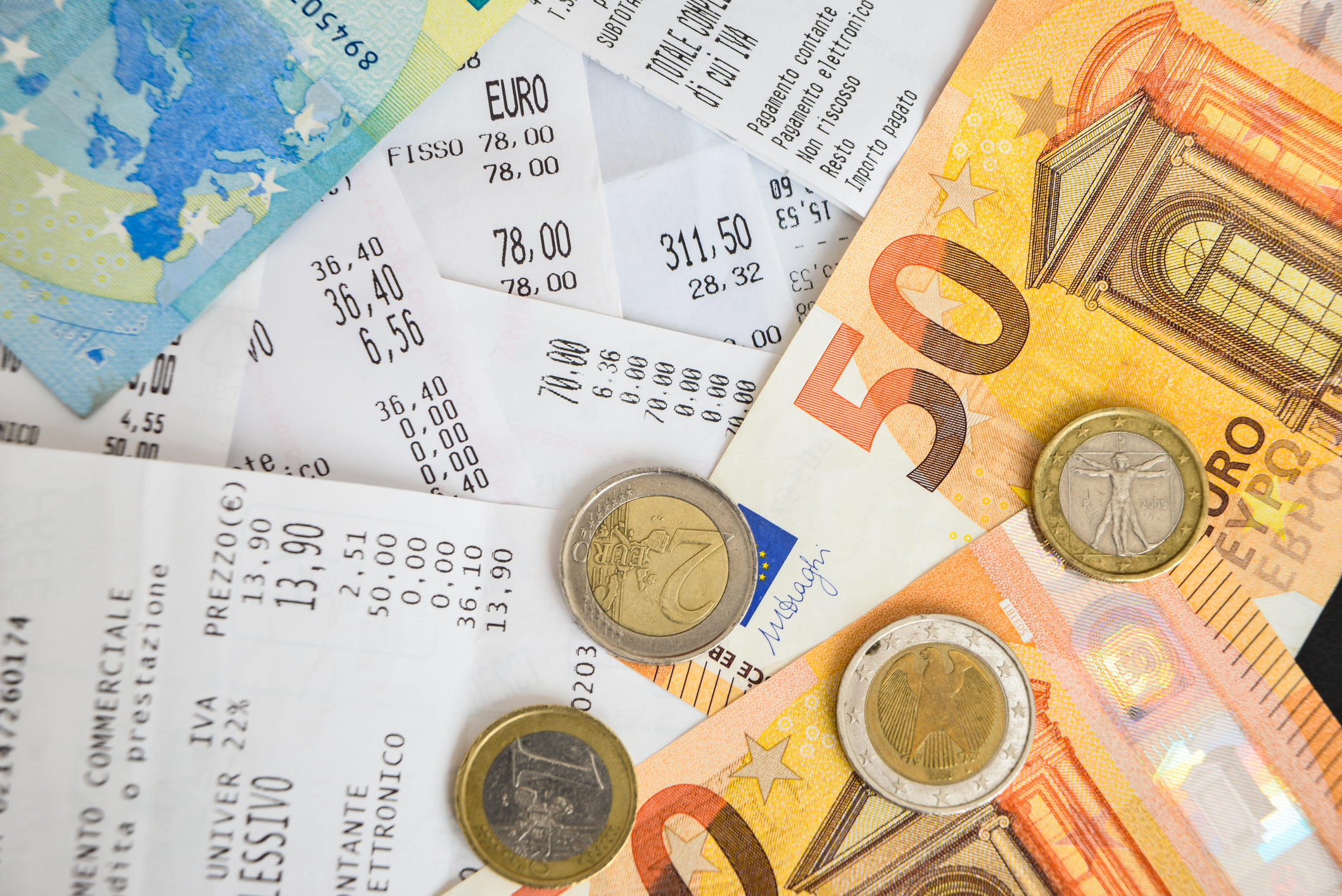
Tax evasion has fallen slightly over time, thanks in part to certain regulations which link receipt issuance to POS terminals. The expected effect of this on the economy this year is an increase of 11.8 billion compared to 2025. But the mountain of imbalances remains. 235 billion euros is paid in cash, thereby evading many checks (despite regulations requiring electronic payment for many trades and professional services above a minimum threshold). The astute economist Marco Leonardi sums it up as follows: ‘There are too many flat-rate tax schemes for the self-employed, whilst inflation is eroding take-home pay.’ This triggers a tax drag that continues to weigh most heavily on wages and salaries, revealing a crack in the social contract between the various social classes and the risk of a breakdown in trust in democratic institutions and in the stability of the intergenerational pact. Such persistently high levels of tax evasion divert resources away from public investment in social services such as nurseries, schools, care centres and healthcare for new families, as well as social housing priced below the market average. They also squeeze wages and contribute to the exodus of our young people to other European countries which offer clearer and more secure wages and prospects for professional growth.
So here it is: a sound government programme that prioritises the issue of taxation and links it to the future of young generations and the competitiveness of the national economy. Those who evade tax undermine the common good and the values of citizenship, and companies that evade tax engage in unfair competition with law-abiding businesses. Tax inequality also seriously undermines democracy. We have known this for some time, but it is never a waste of time to reiterate the negative consequences, risks, injustices and damage.
(photo Getty Images)