Access the Online Archive
Search the Historical Archive of the Pirelli Foundation for sources and materials. Select the type of support you are interested in and write the keywords of your research.
    Select one of the following categories
  • Documents
  • Photographs
  • Drawings and posters
  • Audio-visuals
  • Publications and magazines
  • All
Help with your research
To request to view the materials in the Historical Archive and in the libraries of the Pirelli Foundation for study and research purposes and/or to find out how to request the use of materials for loans and exhibitions, please fill in the form below. You will receive an email confirming receipt of the request and you will be contacted.
Pirelli Foundation Educational Courses

Select the education level of the school
Back
Primary schools
Pirelli Foundation Educational Courses
Please fill in your details and the staff of Pirelli Foundation Educational will contact you to arrange the dates of the course.

I declare I have read  the privacy policy, and authorise the Pirelli Foundation to process my personal data in order to send communications, also by email, about initiatives/conferences organised by the Pirelli Foundation.

Back
Lower secondary school
Pirelli Foundation Educational Courses
Please fill in your details and the staff of Pirelli Foundation Educational will contact you to arrange the dates of the course.
Back
Upper secondary school
Pirelli Foundation Educational Courses
Please fill in your details and the staff of Pirelli Foundation Educational will contact you to arrange the dates of the course.
Back
University
Pirelli Foundation Educational Courses

Do you want to organize a training programme with your students? For information and reservations, write to universita@fondazionepirelli.org

Visit the Foundation
For information about the Foundation’s activities, guided tours and accessibility,
please call +39 0264423971 or fill in the form below, providing details of your request in the notes field.

Quality of life means well-being and values, and therefore Europe, security and development

What is quality of life? Widespread prosperity, skilled and well-paid work, comfortable housing, effective services for health, schooling, culture and sport. And then a condition that stimulates enterprise and innovation, a civilised and safe environment, the possibility to plan a better future for oneself and one’s children. In short, a life that is pleasant, free and worth living. Come to think of it, much of what Italy generally offers, despite its shadows and disparities. Even if we do like to attribute to this country of ours the definition that Benedetto Croce gave to Naples, in the wake of European travellers on the Grand Tour: ‘A paradise inhabited by devils’.

However, quality of life cannot be assessed only in the microcosm of the local community, in the ‘overland’ Italy, or in the dimension of the ‘particular’ at a time of dramatic crises in geopolitical relations, fractures in international trade, and resounding productive and social upheavals caused by digital technologies. It is linked to major themes such as freedom, social inclusion, and strengthening democracy, which is being undermined by authoritarian forces.  Thus, it is also linked to the revival of Europe, an area that, during the second half of the 20th century, developed, experimented with and grew the model of an original synthesis between liberal democracy, the market economy and welfare; between freedom, innovation and solidarity.

Quality of life indeed. So it is worth thinking not only about ‘what we are not, what we do not want’, but also about political and social projects worth considering and realising, in the name of a better human and civilised condition.

Let us look at Italy, then, putting aside stereotypes, prejudices and clichés.  Recent surveys provide us with data and analyses to help, including the annual quality of life ranking from Il Sole 24 Ore (1 December), the Censis report on the social state of the country (5 December), and ISTAT data on the economy, employment and wages.

Let us take a closer look, starting with the ‘well-being maps’ of Il Sole 24 Ore (the first edition of the census dates back to 1990).  Trento, Bolzano and Udine lead the way, with the business newspaper proclaiming the ‘triumph of the Alpine arc’.  Then come Bologna, Bergamo, Treviso and Verona. Milan is eighth, having recovered four positions since last year, although it drops to second-to-last place for ‘safety’. It is followed by Padua, Parma, and so on for all 107 Italian provinces.

One noteworthy fact is that Siena, ranked 21st overall, has the highest quality of life for women.  This is a situation that political, economic and social forces would do well to carefully reflect on, given that the gender gap is closing too slowly and is one of the most negative aspects of the situation in Italy.

Reggio Calabria is at the bottom of the list again this year, preceded by Syracuse, Crotone and Naples.  As always, the south is performing poorly:  to find the best-placed southern city in the ranking, one has to go to 39th place with Cagliari, while Bari is 67th and Palermo 97th.  Rome, the capital, is in 46th place, having gained 13 places over last year.

The 90 indicators used take into account wealth and consumption, business and work, demographics, society and health, the environment and services, justice and security, and culture and leisure. In-depth analysis is provided by gender, age and social conditions. This year’s analyses show a country that is still divided, but is slowly improving, despite the ongoing issues of stark inequalities, ageing populations, demographic stagnation, young people leaving the country, low wages and hardship.  And in the most dynamic and attractive metropolitan areas, social problems are growing, starting with housing.

In the opinion of many Europeans, Italy is a country where people live well, thanks to a comprehensive welfare system (especially with regard to social security) and a national health system that works better than elsewhere, partly due to the public-private partnership.

And yet, widespread discontent is growing. ‘The winter of our discontent’, to quote the opening lines of Shakespeare’s Richard III, is gaining more and more supporters. Social unrest is becoming increasingly acute, especially among the middle classes, who feel they have lost purchasing power and are experiencing a deterioration in living conditions. ‘Wages in a nosedive:  -8.8% compared to 2021,’ writes La Stampa on 6 December, citing Istat data. Wages will grow slightly this year, thanks in part to labour contracts being renewed, but not enough to close the gap that separates us from the rest of productive Europe.

These issues are reflected in the findings of the 59th annual Censis Report, which portrays a disheartened Italy that is struggling to make ends meet, is disillusioned with current politics and is increasingly abstaining from elections (at the last regional elections, for example, less than half of the electorate voted). Most worryingly of all, 30% of respondents expressed their support for autocrats such as Putin, Orbán, Erdoğan, Xi Jinping and Trump. In short, democracy is in a bad way. The perceived poor quality of life and loss of hope are undermining its foundations.

The preferred international leader is Pope Leo XIV, with 66.7% support.

In their free time, Italians have a lot of sex (62.5% declare having very frequent relationships, even ‘virtual’ ones).  They spend a lot of money on smartphones, but not on books.  They complain about low incomes, and they age badly.

What’s going on?  ‘Politics no longer knows how to listen; it only looks at the polls, and it neglects the middle class. And yet, it is precisely these people who have resisted fears and decline and worked to save Italy’, comments Giuseppe De Rita, president of Censis, who has always been a keen critic and observer of the changes in our social situation (La Stampa, 7 December). Politicians and trade unions would do well to listen to him.  It is the salaried middle class, especially the industrial middle class, that acts as the connective tissue of our industries, providing ideas and manpower to companies striving to grow and emerge from the crisis.

Chiara Saraceno, a sophisticated sociologist, offers an insightful summary, emphasising ‘the mistrust in Europe and welfare, with 78.5% having no confidence in essential health services in a country that lives from day to day. Deindustrialisation is taking its toll, and a growing segment of society is becoming impoverished.’

What would it take to change things? Rebuilding trust in  employment, especially  among young people,  in politics,  in good administration,  in enterprise and business,  and in opportunities to build a better future,  also to better cope with demographic decline and the ‘brain drain abroad’,  and to attract capital and investment, and promote creative intelligence.

Therefore, the Treccani Institute is right to choose ‘trust’ as its word of the year, based on the number of clicks from young people on its website.

Trust is a personal horizon, and above all it is political and professional.

Trust that Italy will succeed. Above all, it is a matter of trust in Europe, precisely at a time when the EU is experiencing deep difficulties and crisis.

Here is another point to consider:  Europe’s future and responsibilities, starting with the US National Security Strategy document that has been causing a stir in international, and especially European, public opinion for a few days now. It affirms ‘the economic decline of Europe and the real and even darker prospect of the erasure of civilisation’, which is being undermined ‘by unstable minority governments trampling on the principles of democracy to suppress opposition’, while the EU ‘undermines political freedom and sovereignty’.  Sovereignty that must be returned to nation states, with the end of the EU.

It is the formalised (but far from unexpected) fracture of the West as we knew it in 20th-century liberal democracies, and the realisation of Europe’s isolation with regard to its own security. It is also the crisis of the union between freedom and welfare that we discussed at the beginning, when we were under the protective military umbrella of the US and NATO.

Now, in order to defend and revive those European values, the EU ‘dances alone’ and must learn to survive. In the face of what Corriere della Sera (8 December) calls the ‘Putin-Trump Axis on Europe’, the Kremlin having declared its full agreement with the US document’s positions, La Stampa (8 December) speaks of ‘Atlantic Divorce’, while Quotidiano Nazionale (Il Resto del Carlino, La Nazione and Il Giorno) headlines ‘Europe under siege’.  Moscow declares, ‘We are with Trump’, and La Repubblica also headlines ‘Europe under siege’.

What should be done?  The comments in major Italian newspapers between Saturday and Monday were already indicative of both the unease and the need for a clear reaction. Antonio Polito, writing in Corriere della Sera, quotes Mark Twain as saying that ‘the news about the death of Europe seems grossly exaggerated’, even though the crisis must be tackled with foresight and responsibility. This requires opposition to the pro-Putin and pro-MAGA populist movement within Europe. This is a difficult political and cultural battle, but Europe is not without resources to fight it.

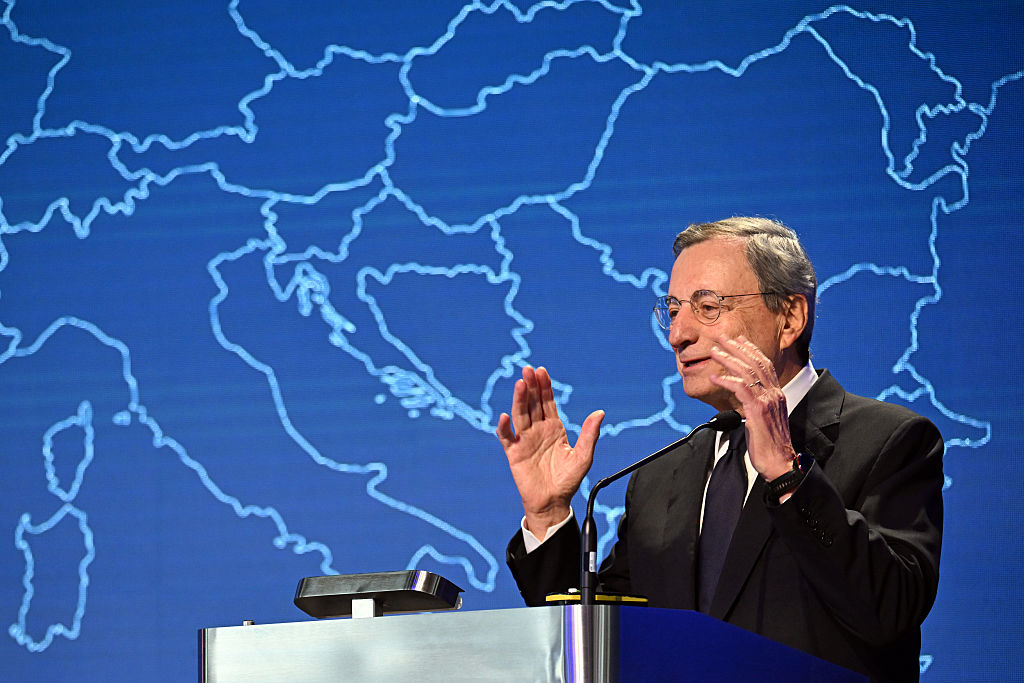
Andrea Malaguti, writing in La Stampa, calls for ‘a return to the solidarity of the countries that created the European Union’, without ambiguity, in order to carry more weight within NATO and relaunch Europe as an economic power and a major international player. He suggests starting with the implementation of the Draghi Plan. Agnese Pini, writing in Quotidiano Nazionale, notes that ‘we must make transparency and the rule of law our identity because the strength of Europe is not a mythical past or ethnic homogeneity, but the promise of equal rights for all, including minorities’. In short, to build an ‘alternative narrative of European civilisation’ and to ‘stop seeing ourselves as an appendage of someone else’s world’.

Europe must be reformed, strengthened, freed from bureaucracy and relaunched, without breaking ties with the US or considering running NATO alone (we cannot afford it and don’t have the technological or militarily capability). However, we must insist on our autonomy, and the relationship between the EU and Britain is essential in this respect. In Il Sole24Ore, Sergio Fabbrini discusses ‘European defence in the post-American era’, exploring ways to maintain security and democracy while engaging in dialogue with other international players interested in achieving global balance, as an alternative to the current rough confrontation between the US, China and Russia.

In short, it is a question of values and freedom. This is certainly a new course for the EU. We should remember Jean Monnet‘s lesson that Europe has always found a way to relaunch itself in the face of difficulties.

Thus, it is worth listening to Jürgen Habermas, one of the most influential German political philosophers and one of the fathers of 20th-century democratic thought.  Europe is alone, caught between Chinese expansion and Trump’s hollowed-out democracy. Therefore, ‘further political integration, at least at the heart of the European Union, has never been so vital to our survival as it is today, yet has never seemed so unlikely’ (from a lecture delivered on 19 November at the Siemens Foundation in Munich). Habermas is right, as is another great European thinker, Michel Foucault, who said, ‘Freedom is not something you possess; it is something you practise’.   What we need now is a liberal and democratic vision and a reconstruction of trust.

(photo Getty images)

What is quality of life? Widespread prosperity, skilled and well-paid work, comfortable housing, effective services for health, schooling, culture and sport. And then a condition that stimulates enterprise and innovation, a civilised and safe environment, the possibility to plan a better future for oneself and one’s children. In short, a life that is pleasant, free and worth living. Come to think of it, much of what Italy generally offers, despite its shadows and disparities. Even if we do like to attribute to this country of ours the definition that Benedetto Croce gave to Naples, in the wake of European travellers on the Grand Tour: ‘A paradise inhabited by devils’.

However, quality of life cannot be assessed only in the microcosm of the local community, in the ‘overland’ Italy, or in the dimension of the ‘particular’ at a time of dramatic crises in geopolitical relations, fractures in international trade, and resounding productive and social upheavals caused by digital technologies. It is linked to major themes such as freedom, social inclusion, and strengthening democracy, which is being undermined by authoritarian forces.  Thus, it is also linked to the revival of Europe, an area that, during the second half of the 20th century, developed, experimented with and grew the model of an original synthesis between liberal democracy, the market economy and welfare; between freedom, innovation and solidarity.

Quality of life indeed. So it is worth thinking not only about ‘what we are not, what we do not want’, but also about political and social projects worth considering and realising, in the name of a better human and civilised condition.

Let us look at Italy, then, putting aside stereotypes, prejudices and clichés.  Recent surveys provide us with data and analyses to help, including the annual quality of life ranking from Il Sole 24 Ore (1 December), the Censis report on the social state of the country (5 December), and ISTAT data on the economy, employment and wages.

Let us take a closer look, starting with the ‘well-being maps’ of Il Sole 24 Ore (the first edition of the census dates back to 1990).  Trento, Bolzano and Udine lead the way, with the business newspaper proclaiming the ‘triumph of the Alpine arc’.  Then come Bologna, Bergamo, Treviso and Verona. Milan is eighth, having recovered four positions since last year, although it drops to second-to-last place for ‘safety’. It is followed by Padua, Parma, and so on for all 107 Italian provinces.

One noteworthy fact is that Siena, ranked 21st overall, has the highest quality of life for women.  This is a situation that political, economic and social forces would do well to carefully reflect on, given that the gender gap is closing too slowly and is one of the most negative aspects of the situation in Italy.

Reggio Calabria is at the bottom of the list again this year, preceded by Syracuse, Crotone and Naples.  As always, the south is performing poorly:  to find the best-placed southern city in the ranking, one has to go to 39th place with Cagliari, while Bari is 67th and Palermo 97th.  Rome, the capital, is in 46th place, having gained 13 places over last year.

The 90 indicators used take into account wealth and consumption, business and work, demographics, society and health, the environment and services, justice and security, and culture and leisure. In-depth analysis is provided by gender, age and social conditions. This year’s analyses show a country that is still divided, but is slowly improving, despite the ongoing issues of stark inequalities, ageing populations, demographic stagnation, young people leaving the country, low wages and hardship.  And in the most dynamic and attractive metropolitan areas, social problems are growing, starting with housing.

In the opinion of many Europeans, Italy is a country where people live well, thanks to a comprehensive welfare system (especially with regard to social security) and a national health system that works better than elsewhere, partly due to the public-private partnership.

And yet, widespread discontent is growing. ‘The winter of our discontent’, to quote the opening lines of Shakespeare’s Richard III, is gaining more and more supporters. Social unrest is becoming increasingly acute, especially among the middle classes, who feel they have lost purchasing power and are experiencing a deterioration in living conditions. ‘Wages in a nosedive:  -8.8% compared to 2021,’ writes La Stampa on 6 December, citing Istat data. Wages will grow slightly this year, thanks in part to labour contracts being renewed, but not enough to close the gap that separates us from the rest of productive Europe.

These issues are reflected in the findings of the 59th annual Censis Report, which portrays a disheartened Italy that is struggling to make ends meet, is disillusioned with current politics and is increasingly abstaining from elections (at the last regional elections, for example, less than half of the electorate voted). Most worryingly of all, 30% of respondents expressed their support for autocrats such as Putin, Orbán, Erdoğan, Xi Jinping and Trump. In short, democracy is in a bad way. The perceived poor quality of life and loss of hope are undermining its foundations.

The preferred international leader is Pope Leo XIV, with 66.7% support.

In their free time, Italians have a lot of sex (62.5% declare having very frequent relationships, even ‘virtual’ ones).  They spend a lot of money on smartphones, but not on books.  They complain about low incomes, and they age badly.

What’s going on?  ‘Politics no longer knows how to listen; it only looks at the polls, and it neglects the middle class. And yet, it is precisely these people who have resisted fears and decline and worked to save Italy’, comments Giuseppe De Rita, president of Censis, who has always been a keen critic and observer of the changes in our social situation (La Stampa, 7 December). Politicians and trade unions would do well to listen to him.  It is the salaried middle class, especially the industrial middle class, that acts as the connective tissue of our industries, providing ideas and manpower to companies striving to grow and emerge from the crisis.

Chiara Saraceno, a sophisticated sociologist, offers an insightful summary, emphasising ‘the mistrust in Europe and welfare, with 78.5% having no confidence in essential health services in a country that lives from day to day. Deindustrialisation is taking its toll, and a growing segment of society is becoming impoverished.’

What would it take to change things? Rebuilding trust in  employment, especially  among young people,  in politics,  in good administration,  in enterprise and business,  and in opportunities to build a better future,  also to better cope with demographic decline and the ‘brain drain abroad’,  and to attract capital and investment, and promote creative intelligence.

Therefore, the Treccani Institute is right to choose ‘trust’ as its word of the year, based on the number of clicks from young people on its website.

Trust is a personal horizon, and above all it is political and professional.

Trust that Italy will succeed. Above all, it is a matter of trust in Europe, precisely at a time when the EU is experiencing deep difficulties and crisis.

Here is another point to consider:  Europe’s future and responsibilities, starting with the US National Security Strategy document that has been causing a stir in international, and especially European, public opinion for a few days now. It affirms ‘the economic decline of Europe and the real and even darker prospect of the erasure of civilisation’, which is being undermined ‘by unstable minority governments trampling on the principles of democracy to suppress opposition’, while the EU ‘undermines political freedom and sovereignty’.  Sovereignty that must be returned to nation states, with the end of the EU.

It is the formalised (but far from unexpected) fracture of the West as we knew it in 20th-century liberal democracies, and the realisation of Europe’s isolation with regard to its own security. It is also the crisis of the union between freedom and welfare that we discussed at the beginning, when we were under the protective military umbrella of the US and NATO.

Now, in order to defend and revive those European values, the EU ‘dances alone’ and must learn to survive. In the face of what Corriere della Sera (8 December) calls the ‘Putin-Trump Axis on Europe’, the Kremlin having declared its full agreement with the US document’s positions, La Stampa (8 December) speaks of ‘Atlantic Divorce’, while Quotidiano Nazionale (Il Resto del Carlino, La Nazione and Il Giorno) headlines ‘Europe under siege’.  Moscow declares, ‘We are with Trump’, and La Repubblica also headlines ‘Europe under siege’.

What should be done?  The comments in major Italian newspapers between Saturday and Monday were already indicative of both the unease and the need for a clear reaction. Antonio Polito, writing in Corriere della Sera, quotes Mark Twain as saying that ‘the news about the death of Europe seems grossly exaggerated’, even though the crisis must be tackled with foresight and responsibility. This requires opposition to the pro-Putin and pro-MAGA populist movement within Europe. This is a difficult political and cultural battle, but Europe is not without resources to fight it.

Andrea Malaguti, writing in La Stampa, calls for ‘a return to the solidarity of the countries that created the European Union’, without ambiguity, in order to carry more weight within NATO and relaunch Europe as an economic power and a major international player. He suggests starting with the implementation of the Draghi Plan. Agnese Pini, writing in Quotidiano Nazionale, notes that ‘we must make transparency and the rule of law our identity because the strength of Europe is not a mythical past or ethnic homogeneity, but the promise of equal rights for all, including minorities’. In short, to build an ‘alternative narrative of European civilisation’ and to ‘stop seeing ourselves as an appendage of someone else’s world’.

Europe must be reformed, strengthened, freed from bureaucracy and relaunched, without breaking ties with the US or considering running NATO alone (we cannot afford it and don’t have the technological or militarily capability). However, we must insist on our autonomy, and the relationship between the EU and Britain is essential in this respect. In Il Sole24Ore, Sergio Fabbrini discusses ‘European defence in the post-American era’, exploring ways to maintain security and democracy while engaging in dialogue with other international players interested in achieving global balance, as an alternative to the current rough confrontation between the US, China and Russia.

In short, it is a question of values and freedom. This is certainly a new course for the EU. We should remember Jean Monnet‘s lesson that Europe has always found a way to relaunch itself in the face of difficulties.

Thus, it is worth listening to Jürgen Habermas, one of the most influential German political philosophers and one of the fathers of 20th-century democratic thought.  Europe is alone, caught between Chinese expansion and Trump’s hollowed-out democracy. Therefore, ‘further political integration, at least at the heart of the European Union, has never been so vital to our survival as it is today, yet has never seemed so unlikely’ (from a lecture delivered on 19 November at the Siemens Foundation in Munich). Habermas is right, as is another great European thinker, Michel Foucault, who said, ‘Freedom is not something you possess; it is something you practise’.   What we need now is a liberal and democratic vision and a reconstruction of trust.

(photo Getty images)

Diversity culture to further development

Research discussed at the University of Padua focuses on rules, tools and pathways for integrating immigrants into businesses

Diversity management is based on growth through capitalising on different cultures, and becoming richer by sharing rather than separating.  This concept applies to both society and the economy. In theory, this approach is straightforward and effective, but in practice, it is often more challenging. In her thesis, discussed at the University of Padua, Victoria Chitoroaga explores one of the most controversial aspects of the issue and summarises her findings.

The title of the study is ‘Gestione interculturale delle risorse umane: inserimento e sviluppo del personale straniero in Italia’ (Intercultural human resource management: integration and development of foreign personnel in Italy), and, as explained above, it addresses ‘the issue of intercultural human resource management in Italy, focusing in particular on strategies for the integration and development of immigrant personnel’. This topic is highly important because it forms part of a current debate involving the business world, institutions, civil society, and the education system, and it offers food for thought on the relationships created within social and productive systems dealing with immigrants.

However, Chitoroaga adds another element to her reasoning: the ‘strategic relevance of diversity in an increasingly interconnected society’, and therefore the importance of multicultural resources in addressing current problems and opportunities.

The work’s main objective is to identify and analyse the most effective strategies for integrating and enhancing immigrant personnel within Italian organisations, and Chitoroaga seeks to achieve this by identifying long-term inclusive and developmental practices.

The work begins with an overview of immigration rules in Italy, before moving on to the central theme of intercultural human resource management, and therefore methods for integrating immigrants into the workforce, and levers for promoting their professional development. The author specifically analyses existing barriers, from cultural prejudices and language difficulties to limitations in the recognition of skills, and proposes solutions to overcome them.


Gestione interculturale delle risorse umane: inserimento e sviluppo del personale straniero in Italia

Victoria Chitoroaga

Thesis, University of Padua Department of Political Science, Law and International Studies Master’s Degree Course in Government Sciences and Public Policies, 2025

Research discussed at the University of Padua focuses on rules, tools and pathways for integrating immigrants into businesses

Diversity management is based on growth through capitalising on different cultures, and becoming richer by sharing rather than separating.  This concept applies to both society and the economy. In theory, this approach is straightforward and effective, but in practice, it is often more challenging. In her thesis, discussed at the University of Padua, Victoria Chitoroaga explores one of the most controversial aspects of the issue and summarises her findings.

The title of the study is ‘Gestione interculturale delle risorse umane: inserimento e sviluppo del personale straniero in Italia’ (Intercultural human resource management: integration and development of foreign personnel in Italy), and, as explained above, it addresses ‘the issue of intercultural human resource management in Italy, focusing in particular on strategies for the integration and development of immigrant personnel’. This topic is highly important because it forms part of a current debate involving the business world, institutions, civil society, and the education system, and it offers food for thought on the relationships created within social and productive systems dealing with immigrants.

However, Chitoroaga adds another element to her reasoning: the ‘strategic relevance of diversity in an increasingly interconnected society’, and therefore the importance of multicultural resources in addressing current problems and opportunities.

The work’s main objective is to identify and analyse the most effective strategies for integrating and enhancing immigrant personnel within Italian organisations, and Chitoroaga seeks to achieve this by identifying long-term inclusive and developmental practices.

The work begins with an overview of immigration rules in Italy, before moving on to the central theme of intercultural human resource management, and therefore methods for integrating immigrants into the workforce, and levers for promoting their professional development. The author specifically analyses existing barriers, from cultural prejudices and language difficulties to limitations in the recognition of skills, and proposes solutions to overcome them.


Gestione interculturale delle risorse umane: inserimento e sviluppo del personale straniero in Italia

Victoria Chitoroaga

Thesis, University of Padua Department of Political Science, Law and International Studies Master’s Degree Course in Government Sciences and Public Policies, 2025

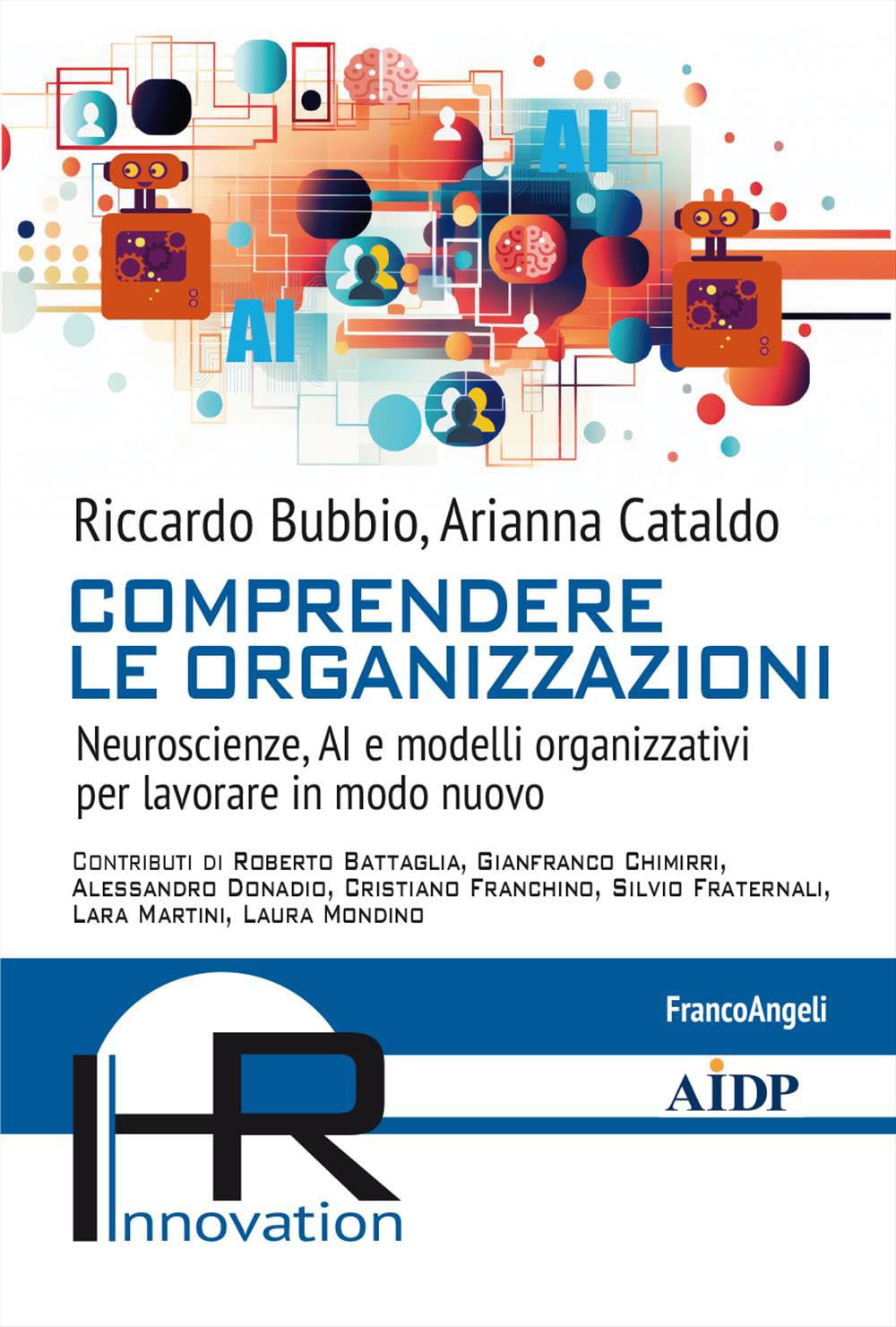
From Programming to Artificial Intelligence

A newly published book helps us to understand the tools of innovation

Many manufacturing organisations (and, ultimately, most modern companies) seem to be experiencing innovation that outpaces innovation. It is not just a question of the pace at which research progresses, but also of the timetable for accepting and applying its results. As always, careful consideration is required to understand this phenomenon, which is also evident in the rapidly evolving field of Artificial Intelligence.
In his recently published book ‘La macchina che si autoprogramma. In quali mani finirà l’innovazione?’ (The self-programming machine: in whose hands will innovation end?), Francesco Maria De Collibus begins his reasoning from these considerations. Within the confines of a limited space, he attempts to clarify the relationship between two pivotal components of innovation: Artificial Intelligence and information technology.
According to De Collibus, it is Artificial Intelligence that is devouring software today. In just a few months, we have gone from a time when programming required years of study to a new reality where we only have to describe what we want in everyday language to see the code write itself. What might the outcome be? The reader is taken on a two-stage journey to learn about this technological transition. First, the focus is on what computers and programming are. Then, there is an in-depth look at the characteristics of Artificial Intelligence. De Collibus, a philosopher and computer scientist with extensive experience in information technology, touches on events in Silicon Valley and the activities of major companies such as GitHub Copilot, as well as emerging companies such as Cursor and Replit. The aim is to show not only how the role of programmers is changing, but also what it means to create technology today.
While the book does not provide solutions for every situation, it does provide tools to help readers better understand and respond to a series of questions whose answers must become part of our collective awareness. Questions on how to think about our time, how to think with totally new tools and how to make sense of the vast amount of information and suggestions offered every day.

La macchina che si autoprogramma. In quali mani finirà l’innovazione?
Francesco De Collibus
EGEA, 2025

A newly published book helps us to understand the tools of innovation

Many manufacturing organisations (and, ultimately, most modern companies) seem to be experiencing innovation that outpaces innovation. It is not just a question of the pace at which research progresses, but also of the timetable for accepting and applying its results. As always, careful consideration is required to understand this phenomenon, which is also evident in the rapidly evolving field of Artificial Intelligence.
In his recently published book ‘La macchina che si autoprogramma. In quali mani finirà l’innovazione?’ (The self-programming machine: in whose hands will innovation end?), Francesco Maria De Collibus begins his reasoning from these considerations. Within the confines of a limited space, he attempts to clarify the relationship between two pivotal components of innovation: Artificial Intelligence and information technology.
According to De Collibus, it is Artificial Intelligence that is devouring software today. In just a few months, we have gone from a time when programming required years of study to a new reality where we only have to describe what we want in everyday language to see the code write itself. What might the outcome be? The reader is taken on a two-stage journey to learn about this technological transition. First, the focus is on what computers and programming are. Then, there is an in-depth look at the characteristics of Artificial Intelligence. De Collibus, a philosopher and computer scientist with extensive experience in information technology, touches on events in Silicon Valley and the activities of major companies such as GitHub Copilot, as well as emerging companies such as Cursor and Replit. The aim is to show not only how the role of programmers is changing, but also what it means to create technology today.
While the book does not provide solutions for every situation, it does provide tools to help readers better understand and respond to a series of questions whose answers must become part of our collective awareness. Questions on how to think about our time, how to think with totally new tools and how to make sense of the vast amount of information and suggestions offered every day.

La macchina che si autoprogramma. In quali mani finirà l’innovazione?
Francesco De Collibus
EGEA, 2025

Here are the Finalist Shortlists for the Fifth Campiello Junior Awards

On 4 December 2025, at the Pirelli Headquarters in Milano Bicocca, the two finalist shortlists of the fifth edition of the Campiello Junior award were selected. The literary prize, created through a collaboration between Fondazione Il Campiello, the Pirelli Foundation and Pirelli, celebrates works of Italian fiction and poetry written for children aged 7 to 10 and young readers aged 11 to 14.

The selection of the finalist works was entrusted to the expert jury, chaired by Pino Boero, a distinguished former professor of Children’s Literature and the Pedagogy of Reading. The members were Chiara Lagani, an actress and playwright; Michela Possamai, a lecturer at IUSVE University in Venice and former member of the Campiello Giovani Technical Committee; Emma Beseghi, former professor of Children’s Literature at the University of Bologna; and Lea Martina Forti Grazzini, an author and screenwriter for Rai radio and television.

After carefully reviewing nearly a hundred submissions, the three finalists for the 7–10 age group are: Album per pensare e non pensare by Mariangela Gualtieri (published by Bompiani), Il seminatore di storie e altri strani mestieri by Michela Guidi (published by Giangiacomo Feltrinelli editore) e Un fratellino. Storia di Nanni e Mario di Rosella Postorino (published by Adriano Salani editore).

For the 11–14 category, the three contenders for the prize will be: Il talento della rondine by Matteo Bussola (published by Adriano Salani editore), Segui la tigre by Luisa Mattia (published by Piemme) e Adelmo che voleva diventare Settimo by Daniele Mencarelli (published by Mondadori).

The event, hosted by Giancarlo Leone, also featured contributions from Antonio Calabrò, Director of the Pirelli Foundation, and Stefania Zuccolotto, member of the Premio Campiello management committee.

The baton now passes to the 240 young readers of the Popular Jury. They will be able to read the shortlisted books and vote for their favourite, helping to determine the winners. The final announcement will be made at the Teatro Comunale in Vicenza on Thursday 16 April 2026. The event will be presented by Armando Traverso from Rai Radio Kids, and directed by Davide Stefanato, to attend click here.

Thanks to the partnership between Campiello Junior and the Turin International Book Fair, young visitors to the 2026 edition will also have the opportunity to meet both winners.

For all the latest on all Campiello Junior activities, visit www.fondazionepirelli.org or follow the social media channels of the Pirelli Foundation and Premio Campiello.

On 4 December 2025, at the Pirelli Headquarters in Milano Bicocca, the two finalist shortlists of the fifth edition of the Campiello Junior award were selected. The literary prize, created through a collaboration between Fondazione Il Campiello, the Pirelli Foundation and Pirelli, celebrates works of Italian fiction and poetry written for children aged 7 to 10 and young readers aged 11 to 14.

The selection of the finalist works was entrusted to the expert jury, chaired by Pino Boero, a distinguished former professor of Children’s Literature and the Pedagogy of Reading. The members were Chiara Lagani, an actress and playwright; Michela Possamai, a lecturer at IUSVE University in Venice and former member of the Campiello Giovani Technical Committee; Emma Beseghi, former professor of Children’s Literature at the University of Bologna; and Lea Martina Forti Grazzini, an author and screenwriter for Rai radio and television.

After carefully reviewing nearly a hundred submissions, the three finalists for the 7–10 age group are: Album per pensare e non pensare by Mariangela Gualtieri (published by Bompiani), Il seminatore di storie e altri strani mestieri by Michela Guidi (published by Giangiacomo Feltrinelli editore) e Un fratellino. Storia di Nanni e Mario di Rosella Postorino (published by Adriano Salani editore).

For the 11–14 category, the three contenders for the prize will be: Il talento della rondine by Matteo Bussola (published by Adriano Salani editore), Segui la tigre by Luisa Mattia (published by Piemme) e Adelmo che voleva diventare Settimo by Daniele Mencarelli (published by Mondadori).

The event, hosted by Giancarlo Leone, also featured contributions from Antonio Calabrò, Director of the Pirelli Foundation, and Stefania Zuccolotto, member of the Premio Campiello management committee.

The baton now passes to the 240 young readers of the Popular Jury. They will be able to read the shortlisted books and vote for their favourite, helping to determine the winners. The final announcement will be made at the Teatro Comunale in Vicenza on Thursday 16 April 2026. The event will be presented by Armando Traverso from Rai Radio Kids, and directed by Davide Stefanato, to attend click here.

Thanks to the partnership between Campiello Junior and the Turin International Book Fair, young visitors to the 2026 edition will also have the opportunity to meet both winners.

For all the latest on all Campiello Junior activities, visit www.fondazionepirelli.org or follow the social media channels of the Pirelli Foundation and Premio Campiello.

Multimedia

Images

Factory culture and education culture

The Montessori school experience at Falck


It’s called corporate welfare today.  A company focusing on its people. Caring for the well-being of those who work in the factory and offices. While this is certainly not common to all companies, it is widespread enough to find examples of it in a number of significant cases.  One such case is that of the Falck steelworks and ironworks in Sesto San Giovanni, Lombardy, which promoted the application of Montessori pedagogy in schools for the children of its employees between 1952 and 1993.

Irene Pozzi (of the University of Bologna) writes about this experience in her article, ‘L’applicazione della pedagogia montessoriana nelle scuole delle Acciaierie e Ferriere Lombarde Falck’ (The application of Montessori pedagogy in the schools of the Lombard Falck steelworks and ironworks) (1952–1993), which was recently published in Nuova Secondaria.

Based on unpublished company sources (publications and archive documents), the article describes the educational initiatives implemented at Falck. These initiatives were made possible thanks to the collaboration between Maly Falck (wife of the company chairman at the time, Giovanni Falck) and Giuliana Sorge, a renowned disciple of Maria Montessori. On the one hand, the Falck Montessori schools were an extremely significant educational experiment for the company, and on the other, they were an important centre for Montessori education in the post-war period.

Therefore, the research has the characteristics of both pedagogical analysis and historical and corporate culture analysis. Irene Pozzi begins her investigation by focusing on the initiative’s educational approach and historical origins. She then moves on to its growth and consolidation in the 1960s, which culminated in a crisis in the steel industry and the closure of schools due to a decline in the school population and the steel crisis.

IIrene Pozzi’s narrative – because it is indeed a narrative, given the language used – guides the reader through an important experience that is an expression of a corporate culture whose memory must not be lost.

L’applicazione della pedagogia montessoriana nelle scuole delle Acciaierie e Ferriere Lombarde Falck (1952-1993)

Irene Pozzi

Nuova Secondaria – No. 2, October 2025 – year XLIII

The Montessori school experience at Falck


It’s called corporate welfare today.  A company focusing on its people. Caring for the well-being of those who work in the factory and offices. While this is certainly not common to all companies, it is widespread enough to find examples of it in a number of significant cases.  One such case is that of the Falck steelworks and ironworks in Sesto San Giovanni, Lombardy, which promoted the application of Montessori pedagogy in schools for the children of its employees between 1952 and 1993.

Irene Pozzi (of the University of Bologna) writes about this experience in her article, ‘L’applicazione della pedagogia montessoriana nelle scuole delle Acciaierie e Ferriere Lombarde Falck’ (The application of Montessori pedagogy in the schools of the Lombard Falck steelworks and ironworks) (1952–1993), which was recently published in Nuova Secondaria.

Based on unpublished company sources (publications and archive documents), the article describes the educational initiatives implemented at Falck. These initiatives were made possible thanks to the collaboration between Maly Falck (wife of the company chairman at the time, Giovanni Falck) and Giuliana Sorge, a renowned disciple of Maria Montessori. On the one hand, the Falck Montessori schools were an extremely significant educational experiment for the company, and on the other, they were an important centre for Montessori education in the post-war period.

Therefore, the research has the characteristics of both pedagogical analysis and historical and corporate culture analysis. Irene Pozzi begins her investigation by focusing on the initiative’s educational approach and historical origins. She then moves on to its growth and consolidation in the 1960s, which culminated in a crisis in the steel industry and the closure of schools due to a decline in the school population and the steel crisis.

IIrene Pozzi’s narrative – because it is indeed a narrative, given the language used – guides the reader through an important experience that is an expression of a corporate culture whose memory must not be lost.

L’applicazione della pedagogia montessoriana nelle scuole delle Acciaierie e Ferriere Lombarde Falck (1952-1993)

Irene Pozzi

Nuova Secondaria – No. 2, October 2025 – year XLIII

Can we avoid becoming ‘celibate machines’?

The relationship between digital technologies, development and humanity

The development model that dominated at the turn of the century no longer holds sway.  So how do we keep an increasingly large and fragmented society together when it is discarding traditional moral order in the name of personal freedom? This is a very important question that everyone must answer, with the level of intensity growing according to one’s individual responsibilities within social systems. This question is successfully answered in ‘Macchine celibi.  Meccanizzare l’umano o umanizzare il mondo?’ (Celibate machines: Mechanising humans or humanising the world?), a book co-authored by sociologist and media anthropologist Chiara Giaccardi and sociologist Mauro Magatti.

So, how can we do it? The solution seems to lie in digital technologies, which offer themselves as an antidote to the disruptive impulses of our age. However, they also prove to be a powerful catalyst for new problems. The two observe that the result is paradoxical: maximum efficiency and maximum communication chaos are achieved with digital technology. While intelligent machines are becoming more human-like, humans are in danger of becoming ‘celibate machines’, i.e. isolated, high-performance individuals capable of great things, but lacking bonds and unable to recognise others. In other words, as Giaccardi and Magatti put it, ‘To move forward, it is necessary to think of digitisation not as a means of standardising and controlling, but as a way of nurturing the vital intelligence of people and groups. Technology alone cannot provide us with guidance; we need a new way of thinking that transcends the limitations of modern rationality.’ We need a ‘new way of thinking’ that restores fundamental principles of existence and human coexistence. This must start with the rediscovery of a ‘politics of the spirit’ that can give our societies meaning, connections and a future. The way forward lies in reviving what modernity has marginalised:  dialogue, thought and spirit.  After all, happiness is not celibate — nor is freedom.

The book takes the reader through several stages on a journey with a destination.  First, the concept of ‘digital rationalisation’ is clarified. Then, the many aspects that this rationalisation determines, from narcissism to aggression, are explored in depth. Finally, a way forward based on thought, complexity, plurality and dialogue is outlined.

Chiara Giaccardi and Mauro Magatti emphasise that we are at a crossroads.  It is up to us to choose the right path, otherwise we will end up as Luigi Pirandello astutely pointed out, as quoted by the authors themselves: ‘We are all becoming like machines; we no longer need a soul’.

Macchine celibi. Meccanizzare l’umano o umanizzare il mondo?

Chiara Giaccardi, Mauro Magatti

il Mulino, 2025

The relationship between digital technologies, development and humanity

The development model that dominated at the turn of the century no longer holds sway.  So how do we keep an increasingly large and fragmented society together when it is discarding traditional moral order in the name of personal freedom? This is a very important question that everyone must answer, with the level of intensity growing according to one’s individual responsibilities within social systems. This question is successfully answered in ‘Macchine celibi.  Meccanizzare l’umano o umanizzare il mondo?’ (Celibate machines: Mechanising humans or humanising the world?), a book co-authored by sociologist and media anthropologist Chiara Giaccardi and sociologist Mauro Magatti.

So, how can we do it? The solution seems to lie in digital technologies, which offer themselves as an antidote to the disruptive impulses of our age. However, they also prove to be a powerful catalyst for new problems. The two observe that the result is paradoxical: maximum efficiency and maximum communication chaos are achieved with digital technology. While intelligent machines are becoming more human-like, humans are in danger of becoming ‘celibate machines’, i.e. isolated, high-performance individuals capable of great things, but lacking bonds and unable to recognise others. In other words, as Giaccardi and Magatti put it, ‘To move forward, it is necessary to think of digitisation not as a means of standardising and controlling, but as a way of nurturing the vital intelligence of people and groups. Technology alone cannot provide us with guidance; we need a new way of thinking that transcends the limitations of modern rationality.’ We need a ‘new way of thinking’ that restores fundamental principles of existence and human coexistence. This must start with the rediscovery of a ‘politics of the spirit’ that can give our societies meaning, connections and a future. The way forward lies in reviving what modernity has marginalised:  dialogue, thought and spirit.  After all, happiness is not celibate — nor is freedom.

The book takes the reader through several stages on a journey with a destination.  First, the concept of ‘digital rationalisation’ is clarified. Then, the many aspects that this rationalisation determines, from narcissism to aggression, are explored in depth. Finally, a way forward based on thought, complexity, plurality and dialogue is outlined.

Chiara Giaccardi and Mauro Magatti emphasise that we are at a crossroads.  It is up to us to choose the right path, otherwise we will end up as Luigi Pirandello astutely pointed out, as quoted by the authors themselves: ‘We are all becoming like machines; we no longer need a soul’.

Macchine celibi. Meccanizzare l’umano o umanizzare il mondo?

Chiara Giaccardi, Mauro Magatti

il Mulino, 2025

Milan discusses its fate as an enterprising and supportive city

When we say Milan, what city are we talking about?  A city of 1.5 million inhabitants, into which at least another million people travel every day for work or study? Or a metropolis consisting of 133 municipalities and home to over three million people?  Or Italy’s largest university city, with 230,000 students across ten prestigious universities that are also well respected abroad? We could also tell the story of an area that produces 11% of the national GDP and is home to 34% of the foreign multinationals based in Italy, according to data from Assolombarda, the largest territorial organisation of Confindustria which brings together almost 8,000 companies in Milan, Monza and Brianza, Lodi and Pavia — ‘the productive and innovative heart of the country’. Or we could talk about the metropolitan centre of gravity of a vast industrial and dynamic area in Europe, stretching from Turin and Genoa to Veneto and Trieste, and from the Alps to the Via Emilia. Milan is therefore the ‘infinite city’, to repeat Aldo Bonomi’s pertinent and famous definition.

And it is a Milan to be governed.  But how? The sheer scale of the ongoing transformations and the radical nature of the changing processes (from economic growth to social issues) reveal that, although Milan is a market metropolis, it cannot be reduced solely to the logic of the market and productivity. Its attractiveness to people, capital, ideas and businesses requires foundations that are more solid than the fundamental parameters of competitiveness. Civic virtues and social values are needed, as are international cultural exchanges and, above all, good politics and effective public administration.

As the figure at the beginning shows, these issues cannot be governed solely at the municipal level. With one and a half million residents, and another million people arriving in the morning and leaving in the evening, Milan’s population almost doubles on a daily basis, with all the attendant problems of transport, cleaning, services, security, catering and waste.

Therefore, the scale must be at least of a metropolitan city, with better application of the relevant regulations (the founding law dates from 1990, inclusion in the Constitution from 2001, implementation from 2014 and formal operation instead of the old provinces from 2015 —  a quarter of a century, a very long time).  It must also be provided with financial and professional resources.

However, the trouble is that the metropolitan city has never worked well. ‘The Great Ghost of Milan,’ writes Corriere della Sera (28 October) and ‘A restrained but strategic giant’ (29 October). The mayor of the metropolitan city is the same as that of the capital, Beppe Sala.  But the perception of the role and relative powers has always been marginal. With negative consequences for all the areas concerned.

So, do we need a ‘special law’ for Milan, like the one in force for Rome? Maybe, as long as there are adequate allocations for public services and fiscal incentives for private investment to accompany public resources, and as long as the standards are based on the metropolitan area.

However, we need to go one step further. The real issue with services is to consider them not only from an administrative perspective, but also in terms of the movement of people, products and jobs.  This would involve developing proposals for unions, consortia of municipalities and public-private partnerships, depending on the services to be provided, and would create a new political, economic and administrative landscape.  However, this would need to be tested, bearing in mind the positive fiscal examples of other European countries. Piero Borghini, who was mayor of Milan in the early 1990s, refers to Manchester’s experience of using locally produced tax resources to build governance of services ‘from below’ rather than ‘from the top’ of administrative leadership. New ideas, the dynamism of a society on the move (Corriere della Sera, 31 October).

In any case, Milan is multifaceted and, to use Lucio Dalla‘s words, ‘close to Europe’.  And it is certainly not ‘livid and sunk by its own hand’, as Ivano Fossati wrote in ‘Steam Trains’ (but that was in 1992, the year investigations began into the Tangentopoli system of political and financial corruption). Polycentric Milan cannot be reduced to the stereotypes of a hectic and wealthy city, a ‘city of a thousand lights’ for fashion, design and luxury living. However, it is also difficult to understand based solely on the stylistic features derived from the widespread reports of corruption in public administration (although the judicial inquiries into alleged urban planning irregularities in the municipality have not found solid evidence), and the growing violence in the ‘movida’ areas, where petty crime is perceived as an emergency.

However, there are shadows over the soul of a city said to be losing its ability to combine work and culture, productivity and solidarity. Bonomi is right to write of a metropolis in the midst of an ‘interrupted metamorphosis’, at risk of losing its social cohesion (IlSole24Ore, 29 October). This is partly due to an increasing inability, or perhaps unwillingness, to combine the dimensions of needs and rights. However, even in the most challenging neighbourhoods, it is possible to find stories of solidarity and social commitment brought to life by organisations, institutions, and voluntary groups in the ‘third sector’ (Caritas Ambrosiana is a prime example, though by no means the only one).

Therefore, before the city plunges into the rhetoric of electoral propaganda for the election of a new mayor and city council in 2027, it makes sense to discuss in depth the ongoing transformations and the political and cultural tools needed to tackle the problems exacerbated by Milan’s status as the Italian region most affected by overwhelming economic phenomena, such as the transition from industrial to post-industrial production at the end of the 20th century, and the current mutations linked to the ‘knowledge economy’ and the pervasiveness of artificial intelligence.

Much has been said about the ‘crisis of the Milan model’. But Milan is by no means a model; it is a land in motion, an economic engine and a ‘factory of the future’ (a term dear to Assolombarda), as well as a magnet for attracting intelligence and capital. It is also a cultural and social hub with the capacity to engage in in-depth self-reflection, a rare quality in the Italy of the ‘strapaese’, the movement that championed traditional, rural, and nationalistic values over cosmopolitan and modernist ones and which is characterised by a sense of proud parochialism.

This is a Milan that needs to be understood and explained better.  It should be severely criticised, and yet it should also be designed with love and lived in.

A good example of this attitude is the discussion organised by the Centro Studi Grande Milano and chaired by Daniela Mainini, with Roberto Poli acting as director. Taking place on Wednesday 26th at the Museo della Scienza e della Tecnica, the event is aptly titled ‘Milan is its destiny:  ideas and projects for the city’. Speakers will include Cristina Messa, Agnese Pini, Venanzio Postiglione, Gianmario Verona and myself. Milan’s destiny stems from its history and character, and encompasses ‘enterprising dialogue’, culture and solidarity, innovation and reformist awareness, enlightenment, polytechnic culture, civic sentiment, education and science.

In fact, this is a Milan that must learn to take greater account of the opinions of other Italian and European cities.  It cannot abandon the economic and social characteristics that underpin its activities and, over time, have enabled millions of people to ‘become Milanese’. Citizens who are both enterprising and supportive.

(photo Getty Images)

When we say Milan, what city are we talking about?  A city of 1.5 million inhabitants, into which at least another million people travel every day for work or study? Or a metropolis consisting of 133 municipalities and home to over three million people?  Or Italy’s largest university city, with 230,000 students across ten prestigious universities that are also well respected abroad? We could also tell the story of an area that produces 11% of the national GDP and is home to 34% of the foreign multinationals based in Italy, according to data from Assolombarda, the largest territorial organisation of Confindustria which brings together almost 8,000 companies in Milan, Monza and Brianza, Lodi and Pavia — ‘the productive and innovative heart of the country’. Or we could talk about the metropolitan centre of gravity of a vast industrial and dynamic area in Europe, stretching from Turin and Genoa to Veneto and Trieste, and from the Alps to the Via Emilia. Milan is therefore the ‘infinite city’, to repeat Aldo Bonomi’s pertinent and famous definition.

And it is a Milan to be governed.  But how? The sheer scale of the ongoing transformations and the radical nature of the changing processes (from economic growth to social issues) reveal that, although Milan is a market metropolis, it cannot be reduced solely to the logic of the market and productivity. Its attractiveness to people, capital, ideas and businesses requires foundations that are more solid than the fundamental parameters of competitiveness. Civic virtues and social values are needed, as are international cultural exchanges and, above all, good politics and effective public administration.

As the figure at the beginning shows, these issues cannot be governed solely at the municipal level. With one and a half million residents, and another million people arriving in the morning and leaving in the evening, Milan’s population almost doubles on a daily basis, with all the attendant problems of transport, cleaning, services, security, catering and waste.

Therefore, the scale must be at least of a metropolitan city, with better application of the relevant regulations (the founding law dates from 1990, inclusion in the Constitution from 2001, implementation from 2014 and formal operation instead of the old provinces from 2015 —  a quarter of a century, a very long time).  It must also be provided with financial and professional resources.

However, the trouble is that the metropolitan city has never worked well. ‘The Great Ghost of Milan,’ writes Corriere della Sera (28 October) and ‘A restrained but strategic giant’ (29 October). The mayor of the metropolitan city is the same as that of the capital, Beppe Sala.  But the perception of the role and relative powers has always been marginal. With negative consequences for all the areas concerned.

So, do we need a ‘special law’ for Milan, like the one in force for Rome? Maybe, as long as there are adequate allocations for public services and fiscal incentives for private investment to accompany public resources, and as long as the standards are based on the metropolitan area.

However, we need to go one step further. The real issue with services is to consider them not only from an administrative perspective, but also in terms of the movement of people, products and jobs.  This would involve developing proposals for unions, consortia of municipalities and public-private partnerships, depending on the services to be provided, and would create a new political, economic and administrative landscape.  However, this would need to be tested, bearing in mind the positive fiscal examples of other European countries. Piero Borghini, who was mayor of Milan in the early 1990s, refers to Manchester’s experience of using locally produced tax resources to build governance of services ‘from below’ rather than ‘from the top’ of administrative leadership. New ideas, the dynamism of a society on the move (Corriere della Sera, 31 October).

In any case, Milan is multifaceted and, to use Lucio Dalla‘s words, ‘close to Europe’.  And it is certainly not ‘livid and sunk by its own hand’, as Ivano Fossati wrote in ‘Steam Trains’ (but that was in 1992, the year investigations began into the Tangentopoli system of political and financial corruption). Polycentric Milan cannot be reduced to the stereotypes of a hectic and wealthy city, a ‘city of a thousand lights’ for fashion, design and luxury living. However, it is also difficult to understand based solely on the stylistic features derived from the widespread reports of corruption in public administration (although the judicial inquiries into alleged urban planning irregularities in the municipality have not found solid evidence), and the growing violence in the ‘movida’ areas, where petty crime is perceived as an emergency.

However, there are shadows over the soul of a city said to be losing its ability to combine work and culture, productivity and solidarity. Bonomi is right to write of a metropolis in the midst of an ‘interrupted metamorphosis’, at risk of losing its social cohesion (IlSole24Ore, 29 October). This is partly due to an increasing inability, or perhaps unwillingness, to combine the dimensions of needs and rights. However, even in the most challenging neighbourhoods, it is possible to find stories of solidarity and social commitment brought to life by organisations, institutions, and voluntary groups in the ‘third sector’ (Caritas Ambrosiana is a prime example, though by no means the only one).

Therefore, before the city plunges into the rhetoric of electoral propaganda for the election of a new mayor and city council in 2027, it makes sense to discuss in depth the ongoing transformations and the political and cultural tools needed to tackle the problems exacerbated by Milan’s status as the Italian region most affected by overwhelming economic phenomena, such as the transition from industrial to post-industrial production at the end of the 20th century, and the current mutations linked to the ‘knowledge economy’ and the pervasiveness of artificial intelligence.

Much has been said about the ‘crisis of the Milan model’. But Milan is by no means a model; it is a land in motion, an economic engine and a ‘factory of the future’ (a term dear to Assolombarda), as well as a magnet for attracting intelligence and capital. It is also a cultural and social hub with the capacity to engage in in-depth self-reflection, a rare quality in the Italy of the ‘strapaese’, the movement that championed traditional, rural, and nationalistic values over cosmopolitan and modernist ones and which is characterised by a sense of proud parochialism.

This is a Milan that needs to be understood and explained better.  It should be severely criticised, and yet it should also be designed with love and lived in.

A good example of this attitude is the discussion organised by the Centro Studi Grande Milano and chaired by Daniela Mainini, with Roberto Poli acting as director. Taking place on Wednesday 26th at the Museo della Scienza e della Tecnica, the event is aptly titled ‘Milan is its destiny:  ideas and projects for the city’. Speakers will include Cristina Messa, Agnese Pini, Venanzio Postiglione, Gianmario Verona and myself. Milan’s destiny stems from its history and character, and encompasses ‘enterprising dialogue’, culture and solidarity, innovation and reformist awareness, enlightenment, polytechnic culture, civic sentiment, education and science.

In fact, this is a Milan that must learn to take greater account of the opinions of other Italian and European cities.  It cannot abandon the economic and social characteristics that underpin its activities and, over time, have enabled millions of people to ‘become Milanese’. Citizens who are both enterprising and supportive.

(photo Getty Images)

To the Moon and Beyond, Towards the Future

In the 1980s, Pirelli’s designs benefited from the use of new tools made possible by advances in computing technologies. The following decade saw the development of an important academic partnership with the creation of the Consortium for Research on Optical Switching and Processing in Milan (CoreCom) together with the Politecnico University of Milan. The Consortium soon became a European benchmark for research on optical communications, pioneering work also in networks and special optical fibres. Innovation, however, did not concern materials and products alone. In 1999, at Bicocca, Pirelli presented its Modular Integrated Robotized System (MIRSTM) for automated tyre production. Protected by twenty-two patents, it made it possible to manufacture high- and ultra-high-performance tyres in small batches with very rapid development times, ushering in new logistics and customer service possibilities. This represented a radical shift from traditional production processes. In 2001, the partnership between Pirelli and the University of Milano-Bicocca gave rise to the Consortium for Research on Advanced Materials (CORIMAV), which was set up to develop cutting-edge materials technologies and to support research activities and promote training for young people.

Training, research and development remain a strategic asset for Pirelli today: more than 2,000 people work in R&D across the Milan headquarters and the company’s twelve technological centres around the world, and the Group continues to work with suppliers, universities and vehicle manufacturers to anticipate technological innovation. Pirelli’s long-term goal is to replace 100% of fossil- and mineral-based raw materials with bio-based, renewable or recycled components. In addition to this, 80% of aftermarket tyres are now developed using virtual models and simulations, reducing design and production times and costs. The shift towards an increasingly sustainable industry takes time, but the direction is clear: what is research today will become reality tomorrow.

This constant drive to investigate, to go and look “inside things”, is the profound meaning of the great mosaic entitled Scientific Research, created in 1961 from a design by Renato Guttuso and preserved – significantly – in the study room of the Pirelli Foundation. Surrounded by their microscopes and calculators, the scientists imagined by the painter are intent on observing the Moon. A goal later achieved, and from which we now look further still, towards what lies beyond and cannot yet be seen, but which study, research, and the intelligence of humans and machines will one day reveal.

Back to main page

In the 1980s, Pirelli’s designs benefited from the use of new tools made possible by advances in computing technologies. The following decade saw the development of an important academic partnership with the creation of the Consortium for Research on Optical Switching and Processing in Milan (CoreCom) together with the Politecnico University of Milan. The Consortium soon became a European benchmark for research on optical communications, pioneering work also in networks and special optical fibres. Innovation, however, did not concern materials and products alone. In 1999, at Bicocca, Pirelli presented its Modular Integrated Robotized System (MIRSTM) for automated tyre production. Protected by twenty-two patents, it made it possible to manufacture high- and ultra-high-performance tyres in small batches with very rapid development times, ushering in new logistics and customer service possibilities. This represented a radical shift from traditional production processes. In 2001, the partnership between Pirelli and the University of Milano-Bicocca gave rise to the Consortium for Research on Advanced Materials (CORIMAV), which was set up to develop cutting-edge materials technologies and to support research activities and promote training for young people.

Training, research and development remain a strategic asset for Pirelli today: more than 2,000 people work in R&D across the Milan headquarters and the company’s twelve technological centres around the world, and the Group continues to work with suppliers, universities and vehicle manufacturers to anticipate technological innovation. Pirelli’s long-term goal is to replace 100% of fossil- and mineral-based raw materials with bio-based, renewable or recycled components. In addition to this, 80% of aftermarket tyres are now developed using virtual models and simulations, reducing design and production times and costs. The shift towards an increasingly sustainable industry takes time, but the direction is clear: what is research today will become reality tomorrow.

This constant drive to investigate, to go and look “inside things”, is the profound meaning of the great mosaic entitled Scientific Research, created in 1961 from a design by Renato Guttuso and preserved – significantly – in the study room of the Pirelli Foundation. Surrounded by their microscopes and calculators, the scientists imagined by the painter are intent on observing the Moon. A goal later achieved, and from which we now look further still, towards what lies beyond and cannot yet be seen, but which study, research, and the intelligence of humans and machines will one day reveal.

Back to main page

Multimedia

Images

New Materials, Inventions, and Patents

In 1937, Giulio Natta—then full professor at the Politecnico University of Turin—was commissioned by Pirelli to find an alternative to importing natural rubber from plantations in South America and the Far East, which was becoming increasingly difficult. Thanks to the work of the future Nobel laureate, the laboratories at Bicocca came up with an original technology for producing synthetic rubber and in 1938 two patents were filed for the separation of butylene and butadiene. Among the thousands of test specifications produced by the Tyre Research and Development department, the word “cauccital” – a blend of “caucciu” (rubber) and “Italy” – appears for the first time, marking the beginning of experiments with the laboratory-produced rubber now commonly used across the entire industry. It was the start of a technological revolution. Alongside these specifications, now held in our Historical Archive, there are technical data sheets detailing mould dimensions for tyre vulcanisation, tread designs, and the original markings (sizes, tyre type, company logo) embossed on the sidewall. These documents have accompanied the development and evolution of all Pirelli tyres, every step of the way, ever since the early 1930s, from memorable products such as the Stella Bianca and Cinturato, to the Corsa racing versions, through to the experimentation with Cord fabrics. The 1930s and 1940s also provide the first photographic evidence of the people who worked in these experimentation laboratories. Together with the technicians and researchers, the scientific community and its instruments take centre stage: the work benches of the chemical and physics laboratories have microscopes, ampoules, slides, test tubes, torque transducers and plastometers, shown close up to highlight the details.

In the immediate post-war years, Pirelli oversaw the creation of a technological centre with vast laboratories specialising in various branches of chemistry and physics. The 1957 annual report notes: “in the field of technical progress, new research laboratories began operation in Bicocca and have proved to be a model of efficiency with state-of-the-art equipment. In particular, these laboratories are equipped with an electron accelerator generator of two mega electron volts, to be used primarily for research on rubber and plastics.” During the 1950s, renowned photographers such as Aldo Ballo, were invited to capture the complexities of these research facilities at Pirelli. Organised and named according to the branch of activity and the site of experiments and tests in the run-up to the manufacture of the company’s products, these laboratories embodied science as both study and application, as we see in their photographs. In 1960, Pirelli magazine wrote about the purchase and installation of two new pieces of equipment – a microphotometer and an optical comparator – both designed by Pirelli personnel. In 1963 came the opening of a new laboratory for the electrical sector, described as “one of the largest currently existing in the world for very high voltage tests”.

Back to main page

In 1937, Giulio Natta—then full professor at the Politecnico University of Turin—was commissioned by Pirelli to find an alternative to importing natural rubber from plantations in South America and the Far East, which was becoming increasingly difficult. Thanks to the work of the future Nobel laureate, the laboratories at Bicocca came up with an original technology for producing synthetic rubber and in 1938 two patents were filed for the separation of butylene and butadiene. Among the thousands of test specifications produced by the Tyre Research and Development department, the word “cauccital” – a blend of “caucciu” (rubber) and “Italy” – appears for the first time, marking the beginning of experiments with the laboratory-produced rubber now commonly used across the entire industry. It was the start of a technological revolution. Alongside these specifications, now held in our Historical Archive, there are technical data sheets detailing mould dimensions for tyre vulcanisation, tread designs, and the original markings (sizes, tyre type, company logo) embossed on the sidewall. These documents have accompanied the development and evolution of all Pirelli tyres, every step of the way, ever since the early 1930s, from memorable products such as the Stella Bianca and Cinturato, to the Corsa racing versions, through to the experimentation with Cord fabrics. The 1930s and 1940s also provide the first photographic evidence of the people who worked in these experimentation laboratories. Together with the technicians and researchers, the scientific community and its instruments take centre stage: the work benches of the chemical and physics laboratories have microscopes, ampoules, slides, test tubes, torque transducers and plastometers, shown close up to highlight the details.

In the immediate post-war years, Pirelli oversaw the creation of a technological centre with vast laboratories specialising in various branches of chemistry and physics. The 1957 annual report notes: “in the field of technical progress, new research laboratories began operation in Bicocca and have proved to be a model of efficiency with state-of-the-art equipment. In particular, these laboratories are equipped with an electron accelerator generator of two mega electron volts, to be used primarily for research on rubber and plastics.” During the 1950s, renowned photographers such as Aldo Ballo, were invited to capture the complexities of these research facilities at Pirelli. Organised and named according to the branch of activity and the site of experiments and tests in the run-up to the manufacture of the company’s products, these laboratories embodied science as both study and application, as we see in their photographs. In 1960, Pirelli magazine wrote about the purchase and installation of two new pieces of equipment – a microphotometer and an optical comparator – both designed by Pirelli personnel. In 1963 came the opening of a new laboratory for the electrical sector, described as “one of the largest currently existing in the world for very high voltage tests”.

Back to main page

Multimedia

Images

“Looking Inside”, From the Very Beginning

Pirelli’s commitment to research and innovation began with its founder, Giovanni Battista, a young engineer freshly graduated from the Istituto Tecnico Superiore di Milano – the future Politecnico University – in 1870. Thanks to his initiative, Italy’s first factory for processing elastic rubber opened in 1873 under the technical direction of Aimé Goulard, with forty workers and five office staff. Following the advice of his mentor, Professor Giuseppe Colombo – the founder of Edison and one of the key figures of Italy’s industrial modernisation between the mid-nineteenth century and the First World War – Giovanni Battista Pirelli decided to start manufacturing parts for industrial machinery, steamships and the railways: various articles, such as transmission belts, valves, and insulators. The range soon extended to consumer items such as toys, balls, waterproofs and haberdashery. Just ten years after the company was founded, the results were clear: the workforce grew from 40 to 300, the facilities expanded, and new sectors were launched. One of these was for the production of rubber-coated telegraph wires, which were introduced in 1879. The first chemical and electrical engineers were hired in 1884, and in the following years important experts in the field of electrotechnics joined the company. These included Emanuele Jona and Leopoldo and Luigi Emanueli, who would long lead the Group’s Research and Development department.

In the late nineteenth century, at the behest of the founder, the company started collecting scientific texts, mainly dedicated to rubber, tyres and electric cables, to broaden the training of Pirelli technicians. These volumes eventually became part of today’s Scientific and Technical Library of over 16,000 titles, kept by the Pirelli Foundation since 2010. It is no coincidence that, ever since it was set up, the Foundation has adopted a quote by Luigi Emanueli as its motto: “Adess ghe capissaremm on quaicoss: andemm a guardagh denter (“Now we’ll understand something, let’s go and look inside”). The idea of “looking inside” in order “to understand” sums up the whole concept of science as a form of research, study, and commitment.

And so it was that, in 1922, photographers were invited to “look inside” the life of the factory. To celebrate the company’s fiftieth anniversary, a photographic shoot was produced at the Milano Bicocca plant, from the production departments to the laboratories. The spaces and technical equipment illustrated Pirelli’s pioneering role in innovation. During these years the company continued to give central importance to research in Italy and abroad. The 1923 annual report stated that the Società Italiana Pirelli “with the help of its technical management and its laboratories, has also […] strongly supported the activity of these foreign plants of ours, continuing its policy of scientific research and refinement at the headquarters and of collaboration with the management of sister companies abroad, which we have constantly pursued throughout these years of expansion of our industrial organisation.” And research never stopped, focusing on new materials and innovative products in the decades that followed, beginning with the development of synthetic rubber.

Back to main page

Pirelli’s commitment to research and innovation began with its founder, Giovanni Battista, a young engineer freshly graduated from the Istituto Tecnico Superiore di Milano – the future Politecnico University – in 1870. Thanks to his initiative, Italy’s first factory for processing elastic rubber opened in 1873 under the technical direction of Aimé Goulard, with forty workers and five office staff. Following the advice of his mentor, Professor Giuseppe Colombo – the founder of Edison and one of the key figures of Italy’s industrial modernisation between the mid-nineteenth century and the First World War – Giovanni Battista Pirelli decided to start manufacturing parts for industrial machinery, steamships and the railways: various articles, such as transmission belts, valves, and insulators. The range soon extended to consumer items such as toys, balls, waterproofs and haberdashery. Just ten years after the company was founded, the results were clear: the workforce grew from 40 to 300, the facilities expanded, and new sectors were launched. One of these was for the production of rubber-coated telegraph wires, which were introduced in 1879. The first chemical and electrical engineers were hired in 1884, and in the following years important experts in the field of electrotechnics joined the company. These included Emanuele Jona and Leopoldo and Luigi Emanueli, who would long lead the Group’s Research and Development department.

In the late nineteenth century, at the behest of the founder, the company started collecting scientific texts, mainly dedicated to rubber, tyres and electric cables, to broaden the training of Pirelli technicians. These volumes eventually became part of today’s Scientific and Technical Library of over 16,000 titles, kept by the Pirelli Foundation since 2010. It is no coincidence that, ever since it was set up, the Foundation has adopted a quote by Luigi Emanueli as its motto: “Adess ghe capissaremm on quaicoss: andemm a guardagh denter (“Now we’ll understand something, let’s go and look inside”). The idea of “looking inside” in order “to understand” sums up the whole concept of science as a form of research, study, and commitment.

And so it was that, in 1922, photographers were invited to “look inside” the life of the factory. To celebrate the company’s fiftieth anniversary, a photographic shoot was produced at the Milano Bicocca plant, from the production departments to the laboratories. The spaces and technical equipment illustrated Pirelli’s pioneering role in innovation. During these years the company continued to give central importance to research in Italy and abroad. The 1923 annual report stated that the Società Italiana Pirelli “with the help of its technical management and its laboratories, has also […] strongly supported the activity of these foreign plants of ours, continuing its policy of scientific research and refinement at the headquarters and of collaboration with the management of sister companies abroad, which we have constantly pursued throughout these years of expansion of our industrial organisation.” And research never stopped, focusing on new materials and innovative products in the decades that followed, beginning with the development of synthetic rubber.

Back to main page

Multimedia

Images