

Medtec graduates its first medical engineers, Milan relaunches the soft power of polytechnic culture


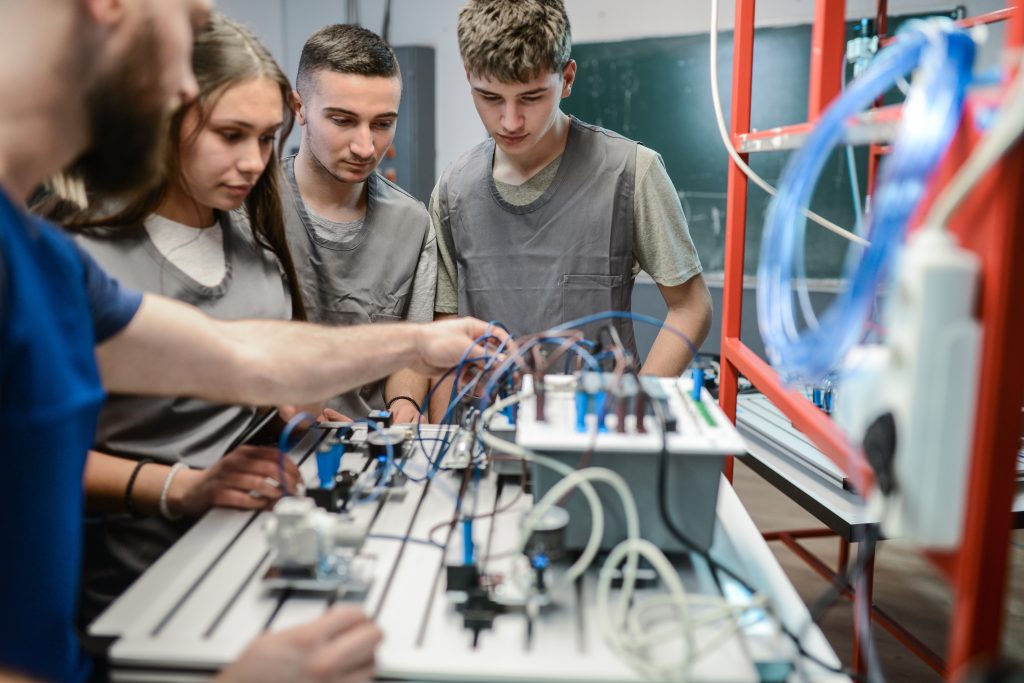
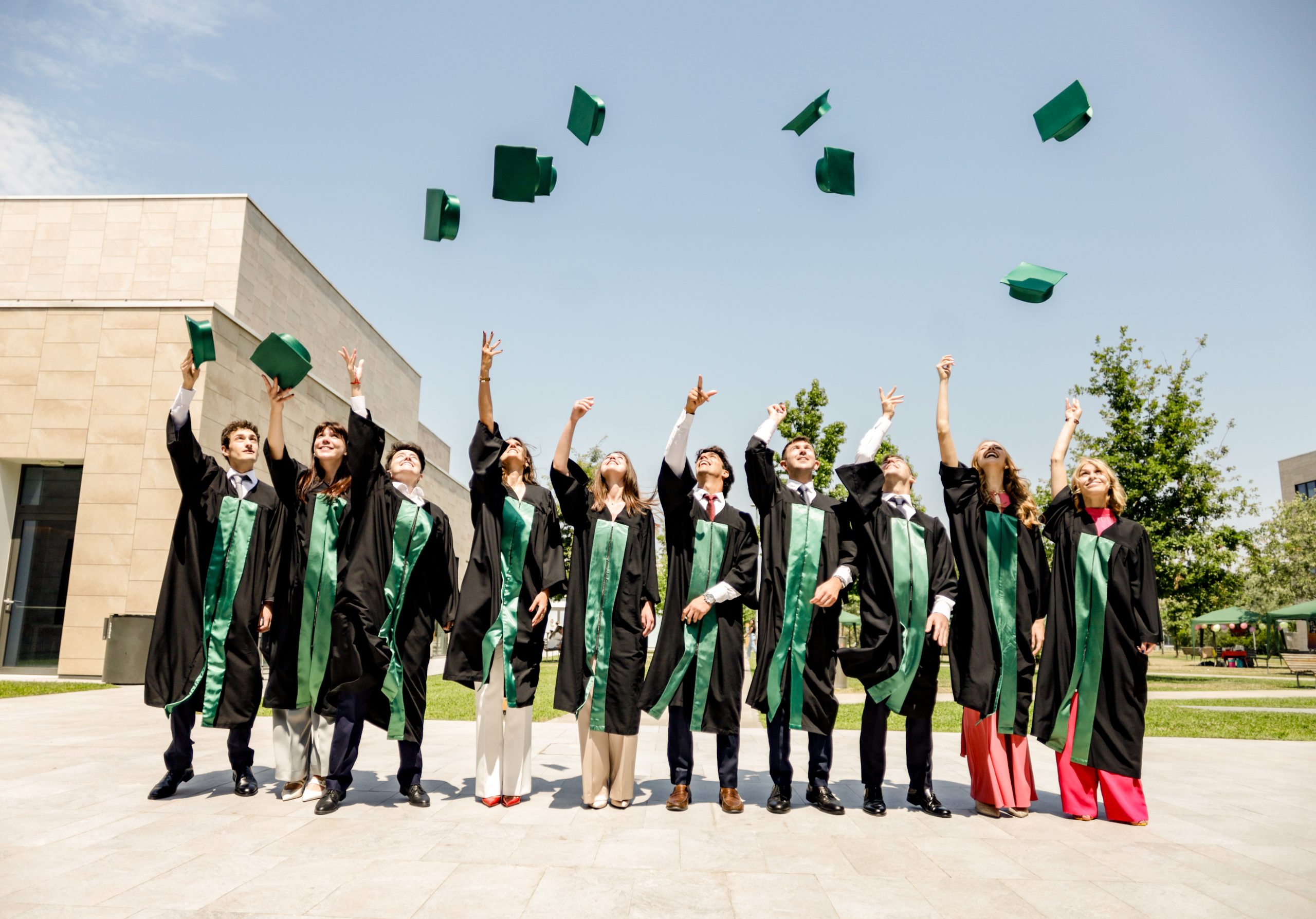
Medical engineers have a unique combination of different skills. They can bridge the gap between anatomy and sophisticated technological machinery, paying close attention to health and using all digital tools for diagnosis, therapy and health prevention. In short, they understand the extraordinary, complex and fragile creation that is the human body in depth and can use the possibilities offered by artificial intelligence to their advantage. Last week, the first 37 students graduated from the interdisciplinary Medtec School course, founded six years ago in collaboration with Humanitas University and the Polytechnic University (Corriere della Sera, 3 July). The city thus confirms one of its defining characteristics: to be at the forefront of high-level training and an international point of reference for Life Sciences. It is a cultural centre for experimentation, cross-fertilisation and the synthesis of different types of knowledge along the new high-tech frontiers — a polytechnic metropolis.
Donatella Sciuto, rector of the Polytechnic, said: ‘The convergence between Medicine and Engineering is a driver of economic and social development on a global scale, and it originated in Italy. And we hope that new graduates will choose to specialise here and work in hospitals and companies in Italy.’ And Luigi Maria Terracciano, rector of Humanitas University: ‘Our goal is to train professionals who can manage technological evolution in the medical field while maintaining a human perspective and a relationship with patients. This is a university experience offering significant opportunities in both the hospital sector and advanced research.’
Today, the Medtec School has 389 students, 58% of whom are female. The school has a strong international appeal, with 17% of students coming from abroad, particularly from France, Greece and Turkey. This year there will be 42 graduates in total. The courses are naturally taught in English and take place at the Polytechnic and Humanitas University in alternating semesters. They also benefit from the extensive network of relationships that the two universities have with professors and researchers from leading universities and research centres around the world. This is proof of the advantages of a critical, dialectical scientific culture that is open to innovation and sensitive to stimuli for change.
In history and in the controversial contemporary age, this is precisely a fundamental characteristic of Milan, now the main Italian university city with over 220,000 students at a dozen or so universities (which are consistently ranked among the most prestigious internationally) and higher education institutions specialising in design and fashion. Those who welcome others (however demanding, severe or productive) know how to stimulate growth, balancing competitiveness and social inclusion, citizenship and enterprise, the market and welfare. Even if these attitudes are experiencing a period of crisis today due to underlying trends such as many superficial city users and a growing number of people experiencing housing and living cost difficulties, we still hear frequent criticisms and self-criticisms regarding the transformation of ‘Milaneseness’ (Milan is the Italian city most inclined to discuss itself). Nevertheless, it is precisely here that cultures, economic and social phenomena and processes that anticipate and structure ways of being, working and producing continue to be born and mature, thereby influencing other areas of Greater Milan, Italy and the most dynamic and productive part of Europe. Milan is an open metropolis where relationships and cross-pollination of ideas are the norm.
Moreover, it was in Milan that the foundations of the ‘polytechnic culture’ were laid, becoming widespread among its companies and cultural and educational centres. This culture had solid foundations in the nineteenth century with figures such as Carlo Cattaneo, and underwent frequent transformations in the fertile years of the early twentieth century, such as the 1906 Universal Exhibition. Then, during the economic boom and dynamic corporate magazines of Pirelli, Olivetti, Eni and Finmeccanica, it was a testament to a fruitful ‘machine civilisation’. Finally, it was evident in the restless contemporary transition of the century and millennium (‘We are astonished’, as the caustic wit Enzo Sellerio would have ironically commented).
Here, in the rooms of Assolombarda, characterised by Gio Ponti’s architecture, emphasis is placed on the need for greater and better STEM (Science, Technology, Engineering and Mathematics) education, to strengthen and relaunch the international competitiveness of businesses. However, an essential addition is also emphasised: the ‘A’ of arts, or humanistic knowledge and the culture of beauty. This idea was developed and publicised during Gianfelice Rocca’s presidency of Assolombarda (2013–2017) and is now being adopted in various national and European economic circles. Rocca, in fact, is president of Humanitas. Doctor-engineers are proof of this. Just like the engineer-philosophers that the Polytechnic of Milan and Turin have been promoting for years.
This dimension of ‘polytechnic culture’, also known as ‘industrial humanism’, is expressed today as ‘digital humanism’ (a topic we discussed in last week’s blog). It is also useful for reflecting on the soft power of ‘Made in Italy’. Téchne, or know-how and a taste for beauty, is also understood as a sense of measure, balance and form that expresses quality of function. This was discussed recently at the UniCredit Territories Forum for Lombardy. Design culture permeates product culture; the objects exhibited at the ADI Design Museum and awarded the ‘Compasso d’Oro’ over the years are clear evidence of this. There is quality production in sectors such as mechanics, mechatronics, aerospace, shipbuilding, rubber and plastics, robotics, automotive, chemicals, pharmaceuticals (Life Sciences, specifically), and the traditional sectors of furniture, clothing, and agri-food.
Innovation, cutting-edge technologies and beauty. This is an inimitable soft power that could be utilised more effectively in international competition thanks to a new and improved national and European industrial policy. This soft power should be valued not only for its productivity, but also for its ability to attract people seeking a better quality of life and work.
The Medtec School, where our discussion began, is a good example of this. Cross-fertilisation to be valued.