
Italy is having a crisis of confidence, caught between electoral apathy, tax inequities and poor levels of education and culture


Let us take a closer look at Italian society during this controversial period of uncertainty and widespread lack of confidence, amid growing fears of crisis, war, and severe economic and social unrest. We can do this by looking at some illustrative data: the number of voters versus non-voters; taxpayers versus tax evaders (often guilty and irresponsible); those with secure job prospects versus those who leave, ‘vote with their feet’ and seek better living conditions and professions elsewhere (almost 200,000 Italians emigrated in 2024, 20% more than the previous year, and many of them had a degree).
‘Il Foglio’ (3 October) runs the headline ‘Disaffection for politics’ alongside a full-page article by Sabino Cassese, one of our foremost scholars of political institutions and movements, who reasons that the behaviour of the electoral body manifests ‘distrust and disinterest’. According to Cassese, ‘in Italy, it is not only voter turnout that is declining, but also “invisible participation”, which means information and discussion’. This refers to the participation of a public opinion capable of critical discourse and thus of well-informed judgement in political and social processes, as set out by Jürgen Habermas in his theory of consensus building in liberal democracy.
Recent data on voter turnout for the regional elections in Marche (50.01%) last week and in Calabria yesterday (43%) confirm the long-standing trend of an average voter turnout of just over 50%. This percentage has been commonplace in other Western democracies for some time, but it nevertheless indicates a significant weakness in the relationship between politics and the public, who increasingly feel like mere ‘residents’, rather than ‘citizens’ — responsible participants in a cohesive and aware community.
Where does the mistrust of politics and disenchantment with the idea that political forces, whether in government or opposition, can improve quality of life and address major issues such as employment, income, security, health and education — in short, the prospect of a better future — come from?
What would be very useful is a ‘forum’ of critical and self-critical reflection, able to suggest measures to encourage abstainers to vote. The hope is that someone will begin a serious and sincere debate, and, above all, be willing to listen to citizens.
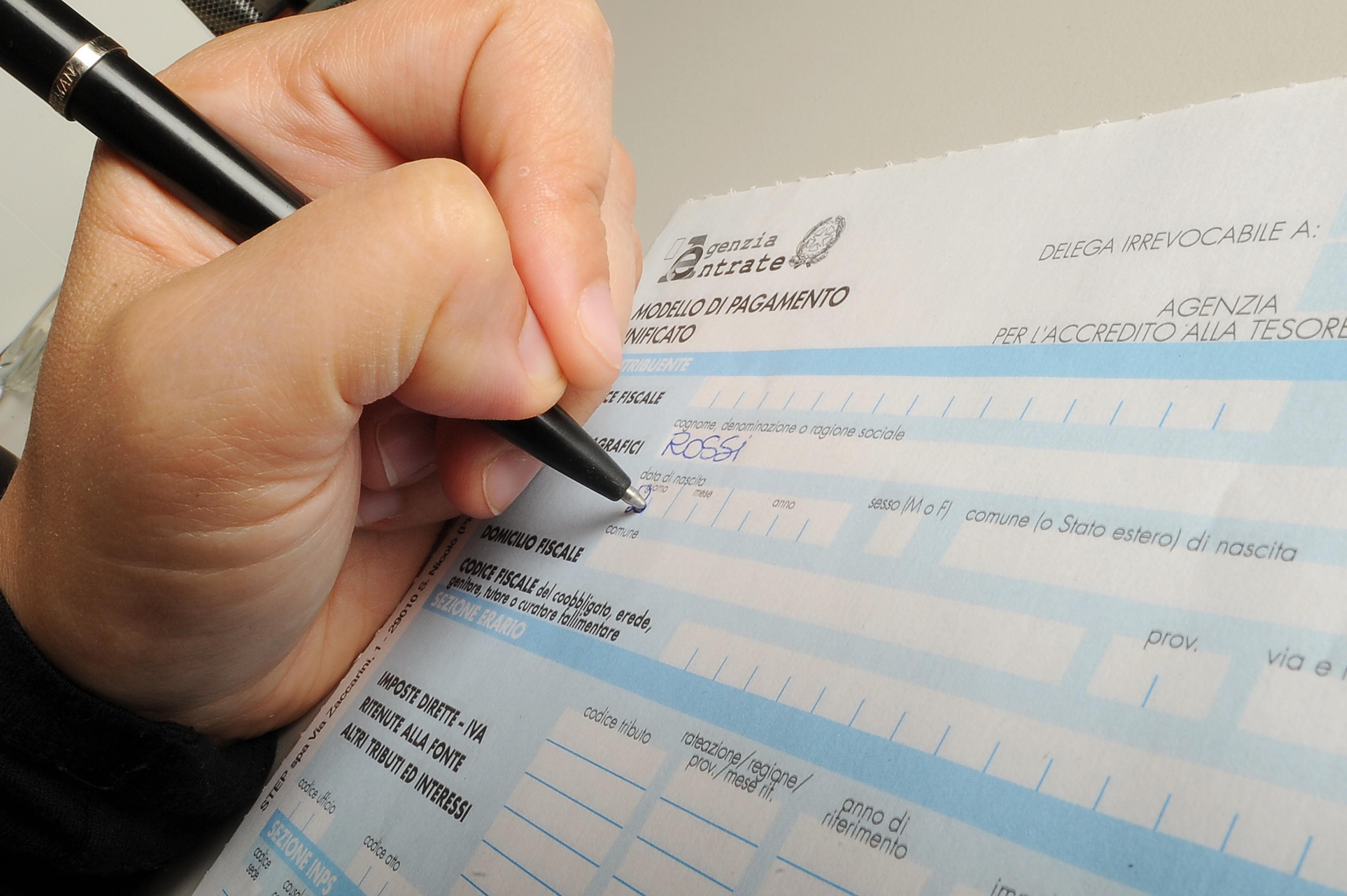
There is a second set of data to be considered, concerning taxation. 43% of Italians do not pay IRPEF (personal income tax) because they have no income or do not declare it, and 12% pay just €26 per year. The result is that the tax burden falls on 45% of Italians. A closer look at the numbers reveals further imbalance: 76.8% of the entire IRPEF is paid by around 11.6 million taxpayers (out of the 42 million who file tax returns and the 33.5 million actual taxpayers, i.e. who pay at least €1).
The data (relating to the 2024 tax return and so to 2023) is provided by Itinerari Previdenziali, with the support of Cida (the association of company directors). These figures confirm a situation that has clear for years and has become increasingly intolerable over time: the entire burden of income taxes, with which the schooling, security, health and public services of all citizens are funded, falls on the middle and upper-middle classes, employees and that minority of productive and professional self-employed individuals who comply with tax laws. ‘Pensioners, employees and large companies — those are the people who pay the taxes,’ summarises La Stampa on 6 October.
In its complexity of income and expenditure (taxes and public spending), taxation is a fundamental part of the citizenship pact and the link between people and the state. The persistence, and indeed worsening, of imbalances between taxpayers and non-taxpayers, and between law-abiding citizens and tax evaders, undermines that pact. It erodes trust and undermines the foundations of civil coexistence and democracy. This is another essential topic for reflection, especially in a season of ‘democracy’s discontent’ (the title of Michael J. Sandel‘s excellent book, a professor at Harvard, which we discussed in last week’s blog), and in light of the need to reinvigorate democratic politics, which is under attack from authoritarian and populist tendencies.
And so the third set of data concerns cultural depth. One in three Italians is a ‘functional illiterate’, unable to understand a written text of even minimal complexity or cope with simple mathematical operations. We have been at the bottom of the rankings of the most industrialised countries for a decade. We also perform poorly in other rankings related to investment in education and scientific research, the number of university graduates, and reading habits.
Ignorance, a lack of understanding of general and professional issues, and a distance from cultural factors are causes of other divisions in community spirit and self-perception as citizens.
In short, there is a link between the collapse of political participation, unease over tax inequities, functional illiteracy, and low cultural quality. Everything contributes to the decline of civilisation. And thus, to the crisis in our ability to address the major issues of public life consciously, starting with the creation of opportunities for more balanced economic and social development, and real improvements in working and living conditions.
A possible solution? Invest massively in knowledge, using public and private resources. Focus on schools. On disseminating and reading books, and on active and critical participation in cultural activities. Focus on the powerful concept of the connection between responsible freedom and our understanding of the phenomena that influence our daily lives and the shaping of our future.
‘Più libri più liberi’ (‘More books, more freedom’) was the slogan of a successful reading initiative and book fair for small and medium-sized publishers a few years ago. Books are, of course, a metaphor for knowledge — critical knowledge that can lead to an improved human condition and a better way of thinking about the future.
Photo Getty Images