Access the Online Archive
Search the Historical Archive of the Pirelli Foundation for sources and materials. Select the type of support you are interested in and write the keywords of your research.
    Select one of the following categories
  • Documents
  • Photographs
  • Drawings and posters
  • Audio-visuals
  • Publications and magazines
  • All
Help with your research
To request to view the materials in the Historical Archive and in the libraries of the Pirelli Foundation for study and research purposes and/or to find out how to request the use of materials for loans and exhibitions, please fill in the form below. You will receive an email confirming receipt of the request and you will be contacted.
Pirelli Foundation Educational Courses

Select the education level of the school
Back
Primary schools
Pirelli Foundation Educational Courses
Please fill in your details and the staff of Pirelli Foundation Educational will contact you to arrange the dates of the course.

I declare I have read  the privacy policy, and authorise the Pirelli Foundation to process my personal data in order to send communications, also by email, about initiatives/conferences organised by the Pirelli Foundation.

Back
Lower secondary school
Pirelli Foundation Educational Courses
Please fill in your details and the staff of Pirelli Foundation Educational will contact you to arrange the dates of the course.
Back
Upper secondary school
Pirelli Foundation Educational Courses
Please fill in your details and the staff of Pirelli Foundation Educational will contact you to arrange the dates of the course.
Back
University
Pirelli Foundation Educational Courses

Do you want to organize a training programme with your students? For information and reservations, write to universita@fondazionepirelli.org

Visit the Foundation
For information about the Foundation’s activities, guided tours and accessibility,
please call +39 0264423971 or fill in the form below, providing details of your request in the notes field.

Europe has a power that it could use more effectively against the US and China: the strength of freedom, humanism and science

‘In the end three things remained/The certainty that we are beginning…/The certainty that it is necessary to keep on going…/The certainty that we may be interrupted/before we finish…/Let us transform the interruption into a new path/the fall into a dance step…/fear into a ladder…/dream into a bridge…/searching into meeting!’

Eighteen essential verses.  They are often attributed to Fernando Pessoa by mistake.  They were actually written by Fernando Sabino, a Brazilian poet with a melancholic streak, perhaps the source of the Pessoa misunderstanding, who had a solid reputation in the 20th-century literary world of Rio de Janeiro.

It is useful to reread these verses so as not to get lost among today’s pushy and contradictory statements, arrogant threats, false news and real acts of violence. Instead, we can reevaluate the importance of intellectual work, of doubt and research, of ‘making a fall into a dance step’, ‘of interruption into a new path’, and, above all, follow the idea that ‘the course of things is sinuous’ (Maurice Merleau-Ponty), and therefore that the story may suddenly change direction, reject something, or reveal a multitude of different ends capable of restoring a different, and often better, order to things.

As elderly Europeans, we grew up according to the values of the primacy of ideas (of law, rules, constitutions, reason, philosophy and literature) and we are now profoundly uncomfortable in the face of the arrogant assertion of the primacy of force. Many of us, convinced of the merits of democracy, have adopted the ‘primacy of the impersonal and abstract norm’ (not subject to the whims of the ruler) as theorised by the liberal jurist Hans Kelsen and detested by the Nazis. At the same time, we rejected the principle that ‘in a state of exception, the sovereign is the one who decides’, as theorised by Carl Schmitt and favoured by Nazi authoritarian thought.

We now risk not living our remaining years ‘with an open soul, a heart at peace… lovingly embracing the ones still left to live’ as the old Pablo Neruda wisely wished for himself and for us (which should be reread every day, like a joyful and wise prayer). Instead, we risk suffering them with the anguish of living in a violent, abusive world dominated by macho bullying that creates rules and behaviours that benefit the strongest, and by techno-feudal lords who are beyond all control, manipulating algorithms with no regard for the consequences for the sustainability of life for millions of people (read the prophetic novels What We Can Know by Ian McEwan and The World Without Winter by Bruno Arpaia to understand this better).

Is Europe therefore lost, marginalised and in decline, as the powerful in Washington, Beijing and Big Tech hurry to explain to us almost daily?

Probably not. Provided that this vilified and intimidated Europe does not give up playing to its strengths in the geopolitical and geoeconomic confrontation, including those values derided as irrelevant because they are not accompanied by military force and high technology (this is what we have been trying to write stubbornly in our recent blogs: ‘to make fear into a ladder, the dream into a bridge’, to falsely paraphrase Pessoa, actually Sabino).

Let’s dare to play with a different deck of cards, one not illustrated with tanks, soldiers and cannons, and let’s try to measure Europe’s strength in a different way, for example by putting our culture on the table.

Take Raphael’s great painting The School of Athens, for example, which is housed in the Vatican Museums (the preparatory cartoon is at the Pinacoteca Ambrosiana in Milan and is well worth a closer look):  there are great philosophers guided by Plato and Aristotle, as well as mathematicians, astronomers and artists (including Raphael himself, looking thoughtful in a corner). There is even a little boy whose hair is ruffled by an impetuous wind, probably the strong breath of innovation that animates that otherwise stately and composed painting.

The ‘School of Athens’ embodies the strength of Europe:  knowledge and ideas in motion; the ‘polytechnic culture’ of philosophers and mathematicians (that culture which is now indispensable for designing, giving meaning to, controlling and guiding artificial intelligence); the beauty of art, as well as the balance of science.

This is the strength of Europe that other parts of the world lack, or at least do not have to the same extent:  the critical depth of knowledge that translates into science, research, technology, business, productivity, work and civil coexistence.  This precious social and civil capital is much more solid and lasting than pure military technology. This social capital can be weakened by the bureaucratic rigidity and ideological schemes of the EU, but certainly not blocked.  It is a capital that must be invested in with political wisdom and robust pride in European ‘sweet patriotism’.

So, here is the freedom affirmed against all compulsion by Baruch Spinoza, alongside the spiritual thoughts of Pascal and Montaigne; the stubborn scientific spirit of Galileo and Newton; the ingenuity of Leonardo da Vincis Atlantic Code, which depicts technical objects that do not yet exist; and the architectural principles of Leon Battista Alberti. Not to mention Shakespeare’s profound understanding of the dynamics of power and hubris (which should be studied in all good management schools and enjoyed at the theatre), Bach‘s sense of the divine, Voltaire‘s critical intelligence, and Kant‘s philosophical and ethical perspective. Then there is the economic wisdom of Antonio Genovesi, Adam Smith and John M. Keynes; the scientific and moral acuity of Hans Bohr and Marie Curie; and the lucid critical and narrative skills of Alessandro Manzoni and Thomas Mann. More recently, we can see the meaning of alchemical creation as an artistic antidote to the historical and current violence of the world in the work of Anselm Kiefer, the wise Primo Levi of ‘If This Is a Man’, and the extraordinary Hannah Arendt, who still warns us against the alleged ‘banality of evil’. This ‘banality’ can still be seen in recent images of children being used in Minneapolis to ‘find out’ whether their parents are illegal immigrants (But what are men and women, animals to be ‘flushed out’?) To understand, read the articles and editorial in the Quotidiano Nazionale/Il Giorno, La Nazione, Il Resto del Carlino of 28 January). And we can endlessly go on, page by page, intellectual by intellectual (a nice word, ‘intellectual’, as Tullio De Mauro taught us) until we have finished browsing the monumental Treccani and Britannica encyclopaedias, with all their updated volumes.

Our values of culture, democracy, freedom and tolerance are the same as those of the democratic and liberal West. These values are currently being challenged in the US, with protests taking place in cities such as Minneapolis and New York, as people fear that they will be compromised, limited or abolished.

We have the knowledge and the ‘civilisation of conversation’ from which the Enlightenment was born, the cornerstone of contemporary civilisation, and a capacity for critical thinking that marked the entire twentieth century when applied to science. We also have the pragmatic intelligence to define the mechanisms and values of liberal democracy, which brings together freedom, entrepreneurship, the market and welfare like nowhere else in the world.

Are books worth more than an army?  Do ideas beat the missiles and machine guns of mercenary or fanatical militias?  The challenge is on, at least in the medium term. Iran is offering us exemplary evidence of the disruptive power of ideas against the weapons of the Pasdarans right now.  ‘Reading Lolita in Tehran’ has been a powerful symbol of freedom and civilisation for decades.

Meanwhile, the Canadian leader, Mark Carney, has turned to a seminal European text to bolster his argument against Donald Trump’s claims on Greenland.  This text is ‘The Power of the Powerless’, in which Vaclav Havel opposed Soviet communist authoritarianism before he became president of the Czech Republic and the course of history changed.

‘The power of the powerless’ to finally recognise that ideas have a great power that must be asserted, even in the face of weapons and the most advanced high tech devices (which, however, do not work without ideas). For the record, Carney has recently prevailed over Trump, who has temporarily given up on buying or using military force to take over Greenland.

Of course, political realism is needed to avoid ending up in the pages of Don Miguel de Cervantes, but without abandoning our values and principles. This is far removed from the cynicism of Giulio Andreotti‘s ‘It’s better to make a living than to kick the bucket’, and does not reflect the values supported by projects such as Draghi and Letta’s plans for Europe. It is also far removed from the arrogance fuelled by greed and vast, disproportionate wealth. There is a difference between the ‘credible deterrence’ that Europe must establish, involving an ‘industry of war’ with strong ‘technological leadership’ that renders war unfeasible, and the aggressive plans of those who seek to return the world to a time of two or three dominant empires (concepts explored in ‘The Price of Conflict’ by Paolo Balduzzi and Andrea Bignami, published by Paesi Edizioni).

After much deliberation, it is only natural to agree wholeheartedly with Marina Brambilla, the Rector of the State University of Milan, who, a few days ago, gave a speech at the inauguration of the Academic Year in which she stated that ‘academic freedom is a non-negotiable’ (Il Giorno, 20 January), particularly in a context in which ‘anti-scientism is rife’.

Academic freedom is defined as ‘freedom of research and teaching, the autonomy of science and a stimulus to research, the positive effects of which then extend to businesses, work, civil life and society’. The autonomy of scientific research is one of the founding values of the liberal order. Reiterating this in these controversial times is essential.

Marina Brambilla therefore did well to remind us that research in Italy is provided for and protected by the Constitution, and to call for much greater resources to be directed towards research than have been made available so far.

‘Non-negotiable academic freedom’ is indispensable today if Europe is to compete with the US, where tens of thousands of students, researchers and professors are in serious difficulty due to massive cuts in federal funding to universities for disobeying the White House’s political directives (we discussed this last week on the blog).

Of course, Europe can never reasonably act as a global alternative to the US.  However, reaffirming its strength, solidity, scientific creativity and culture can be a great European objective. This would also strengthen some far-reaching EU values and interests, such as autonomy, strategic and energy security, industrial policy and an authoritative voice that goes beyond the power of the US and China.

In this sense, good news has come from Italian universities in recent days.  For example, the Polytechnic and Bocconi University of Milan recently signed an agreement to establish ‘the gigafactory of start-ups’ (Il Sole24Ore, 21 January).  The Polihub and B4i hubs of the two universities are to be transferred to the TEF Foundation (chaired by Ferruccio Resta), with the aim of creating a thousand innovative companies per year. An important step forward for research, innovation and the most dynamic companies.

Europe, in search of strength and identity, is grateful.

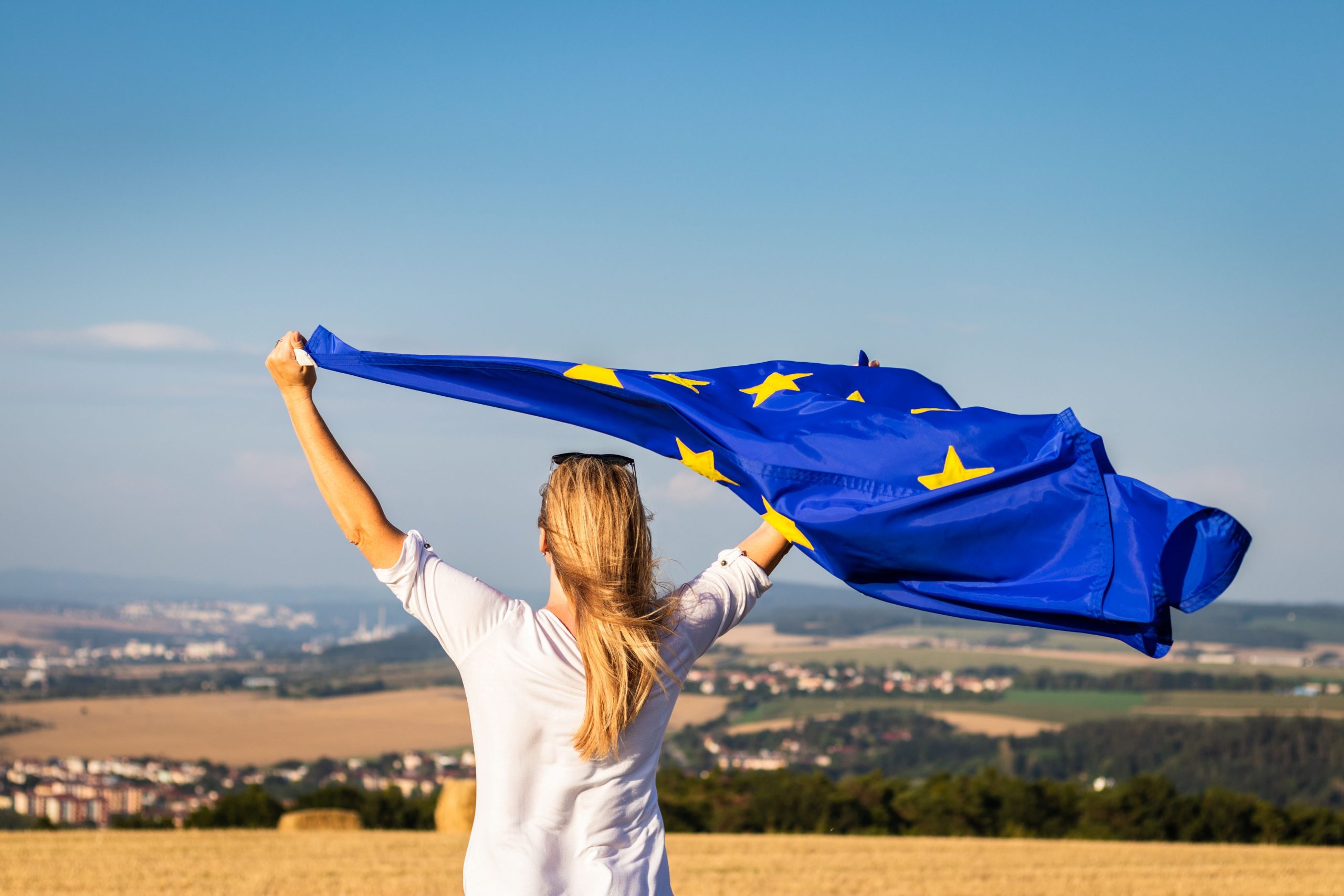
(photo Getty Images)

‘In the end three things remained/The certainty that we are beginning…/The certainty that it is necessary to keep on going…/The certainty that we may be interrupted/before we finish…/Let us transform the interruption into a new path/the fall into a dance step…/fear into a ladder…/dream into a bridge…/searching into meeting!’

Eighteen essential verses.  They are often attributed to Fernando Pessoa by mistake.  They were actually written by Fernando Sabino, a Brazilian poet with a melancholic streak, perhaps the source of the Pessoa misunderstanding, who had a solid reputation in the 20th-century literary world of Rio de Janeiro.

It is useful to reread these verses so as not to get lost among today’s pushy and contradictory statements, arrogant threats, false news and real acts of violence. Instead, we can reevaluate the importance of intellectual work, of doubt and research, of ‘making a fall into a dance step’, ‘of interruption into a new path’, and, above all, follow the idea that ‘the course of things is sinuous’ (Maurice Merleau-Ponty), and therefore that the story may suddenly change direction, reject something, or reveal a multitude of different ends capable of restoring a different, and often better, order to things.

As elderly Europeans, we grew up according to the values of the primacy of ideas (of law, rules, constitutions, reason, philosophy and literature) and we are now profoundly uncomfortable in the face of the arrogant assertion of the primacy of force. Many of us, convinced of the merits of democracy, have adopted the ‘primacy of the impersonal and abstract norm’ (not subject to the whims of the ruler) as theorised by the liberal jurist Hans Kelsen and detested by the Nazis. At the same time, we rejected the principle that ‘in a state of exception, the sovereign is the one who decides’, as theorised by Carl Schmitt and favoured by Nazi authoritarian thought.

We now risk not living our remaining years ‘with an open soul, a heart at peace… lovingly embracing the ones still left to live’ as the old Pablo Neruda wisely wished for himself and for us (which should be reread every day, like a joyful and wise prayer). Instead, we risk suffering them with the anguish of living in a violent, abusive world dominated by macho bullying that creates rules and behaviours that benefit the strongest, and by techno-feudal lords who are beyond all control, manipulating algorithms with no regard for the consequences for the sustainability of life for millions of people (read the prophetic novels What We Can Know by Ian McEwan and The World Without Winter by Bruno Arpaia to understand this better).

Is Europe therefore lost, marginalised and in decline, as the powerful in Washington, Beijing and Big Tech hurry to explain to us almost daily?

Probably not. Provided that this vilified and intimidated Europe does not give up playing to its strengths in the geopolitical and geoeconomic confrontation, including those values derided as irrelevant because they are not accompanied by military force and high technology (this is what we have been trying to write stubbornly in our recent blogs: ‘to make fear into a ladder, the dream into a bridge’, to falsely paraphrase Pessoa, actually Sabino).

Let’s dare to play with a different deck of cards, one not illustrated with tanks, soldiers and cannons, and let’s try to measure Europe’s strength in a different way, for example by putting our culture on the table.

Take Raphael’s great painting The School of Athens, for example, which is housed in the Vatican Museums (the preparatory cartoon is at the Pinacoteca Ambrosiana in Milan and is well worth a closer look):  there are great philosophers guided by Plato and Aristotle, as well as mathematicians, astronomers and artists (including Raphael himself, looking thoughtful in a corner). There is even a little boy whose hair is ruffled by an impetuous wind, probably the strong breath of innovation that animates that otherwise stately and composed painting.

The ‘School of Athens’ embodies the strength of Europe:  knowledge and ideas in motion; the ‘polytechnic culture’ of philosophers and mathematicians (that culture which is now indispensable for designing, giving meaning to, controlling and guiding artificial intelligence); the beauty of art, as well as the balance of science.

This is the strength of Europe that other parts of the world lack, or at least do not have to the same extent:  the critical depth of knowledge that translates into science, research, technology, business, productivity, work and civil coexistence.  This precious social and civil capital is much more solid and lasting than pure military technology. This social capital can be weakened by the bureaucratic rigidity and ideological schemes of the EU, but certainly not blocked.  It is a capital that must be invested in with political wisdom and robust pride in European ‘sweet patriotism’.

So, here is the freedom affirmed against all compulsion by Baruch Spinoza, alongside the spiritual thoughts of Pascal and Montaigne; the stubborn scientific spirit of Galileo and Newton; the ingenuity of Leonardo da Vincis Atlantic Code, which depicts technical objects that do not yet exist; and the architectural principles of Leon Battista Alberti. Not to mention Shakespeare’s profound understanding of the dynamics of power and hubris (which should be studied in all good management schools and enjoyed at the theatre), Bach‘s sense of the divine, Voltaire‘s critical intelligence, and Kant‘s philosophical and ethical perspective. Then there is the economic wisdom of Antonio Genovesi, Adam Smith and John M. Keynes; the scientific and moral acuity of Hans Bohr and Marie Curie; and the lucid critical and narrative skills of Alessandro Manzoni and Thomas Mann. More recently, we can see the meaning of alchemical creation as an artistic antidote to the historical and current violence of the world in the work of Anselm Kiefer, the wise Primo Levi of ‘If This Is a Man’, and the extraordinary Hannah Arendt, who still warns us against the alleged ‘banality of evil’. This ‘banality’ can still be seen in recent images of children being used in Minneapolis to ‘find out’ whether their parents are illegal immigrants (But what are men and women, animals to be ‘flushed out’?) To understand, read the articles and editorial in the Quotidiano Nazionale/Il Giorno, La Nazione, Il Resto del Carlino of 28 January). And we can endlessly go on, page by page, intellectual by intellectual (a nice word, ‘intellectual’, as Tullio De Mauro taught us) until we have finished browsing the monumental Treccani and Britannica encyclopaedias, with all their updated volumes.

Our values of culture, democracy, freedom and tolerance are the same as those of the democratic and liberal West. These values are currently being challenged in the US, with protests taking place in cities such as Minneapolis and New York, as people fear that they will be compromised, limited or abolished.

We have the knowledge and the ‘civilisation of conversation’ from which the Enlightenment was born, the cornerstone of contemporary civilisation, and a capacity for critical thinking that marked the entire twentieth century when applied to science. We also have the pragmatic intelligence to define the mechanisms and values of liberal democracy, which brings together freedom, entrepreneurship, the market and welfare like nowhere else in the world.

Are books worth more than an army?  Do ideas beat the missiles and machine guns of mercenary or fanatical militias?  The challenge is on, at least in the medium term. Iran is offering us exemplary evidence of the disruptive power of ideas against the weapons of the Pasdarans right now.  ‘Reading Lolita in Tehran’ has been a powerful symbol of freedom and civilisation for decades.

Meanwhile, the Canadian leader, Mark Carney, has turned to a seminal European text to bolster his argument against Donald Trump’s claims on Greenland.  This text is ‘The Power of the Powerless’, in which Vaclav Havel opposed Soviet communist authoritarianism before he became president of the Czech Republic and the course of history changed.

‘The power of the powerless’ to finally recognise that ideas have a great power that must be asserted, even in the face of weapons and the most advanced high tech devices (which, however, do not work without ideas). For the record, Carney has recently prevailed over Trump, who has temporarily given up on buying or using military force to take over Greenland.

Of course, political realism is needed to avoid ending up in the pages of Don Miguel de Cervantes, but without abandoning our values and principles. This is far removed from the cynicism of Giulio Andreotti‘s ‘It’s better to make a living than to kick the bucket’, and does not reflect the values supported by projects such as Draghi and Letta’s plans for Europe. It is also far removed from the arrogance fuelled by greed and vast, disproportionate wealth. There is a difference between the ‘credible deterrence’ that Europe must establish, involving an ‘industry of war’ with strong ‘technological leadership’ that renders war unfeasible, and the aggressive plans of those who seek to return the world to a time of two or three dominant empires (concepts explored in ‘The Price of Conflict’ by Paolo Balduzzi and Andrea Bignami, published by Paesi Edizioni).

After much deliberation, it is only natural to agree wholeheartedly with Marina Brambilla, the Rector of the State University of Milan, who, a few days ago, gave a speech at the inauguration of the Academic Year in which she stated that ‘academic freedom is a non-negotiable’ (Il Giorno, 20 January), particularly in a context in which ‘anti-scientism is rife’.

Academic freedom is defined as ‘freedom of research and teaching, the autonomy of science and a stimulus to research, the positive effects of which then extend to businesses, work, civil life and society’. The autonomy of scientific research is one of the founding values of the liberal order. Reiterating this in these controversial times is essential.

Marina Brambilla therefore did well to remind us that research in Italy is provided for and protected by the Constitution, and to call for much greater resources to be directed towards research than have been made available so far.

‘Non-negotiable academic freedom’ is indispensable today if Europe is to compete with the US, where tens of thousands of students, researchers and professors are in serious difficulty due to massive cuts in federal funding to universities for disobeying the White House’s political directives (we discussed this last week on the blog).

Of course, Europe can never reasonably act as a global alternative to the US.  However, reaffirming its strength, solidity, scientific creativity and culture can be a great European objective. This would also strengthen some far-reaching EU values and interests, such as autonomy, strategic and energy security, industrial policy and an authoritative voice that goes beyond the power of the US and China.

In this sense, good news has come from Italian universities in recent days.  For example, the Polytechnic and Bocconi University of Milan recently signed an agreement to establish ‘the gigafactory of start-ups’ (Il Sole24Ore, 21 January).  The Polihub and B4i hubs of the two universities are to be transferred to the TEF Foundation (chaired by Ferruccio Resta), with the aim of creating a thousand innovative companies per year. An important step forward for research, innovation and the most dynamic companies.

Europe, in search of strength and identity, is grateful.

(photo Getty Images)