Access the Online Archive
Search the Historical Archive of the Pirelli Foundation for sources and materials. Select the type of support you are interested in and write the keywords of your research.
    Select one of the following categories
  • Documents
  • Photographs
  • Drawings and posters
  • Audio-visuals
  • Publications and magazines
  • All
Help with your research
To request to view the materials in the Historical Archive and in the libraries of the Pirelli Foundation for study and research purposes and/or to find out how to request the use of materials for loans and exhibitions, please fill in the form below. You will receive an email confirming receipt of the request and you will be contacted.
Pirelli Foundation Educational Courses

Select the education level of the school
Back
Primary schools
Pirelli Foundation Educational Courses
Please fill in your details and the staff of Pirelli Foundation Educational will contact you to arrange the dates of the course.

I declare I have read  the privacy policy, and authorise the Pirelli Foundation to process my personal data in order to send communications, also by email, about initiatives/conferences organised by the Pirelli Foundation.

Back
Lower secondary school
Pirelli Foundation Educational Courses
Please fill in your details and the staff of Pirelli Foundation Educational will contact you to arrange the dates of the course.
Back
Upper secondary school
Pirelli Foundation Educational Courses
Please fill in your details and the staff of Pirelli Foundation Educational will contact you to arrange the dates of the course.
Back
University
Pirelli Foundation Educational Courses

Do you want to organize a training programme with your students? For information and reservations, write to universita@fondazionepirelli.org

Visit the Foundation
For information about the Foundation’s activities, guided tours and accessibility,
please call +39 0264423971 or fill in the form below, providing details of your request in the notes field.

Reactions in Europe: from the Mercosur and India agreements to Draghi’s proposal for ‘pragmatic federalism’

‘The old world is dying,  and the new world struggles to be born:  now is the time of monsters’. This quote by Antonio Gramsci, taken from the Prison Notebooks, is the epigraph to one of the most beautiful films of the late 1970s: Don Giovanni, directed by Joseph Losey and starring the magnificent tenor Ruggero Raimondi and soprano Kiri Te Kanawa, with excellent conducting by Loris Maazel. The epigraph is not only perfect for the film, but also for the more general political context to which it alludes, which is strikingly relevant today.

Gramsci’s ‘new world’ generated an October Revolution that nourished great hopes and ambitious dreams of redemption and social progress. However, it also fuelled the nightmare of the Soviet dictatorship in Moscow. It is worth revisiting the works of Vladimir Majakovsky, Osip Mandelstam and Gramsci himself for vivid accounts of this period.

On the other hand, Losey’s version shifts the timing and expectations with poetic flair,  taking centre stage in that extraordinary period from the beginning of the Age of Enlightenment, characterised by the ‘Civilisation of Conversation’, as recounted by Benedetta Craveri, to the French Revolution and the birth of the Europe of rights and freedoms that still shapes our political and civil conscience today.

The protagonist of Mozart’s opera, Don Giovanni, is a libertine rather than a libertarian or a liberal; he is a man who seeks pleasure without moral qualms.  But in the 18th century, liberalism, libertinism, libertarianism and a passion for new and unusual ideas coexisted in an extraordinary, and at times unbearable, combination. Look closely at the exhibition on Casanova at the Cini Foundation in Venice for proof of this.

The manner in which Don Giovanni opens the palace doors for a sumptuous feast is accompanied by a mighty chorus, repeated twice: ‘Long live liberty!’, which is as much about the passions of reason as it is about a lack of ethical and civic scruples. On the other hand,  Mozart is a devout Freemason and a liberal.  Don Juan, who is unscrupulous, will end up in hell. And the ‘New World’ evoked by the verses and music will indeed be new,  with freedoms, human rights, research and the precursors of democracy, our civilisation.

It is worth remembering that Gramscian motto reimagined in the Losey-Mozart style when considering the challenging times we are living through. The Europe of glittering wit in the salons of the Hôtel Particulier in the Marais, with debates between Voltaire, Diderot and their Neapolitan guests, such as Abbot Galliani and the economist Antonio Genovesi, no longer marks the time of new ideas.  The brilliant and cultured ‘conversations’, even in the palaces of power in Brussels and other European capitals, have given way to sloppy populist chatter.

So, adieu to Europe?  Far from it!  It is always time to sing the chorus, ‘Long live liberty!’.  Liberal Europe still has a place in today’s world, despite everything.  It has a culture,  a power and  a reason. As Antonio Scurati rightly notes in La Repubblica (4 February), ‘Against empires, Europe is alone with its freedom’, defining this solitude as an excellent opportunity to act as a ‘bridge between civilisations’, mindful of Peter Burke‘s cultural and civil lesson of the ‘explosion of knowledge’.

Here’s the point.  Following the recent barrage of insults against Europe from the US, China and Russia, as well as Big Tech, (the EU and Great Britain are skilfully moving forward, embracing rules, limits and critical reasoning.  Corriere della Sera, 6 February), for some time now, certain key figures in Brussels and some political circles in European countries have decided to take sensible, intelligent and prudent steps to avoid continuing to suffer aggression and insults.

Examples include the signing of the Mercosur Treaty for substantial mutual economic benefits  and the establishment of good trade relations with India, which immediately prompted Trump to pursue agreements with New Delhi, despite having denied doing so until yesterday.  Another small political victory was the clear ‘no’ from Mark Carney, the Canadian Prime Minister (a politician whom Trump and his administration have always viewed as an obstacle), to the US’s dual option  of either buying or invading Greenland.

Carney waved the concise yet profound book ‘The Power of the Powerless‘, a dialogue with Václav Havel, a former leading anti-communist intellectual and later wise president of the Czechoslovak Federation, under Trump’s nose. It is a wise argument about the power of good ideas against the arrogance of ideals-less force. Trump has taken a step back and the good reasons for defending the European space remain firmly in the hands of NATO.

Is this too insignificant to suggest that Europe is regaining its spirit?  No, because during the ceremony for his honorary degree at the University of Leuven, Mario Draghi revived the idea of a ‘European federation’ and said  that this is how Europe will become a power.  In fact, he said that ‘the global order is dead and the US is seeking dominance. Now we need pragmatism:  let’s move forward with partners willing to do so in areas where progress can be made’ (La Stampa, 3 February).  ‘Pragmatic federalism’, reads the headline in Il Sole 24 Ore on 3 February,  while Lucrezia Reichlin sagely comments in Corriere della Sera on 6 February that ‘ Italy can now count on a change of pace in Berlin’.

For some time now, Draghi has emphasised the need for Europe to develop its own policies on security, technology, scientific research and innovation, industrial policy and training. These are all related issues for a Europe that wants to continue defending its industrial and production advantages, as well as its political, social and civil values. He is now raising his voice  and preparing to relaunch his competitiveness programme in the coming days, ahead of the European Council. He will be working with Enrico Letta on the common market,  and it is Letta who has made an important announcement:  ‘The EU must break the mould with quick decisions and cooperation’ (Il Sole 24 Ore, 6 February).

The era of cautious small steps, of small states putting the brakes on and of strong micro-nationalisms with paralysing veto rights, or even outright complicity with Europe’s enemies, such as the harmony between Orbán and Putin, seems to be over.  Otherwise, Europe itself will be reduced to a colony or a consumer market to be exploited and humiliated at will.

Patrizio Bianchi comments in Il Sole 24 Ore on 5 February:  ‘Europe must move from being little more than a confederal union to becoming a true federation that, while leaving room for national and local governments, consistently makes unitary choices in terms of foreign policy, defence and the economy, breaking free from the double trap of internal unanimism and submission to the US’.

Can it be done?  With difficulty,  but yes. Even the euro was the result of a small group of around a dozen countries coming together, with Italy rightly striving to be at the forefront,  and the others following.  The single currency has been one of the greatest policy successes in contemporary history, not just in terms of monetary policy.

Naturally, the relationship with the US remains crucial,  as does the dialogue with China  and the maintenance of good multilateral relations with Latin America, the Gulf countries and Africa. And why not Russia too, once it has extricated itself from the Ukrainian crisis. The objective is clear:  a foreign, security and economic/trade policy for Europe,  starting with those who are in it.

The Draghi-Letta lesson is clear, as is the European federalism espoused in the Ventotene Manifesto, written by Eugenio Colorni, Altiero Spinelli and Ernesto Rossi, and supported by ‘the mothers of Europe’, Ursula Hirschmann and Ada Rossi, as well as Simone Weil and Hannah Arendt.

It is a matter of pragmatic federalism and ambitious political intelligence.  Certainly, one cannot be caught between the old and the new worlds,  for amidst the shadows, political miseries and fears, the sleep of reason breeds monsters.

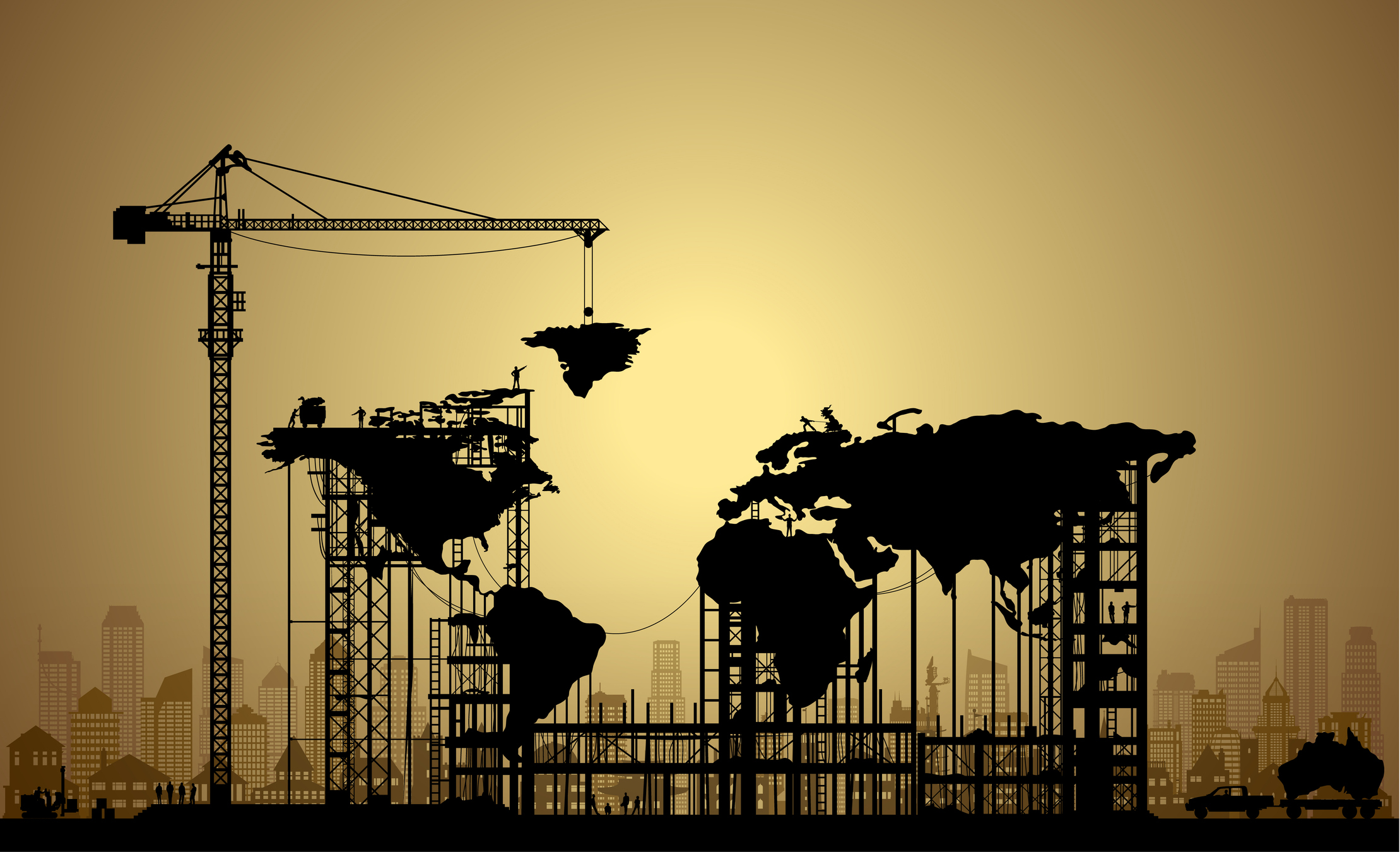
(photo Getty Images)

‘The old world is dying,  and the new world struggles to be born:  now is the time of monsters’. This quote by Antonio Gramsci, taken from the Prison Notebooks, is the epigraph to one of the most beautiful films of the late 1970s: Don Giovanni, directed by Joseph Losey and starring the magnificent tenor Ruggero Raimondi and soprano Kiri Te Kanawa, with excellent conducting by Loris Maazel. The epigraph is not only perfect for the film, but also for the more general political context to which it alludes, which is strikingly relevant today.

Gramsci’s ‘new world’ generated an October Revolution that nourished great hopes and ambitious dreams of redemption and social progress. However, it also fuelled the nightmare of the Soviet dictatorship in Moscow. It is worth revisiting the works of Vladimir Majakovsky, Osip Mandelstam and Gramsci himself for vivid accounts of this period.

On the other hand, Losey’s version shifts the timing and expectations with poetic flair,  taking centre stage in that extraordinary period from the beginning of the Age of Enlightenment, characterised by the ‘Civilisation of Conversation’, as recounted by Benedetta Craveri, to the French Revolution and the birth of the Europe of rights and freedoms that still shapes our political and civil conscience today.

The protagonist of Mozart’s opera, Don Giovanni, is a libertine rather than a libertarian or a liberal; he is a man who seeks pleasure without moral qualms.  But in the 18th century, liberalism, libertinism, libertarianism and a passion for new and unusual ideas coexisted in an extraordinary, and at times unbearable, combination. Look closely at the exhibition on Casanova at the Cini Foundation in Venice for proof of this.

The manner in which Don Giovanni opens the palace doors for a sumptuous feast is accompanied by a mighty chorus, repeated twice: ‘Long live liberty!’, which is as much about the passions of reason as it is about a lack of ethical and civic scruples. On the other hand,  Mozart is a devout Freemason and a liberal.  Don Juan, who is unscrupulous, will end up in hell. And the ‘New World’ evoked by the verses and music will indeed be new,  with freedoms, human rights, research and the precursors of democracy, our civilisation.

It is worth remembering that Gramscian motto reimagined in the Losey-Mozart style when considering the challenging times we are living through. The Europe of glittering wit in the salons of the Hôtel Particulier in the Marais, with debates between Voltaire, Diderot and their Neapolitan guests, such as Abbot Galliani and the economist Antonio Genovesi, no longer marks the time of new ideas.  The brilliant and cultured ‘conversations’, even in the palaces of power in Brussels and other European capitals, have given way to sloppy populist chatter.

So, adieu to Europe?  Far from it!  It is always time to sing the chorus, ‘Long live liberty!’.  Liberal Europe still has a place in today’s world, despite everything.  It has a culture,  a power and  a reason. As Antonio Scurati rightly notes in La Repubblica (4 February), ‘Against empires, Europe is alone with its freedom’, defining this solitude as an excellent opportunity to act as a ‘bridge between civilisations’, mindful of Peter Burke‘s cultural and civil lesson of the ‘explosion of knowledge’.

Here’s the point.  Following the recent barrage of insults against Europe from the US, China and Russia, as well as Big Tech, (the EU and Great Britain are skilfully moving forward, embracing rules, limits and critical reasoning.  Corriere della Sera, 6 February), for some time now, certain key figures in Brussels and some political circles in European countries have decided to take sensible, intelligent and prudent steps to avoid continuing to suffer aggression and insults.

Examples include the signing of the Mercosur Treaty for substantial mutual economic benefits  and the establishment of good trade relations with India, which immediately prompted Trump to pursue agreements with New Delhi, despite having denied doing so until yesterday.  Another small political victory was the clear ‘no’ from Mark Carney, the Canadian Prime Minister (a politician whom Trump and his administration have always viewed as an obstacle), to the US’s dual option  of either buying or invading Greenland.

Carney waved the concise yet profound book ‘The Power of the Powerless‘, a dialogue with Václav Havel, a former leading anti-communist intellectual and later wise president of the Czechoslovak Federation, under Trump’s nose. It is a wise argument about the power of good ideas against the arrogance of ideals-less force. Trump has taken a step back and the good reasons for defending the European space remain firmly in the hands of NATO.

Is this too insignificant to suggest that Europe is regaining its spirit?  No, because during the ceremony for his honorary degree at the University of Leuven, Mario Draghi revived the idea of a ‘European federation’ and said  that this is how Europe will become a power.  In fact, he said that ‘the global order is dead and the US is seeking dominance. Now we need pragmatism:  let’s move forward with partners willing to do so in areas where progress can be made’ (La Stampa, 3 February).  ‘Pragmatic federalism’, reads the headline in Il Sole 24 Ore on 3 February,  while Lucrezia Reichlin sagely comments in Corriere della Sera on 6 February that ‘ Italy can now count on a change of pace in Berlin’.

For some time now, Draghi has emphasised the need for Europe to develop its own policies on security, technology, scientific research and innovation, industrial policy and training. These are all related issues for a Europe that wants to continue defending its industrial and production advantages, as well as its political, social and civil values. He is now raising his voice  and preparing to relaunch his competitiveness programme in the coming days, ahead of the European Council. He will be working with Enrico Letta on the common market,  and it is Letta who has made an important announcement:  ‘The EU must break the mould with quick decisions and cooperation’ (Il Sole 24 Ore, 6 February).

The era of cautious small steps, of small states putting the brakes on and of strong micro-nationalisms with paralysing veto rights, or even outright complicity with Europe’s enemies, such as the harmony between Orbán and Putin, seems to be over.  Otherwise, Europe itself will be reduced to a colony or a consumer market to be exploited and humiliated at will.

Patrizio Bianchi comments in Il Sole 24 Ore on 5 February:  ‘Europe must move from being little more than a confederal union to becoming a true federation that, while leaving room for national and local governments, consistently makes unitary choices in terms of foreign policy, defence and the economy, breaking free from the double trap of internal unanimism and submission to the US’.

Can it be done?  With difficulty,  but yes. Even the euro was the result of a small group of around a dozen countries coming together, with Italy rightly striving to be at the forefront,  and the others following.  The single currency has been one of the greatest policy successes in contemporary history, not just in terms of monetary policy.

Naturally, the relationship with the US remains crucial,  as does the dialogue with China  and the maintenance of good multilateral relations with Latin America, the Gulf countries and Africa. And why not Russia too, once it has extricated itself from the Ukrainian crisis. The objective is clear:  a foreign, security and economic/trade policy for Europe,  starting with those who are in it.

The Draghi-Letta lesson is clear, as is the European federalism espoused in the Ventotene Manifesto, written by Eugenio Colorni, Altiero Spinelli and Ernesto Rossi, and supported by ‘the mothers of Europe’, Ursula Hirschmann and Ada Rossi, as well as Simone Weil and Hannah Arendt.

It is a matter of pragmatic federalism and ambitious political intelligence.  Certainly, one cannot be caught between the old and the new worlds,  for amidst the shadows, political miseries and fears, the sleep of reason breeds monsters.

(photo Getty Images)