Access the Online Archive
Search the Historical Archive of the Pirelli Foundation for sources and materials. Select the type of support you are interested in and write the keywords of your research.
    Select one of the following categories
  • Documents
  • Photographs
  • Drawings and posters
  • Audio-visuals
  • Publications and magazines
  • All
Help with your research
To request to view the materials in the Historical Archive and in the libraries of the Pirelli Foundation for study and research purposes and/or to find out how to request the use of materials for loans and exhibitions, please fill in the form below. You will receive an email confirming receipt of the request and you will be contacted.
Pirelli Foundation Educational Courses

Select the education level of the school
Back
Primary schools
Pirelli Foundation Educational Courses
Please fill in your details and the staff of Pirelli Foundation Educational will contact you to arrange the dates of the course.

I declare I have read  the privacy policy, and authorise the Pirelli Foundation to process my personal data in order to send communications, also by email, about initiatives/conferences organised by the Pirelli Foundation.

Back
Lower secondary school
Pirelli Foundation Educational Courses
Please fill in your details and the staff of Pirelli Foundation Educational will contact you to arrange the dates of the course.
Back
Upper secondary school
Pirelli Foundation Educational Courses
Please fill in your details and the staff of Pirelli Foundation Educational will contact you to arrange the dates of the course.
Back
University
Pirelli Foundation Educational Courses

Do you want to organize a training programme with your students? For information and reservations, write to universita@fondazionepirelli.org

Visit the Foundation
For information about the Foundation’s activities, guided tours and accessibility,
please call +39 0264423971 or fill in the form below, providing details of your request in the notes field.

From neo-feudal power to servitude, this is the dark soul of unacceptable capitalism

‘Feudal Capitalism’ is the working title of the new book by Roberto Seghetti, a seasoned economic journalist (Agi, Panorama, Paese Sera, etc.), which recounts how liberalism and technocracy have reversed the progress of history.  It has just been published by Laterza. Rights, once equal for all, the noble legacy of the French and American Revolutions after the ‘Age of Enlightenment’, one of the finest periods in our political and civil history inspired by reason  (read Leonardo Sciascia and Voltaire to get a sense of the nostalgia this period inspires), now seem to have disappeared from the constitutions of liberal democracies. Instead, they are entrusted to the capricious protection of the ‘winners of capitalism’: populist politicians and the masters of Big Tech (monsters, as they were aptly described eight years ago on the cover of The Economist, a liberal weekly business magazine, not a radical Anglo-Saxon left-wing publication).

The weak, like new serfs, search for a master who will decide ‘who has the cards and who doesn’t’ in the new great global game of power, a sort of villainous game of Risk in which the strongest, already benefiting from guns, soldiers and tanks, immediately take everything, including icy Greenland.

Of course, ‘feudal capitalism‘ is the exact opposite of the ‘democratic’ capitalism that many of us have relied on: a system based on market rules that limit monopolies’ arrogance and protect information symmetry (which is always relative, let’s not delude ourselves). This system also punishes unscrupulous ‘lions of Wall Street’ and real financial fraudsters.

In short, we appreciated the ‘civil economy‘ capitalism theorised by Antonio Genovesi, who taught Adam Smith, the father of liberalism, as well as the ‘just economy’, ‘sustainable’ and ‘circular’ economies dear to Pope Francis (whom we recently learned Epstein and Bannon were plotting against because he was too friendly with the weak, la Repubblica, 15 February). This is also the approach favoured by the best of American and European economic literature, which tries to reconcile liberal democracy, the market economy and welfare through entrepreneurship, freedom, innovation and progress. In short, it builds wealth without blocking the ‘social ladder’.

Even in recent days, the newspapers have offered excellent examples of this ‘feudalism’.

Take, for example, the new revelations about the clandestine and criminal ties between sex and business that were woven by Jeffrey Epstein, a financier who liked to portray himself as a philanthropist (Il Foglio, 14 February). He had a dense network of ‘intimate friends’ (Corriere della Sera, 14 February) and ‘kept managers from Wall Street to the Emirates in his network’ (Il Sole24Ore, 14 February), as well as prominent figures ‘from the progressive world’, (Corriere della Sera, 15 February).  Political and power cross-cutting is always good for business, isn’t it?

But there are also those who reject the neo-feudalism of the  US and China. Take ‘Europe, USA, Merz’s shake-up’ (Corriere della Sera, 14 February), for example, which refers to a Europe that acknowledged the fracture in the West at the last summit in Belgium and tried to organise its own security and autonomy project. Then there’s ‘The new Atlantic alliance is born:  European autonomy and division of fronts’ (La Stampa, 14 February),

which suggests that powers and alliances are being mixed up. Finally, while not renouncing its special relationship with the US, Europe is attempting to build its own autonomous and better future by drawing on Mario Draghi‘s competitiveness projects and Enrico Letta‘s Single Market project.  It is not acting as a Maga satellite, but moving forward as a leading player on the global stage.  It is investing and innovating rapidly to build its own defence system, and forging

alliances with India, Mercosur and others that will guarantee it a broader and more favourable playing field than that dictated by Washington.  ‘I do not share Merz’s criticism of Maga.’ says Italian Prime Minister Giorgia Meloni, adding that ‘the US and the EU must move together’ (Corriere della Sera, 15 February).  Meanwhile, Jack Rubio, the US Secretary of State, is trying to bring everyone together: ‘We are ready for a future together’.  In fact, the Quotidiano Nazionale (Il Resto del Carlino, La Nazione and Il Giorno) ran with the headline  ‘Rubio extends a hand to the EU’, even though it is widely known that tensions between the US and the EU will continue. On the other hand, the traditions of feudal capitalism are based above all on obedience,  although it would of course be up to good politics to reach agreements that do not reward the arrogance of feudal lords or humiliate allies. It is a changing world, of course.

Everything is more fragile and uncertain,  but reviving and defending the democratic cultures and values of old Europe (or the old democratic transatlantic West) is probably more valuable than reviving neo-feudalism. This would ensure greater stability and a better economic and social balance, as well as making wealth gaps more acceptable and limiting their excesses.

If we descend from the heights of politics ‘everywhere and down to earth’ (to use a fascinating image from Censis) and delve into social relations, other reasons for rejecting the neo-feudal model come to mind.  Here, too, it is worth reading the news and looking at examples.

Take Milan, for example, which has recently been shining splendidly with gold and silver medals from the Winter Olympics, not to mention the sky-high prices for the beautiful international audience of sports fans and shoppers in Via Montenapoleone and Cortina.

The flip side of the metropolis of the ‘thousand lights of luxury’ is the homeless people dying of cold, eight victims since the beginning of 2026, while the Corriere della Sera and Il Giorno campaign on the ‘invisible victims of frost’, and Giorgio Gualzetti, president of the Opera Cardinal Ferrari, which provides assistance guaranteed by the Ambrosian Church, speaks of 700 daily hospitalisations and services that are not enough to look after everyone:  ‘The tragic winter of the streets… (Il Giorno, 14 February).

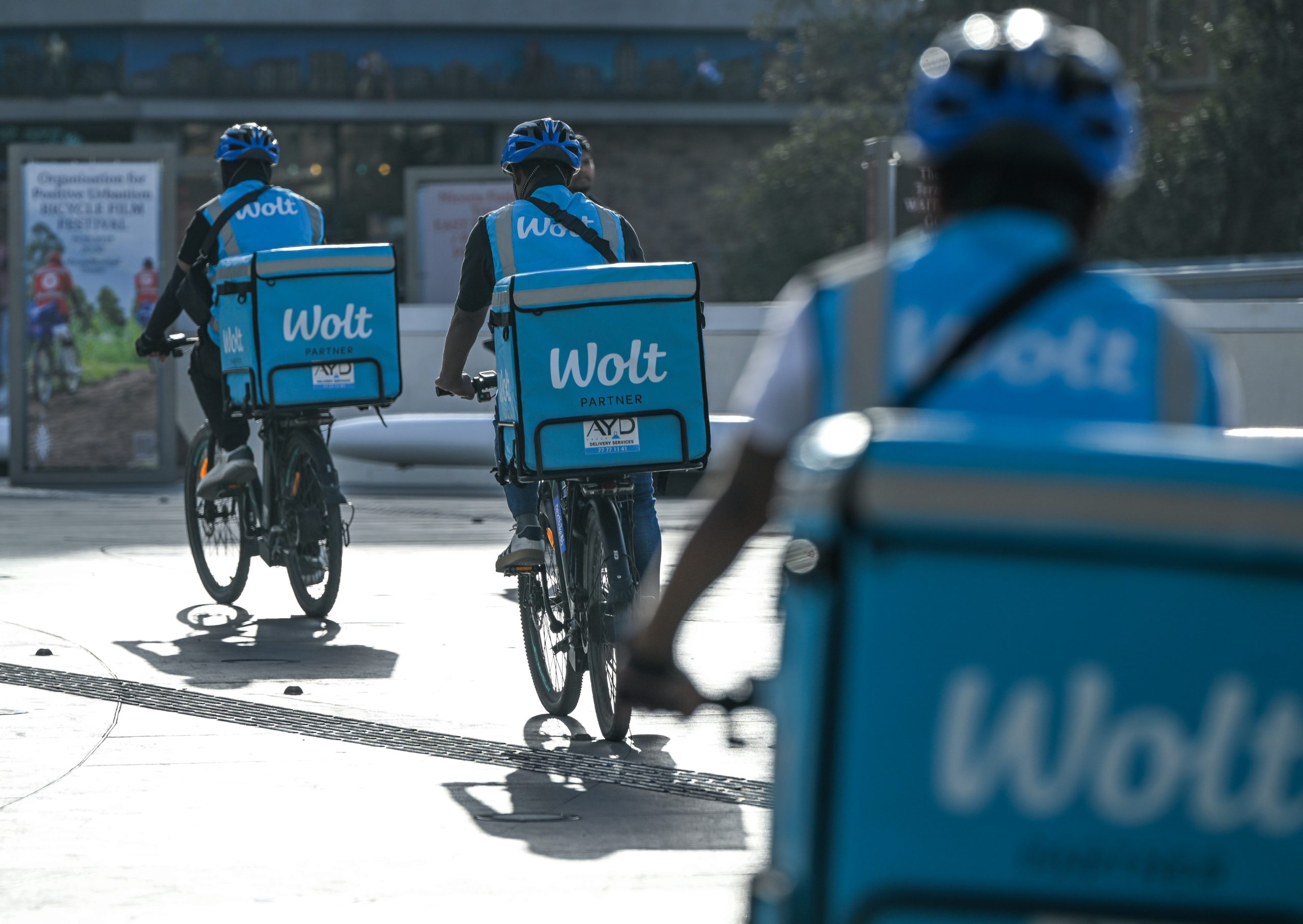
Beyond the issue of homelessness, another social drama is occupying the pages of Milanese newspapers these days:  that of the delivery riders who bring food and other goods day and night to anyone who calls one of the many service cooperatives.  More than 5,000 people are involved, and in peak periods this figure can rise to 9,000.

The Public Prosecutor’s Office of Milan has opened an investigation to determine whether these individuals are self-employed, as the service companies claim, or employees, in which case contracts, job guarantees and security would be required. One of the companies, Just Eat, has stated that it has complied with this, but salaries are often lower than contractual rates.

Data from the CGIL trade union (Il Giorno, 12 February) shows that: 55% of riders work for multiple platforms, 72.9% work six or seven days a week, 50% work seven to ten hours a day, 66% travel more than 40 kilometres a day,  39.8% have been injured at least once and 67.4% have not received any compensation.
It’s hell.

In most cases, routes are defined by an algorithm, so those who work the most get the best services.

And what about employment contracts?  ‘Flexibility is compatible with subordinate work,  and the Milan model is booming,  filling a service gap while exploiting workers,’ comments Orsola Razzolini, a professor at the University of Milan who has been investigating the phenomenon for years (Il Giorno, 12 January).

Serfs, indeed. It is one of the darkest pages of capitalism, ensuring services that satisfy real needs and personal whims (such as a midnight pizza) for just 2.5 euros per ride,  often without even a tip.  Is that okay?

Sooner or later, the system will collapse. The dark side of this widespread ‘feudal capitalism’ will provoke revolts, protests or, at the very least, movements of conscience.

Therefore, it will be worth heeding the warnings of those who truly understand the principles of good capitalism.  Take Larry Fink, for example, the CEO of BlackRock, the largest global investment company based in New York,  who said:  ‘Capitalists, beware.  You risk losing your political and moral legitimacy. In the virtuous scheme of stakeholder values, legitimacy, even if only ethical, is essential to make the imbalances of capitalism tolerable.’

Speaking in Davos at the end of January at the annual conference of the most powerful men and women in world finance and business,  Larry Fink was not new with his warnings about the degradation of speculative excesses (La Stampa, 21 January).  In Davos, he didn’t specifically talk about delivery riders,  but rather everything that makes unacceptable a capitalism that violates or circumvents the rules and offloads the costs onto the poorest and weakest.  He spoke about ‘global capitalism‘  and its distortions, which are now feudal in nature. It is certainly worth paying full attention to his words.

(photo: Getty Images)

‘Feudal Capitalism’ is the working title of the new book by Roberto Seghetti, a seasoned economic journalist (Agi, Panorama, Paese Sera, etc.), which recounts how liberalism and technocracy have reversed the progress of history.  It has just been published by Laterza. Rights, once equal for all, the noble legacy of the French and American Revolutions after the ‘Age of Enlightenment’, one of the finest periods in our political and civil history inspired by reason  (read Leonardo Sciascia and Voltaire to get a sense of the nostalgia this period inspires), now seem to have disappeared from the constitutions of liberal democracies. Instead, they are entrusted to the capricious protection of the ‘winners of capitalism’: populist politicians and the masters of Big Tech (monsters, as they were aptly described eight years ago on the cover of The Economist, a liberal weekly business magazine, not a radical Anglo-Saxon left-wing publication).

The weak, like new serfs, search for a master who will decide ‘who has the cards and who doesn’t’ in the new great global game of power, a sort of villainous game of Risk in which the strongest, already benefiting from guns, soldiers and tanks, immediately take everything, including icy Greenland.

Of course, ‘feudal capitalism‘ is the exact opposite of the ‘democratic’ capitalism that many of us have relied on: a system based on market rules that limit monopolies’ arrogance and protect information symmetry (which is always relative, let’s not delude ourselves). This system also punishes unscrupulous ‘lions of Wall Street’ and real financial fraudsters.

In short, we appreciated the ‘civil economy‘ capitalism theorised by Antonio Genovesi, who taught Adam Smith, the father of liberalism, as well as the ‘just economy’, ‘sustainable’ and ‘circular’ economies dear to Pope Francis (whom we recently learned Epstein and Bannon were plotting against because he was too friendly with the weak, la Repubblica, 15 February). This is also the approach favoured by the best of American and European economic literature, which tries to reconcile liberal democracy, the market economy and welfare through entrepreneurship, freedom, innovation and progress. In short, it builds wealth without blocking the ‘social ladder’.

Even in recent days, the newspapers have offered excellent examples of this ‘feudalism’.

Take, for example, the new revelations about the clandestine and criminal ties between sex and business that were woven by Jeffrey Epstein, a financier who liked to portray himself as a philanthropist (Il Foglio, 14 February). He had a dense network of ‘intimate friends’ (Corriere della Sera, 14 February) and ‘kept managers from Wall Street to the Emirates in his network’ (Il Sole24Ore, 14 February), as well as prominent figures ‘from the progressive world’, (Corriere della Sera, 15 February).  Political and power cross-cutting is always good for business, isn’t it?

But there are also those who reject the neo-feudalism of the  US and China. Take ‘Europe, USA, Merz’s shake-up’ (Corriere della Sera, 14 February), for example, which refers to a Europe that acknowledged the fracture in the West at the last summit in Belgium and tried to organise its own security and autonomy project. Then there’s ‘The new Atlantic alliance is born:  European autonomy and division of fronts’ (La Stampa, 14 February),

which suggests that powers and alliances are being mixed up. Finally, while not renouncing its special relationship with the US, Europe is attempting to build its own autonomous and better future by drawing on Mario Draghi‘s competitiveness projects and Enrico Letta‘s Single Market project.  It is not acting as a Maga satellite, but moving forward as a leading player on the global stage.  It is investing and innovating rapidly to build its own defence system, and forging

alliances with India, Mercosur and others that will guarantee it a broader and more favourable playing field than that dictated by Washington.  ‘I do not share Merz’s criticism of Maga.’ says Italian Prime Minister Giorgia Meloni, adding that ‘the US and the EU must move together’ (Corriere della Sera, 15 February).  Meanwhile, Jack Rubio, the US Secretary of State, is trying to bring everyone together: ‘We are ready for a future together’.  In fact, the Quotidiano Nazionale (Il Resto del Carlino, La Nazione and Il Giorno) ran with the headline  ‘Rubio extends a hand to the EU’, even though it is widely known that tensions between the US and the EU will continue. On the other hand, the traditions of feudal capitalism are based above all on obedience,  although it would of course be up to good politics to reach agreements that do not reward the arrogance of feudal lords or humiliate allies. It is a changing world, of course.

Everything is more fragile and uncertain,  but reviving and defending the democratic cultures and values of old Europe (or the old democratic transatlantic West) is probably more valuable than reviving neo-feudalism. This would ensure greater stability and a better economic and social balance, as well as making wealth gaps more acceptable and limiting their excesses.

If we descend from the heights of politics ‘everywhere and down to earth’ (to use a fascinating image from Censis) and delve into social relations, other reasons for rejecting the neo-feudal model come to mind.  Here, too, it is worth reading the news and looking at examples.

Take Milan, for example, which has recently been shining splendidly with gold and silver medals from the Winter Olympics, not to mention the sky-high prices for the beautiful international audience of sports fans and shoppers in Via Montenapoleone and Cortina.

The flip side of the metropolis of the ‘thousand lights of luxury’ is the homeless people dying of cold, eight victims since the beginning of 2026, while the Corriere della Sera and Il Giorno campaign on the ‘invisible victims of frost’, and Giorgio Gualzetti, president of the Opera Cardinal Ferrari, which provides assistance guaranteed by the Ambrosian Church, speaks of 700 daily hospitalisations and services that are not enough to look after everyone:  ‘The tragic winter of the streets… (Il Giorno, 14 February).

Beyond the issue of homelessness, another social drama is occupying the pages of Milanese newspapers these days:  that of the delivery riders who bring food and other goods day and night to anyone who calls one of the many service cooperatives.  More than 5,000 people are involved, and in peak periods this figure can rise to 9,000.

The Public Prosecutor’s Office of Milan has opened an investigation to determine whether these individuals are self-employed, as the service companies claim, or employees, in which case contracts, job guarantees and security would be required. One of the companies, Just Eat, has stated that it has complied with this, but salaries are often lower than contractual rates.

Data from the CGIL trade union (Il Giorno, 12 February) shows that: 55% of riders work for multiple platforms, 72.9% work six or seven days a week, 50% work seven to ten hours a day, 66% travel more than 40 kilometres a day,  39.8% have been injured at least once and 67.4% have not received any compensation.
It’s hell.

In most cases, routes are defined by an algorithm, so those who work the most get the best services.

And what about employment contracts?  ‘Flexibility is compatible with subordinate work,  and the Milan model is booming,  filling a service gap while exploiting workers,’ comments Orsola Razzolini, a professor at the University of Milan who has been investigating the phenomenon for years (Il Giorno, 12 January).

Serfs, indeed. It is one of the darkest pages of capitalism, ensuring services that satisfy real needs and personal whims (such as a midnight pizza) for just 2.5 euros per ride,  often without even a tip.  Is that okay?

Sooner or later, the system will collapse. The dark side of this widespread ‘feudal capitalism’ will provoke revolts, protests or, at the very least, movements of conscience.

Therefore, it will be worth heeding the warnings of those who truly understand the principles of good capitalism.  Take Larry Fink, for example, the CEO of BlackRock, the largest global investment company based in New York,  who said:  ‘Capitalists, beware.  You risk losing your political and moral legitimacy. In the virtuous scheme of stakeholder values, legitimacy, even if only ethical, is essential to make the imbalances of capitalism tolerable.’

Speaking in Davos at the end of January at the annual conference of the most powerful men and women in world finance and business,  Larry Fink was not new with his warnings about the degradation of speculative excesses (La Stampa, 21 January).  In Davos, he didn’t specifically talk about delivery riders,  but rather everything that makes unacceptable a capitalism that violates or circumvents the rules and offloads the costs onto the poorest and weakest.  He spoke about ‘global capitalism‘  and its distortions, which are now feudal in nature. It is certainly worth paying full attention to his words.

(photo: Getty Images)