
The car industry appeals to the EU to stop the death of the factory


‘Last night, after our shift, we went out together. It was freezing cold, and there were no lorries at Gate 23 or anyone on the street. I said to him, “Shut up, Junior. Don’t say a word.” He looked at me with that beaten-dog face and said,
“Can you hear this silence?”
We stood there, frozen like two statues, right where we were. Junior said, “Yes. It’s the factory that’s dying’.’
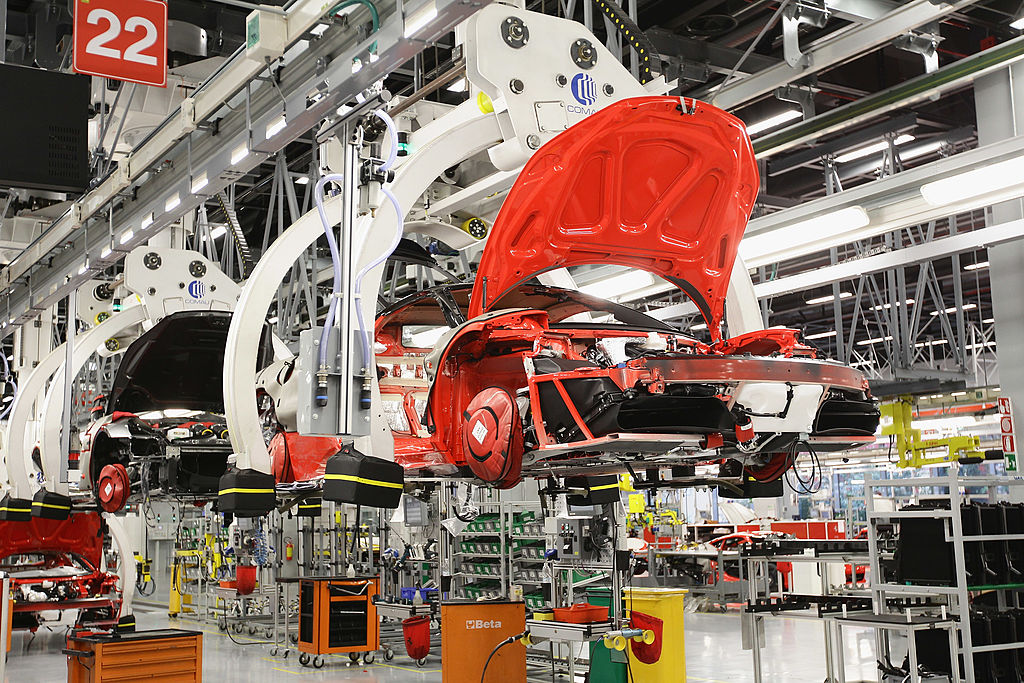
The opening pages of L’ultimo operaio (The last worker), or Canto finale della grande fabbrica (The final song of the great factory) by Niccolò Zancan, a journalist for La Stampa, published by Einaudi, feature a conversation between two workers who were the last intake to join Fiat in 1987: ‘We were still wearing our blue overalls…’ The book contains 130 pages of stories about work and friendship, daily toil and dashed hopes, the extraordinary professional skills of technicians and workers, and misguided investments. Zancan describes it as ‘a story of love and ghosts’, built entirely around one of Europe’s largest car manufacturing plants, Mirafiori, which once employed 60,000 people but now has just a few thousand. It is a stark, multifaceted account of an industrial world that has long been undergoing dramatic downsizing.
The ‘end of the factory’, after all, has been predicted many times, as has the disappearance of the workers. However, the fact remains that, despite the profound technological transformations of recent years, most recently the growing spread of AI, which threatens the loss of tens of thousands of jobs, Italy continues to be a major industrial nation and Europe’s second-largest manufacturing power. Many companies are ready to invest and grow as soon as geopolitical tensions ease (Il Foglio, 11 June).
After all, we are a country of high-tech factories and ‘neo-factories’, where production, research and services are linked in novel ways. In short, industrial work is taking on new forms and a new language is emerging that is reshaping the ‘civilisation of machines’. But nothing is guaranteed forever, and while technology is advancing so swiftly, bringing with it changes and economic and social consequences, politics seems slow in comparison.
However, when it comes to the car industry, it finally seems that the EU is taking action.
The automotive sector (vehicle and component manufacturing) is a cornerstone of European industry, employing 12.6 million people and boasting world-class brands such as the German firms Volkswagen, Audi and BMW, as well as the top-of-the-range Italian brands Ferrari and Lamborghini. It has links with other key industrial sectors, such as electronics, robotics, rubber, plastics, speciality materials and textiles. It has always been a symbol of cutting-edge mechanics, mechatronics, innovation and style, the heart of industry.
For years, however, the sector has been in crisis. The growing dominance of electric cars powered by US and Chinese technologies has caught major European brands off guard. Driven by a misguided sense of environmental responsibility, the EU Commission itself has formally accelerated the transition process: no more internal combustion engines by 2035 and a complete shift to electric vehicles, which are deemed to be less polluting.
This strategy was initially accepted, but has since been called into question, not just by the automotive industry, but by others too. This has led to more reasonable positions being taken: sustainability is all very well, provided it is socially acceptable and does not destroy European industry or jeopardise tens of thousands of jobs, from Germany to France and Italy. In Italy, in particular, the automotive components sector (with Stellantis, formerly Fiat, production now significantly scaled back) is a vital, innovative and high-quality supply chain. This is particularly important for exports. Piedmont, Lombardy and Veneto are regions heavily involved in this sector, as is the Motor Valley in Emilia-Romagna. However, certain areas in the south, such as Campania, Puglia and Basilicata, have also begun to take action. They are seeking a more decisive and persistent approach to engaging with the government in Rome.
The emerging strategic direction of the automotive sector is ‘technological neutrality’: not just electric cars, but also ‘green’ petrol engines, hydrogen-powered engines (where further research is needed) and diesel engines with very low pollution levels.
In recent days, a letter signed by three leading figures in the automotive industry has caused a stir in Brussels. François Provost (CEO of Renault), Antonio Filosa (CEO of Stellantis) and Olivier Blume (CEO of the Volkswagen Group) requested that 70 per cent of components should be ‘Made in Europe’. With measures that reward manufacturers and keep design and research within EU countries, ‘we want to ensure that Europe remains a global powerhouse in the automotive world, and we need a simple, easy-to-implement and easy-to-monitor mechanism that favours European cars and the European industry’ (Corriere della Sera, 13 June).
Reactions to the letter in Brussels have met with cross-party support (La Stampa, 14 June), for measures that could strengthen the Industrial Accelerator Act, specifically for cars and components ‘Made in Europe’. Paolo Streparava, president of Confindustria Brescia, argues that ‘a change of direction in Europe is needed if we are not to lose our industry’ and that ‘energy, cars and regulations are the priorities for competitiveness’ (Il Sole 24 Ore, 28 May).
The debate has certainly been reignited. Giving up on the car industry would leave the international market open to Chinese competitors, whilst protecting the US industry. This would accelerate the risk of ‘deindustrialisation’, which is also a concern in Italy (this warning is now a recurring theme within Confindustria). Despite all the potential difficulties and fierce competition posed by Chinese electric cars, even in Europe, it is worth swiftly devising and implementing a European industrial policy that supports research, innovation and training without falling back on old protectionist models, whilst taking into account the three fundamental elements of sustainability: environmental, social and economic.
Over the past few days, these issues were discussed at length at the Symbola Summer Seminar in Mantua (Il Giorno, 14 June). The lesson from one of the leading figures in Italian environmentalism, Alexander Langer, remains clear: sustainability will not progress until it is socially acceptable, and there were repeated calls to link sustainability to social cohesion.
European investment and policies on the automotive sector also fall within this context, without giving up on European support for electric vehicles, nor neglecting the other technologies in which Europe holds a technological lead and which are perfectly capable of supporting sustainability,
This will ensure that the car does not truly end up being ‘a ghost story’.
(photo Getty Images)