

The ‘Po Valley megalopolis’ offers a fine example of a unique high-tech fusion of industry and culture


Urban planners and geographers say that this is the age of megacities. They point out that 45% of the world’s population now lives in cities, and that megacities are constantly expanding. These are immense urbanised areas and interconnected territorial systems that are home to tens of millions of inhabitants, and which experience an intense, continuous and conflict-ridden fusion of physical and economic activities. Gigantic concentrations of initiatives, businesses, ideas, wealth and movements, and equally gigantic social, economic and environmental problems. Depending on their size and population, these spaces are known as megalopolises, metropolises or megacities. They are places where political, economic, cultural and social life is concentrated, and Aldo Bonomi, a sociologist with a keen eye for data and a creative way with words, has coined the poetic definition of ‘an infinite city’. The figures will soon reveal the scale of the phenomenon. First and foremost, alongside Asia and the US (where most of the major megacities are located), it is worth taking a look at Italy, where there has been an interesting debate for some time now about the future, challenges and opportunities of the north of the country. Here, the ‘industrial issue’ (the major technological and productive transformation advancing amidst crises and new opportunities) is intertwined with social issues such as the widening gaps in wealth, quality of life, knowledge and opportunities, as well as the growing political and administrative difficulties in governing increasingly complex areas.
A new, difficult and unprecedented ‘northern question’, at the heart of the ‘European question’, the outcome of which will determine the future of our systems, encompassing democracy, work, welfare, civic values and cultural heritage.
Let us therefore consider the geography and economic landscape of these places. What we might call the Po Valley megalopolis stretches from the Piedmontese Alps to the eastern borders of the Balkans and is also known as the A1-A4 macro-region, named after the motorways that run through it. A vast rectangle of enterprise and culture at the heart of Europe, it has two major ‘waterways’ which, via the ports of Genoa and Trieste (and many smaller ports), are well integrated into Mediterranean trade links, primarily with Africa and Asia. These links have regained central importance following recent geopolitical and geo-economic developments, as well as the trade imbalances that have reshaped markets, value chains, and terms of trade.
According to the Assolombarda Research Centre’s analysis of Istat data, what do the figures show? The areas comprising the ‘Po Valley megalopolis’ span eight regions: Lombardy, Veneto, Emilia-Romagna, Piedmont, Liguria, Trentino-Alto Adige, Friuli-Venezia Giulia and Valle d’Aosta. They account for 59% of national GDP (led by Lombardy with 23%), despite being home to just over 28 million people, or 49% of the population. They cover an area equivalent to 44% of the entire country and are home to 2.6 million businesses, 224,315 of which are ‘local manufacturing units’, accounting for 56.2% of the entire Italian manufacturing sector, and employing 10.765 million people, 2.623 million of whom are industrial workers and technicians.
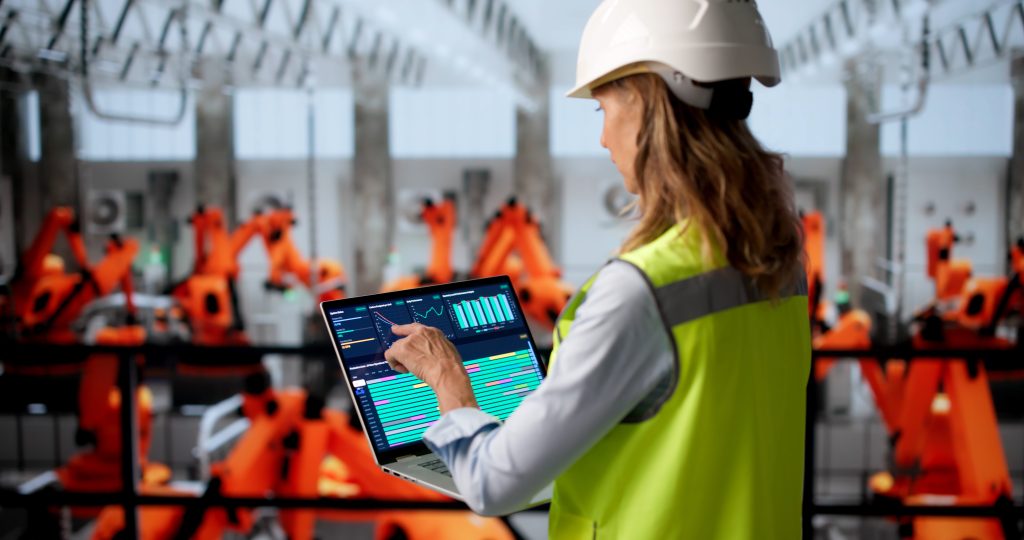
Here it is: a largely northern Italy that is still vibrant with its factories, technologies and innovation, and therefore the future. Italy’s export sector accounts for 67.9% of our total exports, with a quarter coming from Lombardy alone. The sectors with the highest added value include mechanical engineering, mechatronics, robotics, avionics, shipbuilding, chemicals, pharmaceuticals and rubber, as well as traditional sectors such as clothing, furniture and agri-food. High-tech Italy is linked to research centres and universities, and is already committed to making the most of the opportunities offered by AI (artificial intelligence). The metropolis of Milan is its centre of gravity, particularly due to the strength of its services sector (starting with finance), but it is neither the capital nor an all-encompassing ‘model’.
It is precisely in these sectors that 75.5% of all national private expenditure on ‘research and development’ is invested, along with 62.8% of all public and private R&D funding (with the private sector accounting for two-thirds of the total). And 80.3% of patents are registered here, mainly in Lombardy (28.4%) and Emilia-Romagna (21.4%).
Here, then, are the figures that characterise one of Europe’s most productive regions, the real driving force behind Italy’s future in Europe and the Mediterranean. For it is within these companies that all the fundamental elements relating to innovation, productivity and competitiveness lie: that special ‘industrial humanism’, a synthesis of humanistic and scientific knowledge, of beauty as balance and proportion, and of innovation as the translation of science into technology. This ensures that we remain Europe’s second-largest industrial nation after Germany and rank among the world’s top four exporting nations in terms of value added.
The ‘Po Valley megalopolis’ is therefore a vast industrial area. But that is not all: it is a highly original example of an extensive urban area characterised by connections and relationships. It is a region rich in industry and culture, comprising major cities such as Milan, Turin, Genoa and Bologna, as well as vibrant and prosperous medium-sized towns such as Parma, Modena, ‘Motor Valley’, Vicenza and Padua, not to mention villages and the surrounding countryside. It is home to around twenty universities, some of which rank among the best in Europe. The Politecnico di Milano is among the top hundred in the world. Theatres, museums (including corporate history museums and archives, which are essential for tracing the history of innovation in Italian industry and highlighting our historical competitiveness), art academies, scientific laboratories, economic research centres and cutting-edge healthcare institutions can also be found here. And Leonardo, one of Europe’s leading centres for AI, and the University of Pollenzo for gastronomic studies, founded by Carlo Petrini, a temple to the excellence of Italian cuisine. The Milan Triennale and the Venice Biennale are also located here. And not to mention newspapers, television, publishing houses, film and literary and cultural festivals, which attract tens of thousands of people (such as Mantua, Pordenonelegge, the Turin Book Fair and the Trento Economics Festival). It is a highly original continuum and one of the main drivers of Italian identity, woven from resourcefulness and knowledge.
The world’s metropolises, such as Jakarta, Dhaka, Tokyo, New Delhi, Shanghai, Mexico City, São Paulo, New York and Cairo, are growing mainly upwards, with expanses of skyscrapers.
The Po Valley megalopolis, on the other hand, is horizontal and rich in diversity, environments and social conditions. It is characterised by a series of links between the provinces and the city, ‘between the Via Emilia and the West’, as Francesco Guccini sang in an extraordinary poetic metaphor. This creative space, with its complex, open, fluid and variable identity (‘Identity lies in relationships’, as Emmanuel Lévinas taught us), deserves special attention — more intense and informed attention that can look more deeply into economic and social processes than has been the case so far.
Italy is only growing slightly. ‘It is not poor, but unproductive,’ comments Mauro Magatti in Corriere della Sera on 12 July. Public debt is partly offset by low private debt, but ‘private prosperity does not translate into public prosperity’. Whilst a significant proportion of the population is accumulating and consolidating its economic position, the system as a whole is becoming impoverished in terms of services, infrastructure, investment, innovation and capacity for growth. Private prosperity and savings, which through favourable tax incentives should be channelled towards private enterprises and their growth, are not being utilised.
The only functioning engine is the industrial sector, and even this is faltering under the weight of radical and disruptive changes caused by ongoing geopolitical crises and rising energy costs. There are entire industrial sectors feeling the negative repercussions, such as the car industry and the components sector, where Italian industry holds a leading position. Household appliances and steel are two such sectors.
This is why we need a European industrial policy that encompasses Italy, as well as a robust plan for public investment in research, innovation, training and productivity, because what has been done under the NRRP is not enough.
Confindustria is calling for an urgent plan to revitalise industry, starting with the energy sector.
Several months ago, the five regional councillors for development from five northern regions (Guido Guidesi for Lombardy, Massimo Bitonci for Veneto, Vincenzo Colla for Emilia-Romagna, Andrea Tronzano for Piedmont, and Alessio Piana for Liguria – four from the centre-right and one from the centre-left) set up a joint working group to call on the authorities in Brussels to implement a series of measures for northern industry. These measures focus on energy, the shortage of skilled labour, and streamlining red tape.
This is not a revival of the old northern separatism associated with the Lega, an initiative that smacks of secession and a rift between the ‘two Italies’. If anything, it reflects the realisation among the most industrialised regions that if the ‘northern locomotive’ grinds to a halt, the whole country will come to a standstill (even the automotive, components, mechatronics, and avionics supply chains, which are flourishing in the south, depend on it).
The Conference of Regions, too, acting in unison, has prepared a ‘special plan for Northern industry’ for the government. To highlight the strength, solidity, and European significance of the Po Valley megalopolis we discussed. What is being called for is not sector-specific bonuses or subsidies, but a genuine industrial policy: innovation, training, competitiveness, employment.
The ‘Made in Italy upon which to build the future for new generations is not the ‘typical and distinctive’ style for which we are known worldwide, but rather the productivity of our most innovative sectors, a genuine industrial culture within cutting-edge fields (bringing us back to AI, then).
This policy encompasses legislation, investment, streamlined red tape and a particular focus on communication, moving from ‘know-how’ to ‘communicating know-how’, as Confindustria argues, with the commitment of the group responsible for corporate culture.
The aim is to build a new and better narrative around the productive and cultural characteristics of the ‘Po Valley megalopolis’. And of its industry.
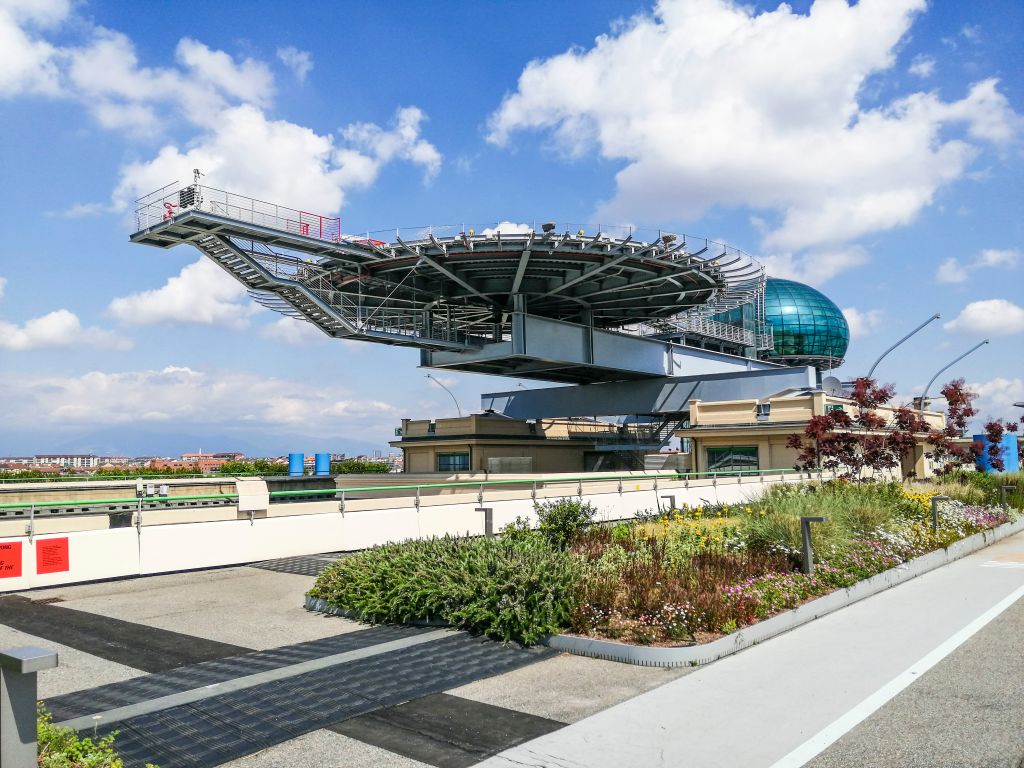
It would take a work of art such as Alighiero Boetti’s maps, a photographic journey through sites of high-tech production, a film (corporate film festivals are becoming increasingly common; the one in Rome is a prime example) or a play (there are already a couple, such as ‘Settimo, the Factory and Work’, directed by Serena Sinigaglia at the Piccolo Teatro). And Why not? a piece of music, such as ‘Il Canto della fabbrica’, which was composed by Francesco Fiore on the initiative of the Pirelli Foundation and performed by the Italian Chamber Orchestra, conducted by Salvatore Accardo, to depict the rhythms of Pirelli’s digital factory in Settimo Torinese, which was designed by Renzo Piano.
There is a close relationship between industry and culture. A strong polytechnic culture. Not least because ‘industry is culture’, scientific and technological, humanistic and economic, entrepreneurial and social.
The Po Valley megalopolis, the great industrial heartland of the North, possesses all the necessary tools.
(photo Getty Images)