
Learning to ask questions, like Ulysses, to understand the meaning and value of Artificial Intelligence


One cannot understand anything about the world, whether ancient or contemporary, so full of uncertainties and complexities, unless one adopts the intellectual stance of someone who never tires of asking questions: what really happened, how, and, above all, why, and what were the consequences?
To return to the wonder of childhood, when we never tired of asking ‘Why?’ about everything, and to embrace adulthood with Descartes’s pages on ‘methodical doubt’ and the works of Pascal and Montaigne, which emphasise the importance of inquiry and culture as a constant approximation to the truth. Spinoza’s writings on the construction of an ethic are also important here: a rigorous line of thought firmly rooted in the reflections of the centuries leading us to modernity, which tell us ‘I enjoy life, and endeavour to pass it not in weeping and sighing, but in peace, joy, and cheerfulness, and from time to time climb thereby a step higher’. This is the process of knowledge, the ladder that guides us towards an awareness of the meaning of our disruptive contemporary world.
We live in ignorant and superficial times, characterised by a rejection of the analysis of facts and data (the very pillars of knowledge) and by propaganda promoting a ‘post-truth’ that is the exact opposite of knowledge. This demagogic ‘post-truth’ manipulates emotions, beliefs and worldviews in a direction entirely opposed to Spinoza’s ladder. These are times of the rejection of science and the derision of intellectual work, in which the ‘reason of the strongest’ prevails over the ‘force of reason’. Both civil coexistence and our very democracy are seriously threatened by this.
It is worth re-reading one of Italo Calvino’s most lucid and incisive passages: ‘ The devil today is vagueness. By “devil”, I mean irredeemable negativity from which no good can come. In vague discourse, generalisations and imprecision of thought and language, especially when accompanied by self-assurance and petulance, we can recognise the devil as the enemy of clarity within ourselves and in our relationships with others, as the personification of mystification and self-deception. I mean the vague, not the complicated. When things are not simple or clear, demanding clarity and simplification at all costs is superficial, and it is precisely this demand that forces discourse to become generalised, that is, deceitful. On the other hand, the effort to think and express oneself with the greatest possible precision, particularly when faced with the most complex issues, is the only honest and useful approach’ (The Uses of Literature: Essays. 1980).
Asking questions is the way to combat ‘the devil of approximation’. That is to say, it involves practising the professions of intellectual, scientist, entrepreneur and teacher with humility and determination (in times of such radical innovation, the only truly viable form of teaching is ‘learning to learn’). In short, to fulfil one’s role as a citizen, it is important to bear in mind Jürgen Habermas’s lesson that ‘well-informed public discourse’ is the foundation of critical public opinion, and thus of democracy.
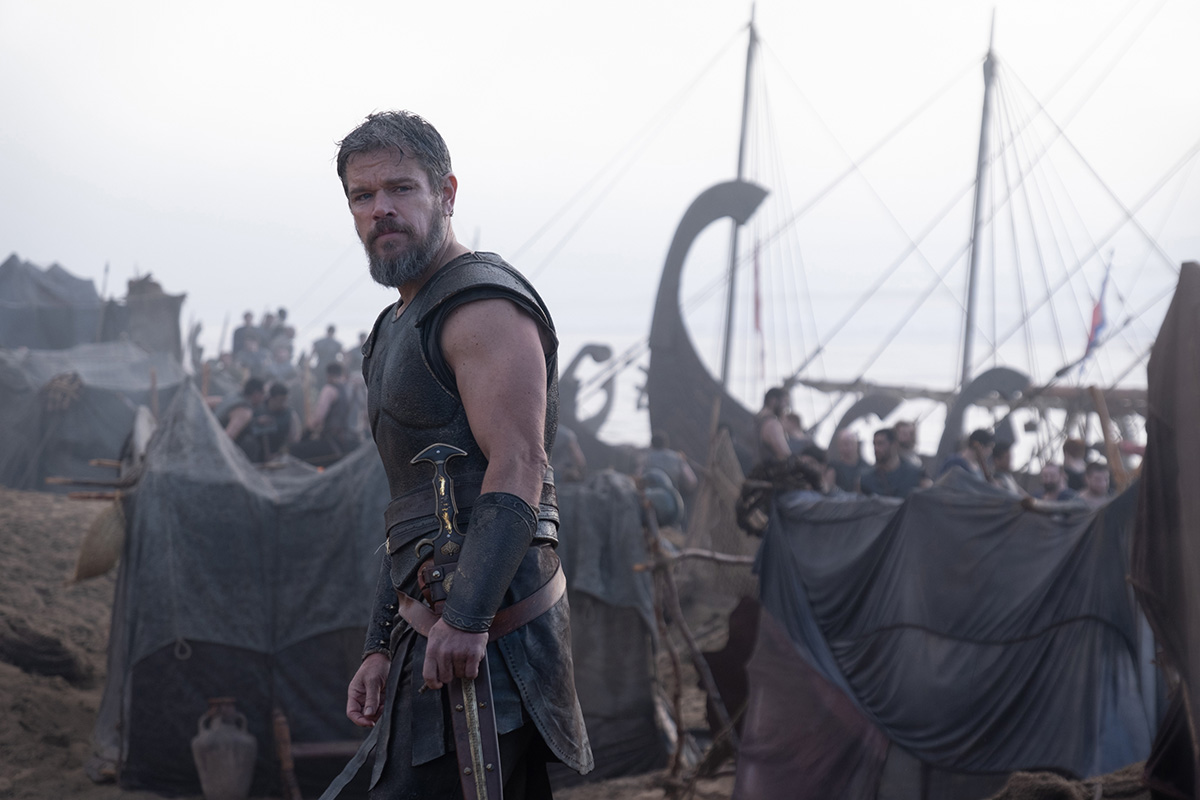
Ulysses is a man who harbours doubts and therefore asks questions and one of the most successful characters in contemporary cinema: the Ulysses portrayed in Christopher Nolan’s fascinating film Odyssey, to be precise. For the man undertaking his journey back to Ithaca is no longer the shrewd victor of the Trojan War, but a restless man who lands in unfamiliar ports and must win over his hosts, overcome temptations and traps, escape Circe’s spells and Calypso’s seductive promises, and keep his crew together to reach their destiny. In short, Ulysses is a ‘modern hero with his doubts’. ‘A myth that is still being created today, just like science and progress,’ summarises Giulio Guidorizzi, one of the most eminent contemporary Greek studies scholars (La Stampa, 14 July).
Ulysses has always spoken to us and about us. Konstantinos Kavafis writes in one of the most beautiful poems of the twentieth century that, ‘when setting out on a journey to Ithaca, one should hope that the road is long and full of adventures and experiences’. He also advises us to ‘visit many Egyptian cities and learn from the learned’. And be grateful, for ‘Ithaca has given you the beautiful journey’ (and the concept of the journey is also explored at the Salina Film Fest, directed by Giovanna Taviani in the Aeolian Islands, which are the symbolic setting of Homer’s epics).
It is not merely a journey of discovery into an unknown and fascinating world. But it is also, and above all, an inner journey exploring nostalgia and melancholy whilst gazing at ‘the sea the colour of wine’, and the strengths and weaknesses of humankind, whose very nature is to ‘follow virtue and knowledge’ (as Dante urges us in the pages of the Divine Comedy).
Ulysses’s journey is our own ongoing journey, making good use of the ‘talent’ with which we have been blessed, regardless of our work or responsibilities. Ulysses is our archetype, echoed in countless literary characters. Ulysses is our restless soul, finally seeking peace in the familiar harbour of Ithaca and in the home guarded and defended by Penelope. However, he must set out again, as he discovers during his perilous wanderings across the Mediterranean, in the answer of the soothsayer Tiresias to his question.
In The Odyssey, Odysseus is far from invincible. He makes mistakes, he fails, and he starts again. Andrea Lipparini is right to describe him as a leader who exercises his leadership through mistakes, second thoughts, critical reflection and risks taken after a night of doubt in times of uncertainty (‘Desire and Limits. Ulysses and Transformative Leadership’, Il Mulino).
This is the exploratory, dialogue-based leadership of our time, where everything changes too quickly for traditional knowledge and old maps to suffice. New knowledge must be built by linking established knowledge to the technological and geopolitical developments that force us to work things out quickly, and by drawing these new maps during the journey in the hope that they will benefit others too.
Knowledge is called into question, deconstructed and reconstructed. Imagination and creativity are on high alert, and once again, there are questions.
Moreover, when it comes to questions, Artificial Intelligence also plays a part. We are already grappling with it, albeit with difficulty, but with a desire to learn how it works and make good use of its potential.
When it comes to questions of meaning, value, and human and social sustainability, we seek to address the ethical and political issues that new technologies present to us (Pope Leo’s encyclical letter ‘Magnifica Humanitas’ contains exemplary reflections on this subject, even for secular thought).
This is our moral and cultural responsibility, particularly towards younger generations, our children and grandchildren.
In Eduardo Galeano’s ‘The Book of Embraces’, the young Diego, amazed and overwhelmed by the immensity of the sea which he has just seen for the first time, asks his father, Santiago ‘Help me to see!’
It is a question we all ask in times of uncertainty and change: help me to understand. Like so many Ulysses, like so many Diegos.