

Winter, a Season to Enjoy
Pirelli and winter are two worlds that come together under the banner of innovation. Through documents preserved in our Historical Archive, we explore the product inventions, communication campaigns, partnerships and projects that – in cities and in the mountains, on the roads, on the slopes and even at home – have helped transform the cold months into a new season to enjoy, safely and with pleasure.
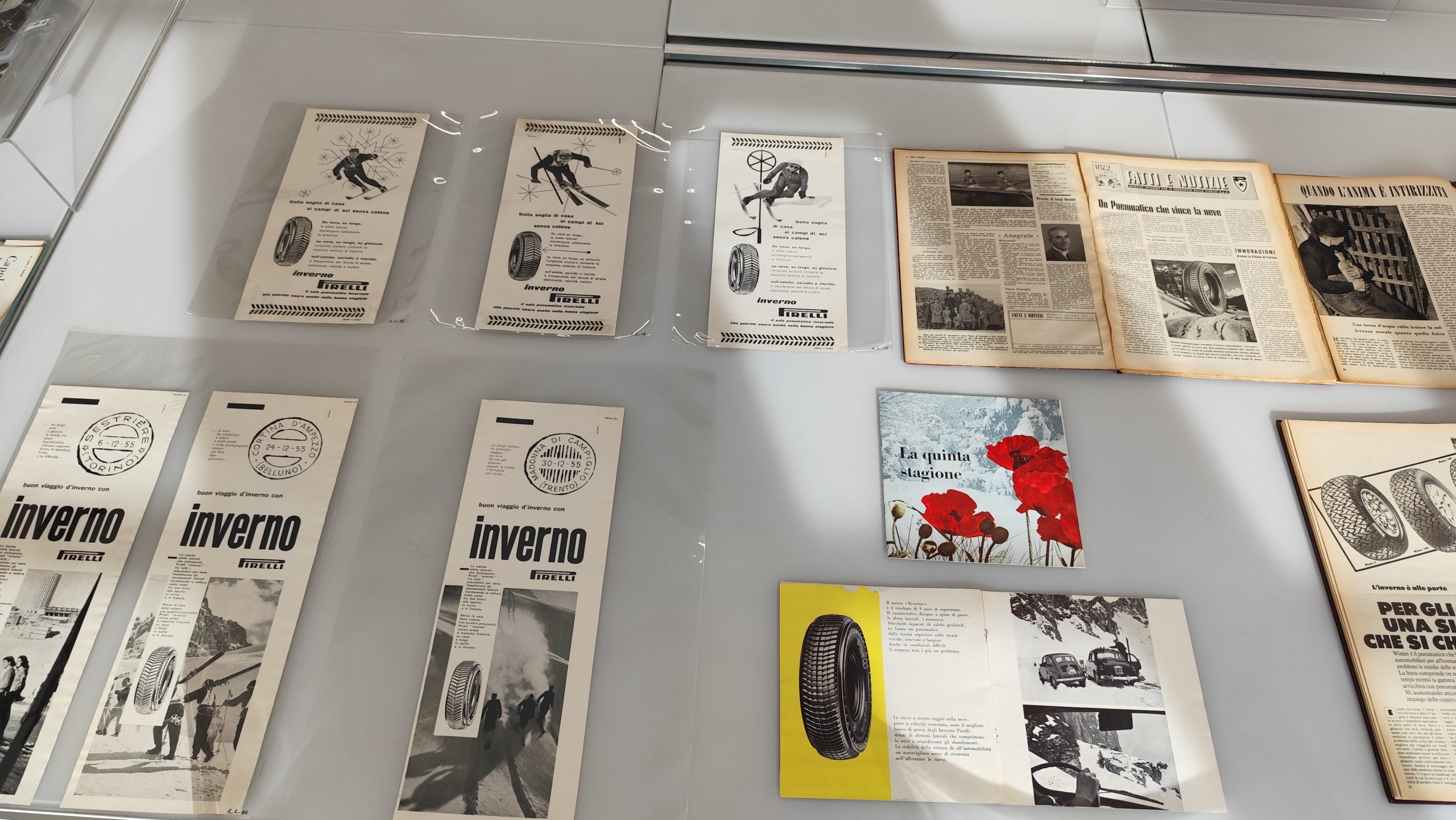
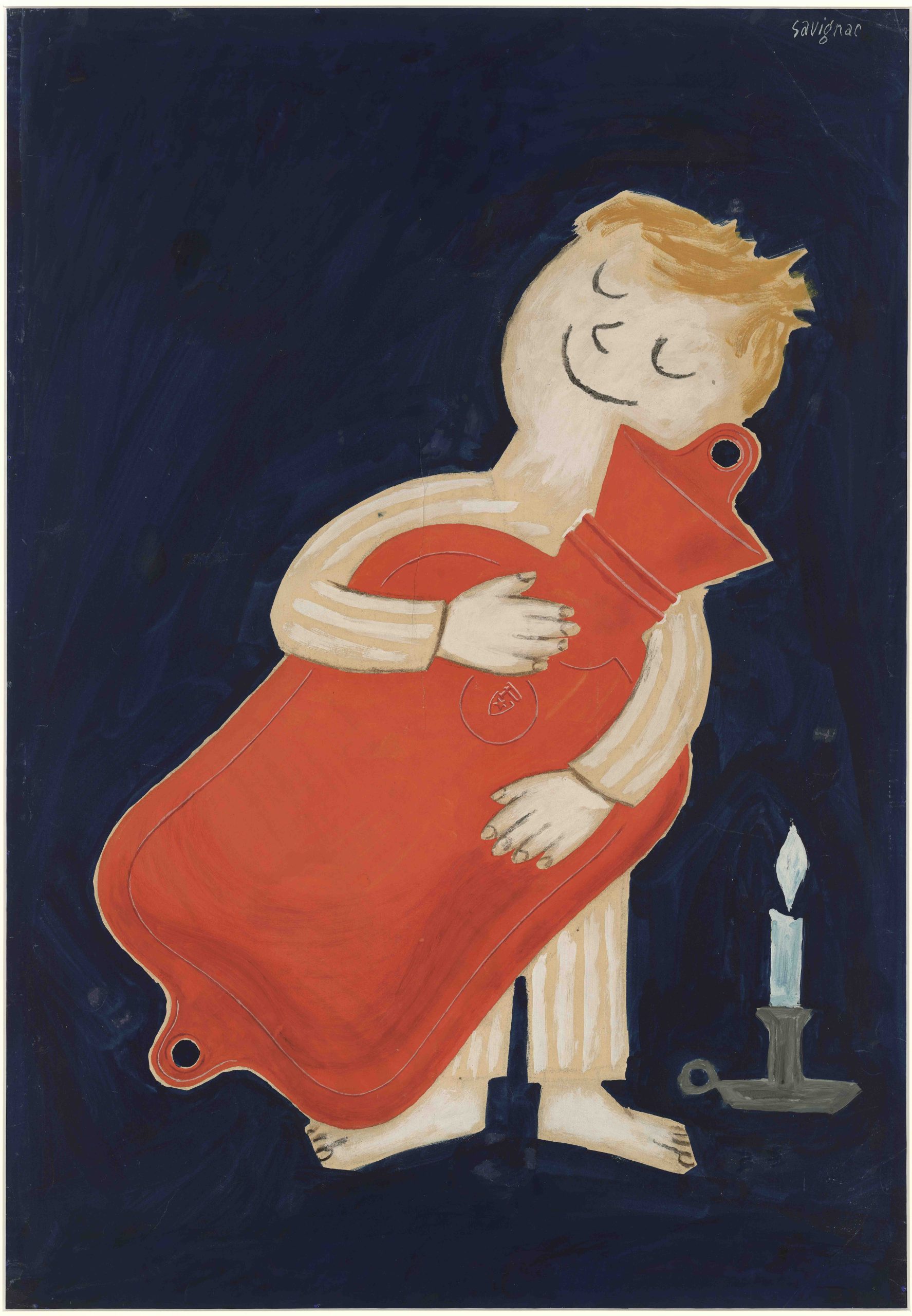
The hot-water bottle was Pirelli’s very first product for the winter. It appeared in the catalogue as early as 1880 as one of the brand’s first “diversified” (i.e. non-industrial) items, offering comfort and protection from the cold. It proved to be remarkably enduring and increasingly common in homes, and in the 1950s it featured in sketches and advertising campaigns by famous names such as Lora Lamm, Raymond Savignac and the Pagot brothers, as well as in articles praising its invaluable benefits. In Pirelli magazine no. 5 of 1949, the writer and journalist Marise Ferro penned a piece entitled “Quando l’anima è intirizzita” (When the Soul is Numb), a veritable “ode to the hot-water bottle – the rubber one, soft, elastic, long-lasting, and generous” because “a hot-water bottle soothes moral suffering just as it does physical pain”.
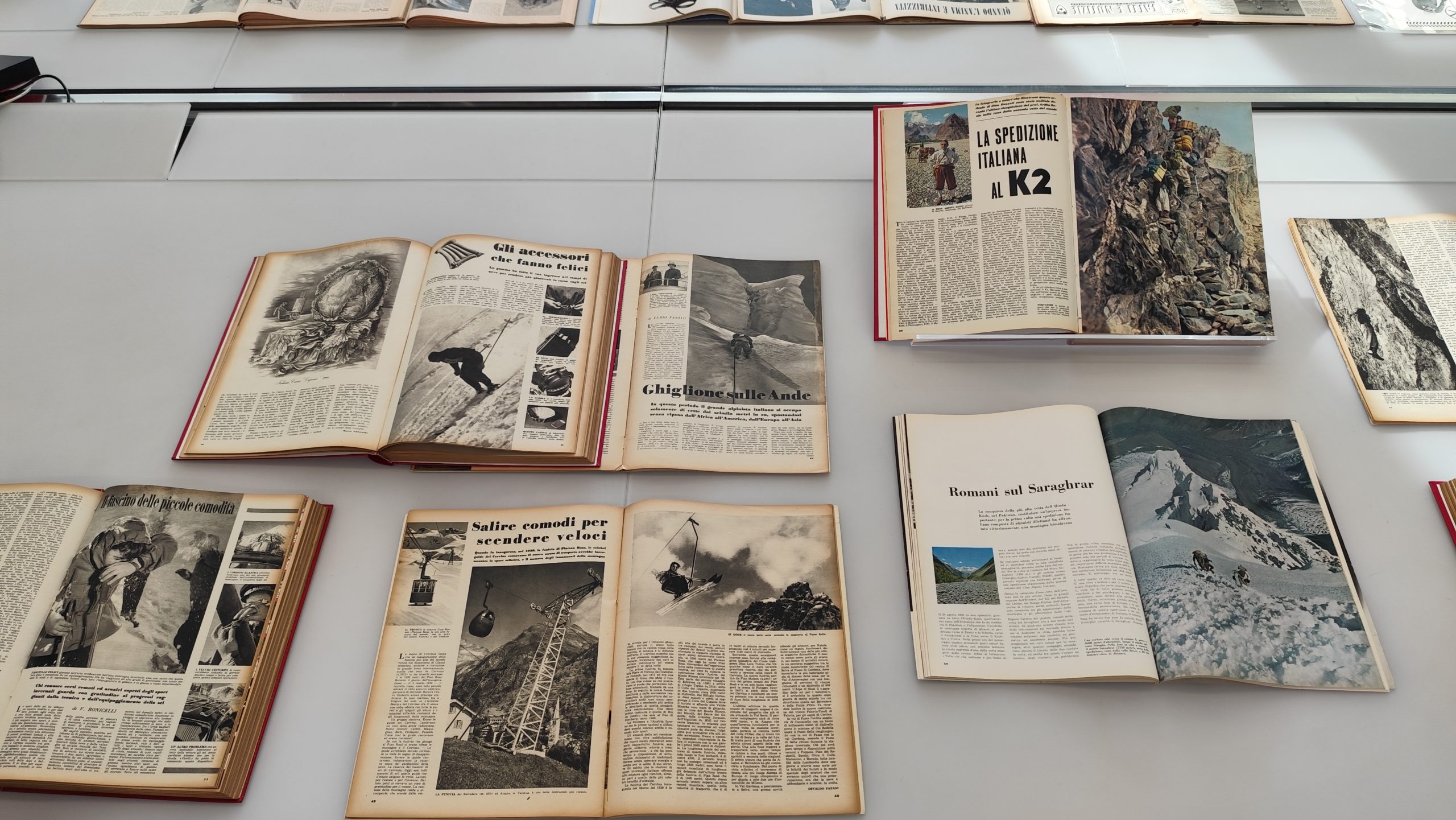
The first Pirelli soles came out in 1890: “elastic rubber specialities for footwear”, along with galoshes designed to protect ladies’ shoes from the rain. These soles enjoyed considerable commercial success and earned a notable place in our story devoted to Pirelli and winter. After the Second World War, and particularly in the 1950s, they were among the rubber items that improved the skiing experience. Together with jackets, mitts, ski pole baskets, straps and buckles for bindings, ankle guards, mats and full camping sets, boots with rubber soles were praised in Pirelli magazine no. 1 of 1949, in an article entitled “Gli accessori che fanno felici” (Accessories that Bring Happiness), which explained how “rubber has made its entrance on the snowfields to make skiing more enjoyable”. It continues: “A skier’s accessories need to have various different qualities: they need to be practical, long-lasting, and compact, making them ideal for use. There are lots of accessories that can improve a skier’s life. And they are all made of Pirelli rubber.”
The tradition of rubber boots held sway through much of the second half of the twentieth century, with generations of soles for the mountains made in varied designs. In the 1960s it culminated in the highly specialised Superga G3 boots, which were used in major expeditions in Afghanistan in 1965 and in the Caucasus in 1966. These adventures were documented in the house organ Fatti e Notizie, no. 12 of 1965 and no. 5 of 1966.
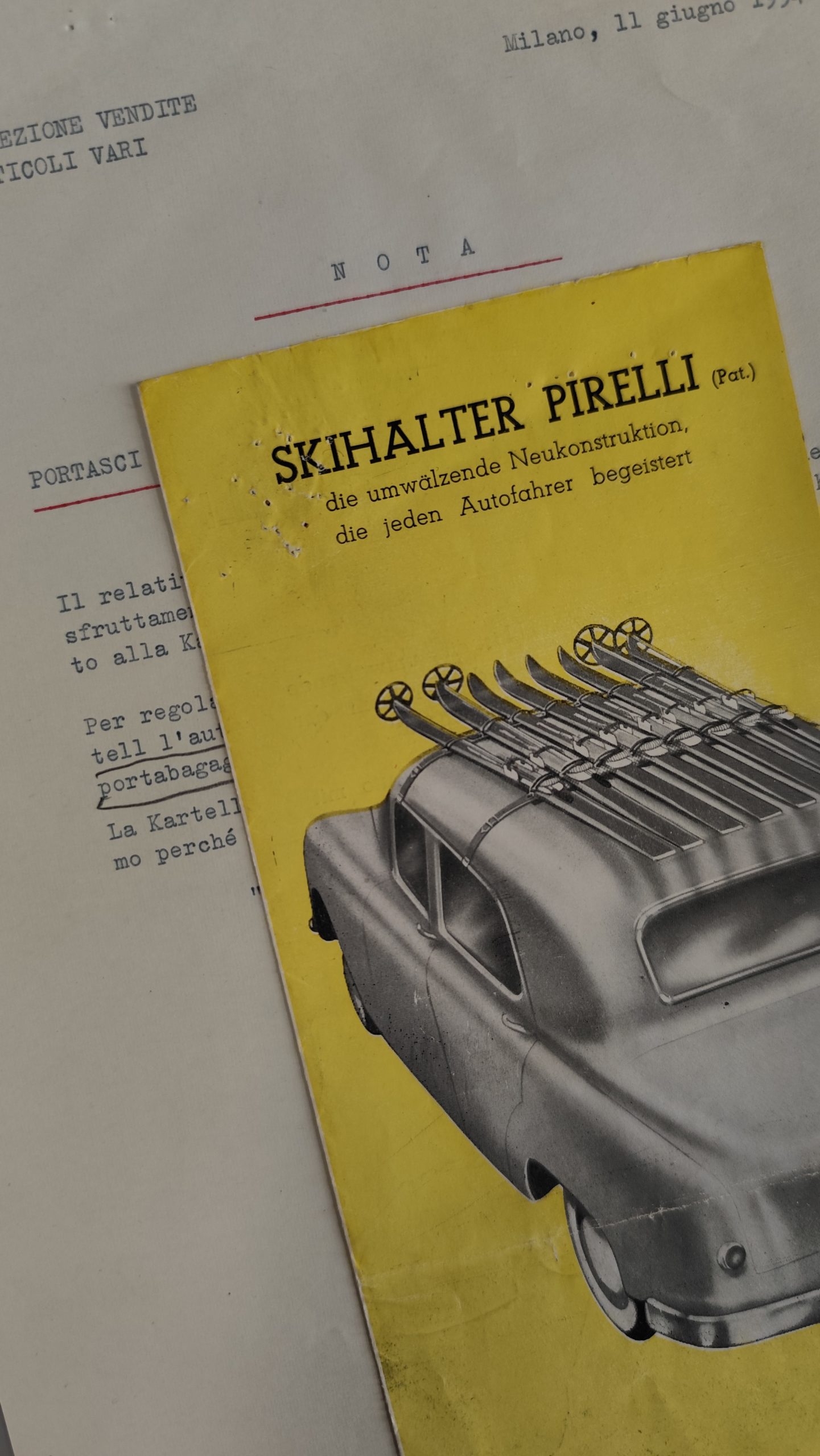
In 1950, two innovations made car journeys to ski resorts easier and more relaxed – a habit that became increasingly common during the decade in Italy and beyond. These were the “Pirelli patented luggage rack” and the “Pirelli patented ski rack”, designed by a Pirelli engineer, Carlo Barassi, and an architect, Roberto Menghi. Pirelli later ceded them to Kartell, which brought them to market.
“You will travel without unpleasant surprises” promised the advertisement on the inside back cover of Pirelli magazine no. 1 of 1948. It introduced rubber crosspieces, a Pirelli product designed to make car journeys to the mountains safer by ensuring that the “chains do not slip.”
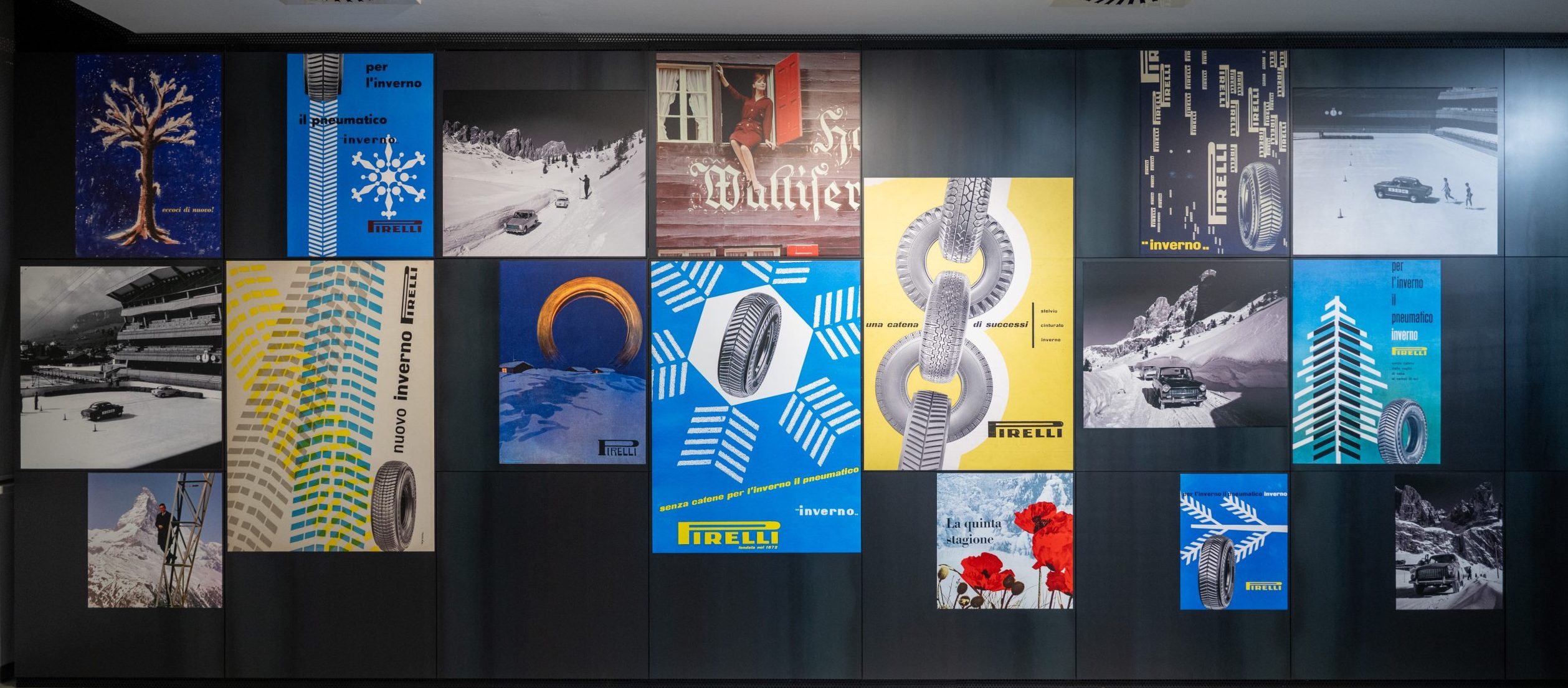
Pirelli’s first winter tyre with a herringbone tread was the Inverno, which came out in 1951, based on the 1930s Artiglio tyre. In the years that followed, leading figures in advertising and design – Bob Noorda, Ezio Bonini and Franco Grignani – were called in to promote it. “Senza catene per l’inverno” (“Winter without Chains”) is the tagline in Noorda’s advertisement published in Pirelli magazine no. 6 of 1952, summing up the benefit offered by the Inverno. Bonini took up the theme in his 1952/3 campaign “Per l’inverno il pneumatico Inverno” “For winter, the winter tyre”, declaring: “Safe on slippery, wet roads, on smooth, compacted snow, without the loss of power caused by chains.” In 1955, Grignani added: “Have a good winter journey with Pirelli Inverno”, explaining that it came “… without the bother of chains.”
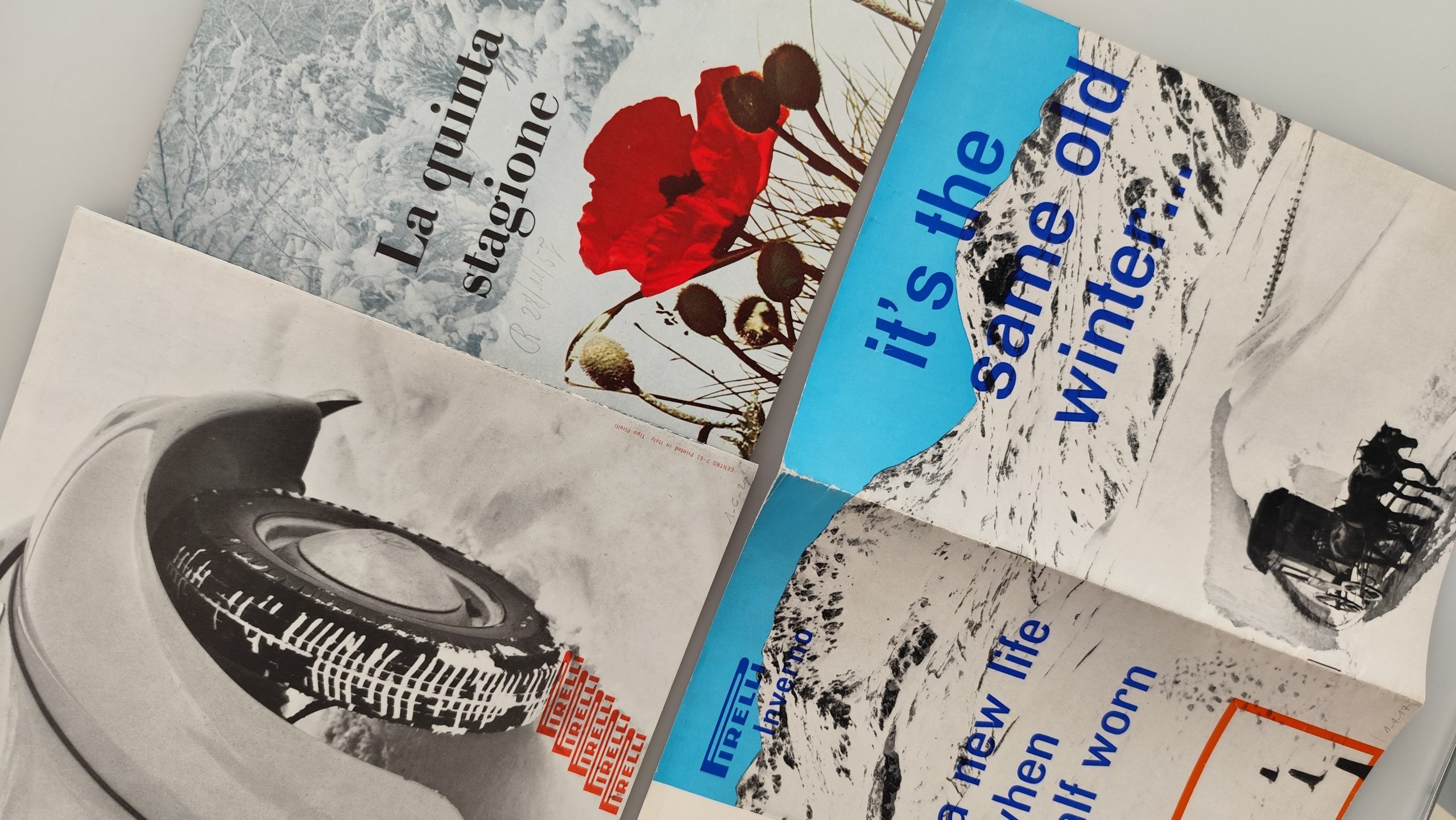
In 1957, the moment came for a new Inverno. It appeared on the cover and in a double-page spread in Fatti e Notizie no. 1 of 1958. The article opened: “Today the idea of winter as a season spent stuck indoors, where life stagnates, belongs to the past. As an active season, full of life and work, winter is a season of our age: a fifth season.” This idea of a “fifth season” accompanied the launch of the new winter tyre and reflected Pirelli’s broader view of winter: a season of opportunity, movement and innovation, calling for products that could improve everyday life and sporting activity, easing difficulties and offering comfort, safety and top performance.
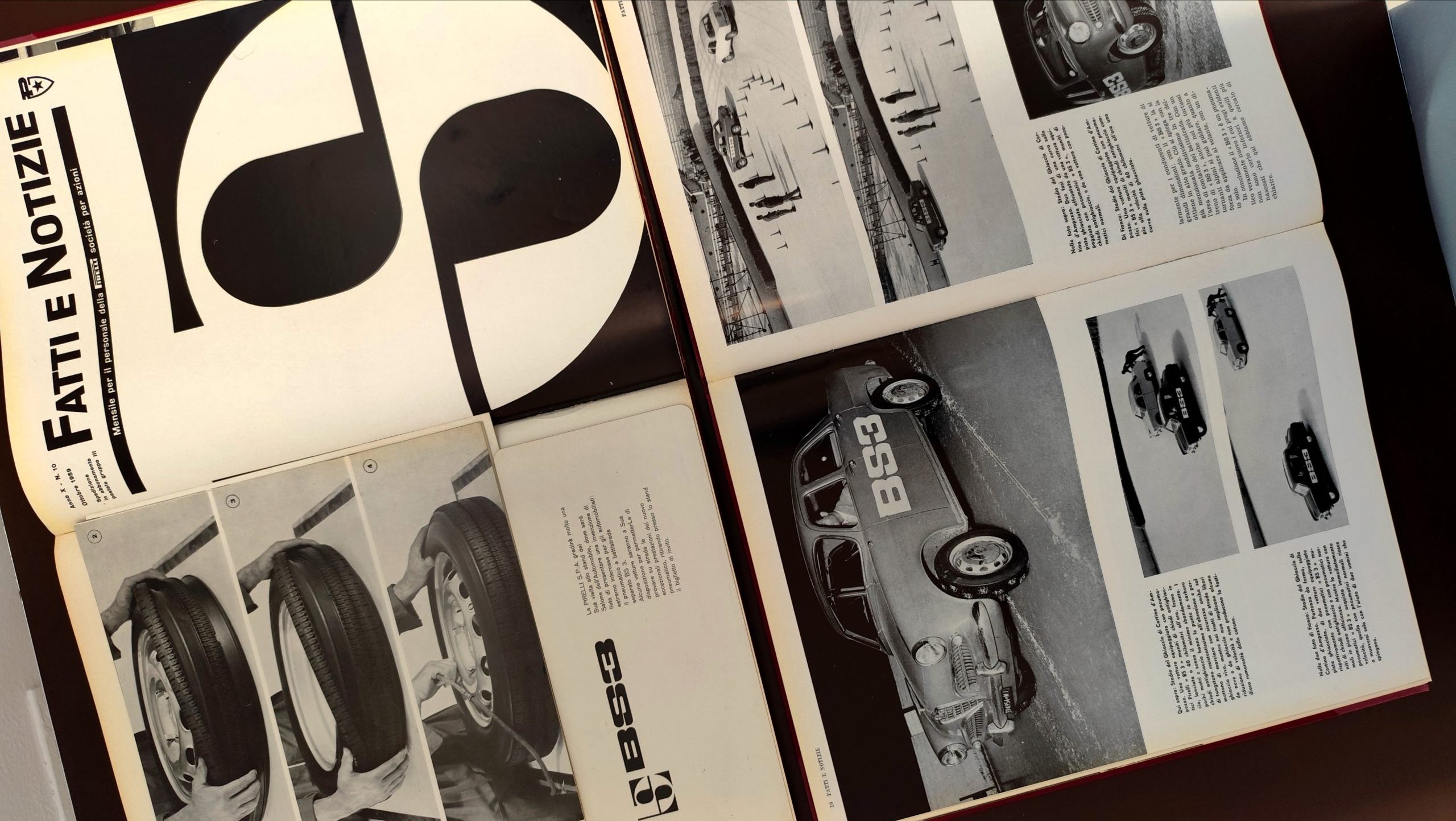
The story continues with the Pirelli BS3, the “Battistrada Separato 3” (Separate Tread 3) – made of a casing and a tread not vulcanised together, making it easy to replace. Such an advanced design, which remained in production for some years, effectively pioneered the concept of seasonal tyre changes, making it possible to transition seamlessly between summer and winter performance. Fatti e Notizie 1959, no. 10 contained an extensive feature on this ingenious Pirelli creation. In the 1961 Monte Carlo Rally, 28 competing cars were fitted with the BS3, with 23 successfully reaching the finish line. The BS3 paved the way for Pirelli’s first true winter tyre, the Cinturato MS35 Rally. In television commercials of the time, it appeared alongside Sandro Munari at the wheel of his Lancia Fulvia, in which he won several races, including the 1972 Monte Carlo Rally. In its road version, it gave rise to what would become today’s extensive, highly specialised Pirelli Winter range. Launched in 1979, these tyres were designed for snow and ice but equally reliable on dry roads. A few years later, the range expanded with low-profile and extra-low-profile tyres, thus broadening its applications, as described in the article titled “Una sicurezza che si chiama Winter” (Safety Called Winter) in Fatti e Notizie no. 9 of 1985. In the 1990s, winter tyres took a decisive step forward: larger sizes, better performance on dry and wet roads, and greater noise reduction. In 2004, the new Winter Sottozero ensured top performance even in normal road conditions, from October to April. It was the first dual-season winter tyre, as we read in Fatti e Notizie no. 365 of 2004.
Pirelli Winter continues to this day, with eight tyres for cars, seven for SUVs and one for vans. The latest, launched this year, is the Cinturato WINTER 3, whose promise remains faithful to Pirelli’s original vision for winter products: “Enjoy the pleasures of winter…!”
Pirelli and winter are two worlds that come together under the banner of innovation. Through documents preserved in our Historical Archive, we explore the product inventions, communication campaigns, partnerships and projects that – in cities and in the mountains, on the roads, on the slopes and even at home – have helped transform the cold months into a new season to enjoy, safely and with pleasure.
The hot-water bottle was Pirelli’s very first product for the winter. It appeared in the catalogue as early as 1880 as one of the brand’s first “diversified” (i.e. non-industrial) items, offering comfort and protection from the cold. It proved to be remarkably enduring and increasingly common in homes, and in the 1950s it featured in sketches and advertising campaigns by famous names such as Lora Lamm, Raymond Savignac and the Pagot brothers, as well as in articles praising its invaluable benefits. In Pirelli magazine no. 5 of 1949, the writer and journalist Marise Ferro penned a piece entitled “Quando l’anima è intirizzita” (When the Soul is Numb), a veritable “ode to the hot-water bottle – the rubber one, soft, elastic, long-lasting, and generous” because “a hot-water bottle soothes moral suffering just as it does physical pain”.
The first Pirelli soles came out in 1890: “elastic rubber specialities for footwear”, along with galoshes designed to protect ladies’ shoes from the rain. These soles enjoyed considerable commercial success and earned a notable place in our story devoted to Pirelli and winter. After the Second World War, and particularly in the 1950s, they were among the rubber items that improved the skiing experience. Together with jackets, mitts, ski pole baskets, straps and buckles for bindings, ankle guards, mats and full camping sets, boots with rubber soles were praised in Pirelli magazine no. 1 of 1949, in an article entitled “Gli accessori che fanno felici” (Accessories that Bring Happiness), which explained how “rubber has made its entrance on the snowfields to make skiing more enjoyable”. It continues: “A skier’s accessories need to have various different qualities: they need to be practical, long-lasting, and compact, making them ideal for use. There are lots of accessories that can improve a skier’s life. And they are all made of Pirelli rubber.”
The tradition of rubber boots held sway through much of the second half of the twentieth century, with generations of soles for the mountains made in varied designs. In the 1960s it culminated in the highly specialised Superga G3 boots, which were used in major expeditions in Afghanistan in 1965 and in the Caucasus in 1966. These adventures were documented in the house organ Fatti e Notizie, no. 12 of 1965 and no. 5 of 1966.
In 1950, two innovations made car journeys to ski resorts easier and more relaxed – a habit that became increasingly common during the decade in Italy and beyond. These were the “Pirelli patented luggage rack” and the “Pirelli patented ski rack”, designed by a Pirelli engineer, Carlo Barassi, and an architect, Roberto Menghi. Pirelli later ceded them to Kartell, which brought them to market.
“You will travel without unpleasant surprises” promised the advertisement on the inside back cover of Pirelli magazine no. 1 of 1948. It introduced rubber crosspieces, a Pirelli product designed to make car journeys to the mountains safer by ensuring that the “chains do not slip.”
Pirelli’s first winter tyre with a herringbone tread was the Inverno, which came out in 1951, based on the 1930s Artiglio tyre. In the years that followed, leading figures in advertising and design – Bob Noorda, Ezio Bonini and Franco Grignani – were called in to promote it. “Senza catene per l’inverno” (“Winter without Chains”) is the tagline in Noorda’s advertisement published in Pirelli magazine no. 6 of 1952, summing up the benefit offered by the Inverno. Bonini took up the theme in his 1952/3 campaign “Per l’inverno il pneumatico Inverno” “For winter, the winter tyre”, declaring: “Safe on slippery, wet roads, on smooth, compacted snow, without the loss of power caused by chains.” In 1955, Grignani added: “Have a good winter journey with Pirelli Inverno”, explaining that it came “… without the bother of chains.”
In 1957, the moment came for a new Inverno. It appeared on the cover and in a double-page spread in Fatti e Notizie no. 1 of 1958. The article opened: “Today the idea of winter as a season spent stuck indoors, where life stagnates, belongs to the past. As an active season, full of life and work, winter is a season of our age: a fifth season.” This idea of a “fifth season” accompanied the launch of the new winter tyre and reflected Pirelli’s broader view of winter: a season of opportunity, movement and innovation, calling for products that could improve everyday life and sporting activity, easing difficulties and offering comfort, safety and top performance.
The story continues with the Pirelli BS3, the “Battistrada Separato 3” (Separate Tread 3) – made of a casing and a tread not vulcanised together, making it easy to replace. Such an advanced design, which remained in production for some years, effectively pioneered the concept of seasonal tyre changes, making it possible to transition seamlessly between summer and winter performance. Fatti e Notizie 1959, no. 10 contained an extensive feature on this ingenious Pirelli creation. In the 1961 Monte Carlo Rally, 28 competing cars were fitted with the BS3, with 23 successfully reaching the finish line. The BS3 paved the way for Pirelli’s first true winter tyre, the Cinturato MS35 Rally. In television commercials of the time, it appeared alongside Sandro Munari at the wheel of his Lancia Fulvia, in which he won several races, including the 1972 Monte Carlo Rally. In its road version, it gave rise to what would become today’s extensive, highly specialised Pirelli Winter range. Launched in 1979, these tyres were designed for snow and ice but equally reliable on dry roads. A few years later, the range expanded with low-profile and extra-low-profile tyres, thus broadening its applications, as described in the article titled “Una sicurezza che si chiama Winter” (Safety Called Winter) in Fatti e Notizie no. 9 of 1985. In the 1990s, winter tyres took a decisive step forward: larger sizes, better performance on dry and wet roads, and greater noise reduction. In 2004, the new Winter Sottozero ensured top performance even in normal road conditions, from October to April. It was the first dual-season winter tyre, as we read in Fatti e Notizie no. 365 of 2004.
Pirelli Winter continues to this day, with eight tyres for cars, seven for SUVs and one for vans. The latest, launched this year, is the Cinturato WINTER 3, whose promise remains faithful to Pirelli’s original vision for winter products: “Enjoy the pleasures of winter…!”