

Avoiding the traps of a ‘Peter Pan Europe’ and building better strategies for democracy, security and development
In ‘La Stampa’ (29 October), Gabriele Segre writes, ‘Europe is like Peter Pan, stuck in political adolescence, oscillating between nostalgia and distraction, while the rest of the world is rewriting geopolitics at lightning speed.’ Even for Agnese Pini, director of QN (La Nazione, Il Resto del Carlino and Il Giorno, 2 November), Europe is ‘at a standstill’, while ‘the giants’, namely China and the US, establish an ‘icy and precarious peace’ in a ‘new bipolar world in which the voice of the Old Continent is missing’. Europe is incapable of ‘making political choices rather than accounting choices’, as demonstrated by the discussions on the EU’s and individual states’ meagre budgets. Lucrezia Reichlin wrote in the Corriere della Sera on 1 November that Europe is in difficulty in the ‘era of new empires’, with arrangements such that ‘at the political level, a hybrid system dominated by nation-states with imperial connotations is emerging’, while ‘at the economic level, the system continues to be characterised by globalisation that ignores borders’. It should be added that powerful, unscrupulous Big Tech companies dominate much more than in the past, and are determined to create a world in which democracy and freedom are separated, and new technologies radically reshape power, interests and values.
Segre, Pini and Reichlin are three of the many voices that have long been highlighting the worsening political and strategic crisis in Europe. Despite being an economic giant, Europe is a political dwarf, incapable of asserting the weight of its own interests and values, and of the noble tradition on which the original combination of liberal democracy, the market economy and welfare systems is based. This is a Europe that now seems mute, frightened, battered and divided.
And yet, right now, do we see a way forward for European recovery? Can we glimpse a political choice of historic value that puts Europe back on the stage of a rapidly changing world, with authority and incisiveness?
There is no easy solution, but there is an endless amount of literature on solutions to the crisis, from political to economic to social perspectives. This includes the two key reports commissioned by Brussels and signed by Mario Draghi and Enrico Letta that focus on choices for competitiveness and the formation of the European Single Market. They address environmental and digital transitions, as well as banking and finance, and are praised for being wise, forward-looking, lucid and full of complex analyses and responsible proposals. They were praised by everyone at the top of the EU. Yet they have been left gathering dust in the drawers of the Commission and the governments of European countries for over a year.
Is our fate paralysis, then? A cultured and sophisticated, yet powerless, Europe that is merely a grand hotel for the new ’emperors of the world’? The risk is real,
yet the road ahead is far from paved with improbable ideas and proposals. Leafing through the newspapers of recent weeks (good newspapers again) one comes across ideas that merit attention and political engagement. Consider the ideas of Giulio Tremonti, for example: President of the Senate Foreign Affairs Commission, former Minister of the Economy, and above all, President of the Aspen Institute Italia (an authoritative think tank capable of providing well-informed, politically cross-party analyses). In an article in the Corriere della Sera on 2 November, Tremonti writes that it is necessary to ‘unite for global trade’ and ‘return to the spirit of Bretton Woods, with an agreement between China, the USA and Europe’ (that agreement, in 1944 when the Second World War was still ongoing, regulated relations between currencies in the common interest) and to follow a similar path for world trade today. International trade is the responsibility of the EU, not individual states.
The point is this: the EU must be revived. It must escape the trap of unanimous decision-making and the illusion of minimal federalism, where individual states form the backbone of Europe and have the final say. Despite everything, we need more Europe. We need a better Europe that puts an end to the intolerable prices paid by Brussels bureaucracies and short-sighted sovereignty. Last week’s Dutch vote in favour of pro-European political forces was a modest signal, but it may make people think twice.
Europe already operates with qualified majorities and tries to circumvent vetoes and paralysing unanimity. This is a path that should be followed and strengthened. A ‘political’ road while we wait for the time to be right for profound institutional reform.
The issues to be addressed are clear: security and defence. Former NATO deputy secretary Mircea Geoana argues that the EU must re-discuss the contract with the US, involving the UK, Norway, Turkey and Canada (La Stampa, 30 October). Other issues include energy, the environment, new technologies, scientific research, training, and everything that concerns the potential, social costs and governance of artificial intelligence. A ‘European way’ must be rapidly constructed to free us from the dominance of the USA and China.
It is a busy agenda and politically arduous, but a key step. Agnes Pini again: ‘Today, more than ever, we need political choices, not accounting ones. Credible military capability, achieved through truly joint procurement, is essential. We must have common economic levers on energy and critical technologies to avoid being held hostage to the next truce between Washington and Beijing. A European negotiating line on Ukraine that complements, or even balances, the American one is also crucial. Otherwise, if Europe continues to speak only the language of budgets, not the language of power, peace, when it comes, will not bear our signature.’
Jean Monnet, one of the founding fathers of Europe, always said that Europe moves forward and builds itself through adversity. His warning has never been more relevant, and timely and forward-looking political choices have never been more necessary.
There is a strategic political opportunity to create a better Europe for future generations that could be seized: the ‘Next Generation EU’ plan, which involves over 750 billion euros’ worth of investments (largely financed through borrowing on the international financial market, ‘good debt’, as Mario Draghi would say) and was devised to deal with the dramatic consequences of the pandemic. Sooner or later, we Italians will need to discuss how we have used the Next Generation EU Recovery Plan (NRP), and whether we have adhered to its development guidelines.
If European rulers truly wish to be statesmen, they must take responsibility for the next generations, not just the next budgets and elections. It is also our responsibility as older people to make the most of the twilight years we hope will last as long as possible. This responsibility should be strengthened by a robust historical memory in order to interweave the past and the future, and finally give form to the idea of ‘Europe as destiny’, which we have experienced during a long period of prosperity and peace. However, dark shadows of crisis are now looming over this idea.
Is Europe fragile? Yes, politically, economically and socially, in the internal relations of individual states and the Brussels area, and in international relations. Yet it is precisely the assumption of fragility as a founding element that is a strength in politics, democracy, business, technology and personal and social relationships, and in plans for the future. Strength lies ‘beyond fragility’, with critical awareness and self-criticism.
In his latest novel, What We Can Know (Einaudi), British author Ian McEwan, born in 1948, reminds us of this with a disturbing story about how we might be perceived in the near future. In the 21st century, the Earth has been ravaged by climate disasters and political and intellectual stupidity. On 2 November, Caterina Soffici wrote about it sharply in La Stampa: ‘What will remain of what we are’.
This is a disaster to be avoided with humility, knowledge, intelligence, and the ability to take on the interests and values of the ‘other’. It is a world to be defended and, at the same time, corrected and rebuilt, it is reform.
Wise words like McEwan’s are therefore appropriate and welcome, and we all know how much politics, economics and science, especially today, have a fundamental need for good literature.
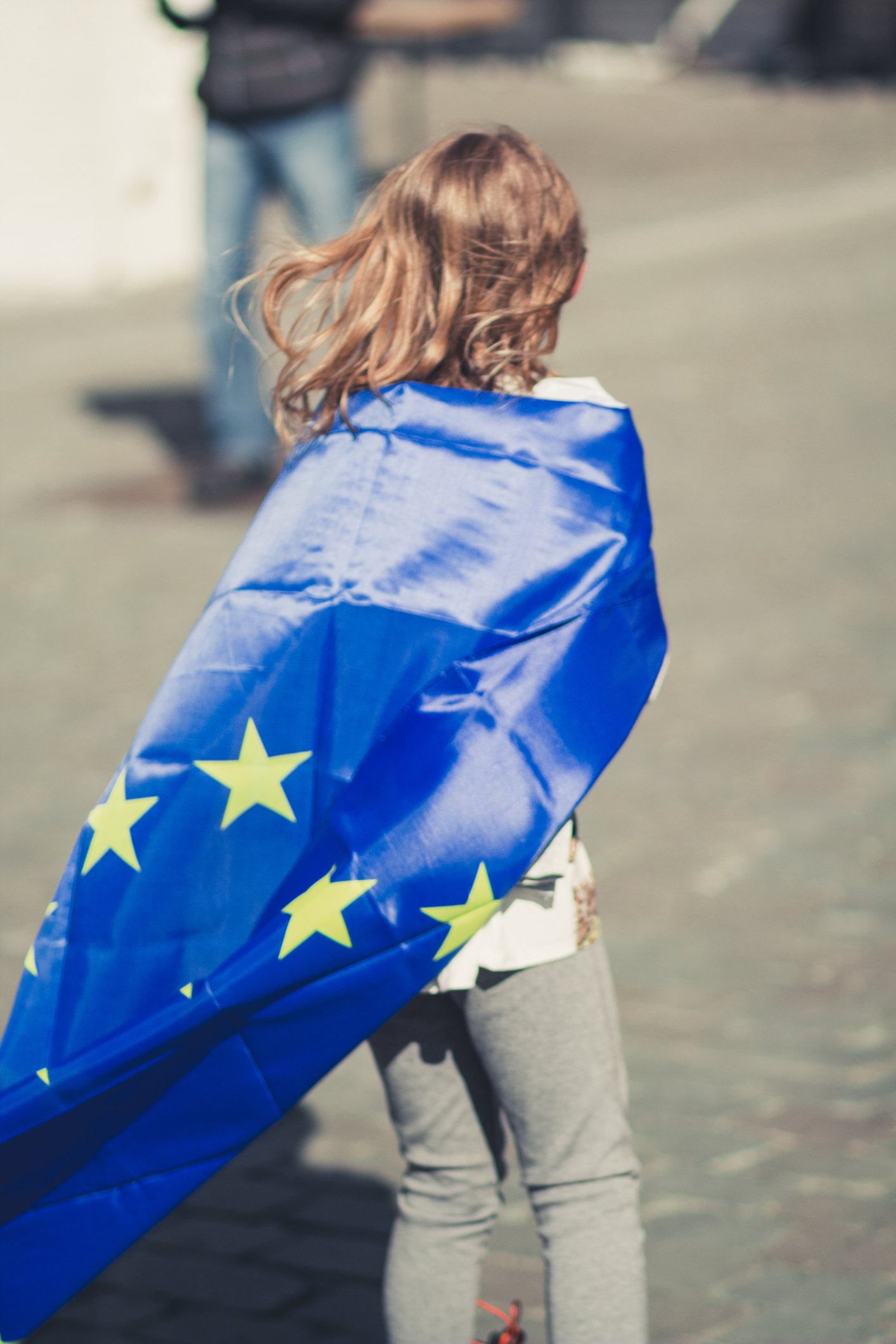
(photo Getty Images)
In ‘La Stampa’ (29 October), Gabriele Segre writes, ‘Europe is like Peter Pan, stuck in political adolescence, oscillating between nostalgia and distraction, while the rest of the world is rewriting geopolitics at lightning speed.’ Even for Agnese Pini, director of QN (La Nazione, Il Resto del Carlino and Il Giorno, 2 November), Europe is ‘at a standstill’, while ‘the giants’, namely China and the US, establish an ‘icy and precarious peace’ in a ‘new bipolar world in which the voice of the Old Continent is missing’. Europe is incapable of ‘making political choices rather than accounting choices’, as demonstrated by the discussions on the EU’s and individual states’ meagre budgets. Lucrezia Reichlin wrote in the Corriere della Sera on 1 November that Europe is in difficulty in the ‘era of new empires’, with arrangements such that ‘at the political level, a hybrid system dominated by nation-states with imperial connotations is emerging’, while ‘at the economic level, the system continues to be characterised by globalisation that ignores borders’. It should be added that powerful, unscrupulous Big Tech companies dominate much more than in the past, and are determined to create a world in which democracy and freedom are separated, and new technologies radically reshape power, interests and values.
Segre, Pini and Reichlin are three of the many voices that have long been highlighting the worsening political and strategic crisis in Europe. Despite being an economic giant, Europe is a political dwarf, incapable of asserting the weight of its own interests and values, and of the noble tradition on which the original combination of liberal democracy, the market economy and welfare systems is based. This is a Europe that now seems mute, frightened, battered and divided.
And yet, right now, do we see a way forward for European recovery? Can we glimpse a political choice of historic value that puts Europe back on the stage of a rapidly changing world, with authority and incisiveness?
There is no easy solution, but there is an endless amount of literature on solutions to the crisis, from political to economic to social perspectives. This includes the two key reports commissioned by Brussels and signed by Mario Draghi and Enrico Letta that focus on choices for competitiveness and the formation of the European Single Market. They address environmental and digital transitions, as well as banking and finance, and are praised for being wise, forward-looking, lucid and full of complex analyses and responsible proposals. They were praised by everyone at the top of the EU. Yet they have been left gathering dust in the drawers of the Commission and the governments of European countries for over a year.
Is our fate paralysis, then? A cultured and sophisticated, yet powerless, Europe that is merely a grand hotel for the new ’emperors of the world’? The risk is real,
yet the road ahead is far from paved with improbable ideas and proposals. Leafing through the newspapers of recent weeks (good newspapers again) one comes across ideas that merit attention and political engagement. Consider the ideas of Giulio Tremonti, for example: President of the Senate Foreign Affairs Commission, former Minister of the Economy, and above all, President of the Aspen Institute Italia (an authoritative think tank capable of providing well-informed, politically cross-party analyses). In an article in the Corriere della Sera on 2 November, Tremonti writes that it is necessary to ‘unite for global trade’ and ‘return to the spirit of Bretton Woods, with an agreement between China, the USA and Europe’ (that agreement, in 1944 when the Second World War was still ongoing, regulated relations between currencies in the common interest) and to follow a similar path for world trade today. International trade is the responsibility of the EU, not individual states.
The point is this: the EU must be revived. It must escape the trap of unanimous decision-making and the illusion of minimal federalism, where individual states form the backbone of Europe and have the final say. Despite everything, we need more Europe. We need a better Europe that puts an end to the intolerable prices paid by Brussels bureaucracies and short-sighted sovereignty. Last week’s Dutch vote in favour of pro-European political forces was a modest signal, but it may make people think twice.
Europe already operates with qualified majorities and tries to circumvent vetoes and paralysing unanimity. This is a path that should be followed and strengthened. A ‘political’ road while we wait for the time to be right for profound institutional reform.
The issues to be addressed are clear: security and defence. Former NATO deputy secretary Mircea Geoana argues that the EU must re-discuss the contract with the US, involving the UK, Norway, Turkey and Canada (La Stampa, 30 October). Other issues include energy, the environment, new technologies, scientific research, training, and everything that concerns the potential, social costs and governance of artificial intelligence. A ‘European way’ must be rapidly constructed to free us from the dominance of the USA and China.
It is a busy agenda and politically arduous, but a key step. Agnes Pini again: ‘Today, more than ever, we need political choices, not accounting ones. Credible military capability, achieved through truly joint procurement, is essential. We must have common economic levers on energy and critical technologies to avoid being held hostage to the next truce between Washington and Beijing. A European negotiating line on Ukraine that complements, or even balances, the American one is also crucial. Otherwise, if Europe continues to speak only the language of budgets, not the language of power, peace, when it comes, will not bear our signature.’
Jean Monnet, one of the founding fathers of Europe, always said that Europe moves forward and builds itself through adversity. His warning has never been more relevant, and timely and forward-looking political choices have never been more necessary.
There is a strategic political opportunity to create a better Europe for future generations that could be seized: the ‘Next Generation EU’ plan, which involves over 750 billion euros’ worth of investments (largely financed through borrowing on the international financial market, ‘good debt’, as Mario Draghi would say) and was devised to deal with the dramatic consequences of the pandemic. Sooner or later, we Italians will need to discuss how we have used the Next Generation EU Recovery Plan (NRP), and whether we have adhered to its development guidelines.
If European rulers truly wish to be statesmen, they must take responsibility for the next generations, not just the next budgets and elections. It is also our responsibility as older people to make the most of the twilight years we hope will last as long as possible. This responsibility should be strengthened by a robust historical memory in order to interweave the past and the future, and finally give form to the idea of ‘Europe as destiny’, which we have experienced during a long period of prosperity and peace. However, dark shadows of crisis are now looming over this idea.
Is Europe fragile? Yes, politically, economically and socially, in the internal relations of individual states and the Brussels area, and in international relations. Yet it is precisely the assumption of fragility as a founding element that is a strength in politics, democracy, business, technology and personal and social relationships, and in plans for the future. Strength lies ‘beyond fragility’, with critical awareness and self-criticism.
In his latest novel, What We Can Know (Einaudi), British author Ian McEwan, born in 1948, reminds us of this with a disturbing story about how we might be perceived in the near future. In the 21st century, the Earth has been ravaged by climate disasters and political and intellectual stupidity. On 2 November, Caterina Soffici wrote about it sharply in La Stampa: ‘What will remain of what we are’.
This is a disaster to be avoided with humility, knowledge, intelligence, and the ability to take on the interests and values of the ‘other’. It is a world to be defended and, at the same time, corrected and rebuilt, it is reform.
Wise words like McEwan’s are therefore appropriate and welcome, and we all know how much politics, economics and science, especially today, have a fundamental need for good literature.
(photo Getty Images)