
Critical knowledge for governing AI: the essential role of libraries


A time of crisis, but also an opportunity. Difficulties arise in the face of radical geopolitical and technological changes, and critical thoughts must be considered and choices must be made so as not to continue walking along the edge of the cliff with the risk of falling off (after all in Ancient Greek: κρίσις (krisis) and κρίνω denote ‘decision, separation, judgement’, and the Indo-European root ‘krey’ means ‘to sift, to divide’. Words such as ‘criticism’ and ‘criterion’ are also derived from this root).
What criteria should we follow when faced with the dilemmas posed by the disruptive spread of AI across so many aspects of daily life, scientific and technological research, and the organisation of work and business? This was discussed recently at the University of Verona during an event organised by OMI (the Observatory on Corporate Monographs), featuring a debate on ‘The Human Enterprise – Corporate Culture and Artificial Intelligence: Industrial Roots and New Digital Frontiers’. The contributions converged on two points: the rejection of the simplistic division between ‘doomsayers’ and ‘pro-AI advocates’, and the need to develop widespread critical awareness. Rejection, born of fear of technological innovation, or its enthusiastic acceptance? This means coming to terms with innovation that is fraught with problems but also offers advantages; understanding its critical issues; managing its developments and applications; and taking into account the principle of the centrality of the human person, as well as the ethical, social and legal responses required, as one of the finest reflections available to us, Pope Leo XIV‘s ‘Magnificent Humanity’, indicates with great clarity. This is a challenge that cannot be confined to national borders, but must be set within a European framework combining governance rules, high-tech public and private investment and appropriate fiscal incentives in order to build an AI system that is grounded in Europe’s values and languages.
Critical thinking and attention to the growing spread of knowledge-based processes are therefore required. We need a political commitment to a new approach to welfare to tackle the problems posed by radical changes in the world of work. As with all technological innovations throughout history, old professional skills are becoming obsolete while new ones are emerging. Those who argue that the new jobs created by AI applications will outnumber those lost are probably right. The trouble is that many of these opportunities will not be accessible to those losing their jobs. What can be done to guarantee them opportunities, support and security?
We need to rethink welfare systems creatively, focusing not only on developing new skills (‘reskilling’ in economic terms), but also on income structure and distribution. For innovations to be accepted and ‘digested’, they need to be socially acceptable, and without building a greater sense of confidence in the future, both personal and social, we will see negative repercussions on society, the economy, and of course, democracy itself. How can this be achieved?
The key lies in one word: knowledge. This term recurs in our blogs, most recently on 2 November. Knowledge must continually be updated, it is a ‘learning to learn’ process that lasts a lifetime, as discussed by the philosopher of science Telmo Pievani in his latest book, Good Ignorance (Raffaello Cortina Editore). Pievani defines this as ‘the awareness that we know nothing allows us to know more: a sort of oceanic sense of ignorance’.
Knowledge, and not merely skills, is what is needed. In everyday speech, the two terms are unfortunately all too often used as synonyms, but skills, the know-how and the ‘how to’, become obsolete as the technologies at our disposal are constantly changing. Knowledge, on the other hand, is critical thinking: the ability to question accumulated knowledge, the habit of asking questions and a passion for ‘following virtue and knowledge’, as Dante Alighieri taught us in the ‘Inferno’ verses. This is precisely what is needed to tackle the challenges posed by AI.
The multinational consultancy firm PwC has also recognised this, and is preparing to spend over a million dollars teaching 85,000 of its employees how to develop critical judgement with regard to AI products. A ‘Critical Thinking & Judgement Certificate’ will be awarded upon completion of a series of university courses designed to teach participants how to verify, develop and test the findings of research into the outcomes of various AI tools (Corriere della Sera, 12 November).
Literary festivals and book fairs are useful in this regard, such as Pordenonelegge, Mantua and Taormina, as well as Salerno and Polignano with its ‘Libro Possibile’, and events such as BookCity, organised in Milan every year at the end of November. There are also initiatives such as ‘#ioleggoperché’, promoted by the AIE (the Publishers’ Association), which encourage the donation of books to school libraries throughout Italy.
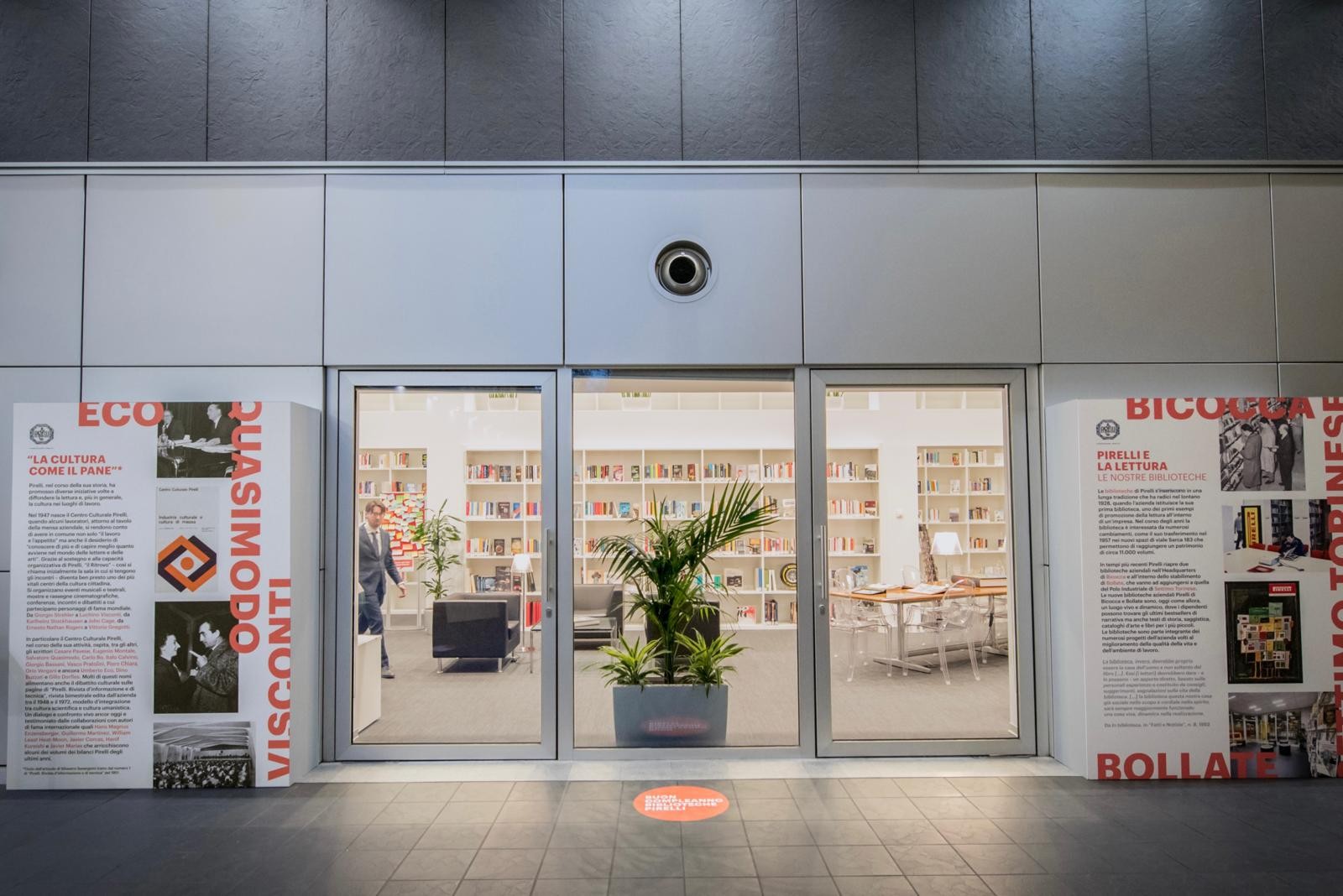
Herein lies the value of libraries, both public and private. Public libraries such as the Central Library of Turin, set to open in Valentino Park in the coming days, will be veritable cultural hubs, as will the ‘Archimede’ library centres in Settimo Torinese and the ‘Multiplo’ in Cavriago in Emilia. And private libraries, such as workplace libraries at Pirelli, Bracco and Assolombarda in Milan, Unipol in Bologna and a number of other companies in various cities, both large and small.
There is a key phrase at the entrance to the Pirelli Library in Bicocca, which reopened exactly ten years ago: ‘La cultura come il pane’ (literally, ‘culture like bread’). It is the title of an article by Silvestro Severgnini, written in 1951 for the magazine Pirelli, which highlights the commitment of businesses to being key players in economic recovery following war, as well as fundamental social and cultural actors. The bread of development, the nourishment of knowledge and thus of democracy, and a stimulus towards new horizons inspired by the idea that reading and listening to words of wisdom is the main path to building our consciousness and a better humanity.
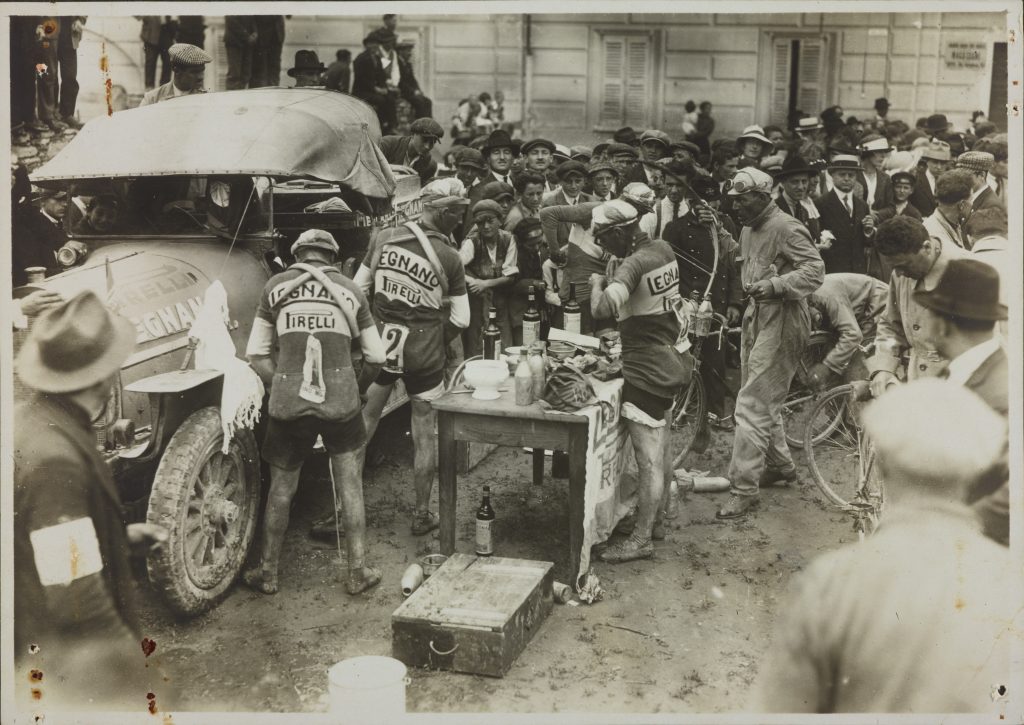
Marco Tronchetti Provera, Executive Chairman of Pirelli, comments, ‘A book can give rise to a dream and help us turn it into reality. It allows us to get to know different people and worlds, to understand the past, and to imagine a future for our children and grandchildren.’ At Pirelli, this conviction has deep-rooted origins. In 1928, we established a circulating library of 800 books for our employees, and today our libraries – from Bicocca to Settimo Torinese, from Bollate to Bari – boast 11,000 books. They are places where employees, their families, schools and children can meet writers and artists. And further: ‘A company grows thanks to the skills of its people, their curiosity, and their ability to look beyond what they already know, which is why culture is part of our way of doing business, in research, technology, and product quality, as well as art and the preservation of our heritage’.
Tronchetti Provera concludes, ‘This is what we at Pirelli call polytechnic culture: fostering a dialogue between scientific and humanistic knowledge, bringing together rigour and imagination, a relationship that becomes even more important in the face of artificial intelligence. To develop its potential and manage its effects, we need preparation, critical thinking, and an awareness of our responsibilities. Progress has value when it improves people’s lives’.
The ‘Lettura’ supplement of Corriere della Sera expresses this idea through the headlines of a lengthy feature on the value of books: ‘ The Library of Babel’ and ‘The Libraries of Italy’, commenting, ‘Borges understood everything with his Infinite Library. And we expect AI to bring us more benefits than harm’.
To avoid this harm, it is essential to turn to books. For the pleasure of the text, for good reading, for literature, history and science.