


To understand social inequalities and protests, we need to look beyond the streets


Inequalities in income and living standards in Italy remain higher than the European Union average, with inflation and prices, particularly for housing and food, continuing to rise. Meanwhile, wages and salaries are rising at a slower rate than in the rest of Europe, and 5.4 million people are living in absolute poverty. This is the picture that emerges from cross-referencing data from Eurostat and the Consumers’ Union (based on Istat statistics; Corriere della Sera, 25 October, and La Stampa, 16 October). If we are to better understand the reasons behind increasingly widespread social unrest and provide long-term political responses to the protests, including those by young people, which are mounting in many cities across Italy and Europe, we need to reflect on these factors. These protests cannot be dismissed as mere violence and vandalism, which are certainly reprehensible and must be prevented and suppressed, as is often the case in media reports. ‘We might have stopped the looting, but we haven’t stopped the anger of young people who have been left without representation’, as the Quotidiano Nazionale editorial (published in Il Resto del Carlino, La Nazione and Il Giorno, 25 October) effectively sums up.
In fact, the figures show that Italy’s ‘Gini coefficient’, which measures income distribution among the population on a scale from 0 (perfect equality) to 100 (all wealth held by one person), stands at 31, compared with an EU average of 29.2. This represents a very slight improvement on the 2024 figure of 32.2, but Italy is still far behind France (30.4) and Germany (30.1), as well as the EU average (29.2). In Italy, 23.2% of young people are at risk of poverty, compared with an EU average of 19.6%.
There are 5.4 million people, or 2.1 million households, living in ‘absolute’ poverty (with incomes insufficient to cover the cost of essential goods and services, from food to healthcare and housing). This situation also affects those in work, with a rate of 14.3% among manual workers, almost double the average for the employed population, which is a sign of precarious employment and low wages.
More generally, the cost of living has risen sharply whilst wages and salaries have not. In Milan (Il Giorno/ Quotidiano nazionale, 19 October), for example, prices have risen by 26% over the last ten years (with peaks of 29% for foodstuffs), whilst minimum wages in the retail sector have risen by only 13%, barely half that figure.
If we also consider the tax disparities (78.7% of personal income tax is paid by 30.2% of taxpayers), including public and private sector employees, pensioners, and a small number of businesses that comply with tax regulations, we are faced with a situation of severe imbalance. This undermines the very foundations of civic identity and consequently the perception of democratic values, starting with equality and opportunities for social advancement.
So, in light of the current situation, what should we do? The call to take a close look at the situation comes first and foremost from the President of the Republic, Sergio Mattarella: ‘We must take the young people’s discontent seriously and not view them with indifference or petty condescension. We need greater social cohesion’ (Corriere della Sera, 22 October). But the call also comes from the Archbishop of Milan, Mario Delpini: ‘Let us listen to young people. Indifference breeds anger. The creation of ghettos does not provide the conditions for the young people living there to become good citizens. Therefore, repression alone is not enough to heal widespread aggression. We need education, culture and a welcoming attitude’ (La Repubblica, 24 October). And from Mario Draghi: ‘Behind the protests lies a stalling of expectations: young people perceive a standstill in social dynamics, struggle to find work, and feel ill-prepared to face a rapidly transforming society’ (La Stampa, 22 October).
Draghi is well aware of the situation in various European countries, such as France, Spain and Italy, where protests have erupted. As a banker, senior civil servant and government official, he is well aware of just how deep the social, political and economic crisis in the EU runs. This is effectively summarised by the latest cover of the weekly magazine The Economist: ‘The agony of liberal Europe’. And for some time now, he has been emphasising the need for the EU to act as a unified political entity (which by no means implies continued unanimous decision-making by member states, a form of governance that would paralyse the EU) and to make choices that will prevent it from being crushed between the hegemonic ambitions of the US, Russia and China, and the overwhelming power of big tech. We must defend our culture, capable of sustaining liberal democracy, the market economy and the welfare state, that is to say, freedom, innovative enterprise and social solidarity. These protests emphasise the need for reforms, an improvement in living and working conditions, and a renewal of politics and democratic culture. Looking towards the EU’s Next Generation, ‘we must prioritise merit so that young people can progress rapidly within companies, and address issues such as wages, affordable housing and welfare. If everyone did their bit, we would be well placed to support young people and the country more effectively. Rebuilding trust’, says Emanuele Orsini, president of Confindustria (Il Sole24Ore, 24 October).
This is precisely what young people are calling for: confidence in the future and in the functioning of democracy, encompassing the rule of law, sustainable development, quality education and social integration.
With the exception of the violent few, this applies to both those who have taken to the streets to protest peacefully and those who, disillusioned, reject politics and civic engagement. But they cannot, nor do they wish to, give up on a better future.
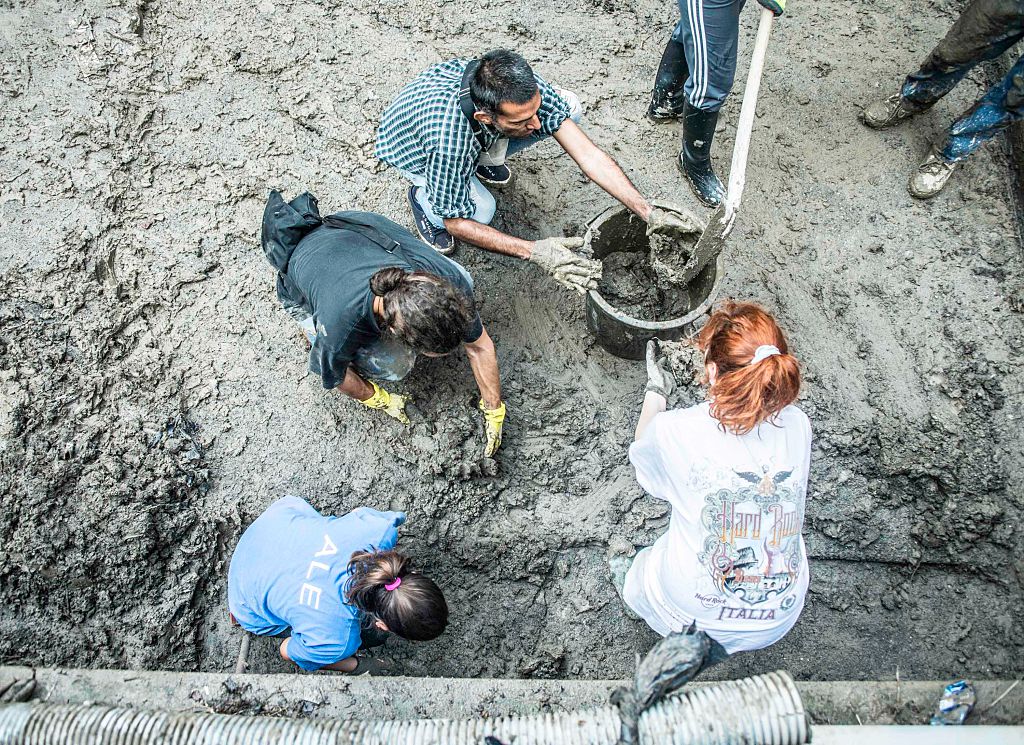
(photo Getty Images)