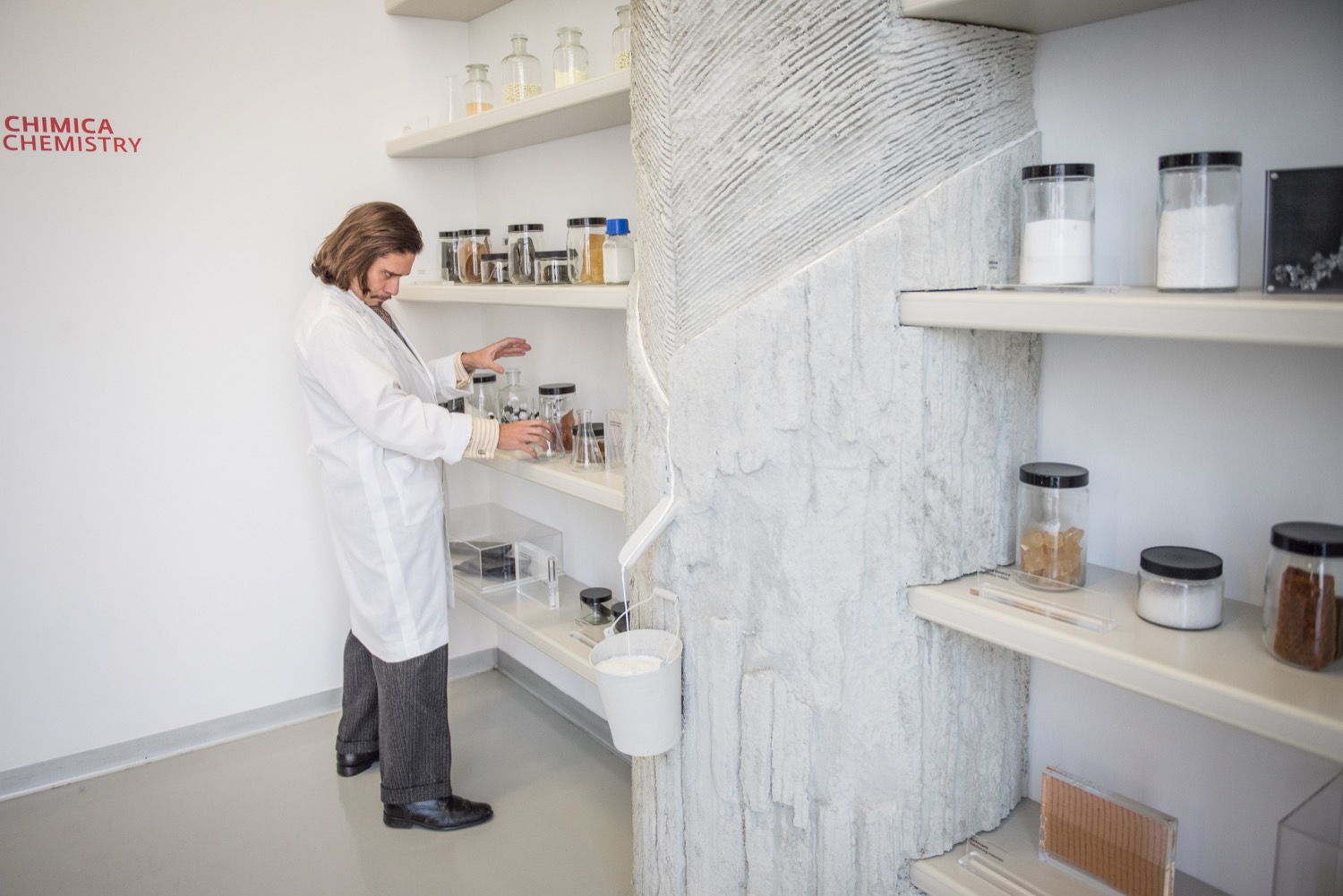

XV Corporate Culture Week. “Animated” tours
06 December 2016

Accessibility Come visit us.
Find out moreHelp with your research To access the Historical Archive's documents and materials, please fill out the form to request an appointment.
Request an appointmentHelp with your research To access the Historical Archive's documents and materials, please fill out the form to request an appointment.
Request an appointmentThe Pirelli Foundation Educational Programs
Explore pathsCome visit us.
Come visit us.
To access the Historical Archive's documents and materials, please fill out the form to request an appointment.
Grazie per la tua richiesta
Riceverai una mail di conferma dell'avvenuta ricezione della richiesta e sarai ricontattato.
Grazie per la tua richiesta
Abbiamo ricevuto la tua richiesta. Sarai ricontattato dallo staff di Fondazione Pirelli Educational.
Grazie per la tua richiesta
Abbiamo ricevuto la tua richiesta. Sarai ricontattato al più presto.
The story of Olivetti after Adriano has just been published: it is a tale of “mutation in nature” based on unique and special cultural roots
One learns a great deal from the experience of others as well as one’s own. This is the heart of a story meant in the widest sense of the term. It also applies to companies and to entrepreneurs. It is not a question of copying, but of understanding. Drawing teachings from what has happened and from what is happening around one’s company is vital. So reading the latest literary efforts of Paolo Bricco on the question of Carlo De Benedetti’s Olivetti is a good way of applying the principle of knowing in order to grow. Bricco – a journalist and narrator of company stories – writes in an accurate and detailed way, which makes for a smooth read. And he tells the story of excellent examples of good Italian entrepreneurship – that of Olivetti in fact -, from a time of great difficulty following the death of Adriano, right up to the end of De Benedetti’s rule.
The book explains how under the guidance of the Engineer the company experienced an intensive period of development, founded on the production of personal computers (the M24 is the best-selling pc in the world) and the extension of products: faxes, photocopiers, printers. Yet straddling the 1980s and the 1990s, the company shared the hard remodulation of information technology alongside the other European Fordism-based electronic companies, also experimenting the happy metamorphosis in telephony with Omnitel. Indeed, as Bricco points out, it is a change in nature (not just in skin) that is unique on the international scene: from the crisis of the factory to the new services. Then everything ends in 1996, when De Benedetti left the helm of the group.
The whole story is, as mentioned earlier, told with painstaking detail and based on several documentary sources: an example of a story that is easy to read and that can tell many historians a great deal. A lively and complex story, sometimes contradictory yet always useful to cover. And one which in fact reconstructs an exemplary affair in the Italian 20th Century: that of a company which much more than others was able to combine manufacturing with culture, high technology and entrepreneurial ability.
L’Olivetti dell’Ingegnere (1978-1996) (The Engineer’s Olivetti 1978-1996)
Paolo Bricco
Il Mulino, 2016

The story of Olivetti after Adriano has just been published: it is a tale of “mutation in nature” based on unique and special cultural roots
One learns a great deal from the experience of others as well as one’s own. This is the heart of a story meant in the widest sense of the term. It also applies to companies and to entrepreneurs. It is not a question of copying, but of understanding. Drawing teachings from what has happened and from what is happening around one’s company is vital. So reading the latest literary efforts of Paolo Bricco on the question of Carlo De Benedetti’s Olivetti is a good way of applying the principle of knowing in order to grow. Bricco – a journalist and narrator of company stories – writes in an accurate and detailed way, which makes for a smooth read. And he tells the story of excellent examples of good Italian entrepreneurship – that of Olivetti in fact -, from a time of great difficulty following the death of Adriano, right up to the end of De Benedetti’s rule.
The book explains how under the guidance of the Engineer the company experienced an intensive period of development, founded on the production of personal computers (the M24 is the best-selling pc in the world) and the extension of products: faxes, photocopiers, printers. Yet straddling the 1980s and the 1990s, the company shared the hard remodulation of information technology alongside the other European Fordism-based electronic companies, also experimenting the happy metamorphosis in telephony with Omnitel. Indeed, as Bricco points out, it is a change in nature (not just in skin) that is unique on the international scene: from the crisis of the factory to the new services. Then everything ends in 1996, when De Benedetti left the helm of the group.
The whole story is, as mentioned earlier, told with painstaking detail and based on several documentary sources: an example of a story that is easy to read and that can tell many historians a great deal. A lively and complex story, sometimes contradictory yet always useful to cover. And one which in fact reconstructs an exemplary affair in the Italian 20th Century: that of a company which much more than others was able to combine manufacturing with culture, high technology and entrepreneurial ability.
L’Olivetti dell’Ingegnere (1978-1996) (The Engineer’s Olivetti 1978-1996)
Paolo Bricco
Il Mulino, 2016
An article attempting to merge the concepts of corporate welfare and organisational health has been published
Devised and built to produce profit, the modern and prudent corporate organisation evolves into something more complex and varied, far from the simple mechanism that transforms raw materials into finished products. This is one of the results of the era where companies and productions have found themselves to act. A complex condition, which beside profit and rationality of production also involves the social responsibility of productive action as one of the organisational cornerstones of the modern company.
The article by Anna Taglioli (from the Department of Political Sciences of the University of Pisa) tries to put together in a single reasoning the drives towards the growth of corporate welfare and the best possible “organisational health”.
The work starts with the consideration that the current social make-up extends the concept of health from the mere psycho-physical aspect to that related to risk and social vulnerability. Health is therefore not just an individual condition, but it also has to do with collective assets. In other words, it could be said that the health of each individual becomes a public asset. With other protections therefore and other developmental horizons.
In this context, production organisation and “corporate collectivity” play an important role. This is where individuals spend a good part of their active life; it is from this organisational context that positive drives or negative pressures can also develop under such profiles.
According to Anna Taglioli, a new way of co-ordinating knowledge about health and knowledge about the organisation is required.
The author writes as follows in thee presentation of her work: “The economic and social changes as well as the new risks deriving from public welfare and the rise in conditions of stress and insecurity – both on a European and on a national scale – make corporate welfare a significant challenge for social well-being”. Again: it is possible to improve the “psycho-physical health and the social well-being of individuals and of the working community, as well as of the territories in which companies operate” by looking at corporate welfare in a new light.
In fact it is a renewed aspect of the culture of good business, which observes social change that is reflected within production organisation and learns from it to improve the end results of production itself, looking not only for pure and simple profit.
Anna Taglioli’s work thus provides a contribution for further investigation and clarification of the strong ties between individual and social health and corporate organisation.
Anna Taglioli
Salute e società (health and society), 2016 Fascicolo (Leaflet) 3, pages 75-87
An article attempting to merge the concepts of corporate welfare and organisational health has been published
Devised and built to produce profit, the modern and prudent corporate organisation evolves into something more complex and varied, far from the simple mechanism that transforms raw materials into finished products. This is one of the results of the era where companies and productions have found themselves to act. A complex condition, which beside profit and rationality of production also involves the social responsibility of productive action as one of the organisational cornerstones of the modern company.
The article by Anna Taglioli (from the Department of Political Sciences of the University of Pisa) tries to put together in a single reasoning the drives towards the growth of corporate welfare and the best possible “organisational health”.
The work starts with the consideration that the current social make-up extends the concept of health from the mere psycho-physical aspect to that related to risk and social vulnerability. Health is therefore not just an individual condition, but it also has to do with collective assets. In other words, it could be said that the health of each individual becomes a public asset. With other protections therefore and other developmental horizons.
In this context, production organisation and “corporate collectivity” play an important role. This is where individuals spend a good part of their active life; it is from this organisational context that positive drives or negative pressures can also develop under such profiles.
According to Anna Taglioli, a new way of co-ordinating knowledge about health and knowledge about the organisation is required.
The author writes as follows in thee presentation of her work: “The economic and social changes as well as the new risks deriving from public welfare and the rise in conditions of stress and insecurity – both on a European and on a national scale – make corporate welfare a significant challenge for social well-being”. Again: it is possible to improve the “psycho-physical health and the social well-being of individuals and of the working community, as well as of the territories in which companies operate” by looking at corporate welfare in a new light.
In fact it is a renewed aspect of the culture of good business, which observes social change that is reflected within production organisation and learns from it to improve the end results of production itself, looking not only for pure and simple profit.
Anna Taglioli’s work thus provides a contribution for further investigation and clarification of the strong ties between individual and social health and corporate organisation.
Anna Taglioli
Salute e società (health and society), 2016 Fascicolo (Leaflet) 3, pages 75-87
A school for made in Italy excellence. A place to train useful people, or rather indispensable people to grow “hi tech luxury”, that original blend of sophisticated creativity and new digital technology that lies at the heart of the success of the finest Italian industries. It is in fact called the “Scuola Politecnica del Saper Fare italiano” (Polytechnic School of Italian Savoir-Faire) and it stems from the agreement between Altagamma (an association of 115 luxury brands, chaired by Andrea Illy), Assolombarda, the Ministry for Education, the Lombardy region and the Milan Polytechnic University and it will be built in the former Expo area, right beside the research laboratories and the Human Technopole companies and the new scientific campus of the State University (at the end of last week, the Government and Parliament finally released the funds for these two initiatives, with allocations in the budget bill).
It is a post-secondary school technical institute involving three years of specialised studies, with 900 graduates in the first three-year period, starting in 2018: this training is to be “multi-disciplinary for the manufacturing sectors with a high degree of creativity, such as fashion, food, furnishings and jewellery and the highest levels of technological innovation, such as automation, biotechnologies and pharmaceuticals” explains Andrea Illy, chairman of Altagamma. He adds: “It is the first step in building a network of schools. This institute will become the fulcrum of a functional technical pole that will involve technical institutes, professional schools, corporate training schools and universities. It has three goals: to select the best students, to modernise the study programmes and to invent new jobs”.
Hi tech craftsmen and Industry4.0 experts to be precise. With a long-term perspective. “Luxury 4.0, the evolution of the sector up to 2025” is the name of the project by Altagamma. With one basic consideration: the global luxury market is worth over one thousand billion Euro, with Italy holding a 10% share of it (totalling 5% of the GDP). And competitiveness needs to be defended. Indeed, by focusing on creativity. And on human capital. Innovation, research and development, companies capable of insisting on products and productions with high added value, an open culture. “In the luxury sector understood in the extended sense, from fashion to nautical, jewellery and design, there are 110 thousand vacancies” Illy points out. A production eco-system. With plenty of wealth to create: companies, work, future. Agreeing, in the digital world, with the lesson by Carlo Maria Cipolla,a great economic historian, on the “Italians who are accustomed, since the Middle Ages, to producing, in the shade of the bell towers, beautiful things that the rest of the world likes”. Tradition and innovation, in fact. And a new burst of competitiveness in the key sectors of manufacturing and, consequently, of the entire Country.
The school of made in Italy excellence is the latest example of the growing awareness that Italian development is strictly connected to the marriage of “culture & manufacturing”. “Investing more in knowledge to build work” is what governor of Banca d’Italia Ignazio Visco is often heard repeating when he looks at the evolution of “digital Italy”. And Nuccio Ordine, a famous philosopher, when liaising with the Minister of Education Stefania Giannini (“Sette” of Corriere della Sera, 18th November), insists on the need to grow the share of GDP which Italy allocates to the university system, which is just 0.4% of the GDP, compared with 0.99% in France and 0.98% in Germany, twice as much as us.
It is true that recent provisions made by the Government are improving the situation somewhat. And the quality of universities is also improving (the Polytechnic universities of Milan and Turin and Bocconi university are climbing up the international ratings and recently both the Milan polytechnic and the Università Cattolica in Milan are listed in the “top 100” universities in the world for Graduate Employability Ranking 2017, the ranking by English institute Qs based on the most sought-after students by companies). Yet there is still a lot to do.
There are two challenges. To train our human capital better, from technical institutes to secondary schools and universities. And to give job opportunities and growth opportunities to these “talents”. In other words: to stem the “brain drain” (100 thousand youths left Italy in 2015, especially in the 18-34 age bracket, the most educated and dynamic; 20 thousand of whom come from the rich and dynamic region of Lombardy). And if anything draw in new talents from the rest of the world.
To do so, synergy is required between universities and companies. And an active role played by the institutions, from the Government to the Regions. Something is happening: the Lombardy region, for instance, has approved a law on research, also to fund projects shared by universities and companies. And Parliament is faced with a draft law (defined by Michele Tiraboschi, professor of Employment Law in Modena) to create and motivate the figure of the “cosmopolitan researcher” (Dario Di Vico discusses this in Corriere della Sera, 24th November). So the world is in motion. And it should be heeded.
Milan as the metropolis has a key role in this process. With its universities, research centres and, now, the Human Technopole project, where innovation, life sciences, big data pool together in the productive training-research-companies dialogue. The framework is the “economy of knowledge”. The strength is hi tech and medium tech manufacturing that is already implementing Industry 4.0 in view of “Italian-style smart industry”, applying the protocols of the “digital revolution” to a world of small and medium-sized enterprises, networks and districts. Recurrent themes also in the most sophisticated industrial provinces, from Brescia to Bergamo, from Emilia to the dynamic North-East.
And also “Milan steam city” (science, technology, environment or even energy from green economy, arts and manufacturing) which is so dear to Assolombarda is on the horizon. This is the challenge in which creative intelligence fuels industry and transforms it. A challenge is under way, compared with the other European capitals of the most innovative industrial economy. And the “smart” paradigm is also useful for other areas in the Country. Polytechnic schools and universities are in fact indispensable. “Made in Italy” excellence is about culture first and foremost.

A school for made in Italy excellence. A place to train useful people, or rather indispensable people to grow “hi tech luxury”, that original blend of sophisticated creativity and new digital technology that lies at the heart of the success of the finest Italian industries. It is in fact called the “Scuola Politecnica del Saper Fare italiano” (Polytechnic School of Italian Savoir-Faire) and it stems from the agreement between Altagamma (an association of 115 luxury brands, chaired by Andrea Illy), Assolombarda, the Ministry for Education, the Lombardy region and the Milan Polytechnic University and it will be built in the former Expo area, right beside the research laboratories and the Human Technopole companies and the new scientific campus of the State University (at the end of last week, the Government and Parliament finally released the funds for these two initiatives, with allocations in the budget bill).
It is a post-secondary school technical institute involving three years of specialised studies, with 900 graduates in the first three-year period, starting in 2018: this training is to be “multi-disciplinary for the manufacturing sectors with a high degree of creativity, such as fashion, food, furnishings and jewellery and the highest levels of technological innovation, such as automation, biotechnologies and pharmaceuticals” explains Andrea Illy, chairman of Altagamma. He adds: “It is the first step in building a network of schools. This institute will become the fulcrum of a functional technical pole that will involve technical institutes, professional schools, corporate training schools and universities. It has three goals: to select the best students, to modernise the study programmes and to invent new jobs”.
Hi tech craftsmen and Industry4.0 experts to be precise. With a long-term perspective. “Luxury 4.0, the evolution of the sector up to 2025” is the name of the project by Altagamma. With one basic consideration: the global luxury market is worth over one thousand billion Euro, with Italy holding a 10% share of it (totalling 5% of the GDP). And competitiveness needs to be defended. Indeed, by focusing on creativity. And on human capital. Innovation, research and development, companies capable of insisting on products and productions with high added value, an open culture. “In the luxury sector understood in the extended sense, from fashion to nautical, jewellery and design, there are 110 thousand vacancies” Illy points out. A production eco-system. With plenty of wealth to create: companies, work, future. Agreeing, in the digital world, with the lesson by Carlo Maria Cipolla,a great economic historian, on the “Italians who are accustomed, since the Middle Ages, to producing, in the shade of the bell towers, beautiful things that the rest of the world likes”. Tradition and innovation, in fact. And a new burst of competitiveness in the key sectors of manufacturing and, consequently, of the entire Country.
The school of made in Italy excellence is the latest example of the growing awareness that Italian development is strictly connected to the marriage of “culture & manufacturing”. “Investing more in knowledge to build work” is what governor of Banca d’Italia Ignazio Visco is often heard repeating when he looks at the evolution of “digital Italy”. And Nuccio Ordine, a famous philosopher, when liaising with the Minister of Education Stefania Giannini (“Sette” of Corriere della Sera, 18th November), insists on the need to grow the share of GDP which Italy allocates to the university system, which is just 0.4% of the GDP, compared with 0.99% in France and 0.98% in Germany, twice as much as us.
It is true that recent provisions made by the Government are improving the situation somewhat. And the quality of universities is also improving (the Polytechnic universities of Milan and Turin and Bocconi university are climbing up the international ratings and recently both the Milan polytechnic and the Università Cattolica in Milan are listed in the “top 100” universities in the world for Graduate Employability Ranking 2017, the ranking by English institute Qs based on the most sought-after students by companies). Yet there is still a lot to do.
There are two challenges. To train our human capital better, from technical institutes to secondary schools and universities. And to give job opportunities and growth opportunities to these “talents”. In other words: to stem the “brain drain” (100 thousand youths left Italy in 2015, especially in the 18-34 age bracket, the most educated and dynamic; 20 thousand of whom come from the rich and dynamic region of Lombardy). And if anything draw in new talents from the rest of the world.
To do so, synergy is required between universities and companies. And an active role played by the institutions, from the Government to the Regions. Something is happening: the Lombardy region, for instance, has approved a law on research, also to fund projects shared by universities and companies. And Parliament is faced with a draft law (defined by Michele Tiraboschi, professor of Employment Law in Modena) to create and motivate the figure of the “cosmopolitan researcher” (Dario Di Vico discusses this in Corriere della Sera, 24th November). So the world is in motion. And it should be heeded.
Milan as the metropolis has a key role in this process. With its universities, research centres and, now, the Human Technopole project, where innovation, life sciences, big data pool together in the productive training-research-companies dialogue. The framework is the “economy of knowledge”. The strength is hi tech and medium tech manufacturing that is already implementing Industry 4.0 in view of “Italian-style smart industry”, applying the protocols of the “digital revolution” to a world of small and medium-sized enterprises, networks and districts. Recurrent themes also in the most sophisticated industrial provinces, from Brescia to Bergamo, from Emilia to the dynamic North-East.
And also “Milan steam city” (science, technology, environment or even energy from green economy, arts and manufacturing) which is so dear to Assolombarda is on the horizon. This is the challenge in which creative intelligence fuels industry and transforms it. A challenge is under way, compared with the other European capitals of the most innovative industrial economy. And the “smart” paradigm is also useful for other areas in the Country. Polytechnic schools and universities are in fact indispensable. “Made in Italy” excellence is about culture first and foremost.
A handful of pages presents the interpretative outline, the accomplishments and the guidelines of one of the most excellent tools to understand the culture of Italian manufacturing
A company can be told. This assumption has now become part and parcel of the cultural heritage of a significant portion of Italian management and entrepreneurship. It is nevertheless necessary to continue along the road of discovery and in-depth investigation into the meaning of the tale of a company and of the various tools used to tell it. It is therefore necessary better to understand and learn from what has already been done. This is the case with company museums: material representations of a company’s past, but also, when interpreted correctly, of the meaning of the presence of a factory in a specific location.
To have a useful overview of what has already been done, read “Il museo d’impresa: rassegna della letteratura” (The company museum: review of literature) by Andrea Quintiliani.
It is a clear and spot-on analysis of the main studies published in recent years on the topic of company museums, which has the benefit of outlining as early as the introductory lines how these activities have changed. “The company museum – Quintiliani in fact writes -, is configured as a multi-purpose marketing tool capable of activating and raising awareness as to the value systems which touch on the widest sphere of recognisability and identity of a corporate brand”. The author does point out the flaw that has accompanied many “interpretations” of company museums up until now: their almost sole use as commercial tools.
The leap in quality that needs to be taken, according to Quintiliani, is in fact this: to move company museums on from being mere marketing tools to something different and more complex. “These facilities are an expression of the company’s (social) orientation in satisfying the legitimate expectations of the stakeholders (employees and the local territory/community first and foremost)”. But that’s not all, because again according to Quintiliani the “company museum plays an additional function in valuing the cultural heritage of a territory, as it testifies to the abilities, skills, resources, habits and traditions which have distinguished a specific area of the territory (local community). It follows that the communicative model of the company museum breaks free from the logic of corporate marketing to take on a superior value as it is capable of re-evoking a collective development process that does not only concern the company but that embraces an entire community; hence, acting as a cultural entity and complementary tool to traditional museums in the representation of cultural and economic progress in a given territory”.
Hence the analysis of the situation of the main company museums (and collateral activities) found in Italy as well as the outline of the objectives which this kind of initiative can set themselves vis-à-vis corporate management. Then the author provides guidelines for the creation and valuing of corporate culture through museums.
Quintiliani writes in conclusion of his work that must absolutely be read: “A company capable of listening to and interpreting its surrounding territory is one which wisely combines the obligations of economic profitability with the expectations – also immaterial – of the reference territory”.
Il museo d’impresa: rassegna della letteratura (The company museum: review of literature)
Andrea Quintiliani (Università Telematica Pegaso, Naples)
XXVII Annual Convention on Synergies, Heritage, management and companies: what are the synergies? – Università degli Studi del Molise, Termoli facility
Sinergie Journal, 2016
The company museum: review of literature
A handful of pages presents the interpretative outline, the accomplishments and the guidelines of one of the most excellent tools to understand the culture of Italian manufacturing
A company can be told. This assumption has now become part and parcel of the cultural heritage of a significant portion of Italian management and entrepreneurship. It is nevertheless necessary to continue along the road of discovery and in-depth investigation into the meaning of the tale of a company and of the various tools used to tell it. It is therefore necessary better to understand and learn from what has already been done. This is the case with company museums: material representations of a company’s past, but also, when interpreted correctly, of the meaning of the presence of a factory in a specific location.
To have a useful overview of what has already been done, read “Il museo d’impresa: rassegna della letteratura” (The company museum: review of literature) by Andrea Quintiliani.
It is a clear and spot-on analysis of the main studies published in recent years on the topic of company museums, which has the benefit of outlining as early as the introductory lines how these activities have changed. “The company museum – Quintiliani in fact writes -, is configured as a multi-purpose marketing tool capable of activating and raising awareness as to the value systems which touch on the widest sphere of recognisability and identity of a corporate brand”. The author does point out the flaw that has accompanied many “interpretations” of company museums up until now: their almost sole use as commercial tools.
The leap in quality that needs to be taken, according to Quintiliani, is in fact this: to move company museums on from being mere marketing tools to something different and more complex. “These facilities are an expression of the company’s (social) orientation in satisfying the legitimate expectations of the stakeholders (employees and the local territory/community first and foremost)”. But that’s not all, because again according to Quintiliani the “company museum plays an additional function in valuing the cultural heritage of a territory, as it testifies to the abilities, skills, resources, habits and traditions which have distinguished a specific area of the territory (local community). It follows that the communicative model of the company museum breaks free from the logic of corporate marketing to take on a superior value as it is capable of re-evoking a collective development process that does not only concern the company but that embraces an entire community; hence, acting as a cultural entity and complementary tool to traditional museums in the representation of cultural and economic progress in a given territory”.
Hence the analysis of the situation of the main company museums (and collateral activities) found in Italy as well as the outline of the objectives which this kind of initiative can set themselves vis-à-vis corporate management. Then the author provides guidelines for the creation and valuing of corporate culture through museums.
Quintiliani writes in conclusion of his work that must absolutely be read: “A company capable of listening to and interpreting its surrounding territory is one which wisely combines the obligations of economic profitability with the expectations – also immaterial – of the reference territory”.
Il museo d’impresa: rassegna della letteratura (The company museum: review of literature)
Andrea Quintiliani (Università Telematica Pegaso, Naples)
XXVII Annual Convention on Synergies, Heritage, management and companies: what are the synergies? – Università degli Studi del Molise, Termoli facility
Sinergie Journal, 2016
Condensed into a book is the origin and evolution of disruptive innovation
Getting there before others. Being faster. Managing to conquer the market first, which will subsequently be the winning one. There is no use denying it, these are some of the goals which companies must set themselves. Because, beside the engagements of social responsibility and awareness of their own role in the territory where the factory resides, a company must also aim for the best possible balance sheet.
“Disruptive innovation: economia e cultura dell’era delle start-up” (Disruptive innovation: economy and culture in the start-up era) by Fabio Meneghini, which has just been published in digital format, analyses and explains the story of one of the theoretical bases which support this type of behaviour: the concept of disruptive technology coined in 1995 by Clayton M. Christensen in his article entitled Disruptive Technologies: Catching the Wave. Christensen taught at Harvard University and, probably without expecting it, with that article he gave rise to a sort of “school” of business management based on the idea that in markets the winners are those who manage to destroy their adversary, in other words, those who manage better to identify the most suitable path to reach the most important destination through the use of technologies which “disrupt” their offensive abilities. That article became a mantra for the Internet pioneering generation, from Steve Jobs to Jeff Bezos and Larry Page. So much so that disruptive technology often overlaps with digital technologies and the Internet.
Today Meneghini – an economist, manager, expert in corporate strategies -, goes back and analyses this intervention and combines it with the developments in corporate culture which it has caused and with the debate it has generated. The author therefore tells of the change incurred in managing a company, the changes in the markets, the onset of what is referred to as the digital economy, the significance of the Internet for companies, the relationship between new companies and manufacturing, all of this while following the evolution of the interpretations of the concept of disruptive technology. And that’s not all. Indeed, Meneghini completes his book with another essay by the same Christensen and with the text written by Jill Lepore, a Harvard colleague of Christensen, which counters the thesis of the 1995 article.
The author writes: “(…) Christensen’s work has the benefit of providing, also for Europe, a key to reading the radical transformation processes which are affecting the majority of industrial sectors and services of the entire world, including our continent”; and then: “(…) thanks also to the debate that has developed around this theory, we can now benefit from many suggestions and assessments which doubtless help us reflect upon the transformations which the economy and companies have undergone over the last twenty years and whose disruptive effects seem to have far from died down”.
Meneghini’s books is not always easy to read. You need to pay attention in order to follow its reasoning. But it is a good mental exercise, valid for any entrepreneur and manager wanting to realise from up close what they have inherited.
Disruptive innovation: economia e cultura dell’era delle start-up (Disruptive innovation: economy and culture in the start-up era)
Fabio Meneghini
goWare, 2016

Condensed into a book is the origin and evolution of disruptive innovation
Getting there before others. Being faster. Managing to conquer the market first, which will subsequently be the winning one. There is no use denying it, these are some of the goals which companies must set themselves. Because, beside the engagements of social responsibility and awareness of their own role in the territory where the factory resides, a company must also aim for the best possible balance sheet.
“Disruptive innovation: economia e cultura dell’era delle start-up” (Disruptive innovation: economy and culture in the start-up era) by Fabio Meneghini, which has just been published in digital format, analyses and explains the story of one of the theoretical bases which support this type of behaviour: the concept of disruptive technology coined in 1995 by Clayton M. Christensen in his article entitled Disruptive Technologies: Catching the Wave. Christensen taught at Harvard University and, probably without expecting it, with that article he gave rise to a sort of “school” of business management based on the idea that in markets the winners are those who manage to destroy their adversary, in other words, those who manage better to identify the most suitable path to reach the most important destination through the use of technologies which “disrupt” their offensive abilities. That article became a mantra for the Internet pioneering generation, from Steve Jobs to Jeff Bezos and Larry Page. So much so that disruptive technology often overlaps with digital technologies and the Internet.
Today Meneghini – an economist, manager, expert in corporate strategies -, goes back and analyses this intervention and combines it with the developments in corporate culture which it has caused and with the debate it has generated. The author therefore tells of the change incurred in managing a company, the changes in the markets, the onset of what is referred to as the digital economy, the significance of the Internet for companies, the relationship between new companies and manufacturing, all of this while following the evolution of the interpretations of the concept of disruptive technology. And that’s not all. Indeed, Meneghini completes his book with another essay by the same Christensen and with the text written by Jill Lepore, a Harvard colleague of Christensen, which counters the thesis of the 1995 article.
The author writes: “(…) Christensen’s work has the benefit of providing, also for Europe, a key to reading the radical transformation processes which are affecting the majority of industrial sectors and services of the entire world, including our continent”; and then: “(…) thanks also to the debate that has developed around this theory, we can now benefit from many suggestions and assessments which doubtless help us reflect upon the transformations which the economy and companies have undergone over the last twenty years and whose disruptive effects seem to have far from died down”.
Meneghini’s books is not always easy to read. You need to pay attention in order to follow its reasoning. But it is a good mental exercise, valid for any entrepreneur and manager wanting to realise from up close what they have inherited.
Disruptive innovation: economia e cultura dell’era delle start-up (Disruptive innovation: economy and culture in the start-up era)
Fabio Meneghini
goWare, 2016
“The beautiful factory: culture, creativity, sustainability”. Five key words, in the title of the 15th Corporate Culture Week, organised by Confindustria and Museimpresa, from 10th until 24th November (a very long week, therefore, beyond the traditional time frame, also to emphasise the not solely symbolic, but also strategic long-term character of the event) which the Pirelli Foundation is taking part in, as usual, with original get-togethers, built around the notion that doing business, good business, is an essential part of “creating culture”: history, music, drama, literature, the environment, at the heart of commitment to liaise between the company and its stakeholders, starting with the youngest (the detailed schedule of initiatives can be found on these pages of the Pirelli Foundation, including the main event, the “Words of the factory: the “big names” in the historic “Rivista Pirelli” (Pirelli magazine) but also in the contemporary “Pirelli World”, Eco and Buzzati, Munari and Sinisgalli, Sereni and Javier Cercas, taken “to the stage”, next Friday, in the Pirelli auditorium, with the collaboration of the Parenti Theatre, by two outstanding actors, Sara Bertelà and Giuseppe Cederna).
Five key words, therefore. Factory, first and foremost. The production of quality, with high added value, which allows us to continue to be, despite everything, the second largest manufacturing country in Europe, after Germany, and to face the challenges of the demanding and competitive global markets (globalisation may encounter slow-downs and changes, in an era of neo-nationalisms and new protectionisms which have been confirmed by the Trump presidency, but no radical closures). So a “beautiful factory” in other words one that is well designed and planned (there are many now in Italy, starting with Pirelli in Settimo Torinese, with the touch of a great architect such as Renzo Piano), bright, transparent, welcoming, safe and secure (occupational safety is a vital aspect of this idea of “beauty”, according to the classic canons of “kalos kai agathos”), with a low environmental impact, renewable energy, full compliance with the criteria for environmental and social sustainability. And here is the third word, “sustainability”: a choice of basic values, in doing business, in opposition to the rapacity of speculative finance and in keeping with the balances, to be rebuilt and improved, between “building value for the shareholders” (making a profit, which is also indispensable for investments, innovation, growth, creating jobs) and having a role as a responsible social player in the development of a “fair economy”. How so?
The fourth key word provides the profound sense: creativity. Not just shapes and functionality of products, but design, “well-made beauty” as the distinguishing feature of the very best of what’s “made in Italy”. But everything that has to do with innovation, in the widest sense of the word: hi tech and medium tech, products and productions, materials, languages, industrial relations, in the close relationship with research and the most sophisticated corporate services. An original tendency towards innovation, which is also indispensable in view of the need to tackle – for the Italian business (whether small or medium-sized, family-run from the onset, tied to the territories, inserted in networks and new dimensions of districts and metadistricts) – the digital challenges set by Industry 4.0.
It is indeed a culture choice (here is the fifth word). One in which the company plays the starring role. With this “corporate culture week” which condenses an undertaking which has been going on for years and continues beyond the dates of the event.
The future development of our country, in fact, by reinforcing the albeit fragile recovery under way, lies in the virtuous synergy between company and culture, between sophisticated and original creativity and manufacturing capacity which is able to take on the challenges of innovation. A “polytechnic culture”, naturally, an all-Italian inclination towards the syntheses between humanism and science, literary and artistic visions and technological skills, design culture and product culture. A genuine “industrial humanism”, to refer to the title of the exhibition organised four years ago by the Pirelli Foundation for that particular “corporate culture week”. It is an ability which has ancient roots, in the Renaissance but also an extraordinary force of contemporary nature. Which can be summed up by the acronym steam, which is so dear to Assolombarda and now widespread in the more general public debate (we have mentioned it multiple times in this blog): the initials for science, technology, engineering but also the environment, arts and manufacturing. Hence all the components, in fact, of innovation which drives economic growth, with a clear emphasis: the insistence on two letters, on the letter a of creative and humanistic cultures and the letter m of manufacturing. Milan and Lombardy are its paradigm. Under the banner of a strong idea of competitiveness, tied to the greater and improved dissemination of the “economy of knowledge”.
Italian cultural industry, in all its components and for which Milan is in fact the essential benchmark, has top-level characteristics, to be an active and essential part of this process, to contribute towards the growth and the dissemination of the best corporate culture, towards the construction of a “great popular tale” of our manufacturing expertise and the excellence of the related services. In this sense too, “business is culture”. And, with culture, the company can conquer new spaces for competitiveness.
The road ahead includes two basic objectives: to grow, across the country, a greater awareness of the corporate values, of entrepreneurship, of the market and of merit; and to grow, within the companies themselves, the awareness of their own role, not just as fundamental economic players for growth, but also as social players, in other words as factors for cultural growth, social cohesion, participation. Besides, these are the new dimensions of corporate social responsibility, a point of commitment of particular value.

“The beautiful factory: culture, creativity, sustainability”. Five key words, in the title of the 15th Corporate Culture Week, organised by Confindustria and Museimpresa, from 10th until 24th November (a very long week, therefore, beyond the traditional time frame, also to emphasise the not solely symbolic, but also strategic long-term character of the event) which the Pirelli Foundation is taking part in, as usual, with original get-togethers, built around the notion that doing business, good business, is an essential part of “creating culture”: history, music, drama, literature, the environment, at the heart of commitment to liaise between the company and its stakeholders, starting with the youngest (the detailed schedule of initiatives can be found on these pages of the Pirelli Foundation, including the main event, the “Words of the factory: the “big names” in the historic “Rivista Pirelli” (Pirelli magazine) but also in the contemporary “Pirelli World”, Eco and Buzzati, Munari and Sinisgalli, Sereni and Javier Cercas, taken “to the stage”, next Friday, in the Pirelli auditorium, with the collaboration of the Parenti Theatre, by two outstanding actors, Sara Bertelà and Giuseppe Cederna).
Five key words, therefore. Factory, first and foremost. The production of quality, with high added value, which allows us to continue to be, despite everything, the second largest manufacturing country in Europe, after Germany, and to face the challenges of the demanding and competitive global markets (globalisation may encounter slow-downs and changes, in an era of neo-nationalisms and new protectionisms which have been confirmed by the Trump presidency, but no radical closures). So a “beautiful factory” in other words one that is well designed and planned (there are many now in Italy, starting with Pirelli in Settimo Torinese, with the touch of a great architect such as Renzo Piano), bright, transparent, welcoming, safe and secure (occupational safety is a vital aspect of this idea of “beauty”, according to the classic canons of “kalos kai agathos”), with a low environmental impact, renewable energy, full compliance with the criteria for environmental and social sustainability. And here is the third word, “sustainability”: a choice of basic values, in doing business, in opposition to the rapacity of speculative finance and in keeping with the balances, to be rebuilt and improved, between “building value for the shareholders” (making a profit, which is also indispensable for investments, innovation, growth, creating jobs) and having a role as a responsible social player in the development of a “fair economy”. How so?
The fourth key word provides the profound sense: creativity. Not just shapes and functionality of products, but design, “well-made beauty” as the distinguishing feature of the very best of what’s “made in Italy”. But everything that has to do with innovation, in the widest sense of the word: hi tech and medium tech, products and productions, materials, languages, industrial relations, in the close relationship with research and the most sophisticated corporate services. An original tendency towards innovation, which is also indispensable in view of the need to tackle – for the Italian business (whether small or medium-sized, family-run from the onset, tied to the territories, inserted in networks and new dimensions of districts and metadistricts) – the digital challenges set by Industry 4.0.
It is indeed a culture choice (here is the fifth word). One in which the company plays the starring role. With this “corporate culture week” which condenses an undertaking which has been going on for years and continues beyond the dates of the event.
The future development of our country, in fact, by reinforcing the albeit fragile recovery under way, lies in the virtuous synergy between company and culture, between sophisticated and original creativity and manufacturing capacity which is able to take on the challenges of innovation. A “polytechnic culture”, naturally, an all-Italian inclination towards the syntheses between humanism and science, literary and artistic visions and technological skills, design culture and product culture. A genuine “industrial humanism”, to refer to the title of the exhibition organised four years ago by the Pirelli Foundation for that particular “corporate culture week”. It is an ability which has ancient roots, in the Renaissance but also an extraordinary force of contemporary nature. Which can be summed up by the acronym steam, which is so dear to Assolombarda and now widespread in the more general public debate (we have mentioned it multiple times in this blog): the initials for science, technology, engineering but also the environment, arts and manufacturing. Hence all the components, in fact, of innovation which drives economic growth, with a clear emphasis: the insistence on two letters, on the letter a of creative and humanistic cultures and the letter m of manufacturing. Milan and Lombardy are its paradigm. Under the banner of a strong idea of competitiveness, tied to the greater and improved dissemination of the “economy of knowledge”.
Italian cultural industry, in all its components and for which Milan is in fact the essential benchmark, has top-level characteristics, to be an active and essential part of this process, to contribute towards the growth and the dissemination of the best corporate culture, towards the construction of a “great popular tale” of our manufacturing expertise and the excellence of the related services. In this sense too, “business is culture”. And, with culture, the company can conquer new spaces for competitiveness.
The road ahead includes two basic objectives: to grow, across the country, a greater awareness of the corporate values, of entrepreneurship, of the market and of merit; and to grow, within the companies themselves, the awareness of their own role, not just as fundamental economic players for growth, but also as social players, in other words as factors for cultural growth, social cohesion, participation. Besides, these are the new dimensions of corporate social responsibility, a point of commitment of particular value.
Here it is again, an old word with a new meaning: factory. It had escaped the public eye in the 1990s. And the new generations, surveyed in 2008 by Nando Pagnoncelli’s Ipsos for the book entitled “Orgoglio industriale” (Industrial Pride – Mondadori) and then for an Assolombarda inquiry in 2010, insisted that they obstinately preferred “even a temporary job in a call center” or “as a shop assistant in a fashion boutique to working in a factory”. Things have changed. Good competitive manufacturing (mechanical, mechatronic, chemical, pharmaceutical, rubber, as well as furnishings, clothing and food) is what keeps the best part of the Country’s GDP going and allows Italy to be the second largest manufacturing power in Europe, after Germany, and among the top five countries in the world of commercial surplus (again with mechanical and mechatronics in first place). So the Chairman of Confindustria Vincenzo Boccia has a good deal to offer “a factory pact”, in discussions with the government and trade unions from the stage of the Young Entrepreneurs Convention in Capri.
A smart choice, re-launching factories, following on from the recovery of the centrality of manufacturing and what is commonly referred to as the “real economy” after the Great Crisis of the financial speculations hype and the “paper economy”, a giant accelerator of imbalances and unacceptable inequalities. Boccia is right in saying: “We are ready for a pact on the industrial issue among the players in the factory”, a pact “for growth, for industry, to fight inequalities”, aware that “we have to be actors in this change starting with our factories”, the linchpin for the country’s development.
This “factory pact” embodies an updated version of ancient passions of the best Italian politics, from the “manufacturers pact” (dear to the Italian PRI of Ugo La Malfa, the misunderstood supporter of the “income politics” and to a certain season of the PCI of Enrico Berlinguer) to the relaunching of industry against the resistance of an all “red-tape” bureaucracy and customer favours among the public sector against which Guido Carli fought as Governor of Banca d’Italia first and then as chairman of Confindustria during the second half of the 1970s. Through to the “innovative reformism” of Confindustria’s reform Report prepared by Leopoldo Pirelli during the same tough 1970s: new industrial relations, post Taylorism working hours, competition. In short, innovation, always. These were responsible long-term policies. Yet left on the side. To the serious detriment of the Italian economy and its industries.
So what factories are we talking about today, when we insist on change (we have discussed this repeatedly on this blog)? First of all, those 4600 medium-sized and medium-large companies of the “fourth capitalism”, the “pocket multinationals” already present in the excellence niches of international markets, those companies a good portion of which are family-owned yet marked by strong managerialism, modern in governance and in corporate culture (many of these are represented by Aidaf, the dynamic Association of family businesses brilliantly led by Elena Zambon, head of one of the best Italian pharmaceutical industries). Then, there are the networks and supply chains of their suppliers, which stimulate innovation and quality enhancement (an example of excellence is Alberto Vacchi’s IMA, as well as Isabella Seragnoli’s Coesia group and the “pharmaceutical packaging pole” led in the province of Modena by Marchesini Group, according to 4.0 innovations: beautiful factories in the manufacturing part of Emilia, filled with payers who do their job as industrials well, who have led to the growth of their “factories” over the years, despite all the difficulties). Or even the Pirelli, Lavazza and L’Oréal “factories” in Settimo Torinese which, based on a strong and widespread culture of innovation and welcome-integration (the factory is a prime example of this between the 1950s and today), can legitimately put themselves forward as the “Italian capital of culture for 2019”. And the entire series of excellent companies in the “great Milan” which ties industry with know-how and training, in Lombardy and in a Veneto region which, despite the crisis of “small is beautiful”, is renovated and innovated. Through to the albeit small glimpse of quality in the South, from Potenza (where Industry4.0 is being passionately discussed) to Bari, from certain areas of the Campania region to a few good examples in Sicily.
These are the factories which should star in this “pact”. Which should be valued. Which should be indicated as examples of the driving force for the other tens of thousands of conservative companies in crisis. And it is based on their experience that an all-Italian version of Industry4.0 should be built, far beyond the rigid German paradigms which nevertheless appeal to Brussels and relying on the positive combination of our “human capital” (smart, educated, flexible, capable of “customising” even the most sophisticated mechanics, much more and much better than the rigid and difficult Germans) and the skills spread across the country which can connect manufacturing with services, processing innovation and quality products.
“The beautiful factory: culture, creativity, sustainability” is the topic of the upcoming corporate culture Week (organised by Confindustria and Museimpresa). Where “beautiful factory” means bright, transparent, welcoming, safe, with a low environmental impact (renewable energy, limited water consumption, recycling, “circular economy” cultures). A sustainable factory, both environmentally and socially. A well-designed one. Such as the “wired” Pirelli service hub in Settimo designed by Renzo Piano and the Zambon plants designed by Enzo De Lucchi, Maserati and Dallara, the “Mediaeval town” packed with philosophy and art by Brunello Cucinelli and the other dozens of companies on which leading architects and engineers have worked with a taste for innovation.
These are the topics of the “factory pact”. Which also require new industrial relations and new contracts tied to productivity and competitiveness. But also a different culture which invests directly into the same world of companies (many of these are still family-run, closed off, wary of innovation, anchored to the narrow margins of the domestic market and hostile to change). And a profound reformation of Confindustria itself: fewer ministerial offices in Rome, more importance to territories where “the factories” are engines for change, relations and welfare, less Rome filled with schemes and more Brussels to try to shake up Europe a little.
If the future truly lies in the factory, then that future should be well built.

Here it is again, an old word with a new meaning: factory. It had escaped the public eye in the 1990s. And the new generations, surveyed in 2008 by Nando Pagnoncelli’s Ipsos for the book entitled “Orgoglio industriale” (Industrial Pride – Mondadori) and then for an Assolombarda inquiry in 2010, insisted that they obstinately preferred “even a temporary job in a call center” or “as a shop assistant in a fashion boutique to working in a factory”. Things have changed. Good competitive manufacturing (mechanical, mechatronic, chemical, pharmaceutical, rubber, as well as furnishings, clothing and food) is what keeps the best part of the Country’s GDP going and allows Italy to be the second largest manufacturing power in Europe, after Germany, and among the top five countries in the world of commercial surplus (again with mechanical and mechatronics in first place). So the Chairman of Confindustria Vincenzo Boccia has a good deal to offer “a factory pact”, in discussions with the government and trade unions from the stage of the Young Entrepreneurs Convention in Capri.
A smart choice, re-launching factories, following on from the recovery of the centrality of manufacturing and what is commonly referred to as the “real economy” after the Great Crisis of the financial speculations hype and the “paper economy”, a giant accelerator of imbalances and unacceptable inequalities. Boccia is right in saying: “We are ready for a pact on the industrial issue among the players in the factory”, a pact “for growth, for industry, to fight inequalities”, aware that “we have to be actors in this change starting with our factories”, the linchpin for the country’s development.
This “factory pact” embodies an updated version of ancient passions of the best Italian politics, from the “manufacturers pact” (dear to the Italian PRI of Ugo La Malfa, the misunderstood supporter of the “income politics” and to a certain season of the PCI of Enrico Berlinguer) to the relaunching of industry against the resistance of an all “red-tape” bureaucracy and customer favours among the public sector against which Guido Carli fought as Governor of Banca d’Italia first and then as chairman of Confindustria during the second half of the 1970s. Through to the “innovative reformism” of Confindustria’s reform Report prepared by Leopoldo Pirelli during the same tough 1970s: new industrial relations, post Taylorism working hours, competition. In short, innovation, always. These were responsible long-term policies. Yet left on the side. To the serious detriment of the Italian economy and its industries.
So what factories are we talking about today, when we insist on change (we have discussed this repeatedly on this blog)? First of all, those 4600 medium-sized and medium-large companies of the “fourth capitalism”, the “pocket multinationals” already present in the excellence niches of international markets, those companies a good portion of which are family-owned yet marked by strong managerialism, modern in governance and in corporate culture (many of these are represented by Aidaf, the dynamic Association of family businesses brilliantly led by Elena Zambon, head of one of the best Italian pharmaceutical industries). Then, there are the networks and supply chains of their suppliers, which stimulate innovation and quality enhancement (an example of excellence is Alberto Vacchi’s IMA, as well as Isabella Seragnoli’s Coesia group and the “pharmaceutical packaging pole” led in the province of Modena by Marchesini Group, according to 4.0 innovations: beautiful factories in the manufacturing part of Emilia, filled with payers who do their job as industrials well, who have led to the growth of their “factories” over the years, despite all the difficulties). Or even the Pirelli, Lavazza and L’Oréal “factories” in Settimo Torinese which, based on a strong and widespread culture of innovation and welcome-integration (the factory is a prime example of this between the 1950s and today), can legitimately put themselves forward as the “Italian capital of culture for 2019”. And the entire series of excellent companies in the “great Milan” which ties industry with know-how and training, in Lombardy and in a Veneto region which, despite the crisis of “small is beautiful”, is renovated and innovated. Through to the albeit small glimpse of quality in the South, from Potenza (where Industry4.0 is being passionately discussed) to Bari, from certain areas of the Campania region to a few good examples in Sicily.
These are the factories which should star in this “pact”. Which should be valued. Which should be indicated as examples of the driving force for the other tens of thousands of conservative companies in crisis. And it is based on their experience that an all-Italian version of Industry4.0 should be built, far beyond the rigid German paradigms which nevertheless appeal to Brussels and relying on the positive combination of our “human capital” (smart, educated, flexible, capable of “customising” even the most sophisticated mechanics, much more and much better than the rigid and difficult Germans) and the skills spread across the country which can connect manufacturing with services, processing innovation and quality products.
“The beautiful factory: culture, creativity, sustainability” is the topic of the upcoming corporate culture Week (organised by Confindustria and Museimpresa). Where “beautiful factory” means bright, transparent, welcoming, safe, with a low environmental impact (renewable energy, limited water consumption, recycling, “circular economy” cultures). A sustainable factory, both environmentally and socially. A well-designed one. Such as the “wired” Pirelli service hub in Settimo designed by Renzo Piano and the Zambon plants designed by Enzo De Lucchi, Maserati and Dallara, the “Mediaeval town” packed with philosophy and art by Brunello Cucinelli and the other dozens of companies on which leading architects and engineers have worked with a taste for innovation.
These are the topics of the “factory pact”. Which also require new industrial relations and new contracts tied to productivity and competitiveness. But also a different culture which invests directly into the same world of companies (many of these are still family-run, closed off, wary of innovation, anchored to the narrow margins of the domestic market and hostile to change). And a profound reformation of Confindustria itself: fewer ministerial offices in Rome, more importance to territories where “the factories” are engines for change, relations and welfare, less Rome filled with schemes and more Brussels to try to shake up Europe a little.
If the future truly lies in the factory, then that future should be well built.
A work organising and clarifying the importance of human relations within companies has just been published
In a company, men and women count. In an era of digitalisation and dematerialisation, exactly what the shrewdest academics predicted has happened: the human factor, also referred to as social capital, is growing in importance is plays a crucial role in growth and development. This is not a theory but a statement. To help understand how broad the role of social capital is in companies, read the work of Alessandra De Chiara (from the Department of Human and social sciences at the “Orientale “ University of Naples), contained in the book entitled “Implementing Sustainability Strategies in Networks and Clusters” which has just been published.
“Social Capital and Sustainability Strategies” takes into consideration social capital as a resource to implement sustainability strategies in small and medium-sized enterprises. The field observed represents just a part of the manufacturing system, but it applies to it all. The focus is on the human and social role of expansion and network strategies in SMEs. The core reasoning is that it would appear that the weight of social capital is what makes the strategic difference for SMEs, giving a “responsible vision” that allows these players to reinforce their relational resources. In other words, it is the presence and the attention of men and women (with their relationships) which achieve the leap in quality which machinery, automation, digitalisation and new technologies fail to do.
This also and mostly applies to relations which can be set up between different companies (networks), and within individual manufacturing concerns.
“Relations – the author explains -, are therefore vital connectors for the involvement of the stakeholders”. The theory is therefore demonstrated through an examination of the literature available on the concept of social responsibility of companies and it identifies the distinguishing features of the sustainability strategy, while describing business advantages and the ensuing benefits for the stakeholders. Men and women are therefore presumed to be of superior and irreplaceable importance as “capital”.
From a reasoning about human relations and social capital, Alessandra De Chiara moves on to address the role of networks for SMEs and for companies in general. She therefore identifies the need to establish a bond between corporate social capital, manufacturing systems, competitiveness and institutions, with the aim of creating networks of relations and businesses that are sustainable and useful for the local territory.
The writings of Alessandra De Chiara are useful in placing the idea of social capital in a positive and concrete context: this is why it is useful to read.
Social Capital and Sustainability Strategies
Alessandra De Chiara (Department of Human and social sciences at the “Orientale “ University of Naples) in “Implementing Sustainability Strategies in Networks and Clusters”, Springer International Publishing, 2016, pages 25-72.
//www.springer.com/us/book/9783319402000
A work organising and clarifying the importance of human relations within companies has just been published
In a company, men and women count. In an era of digitalisation and dematerialisation, exactly what the shrewdest academics predicted has happened: the human factor, also referred to as social capital, is growing in importance is plays a crucial role in growth and development. This is not a theory but a statement. To help understand how broad the role of social capital is in companies, read the work of Alessandra De Chiara (from the Department of Human and social sciences at the “Orientale “ University of Naples), contained in the book entitled “Implementing Sustainability Strategies in Networks and Clusters” which has just been published.
“Social Capital and Sustainability Strategies” takes into consideration social capital as a resource to implement sustainability strategies in small and medium-sized enterprises. The field observed represents just a part of the manufacturing system, but it applies to it all. The focus is on the human and social role of expansion and network strategies in SMEs. The core reasoning is that it would appear that the weight of social capital is what makes the strategic difference for SMEs, giving a “responsible vision” that allows these players to reinforce their relational resources. In other words, it is the presence and the attention of men and women (with their relationships) which achieve the leap in quality which machinery, automation, digitalisation and new technologies fail to do.
This also and mostly applies to relations which can be set up between different companies (networks), and within individual manufacturing concerns.
“Relations – the author explains -, are therefore vital connectors for the involvement of the stakeholders”. The theory is therefore demonstrated through an examination of the literature available on the concept of social responsibility of companies and it identifies the distinguishing features of the sustainability strategy, while describing business advantages and the ensuing benefits for the stakeholders. Men and women are therefore presumed to be of superior and irreplaceable importance as “capital”.
From a reasoning about human relations and social capital, Alessandra De Chiara moves on to address the role of networks for SMEs and for companies in general. She therefore identifies the need to establish a bond between corporate social capital, manufacturing systems, competitiveness and institutions, with the aim of creating networks of relations and businesses that are sustainable and useful for the local territory.
The writings of Alessandra De Chiara are useful in placing the idea of social capital in a positive and concrete context: this is why it is useful to read.
Social Capital and Sustainability Strategies
Alessandra De Chiara (Department of Human and social sciences at the “Orientale “ University of Naples) in “Implementing Sustainability Strategies in Networks and Clusters”, Springer International Publishing, 2016, pages 25-72.
A book of just under one hundred pages efficiently sums up good corporate advertising methods and applications
The culture of a company – and therefore its vision of manufacturing and its approach to business – can also be understood from the way in which the company communicates with the outside. In other words, it is based on the messages and on the way these messages are conveyed that one better understands what lies behind a product. Learning about the origin and the spirit of corporate advertising is therefore very important to know more about the company itself. When it is also possible to follow the paths of those who create the advertising, then one is able to delve into a world entirely to be discovered, made up of creativity, skill, imagination, daring and a profound knowledge of humanity which – all things considered – are some of the fundamental ingredients that make for a good entrepreneur and a goodmanager.
Reading “La mia pubblicità” (My advertising), a collection of articles and studies by Emanuele Pirella curated by Vanni Codeluppi, makes up a genuine adventure to dive into. On emerging from reading these near one hundred pages, astounded by what appears to be simple – yet is profoundly difficult – one can communicate well and with imagination, having comprehended the crucial aspect of each product and, as mentioned, of each company behind it.
Pirella has never been fond of teaching and narrating her work method, she is not smug or condescending, but rather a simple and coy person. The texts collected in the book, nevertheless, help better understand how one can achieve a unique advertising message, a striking one, that will make others reflect and most of all remember both the company and the product. The book does not contain lessons, but four distinct parts that integrate one another. In the first part, Pirella analyses the advertising context that surrounded her work, in the second (an interview), Pirella sets certain basic principles at the core of her view of advertising, in the third she narrates (almost as if it were a case study) her most famous and significant advertising campaign, and in the last part Pirella illustrates who her teachers were. She ends the work with a collection of ten pictures of the same number of famous advertising campaigns the author curated.
Beautiful and interesting – also to understand certain aspects of Pirella’s personality -, is the Introduction by Vanni Codeluppi who rightly recalls how passionate Pirella was about René Magritte: “Pirella adored his work and probably saw in him an ideal reference model for what he thought advertising should be about: a form of communication capable of surprising the observer, but also of creating with the latter an extremely close relationship, some narrative devices capable of involving in depth”. If one looks more closely, it is quite similar to the mechanisms of culture communication. And also of manufacturing.
Reading “La mia pubblicità” is like a breath of fresh air. Pirella is not an entrepreneuse, nor can she claim to be amanager. She is something else. Yet she still has a lot to teach to those who need to plan, organise and run a business. Starting with the role of ideas left to roam freely, of imagination in everything, of the ability to look at reality all the time and not stay behind a desk for too long.
La mia pubblicità (My advertising)
Emanuele Pirella
Franco Angeli, 2016

A book of just under one hundred pages efficiently sums up good corporate advertising methods and applications
The culture of a company – and therefore its vision of manufacturing and its approach to business – can also be understood from the way in which the company communicates with the outside. In other words, it is based on the messages and on the way these messages are conveyed that one better understands what lies behind a product. Learning about the origin and the spirit of corporate advertising is therefore very important to know more about the company itself. When it is also possible to follow the paths of those who create the advertising, then one is able to delve into a world entirely to be discovered, made up of creativity, skill, imagination, daring and a profound knowledge of humanity which – all things considered – are some of the fundamental ingredients that make for a good entrepreneur and a goodmanager.
Reading “La mia pubblicità” (My advertising), a collection of articles and studies by Emanuele Pirella curated by Vanni Codeluppi, makes up a genuine adventure to dive into. On emerging from reading these near one hundred pages, astounded by what appears to be simple – yet is profoundly difficult – one can communicate well and with imagination, having comprehended the crucial aspect of each product and, as mentioned, of each company behind it.
Pirella has never been fond of teaching and narrating her work method, she is not smug or condescending, but rather a simple and coy person. The texts collected in the book, nevertheless, help better understand how one can achieve a unique advertising message, a striking one, that will make others reflect and most of all remember both the company and the product. The book does not contain lessons, but four distinct parts that integrate one another. In the first part, Pirella analyses the advertising context that surrounded her work, in the second (an interview), Pirella sets certain basic principles at the core of her view of advertising, in the third she narrates (almost as if it were a case study) her most famous and significant advertising campaign, and in the last part Pirella illustrates who her teachers were. She ends the work with a collection of ten pictures of the same number of famous advertising campaigns the author curated.
Beautiful and interesting – also to understand certain aspects of Pirella’s personality -, is the Introduction by Vanni Codeluppi who rightly recalls how passionate Pirella was about René Magritte: “Pirella adored his work and probably saw in him an ideal reference model for what he thought advertising should be about: a form of communication capable of surprising the observer, but also of creating with the latter an extremely close relationship, some narrative devices capable of involving in depth”. If one looks more closely, it is quite similar to the mechanisms of culture communication. And also of manufacturing.
Reading “La mia pubblicità” is like a breath of fresh air. Pirella is not an entrepreneuse, nor can she claim to be amanager. She is something else. Yet she still has a lot to teach to those who need to plan, organise and run a business. Starting with the role of ideas left to roam freely, of imagination in everything, of the ability to look at reality all the time and not stay behind a desk for too long.
La mia pubblicità (My advertising)
Emanuele Pirella
Franco Angeli, 2016
Thank you for your request
You will receive an email confirming your subscription to the newsletter.