Access the Online Archive
Search the Historical Archive of the Pirelli Foundation for sources and materials. Select the type of support you are interested in and write the keywords of your research.
    Select one of the following categories
  • Documents
  • Photographs
  • Drawings and posters
  • Audio-visuals
  • Publications and magazines
  • All
Help with your research
To request to view the materials in the Historical Archive and in the libraries of the Pirelli Foundation for study and research purposes and/or to find out how to request the use of materials for loans and exhibitions, please fill in the form below. You will receive an email confirming receipt of the request and you will be contacted.
Pirelli Foundation Educational Courses

Select the education level of the school
Back
Primary schools
Pirelli Foundation Educational Courses
Please fill in your details and the staff of Pirelli Foundation Educational will contact you to arrange the dates of the course.

I declare I have read  the privacy policy, and authorise the Pirelli Foundation to process my personal data in order to send communications, also by email, about initiatives/conferences organised by the Pirelli Foundation.

Back
Lower secondary school
Pirelli Foundation Educational Courses
Please fill in your details and the staff of Pirelli Foundation Educational will contact you to arrange the dates of the course.
Back
Upper secondary school
Pirelli Foundation Educational Courses
Please fill in your details and the staff of Pirelli Foundation Educational will contact you to arrange the dates of the course.
Back
University
Pirelli Foundation Educational Courses

Do you want to organize a training programme with your students? For information and reservations, write to universita@fondazionepirelli.org

Visit the Foundation
For information about the Foundation’s activities, guided tours and accessibility,
please call +39 0264423971 or fill in the form below, providing details of your request in the notes field.

Italian universities improve their international rankings while “polytechnic culture” strengthens economy and civic life

According to international rankings, the best Italian universities are now performing better in terms of teaching, research and master’s programmes – this goes to show how, even in these times marked by the knowledge economy and radical change, Italy’s culture and education are capable to considerably drive development, social inclusion, stronger civic attitudes and, of course, competitiveness too.

The Financial Times brings us the latest great news. Its global league tables of the best 2023 master’s management programmes see HEC Paris in the lead, followed by the University of St. Gallen in Switzerland and the London Business School, and in eight place we find the SDA Bocconi, up several places as compared to 2022 (20th place) and on a par with ESADE, in Spain. The second Italian institution included in the “Top 100 Masters in Management programs” is LUISS University of Rome, which made an extraordinary leap forward to 30th place – a dramatic improvement from its previous rankings (53rd in 2022 and 90th in 2019) – while the third Italian institution in the league is the Polytechnic University of Milan’s School of Management, in 70th place (up seven places from last year).

Other international leagues comprise the Sapienza University of Rome (first amongst the Italian institutions in the “Academic Ranking of World Universities” by the Shanghai Ranking, with Harvard, Stanford and the MIT in Boston in the lead – the Roman university falls within the first 150 rankings, followed at a distance by institutions in Milan, Padua, Pisa, Bologna and the Federico II in Naples), Milan’s Università Cattolica and University of Milano-Bicocca, the Polytechnic University of Turin, etc. According to QS World University Rankings, however, the best Italian institutions are the Polytechnic University of Milan (123rd place in the world, 16 places up), followed by the Sapienza.

Let’s take a moment to consider the Financial Times’s most glaring leap forward, made by LUISS University (associated with entrepreneurial association Confindustria): “We distinguished ourselves not only in the enhancement of education and research, but also in the parameters concerning internationalisation, innovation, interdisciplinarity, alumni career support and care for sustainability,” comments its Rector Andrea Prencipe, adding that 96% of graduates finds employment within one year of graduation.

Indeed, we really should take notice of the fact that the Italian university system is strengthening its impact on the creation of Italy’s social and cultural capital. Of course, all the familiar issues are still there – from insufficient public investment in education (4.1% of the GDP as compared to 4.8% of the EU average), a lack in research funding (only 1.5% of the GDP – Germany invests three times as much – half of which is financed by privates, while the EU recommends investing over 2%), from a lack of facilities (including the severe shortages in student accommodation) to inadequate technical and scientific equipment in research centres, from some institutions’ narrow-minded attitude to the cronyism engendered by old and new elites (it’s worth reading Dario Ferrari’s witty novel La ricreazione è finita (Recess is over), one of this literary season’s best works, to get a good idea of the situation). Yet, despite all this, our universities are improving and can play an increasingly significant role on development – a crucial factor in this times dominated by the so-called environmental and digital twin transition demanding new knowledge and better skills that not only encompass all economic and manufacturing processes but also urban life, health, and the quality of both civic and political engagement. After all, we know full well that knowledge and freedom, critical thinking and responsible civic attitude, market economy, welfare and democracy, all share a very tight bond, as education not only means wealth but also – and above all – freedom.

From an economic standpoint, we are well aware that Italy’s fierce post-Covid financial recovery – the best in Europe – was due precisely to mutually beneficial collaborations between universities and enterprises concerning innovation, technology transfer, and the recent conquest of niches with higher added value in the international markets.

Italy has one strength on which to capitalise: its extraordinary ability to blend humanities and sciences, beautiful aesthetics and unique flexibility in the use of new technologies, the awareness of our roots’ historical significance coupled with a sophisticated inclination towards future innovations. Creativity combined with rigorous topics and methods – this is what “polytechnic culture” is. Our new millennium’s “humanist approach”, which could also be termed “digital humanism” or, by virtue of the competitive quality of Italian top manufacturing, “industrial humanism” even. An attitude that, nowadays, can help us add an essential human touch to the widespread processes introduced by Artificial Intelligence.

Integrated multidisciplinary skills – building a culture that will transcend the traditional dichotomy between “two disciplines” in favour of a dialogic blend of knowledge, regenerating and restoring the spirit of the Renaissance – that extraordinary historical period thriving with artist-cum-scientists, whose teachings still exude a contemporary feel.

Indeed, the appreciation that Italian managers with multidisciplinary skills enjoys in the global employment markets it’s further proof of the validity of this approach.

The PNRR (the Italian recovery and resilience plan) includes indications – which we should swiftly and aptly implement – concerning education as the mainstay for increased development, not only relating to the GDP but, above all, to the BES, the Italian Equitable and Sustainable Well-being Index.

True, our graduate numbers are low, about 200,000 per year – only 20% of the population aged between 25 and 64 years, as compared to over 40% in France and Spain, 31% in Germany, and the 33.4% EU average. Moreover, we are experiencing a genuine “demographic winter” (only 392,000 babies were born in 2022, and the Italian fertility index is one of the lowest in the world), so it’s easy to predict how, over the next 20 years, student and graduate numbers will collapse. A collapse also attributable to the vast number of young graduates that’s already fleeing Italy, looking for better life and work conditions (Italian graduate salaries are amongst the lowest as compared to international competitors). ISTAT data show that in 2021, 40% of young emigrants had a degree and over the 2012 – 2022 decade 337,000 graduates left the country.

It’s a major phenomenon that’s having an impact on economic development and testing the strength the Italian social and political fabric, and thus must be tackled and addressed.

But how? Apart from making the necessary long-term demographic decisions, universities might inspire some ideas.

The vast majority of students are Italian, and universities are competing to attract the best students, but this currently involves only a small internal market – and an increasingly dwindling one at that, not only on account of the demographic degrowth but also of the increased number of young people choosing to study abroad (while most home students leave after graduation, as said above).

Thus, it would be advantageous to emphasise the above-mentioned improved quality of Italian universities and master’s programmes and use it as leverage to expand this market. We could include the Mediterranean areas, above all, and then encourage other countries (Africa at the forefront) to send their young women and men to study in Italian universities, underlining the unique value of our “polytechnic culture” and the creative, adaptable and flexible nature of our “Italian brilliance”.

We should offer programmes inspired by globalism, teach them in different languages, revamp our educational methods, research and infrastructures, and adopt a more welcoming attitude to the world – which after all is what already distinguishes Mediterranean cultures.

We should build bridges, not walls, engender critical and inclusive conversations, spark cultural awareness, and nurture an identity not entrenched in racial and cultural prejudice, but able to withstand comparisons, just as the cultural and civic history of Italy teaches.

This is the kind of approach that would keep on enhancing Italian international university rankings – giving Italy the central position it deserves, in between Europe and the Mediterranean, and on which to build our best future.

(photo Getty Images)
According to international rankings, the best Italian universities are now performing better in terms of teaching, research and master’s programmes – this goes to show how, even in these times marked by the knowledge economy and radical change, Italy’s culture and education are capable to considerably drive development, social inclusion, stronger civic attitudes and, of course, competitiveness too.

The Financial Times brings us the latest great news. Its global league tables of the best 2023 master’s management programmes see HEC Paris in the lead, followed by the University of St. Gallen in Switzerland and the London Business School, and in eight place we find the SDA Bocconi, up several places as compared to 2022 (20th place) and on a par with ESADE, in Spain. The second Italian institution included in the “Top 100 Masters in Management programs” is LUISS University of Rome, which made an extraordinary leap forward to 30th place – a dramatic improvement from its previous rankings (53rd in 2022 and 90th in 2019) – while the third Italian institution in the league is the Polytechnic University of Milan’s School of Management, in 70th place (up seven places from last year).

Other international leagues comprise the Sapienza University of Rome (first amongst the Italian institutions in the “Academic Ranking of World Universities” by the Shanghai Ranking, with Harvard, Stanford and the MIT in Boston in the lead – the Roman university falls within the first 150 rankings, followed at a distance by institutions in Milan, Padua, Pisa, Bologna and the Federico II in Naples), Milan’s Università Cattolica and University of Milano-Bicocca, the Polytechnic University of Turin, etc. According to QS World University Rankings, however, the best Italian institutions are the Polytechnic University of Milan (123rd place in the world, 16 places up), followed by the Sapienza.

Let’s take a moment to consider the Financial Times’s most glaring leap forward, made by LUISS University (associated with entrepreneurial association Confindustria): “We distinguished ourselves not only in the enhancement of education and research, but also in the parameters concerning internationalisation, innovation, interdisciplinarity, alumni career support and care for sustainability,” comments its Rector Andrea Prencipe, adding that 96% of graduates finds employment within one year of graduation.

Indeed, we really should take notice of the fact that the Italian university system is strengthening its impact on the creation of Italy’s social and cultural capital. Of course, all the familiar issues are still there – from insufficient public investment in education (4.1% of the GDP as compared to 4.8% of the EU average), a lack in research funding (only 1.5% of the GDP – Germany invests three times as much – half of which is financed by privates, while the EU recommends investing over 2%), from a lack of facilities (including the severe shortages in student accommodation) to inadequate technical and scientific equipment in research centres, from some institutions’ narrow-minded attitude to the cronyism engendered by old and new elites (it’s worth reading Dario Ferrari’s witty novel La ricreazione è finita (Recess is over), one of this literary season’s best works, to get a good idea of the situation). Yet, despite all this, our universities are improving and can play an increasingly significant role on development – a crucial factor in this times dominated by the so-called environmental and digital twin transition demanding new knowledge and better skills that not only encompass all economic and manufacturing processes but also urban life, health, and the quality of both civic and political engagement. After all, we know full well that knowledge and freedom, critical thinking and responsible civic attitude, market economy, welfare and democracy, all share a very tight bond, as education not only means wealth but also – and above all – freedom.

From an economic standpoint, we are well aware that Italy’s fierce post-Covid financial recovery – the best in Europe – was due precisely to mutually beneficial collaborations between universities and enterprises concerning innovation, technology transfer, and the recent conquest of niches with higher added value in the international markets.

Italy has one strength on which to capitalise: its extraordinary ability to blend humanities and sciences, beautiful aesthetics and unique flexibility in the use of new technologies, the awareness of our roots’ historical significance coupled with a sophisticated inclination towards future innovations. Creativity combined with rigorous topics and methods – this is what “polytechnic culture” is. Our new millennium’s “humanist approach”, which could also be termed “digital humanism” or, by virtue of the competitive quality of Italian top manufacturing, “industrial humanism” even. An attitude that, nowadays, can help us add an essential human touch to the widespread processes introduced by Artificial Intelligence.

Integrated multidisciplinary skills – building a culture that will transcend the traditional dichotomy between “two disciplines” in favour of a dialogic blend of knowledge, regenerating and restoring the spirit of the Renaissance – that extraordinary historical period thriving with artist-cum-scientists, whose teachings still exude a contemporary feel.

Indeed, the appreciation that Italian managers with multidisciplinary skills enjoys in the global employment markets it’s further proof of the validity of this approach.

The PNRR (the Italian recovery and resilience plan) includes indications – which we should swiftly and aptly implement – concerning education as the mainstay for increased development, not only relating to the GDP but, above all, to the BES, the Italian Equitable and Sustainable Well-being Index.

True, our graduate numbers are low, about 200,000 per year – only 20% of the population aged between 25 and 64 years, as compared to over 40% in France and Spain, 31% in Germany, and the 33.4% EU average. Moreover, we are experiencing a genuine “demographic winter” (only 392,000 babies were born in 2022, and the Italian fertility index is one of the lowest in the world), so it’s easy to predict how, over the next 20 years, student and graduate numbers will collapse. A collapse also attributable to the vast number of young graduates that’s already fleeing Italy, looking for better life and work conditions (Italian graduate salaries are amongst the lowest as compared to international competitors). ISTAT data show that in 2021, 40% of young emigrants had a degree and over the 2012 – 2022 decade 337,000 graduates left the country.

It’s a major phenomenon that’s having an impact on economic development and testing the strength the Italian social and political fabric, and thus must be tackled and addressed.

But how? Apart from making the necessary long-term demographic decisions, universities might inspire some ideas.

The vast majority of students are Italian, and universities are competing to attract the best students, but this currently involves only a small internal market – and an increasingly dwindling one at that, not only on account of the demographic degrowth but also of the increased number of young people choosing to study abroad (while most home students leave after graduation, as said above).

Thus, it would be advantageous to emphasise the above-mentioned improved quality of Italian universities and master’s programmes and use it as leverage to expand this market. We could include the Mediterranean areas, above all, and then encourage other countries (Africa at the forefront) to send their young women and men to study in Italian universities, underlining the unique value of our “polytechnic culture” and the creative, adaptable and flexible nature of our “Italian brilliance”.

We should offer programmes inspired by globalism, teach them in different languages, revamp our educational methods, research and infrastructures, and adopt a more welcoming attitude to the world – which after all is what already distinguishes Mediterranean cultures.

We should build bridges, not walls, engender critical and inclusive conversations, spark cultural awareness, and nurture an identity not entrenched in racial and cultural prejudice, but able to withstand comparisons, just as the cultural and civic history of Italy teaches.

This is the kind of approach that would keep on enhancing Italian international university rankings – giving Italy the central position it deserves, in between Europe and the Mediterranean, and on which to build our best future.

(photo Getty Images)
Sustainability and competitiveness

A recently published research study examines the relationships between care for the environment and for people, and manufacturing efficiency


Being “sustainable” so as to be more competitive – an almost trite observation, though in many corporate environments this has not actually been implemented yet. It is also a matter of information and culture, and it definitively requires further analysis. Thus, Chiara Prisco’s recently published contribution, entitled “La sostenibilità come valore aggiunto aziendale” (“Sustainability as added corporate value”), makes for very useful reading on the topic.

Prisco’s study focuses on the aspects that make sustainability a corporate element embodying added value and competitiveness. Essentially, the argument has only one aim: leading readers, through the definition of basic concepts, on a path towards significant awareness – being “sustainable” increases corporate value, efficiency and competitiveness.

Prisco begins, as we just said, from providing basic definitions before looking at financial aspects (and thus investment opportunities) as “drives for a sustainable transition.” To corroborate her argument, the author provides a number of examples, such as that of cooperative bank Banca Etica, the Infinityhub portal dedicated to energy and ESCO (Energy Service Company) societies, and, more in general, that of hybrid companies.

Thus, we can see how technology and organisation are at the heart of corporate sustainability, as well as being competitive elements, together with financial considerations and a production culture mindful not only of the environment but also of people. Prisco provides us with a rather complex study, attempting to bring together production requirements, organisational paradigms and environmental and social advice. Describing our great historical epoch – the Anthropocene – from an economic and social viewpoint, Chiara Prisco points out that, “We must keep in mind that this term does not purely refers to our impact on the environment, but also to the modifications and alterations engendered by a growing industrialisation that are affecting relationships and interactions between individuals.”

La sostenibilità come valore aggiunto aziendale (“Sustainability as added corporate value”)

Chiara Prisco, Academy Infinityhub

in Persone, Energie, Futuro. Infinityhub: la guida interstellare per una nuova dimensione dell’energia (People, energies, future. Infinityhub: the interstellar guide for a new dimension of energy), curated by Massimiliano Braghin, I libri di Ca’ Foscari 22, 2023

A recently published research study examines the relationships between care for the environment and for people, and manufacturing efficiency


Being “sustainable” so as to be more competitive – an almost trite observation, though in many corporate environments this has not actually been implemented yet. It is also a matter of information and culture, and it definitively requires further analysis. Thus, Chiara Prisco’s recently published contribution, entitled “La sostenibilità come valore aggiunto aziendale” (“Sustainability as added corporate value”), makes for very useful reading on the topic.

Prisco’s study focuses on the aspects that make sustainability a corporate element embodying added value and competitiveness. Essentially, the argument has only one aim: leading readers, through the definition of basic concepts, on a path towards significant awareness – being “sustainable” increases corporate value, efficiency and competitiveness.

Prisco begins, as we just said, from providing basic definitions before looking at financial aspects (and thus investment opportunities) as “drives for a sustainable transition.” To corroborate her argument, the author provides a number of examples, such as that of cooperative bank Banca Etica, the Infinityhub portal dedicated to energy and ESCO (Energy Service Company) societies, and, more in general, that of hybrid companies.

Thus, we can see how technology and organisation are at the heart of corporate sustainability, as well as being competitive elements, together with financial considerations and a production culture mindful not only of the environment but also of people. Prisco provides us with a rather complex study, attempting to bring together production requirements, organisational paradigms and environmental and social advice. Describing our great historical epoch – the Anthropocene – from an economic and social viewpoint, Chiara Prisco points out that, “We must keep in mind that this term does not purely refers to our impact on the environment, but also to the modifications and alterations engendered by a growing industrialisation that are affecting relationships and interactions between individuals.”

La sostenibilità come valore aggiunto aziendale (“Sustainability as added corporate value”)

Chiara Prisco, Academy Infinityhub

in Persone, Energie, Futuro. Infinityhub: la guida interstellare per una nuova dimensione dell’energia (People, energies, future. Infinityhub: the interstellar guide for a new dimension of energy), curated by Massimiliano Braghin, I libri di Ca’ Foscari 22, 2023

The Pirelli Foundation and the world of racing at the Festival of Innovation and Science

Thursday 12 October, 11 a.m. – Biblioteca Archimede, Settimo Torinese

After celebrating its 10th edition in 2022, the Festival dell’Innovazione e della Scienza is back again this year. The event is organised by the Municipality of Settimo Torinese in collaboration with the Fondazione ECM and is open to schools of all levels in the area. Its primary objective is to popularise science in a simple and engaging manner. Settimo Torinese has long been engaged in promoting innovation and sustainability and is connected to Pirelli through the presence of the Group’s most technologically advanced Industrial Centre. The Festival will have a rich programme of workshops, conferences, exhibitions, guided tours, and theatrical performances from 8 to 15 October 2023. The aim is to help young people understand the world around them and face the challenges of the future.
The 11th edition of the event, which is once again supported by Pirelli, is devoted to theme of language in all its many forms: from social media and new technologies to artificial intelligence and neuroscience, by way of art, music, sport and more.

As part of its commitment to research and education, on Thursday 12 October 2023 at 11 a.m. the Pirelli Foundation will take part with a meeting devoted to second grade schools entitled Il mondo delle corse dalla A alla Z (The world of racing from A to Z). This will look back over 150 years of passion and innovation, successes and teamwork, during which Pirelli has put its tyres to the test on the world’s toughest tracks to develop new technologies and cutting-edge, safe, and sustainable products. Words, taken from the most ancient lexicons and from the latest technologies, will serve as our guides on an exploration of the most exciting road and circuit races. Through quizzes and the presentation of photographs and videos preserved in the company’s Historical Archive, participants will discover fascinating anecdotes and curiosities concerning the best-performing tyres. The journey will range from the Pirelli pneus used on the international Peking-Paris Motor Race in 1907 to the first car drifting in rally racing, from Juan Emanuel Fangio’s Cinturato Extraordinario to the grip and compounds of the latest Formula 1 tyres.
For bookings, click here.

Participation in the festival aligns with the mission of Pirelli Foundation Educational, which since 2013 has been offering courses designed to promote scientific research and technological advancement also among young people. These values have been deeply embedded in Pirelli’s corporate culture since its inception. To find out more about the 2023/2024 educational programme, click here.

With a speech by Antonio Calabrò, senior vice president of culture and director of the Pirelli Foundation, Pirelli will also be present at the conference La fabbrica ‘intelligente’ quanto sarà davvero ‘artificiale’? (“How ‘artificial’ will the ‘smart’ factory really be?”), on Saturday 14 October. This will reflect on the connection between the languages of science, those of production and the new frontiers opened by Artificial Intelligence and its potential ramifications for employment, factories, education, and knowledge.

For further details and access to the complete programme of events, please go to www.festivaldellinnovazione.settimo-torinese.it

Thursday 12 October, 11 a.m. – Biblioteca Archimede, Settimo Torinese

After celebrating its 10th edition in 2022, the Festival dell’Innovazione e della Scienza is back again this year. The event is organised by the Municipality of Settimo Torinese in collaboration with the Fondazione ECM and is open to schools of all levels in the area. Its primary objective is to popularise science in a simple and engaging manner. Settimo Torinese has long been engaged in promoting innovation and sustainability and is connected to Pirelli through the presence of the Group’s most technologically advanced Industrial Centre. The Festival will have a rich programme of workshops, conferences, exhibitions, guided tours, and theatrical performances from 8 to 15 October 2023. The aim is to help young people understand the world around them and face the challenges of the future.
The 11th edition of the event, which is once again supported by Pirelli, is devoted to theme of language in all its many forms: from social media and new technologies to artificial intelligence and neuroscience, by way of art, music, sport and more.

As part of its commitment to research and education, on Thursday 12 October 2023 at 11 a.m. the Pirelli Foundation will take part with a meeting devoted to second grade schools entitled Il mondo delle corse dalla A alla Z (The world of racing from A to Z). This will look back over 150 years of passion and innovation, successes and teamwork, during which Pirelli has put its tyres to the test on the world’s toughest tracks to develop new technologies and cutting-edge, safe, and sustainable products. Words, taken from the most ancient lexicons and from the latest technologies, will serve as our guides on an exploration of the most exciting road and circuit races. Through quizzes and the presentation of photographs and videos preserved in the company’s Historical Archive, participants will discover fascinating anecdotes and curiosities concerning the best-performing tyres. The journey will range from the Pirelli pneus used on the international Peking-Paris Motor Race in 1907 to the first car drifting in rally racing, from Juan Emanuel Fangio’s Cinturato Extraordinario to the grip and compounds of the latest Formula 1 tyres.
For bookings, click here.

Participation in the festival aligns with the mission of Pirelli Foundation Educational, which since 2013 has been offering courses designed to promote scientific research and technological advancement also among young people. These values have been deeply embedded in Pirelli’s corporate culture since its inception. To find out more about the 2023/2024 educational programme, click here.

With a speech by Antonio Calabrò, senior vice president of culture and director of the Pirelli Foundation, Pirelli will also be present at the conference La fabbrica ‘intelligente’ quanto sarà davvero ‘artificiale’? (“How ‘artificial’ will the ‘smart’ factory really be?”), on Saturday 14 October. This will reflect on the connection between the languages of science, those of production and the new frontiers opened by Artificial Intelligence and its potential ramifications for employment, factories, education, and knowledge.

For further details and access to the complete programme of events, please go to www.festivaldellinnovazione.settimo-torinese.it

Corporate social sustainability

A thesis debated at the University of Padua explores the close bonds between CSR and ESG

Responsibility and sustainability – this is the twofold aim (and not a new one at that) that well-rounded enterprises, i.e. those valuing their role in social, environmental and territorial terms as much as profit-making, should set for themselves. Indeed, commitment to corporate social responsibility is now frequently accompanied by attention to the environmental impact of manufacturing.

Francesca Pitis’s thesis, entitled “Integrare la sostenibilità nella strategia d’impresa” (“Integrating sustainability into corporate strategy”) revolves around these two themes, and was debated at the University of Padua as part of its degree in political science, international relationships and human rights.

In the first pages of her investigation, Pitis explains how the (virtuous) combination of budgetary targets and goals unrelated to financial gain and efficiency has now become indispensable. This gives rise to a working path subdivided into three consecutive stages: first of all, the definition of concepts, including that of corporate social responsibility, with all that this entails; then, an analysis of the tools for social responsibility, understood in its widest meaning so as to also comprise the aspects connected to corporate sustainability; finally, a focus on ESG factors, somewhat conceived as the evolution of the notions and methods inherent in corporate social responsibility.

In her conclusions, Francesca Pitis rightfully cautions us not only about the convergence between the various tools identified, but also about the divergence of conceptual and applicable terms. Despite this, CSR and ESG are not mutually exclusive – actually, they can somehow boost each other’s analytical and interventional corporate impact along a production organisation’s development path that, from economic and technical, will increasingly become cultural.

“Integrare la sostenibilità nella strategia d’impresa” (“Integrating sustainability into corporate strategy”)

Francesca Pitis

Thesis, University of Padua, Department of political science, law and international studies, Degree in political science, international relationships and human rights, 2023

A thesis debated at the University of Padua explores the close bonds between CSR and ESG

Responsibility and sustainability – this is the twofold aim (and not a new one at that) that well-rounded enterprises, i.e. those valuing their role in social, environmental and territorial terms as much as profit-making, should set for themselves. Indeed, commitment to corporate social responsibility is now frequently accompanied by attention to the environmental impact of manufacturing.

Francesca Pitis’s thesis, entitled “Integrare la sostenibilità nella strategia d’impresa” (“Integrating sustainability into corporate strategy”) revolves around these two themes, and was debated at the University of Padua as part of its degree in political science, international relationships and human rights.

In the first pages of her investigation, Pitis explains how the (virtuous) combination of budgetary targets and goals unrelated to financial gain and efficiency has now become indispensable. This gives rise to a working path subdivided into three consecutive stages: first of all, the definition of concepts, including that of corporate social responsibility, with all that this entails; then, an analysis of the tools for social responsibility, understood in its widest meaning so as to also comprise the aspects connected to corporate sustainability; finally, a focus on ESG factors, somewhat conceived as the evolution of the notions and methods inherent in corporate social responsibility.

In her conclusions, Francesca Pitis rightfully cautions us not only about the convergence between the various tools identified, but also about the divergence of conceptual and applicable terms. Despite this, CSR and ESG are not mutually exclusive – actually, they can somehow boost each other’s analytical and interventional corporate impact along a production organisation’s development path that, from economic and technical, will increasingly become cultural.

“Integrare la sostenibilità nella strategia d’impresa” (“Integrating sustainability into corporate strategy”)

Francesca Pitis

Thesis, University of Padua, Department of political science, law and international studies, Degree in political science, international relationships and human rights, 2023

Organisational culture

A book outlines the way to reorganise Italy’s production and administrative systems


A new beginning for organisations – in terms of efficiency, too – and therefore also a new beginning for production culture, one differing from the prevailing Italian one. A long-term goal that can be achieved by reading some good manuals along the way, such as Federico Butera’s book.

Indeed, Disegnare l’Italia. Progetti e politiche per organizzazioni e lavori di qualità (Designing Italy. Projects and policies for quality works and organisations), recently published, starts from the pertinent observation that what lies at the root of Italy’s weak economic and social system is an unacknowledged organisational issue. In other words, Italy is a country where works and organisations are highly unevenly run. On the one hand, we have a range of new and excellent organisational, work and management methods, but on the other we find a conglomerate of ineffective, ineffectual and unsustainable practices regulated by obsolete procedures and organisational cultures.

Butera proposes to “redesign” Italy (hence the book’s title) according to a planning and development concept applicable to high-quality works and organisations, thanks to enabling digital technologies, industrial policies and work sites engaging people’s involvement. All this accompanied by increased care for the environment and appropriate digital procedures, as well as for better quality of life, greater wealth and, above all, the engendering of a more democratic society.

After providing a concise overview of Italy as an “unevenly organised society”, the author sets the goal to be reached, starting with work-based organisations, and then outlines the enterprises and public administration of the future, before examining the tools required to fulfil this aim. These include attention to relationship networks and systems, the implementation of new working methods, the tangible attainment of quality works and workers, and an awareness of the deep cultural relevance of organisational change.

As the author concludes, “Finding new organisational methods is not enough, we need to develop new concepts concerning technical and social structures.”

Disegnare l’Italia. Progetti e politiche per organizzazioni e lavori di qualità (Designing Italy. Projects and policies for quality works and organisations)

Federico Butera

Egea, 2023

A book outlines the way to reorganise Italy’s production and administrative systems


A new beginning for organisations – in terms of efficiency, too – and therefore also a new beginning for production culture, one differing from the prevailing Italian one. A long-term goal that can be achieved by reading some good manuals along the way, such as Federico Butera’s book.

Indeed, Disegnare l’Italia. Progetti e politiche per organizzazioni e lavori di qualità (Designing Italy. Projects and policies for quality works and organisations), recently published, starts from the pertinent observation that what lies at the root of Italy’s weak economic and social system is an unacknowledged organisational issue. In other words, Italy is a country where works and organisations are highly unevenly run. On the one hand, we have a range of new and excellent organisational, work and management methods, but on the other we find a conglomerate of ineffective, ineffectual and unsustainable practices regulated by obsolete procedures and organisational cultures.

Butera proposes to “redesign” Italy (hence the book’s title) according to a planning and development concept applicable to high-quality works and organisations, thanks to enabling digital technologies, industrial policies and work sites engaging people’s involvement. All this accompanied by increased care for the environment and appropriate digital procedures, as well as for better quality of life, greater wealth and, above all, the engendering of a more democratic society.

After providing a concise overview of Italy as an “unevenly organised society”, the author sets the goal to be reached, starting with work-based organisations, and then outlines the enterprises and public administration of the future, before examining the tools required to fulfil this aim. These include attention to relationship networks and systems, the implementation of new working methods, the tangible attainment of quality works and workers, and an awareness of the deep cultural relevance of organisational change.

As the author concludes, “Finding new organisational methods is not enough, we need to develop new concepts concerning technical and social structures.”

Disegnare l’Italia. Progetti e politiche per organizzazioni e lavori di qualità (Designing Italy. Projects and policies for quality works and organisations)

Federico Butera

Egea, 2023

The economy is slowing down but the Italian industry stays strong – and remains in need of good policies

Autumn seems to be bringing a great deal of uncertainty about the Italian economy. Latest data records a GDP decrease of 0.4% in the second quarter, and thus a slower growth this year – 0.7% (rather than 0.8%) with an estimated 1% in 2024 (lower than the goal of 1.5% set by the DEF – the Italian Treasury’s Document of economy and finance). True, the government is still holding on to the forecast 1% for 2023, but this may well be amended over the next few weeks, as the new DEF is drafted. Why this slowdown? Weak internal demand (also due to the high inflation level), a contraction in exports, the high cost of money, and a general climate of uncertainty restraining corporate investments. All factors that could also weigh down the third quarter’s data, already negatively affected by a tourist season that turned out to be less thriving than expected.

No fears of a recession, however – “There won’t be a recession, despite all this. At most, a recalibration of markets and priorities”, asserts Valter Caiumi, president of entrepreneurial association Confindustria Emilia, leader of the entrepreneurs based in one of the most dynamic areas of Italy (interview by Dario Di Vico on Corriere Economia, 4 September). Yet, many believe that the slowdown will continue and entrepreneurs and bankers expressed much concern at the traditional Forum held at the European House in Cernobbio in early September.

Concerns that are reflected in Istat’s business confidence index, which in August fell to 106.8 (the lowest rate since November 2022) from a previous rate of 108.9 – a heavy setback due, according to Istat, “to a general decline in all the economic segments analysed”, from manufacturing to the service industry.

Lack of confidence, limited investments and prudent consumption are all stunting the economic growth.

Moreover, the German recession is also having a negative impact on the European and international economies, including the Italian one, which strongly relies on export (Italian manufacturing has close ties with the German markets, starting with automotive supply chains). The situation is further exacerbated by a struggling Chinese economy, geo-political turmoil aggravated by the ongoing war in Ukraine, the rates set by FED and ECB to slow down inflation, tensions concerning the environment, and, more in general, the environmental and digital twin transition, which is subjecting all production, distribution and consumption cycles to intensely tumultuous reorganisations. Besides, however positive this transition period will prove to be, striving for a better future entails economic and social costs to be paid straight away.

In any case, uncertain times are never conducive to a good economy, at least in the short term.

So, how are things really, when looked at from a wider perspective?

Ignoring our current contingencies and focusing on the underlying data, it’s worth remembering – precisely in such worrying and anxious times – that apart from this negative, or at least not brilliant, state of affairs, over the long period succeeding the 2008 great financial crisis the Italian economy, driven by the industrial sector, succeeded nonetheless in building solid foundations for development. Foundations on which we need to lean now, to glimpse a way out from the current slowdown through forward-looking decisions pertaining investments and growth.

What kind of foundations? Well, a radical technological overhaul in both products and production methods, thanks to hefty investments facilitated by an aptly implemented fiscal stimulus; greater attention to quality; a wider interest in new international markets, especially global niches with higher added value; the unique ability to define new processes able to hold together manufacturing, services and high-tech research; the digital “paradigm shift” of data-driven enterprises. And, further, a responsible attitude towards both environmental and social sustainability, intended not as a mere communication and marketing ruse or a cunning greenwashing strategy, but as a genuine key competitive asset distinguishing the best ‘made in Italy’ goods.

The most technologically advanced Italian enterprises have fully embraced this change (a generational shift contributed to this, too). This kind of attitude has led to their growth, turning them into leading manufacturers at the head of sophisticated supply chains and, nowadays, into successful players in the reshoring process, which sees Europe’s comeback as a vast high-quality manufacturing platform. Moreover, this approach has led to new and better collaborations with universities, so as to best harness the benefits of the “knowledge economy” and the tools offered by Artificial Intelligence, and is driving long-term development in a number of manufacturing sectors, such as the mechanics and mechatronics, chemical and pharmaceutical, life sciences and agro-food, automotive and rubber, aerospace and shipbuilding, transport and construction systems, furnishing and textile/clothing industries.

These are key strengths within an integrated relationship network – guarantees that, looking beyond our current struggling economy, Italian enterprises do have a future and are able to continue driving the country’s growth.

We need, however, apt national and European political decisions and governmental actions. We need open-minded industrial policies far from statist and protectionist lures; fiscal policies focused on innovation rather than on rewarding politically influential corporations; security policies concerning energy and the provision of strategic raw materials; well-defined, long-term educational and training pathways; and the implementation of all those reforms (affecting public administration, legal processes, schools, the employment market, etc.) that we’ve been merely debating for far too long.

The PNRR (Italian recovery and resilience plan) was set up as a political and investment tool to enhance infrastructures and reforms, and not making full use of it would be a big mistake.

When responsibly pondering the future of the Italian economy (and thus that of the new generations), it’s worth bearing in mind the Il Sole24Ore‘s concise summary of the results yielded by a lengthy study on innovative businesses: “Italian ingenuity is a true fact. But without research, management and a financial structure, it won’t go far.” Here we are then – these are the themes that should inform future political decisions.

(photo: Getty Images)

Autumn seems to be bringing a great deal of uncertainty about the Italian economy. Latest data records a GDP decrease of 0.4% in the second quarter, and thus a slower growth this year – 0.7% (rather than 0.8%) with an estimated 1% in 2024 (lower than the goal of 1.5% set by the DEF – the Italian Treasury’s Document of economy and finance). True, the government is still holding on to the forecast 1% for 2023, but this may well be amended over the next few weeks, as the new DEF is drafted. Why this slowdown? Weak internal demand (also due to the high inflation level), a contraction in exports, the high cost of money, and a general climate of uncertainty restraining corporate investments. All factors that could also weigh down the third quarter’s data, already negatively affected by a tourist season that turned out to be less thriving than expected.

No fears of a recession, however – “There won’t be a recession, despite all this. At most, a recalibration of markets and priorities”, asserts Valter Caiumi, president of entrepreneurial association Confindustria Emilia, leader of the entrepreneurs based in one of the most dynamic areas of Italy (interview by Dario Di Vico on Corriere Economia, 4 September). Yet, many believe that the slowdown will continue and entrepreneurs and bankers expressed much concern at the traditional Forum held at the European House in Cernobbio in early September.

Concerns that are reflected in Istat’s business confidence index, which in August fell to 106.8 (the lowest rate since November 2022) from a previous rate of 108.9 – a heavy setback due, according to Istat, “to a general decline in all the economic segments analysed”, from manufacturing to the service industry.

Lack of confidence, limited investments and prudent consumption are all stunting the economic growth.

Moreover, the German recession is also having a negative impact on the European and international economies, including the Italian one, which strongly relies on export (Italian manufacturing has close ties with the German markets, starting with automotive supply chains). The situation is further exacerbated by a struggling Chinese economy, geo-political turmoil aggravated by the ongoing war in Ukraine, the rates set by FED and ECB to slow down inflation, tensions concerning the environment, and, more in general, the environmental and digital twin transition, which is subjecting all production, distribution and consumption cycles to intensely tumultuous reorganisations. Besides, however positive this transition period will prove to be, striving for a better future entails economic and social costs to be paid straight away.

In any case, uncertain times are never conducive to a good economy, at least in the short term.

So, how are things really, when looked at from a wider perspective?

Ignoring our current contingencies and focusing on the underlying data, it’s worth remembering – precisely in such worrying and anxious times – that apart from this negative, or at least not brilliant, state of affairs, over the long period succeeding the 2008 great financial crisis the Italian economy, driven by the industrial sector, succeeded nonetheless in building solid foundations for development. Foundations on which we need to lean now, to glimpse a way out from the current slowdown through forward-looking decisions pertaining investments and growth.

What kind of foundations? Well, a radical technological overhaul in both products and production methods, thanks to hefty investments facilitated by an aptly implemented fiscal stimulus; greater attention to quality; a wider interest in new international markets, especially global niches with higher added value; the unique ability to define new processes able to hold together manufacturing, services and high-tech research; the digital “paradigm shift” of data-driven enterprises. And, further, a responsible attitude towards both environmental and social sustainability, intended not as a mere communication and marketing ruse or a cunning greenwashing strategy, but as a genuine key competitive asset distinguishing the best ‘made in Italy’ goods.

The most technologically advanced Italian enterprises have fully embraced this change (a generational shift contributed to this, too). This kind of attitude has led to their growth, turning them into leading manufacturers at the head of sophisticated supply chains and, nowadays, into successful players in the reshoring process, which sees Europe’s comeback as a vast high-quality manufacturing platform. Moreover, this approach has led to new and better collaborations with universities, so as to best harness the benefits of the “knowledge economy” and the tools offered by Artificial Intelligence, and is driving long-term development in a number of manufacturing sectors, such as the mechanics and mechatronics, chemical and pharmaceutical, life sciences and agro-food, automotive and rubber, aerospace and shipbuilding, transport and construction systems, furnishing and textile/clothing industries.

These are key strengths within an integrated relationship network – guarantees that, looking beyond our current struggling economy, Italian enterprises do have a future and are able to continue driving the country’s growth.

We need, however, apt national and European political decisions and governmental actions. We need open-minded industrial policies far from statist and protectionist lures; fiscal policies focused on innovation rather than on rewarding politically influential corporations; security policies concerning energy and the provision of strategic raw materials; well-defined, long-term educational and training pathways; and the implementation of all those reforms (affecting public administration, legal processes, schools, the employment market, etc.) that we’ve been merely debating for far too long.

The PNRR (Italian recovery and resilience plan) was set up as a political and investment tool to enhance infrastructures and reforms, and not making full use of it would be a big mistake.

When responsibly pondering the future of the Italian economy (and thus that of the new generations), it’s worth bearing in mind the Il Sole24Ore‘s concise summary of the results yielded by a lengthy study on innovative businesses: “Italian ingenuity is a true fact. But without research, management and a financial structure, it won’t go far.” Here we are then – these are the themes that should inform future political decisions.

(photo: Getty Images)

The Pirelli Foundation’s latest educational programme is an odyssey through the words, images and sounds of Pirelli

The school year that starts in September 2023 will be one filled with words, images and sounds. On Monday 25 September 2023 at 5 p.m., an online meeting will introduce teachers to the contents of the courses, explaining their implementation and how to register for the Pirelli Foundation’s new educational programme. “A PARLAR D’IMPRESA… Viaggio tra parole, immagini e suoni del mondo Pirelli” (“TALKING OF BUSINESS… An odyssey through the words, images and sounds of Pirelli”) is the title of the course that will take primary and secondary school students on a journey of discovery to explore the company’s ability to narrate and be narrated, in the realms of scientific knowledge and artistic expression. An odyssey spanning 150 years of Pirelli history through to the present day, on a wide range of topics, from the evolution of visual communication to the voices of influential figures in the history of design, to the values of sustainability and the importance and love of reading.

The journey continues with testimonies from the documents now in our Historical Archive, the technological innovations incorporated in the latest tyres, and the digital rhythms of the world of production and robotics. The programme includes in-person workshops, webinars with podcasts and interactive platforms, and guided visits of the Pirelli Foundation, the company’s Research and Development Centre and the Milano Bicocca district. Students will investigate Pirelli’s corporate culture and explore its identity and transformation, as well as the intricate relationship between memory, the present and the future.

The presentation of the programme will culminate in a virtual guided tour of the exhibition Pirelli: When History Builds the Future and of the Historical Archive.

On Tuesday 3 October 2023, teachers will also be able to visit the Pirelli Foundation in person on a tour specially designed for them, starting at 5 p.m.

If you wish to take part in the online presentation of the programme, which will be held on the Microsoft Teams platform, please click HERE. Booking is required for the in-person guided tour. To register, please click HERE. Registration is now open, subject to availability.

The school year that starts in September 2023 will be one filled with words, images and sounds. On Monday 25 September 2023 at 5 p.m., an online meeting will introduce teachers to the contents of the courses, explaining their implementation and how to register for the Pirelli Foundation’s new educational programme. “A PARLAR D’IMPRESA… Viaggio tra parole, immagini e suoni del mondo Pirelli” (“TALKING OF BUSINESS… An odyssey through the words, images and sounds of Pirelli”) is the title of the course that will take primary and secondary school students on a journey of discovery to explore the company’s ability to narrate and be narrated, in the realms of scientific knowledge and artistic expression. An odyssey spanning 150 years of Pirelli history through to the present day, on a wide range of topics, from the evolution of visual communication to the voices of influential figures in the history of design, to the values of sustainability and the importance and love of reading.

The journey continues with testimonies from the documents now in our Historical Archive, the technological innovations incorporated in the latest tyres, and the digital rhythms of the world of production and robotics. The programme includes in-person workshops, webinars with podcasts and interactive platforms, and guided visits of the Pirelli Foundation, the company’s Research and Development Centre and the Milano Bicocca district. Students will investigate Pirelli’s corporate culture and explore its identity and transformation, as well as the intricate relationship between memory, the present and the future.

The presentation of the programme will culminate in a virtual guided tour of the exhibition Pirelli: When History Builds the Future and of the Historical Archive.

On Tuesday 3 October 2023, teachers will also be able to visit the Pirelli Foundation in person on a tour specially designed for them, starting at 5 p.m.

If you wish to take part in the online presentation of the programme, which will be held on the Microsoft Teams platform, please click HERE. Booking is required for the in-person guided tour. To register, please click HERE. Registration is now open, subject to availability.

The short film “We Are” previewed at the Visioni dal Mondo Festival

The short film “We Are”, a Pirelli Foundation project written and directed by Mattia Colombo and Davide Fois, curated by Francesca Molteni and produced by Muse Factory of Projects, will be previewed as part of the Visioni dal Mondo Festival. The 9th International Documentary Festival, initiated and produced by Francesco Bizzarri with the artistic direction of Maurizio Nichetti, will be held in Milan from Thursday 14 to Sunday 17 September 2023.

The short film, which runs for approximately 7 minutes, is available in both English and Italian and uses the artistic language of the cinema to illustrate the corporate culture of Pirelli, which it portrays as a “stage for the arts and technology”. A story in pictures, it is inspired by Bertolt Brecht’s The Life of Galileo, examining aspects of corporate culture that range from theatre, music and art to research and innovation, highlighting the fundamental combination of artistic and scientific creativity that has always defined Pirelli’s corporate identity.

The protagonists of the film follow one another in a collective performance, in which the common thread is a circular beam of light that illuminates various scenes and settings, giving the idea of a theatrical setting even in places that have little to do with artistic performances. The follow spot thus comes to rest on an actor or a violinist, or on a scale model of the Pirellone created by a model maker, but also on technicians and engineers engrossed in rigorous studies, research and tyre testing. The camera moves from the historic stage of the Piccolo Teatro Grassi in Milan to The Seven Heavenly Palaces by the German artist Ansel Kiefer, a permanent site-specific installation at Pirelli HangarBicocca. It shifts from the Research and Development laboratories to the Historical Archive of the Pirelli Foundation, a heritage protected on more than 4 kilometres of shelving at the heart of the company headquarters. To remind us that “We Are” business, memory, and future.

Watch the trailer here

The short film “We Are”, a Pirelli Foundation project written and directed by Mattia Colombo and Davide Fois, curated by Francesca Molteni and produced by Muse Factory of Projects, will be previewed as part of the Visioni dal Mondo Festival. The 9th International Documentary Festival, initiated and produced by Francesco Bizzarri with the artistic direction of Maurizio Nichetti, will be held in Milan from Thursday 14 to Sunday 17 September 2023.

The short film, which runs for approximately 7 minutes, is available in both English and Italian and uses the artistic language of the cinema to illustrate the corporate culture of Pirelli, which it portrays as a “stage for the arts and technology”. A story in pictures, it is inspired by Bertolt Brecht’s The Life of Galileo, examining aspects of corporate culture that range from theatre, music and art to research and innovation, highlighting the fundamental combination of artistic and scientific creativity that has always defined Pirelli’s corporate identity.

The protagonists of the film follow one another in a collective performance, in which the common thread is a circular beam of light that illuminates various scenes and settings, giving the idea of a theatrical setting even in places that have little to do with artistic performances. The follow spot thus comes to rest on an actor or a violinist, or on a scale model of the Pirellone created by a model maker, but also on technicians and engineers engrossed in rigorous studies, research and tyre testing. The camera moves from the historic stage of the Piccolo Teatro Grassi in Milan to The Seven Heavenly Palaces by the German artist Ansel Kiefer, a permanent site-specific installation at Pirelli HangarBicocca. It shifts from the Research and Development laboratories to the Historical Archive of the Pirelli Foundation, a heritage protected on more than 4 kilometres of shelving at the heart of the company headquarters. To remind us that “We Are” business, memory, and future.

Watch the trailer here

Multimedia

Images

The future of Italy’s industrial economy, amid metropolises and large productive provinces

Does the future belong to metropolises, or even megalopolises? Or, rather, to old provincial towns, with their artistic treasures and peaceful settings? Or to the so-called “city-states” – powerful, rich, fast-paced, attracting talent and innovation? Or to networks made of medium-size cities, invigorated by interlinked industries, skills, and human relations more attuned to a good quality of life for all? These are the questions recurring in this end-of-summer public debate, also thanks to a pointed investigation by Corriere della Sera’s Paolo Coccorese on the future of Turin as we approach 2050 and thus also on its ties with Milan above all, but also with Genoa or Bologna, its surrounding valleys’ territories and the other Piedmontese provinces looking for a new identity and new prospectives now that Fiat’s industrial hegemony has come to an end.

Carlo Ratti contributes some food for thought. Strong of his Turin roots (his Italian architecture firm is actually based in Turin, on Corso Quintino Sella, in his grandfather’s ancient villa) and extensive international experience (a teaching post at the Massachusetts Institute of Technology in Boston and a leading role at MIT’s Senseable City Lab, which researches the impact of digital technologies on architecture, design and urban space planning), his argument is that, “The future of Turin is Milan, the only global city in Italy. We need to push towards an integration of the two metropolitan hubs”, while also taking into consideration a post-industrial future and its connections with another first-rate metropolitan system, Bologna. Urban planners, sociologists, politicians, corporate and cultural figures are joining in on a discussion that, albeit inspiring, remains an open debate on tradition vs innovation that could also be expanded to address other metropolitan systems across Italy.

As such, we should take this opportunity to further explore some of the issues concerning the “urban question”. Avoiding, however, platitudes, small-mindedness, the nostalgia of “the good old days” (Guido Gozzano’s ironic comment – “good things in bad taste” – inevitably comes to mind when talking about Turin) and wishful thoughts about a tourism-focused future: Italian cities, though abundant in artistic and architectural treasures, won’t be able to survive on tourism and events only. And let’s not ignore the danger of so-called overtourism (selfie-obsessed, sandal-wearing crowds invading Venice and Florence, Milan and Rome, Naples and Turin…), as well as the ephemeral nature of “great events” that harm the environment and bring no tangible benefits in the long term.

What should we be looking forward to, then? In his latest book, Urbanità/Un viaggio in quattordici città per scoprire l’urbanistica (Urbanity/An exploration journey through the urban planning of fourteen cities, published by Einaudi), Ratti argues that “the universal urban” is composed by various fragments assembled together, and points out how diversity is indeed an extraordinary form of wealth – diverse cultures, vocations, attitudes, historical roots and a future-oriented attitude.

A much-needed review of the new geo-economic maps, then, calls for a redefinition of urban and metropolitan relationships based, for instance, on the ongoing integration of productive systems, meant in the broadest sense. This is rather obvious when thinking about the so-called “A1/A4 mega region”, so nicknamed for the two motorways it surrounds, extending from the Piedmont region to the north-east of Italy and including the Lombardy and Emilia-Romagna regions, spanning over the dense network of industrial production chains (feeding the automotive, mechatronics and robotics, pharmaceutical, chemical, rubber, aerospace, shipbuilding, agri-food, furnishing, clothing industries and so on), as well as financial businesses (Intesa Sanpaolo, Unicredit, BPM, Generali and UnipolSai), universities, research, training and logistics centres, and a complex network of high-tech hubs.

It’s an economic map representing the entrepreneurial, cultural and social interconnections that will held up well against the new millennium’s crises and that have already met the challenges engendered by the so-called environmental and digital twin transition and the evolution of data-driven enterprises, in our controversial times marked by the incredibly fast spread of Artificial Intelligence. Indeed, this has already significantly contributed to the growth of Italy’s GDP, the best in Europe from 2022 to today.

Interrelated relations that highlight the bonds between great and prestigious academic institutions (universities and polytechnic universities in Turin and Milan) as well as those abounding with educational skills, dotted throughout the most dynamic provinces, from the north-west of Italy to the Emilia-Romagna region and the north-east. And they also emphasise social and cultural ties, existing within collaborations built on solidarity and competitiveness between their major actors, that is, banking foundations and public-sector structures and associations.

What are the main traits of this map? It illustrates the enduring relationships between metropolitan areas (Milan, Turin, Bologna, Genoa, Venice/Mestre/Padua/Treviso), medium-sized cities and productive provinces, and it also reveals what Aldo Bonomi, a sociologist attentive to urban evolutions, terms “the metamorphosis of medium-sized cities”, amid “neo-municipalism” and “network capitalism”, promoting trends for industrial growth that, over time and accelerated by the need for international competitiveness, have conquered their own space and credibility around the world.

Stefano Micelli has analysed unique phenomena such as the rapid evolution of enterprises in the north-east – high-quality crafts businesses that have been swiftly integrated within international supply chains and are now well-equipped to play a prominent role in the ongoing backshoring process, i.e. a return to placing industrial production close to the outlet markets, meaning the national and European markets. Businesses that are socially responsible and care for environmental and social sustainability, intended not as a “decorative frill” or a clever communication and marketing ruse, but as a genuine transformational process in manufacturing as well as a competitive asset (Symbola’s analyses and the presence of several Italian enterprises at the top of international sustainability indexes are concrete evidence of this).

What we’re talking about, then, is a map representing a unique European context, and if carefully taken into account it could assist national and local decision makers in defining new industrial and fiscal policies (aimed at stimulating innovative projects) and better choices related to the service industry, investments in infrastructures, and so on. This would result in clear and forward-looking decisions for the benefit of the country and of new generations – and as such their nature must necessarily widely differ from those corporate, populist and protectionist lures that, unfortunately, still take up too much room in public debate.

What should the future look like, then? “We need to expand the territories, think bigger in terms of economic, social and civic relationships,” concludes Beppe Sala, mayor of Milan. This is it – “expand the territories”, and ambitiously plan for the future, breaking free from insular constraints and the delusions of the “happy degrowth”. And more – projects should be adapted to better reap the benefits from the production and social boons clearly visible on this map.

The “MiToGeno” project, aimed at relaunching the north-west of Italy and promoted by entrepreneurial associations Unione Industriali di Torino (Industrial Union of Turin), Assolombarda and Confindustria Genova (as mentioned in our blog from 1 August) is a case in point, just as the commitment shown by the Centro Studi Grande Milano is – an association focused on forging close relationships with the mayors of Genoa, Bergamo, Turin, Brescia and, soon, with those of cities in the Emilia-Romagna region and the north-east of Italy. An attempt to strengthen the relationships between public and private sectors that would bring fresh meaning to the words that great historian Carlo M. Cipolla used to describe the positive outlook of Italian makers, their will “to produce beautiful things that the world likes in the shadow of bell towers.”

(photo Getty Images)
Does the future belong to metropolises, or even megalopolises? Or, rather, to old provincial towns, with their artistic treasures and peaceful settings? Or to the so-called “city-states” – powerful, rich, fast-paced, attracting talent and innovation? Or to networks made of medium-size cities, invigorated by interlinked industries, skills, and human relations more attuned to a good quality of life for all? These are the questions recurring in this end-of-summer public debate, also thanks to a pointed investigation by Corriere della Sera’s Paolo Coccorese on the future of Turin as we approach 2050 and thus also on its ties with Milan above all, but also with Genoa or Bologna, its surrounding valleys’ territories and the other Piedmontese provinces looking for a new identity and new prospectives now that Fiat’s industrial hegemony has come to an end.

Carlo Ratti contributes some food for thought. Strong of his Turin roots (his Italian architecture firm is actually based in Turin, on Corso Quintino Sella, in his grandfather’s ancient villa) and extensive international experience (a teaching post at the Massachusetts Institute of Technology in Boston and a leading role at MIT’s Senseable City Lab, which researches the impact of digital technologies on architecture, design and urban space planning), his argument is that, “The future of Turin is Milan, the only global city in Italy. We need to push towards an integration of the two metropolitan hubs”, while also taking into consideration a post-industrial future and its connections with another first-rate metropolitan system, Bologna. Urban planners, sociologists, politicians, corporate and cultural figures are joining in on a discussion that, albeit inspiring, remains an open debate on tradition vs innovation that could also be expanded to address other metropolitan systems across Italy.

As such, we should take this opportunity to further explore some of the issues concerning the “urban question”. Avoiding, however, platitudes, small-mindedness, the nostalgia of “the good old days” (Guido Gozzano’s ironic comment – “good things in bad taste” – inevitably comes to mind when talking about Turin) and wishful thoughts about a tourism-focused future: Italian cities, though abundant in artistic and architectural treasures, won’t be able to survive on tourism and events only. And let’s not ignore the danger of so-called overtourism (selfie-obsessed, sandal-wearing crowds invading Venice and Florence, Milan and Rome, Naples and Turin…), as well as the ephemeral nature of “great events” that harm the environment and bring no tangible benefits in the long term.

What should we be looking forward to, then? In his latest book, Urbanità/Un viaggio in quattordici città per scoprire l’urbanistica (Urbanity/An exploration journey through the urban planning of fourteen cities, published by Einaudi), Ratti argues that “the universal urban” is composed by various fragments assembled together, and points out how diversity is indeed an extraordinary form of wealth – diverse cultures, vocations, attitudes, historical roots and a future-oriented attitude.

A much-needed review of the new geo-economic maps, then, calls for a redefinition of urban and metropolitan relationships based, for instance, on the ongoing integration of productive systems, meant in the broadest sense. This is rather obvious when thinking about the so-called “A1/A4 mega region”, so nicknamed for the two motorways it surrounds, extending from the Piedmont region to the north-east of Italy and including the Lombardy and Emilia-Romagna regions, spanning over the dense network of industrial production chains (feeding the automotive, mechatronics and robotics, pharmaceutical, chemical, rubber, aerospace, shipbuilding, agri-food, furnishing, clothing industries and so on), as well as financial businesses (Intesa Sanpaolo, Unicredit, BPM, Generali and UnipolSai), universities, research, training and logistics centres, and a complex network of high-tech hubs.

It’s an economic map representing the entrepreneurial, cultural and social interconnections that will held up well against the new millennium’s crises and that have already met the challenges engendered by the so-called environmental and digital twin transition and the evolution of data-driven enterprises, in our controversial times marked by the incredibly fast spread of Artificial Intelligence. Indeed, this has already significantly contributed to the growth of Italy’s GDP, the best in Europe from 2022 to today.

Interrelated relations that highlight the bonds between great and prestigious academic institutions (universities and polytechnic universities in Turin and Milan) as well as those abounding with educational skills, dotted throughout the most dynamic provinces, from the north-west of Italy to the Emilia-Romagna region and the north-east. And they also emphasise social and cultural ties, existing within collaborations built on solidarity and competitiveness between their major actors, that is, banking foundations and public-sector structures and associations.

What are the main traits of this map? It illustrates the enduring relationships between metropolitan areas (Milan, Turin, Bologna, Genoa, Venice/Mestre/Padua/Treviso), medium-sized cities and productive provinces, and it also reveals what Aldo Bonomi, a sociologist attentive to urban evolutions, terms “the metamorphosis of medium-sized cities”, amid “neo-municipalism” and “network capitalism”, promoting trends for industrial growth that, over time and accelerated by the need for international competitiveness, have conquered their own space and credibility around the world.

Stefano Micelli has analysed unique phenomena such as the rapid evolution of enterprises in the north-east – high-quality crafts businesses that have been swiftly integrated within international supply chains and are now well-equipped to play a prominent role in the ongoing backshoring process, i.e. a return to placing industrial production close to the outlet markets, meaning the national and European markets. Businesses that are socially responsible and care for environmental and social sustainability, intended not as a “decorative frill” or a clever communication and marketing ruse, but as a genuine transformational process in manufacturing as well as a competitive asset (Symbola’s analyses and the presence of several Italian enterprises at the top of international sustainability indexes are concrete evidence of this).

What we’re talking about, then, is a map representing a unique European context, and if carefully taken into account it could assist national and local decision makers in defining new industrial and fiscal policies (aimed at stimulating innovative projects) and better choices related to the service industry, investments in infrastructures, and so on. This would result in clear and forward-looking decisions for the benefit of the country and of new generations – and as such their nature must necessarily widely differ from those corporate, populist and protectionist lures that, unfortunately, still take up too much room in public debate.

What should the future look like, then? “We need to expand the territories, think bigger in terms of economic, social and civic relationships,” concludes Beppe Sala, mayor of Milan. This is it – “expand the territories”, and ambitiously plan for the future, breaking free from insular constraints and the delusions of the “happy degrowth”. And more – projects should be adapted to better reap the benefits from the production and social boons clearly visible on this map.

The “MiToGeno” project, aimed at relaunching the north-west of Italy and promoted by entrepreneurial associations Unione Industriali di Torino (Industrial Union of Turin), Assolombarda and Confindustria Genova (as mentioned in our blog from 1 August) is a case in point, just as the commitment shown by the Centro Studi Grande Milano is – an association focused on forging close relationships with the mayors of Genoa, Bergamo, Turin, Brescia and, soon, with those of cities in the Emilia-Romagna region and the north-east of Italy. An attempt to strengthen the relationships between public and private sectors that would bring fresh meaning to the words that great historian Carlo M. Cipolla used to describe the positive outlook of Italian makers, their will “to produce beautiful things that the world likes in the shadow of bell towers.”

(photo Getty Images)
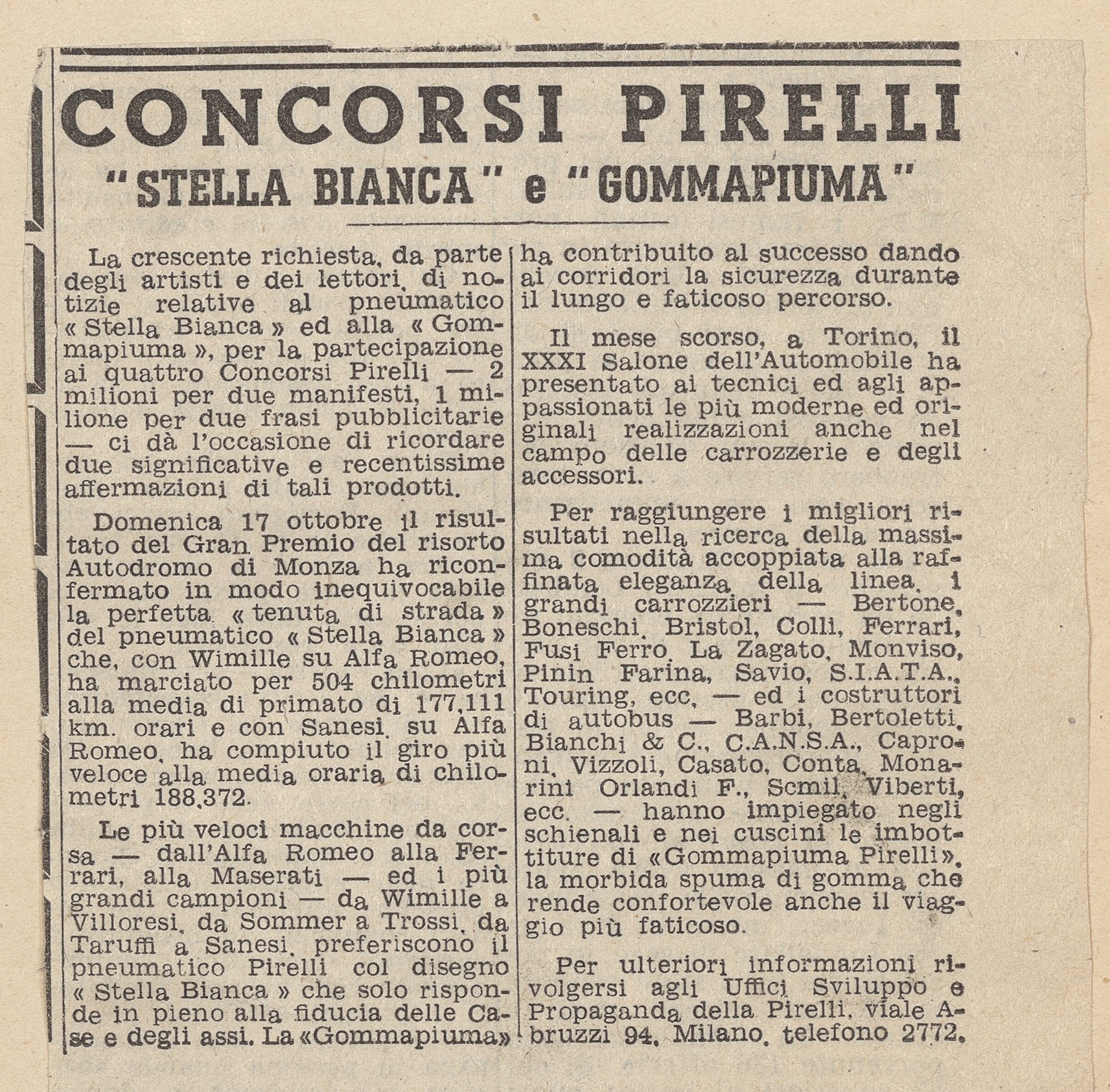
How to “work well”

Teaching the values of commitment and task sharing in production organisations to promote well-being and competitiveness


Resigning and giving up work, or the ‘Great Resignation’ phenomenon, is a growing and increasingly widespread issue (at least in certain sectors) that is engendering new questions we need to tackle, in terms of corporate and work cultures, too. This is the topic explored by Fabrizio d’Aniello in his article “Giovani e cultura pedagogica del lavoro” (“Young people and work-related pedagogic culture”), recently published in the SIPeGeS (the Italian Society of General and Social Pedagogy) bulletin.

The author begins with an observation: the ‘Great Resignation’ phenomenon has highlighted various symptoms of a widespread work-related malaise – something that we need to understand and handled, and that also concerns the field of work-related pedagogy. In fact, such desertion of the workplace demands a review of how work-related education is taught and the need to revise, rediscuss and update it – starting with young people.

The first goal, then, is teaching them how to work, and above all how to work well. A crucial stage according to d’Aniello, who believes that most circumstances are affected by a neglect of human relationships, a key factor that highlights the need to expose and “report” – and discard where required – the neoliberal focus on individual performance and performative competitiveness, as too much competitiveness, too much stress and too much dehumanisation may lie behind the ‘Great Resignation’ phenomenon.

What should be done then? The article by d’Aniello aims to promote teaching young people about a work-related pedagogic culture based on the significance of relationships, as well as providing them with useful advice on how to deal with modern-day issues. Hence, the author believes that this should be learned early and proceeds to identify the (virtuous) relationships between the new and future workforce, education and work-related pedagogy, before examining the issues affecting current work conditions and, lastly, outlining more effective pedagogic pathways.

Fabrizio d’Aniello’s analysis not only helps us better understand an increasingly widespread phenomenon, but also contributes to truly enhance, expand and disseminate what we know about “working well”. Thus, promoting commitment and task sharing through education may genuinely boost well-being and competitiveness.

Giovani e cultura pedagogica del lavoro (“Young people and work-related pedagogic culture”)

Fabrizio d’Aniello (University of Macerata)

Cultura pedagogica e scenari educativi, 1(1), 94-99, June 2023

Teaching the values of commitment and task sharing in production organisations to promote well-being and competitiveness


Resigning and giving up work, or the ‘Great Resignation’ phenomenon, is a growing and increasingly widespread issue (at least in certain sectors) that is engendering new questions we need to tackle, in terms of corporate and work cultures, too. This is the topic explored by Fabrizio d’Aniello in his article “Giovani e cultura pedagogica del lavoro” (“Young people and work-related pedagogic culture”), recently published in the SIPeGeS (the Italian Society of General and Social Pedagogy) bulletin.

The author begins with an observation: the ‘Great Resignation’ phenomenon has highlighted various symptoms of a widespread work-related malaise – something that we need to understand and handled, and that also concerns the field of work-related pedagogy. In fact, such desertion of the workplace demands a review of how work-related education is taught and the need to revise, rediscuss and update it – starting with young people.

The first goal, then, is teaching them how to work, and above all how to work well. A crucial stage according to d’Aniello, who believes that most circumstances are affected by a neglect of human relationships, a key factor that highlights the need to expose and “report” – and discard where required – the neoliberal focus on individual performance and performative competitiveness, as too much competitiveness, too much stress and too much dehumanisation may lie behind the ‘Great Resignation’ phenomenon.

What should be done then? The article by d’Aniello aims to promote teaching young people about a work-related pedagogic culture based on the significance of relationships, as well as providing them with useful advice on how to deal with modern-day issues. Hence, the author believes that this should be learned early and proceeds to identify the (virtuous) relationships between the new and future workforce, education and work-related pedagogy, before examining the issues affecting current work conditions and, lastly, outlining more effective pedagogic pathways.

Fabrizio d’Aniello’s analysis not only helps us better understand an increasingly widespread phenomenon, but also contributes to truly enhance, expand and disseminate what we know about “working well”. Thus, promoting commitment and task sharing through education may genuinely boost well-being and competitiveness.

Giovani e cultura pedagogica del lavoro (“Young people and work-related pedagogic culture”)

Fabrizio d’Aniello (University of Macerata)

Cultura pedagogica e scenari educativi, 1(1), 94-99, June 2023