Access the Online Archive
Search the Historical Archive of the Pirelli Foundation for sources and materials. Select the type of support you are interested in and write the keywords of your research.
    Select one of the following categories
  • Documents
  • Photographs
  • Drawings and posters
  • Audio-visuals
  • Publications and magazines
  • All
Help with your research
To request to view the materials in the Historical Archive and in the libraries of the Pirelli Foundation for study and research purposes and/or to find out how to request the use of materials for loans and exhibitions, please fill in the form below. You will receive an email confirming receipt of the request and you will be contacted.
Pirelli Foundation Educational Courses

Select the education level of the school
Back
Primary schools
Pirelli Foundation Educational Courses
Please fill in your details and the staff of Pirelli Foundation Educational will contact you to arrange the dates of the course.

I declare I have read  the privacy policy, and authorise the Pirelli Foundation to process my personal data in order to send communications, also by email, about initiatives/conferences organised by the Pirelli Foundation.

Back
Lower secondary school
Pirelli Foundation Educational Courses
Please fill in your details and the staff of Pirelli Foundation Educational will contact you to arrange the dates of the course.
Back
Upper secondary school
Pirelli Foundation Educational Courses
Please fill in your details and the staff of Pirelli Foundation Educational will contact you to arrange the dates of the course.
Back
University
Pirelli Foundation Educational Courses

Do you want to organize a training programme with your students? For information and reservations, write to universita@fondazionepirelli.org

Visit the Foundation
For information about the Foundation’s activities, guided tours and accessibility,
please call +39 0264423971 or fill in the form below, providing details of your request in the notes field.

Pirelli Foundation Educational: A Year Discovering the World Beyond Rubber

The end of the school year also means the end of “When Culture Creates Tyres”, the 2022-2023 educational programme of Pirelli Foundation Educational. Webinars, online and in-person workshops, and visits to the Pirelli Foundation and the Bicocca district: over 3,500 students from schools and universities from across Italy and Europe have joined us to discover Pirelli’s corporate culture.

The Out and About in Milan workshop took primary school pupils on a virtual journey through the streets of the city, with riddles to solve and maps to draw, discovering some of the most emblematic places of the city, both past and present.

Secondary school students who attended the From Track to Road workshop got to know the greatest champions of two and four-wheel racing and were introduced to the world of robotics by building and programming a racing car that they then tested with their classmates.

Pirelli’s ongoing commitment to sustainability was at the centre of the Going Fast Takes Time course, which revealed how the creation of a tyre is the result of a lengthy process of research and development in terms of materials. A photographic project inspired by the Sustainable Development Goals of the UN 2030 Agenda helped the students reflect on the fundamental role that we all play in safeguarding the planet.

The workshops linked to the Premio Campiello Junior, Travelling with Words and Let’s Write Cinema!, for primary and lower secondary school students respectively, encouraged a passion for books, with quizzes and readings done all together, helping the children try their hand at creating a postcard and writing a short film script.

One of the courses for upper secondary school students in greatest demand was A Matter of Style, which looked at the history of Pirelli’s visual communication. Here the students learnt about the company’s partnerships with great international photographers, designers, directors and graphic artists, who came up with amazing advertising campaigns, inspiring them to create an animated GIF.

The kids were able to experiment with their creativity in making a podcast on The Story of Research and Innovation, examining the history of the tyre up to the very latest innovations introduced by the Research and Development laboratories, with innovative raw materials, virtual testing and Industry 4.0. And then there was Architecture Makes Global Changes Visible, which helped schools find out about the link between Pirelli and some of the big names in international architecture. Inspired by virtual visits to some of the company’s most iconic buildings, the students designed an “ideal” workplace for the future.

The summer is almost upon us, but our plans don’t stop here. Many new features for the school year 2023-2024!
The new programme will be presented online on Monday 25 September 2023. If you would like to take part, click here.

The end of the school year also means the end of “When Culture Creates Tyres”, the 2022-2023 educational programme of Pirelli Foundation Educational. Webinars, online and in-person workshops, and visits to the Pirelli Foundation and the Bicocca district: over 3,500 students from schools and universities from across Italy and Europe have joined us to discover Pirelli’s corporate culture.

The Out and About in Milan workshop took primary school pupils on a virtual journey through the streets of the city, with riddles to solve and maps to draw, discovering some of the most emblematic places of the city, both past and present.

Secondary school students who attended the From Track to Road workshop got to know the greatest champions of two and four-wheel racing and were introduced to the world of robotics by building and programming a racing car that they then tested with their classmates.

Pirelli’s ongoing commitment to sustainability was at the centre of the Going Fast Takes Time course, which revealed how the creation of a tyre is the result of a lengthy process of research and development in terms of materials. A photographic project inspired by the Sustainable Development Goals of the UN 2030 Agenda helped the students reflect on the fundamental role that we all play in safeguarding the planet.

The workshops linked to the Premio Campiello Junior, Travelling with Words and Let’s Write Cinema!, for primary and lower secondary school students respectively, encouraged a passion for books, with quizzes and readings done all together, helping the children try their hand at creating a postcard and writing a short film script.

One of the courses for upper secondary school students in greatest demand was A Matter of Style, which looked at the history of Pirelli’s visual communication. Here the students learnt about the company’s partnerships with great international photographers, designers, directors and graphic artists, who came up with amazing advertising campaigns, inspiring them to create an animated GIF.

The kids were able to experiment with their creativity in making a podcast on The Story of Research and Innovation, examining the history of the tyre up to the very latest innovations introduced by the Research and Development laboratories, with innovative raw materials, virtual testing and Industry 4.0. And then there was Architecture Makes Global Changes Visible, which helped schools find out about the link between Pirelli and some of the big names in international architecture. Inspired by virtual visits to some of the company’s most iconic buildings, the students designed an “ideal” workplace for the future.

The summer is almost upon us, but our plans don’t stop here. Many new features for the school year 2023-2024!
The new programme will be presented online on Monday 25 September 2023. If you would like to take part, click here.

The Codex by Leonardo Da Vinci – ambassador of quality Italian industry – on display in Washington

The strength of Italian enterprises on global markets lies in their “polytechnic culture”, i.e. the ability to produce competitive products through a unique blend of humanities and science that also integrates an aptitude for beauty and sophisticated high-tech innovation, quality and environmental and social sustainability, the digital economy and customisation (“tailor-made” manufacturing not merely related to fashion and furnishing but – above all – to industrial plants and tool machinery, robotics and aerospace components, luxury shipbuilding and automotive, fine chemistry and exact pharmaceutics, special materials and mechatronics, and so on). Data on export confirm this: at the end of 2022, Italy had gained €650 billion export value – a real record – and, in 2023, international demand for manufactured goods will surpass domestic demand, amounting to half of the total turnover, for the first time ever (Affari&Finanza section of la Repubblica, 12 June, based on forecasts by Prometeia and Intesa Sanpaolo Research Department).

A systematic and productive “polytechnic culture” then, or, rather, “industrial humanism” – an approach to be consolidated and revived.

And also the contextual approach that informed the decision by territorial entrepreneurial institution Confindustria’s choice to promote the exhibition of 12 drawings from Leonardo Da Vinci’s Atlantic Codex. Curated by Monsignor Alberto Rocca (director of the Pinacoteca Ambrosiana of Milan, where Leonardo’s Codex is preserved) and sponsored by large and prominent international companies (Intesa Sanpaolo, ITA, 24Ore Cultura, Dolce e Gabbana, Dompé, Pirelli and Trenitalia), the exhibition takes place at the Washington’s Martin Luther King Memorial Library from 20 June to 20 August, and is entitled Imagining the future – Leonardo da Vinci: In the mind of an Italian genius.

A diplomatic cultural event showcasing extraordinary feats of technical proficiency (the drawings illustrate machinery, gears, the art of flying), combined with balance and beauty, as well as demonstration of how, over time, entrepreneurship has always been bolstered by genius. A culture focused on planning and cutting-edge engineering, relics of a unique creative drive that despite its visionary nature led to concrete change (such as the sluices and shipping canals that were built as per Leonardo’s drawings), of an attitude towards innovation, of the extraordinary ability to write “a future-oriented story”. And therefore an example to the rest of the world, as the Italian genius embodied a universal zest that Italian enterprises still know how to harness today, “compelled by a culture that builds bridges”, as Confindustria president Carlo Bonomi believes (Sunday supplement of Il Sole24Ore, 11 June).

Bridges that include the opening of a Confindustria office in Washington, concomitant with the exhibition’s inauguration, an event that further enhances the association’s presence abroad, spanning from Brussels to Singapore, with more locations to come. “Systemic diplomacy”, they call it at Confindustria – implementing structures to support the efforts of Italian businesses on the international markets.

Indeed, these are all strategic initiatives and assessments we must take into consideration when talking about how to boost the “made in Italy” reputation and implementing policies aimed at maximising what is Italy’s real pivotal development strength in Europe and abroad: high-quality industry. An industry that already played a leading role in the incredible post-Covid recovery of 2021/22 (with a total GDP growth of almost 11%), though in this first half of 2023 is showing some signs of distress, following the impact of the German recession, the cost of energy and international tensions.

“Manufacturing competitiveness is at risk”, warns in fact the Centro Studi Confindustria research centre (10 June), also highlighting Italy’s general scarce production levels – which are affecting businesses – as well as tax rates, poor margins on invested capital, difficulties in finding a qualified workforce, and so on.

Hence, an industry that needs to be revived through a clever and effective use of PNRR (Italian recovery and resilience plan) funds, so as to bolster the environmental and digital twin transition, whose material and immaterial infrastructures (from high-tech networks to essential training for the “knowledge economy” and the use of Artificial Intelligence in education) would give Italy the competitive edge it needs.

Indeed, we’re living in a difficult era ruled by terms of trade and “selective re-globalisation”, marked by the “reconfiguration of the global economy in line with integrated groups in like-minded countries, coalitions competing for economic, political and cultural hegemony” (quote from the lavoce.info website). An era where value chains are shorter and more efficient in relation to finished products’ outlet markets (re-shoring) and trade has been reshaped to suit areas sharing the same values, such as a market economy, economic and political democracy – a friends-shoring approach especially dear to the US government.

Actually, the Italian economy and Italian enterprises should take advantage of such competitive and selective circumstances, by emphasising their products and services, maintaining trade opportunities with China, India, Brazil and the other countries part of the so-called ‘Global South’ (Africa also appears very interesting) while also pinpointing areas where Italian products with higher added value are most appreciated, such as other EU countries and the US and therefore smartly exploit the free-trade opportunities offered by the “NAFTA superhighway” (which includes USA, Canada and Mexico, where several Italian and European businesses have already opened highly productive sites).

Basically, this is the time to strategically choose new sites of production (applying a “local for local” strategy, where production and distribution stay close to the consumption market) but with the support of appropriate policies, starting with EU ones.

And the time to bring into play all necessary development tools, corporate visions, investments in innovation, an international perspective based on solid regional traditions, production chains and production platforms, as well as economic and cultural diplomacy – all traits found in Leonardo da Vinci, the perfect ambassador for the Italian industrious spirit.

The strength of Italian enterprises on global markets lies in their “polytechnic culture”, i.e. the ability to produce competitive products through a unique blend of humanities and science that also integrates an aptitude for beauty and sophisticated high-tech innovation, quality and environmental and social sustainability, the digital economy and customisation (“tailor-made” manufacturing not merely related to fashion and furnishing but – above all – to industrial plants and tool machinery, robotics and aerospace components, luxury shipbuilding and automotive, fine chemistry and exact pharmaceutics, special materials and mechatronics, and so on). Data on export confirm this: at the end of 2022, Italy had gained €650 billion export value – a real record – and, in 2023, international demand for manufactured goods will surpass domestic demand, amounting to half of the total turnover, for the first time ever (Affari&Finanza section of la Repubblica, 12 June, based on forecasts by Prometeia and Intesa Sanpaolo Research Department).

A systematic and productive “polytechnic culture” then, or, rather, “industrial humanism” – an approach to be consolidated and revived.

And also the contextual approach that informed the decision by territorial entrepreneurial institution Confindustria’s choice to promote the exhibition of 12 drawings from Leonardo Da Vinci’s Atlantic Codex. Curated by Monsignor Alberto Rocca (director of the Pinacoteca Ambrosiana of Milan, where Leonardo’s Codex is preserved) and sponsored by large and prominent international companies (Intesa Sanpaolo, ITA, 24Ore Cultura, Dolce e Gabbana, Dompé, Pirelli and Trenitalia), the exhibition takes place at the Washington’s Martin Luther King Memorial Library from 20 June to 20 August, and is entitled Imagining the future – Leonardo da Vinci: In the mind of an Italian genius.

A diplomatic cultural event showcasing extraordinary feats of technical proficiency (the drawings illustrate machinery, gears, the art of flying), combined with balance and beauty, as well as demonstration of how, over time, entrepreneurship has always been bolstered by genius. A culture focused on planning and cutting-edge engineering, relics of a unique creative drive that despite its visionary nature led to concrete change (such as the sluices and shipping canals that were built as per Leonardo’s drawings), of an attitude towards innovation, of the extraordinary ability to write “a future-oriented story”. And therefore an example to the rest of the world, as the Italian genius embodied a universal zest that Italian enterprises still know how to harness today, “compelled by a culture that builds bridges”, as Confindustria president Carlo Bonomi believes (Sunday supplement of Il Sole24Ore, 11 June).

Bridges that include the opening of a Confindustria office in Washington, concomitant with the exhibition’s inauguration, an event that further enhances the association’s presence abroad, spanning from Brussels to Singapore, with more locations to come. “Systemic diplomacy”, they call it at Confindustria – implementing structures to support the efforts of Italian businesses on the international markets.

Indeed, these are all strategic initiatives and assessments we must take into consideration when talking about how to boost the “made in Italy” reputation and implementing policies aimed at maximising what is Italy’s real pivotal development strength in Europe and abroad: high-quality industry. An industry that already played a leading role in the incredible post-Covid recovery of 2021/22 (with a total GDP growth of almost 11%), though in this first half of 2023 is showing some signs of distress, following the impact of the German recession, the cost of energy and international tensions.

“Manufacturing competitiveness is at risk”, warns in fact the Centro Studi Confindustria research centre (10 June), also highlighting Italy’s general scarce production levels – which are affecting businesses – as well as tax rates, poor margins on invested capital, difficulties in finding a qualified workforce, and so on.

Hence, an industry that needs to be revived through a clever and effective use of PNRR (Italian recovery and resilience plan) funds, so as to bolster the environmental and digital twin transition, whose material and immaterial infrastructures (from high-tech networks to essential training for the “knowledge economy” and the use of Artificial Intelligence in education) would give Italy the competitive edge it needs.

Indeed, we’re living in a difficult era ruled by terms of trade and “selective re-globalisation”, marked by the “reconfiguration of the global economy in line with integrated groups in like-minded countries, coalitions competing for economic, political and cultural hegemony” (quote from the lavoce.info website). An era where value chains are shorter and more efficient in relation to finished products’ outlet markets (re-shoring) and trade has been reshaped to suit areas sharing the same values, such as a market economy, economic and political democracy – a friends-shoring approach especially dear to the US government.

Actually, the Italian economy and Italian enterprises should take advantage of such competitive and selective circumstances, by emphasising their products and services, maintaining trade opportunities with China, India, Brazil and the other countries part of the so-called ‘Global South’ (Africa also appears very interesting) while also pinpointing areas where Italian products with higher added value are most appreciated, such as other EU countries and the US and therefore smartly exploit the free-trade opportunities offered by the “NAFTA superhighway” (which includes USA, Canada and Mexico, where several Italian and European businesses have already opened highly productive sites).

Basically, this is the time to strategically choose new sites of production (applying a “local for local” strategy, where production and distribution stay close to the consumption market) but with the support of appropriate policies, starting with EU ones.

And the time to bring into play all necessary development tools, corporate visions, investments in innovation, an international perspective based on solid regional traditions, production chains and production platforms, as well as economic and cultural diplomacy – all traits found in Leonardo da Vinci, the perfect ambassador for the Italian industrious spirit.

Corporate history, to better understand the present

The story of Sardinian refinery group Saras

Understanding the present while looking at the past – an important and valuable approach that, in terms of know-how, can also “secure” business planning. In other words, an approach based on the wise notion that we can always learn from our mistakes. Learning about the past vicissitudes of major companies can therefore – always – be beneficial, just as much as reading “La Saras. Quarant’anni di strategia petrolifera familiare tra storia d’impresa e storia del lavoro (1962-2001)” (“Saras. Forty years of family oil strategy amid corporate and labour history (1962-2001))”, research paper by William Mazzaferro (University of Turin) recently published in journal IMPRESE E STORIA (ENTERPRISES AND HISTORY).

The article’s first lines summarise its aim, which consists in meeting a twofold requirement: “filling what objectively is a historical gap” and “understanding the reasons underlying the success of Saras (Società anonima raffinerie sarde)”.

Quite a unique case study, as Saras is “a company that succeeded not only in entering a market renowned for its difficult accessibility, but also a company that, over time, managed to effectively overcome several difficulties and become what is now the largest active oil refinery in Italy.”

Mazzaferro traces Saras’s corporate history from 1962 to the beginning of the 21st century and discusses the key features of what is known as a firm of “fourth capitalism” – in particular, its powerful internationalisation, medium size (in terms of employees), and origins rooted in family history and a family estate. An intriguing story that furthers our understanding of how our current industrial context developed (and in such a delicate segment as the energy one, moreover).

La Saras. Quarant’anni di strategia petrolifera familiare tra storia d’impresa e storia del lavoro (1962-2001)  (Saras. Forty years of family oil strategy amid corporate and labour history (1962-2001)) 

William Mazzaferro
IMPRESE E STORIA, issue 2022/46

The story of Sardinian refinery group Saras

Understanding the present while looking at the past – an important and valuable approach that, in terms of know-how, can also “secure” business planning. In other words, an approach based on the wise notion that we can always learn from our mistakes. Learning about the past vicissitudes of major companies can therefore – always – be beneficial, just as much as reading “La Saras. Quarant’anni di strategia petrolifera familiare tra storia d’impresa e storia del lavoro (1962-2001)” (“Saras. Forty years of family oil strategy amid corporate and labour history (1962-2001))”, research paper by William Mazzaferro (University of Turin) recently published in journal IMPRESE E STORIA (ENTERPRISES AND HISTORY).

The article’s first lines summarise its aim, which consists in meeting a twofold requirement: “filling what objectively is a historical gap” and “understanding the reasons underlying the success of Saras (Società anonima raffinerie sarde)”.

Quite a unique case study, as Saras is “a company that succeeded not only in entering a market renowned for its difficult accessibility, but also a company that, over time, managed to effectively overcome several difficulties and become what is now the largest active oil refinery in Italy.”

Mazzaferro traces Saras’s corporate history from 1962 to the beginning of the 21st century and discusses the key features of what is known as a firm of “fourth capitalism” – in particular, its powerful internationalisation, medium size (in terms of employees), and origins rooted in family history and a family estate. An intriguing story that furthers our understanding of how our current industrial context developed (and in such a delicate segment as the energy one, moreover).

La Saras. Quarant’anni di strategia petrolifera familiare tra storia d’impresa e storia del lavoro (1962-2001)  (Saras. Forty years of family oil strategy amid corporate and labour history (1962-2001)) 

William Mazzaferro
IMPRESE E STORIA, issue 2022/46

Sufficiency rather than excess

The Einaudi Centre’s 2023 essay collection provides a likely approach for global social and economic systems

Blinded by wealth, the Western social and economic systems now have to face a very different economy and prospects than those existing only a few years ago. It is something that has had a – positive or negative – impact on everyone: individuals, enterprises, institutions, social and financial organisations. It is also something that needs to be fully understood, even just to stop deluding ourselves, starting with the notion that its complexity has reached incredibly high levels. Thus, the customary collection of analyses undertaken by the Luigi Einaudi Research and Documentation Centre in Turin (supported by Intesa Sanpaolo) will prove useful to tackle such a complex issue by providing at least enough knowledge to gain an initial understanding.

Dall’illusione dell’abbondanza all’economia dell’abbastanza (From the delusion of plenty to an economy of sufficiency) – the title says it all, and the book is structured into four sections and a conclusion. Mario Deaglio curated this volume, together with a team of economists affiliated to the Einaudi Centre, and the work unravels from a number of considerations. First of all, the international trade system and global balance that existed before the 2008-2009 financial crisis is now history. Secondly, the ensuing economic, social, geopolitical, climatic crises – which we are still experiencing – have thrown us into a world we can term “post-global”, distinguished by a partial abandonment of free-market rules, incentives for companies to relocate in their countries and the need – as well as the difficulty – of turning tangible plans into “green” projects. Finally, what happened at the beginning of the Russia-Ukraine war and following China-USA tension is exacerbating a situation that is already quite serious.

As such, the book begins with an analysis of the “dawn of globalisation”, before pinpointing the weaknesses of United States and Europe, and then goes on to investigate the many wars that, though under different guises, merely replicated “Cold War” dynamics. The work ends with a couple of questions: will the emerging global rift lead to a highly hostile global environment? Will it slow down structural growth or is it just a temporary glitch? True to the Einaudi Centre’s earnest approach to research, this collection does not aim to find a single answer and merely presents us with a number of scenarios pointing to a shared perspective: we should forget those happy and rather careless times when we thought we could luxuriate in easy wealth and start building – addressing environmental concerns, for a start – an “era of sufficiency” in which to live adequately well. A path that this work curated by Deaglio finds feasible and likely.

Dall’illusione dell’abbondanza all’economia dell’abbastanza (From the delusion of plenty to an economy of sufficiency)

Mario Deaglio (curated by)

Guerini e Associati, 2023

The Einaudi Centre’s 2023 essay collection provides a likely approach for global social and economic systems

Blinded by wealth, the Western social and economic systems now have to face a very different economy and prospects than those existing only a few years ago. It is something that has had a – positive or negative – impact on everyone: individuals, enterprises, institutions, social and financial organisations. It is also something that needs to be fully understood, even just to stop deluding ourselves, starting with the notion that its complexity has reached incredibly high levels. Thus, the customary collection of analyses undertaken by the Luigi Einaudi Research and Documentation Centre in Turin (supported by Intesa Sanpaolo) will prove useful to tackle such a complex issue by providing at least enough knowledge to gain an initial understanding.

Dall’illusione dell’abbondanza all’economia dell’abbastanza (From the delusion of plenty to an economy of sufficiency) – the title says it all, and the book is structured into four sections and a conclusion. Mario Deaglio curated this volume, together with a team of economists affiliated to the Einaudi Centre, and the work unravels from a number of considerations. First of all, the international trade system and global balance that existed before the 2008-2009 financial crisis is now history. Secondly, the ensuing economic, social, geopolitical, climatic crises – which we are still experiencing – have thrown us into a world we can term “post-global”, distinguished by a partial abandonment of free-market rules, incentives for companies to relocate in their countries and the need – as well as the difficulty – of turning tangible plans into “green” projects. Finally, what happened at the beginning of the Russia-Ukraine war and following China-USA tension is exacerbating a situation that is already quite serious.

As such, the book begins with an analysis of the “dawn of globalisation”, before pinpointing the weaknesses of United States and Europe, and then goes on to investigate the many wars that, though under different guises, merely replicated “Cold War” dynamics. The work ends with a couple of questions: will the emerging global rift lead to a highly hostile global environment? Will it slow down structural growth or is it just a temporary glitch? True to the Einaudi Centre’s earnest approach to research, this collection does not aim to find a single answer and merely presents us with a number of scenarios pointing to a shared perspective: we should forget those happy and rather careless times when we thought we could luxuriate in easy wealth and start building – addressing environmental concerns, for a start – an “era of sufficiency” in which to live adequately well. A path that this work curated by Deaglio finds feasible and likely.

Dall’illusione dell’abbondanza all’economia dell’abbastanza (From the delusion of plenty to an economy of sufficiency)

Mario Deaglio (curated by)

Guerini e Associati, 2023

“Risuona”, a podcast series by Fondazione Pirelli and Chora Media

“Risuona”, a podcast series by Fondazione Pirelli and Chora Media with Gino De Crescenzo, alias Pacifico.

A training project that explores the world of work and corporate culture

From today, one episode a week of Risuona, the podcast series produced by Chora Media and promoted by the Pirelli Foundation, will be available on the leading free audio platforms (Spotify, Apple Podcast, Spreaker, and Google Podcast).

The narrator is the singer, musician and author Gino De Crescenzo, aka Pacifico. He has written for and with Andrea Bocelli, Giorgia, Gianni Morandi, Ennio Morricone, Ornella Vanoni and Zucchero, among others.

During the course of four episodes, Pacifico rides his bicycle through the streets of Milan, telling stories of work, corporate culture and innovation. He talks of memories and personal testimonies, with the assistance of materials from our Historical Archives, which evoke resonances between the challenges of the past and those of the future.

In his narration, Milan is at the heart of an Italian story, mingling its industrial disposition and its approach to culture as a public service. It takes us from the years of the Reconstruction and later of the economic boom, through the energy crisis, and up to the story of the contemporary world.

On this bicycle ride through some of the symbolic places of the city – such as the Arena Civica, the Pirelli Tower, the Piccolo Teatro, and the Stazione Centrale – the sounds of the city interweave with the voices and stories of leading names in the worlds of the university, research, design, music and business. Echoes of Gino Bartali’s strenuous efforts on the Giro d’Italia overlap with the notes of John Cage and David Tudor’s “prepared pianos”: screws, marbles, teaspoons, clothes pegs, bamboo straws, and clockwork gears. Dino Buzzati’s words are attuned to the noises of production, from the traditional factory to Industry 4.0.

And everything “resonates” in this reflection on the past and on the present of corporate culture and work, in an attempt to imagine – and build – the future.

“Risuona”, a podcast series by Fondazione Pirelli and Chora Media with Gino De Crescenzo, alias Pacifico.

A training project that explores the world of work and corporate culture

From today, one episode a week of Risuona, the podcast series produced by Chora Media and promoted by the Pirelli Foundation, will be available on the leading free audio platforms (Spotify, Apple Podcast, Spreaker, and Google Podcast).

The narrator is the singer, musician and author Gino De Crescenzo, aka Pacifico. He has written for and with Andrea Bocelli, Giorgia, Gianni Morandi, Ennio Morricone, Ornella Vanoni and Zucchero, among others.

During the course of four episodes, Pacifico rides his bicycle through the streets of Milan, telling stories of work, corporate culture and innovation. He talks of memories and personal testimonies, with the assistance of materials from our Historical Archives, which evoke resonances between the challenges of the past and those of the future.

In his narration, Milan is at the heart of an Italian story, mingling its industrial disposition and its approach to culture as a public service. It takes us from the years of the Reconstruction and later of the economic boom, through the energy crisis, and up to the story of the contemporary world.

On this bicycle ride through some of the symbolic places of the city – such as the Arena Civica, the Pirelli Tower, the Piccolo Teatro, and the Stazione Centrale – the sounds of the city interweave with the voices and stories of leading names in the worlds of the university, research, design, music and business. Echoes of Gino Bartali’s strenuous efforts on the Giro d’Italia overlap with the notes of John Cage and David Tudor’s “prepared pianos”: screws, marbles, teaspoons, clothes pegs, bamboo straws, and clockwork gears. Dino Buzzati’s words are attuned to the noises of production, from the traditional factory to Industry 4.0.

And everything “resonates” in this reflection on the past and on the present of corporate culture and work, in an attempt to imagine – and build – the future.

Always aim higher

A book encapsulates a discussion on culture and technology between a philosopher and a technologist

Polytechnic culture –. an all-inclusive culture entailing a kind of production and progress that is mindful and respectful of people and the environment. A culture that affects us all and should push us higher, not drag us back or down. Discussions revolving around new technologies, progress, the different manifestations of humankind, ways to untangle the knots of the present and weave a good quality fabric for the future are always difficult. Yet, they are also necessary, and some tackle them better than others.

This is the case of Maurizio Ferraris and Guido Saracco (a philosopher and a chemical engineer respectively), who, in their Tecnosofia. Tecnologia e umanesimo per una scienza nuova (Technosophy. Technology and humanism for a new science), pursue an unusual line of reasoning and, in just under 200 pages, reach a conclusion sought by many yet grasped by a very few.

The two premises printed on the book’s cover actually summarise its essence: “The most powerful drug available to unclothed primates is technology, and the most powerful technology is capital. The alliance between technology and humanism can enhance this capital to benefit all, transforming it into human wealth”. Capital, then. The authors look at its various forms, applying their respective academic and real-life backgrounds – philosophy on the one hand, and technology on the other. As a result, they carve an intellectual path that, through various stages, leads readers forward and up, and following the assumption that, in order to progress, humanity first has to deal with what is compared to a “broken lift”, the authors decide to pay particular attention to capital as the key tool needed to repair it. A very special tool indeed – not purely in technological terms but also in semantic (mindful of content and meaning), syntactic (attentive to structure and ways of acting) ones, without neglecting its human traits (human nature and all its different, extraordinary expressions). Further, a capital aware of its environmental, scientific and technological impact, and of its distinct human features, leading us to the attainment of two key principles: “From everyone, according to our skills. To everyone, according to their needs”.

The authors conclude that the more technology and humanism are able to work together, the more humanity can beneficially move forward on its path towards progress.

Maurizio Ferraris and Guido Saracco’s work offers a positive view of technology, seen as something intrinsically human since the dawn of time, and something that is able to preserve and multiply the value of material and cultural goods, to the benefit of future generations – as long as it is employed with care and discernment.

“This work does not really make for an easy read, yet readers should persevere, without preconceptions and commonplace prejudices, as it is a topic that affects us all. One of its conclusive sentences is particularly striking: “Progress is not a search for goodness in a world that never fully dispenses it, but it is an endless escape from evil; and while it is easy to disparage it, we should rather make the effort to preserve and enhance it, keeping our aims high”.

Tecnosofia. Tecnologia e umanesimo per una scienza nuova (Technosophy. Technology and humanism for a new science)

Maurizio Ferraris, Guido Saracco

Laterza, 2023

A book encapsulates a discussion on culture and technology between a philosopher and a technologist

Polytechnic culture –. an all-inclusive culture entailing a kind of production and progress that is mindful and respectful of people and the environment. A culture that affects us all and should push us higher, not drag us back or down. Discussions revolving around new technologies, progress, the different manifestations of humankind, ways to untangle the knots of the present and weave a good quality fabric for the future are always difficult. Yet, they are also necessary, and some tackle them better than others.

This is the case of Maurizio Ferraris and Guido Saracco (a philosopher and a chemical engineer respectively), who, in their Tecnosofia. Tecnologia e umanesimo per una scienza nuova (Technosophy. Technology and humanism for a new science), pursue an unusual line of reasoning and, in just under 200 pages, reach a conclusion sought by many yet grasped by a very few.

The two premises printed on the book’s cover actually summarise its essence: “The most powerful drug available to unclothed primates is technology, and the most powerful technology is capital. The alliance between technology and humanism can enhance this capital to benefit all, transforming it into human wealth”. Capital, then. The authors look at its various forms, applying their respective academic and real-life backgrounds – philosophy on the one hand, and technology on the other. As a result, they carve an intellectual path that, through various stages, leads readers forward and up, and following the assumption that, in order to progress, humanity first has to deal with what is compared to a “broken lift”, the authors decide to pay particular attention to capital as the key tool needed to repair it. A very special tool indeed – not purely in technological terms but also in semantic (mindful of content and meaning), syntactic (attentive to structure and ways of acting) ones, without neglecting its human traits (human nature and all its different, extraordinary expressions). Further, a capital aware of its environmental, scientific and technological impact, and of its distinct human features, leading us to the attainment of two key principles: “From everyone, according to our skills. To everyone, according to their needs”.

The authors conclude that the more technology and humanism are able to work together, the more humanity can beneficially move forward on its path towards progress.

Maurizio Ferraris and Guido Saracco’s work offers a positive view of technology, seen as something intrinsically human since the dawn of time, and something that is able to preserve and multiply the value of material and cultural goods, to the benefit of future generations – as long as it is employed with care and discernment.

“This work does not really make for an easy read, yet readers should persevere, without preconceptions and commonplace prejudices, as it is a topic that affects us all. One of its conclusive sentences is particularly striking: “Progress is not a search for goodness in a world that never fully dispenses it, but it is an endless escape from evil; and while it is easy to disparage it, we should rather make the effort to preserve and enhance it, keeping our aims high”.

Tecnosofia. Tecnologia e umanesimo per una scienza nuova (Technosophy. Technology and humanism for a new science)

Maurizio Ferraris, Guido Saracco

Laterza, 2023

Why be sustainable

A recently published contribution provides a clear and effective summary of a complex and constantly evolving topic


Sustainability above all – a goal we all aim for, yet only a few of us really understand its reasons and paths. Thus, the first question we should ask is, “Why is it so important for enterprises to “be sustainable”?. It is around these tangled issues that “La sfida della sostenibilità nella prospettiva delle imprese” (“The challenge of sustainability from a corporate perspective”) revolves, a contribution by Marco Frey (director of the SUM Laboratory and vice-rector for the Third Mission at the Sant’Anna High School in Pisa, as well as president of Global Compact Network Italia), recently published in a special issue of biannual journal Ordine di Dottori commercialisti e degli esperti contabili di Roma (Order of chartered accountants and accounting experts of Rome).

Frey writes that, “Nowadays, enterprises are increasingly expected to be the protagonists in sustainability challenges. The acknowledgement process concerning this role has progressively intensified over the past 30 years. (…) But what are the reasons leading to sustainability becoming a key strategic factor in today’s enterprises, so much so that CEOs of major businesses include it in long-term business models and strategies?”. Is it merely a matter of corporate culture, we may ask ourselves, or is there more?

Frey highlights three reasons why sustainability as a corporate goal is so successful: reputational meaning and weight, development prospects, and the evolution of the market and social environment in which the company operates.

Frey’s paper than proceeds to investigate what these aspects actually entail and emphasises their mutual connections, through practical examples and including the most significant institutional transitions. The outcome is a complex and dynamic description of one of the crucial issues that modern production organisations working towards a tangible and positive future must tackle.

Marco Frey’s contribution does not add anything new to current research on corporate sustainability, yet has the great merit of providing us with a clear and concise overview about a topic that is too often presented in confused and biased terms.

La sfida della sostenibilità nella prospettiva delle imprese (“The challenge of sustainability from a corporate perspective”),

Marco Frey

TELOS, biannual journal Ordine di Dottori commercialisti e degli esperti contabili di Roma, 4/2022

A recently published contribution provides a clear and effective summary of a complex and constantly evolving topic


Sustainability above all – a goal we all aim for, yet only a few of us really understand its reasons and paths. Thus, the first question we should ask is, “Why is it so important for enterprises to “be sustainable”?. It is around these tangled issues that “La sfida della sostenibilità nella prospettiva delle imprese” (“The challenge of sustainability from a corporate perspective”) revolves, a contribution by Marco Frey (director of the SUM Laboratory and vice-rector for the Third Mission at the Sant’Anna High School in Pisa, as well as president of Global Compact Network Italia), recently published in a special issue of biannual journal Ordine di Dottori commercialisti e degli esperti contabili di Roma (Order of chartered accountants and accounting experts of Rome).

Frey writes that, “Nowadays, enterprises are increasingly expected to be the protagonists in sustainability challenges. The acknowledgement process concerning this role has progressively intensified over the past 30 years. (…) But what are the reasons leading to sustainability becoming a key strategic factor in today’s enterprises, so much so that CEOs of major businesses include it in long-term business models and strategies?”. Is it merely a matter of corporate culture, we may ask ourselves, or is there more?

Frey highlights three reasons why sustainability as a corporate goal is so successful: reputational meaning and weight, development prospects, and the evolution of the market and social environment in which the company operates.

Frey’s paper than proceeds to investigate what these aspects actually entail and emphasises their mutual connections, through practical examples and including the most significant institutional transitions. The outcome is a complex and dynamic description of one of the crucial issues that modern production organisations working towards a tangible and positive future must tackle.

Marco Frey’s contribution does not add anything new to current research on corporate sustainability, yet has the great merit of providing us with a clear and concise overview about a topic that is too often presented in confused and biased terms.

La sfida della sostenibilità nella prospettiva delle imprese (“The challenge of sustainability from a corporate perspective”),

Marco Frey

TELOS, biannual journal Ordine di Dottori commercialisti e degli esperti contabili di Roma, 4/2022

Smart Milan with its skyscrapers and business districts, yet looking for better social and cultural balance

Looking at Milan today, through curious and unprejudiced eyes, it’s impossible not to notice its extraordinary enthusiasm for housing and urban planning – as well as financial and entrepreneurial – initiatives. Projects, ideas and investments suited to a city that likes to think of itself as smart (whatever that might mean: technologically sophisticated and astute, clever and elegant, sustainable and open to the future). A metropolis, nevertheless, that is strategically placed at the heart of an incredibly productive rectangle – one of the most dynamic in Europe – situated along the A1-A4 motorway axes (from the north of Europe to the Mediterranean, from the Atlantic to the west towards Asia to the east. A metropolis that, indeed, is true to its name: Mediolanum (‘In the middle of a plain’), Medium Terrae (‘In the middle of the land’).

Which initiatives are we referring to? Well, a quick scan of the newspapers it’s enough to get up to speed. There’s the launch of the Magnifica Fabbrica (Magnificent Factory) project – new art labs at the Teatro alla Scala and in the Lambretta Park, financed by the PNRR (the Italian recovery and resilience plan) and built where the Innocenti plants in Lambrate used to be, a site that epitomised the economic boom (reading Gli anni del nostro incanto (Our enchanted years) by Giuseppe Lupo, published by Marsilio, will bring back powerful memories and evocative impressions). The relocation of Metanopoli, the neighbourhood planned by Enrico Mattei for the Snam-Eni headquarters (and methane pipeline plants) in the early 1950s, extending from the south of the San Donato area to the new high-tech area in Porta Romana-Vettabia, already home to the Prada Foundation and the high-tech skyscrapers of the Symbiosis business district, and where the new Olympic Village will be built for the 2026 Milano-Cortina Winter Games, together with a “Smart Station” urban transport hub and a “Hanging forest”, a long “green walkway” inspired by New York’s High Line.

Furthermore, in the middle of the historic centre, right next to Sant’Ambrogio Square, the renovation works on the former “Garibaldi” police barracks have started, to turn the area into a new green campus for the Università Cattolica. And activities related to the building of 12 new skyscrapers are also ongoing, with worksites approved and in operation in the Lampugnano and Porta Nuova neighbourhoods (which already accommodate the pointy Unicredit skyscraper designed by Cesar Pelli, on Gae Aulenti Square, and where the “Nido verticale” (“Vertical Nest”), the Unipol Tower conceived by Mario Cucinella has just been completed), while Stefano Boeri is designing a new “vertical forest” extending over the area where the former Porta Genova train station used to be).

In the meantime, in the heart of the city, a few hundred metres from the Duomo and the University of Milan (located in the magnificent Renaissance-style building that housed the former Ospedale Maggiore hospital, designed by architect Filarete, on Via Festa del Perdono), the laborious renovation of a symbolic building, the Velasca Tower, is almost completed. It’ll be surrounded by an elegant pedestrian area that will also include the Assolombarda building, designed in the early 1960s by Gio Ponti, the same architect who conceived the Pirelli Skyscraper.

Witnessing this blend of history and innovation, tradition and change, we can only agree with Francesco Micheli, man of business and learning, when he proposed to nominate Milan’s historic centre as a “UNESCO heritage site” (Corriere della Sera, 1 June): a cultural “heritage of humanity” to be preserved and enhanced through continued investments.

A city that’s growing. A “city that’s rising”, to playfully evoke the works of Umberto Boccioni and the other Futurists who lived in one of the most frenzied eras in Milanese history, at the beginning of the 20th century, when factories and science started thriving. Yet, too, a city that widens and conceives itself as “great”, metropolitan, open. Just as the Milano-Sesto project exemplifies, one of the largest urban renovation projects in Europe, involving the former Falck steelworks – an expense of €5 billion to create services, offices, a “Health City” with hospital and medical research centre, green spaces and social housing, with a particular focus on student accommodation.

“The city must be extended, with more services in the suburbs”, asserts Regina De Albertis, president of Assimpredil Ance, the Association of Construction Companies in Milan, Monza and Brianza. Yet, “without emptying out the city”, adds Gabriele Pasqui, professor of Urban Policies at the Polytechnic, concerned about the lack of urban policy decisions targeted at preventing the city’s large centre to fall prey to the whims of a “market” that, pushing up the prices of homes, shops and offices, could turn Milan into an exclusive site for high-income earners, even outside the Mura Spagnole city walls. The danger we must look out for is the marginalisation and expulsion of the working and middle classes, which would disrupt that social mix that, since always, has distinguished a productive, inclusive, competitive and social civitas, bolstered by industry and finance, as well as by culture, research, innovation and a welcoming attitude.

There it is, then, dynamic Milan. Offering more opportunities than the rest of Italy, and riddled with issues (the high cost of housing and living, speculation risks, the euphoria aroused by the “thousands lights” whose shadows conceal new and old poverty, widespread violence, a growing unease, cracks appearing in its ancient and densely diverse fabric, and so on – as mentioned several times in these blog posts, with the latest one, from last week, dedicated to Milan as Italy’s main university city).

The Council, mayor Beppe Sala and the Regione Lombardia government authority, together with governor Attilio Fontana, are seeking a productive dialogue concerning services, investment stimulus, and effective regional policies unaffected by political affiliations. Indeed, good policies and efficient administration are a must.

Yet, it’s precisely when presented with such dynamism and severe economic and social issues that more must be done. For instance, we should foster the – already widespread – attitude to collaboration between private and public sectors, also engaging the whole “third sector”, from volunteering to social organisations. And we should further widen and explore a honest debate on the sustainable future of Milan – whether as a “metropolis”, “large city”, “open city” or even an “endless city”, as brilliant sociologist Aldo Bonomi likes to define it, the “A1-A4 macro-region” we mentioned above.

A dialogic Milan, a hub of knowledge, entrepreneurship, innovation and sustainability, rather than just a driving engine or, even worse, a “city state” flaunting its many prestigious facets. Rather, Milan as a city at the heart of relationships and interconnections, able to blend metropolis and countryside, different territories, European and Mediterranean cultures.

Significant projects to this end are already ongoing, and we should keep a close eye on them: for instance, the relaunch of the North-West region, the traditional “industrial triangle” comprising Milan, Turin and Genoa, on which the three cities’ entrepreneurial associations are working, to deepen production, cultural and social relationships, aware that acting together means larger PNRR funding as well as greater beneficial impact. Or, further, the decision made by the Centro Studi Grande Milano (a network comprising entrepreneurs, professionals, institutional and cultural figures), headed by Daniela Mainini, to appoint Giorgio Gori, the mayor of Bergamo, and Marco Bucci, the mayor of Genoa, as “ambassadors” – in order to facilitate relationships and dialogue, shared decisions and more initiatives, all under a shared European banner.

(Photo Getty Images)

Looking at Milan today, through curious and unprejudiced eyes, it’s impossible not to notice its extraordinary enthusiasm for housing and urban planning – as well as financial and entrepreneurial – initiatives. Projects, ideas and investments suited to a city that likes to think of itself as smart (whatever that might mean: technologically sophisticated and astute, clever and elegant, sustainable and open to the future). A metropolis, nevertheless, that is strategically placed at the heart of an incredibly productive rectangle – one of the most dynamic in Europe – situated along the A1-A4 motorway axes (from the north of Europe to the Mediterranean, from the Atlantic to the west towards Asia to the east. A metropolis that, indeed, is true to its name: Mediolanum (‘In the middle of a plain’), Medium Terrae (‘In the middle of the land’).

Which initiatives are we referring to? Well, a quick scan of the newspapers it’s enough to get up to speed. There’s the launch of the Magnifica Fabbrica (Magnificent Factory) project – new art labs at the Teatro alla Scala and in the Lambretta Park, financed by the PNRR (the Italian recovery and resilience plan) and built where the Innocenti plants in Lambrate used to be, a site that epitomised the economic boom (reading Gli anni del nostro incanto (Our enchanted years) by Giuseppe Lupo, published by Marsilio, will bring back powerful memories and evocative impressions). The relocation of Metanopoli, the neighbourhood planned by Enrico Mattei for the Snam-Eni headquarters (and methane pipeline plants) in the early 1950s, extending from the south of the San Donato area to the new high-tech area in Porta Romana-Vettabia, already home to the Prada Foundation and the high-tech skyscrapers of the Symbiosis business district, and where the new Olympic Village will be built for the 2026 Milano-Cortina Winter Games, together with a “Smart Station” urban transport hub and a “Hanging forest”, a long “green walkway” inspired by New York’s High Line.

Furthermore, in the middle of the historic centre, right next to Sant’Ambrogio Square, the renovation works on the former “Garibaldi” police barracks have started, to turn the area into a new green campus for the Università Cattolica. And activities related to the building of 12 new skyscrapers are also ongoing, with worksites approved and in operation in the Lampugnano and Porta Nuova neighbourhoods (which already accommodate the pointy Unicredit skyscraper designed by Cesar Pelli, on Gae Aulenti Square, and where the “Nido verticale” (“Vertical Nest”), the Unipol Tower conceived by Mario Cucinella has just been completed), while Stefano Boeri is designing a new “vertical forest” extending over the area where the former Porta Genova train station used to be).

In the meantime, in the heart of the city, a few hundred metres from the Duomo and the University of Milan (located in the magnificent Renaissance-style building that housed the former Ospedale Maggiore hospital, designed by architect Filarete, on Via Festa del Perdono), the laborious renovation of a symbolic building, the Velasca Tower, is almost completed. It’ll be surrounded by an elegant pedestrian area that will also include the Assolombarda building, designed in the early 1960s by Gio Ponti, the same architect who conceived the Pirelli Skyscraper.

Witnessing this blend of history and innovation, tradition and change, we can only agree with Francesco Micheli, man of business and learning, when he proposed to nominate Milan’s historic centre as a “UNESCO heritage site” (Corriere della Sera, 1 June): a cultural “heritage of humanity” to be preserved and enhanced through continued investments.

A city that’s growing. A “city that’s rising”, to playfully evoke the works of Umberto Boccioni and the other Futurists who lived in one of the most frenzied eras in Milanese history, at the beginning of the 20th century, when factories and science started thriving. Yet, too, a city that widens and conceives itself as “great”, metropolitan, open. Just as the Milano-Sesto project exemplifies, one of the largest urban renovation projects in Europe, involving the former Falck steelworks – an expense of €5 billion to create services, offices, a “Health City” with hospital and medical research centre, green spaces and social housing, with a particular focus on student accommodation.

“The city must be extended, with more services in the suburbs”, asserts Regina De Albertis, president of Assimpredil Ance, the Association of Construction Companies in Milan, Monza and Brianza. Yet, “without emptying out the city”, adds Gabriele Pasqui, professor of Urban Policies at the Polytechnic, concerned about the lack of urban policy decisions targeted at preventing the city’s large centre to fall prey to the whims of a “market” that, pushing up the prices of homes, shops and offices, could turn Milan into an exclusive site for high-income earners, even outside the Mura Spagnole city walls. The danger we must look out for is the marginalisation and expulsion of the working and middle classes, which would disrupt that social mix that, since always, has distinguished a productive, inclusive, competitive and social civitas, bolstered by industry and finance, as well as by culture, research, innovation and a welcoming attitude.

There it is, then, dynamic Milan. Offering more opportunities than the rest of Italy, and riddled with issues (the high cost of housing and living, speculation risks, the euphoria aroused by the “thousands lights” whose shadows conceal new and old poverty, widespread violence, a growing unease, cracks appearing in its ancient and densely diverse fabric, and so on – as mentioned several times in these blog posts, with the latest one, from last week, dedicated to Milan as Italy’s main university city).

The Council, mayor Beppe Sala and the Regione Lombardia government authority, together with governor Attilio Fontana, are seeking a productive dialogue concerning services, investment stimulus, and effective regional policies unaffected by political affiliations. Indeed, good policies and efficient administration are a must.

Yet, it’s precisely when presented with such dynamism and severe economic and social issues that more must be done. For instance, we should foster the – already widespread – attitude to collaboration between private and public sectors, also engaging the whole “third sector”, from volunteering to social organisations. And we should further widen and explore a honest debate on the sustainable future of Milan – whether as a “metropolis”, “large city”, “open city” or even an “endless city”, as brilliant sociologist Aldo Bonomi likes to define it, the “A1-A4 macro-region” we mentioned above.

A dialogic Milan, a hub of knowledge, entrepreneurship, innovation and sustainability, rather than just a driving engine or, even worse, a “city state” flaunting its many prestigious facets. Rather, Milan as a city at the heart of relationships and interconnections, able to blend metropolis and countryside, different territories, European and Mediterranean cultures.

Significant projects to this end are already ongoing, and we should keep a close eye on them: for instance, the relaunch of the North-West region, the traditional “industrial triangle” comprising Milan, Turin and Genoa, on which the three cities’ entrepreneurial associations are working, to deepen production, cultural and social relationships, aware that acting together means larger PNRR funding as well as greater beneficial impact. Or, further, the decision made by the Centro Studi Grande Milano (a network comprising entrepreneurs, professionals, institutional and cultural figures), headed by Daniela Mainini, to appoint Giorgio Gori, the mayor of Bergamo, and Marco Bucci, the mayor of Genoa, as “ambassadors” – in order to facilitate relationships and dialogue, shared decisions and more initiatives, all under a shared European banner.

(Photo Getty Images)

Pirelli in Mexico:
A Factory of Culture

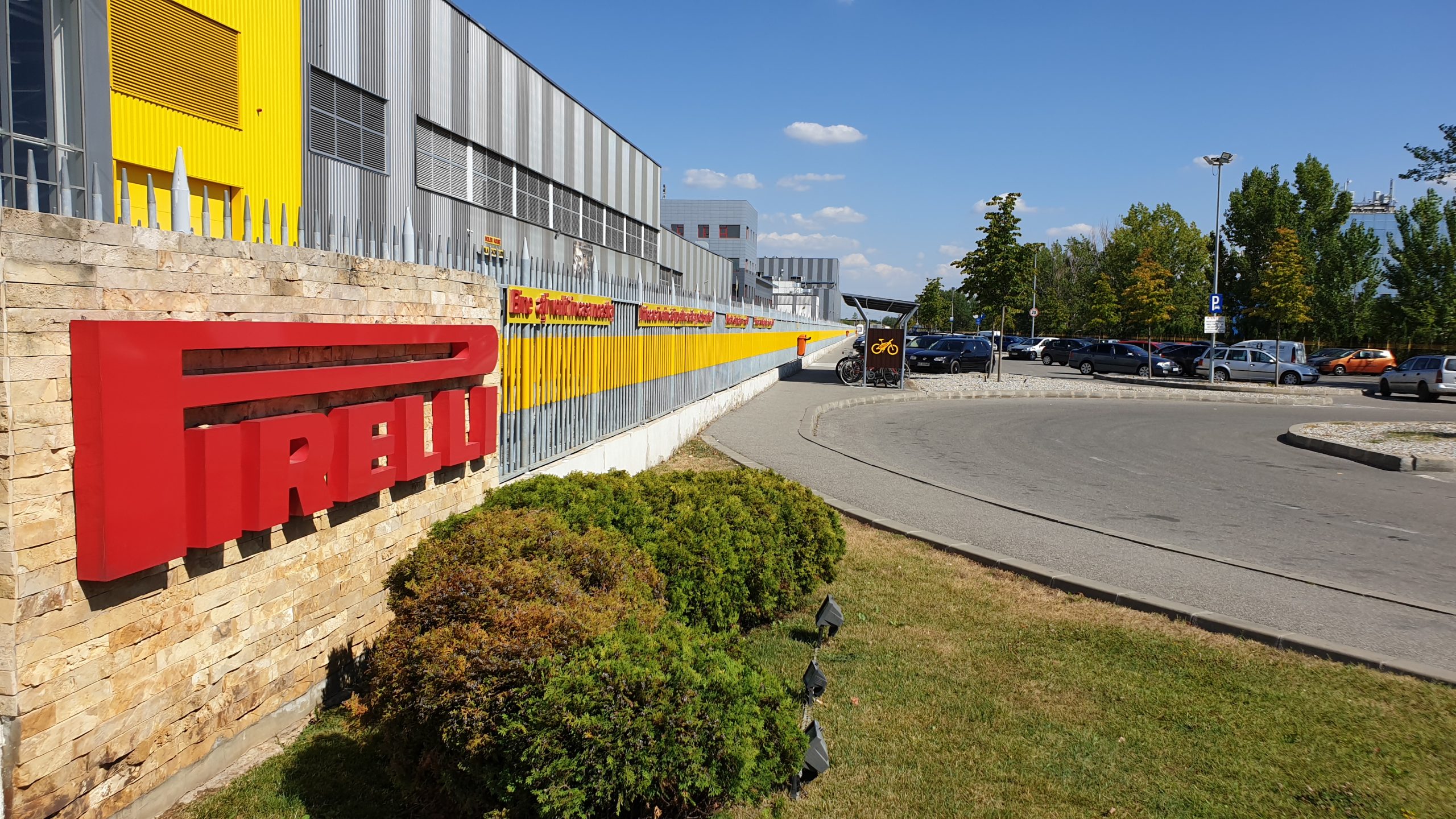
“Pirelli no es sòlo una fàbrica de llantas, es una cultura.” “Pirelli is more than just a tyre factory: it is culture.” This sentence, which perfectly captures the profound significance of Pirelli’s presence in Mexico, featured in the 2022 publication that celebrated the tenth anniversary of the first “Long P” factory in the country. This important step on Pirelli’s journey in Mexico was preceded by the opening of a commercial office in 2004 to import rubber products from Europe and distribute them throughout the Americas. A journey that – it is worth emphasising – goes back a very long way.

It was in the early  years of the twentieth century that Alberto Pirelli, one of the sons of Giovanni Battista, the founder of the company, went out to the Americas in search of the finest caoutchouc. His exploration of this world of huge potential paved the way, approximately one hundred years later, for the decision to open up workshops and sales offices and then, in 2010, to invest in a production plant, with the aim of effectively servicing the entire American market.

On 11 November 2011, the first Pirelli tyre was produced by the Silao factory, and one year later Felipe Calderón, the president of Mexico, opened the factory, which officially began production.

In the publication commemorating the first decade of manufacturing in Mexico, Marco Tronchetti Provera wrote: “This country presents exceptional opportunities, driven by both the positive trends in the domestic market and its strategic location, which makes it an ideal industrial base.” In other words, manufacturing in a strategic position for opening up new markets. While never forgetting the spirit of the Long P.

And indeed, Pirelli has taken many significant steps since 2012. Pirelli Mexico opened its new Training Academy in 2015, an expansion of the Silao plant was announced in 2016, and a Research, Development and Innovation Center was set up in 2022, also in Silao. This means that, together with its technology and research, Pirelli has given greater value to people in Mexico and it has continued to focus on sustainability as well as on safety in the workplace.

Safety, of course, but also quality, commitment, passion and cooperation. Pirelli in culture and work, in all its factories around the world.

“Pirelli no es sòlo una fàbrica de llantas, es una cultura.” “Pirelli is more than just a tyre factory: it is culture.” This sentence, which perfectly captures the profound significance of Pirelli’s presence in Mexico, featured in the 2022 publication that celebrated the tenth anniversary of the first “Long P” factory in the country. This important step on Pirelli’s journey in Mexico was preceded by the opening of a commercial office in 2004 to import rubber products from Europe and distribute them throughout the Americas. A journey that – it is worth emphasising – goes back a very long way.

It was in the early  years of the twentieth century that Alberto Pirelli, one of the sons of Giovanni Battista, the founder of the company, went out to the Americas in search of the finest caoutchouc. His exploration of this world of huge potential paved the way, approximately one hundred years later, for the decision to open up workshops and sales offices and then, in 2010, to invest in a production plant, with the aim of effectively servicing the entire American market.

On 11 November 2011, the first Pirelli tyre was produced by the Silao factory, and one year later Felipe Calderón, the president of Mexico, opened the factory, which officially began production.

In the publication commemorating the first decade of manufacturing in Mexico, Marco Tronchetti Provera wrote: “This country presents exceptional opportunities, driven by both the positive trends in the domestic market and its strategic location, which makes it an ideal industrial base.” In other words, manufacturing in a strategic position for opening up new markets. While never forgetting the spirit of the Long P.

And indeed, Pirelli has taken many significant steps since 2012. Pirelli Mexico opened its new Training Academy in 2015, an expansion of the Silao plant was announced in 2016, and a Research, Development and Innovation Center was set up in 2022, also in Silao. This means that, together with its technology and research, Pirelli has given greater value to people in Mexico and it has continued to focus on sustainability as well as on safety in the workplace.

Safety, of course, but also quality, commitment, passion and cooperation. Pirelli in culture and work, in all its factories around the world.

Multimedia

Images

Why innovation is not enough

A recently published book analyses the relationships between technological innovation and human beings


Innovation above all – a dictate that all enterprises (and business people) now take for granted, entailing new technologies that guarantee development. New, increasingly effective, efficient fast, rational and successful technologies. These are assumptions that permeate most of the advice given nowadays to indicate the right path towards (corporate and social) well-being and success. Innovation, then, as a first-rate strategy. Certainly, a beneficial approach in many respects, yet one that too frequently neglects the role played by human beings as users of such new technologies. An analytical and predictive flaw that often leads to innovations failing, which means that putting people back at the centre may still prove to be the wisest, and most effective, strategy.

This could be the message – a message to be shared – found in Confidenze digitali. Vizi e virtù dell’innovazione tecnologica (Digital confidence. Vices and virtues of technological innovation), a book of about 150 pages written with some flare by Massimiano Bucchi, who draws on his experience as full professor in science and technology, as well as a public figure popularising scientific knowledge in Italy and abroad.

Bucchi starts from an observation: we often look at technology with myopic – if not squinty – eyes. We only focus on technological novelties and forget the other side of the question: human beings and how they use technology. From here, Bucchi begins a narrative journey that encompasses innovations that are already part of our daily life and work habits, and others that are still in embryo. The book comprises 24 short chapters, each dedicated to a topic related to technological innovation aimed at individuals, communities and enterprises. The author analyses the practices that several innovations brought about, before elucidating the strong bond that lies between technology, its uses and, above all, its users. But there’s more. By looking at past, present and future technology, Bucchi also highlights the relations between innovation and human beings, revealing fragmentary and biased visions, adjustments and erroneous uses that illustrate the reason why not all innovations end up being successful.

Massimiano Bucchi’s work is definitely a must-read, and should perhaps be kept on the desks of all those dealing with innovation as a handy guide.

Confidenze digitali. Vizi e virtù dell’innovazione tecnologica (Digital confidence. Vices and virtues of technological innovation)

Massimiano Bucchi

Il Mulino, 2023

A recently published book analyses the relationships between technological innovation and human beings


Innovation above all – a dictate that all enterprises (and business people) now take for granted, entailing new technologies that guarantee development. New, increasingly effective, efficient fast, rational and successful technologies. These are assumptions that permeate most of the advice given nowadays to indicate the right path towards (corporate and social) well-being and success. Innovation, then, as a first-rate strategy. Certainly, a beneficial approach in many respects, yet one that too frequently neglects the role played by human beings as users of such new technologies. An analytical and predictive flaw that often leads to innovations failing, which means that putting people back at the centre may still prove to be the wisest, and most effective, strategy.

This could be the message – a message to be shared – found in Confidenze digitali. Vizi e virtù dell’innovazione tecnologica (Digital confidence. Vices and virtues of technological innovation), a book of about 150 pages written with some flare by Massimiano Bucchi, who draws on his experience as full professor in science and technology, as well as a public figure popularising scientific knowledge in Italy and abroad.

Bucchi starts from an observation: we often look at technology with myopic – if not squinty – eyes. We only focus on technological novelties and forget the other side of the question: human beings and how they use technology. From here, Bucchi begins a narrative journey that encompasses innovations that are already part of our daily life and work habits, and others that are still in embryo. The book comprises 24 short chapters, each dedicated to a topic related to technological innovation aimed at individuals, communities and enterprises. The author analyses the practices that several innovations brought about, before elucidating the strong bond that lies between technology, its uses and, above all, its users. But there’s more. By looking at past, present and future technology, Bucchi also highlights the relations between innovation and human beings, revealing fragmentary and biased visions, adjustments and erroneous uses that illustrate the reason why not all innovations end up being successful.

Massimiano Bucchi’s work is definitely a must-read, and should perhaps be kept on the desks of all those dealing with innovation as a handy guide.

Confidenze digitali. Vizi e virtù dell’innovazione tecnologica (Digital confidence. Vices and virtues of technological innovation)

Massimiano Bucchi

Il Mulino, 2023