

Open factories included in the 700 gems of the FAI Open Days, because doing business also means fostering culture and history


Businesses are key players in the country’s economic, technological and innovative development. But they are also social and cultural actors, embodying a ‘polytechnic culture’ that brings together the humanities and the sciences, ‘know-how’ and ‘knowledge sharing’, and production with the stories of the men and women who keep businesses, and therefore Italy itself, going. Therefore, it makes perfect sense that the FAI (the Italian Environment Fund), Confindustria and Museimpresa have chosen to include a number of businesses amongst the 700 venues for the Fund’s ‘Autumn Days’ on 10 and 11 October. These will be open to visitors alongside museums, palaces, historic villas, gardens and castles across 350 Italian towns and cities.
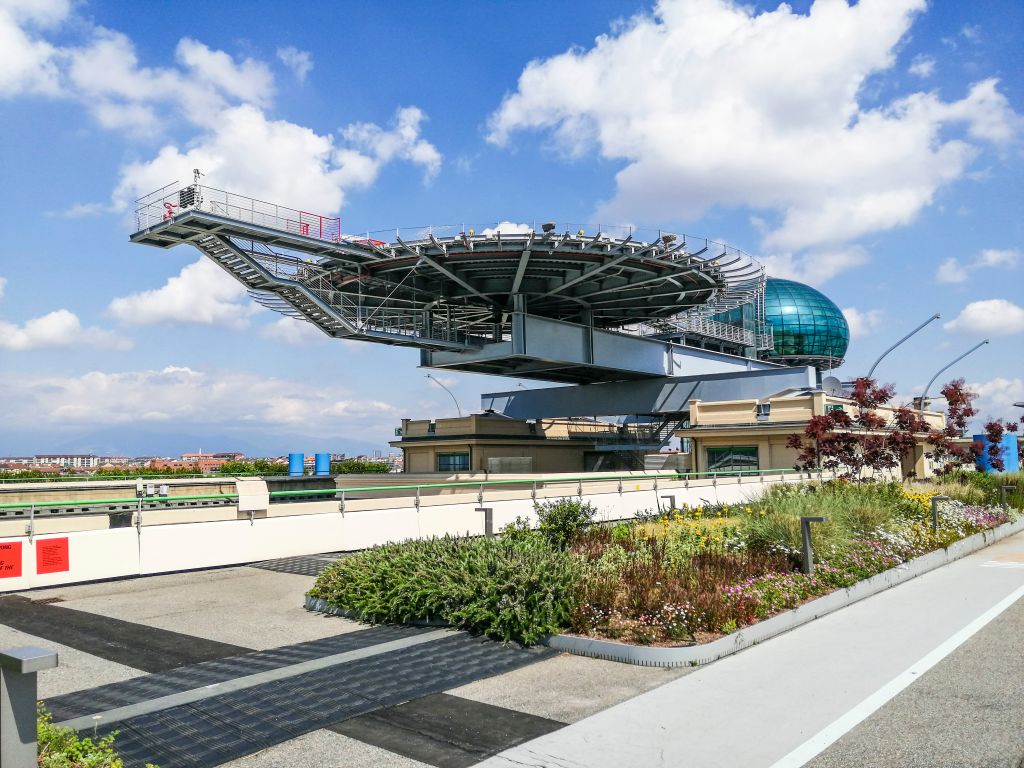
‘The FAI Days showcase the places behind “Made in Italy” to highlight the history of manufacturing and the link between work, innovation, identity and the local area,’ summarises Il Sole 24 Ore (1 October). Which ones? Rubbettino’s historic printing works in Soveria Mannelli, Calabria; the ‘factory of happiness’ in Collegno, Piedmont, where Pastiglie Leone sweets have been produced since the mid-19th century (having just reopened following a major refurbishment); Banca BFF in Milan (with its collections of contemporary art); Kartell, a leading player in the international furniture market; and the Mumac Museum, showcasing coffee machines. These five museums and historical archives have been selected from among the more than 170 members of Museimpresa, as have Librandi and Lanificio Leo, which belong to the “Sud Heritage” association, and the “Bolla” on rooftop of Lingotto, in Turin.
The selection also includes Palazzo Piacentini on Via Veneto in Rome, which houses the Ministry for Enterprise and Made in Italy, and Villa Blanc, home to the Luiss Business School. These venues have played a significant role in shaping the history and current state of the Italian economy. This collaboration between businesses and the FAI is indeed important, as it demonstrates that ‘corporate culture is a living part of Italy’s cultural heritage and, through its narrative, can also inspire younger generations’, as Francesco Somma, Confindustria’s vice-president for culture, maintains. In the past, the Pirelli Foundation also played a leading role, with a Historical Archive that bears witness to the multinational company’s 150-year history in Italy. This view aligns with that of Marco Magnifico, president of the FAI, who is dedicated to promoting Italy’s cultural heritage, which he believes is a valuable stimulus for responsible and informed tourism.
Indeed, this heritage encompasses the ability ‘to produce beautiful things that the world admires in the shadow of bell towers’, as the great economic historian Carlo M. Cipolla so aptly put it. There are now levers to give meaning and competitiveness to ‘Made in Italy’, which encompasses not only the traditional sectors of agri-food, clothing and furniture, all of which are deeply committed to product and process innovation, but also mechanical engineering, mechatronics, robotics, avionics, shipbuilding, the automotive industry, chemicals, pharmaceuticals and rubber and plastics. These sectors are at the forefront of a genuine ‘industrial humanism’, which today also takes the form of ‘digital humanism’.
It is precisely these dimensions and cultural perspectives that give Italy its strength and competitive edge as a major industrial power and Europe’s second-largest manufacturing nation after Germany. Otherwise, the country could be reduced to nothing more than a ‘Grand Hotel’ or a ‘Disneyland’ for wealthy tourists from all over the world. After all, it is industry that drives progress, enriching and improving our lives, while the welfare system continues to serve as a benchmark for a unique link between productivity and solidarity through its contribution to the public purse and support for businesses.
In this era of the knowledge economy and AI, we must commit to ‘knowing in order to compete’, as this year’s Enterprise Culture Week title states. We must open our businesses up to cultural practitioners, such as writers, photographers, filmmakers, artists and theatre and music professionals, as well as students and local stakeholders. The goal is to work together to build a new and better narrative around business, technology, and science, and to strengthen a genuine ‘future of memory’, with the awareness typical of the business world that ‘the future has an ancient heart’, and a vision focused on the new and improved dimensions of the economy and its social sustainability.
(photo Getty Images)