

Ten Italian stories that highlight civic spirit and strengthen the social capital of local communities and businesses


How strong is Italy’s social capital? Very weak, if we consider the figures on tax evasion, which amount to around 100 billion euros a year. Just under a third of taxpayers (public and private sector employees and pensioners) pay 78% of personal income tax. Equally weak if we consider the crisis of confidence in institutions and politics. This is demonstrated by the decline in voter turnout, with one in two voters now staying away from the polls, and by young people with degrees who leave Italy to seek better working and living conditions abroad. Weak social capital, then. We must also consider the growing number of people experiencing hardship, including elderly people living alone in poverty, the sick, women shouldering family responsibilities and facing wage disparities compared to men, and young ‘NEETs’ (not in education, employment or training). These are all alarming examples of a genuine breakdown in the social and generational contract and a deep rift in civil coexistence and the very foundations of democracy.
And yet, despite these fractures, divisions and forms of poverty, both new and old, Italy is holding its own. It continues to navigate domestic and international crises, and it has a business sector, particularly in industry, that ranks among the best in Europe. As is well known, Italy is Europe’s second-largest manufacturing nation after Germany and one of the world’s top five exporters. It is also recognised internationally as one of the places where life is better than elsewhere, despite everything.
All in all, therefore, Italy has strong and positive social capital. Why is this?
One answer can be found in the resourcefulness of the manufacturing sector, where companies demonstrate a unique commitment to sustainability, not only environmental, but also social. They regard this commitment as a fundamental component of their production model and a competitive asset, as well as acting as social and cultural players beyond their capacity for innovation and, consequently, their competitiveness. Another characteristic of a corporate culture widespread in many manufacturing regions is corporate welfare, which includes health, training, sports and initiatives to encourage reading through company libraries. This helps the company grow in terms of social responsibility and establishes it as one of the few places where social mobility still functions, a phenomenon that has now almost ground to a halt when considering Italy as a whole.
The second factor lies in the strength of the ‘third sector’ and the social economy, which has an economic value of 100 billion and contributes 4.5–5% to GDP. It employs 856,000 people, which is a 25% increase over the last six years. However, wages remain low, and managerial expertise needs to be developed and strengthened in some areas. There are also tens of thousands of volunteers, and an increasingly professional and consistent focus on supporting vulnerable people, local welfare, culture, social integration and preserving and enhancing public assets.
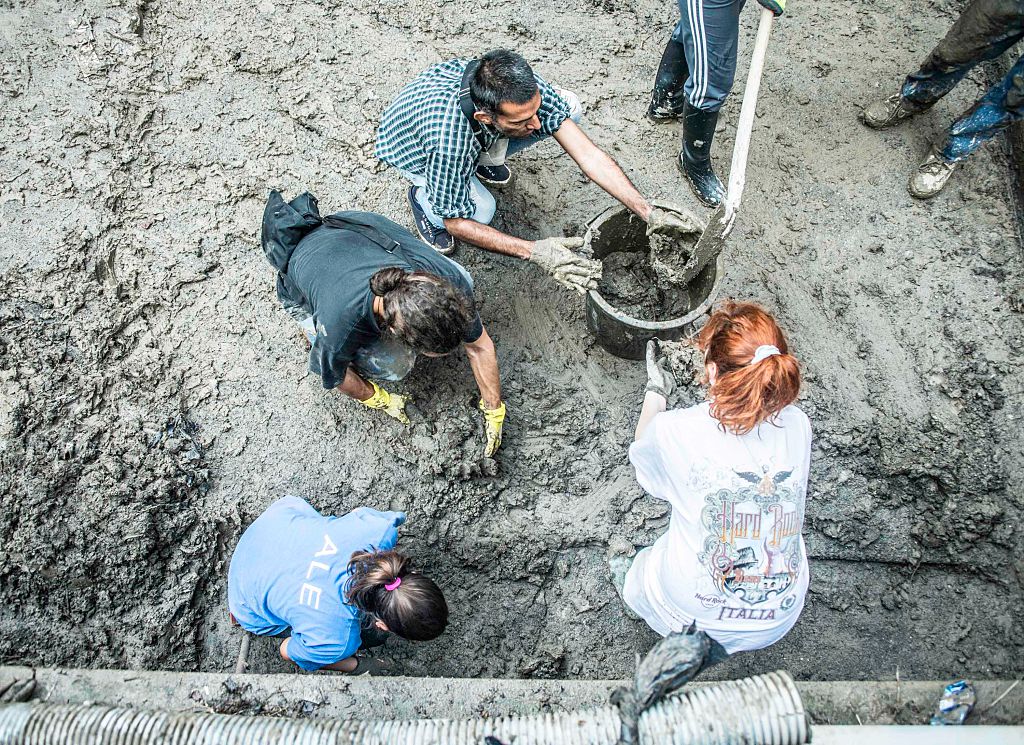
The third answer can be found in the latest Symbola Foundation Report, entitled ‘Un’Italia che fa l’Italia. Dieci storie di un Paese generoso,(An Italy that makes Italy’. Ten stories of a generous country), published to mark the sixtieth anniversary of the Florence flood and the commitment of those who were then dubbed ‘the angels of the mud’, the young men and women who arrived in the Tuscan city from all over Italy to help save works of art, ancient libraries, monuments, and public spaces that had been devastated by the floodwaters of the Arno.
These ‘Ten Stories’ recount the reactions of the Italian public and institutions to catastrophic events in Italy and around the world over the last sixty years. In addition to the Florence flood, they cover the 1976 Friuli earthquake and the 1980 Irpinia earthquake (where the emergency response and subsequent reconstruction efforts were very different), the Italian Navy’s rescue of ‘boat people’ fleeing Vietnam in the South China Sea (a political, moral and humanitarian decision worthy of remembrance, particularly in our current era of migration, shipwrecks, hope and sorrow, and human trafficking), and the recent generosity of the Lampedusa fishermen in rescuing migrants at sea.
And then there are the children affected by the Chernobyl nuclear disaster who were taken in by Italian families, the deployment of the aircraft carrier Cavour to Haiti following the 2010 earthquake, the rescue of the flooded Rummo pasta factory by its workers, consumers, and local residents, the invention of the ‘Charlotte’ valve that transformed diving masks into life-saving medical devices at the start of the pandemic, and the jobs offered by the Caprai winery in Montefalco (producers of Sagrantino wine) to asylum seekers. Finally, there was the decision by the CAB Terra cooperative to sacrifice its own land to allow floodwater from the 2023 floods to flow through, thereby saving the city of Ravenna.
Ten stories of generosity, civic spirit and responsibility, and of safeguarding our values of solidarity, hospitality and rescue. Examples of the ‘gentle patriotism’ we have discussed several times in our blogs. “The Italy that makes Italy”, indeed.
Ermete Realacci, president of Symbola, comments: “Our report highlights how the whole country is imbued with a spirit of solidarity encompassing citizens, businesses and the state. The state has organised its structures to intervene in Italy and throughout the world, even where we have no economic, political or cultural interests.”
It’s a lesson in humanity, then, to strengthen our social capital, in the hope that it will help us organise more effectively and mitigate the effects of any future tragedies.
(photo Getty Images)