


AI and humans, the alliance and its conditions
Guido Saracco’s latest book explores what the relationship between humans and technology might look like ten years from now
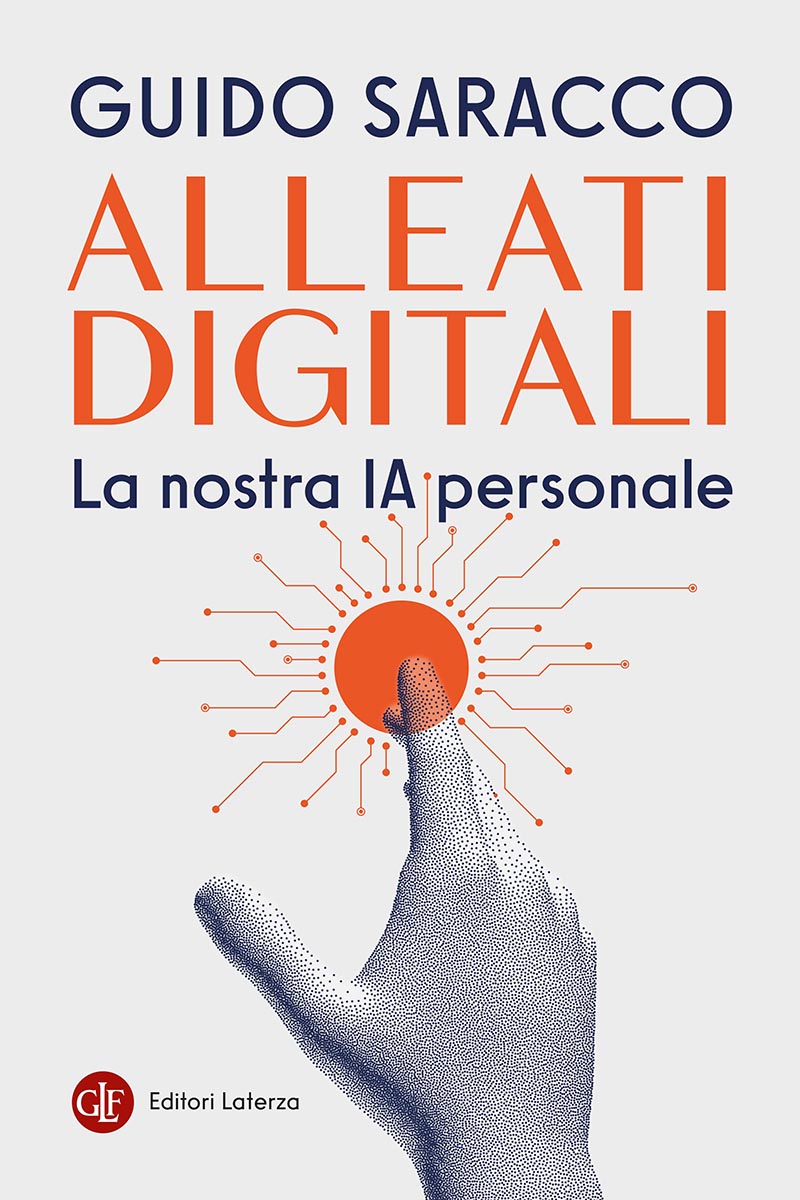
The ideal for all is to be open to progress while remaining mindful of our humanity. This is key and applies from both a social and economic perspective, and it is particularly relevant in this era when technology and innovation seem to surpass human ingenuity (from which they originated). As always, this is a question of culture, which is not just knowledge, but critical and careful thinking. To foster this kind of culture, ‘Alleati digitali. La nostra IA personale’ (Digital allies: Our personal AI), written by Guido Saracco and recently published, is definitely worth a read.
Franco begins by considering the following: artificial intelligence is now part of our daily lives. It is defined by its rapid development and the urgent and necessary changes it brings to the way we understand and perform many daily tasks and productive activities. Saracco points out that if we design it well, starting with a personal digital assistant to help each of us, the future can be a better place.
The book takes readers on a journey into the future, imagining how we might study, work and live in ten years’ time with an AI-based digital assistant by our side.
Guido Saracco shares the most relevant features of the mechanisms of the mind and the most recent neuroscientific and neurotechnological discoveries on human-machine interfaces. He then analyses the developments in artificial intelligence that have already been achieved and those that are expected. He then predicts how the alliance between humans and artificial intelligence will be consolidated in two ways: new devices and shared functions, and the definition of a new regulatory framework that will dictate the technology’s boundaries of applicability and probably redefine humanity’s rights.
Saracco’s book is well written and can be read in one sitting, although it requires attentive reading. Regarding AI and digital allies, he makes a crucial point that should be clear to everyone: ‘The digital ally,’ he writes, ‘will firstly be a device based on generative artificial intelligence that will accompany us during advanced training after our brains have undergone adequate development in adolescence, and will remain at our side for our entire lives. Its hardware and software will improve over time in terms of performance, architecture and functions. The only constraint is that control, evaluation and final decision-making must always be retained by the human.’
Alleati digitali. La nostra IA personale
Guido Saracco
Laterza, 2026
Guido Saracco’s latest book explores what the relationship between humans and technology might look like ten years from now
The ideal for all is to be open to progress while remaining mindful of our humanity. This is key and applies from both a social and economic perspective, and it is particularly relevant in this era when technology and innovation seem to surpass human ingenuity (from which they originated). As always, this is a question of culture, which is not just knowledge, but critical and careful thinking. To foster this kind of culture, ‘Alleati digitali. La nostra IA personale’ (Digital allies: Our personal AI), written by Guido Saracco and recently published, is definitely worth a read.
Franco begins by considering the following: artificial intelligence is now part of our daily lives. It is defined by its rapid development and the urgent and necessary changes it brings to the way we understand and perform many daily tasks and productive activities. Saracco points out that if we design it well, starting with a personal digital assistant to help each of us, the future can be a better place.
The book takes readers on a journey into the future, imagining how we might study, work and live in ten years’ time with an AI-based digital assistant by our side.
Guido Saracco shares the most relevant features of the mechanisms of the mind and the most recent neuroscientific and neurotechnological discoveries on human-machine interfaces. He then analyses the developments in artificial intelligence that have already been achieved and those that are expected. He then predicts how the alliance between humans and artificial intelligence will be consolidated in two ways: new devices and shared functions, and the definition of a new regulatory framework that will dictate the technology’s boundaries of applicability and probably redefine humanity’s rights.
Saracco’s book is well written and can be read in one sitting, although it requires attentive reading. Regarding AI and digital allies, he makes a crucial point that should be clear to everyone: ‘The digital ally,’ he writes, ‘will firstly be a device based on generative artificial intelligence that will accompany us during advanced training after our brains have undergone adequate development in adolescence, and will remain at our side for our entire lives. Its hardware and software will improve over time in terms of performance, architecture and functions. The only constraint is that control, evaluation and final decision-making must always be retained by the human.’
Alleati digitali. La nostra IA personale
Guido Saracco
Laterza, 2026