
Stories of beauty and new technologies, a glossary to help you understand industry


Let us remember Marc Bloch and his rigorous approach to history, as well as the Annales School that he founded with Lucien Febvre in 1929. They began with a journal, the Annales d’histoire économique et sociale, to highlight the importance of ‘material history’, including food, manufacturing, clothing, housing, daily habits and the behaviour of social classes, even the most humble. This approach allows us to write a far richer, more complex and truthful history than one based solely on the choices of the ruling classes, their policies and their wars.
To commemorate him, as they have justly done in France by admitting him to the Panthéon, the first historian to be welcomed into the mausoleum of the Republic, they have accompanied this decision, which is rich in cultural, civic and political significance (Bloch was also a sincere, non-nationalist patriot and a member of the resistance against the Nazi-Fascists), with a series of initiatives and an exhibition entitled ‘Bloch, l’Esprit de l’Histoire’, held in the crypt of the Panthéon itself (as reported in the Sunday edition of Il Sole 24 Ore, 11 October).
Bloch’s teachings are also reflected in the book Vocabolario della cultura d’impresa. Le parole di archivi e musei per raccontare il saper fare italiano (A glossary of corporate culture. Words from archives and museums to illustrate Italian know-how) edited by Museimpresa to mark its 25th anniversary and written by the Scuola Holden in Turin, the book is published by Marsilio. It contains 129 words, ranging from ‘water’, ‘food’ and ‘love’ to ‘emotions’, ‘crowds’ and ‘mother’, and finally ‘values’, ‘journey’, ‘vision’ and ‘voice’, to illustrate knowledge, resourcefulness, business ideas and stories, passions, innovations and hard-working communities from original perspectives.
The book will be available in bookshops from 20 October, but discussions will begin on 14 and 15 October during the annual Museimpresa seminar in Biella, aptly titled ‘From know-how to sharing knowledge’.
The idea behind it stems from the realisation that knowledge, skills, interpersonal relationships, material and cultural values, and outlooks on life have become embedded in familiar objects over time, and that every artefact is a distillation of time. Learning to interpret these artefacts restores depth to the present. We must consider how to devise tools for shaping a better future with a critical conscience and a sense of social and civic responsibility.
Corporate culture begins with the idea that patents, chemical formulas, new industrial materials and employment contracts are as much a part of a country’s cultural landscape as its literary and artistic works. In a contract, after all, relationships and responsibilities are established. In a business plan, we decide which future to try to build. In the design of a factory, we organise the space in which entrepreneurs, workers, managers and technicians will spend much of their time. These are the ways in which a society gives visible expression to its conception of the human being. A business produces meanings alongside its products. It reshapes places, introduces habits and passes on skills, and so it is a culture in its own right, evident in its day-to-day decisions.
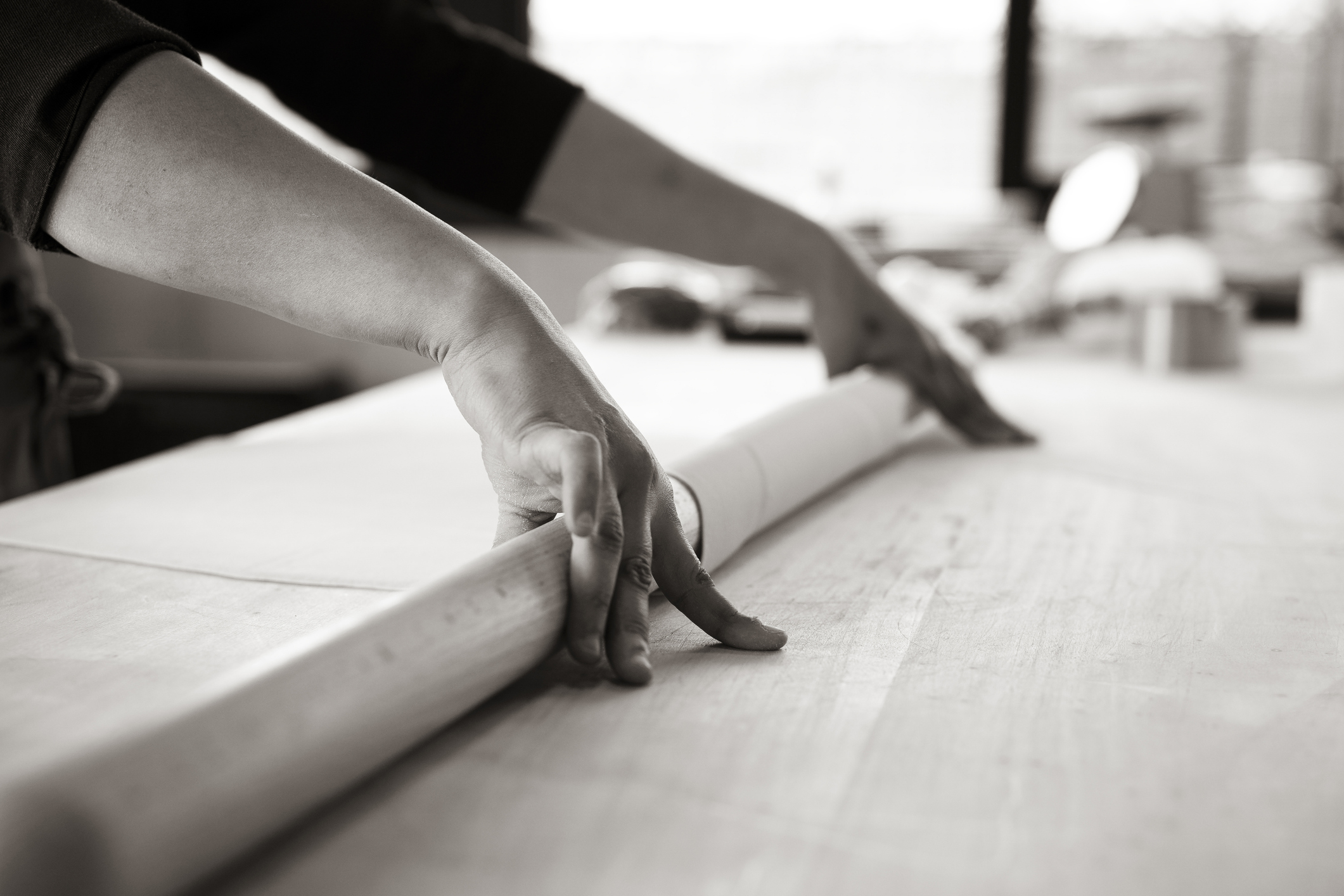
It is a polytechnic culture, a widespread Italian business attitude that combines humanism and science, creativity and function, intuition and rigour. The hand knows things that the mind must heed, while the mind imagines things that the hand will have to confirm. Between the two lies the resistance of matter, which corrects intentions and imposes limits until the finished artefact is achieved, a product of technique and an expression of a culture (the exact lesson of Bloch, and of Primo Levi and Elio Vittorini in Italy). And of a reciprocity of relationships. Cultural capital enriches social capital, as exemplified by the concept of ‘an Italy that does Italy good’, a phrase close to the heart of the Symbola Foundation. A country where industry takes centre stage with its values, connections and the strength of its history, namely museums and corporate archives, as well as its visionary spirit to build a better future. Productivity and competitiveness are also fuelled by diverse forms of knowledge, ideas, philosophies, vocabularies and narratives.
Innovation is not a technology, but rather the ability to capitalise on a fresh perspective.
Within this network of relationships, one recognises the long Italian history of workshops, manufactories, laboratories and industrial districts. Its enduring element is attention to detail: the ability to work on forms, functions and innovations.
Before a painting is presented as the work of an artist, someone has prepared the canvas, ground the pigments and made the tools. In the Renaissance workshop, others have learnt, executed and corrected. Beauty entails an organisation of labour that is often overshadowed by admiration for the result, but behind the master’s name lies a community of practices and the discipline required to produce the work is evident in the material itself. The history of art and the history of techniques converge here, with science and industry stimulating creativity. Piero della Francesca was also an excellent mathematician, and his ability to construct perspective was the result of calculation as well as an extraordinary talent for representation.
Further proof? In the pages of the Codex Atlanticus, men, machines and architecture all stem from the same cognitive impulse. Leonardo draws to understand and to show how to build; he observes in order to invent. A gear mechanism and a human body both engage the same intelligence of form. Awe precedes the technical solution; it makes it possible. Centuries later, the interplay between beauty and function permeated design and accompanied Italy’s industrial development from the 1950s onwards.
This story continues today in computer languages, codes and artificial intelligence, with industrial humanism taking on a digital dimension that is shaping production and products. Even an algorithm contains choices, logic and vision, so we need to recognise the links between different forms of knowledge and make the tools through which work and relationships are changing more understandable. The gap between the speed of change and the time needed to understand it is widening, so we need places where that gap can be measured and opportunities to pause and reflect, even modernity needs a moment’s pause, and museums and corporate archives offer us the time to do just that. We enter them to observe what we once were and to understand the choices that have brought us to where we are today.
Memory makes us more aware of our capacity for planning. A machine that has outlived its original purpose acquires a different kind of eloquence within the museum. Its silence makes other presences perceptible: those who designed it, those who learnt to operate it, the actions it required and the habits it introduced. Beside it, a prototype, a photograph or an advertising campaign enables us to reconstruct its world, and the object rediscovers the context and vision that gave rise to it. Industrial heritage thus becomes part of the country’s collective history, alongside art museums and other places in which we recognise our complex, and therefore rich, identity.
(photo: Getty Images)