


Can we avoid becoming ‘celibate machines’?
The relationship between digital technologies, development and humanity
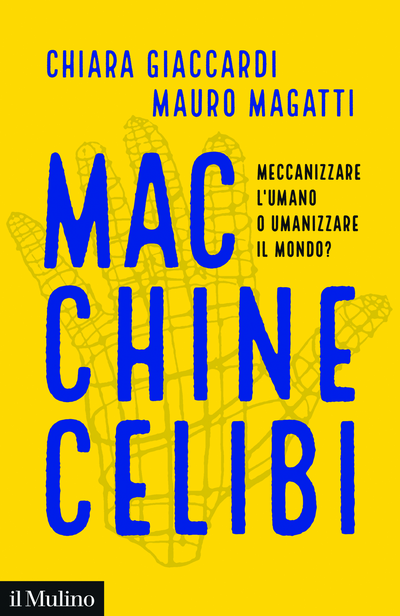
The development model that dominated at the turn of the century no longer holds sway. So how do we keep an increasingly large and fragmented society together when it is discarding traditional moral order in the name of personal freedom? This is a very important question that everyone must answer, with the level of intensity growing according to one’s individual responsibilities within social systems. This question is successfully answered in ‘Macchine celibi. Meccanizzare l’umano o umanizzare il mondo?’ (Celibate machines: Mechanising humans or humanising the world?), a book co-authored by sociologist and media anthropologist Chiara Giaccardi and sociologist Mauro Magatti.
So, how can we do it? The solution seems to lie in digital technologies, which offer themselves as an antidote to the disruptive impulses of our age. However, they also prove to be a powerful catalyst for new problems. The two observe that the result is paradoxical: maximum efficiency and maximum communication chaos are achieved with digital technology. While intelligent machines are becoming more human-like, humans are in danger of becoming ‘celibate machines’, i.e. isolated, high-performance individuals capable of great things, but lacking bonds and unable to recognise others. In other words, as Giaccardi and Magatti put it, ‘To move forward, it is necessary to think of digitisation not as a means of standardising and controlling, but as a way of nurturing the vital intelligence of people and groups. Technology alone cannot provide us with guidance; we need a new way of thinking that transcends the limitations of modern rationality.’ We need a ‘new way of thinking’ that restores fundamental principles of existence and human coexistence. This must start with the rediscovery of a ‘politics of the spirit’ that can give our societies meaning, connections and a future. The way forward lies in reviving what modernity has marginalised: dialogue, thought and spirit. After all, happiness is not celibate — nor is freedom.
The book takes the reader through several stages on a journey with a destination. First, the concept of ‘digital rationalisation’ is clarified. Then, the many aspects that this rationalisation determines, from narcissism to aggression, are explored in depth. Finally, a way forward based on thought, complexity, plurality and dialogue is outlined.
Chiara Giaccardi and Mauro Magatti emphasise that we are at a crossroads. It is up to us to choose the right path, otherwise we will end up as Luigi Pirandello astutely pointed out, as quoted by the authors themselves: ‘We are all becoming like machines; we no longer need a soul’.
Macchine celibi. Meccanizzare l’umano o umanizzare il mondo?
Chiara Giaccardi, Mauro Magatti
il Mulino, 2025
The relationship between digital technologies, development and humanity
The development model that dominated at the turn of the century no longer holds sway. So how do we keep an increasingly large and fragmented society together when it is discarding traditional moral order in the name of personal freedom? This is a very important question that everyone must answer, with the level of intensity growing according to one’s individual responsibilities within social systems. This question is successfully answered in ‘Macchine celibi. Meccanizzare l’umano o umanizzare il mondo?’ (Celibate machines: Mechanising humans or humanising the world?), a book co-authored by sociologist and media anthropologist Chiara Giaccardi and sociologist Mauro Magatti.
So, how can we do it? The solution seems to lie in digital technologies, which offer themselves as an antidote to the disruptive impulses of our age. However, they also prove to be a powerful catalyst for new problems. The two observe that the result is paradoxical: maximum efficiency and maximum communication chaos are achieved with digital technology. While intelligent machines are becoming more human-like, humans are in danger of becoming ‘celibate machines’, i.e. isolated, high-performance individuals capable of great things, but lacking bonds and unable to recognise others. In other words, as Giaccardi and Magatti put it, ‘To move forward, it is necessary to think of digitisation not as a means of standardising and controlling, but as a way of nurturing the vital intelligence of people and groups. Technology alone cannot provide us with guidance; we need a new way of thinking that transcends the limitations of modern rationality.’ We need a ‘new way of thinking’ that restores fundamental principles of existence and human coexistence. This must start with the rediscovery of a ‘politics of the spirit’ that can give our societies meaning, connections and a future. The way forward lies in reviving what modernity has marginalised: dialogue, thought and spirit. After all, happiness is not celibate — nor is freedom.
The book takes the reader through several stages on a journey with a destination. First, the concept of ‘digital rationalisation’ is clarified. Then, the many aspects that this rationalisation determines, from narcissism to aggression, are explored in depth. Finally, a way forward based on thought, complexity, plurality and dialogue is outlined.
Chiara Giaccardi and Mauro Magatti emphasise that we are at a crossroads. It is up to us to choose the right path, otherwise we will end up as Luigi Pirandello astutely pointed out, as quoted by the authors themselves: ‘We are all becoming like machines; we no longer need a soul’.
Macchine celibi. Meccanizzare l’umano o umanizzare il mondo?
Chiara Giaccardi, Mauro Magatti
il Mulino, 2025