


Family businesses, the hows and the whys
The description, analysis and management of a widespread and particular way of doing business
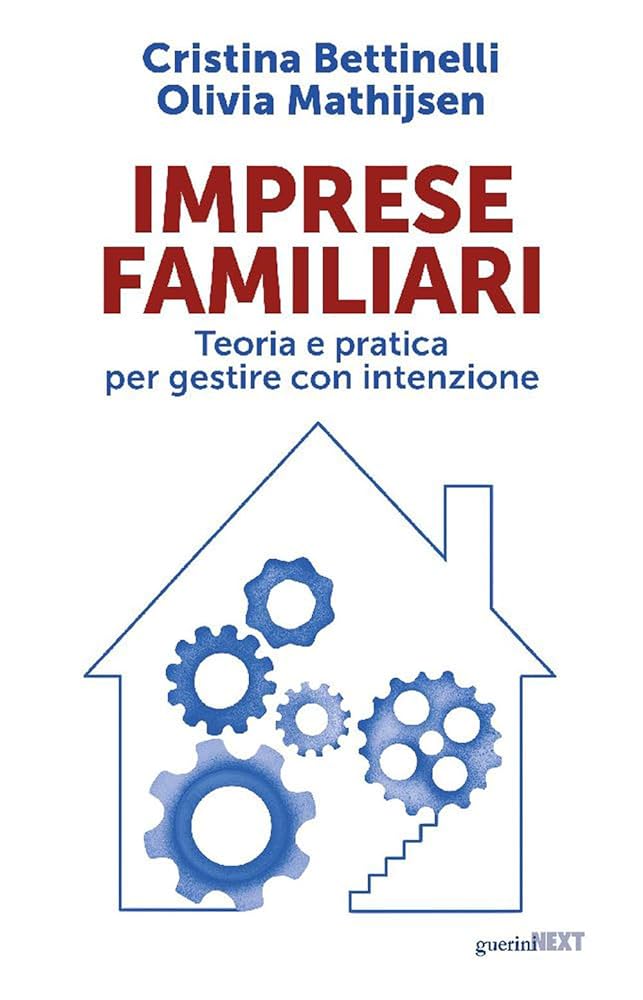
Family businesses are considered the ‘backbone’ of many economies, yet they are little known and burdened by a series of myths that often bear no relation to reality. Understanding their true nature and how they operate and evolve is key to understanding an important part of a country’s (and Italy’s in particular) production culture. This is what ‘Imprese familiari. Teoria e pratica per gestire con intenzione’ (Family businesses. Theory and practice for managing with intention) tries – and succeeds – to do.Co-authored by Cristina Bettinelli and Olivia Mathijsen, it offers an analysis of this category of entrepreneurial activities, guiding the reader through an understanding of their complexities and evolutionary trajectories.
Using theoretical models, case studies and practical tools, the book reflects on issues such as governance, conflicts, values and culture. The book addresses the issue of generational transition by illustrating how to cultivate management skills (stewardship) in future generations. The common thread is the intentionality in consciously addressing these topics.
The book begins with an important passage that addresses and debunks six myths related to the image of family businesses. It then moves on to the criteria for defining family businesses, before addressing the ‘three evolutionary dimensions’ of these production organisations: property, family, and the business itself. The authors then turn to the complex and varied topic of managing the various dimensions that come together in a family business, before moving on to other fundamental themes, such as the intertwining of values and culture in family businesses, and the conflicts, communications, and emotions that can characterise these activities. Bettinelli and Mathijsen’s work concludes with two further key arguments: the crux of generational transition, and the importance of passing on the necessary managerial skills to new generations. Two case studies—Pastificio Rana SpA and Distillatori Nonino SRL- complete the theory illustrated in the book.
Cristina Bettinelli and Olivia Mathijsen have written an excellent introduction to understanding a unique way of doing business.
Imprese familiari. Teoria e pratica per gestire con intenzione
Cristina Bettinelli, Olivia Mathijsen
Guerini Next, 2024
The description, analysis and management of a widespread and particular way of doing business
Family businesses are considered the ‘backbone’ of many economies, yet they are little known and burdened by a series of myths that often bear no relation to reality. Understanding their true nature and how they operate and evolve is key to understanding an important part of a country’s (and Italy’s in particular) production culture. This is what ‘Imprese familiari. Teoria e pratica per gestire con intenzione’ (Family businesses. Theory and practice for managing with intention) tries – and succeeds – to do.Co-authored by Cristina Bettinelli and Olivia Mathijsen, it offers an analysis of this category of entrepreneurial activities, guiding the reader through an understanding of their complexities and evolutionary trajectories.
Using theoretical models, case studies and practical tools, the book reflects on issues such as governance, conflicts, values and culture. The book addresses the issue of generational transition by illustrating how to cultivate management skills (stewardship) in future generations. The common thread is the intentionality in consciously addressing these topics.
The book begins with an important passage that addresses and debunks six myths related to the image of family businesses. It then moves on to the criteria for defining family businesses, before addressing the ‘three evolutionary dimensions’ of these production organisations: property, family, and the business itself. The authors then turn to the complex and varied topic of managing the various dimensions that come together in a family business, before moving on to other fundamental themes, such as the intertwining of values and culture in family businesses, and the conflicts, communications, and emotions that can characterise these activities. Bettinelli and Mathijsen’s work concludes with two further key arguments: the crux of generational transition, and the importance of passing on the necessary managerial skills to new generations. Two case studies—Pastificio Rana SpA and Distillatori Nonino SRL- complete the theory illustrated in the book.
Cristina Bettinelli and Olivia Mathijsen have written an excellent introduction to understanding a unique way of doing business.
Imprese familiari. Teoria e pratica per gestire con intenzione
Cristina Bettinelli, Olivia Mathijsen
Guerini Next, 2024