

How has the world changed since 1945?
A good guide published to better understand the present including through the narration of the past
Having good guides makes travelling through the present easier, and reflecting on the past is important. There is essential reading to be done, and updates to be obtained. This is why it is worth the effort to read the recently published ‘Storia internazionale. Dal 1919 a oggi’ (International History: From 1919 to today) by Antonio Varsori.
The book has a dual origin: on the one hand, it is a ‘manual’ for learning about the history of the 20th century; on the other, it is a ‘reflection on’ the subject. It is therefore a book of learning, but also of analysis. Moreover, it is also accessible to the general public, entrepreneurs and those engaged in public affairs, who need accurate information about the past in order to better understand current events.
Varsori’s book recounts international events from the attempted redefinition of the European and international order at Versailles at the end of the First World War, to the ‘new international disorder’ resulting from the end of Cold War bipolarism. The story then unfolds from 1919, a time of failed international order that presaged a new world conflict: the Second World War, followed by the Cold War and the emergence of two opposing systems. The text goes on to explain the creation of a new world order between 1945 and 1960. It then moves on to the events of the 1960s and 1970s, before addressing what is referred to as the ‘New Cold War’ and the illusion of a new international order. Finally, it discusses the emergence of an ‘international disorder’, which is similar to the situation we are experiencing today, with recent developments in the international system including the war in Ukraine, the conflict in Gaza, the US elections, and the impact of Trump’s retaliations on the global landscape.
Varsori offers a fresh perspective on the history of contemporary international relations, moving away from an exclusively diplomatic view to adopt a more inclusive approach that considers economic, social and cultural factors, as well as transnational processes and the strong links between domestic and foreign policy. Antonio Varsori’s book is one to read and then keep as a useful guidebook.
Storia internazionale. Dal 1919 a oggi
Antonio Varsori
Mulino, 2026
A good guide published to better understand the present including through the narration of the past
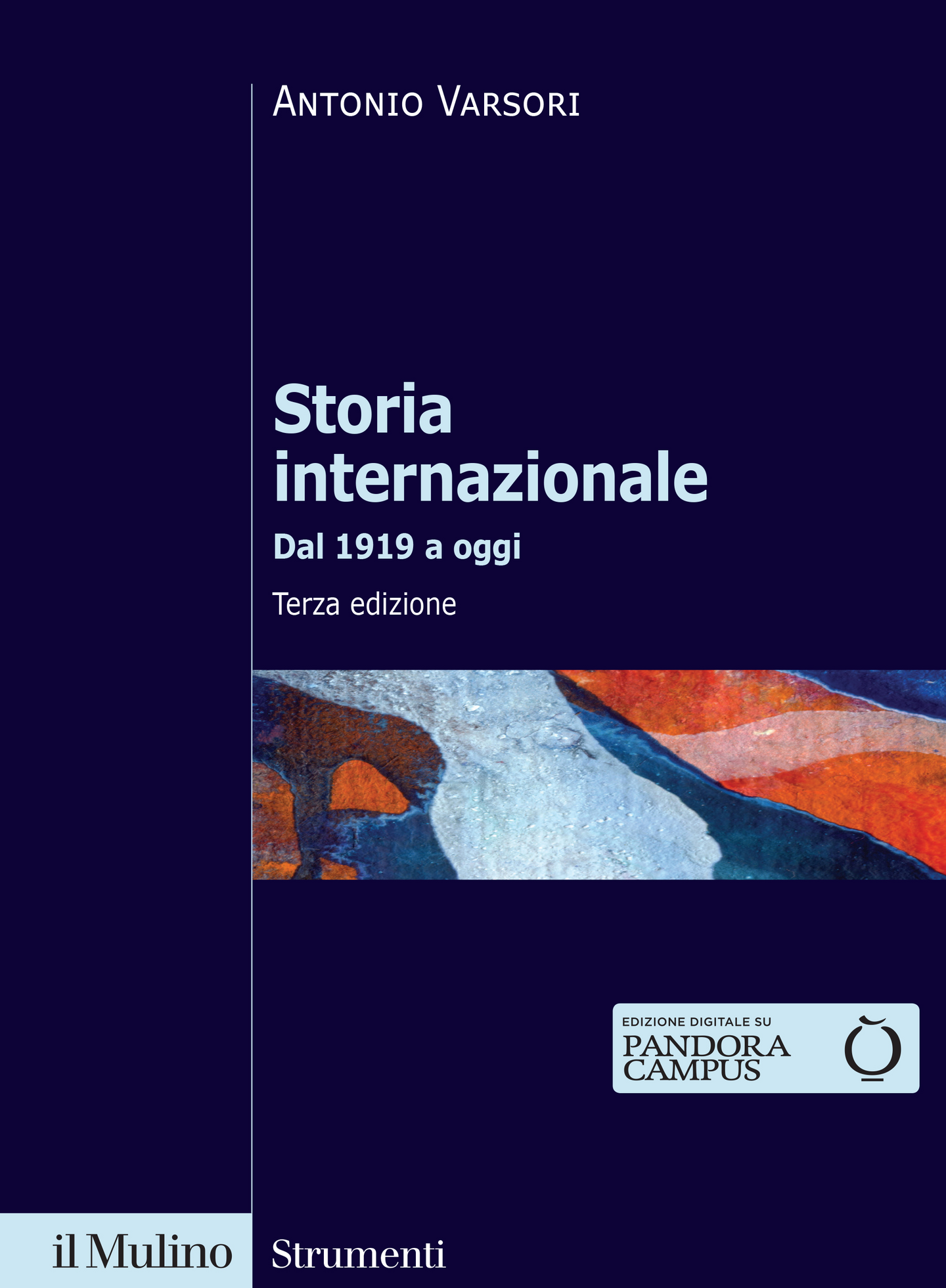
Having good guides makes travelling through the present easier, and reflecting on the past is important. There is essential reading to be done, and updates to be obtained. This is why it is worth the effort to read the recently published ‘Storia internazionale. Dal 1919 a oggi’ (International History: From 1919 to today) by Antonio Varsori.
The book has a dual origin: on the one hand, it is a ‘manual’ for learning about the history of the 20th century; on the other, it is a ‘reflection on’ the subject. It is therefore a book of learning, but also of analysis. Moreover, it is also accessible to the general public, entrepreneurs and those engaged in public affairs, who need accurate information about the past in order to better understand current events.
Varsori’s book recounts international events from the attempted redefinition of the European and international order at Versailles at the end of the First World War, to the ‘new international disorder’ resulting from the end of Cold War bipolarism. The story then unfolds from 1919, a time of failed international order that presaged a new world conflict: the Second World War, followed by the Cold War and the emergence of two opposing systems. The text goes on to explain the creation of a new world order between 1945 and 1960. It then moves on to the events of the 1960s and 1970s, before addressing what is referred to as the ‘New Cold War’ and the illusion of a new international order. Finally, it discusses the emergence of an ‘international disorder’, which is similar to the situation we are experiencing today, with recent developments in the international system including the war in Ukraine, the conflict in Gaza, the US elections, and the impact of Trump’s retaliations on the global landscape.
Varsori offers a fresh perspective on the history of contemporary international relations, moving away from an exclusively diplomatic view to adopt a more inclusive approach that considers economic, social and cultural factors, as well as transnational processes and the strong links between domestic and foreign policy. Antonio Varsori’s book is one to read and then keep as a useful guidebook.
Storia internazionale. Dal 1919 a oggi
Antonio Varsori
Mulino, 2026