


The dignity of man in the face of machines
Paolo Benanti’s reasoning on AI puts humanity back at the heart of the awareness that we must all have
Human activity versus machines. It is an age-old challenge that, however, seems to be taking on new connotations in recent times with the advent of artificial intelligence in the form of ChatGPT and Large Language Models (LLMs). These new developments are capable of confounding human action itself. So much so that one must question whether these new technologies are truly instruments of progress or of the oppression and subjugation of human nature. These are important questions that everyone should consider, whatever their role. This also applies to businesspeople who may find themselves making use of new technologies.
In light of these issues, a careful reading of the short book by Paolo Benanti — a theologian and innovation expert — is highly recommended.
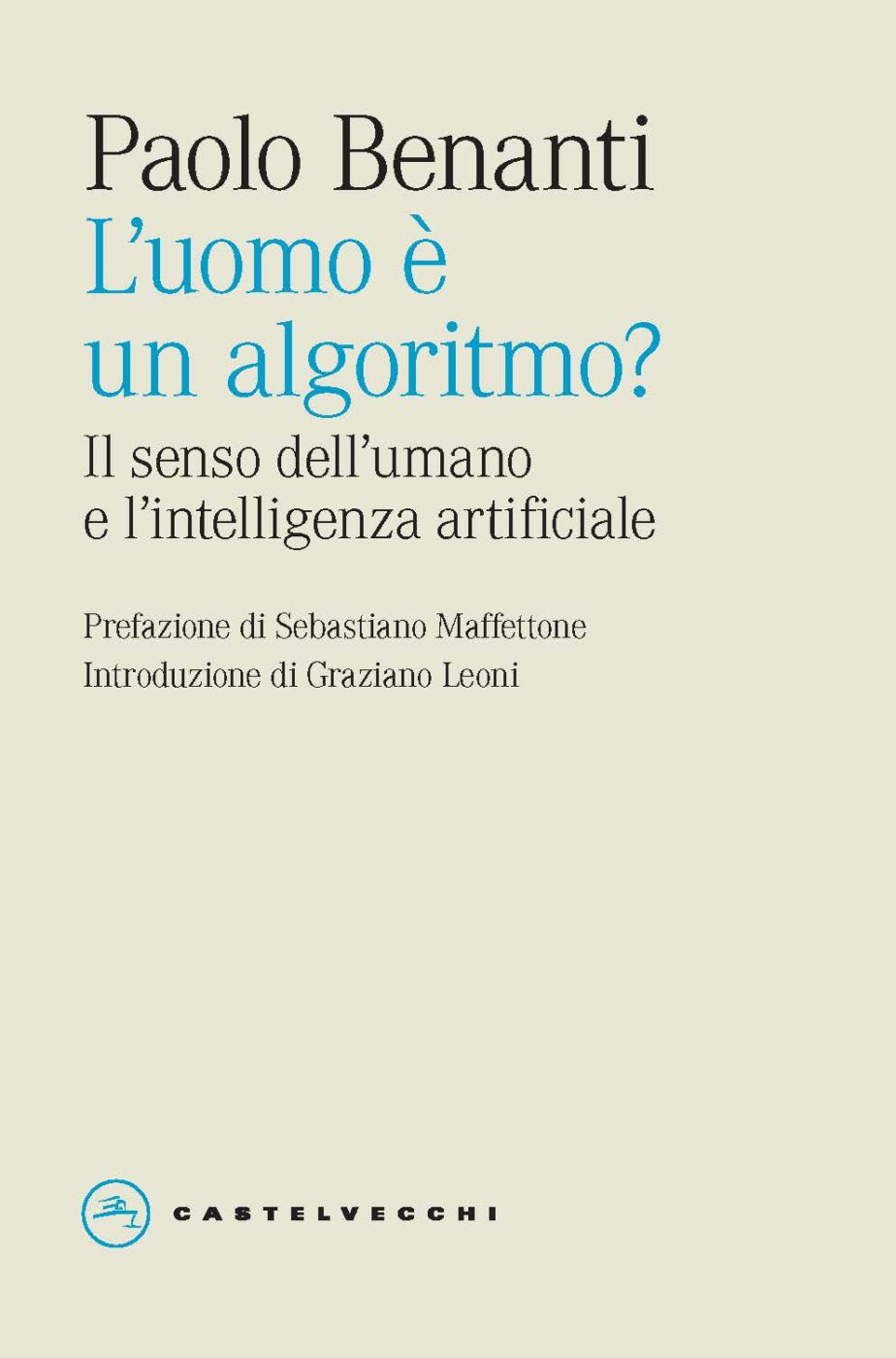
‘L’uomo è un algoritmo? Il senso dell’umano e l’intelligenza artificiale’ (Is man an algorithm? The sense of the human and artificial intelligence) is an expanded version of the lecture that the author delivered at the University of Camerino upon receiving an honorary doctorate in Computer Science and Mathematics. Above all, however, it is a narrative journey exploring the latest innovations related to human life and action.
The author begins by asking what it means to be human today and recalls the myth of Ulysses, which teaches us that the human search for meaning is guided by intelligence in two forms: νοῦς and μῆτις, intuition and practice. It is from the interaction of these faculties that our species’ great inventions were born, starting with the ‘great invention of language’. However, language no longer seems to be an exclusively human prerogative today. The introduction of a computational language by means of AI that reconfigures speech and thought in new ways seems to call everything into question, either threatening or exalting human action.
Benanti then takes the reader on a brief and evocative ethical journey through the paradox of technology. So how do we avoid being confused and overwhelmed? Moving between information technology, philosophy, and spirituality, he puts forward a simple yet disruptive proposal capable of restoring the centrality of the human dimension. Adopting a ‘humanist bias’ today does not mean rejecting progress, but rather reaffirming its most authentic purpose: to live a good and conscious life with dignity. This can be achieved by making use of AI, which must once again become a tool at our service, promoting full human dignity. This is a challenge that cannot be led or won by individuals, but by the community of individuals.
Paolo Benanti’s book is one to read and reread (as Sebastiano Maffettone, who wrote the foreword, did). One of the book’s concluding passages is particularly poignant: ‘Human dignity represents the threshold beyond which human coexistence can no longer regress, not even in an era characterised by machines’ remarkable communication capabilities, which offer a fresh perspective on the semantics and meaning of our human condition’.
L’uomo è un algoritmo? Il senso dell’umano e l’intelligenza artificiale
Paolo Benanti
Castelvecchio, 2025
Paolo Benanti’s reasoning on AI puts humanity back at the heart of the awareness that we must all have
Human activity versus machines. It is an age-old challenge that, however, seems to be taking on new connotations in recent times with the advent of artificial intelligence in the form of ChatGPT and Large Language Models (LLMs). These new developments are capable of confounding human action itself. So much so that one must question whether these new technologies are truly instruments of progress or of the oppression and subjugation of human nature. These are important questions that everyone should consider, whatever their role. This also applies to businesspeople who may find themselves making use of new technologies.
In light of these issues, a careful reading of the short book by Paolo Benanti — a theologian and innovation expert — is highly recommended.
‘L’uomo è un algoritmo? Il senso dell’umano e l’intelligenza artificiale’ (Is man an algorithm? The sense of the human and artificial intelligence) is an expanded version of the lecture that the author delivered at the University of Camerino upon receiving an honorary doctorate in Computer Science and Mathematics. Above all, however, it is a narrative journey exploring the latest innovations related to human life and action.
The author begins by asking what it means to be human today and recalls the myth of Ulysses, which teaches us that the human search for meaning is guided by intelligence in two forms: νοῦς and μῆτις, intuition and practice. It is from the interaction of these faculties that our species’ great inventions were born, starting with the ‘great invention of language’. However, language no longer seems to be an exclusively human prerogative today. The introduction of a computational language by means of AI that reconfigures speech and thought in new ways seems to call everything into question, either threatening or exalting human action.
Benanti then takes the reader on a brief and evocative ethical journey through the paradox of technology. So how do we avoid being confused and overwhelmed? Moving between information technology, philosophy, and spirituality, he puts forward a simple yet disruptive proposal capable of restoring the centrality of the human dimension. Adopting a ‘humanist bias’ today does not mean rejecting progress, but rather reaffirming its most authentic purpose: to live a good and conscious life with dignity. This can be achieved by making use of AI, which must once again become a tool at our service, promoting full human dignity. This is a challenge that cannot be led or won by individuals, but by the community of individuals.
Paolo Benanti’s book is one to read and reread (as Sebastiano Maffettone, who wrote the foreword, did). One of the book’s concluding passages is particularly poignant: ‘Human dignity represents the threshold beyond which human coexistence can no longer regress, not even in an era characterised by machines’ remarkable communication capabilities, which offer a fresh perspective on the semantics and meaning of our human condition’.
L’uomo è un algoritmo? Il senso dell’umano e l’intelligenza artificiale
Paolo Benanti
Castelvecchio, 2025