Access the Online Archive
Search the Historical Archive of the Pirelli Foundation for sources and materials. Select the type of support you are interested in and write the keywords of your research.
    Select one of the following categories
  • Documents
  • Photographs
  • Drawings and posters
  • Audio-visuals
  • Publications and magazines
  • All
Help with your research
To request to view the materials in the Historical Archive and in the libraries of the Pirelli Foundation for study and research purposes and/or to find out how to request the use of materials for loans and exhibitions, please fill in the form below. You will receive an email confirming receipt of the request and you will be contacted.
Pirelli Foundation Educational Courses

Select the education level of the school
Back
Primary schools
Pirelli Foundation Educational Courses
Please fill in your details and the staff of Pirelli Foundation Educational will contact you to arrange the dates of the course.

I declare I have read  the privacy policy, and authorise the Pirelli Foundation to process my personal data in order to send communications, also by email, about initiatives/conferences organised by the Pirelli Foundation.

Back
Lower secondary school
Pirelli Foundation Educational Courses
Please fill in your details and the staff of Pirelli Foundation Educational will contact you to arrange the dates of the course.
Back
Upper secondary school
Pirelli Foundation Educational Courses
Please fill in your details and the staff of Pirelli Foundation Educational will contact you to arrange the dates of the course.
Back
University
Pirelli Foundation Educational Courses

Do you want to organize a training programme with your students? For information and reservations, write to universita@fondazionepirelli.org

Visit the Foundation
For information about the Foundation’s activities, guided tours and accessibility,
please call +39 0264423971 or fill in the form below, providing details of your request in the notes field.

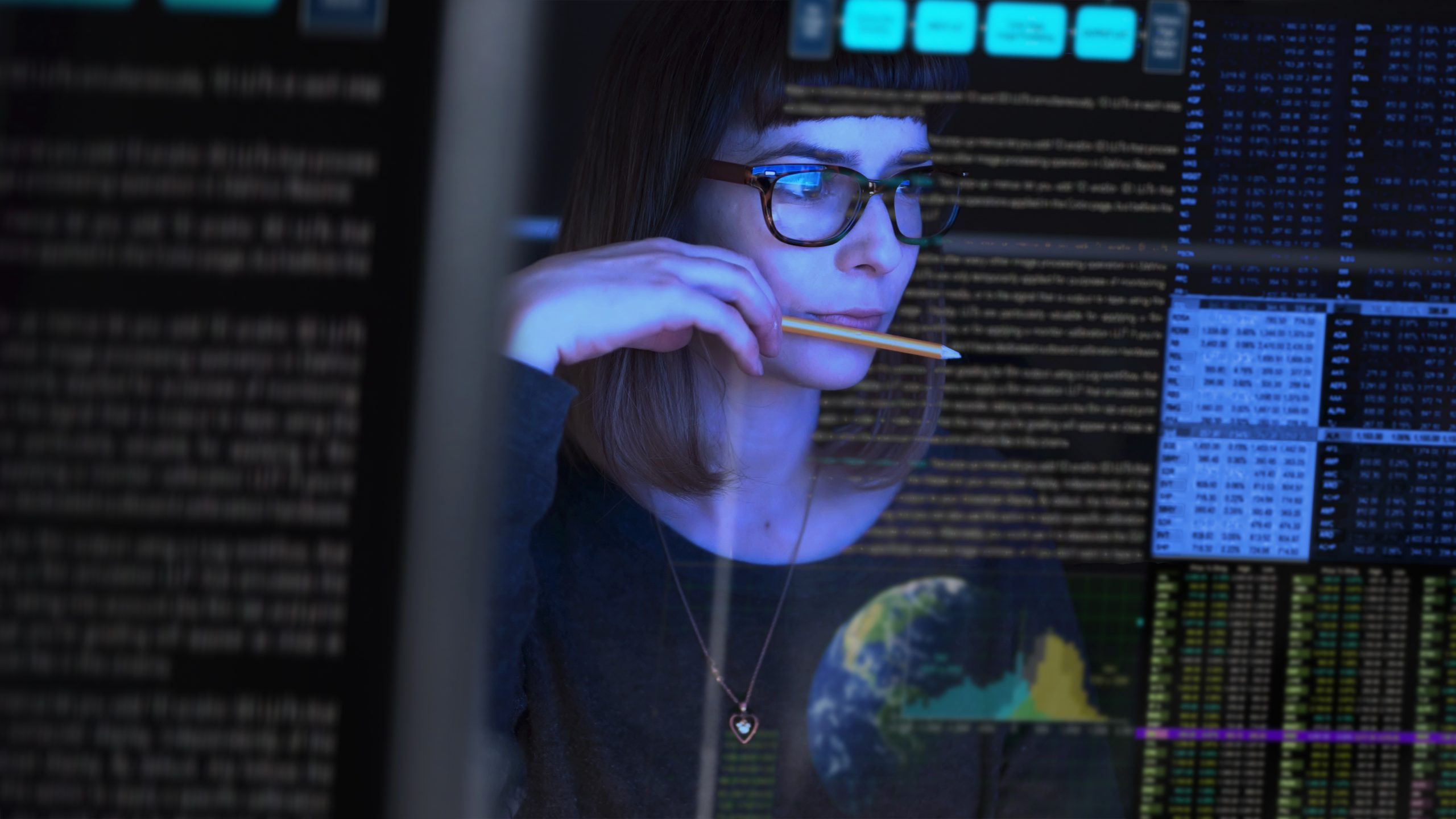
Artificial intelligence: how and why

A book that has just been presented provides an initial guide for a better understanding of the multiple technologies that have arrived.

Artificial intelligence represents the new horizon for business and society in general. An opportunity for many, a terror for just as many again, AI must be well understood in order to be properly applied, just like any technology. We therefore need good guides. This is why data scientist Eugenio Zuccarelli and journalist Gabriele Di Matteo have written Intelligenza artificiale. Come usarla a favore dell’Umanità (Artificial Intelligence: how to use it for humanity), and the book is a good starting point for understanding something more about AI.

The book is intended as a kind of journey into the universe of AI, from its role in our society to all its possible applications, from healthcare to communication, from nutrition to environmental sustainability, and from education to bionics. Zuccarelli and Di Matteo’s book is packed with accurate information, dedicated to everyone who wants to discover or delve into the world of artificial intelligence.

The authors start from a consideration: artificial intelligence will undoubtedly trigger a new technological revolution; and like all great innovations it will be disruptive, transformative, and may be used in the interest of a few or for the benefit of all. All this should take the fact that artificial intelligence is already among us into account. As ChatGPT makes waves, big funds are preparing for billion-dollar investments. Philosophers contemplate the risks and moral implications, economists how work and production will change, teachers the consequences for education, social scientists for information, democracy and human relations. There are also those sounding the alarm, spreading their well-founded fears but also their misleading dystopias and paranoia. To put it another way, the road to a potential new golden age is strewn with obstacles and risks that shouldn’t be overlooked. To address the topic, the book recounts all the possible applications of AI to date, step by step.

Zuccarelli and Di Matteo have by no means produced a milestone in AI studies, but it’s a perfect guide to starting to understand the field. That makes it necessary reading, and deserving of attention.

Intelligenza artificiale. Come usarla a favore dell’Umanità

Gabriele Di Matteo, Eugenio Zuccarelli

Mondadori, 2024

A book that has just been presented provides an initial guide for a better understanding of the multiple technologies that have arrived.

Artificial intelligence represents the new horizon for business and society in general. An opportunity for many, a terror for just as many again, AI must be well understood in order to be properly applied, just like any technology. We therefore need good guides. This is why data scientist Eugenio Zuccarelli and journalist Gabriele Di Matteo have written Intelligenza artificiale. Come usarla a favore dell’Umanità (Artificial Intelligence: how to use it for humanity), and the book is a good starting point for understanding something more about AI.

The book is intended as a kind of journey into the universe of AI, from its role in our society to all its possible applications, from healthcare to communication, from nutrition to environmental sustainability, and from education to bionics. Zuccarelli and Di Matteo’s book is packed with accurate information, dedicated to everyone who wants to discover or delve into the world of artificial intelligence.

The authors start from a consideration: artificial intelligence will undoubtedly trigger a new technological revolution; and like all great innovations it will be disruptive, transformative, and may be used in the interest of a few or for the benefit of all. All this should take the fact that artificial intelligence is already among us into account. As ChatGPT makes waves, big funds are preparing for billion-dollar investments. Philosophers contemplate the risks and moral implications, economists how work and production will change, teachers the consequences for education, social scientists for information, democracy and human relations. There are also those sounding the alarm, spreading their well-founded fears but also their misleading dystopias and paranoia. To put it another way, the road to a potential new golden age is strewn with obstacles and risks that shouldn’t be overlooked. To address the topic, the book recounts all the possible applications of AI to date, step by step.

Zuccarelli and Di Matteo have by no means produced a milestone in AI studies, but it’s a perfect guide to starting to understand the field. That makes it necessary reading, and deserving of attention.

Intelligenza artificiale. Come usarla a favore dell’Umanità

Gabriele Di Matteo, Eugenio Zuccarelli

Mondadori, 2024

Industrial district culture

Research carried out by Ca’ Foscari and the University of Padua outlines the development of a form of organising production and territory that remains original to this day.

Italian industrial districts, businesses and areas that become a productive and social unity, are an economic experiment that has become reality in many locations around the country. At this stage, it’s an example of widespread business culture, economic and social construction that has borne much fruit. It’s an example that also continues to develop, no so much in terms of quantity but of quality. Giancarlo Corò and Roberto Grandinetti (from the Department of Economics at Ca’ Foscari and of Economics and Business Sciences at the University of Padua respectively) reflected on this area in their recently published article in Economia e Società Regionale.

“Industrial districts in the transformations of the Italian economy: from extensive growth to the challenges of the new globalisation” is an exhaustive analysis of the phenomenon of industrial districts in Italy, from their growth in terms of “extension” to their development in terms of “quality”. In other words, it’s a survey of industrial districts along a historical and economic journey from their birth and growth to their qualitative development in the face of globalisation.

From the great transformation of the Italian economy, Corò and Grandinetti arrive at the present day, complementing an examination of the districts’ constituent elements (companies, territory, people, capability) with the innovations of recent times as well: not only the general effects of globalisation, but also new technologies and the need for a constant focus on the social aspects, including those connected to education and knowledge. Indeed, it is precisely the focus on connecting the original characteristics of the districts with the new elements that characterise their activities that makes Corò and Grandinetti’s research so original.

The result is a profile of an Italian industrial district that can not only withstand new economic and social pressures, but also innovate and develop in terms of quality and people. The Italian industrial district, evolving without losing its own original characteristics, traces out a business culture able to update and improve.

I distretti industriali nelle trasformazioni dell’economia italiana: dalla crescita estensiva alle sfide della nuova globalizzazione 

Giancarlo Corò, Roberto Grandinetti
Economia e Società Regionale, 2023/2

Research carried out by Ca’ Foscari and the University of Padua outlines the development of a form of organising production and territory that remains original to this day.

Italian industrial districts, businesses and areas that become a productive and social unity, are an economic experiment that has become reality in many locations around the country. At this stage, it’s an example of widespread business culture, economic and social construction that has borne much fruit. It’s an example that also continues to develop, no so much in terms of quantity but of quality. Giancarlo Corò and Roberto Grandinetti (from the Department of Economics at Ca’ Foscari and of Economics and Business Sciences at the University of Padua respectively) reflected on this area in their recently published article in Economia e Società Regionale.

“Industrial districts in the transformations of the Italian economy: from extensive growth to the challenges of the new globalisation” is an exhaustive analysis of the phenomenon of industrial districts in Italy, from their growth in terms of “extension” to their development in terms of “quality”. In other words, it’s a survey of industrial districts along a historical and economic journey from their birth and growth to their qualitative development in the face of globalisation.

From the great transformation of the Italian economy, Corò and Grandinetti arrive at the present day, complementing an examination of the districts’ constituent elements (companies, territory, people, capability) with the innovations of recent times as well: not only the general effects of globalisation, but also new technologies and the need for a constant focus on the social aspects, including those connected to education and knowledge. Indeed, it is precisely the focus on connecting the original characteristics of the districts with the new elements that characterise their activities that makes Corò and Grandinetti’s research so original.

The result is a profile of an Italian industrial district that can not only withstand new economic and social pressures, but also innovate and develop in terms of quality and people. The Italian industrial district, evolving without losing its own original characteristics, traces out a business culture able to update and improve.

I distretti industriali nelle trasformazioni dell’economia italiana: dalla crescita estensiva alle sfide della nuova globalizzazione 

Giancarlo Corò, Roberto Grandinetti
Economia e Società Regionale, 2023/2

€500 billion for the green and digital transition and a non-ideological but sustainable European policy

Once again, the words of Mario Draghi deserve attention: “The green and digital transitions are estimated to require at least 500 billion euros per year.” He said this on Saturday in Ghent, at the meeting of EU economics ministers, talking about European competitiveness with respect to the two biggest global players, the US and China, and reaffirming concepts already expressed on multiple occasions. Draghi added that it isn’t only defence investments that must be added to such investments, but also “productive” investments, for industry and services. He explained that “the gap between the EU and the USA is widening, above all after 2010”, the end of the Great Global Financial Crisis. The US “needed two years to return to the previous levels, but the EU nine. And we haven’t climbed since then.” Indeed, there’s “an investment gap of 1.5% of GDP, or €500 billion.” In short, “we’ll have to invest huge sums in a short space of time.” Participation from both the state and private investors will enable companies to construct new and better international competitiveness on the very foundation of a balanced transition.

There are many issues that require clarification, taking responsibility for challenging decisions. First and foremost, how do we locate such huge sums? One response can be identified following use of the financial markets as already successfully tested on the 250 billion required to cover the “Next Generation EU” Recovery Plan following the Covid pandemic, which is to say turning to eurobonds. That means both for defence, following the suggestions of Ursula von der Leyen, President of the European Commission (a hypothesis that met with perplexity in Berlin, however; la Repubblica, 24 February), and to finance the twin green and digital transition that Draghi mentions effectively.

A second answer would be increasing the amount of the UE budget and allocating these resources adequately to investments, also in individual European countries. Additionally, a third response asks us to draw conclusions from a clear observation: In a climate of uncertainty and ‘polycrisis’ or ‘permacrisis’, if you prefer, the other major international players – the US and China first and foremost – are acting according to geopolitical strategies that combine the major issues of security and energy, innovation and competitiveness, investing enormous resources. And Europe can’t stay on the sidelines, unless it is content to lose its economic role and erode its political prestige. As we have repeatedly written in this blog, this prestige is founded on its historic and pragmatic future capacity to positively maintain a combination of political democracy, the market and the welfare state, i.e. freedom, economic growth and widespread well-being.

We therefore need ambitious EU policy, with an appropriate reform of governance, abandoning the requirement for unanimous decisions among the 27 member states: defence and security, energy and industry, environmental and digital transition, employment and the new frontiers of artificial intelligence are the constituent sections of a single, forward-looking sustainable development strategy. In the last two weeks, indeed, our blog has addressed “digital humanism” and the need for a European Artificial Intelligence, to stand up to the power of the USA and its Big Tech, of China, and now also India. It’s a political and economic challenge that requires consideration of the Next Generation EU package first and foremost with a broad perspective.

We require investment, therefore, but also research, science and culture. We need a strategy that makes sustainability politically attractive and acceptable, as a system of values and as concrete projects for intervention, endeavour and indeed participation.

The coming generation in particular demonstrates a generous willingness to participate in this way.

One of many signals comes from the world of Italian universities. 2,062 students from over 80 universities took part in the “Dieci tesi per la sostenibilità” (10 theses for sustainability) competition, in an initiative promoted by the Symbola Foundation, Unioncamere and LUISS with the support of Deloitte Climate & Sustainability, and sponsored by the Italian Ministry for Universities and Research and the Conference of Italian University Chancellors. 62% of the participants were female and 38% male. Moreover, the scientific committee, chaired by Stefano Zamagni, Professor of Political Economy at the University of Bologna, and Paola Severino, President of the LUISS School of Law, is already working hard to identify the best theses, in fields concerning economics and statistics, civil engineering, architecture and design, legal, political and social sciences, industrial and information engineering, chemistry and biology, and of course all aspects of the humanities.

This participation is “extraordinary, worth much more than a survey,” comments Ermete Realacci, President of Symbola. “It can provide us with important information and stimuli. We can also count on the clean, renewable energies from the knowledge and intelligence of the young people in our country for our ability to face the challenges ahead of us.” But it’s also “an opportunity to strengthen an Italy that makes Italy […:] facing the climate crisis with courage is not only necessary, but can make our economy and society more compatible with humanity and consequently compatible with the future.” Because, in the wake of exhortations to commitment from the Pope and President Mattarella, Realacci considers it necessary to put European commitment into practice, “indicating cohesion and the green and digital transition as the path to strengthening our economy.”

This is the pivotal question, on which European entrepreneurs also insist, linking the Green Deal to an Industrial Deal that combines the unavoidable decisions for averting a worsening of the climate crisis with the issues of economic development and social sustainability. There are also clear voices in the “Fabbrica Europa” document that Confindustria prepared as a platform for exchange in view of the June elections to renew the EU Parliament and in the Charter that 73 business associations and energy-intensive multinationals signed last week in Antwerp (Il Sole24Ore, 21 February).

There is a clear indication of the method: technological neutrality for the choices to be made. The goal can be found in ESG criteria, but achieving it must not depend on choosing a particular technology. In the case of energy, that includes supply security considerations (with attention to next-generation atomic power). It also includes EU policy with an obsessive focus on reuse as opposed to recycling, and therefore against recyclable packaging (where Italian industry is actually a positive leader). Or to take one more example with a great impact, it includes the radical decision to favour electric cars over the use of internal combustion engines using non-polluting fuels. That’s also a choice that would harm the entire European automotive component industry, with dramatic and unacceptable social consequences.

We need less green ideology and more and better industrial and social policy guided by concrete sustainability. “An industrial renaissance for a competitive EU”, summarises Confindustria. It’s a clear path, along which European political and economic debate must continue.

(Photo Getty Images)

Once again, the words of Mario Draghi deserve attention: “The green and digital transitions are estimated to require at least 500 billion euros per year.” He said this on Saturday in Ghent, at the meeting of EU economics ministers, talking about European competitiveness with respect to the two biggest global players, the US and China, and reaffirming concepts already expressed on multiple occasions. Draghi added that it isn’t only defence investments that must be added to such investments, but also “productive” investments, for industry and services. He explained that “the gap between the EU and the USA is widening, above all after 2010”, the end of the Great Global Financial Crisis. The US “needed two years to return to the previous levels, but the EU nine. And we haven’t climbed since then.” Indeed, there’s “an investment gap of 1.5% of GDP, or €500 billion.” In short, “we’ll have to invest huge sums in a short space of time.” Participation from both the state and private investors will enable companies to construct new and better international competitiveness on the very foundation of a balanced transition.

There are many issues that require clarification, taking responsibility for challenging decisions. First and foremost, how do we locate such huge sums? One response can be identified following use of the financial markets as already successfully tested on the 250 billion required to cover the “Next Generation EU” Recovery Plan following the Covid pandemic, which is to say turning to eurobonds. That means both for defence, following the suggestions of Ursula von der Leyen, President of the European Commission (a hypothesis that met with perplexity in Berlin, however; la Repubblica, 24 February), and to finance the twin green and digital transition that Draghi mentions effectively.

A second answer would be increasing the amount of the UE budget and allocating these resources adequately to investments, also in individual European countries. Additionally, a third response asks us to draw conclusions from a clear observation: In a climate of uncertainty and ‘polycrisis’ or ‘permacrisis’, if you prefer, the other major international players – the US and China first and foremost – are acting according to geopolitical strategies that combine the major issues of security and energy, innovation and competitiveness, investing enormous resources. And Europe can’t stay on the sidelines, unless it is content to lose its economic role and erode its political prestige. As we have repeatedly written in this blog, this prestige is founded on its historic and pragmatic future capacity to positively maintain a combination of political democracy, the market and the welfare state, i.e. freedom, economic growth and widespread well-being.

We therefore need ambitious EU policy, with an appropriate reform of governance, abandoning the requirement for unanimous decisions among the 27 member states: defence and security, energy and industry, environmental and digital transition, employment and the new frontiers of artificial intelligence are the constituent sections of a single, forward-looking sustainable development strategy. In the last two weeks, indeed, our blog has addressed “digital humanism” and the need for a European Artificial Intelligence, to stand up to the power of the USA and its Big Tech, of China, and now also India. It’s a political and economic challenge that requires consideration of the Next Generation EU package first and foremost with a broad perspective.

We require investment, therefore, but also research, science and culture. We need a strategy that makes sustainability politically attractive and acceptable, as a system of values and as concrete projects for intervention, endeavour and indeed participation.

The coming generation in particular demonstrates a generous willingness to participate in this way.

One of many signals comes from the world of Italian universities. 2,062 students from over 80 universities took part in the “Dieci tesi per la sostenibilità” (10 theses for sustainability) competition, in an initiative promoted by the Symbola Foundation, Unioncamere and LUISS with the support of Deloitte Climate & Sustainability, and sponsored by the Italian Ministry for Universities and Research and the Conference of Italian University Chancellors. 62% of the participants were female and 38% male. Moreover, the scientific committee, chaired by Stefano Zamagni, Professor of Political Economy at the University of Bologna, and Paola Severino, President of the LUISS School of Law, is already working hard to identify the best theses, in fields concerning economics and statistics, civil engineering, architecture and design, legal, political and social sciences, industrial and information engineering, chemistry and biology, and of course all aspects of the humanities.

This participation is “extraordinary, worth much more than a survey,” comments Ermete Realacci, President of Symbola. “It can provide us with important information and stimuli. We can also count on the clean, renewable energies from the knowledge and intelligence of the young people in our country for our ability to face the challenges ahead of us.” But it’s also “an opportunity to strengthen an Italy that makes Italy […:] facing the climate crisis with courage is not only necessary, but can make our economy and society more compatible with humanity and consequently compatible with the future.” Because, in the wake of exhortations to commitment from the Pope and President Mattarella, Realacci considers it necessary to put European commitment into practice, “indicating cohesion and the green and digital transition as the path to strengthening our economy.”

This is the pivotal question, on which European entrepreneurs also insist, linking the Green Deal to an Industrial Deal that combines the unavoidable decisions for averting a worsening of the climate crisis with the issues of economic development and social sustainability. There are also clear voices in the “Fabbrica Europa” document that Confindustria prepared as a platform for exchange in view of the June elections to renew the EU Parliament and in the Charter that 73 business associations and energy-intensive multinationals signed last week in Antwerp (Il Sole24Ore, 21 February).

There is a clear indication of the method: technological neutrality for the choices to be made. The goal can be found in ESG criteria, but achieving it must not depend on choosing a particular technology. In the case of energy, that includes supply security considerations (with attention to next-generation atomic power). It also includes EU policy with an obsessive focus on reuse as opposed to recycling, and therefore against recyclable packaging (where Italian industry is actually a positive leader). Or to take one more example with a great impact, it includes the radical decision to favour electric cars over the use of internal combustion engines using non-polluting fuels. That’s also a choice that would harm the entire European automotive component industry, with dramatic and unacceptable social consequences.

We need less green ideology and more and better industrial and social policy guided by concrete sustainability. “An industrial renaissance for a competitive EU”, summarises Confindustria. It’s a clear path, along which European political and economic debate must continue.

(Photo Getty Images)

Industrious business

A recently published book describes Italy’s “fifth capitalism”.


‘Industriousness’ plus ‘determination’, ‘work’ and ‘commitment’ are some of the many terms that can describe the nature of being in business. It’s also a question of vision and projects to carry out, and a question of ‘silence’, that is, confidentiality, paying attention to your own work, a culture of working and being, not of appearing. There’s no shortage of examples, and Roberto Mania provides them in his recently published book Capitalisti silenziosi, which has an important subtitle: “the revenge of family businesses”. That’s the focus of the book’s easily readable pages (just over 130 of them): rediscovering the role and meaning of the entrepreneurial families that, often without standing out a great deal, have made Italian industrial and economic history.

Mania writes about this Italy of medium-sized (even large), mostly family-owned businesses. These businesses sketch out a model with key figures who – going almost unnoticed – have changed the production landscape of the country, allowing it to compete in the (increasingly) troubled waters of a globalised world. It’s an account of what some have called the “fifth Italian capitalism”: a structured system of medium-sized to large, innovative, globalised (albeit with local roots, in small towns rather than large urban areas), financially stable, digitalised, environmentally conscious companies, capable of bringing a good number of small-scale subcontractors along with them. Above all, in the vast majority of cases, it means firmly family ownership.

So it’s business culture that becomes family culture, and which accounts for nearly half of national industrial production in total. From this strong core, moreover, derives a large proportion of the more than 4000 medium-sized and large manufacturing companies who demonstrated their ability to react better than others when faced with the pandemic-induced crisis. They adapted more quickly to the new situation, safeguarding employment and keeping factories open in the name of resilience. They were all “working silently”, in fact.

Roberto Mania tells us stories about and the current situation of this particular capitalism. He explains: “This isn’t the return of the old family capitalism. This is another story that deserves to be told, also by including the voices of those who are part of it.” That’s what the book proceeds to do, involving names like Bombassei, Illy, Squinzi, Rana, Marcegaglia, Nocivelli, Bauli, Lunelli, Barilla, Garrone, Scavolini, Vacchi, Ferrero and Bonfiglioli. They are all characterised by certain traits: they speak little; they have little time for politics; they dislike finance; they’re open to outside managers; they compete on global markets with quality, focusing on their traditional sectors instead of conjuring up unexpected diversification; they reinvest profits; they’re pro-European and anti-populist, but they’re not the new powers that be. They have therefore succeeded (some time ago), says Mania, in turning their companies into “pocket” multinationals, reinforcing them and emerging from the inheritance wars unscathed thus far.

Capitalisti silenziosi. La rivincita delle imprese familiari

Roberto Mania

Egea, 2024

A recently published book describes Italy’s “fifth capitalism”.


‘Industriousness’ plus ‘determination’, ‘work’ and ‘commitment’ are some of the many terms that can describe the nature of being in business. It’s also a question of vision and projects to carry out, and a question of ‘silence’, that is, confidentiality, paying attention to your own work, a culture of working and being, not of appearing. There’s no shortage of examples, and Roberto Mania provides them in his recently published book Capitalisti silenziosi, which has an important subtitle: “the revenge of family businesses”. That’s the focus of the book’s easily readable pages (just over 130 of them): rediscovering the role and meaning of the entrepreneurial families that, often without standing out a great deal, have made Italian industrial and economic history.

Mania writes about this Italy of medium-sized (even large), mostly family-owned businesses. These businesses sketch out a model with key figures who – going almost unnoticed – have changed the production landscape of the country, allowing it to compete in the (increasingly) troubled waters of a globalised world. It’s an account of what some have called the “fifth Italian capitalism”: a structured system of medium-sized to large, innovative, globalised (albeit with local roots, in small towns rather than large urban areas), financially stable, digitalised, environmentally conscious companies, capable of bringing a good number of small-scale subcontractors along with them. Above all, in the vast majority of cases, it means firmly family ownership.

So it’s business culture that becomes family culture, and which accounts for nearly half of national industrial production in total. From this strong core, moreover, derives a large proportion of the more than 4000 medium-sized and large manufacturing companies who demonstrated their ability to react better than others when faced with the pandemic-induced crisis. They adapted more quickly to the new situation, safeguarding employment and keeping factories open in the name of resilience. They were all “working silently”, in fact.

Roberto Mania tells us stories about and the current situation of this particular capitalism. He explains: “This isn’t the return of the old family capitalism. This is another story that deserves to be told, also by including the voices of those who are part of it.” That’s what the book proceeds to do, involving names like Bombassei, Illy, Squinzi, Rana, Marcegaglia, Nocivelli, Bauli, Lunelli, Barilla, Garrone, Scavolini, Vacchi, Ferrero and Bonfiglioli. They are all characterised by certain traits: they speak little; they have little time for politics; they dislike finance; they’re open to outside managers; they compete on global markets with quality, focusing on their traditional sectors instead of conjuring up unexpected diversification; they reinvest profits; they’re pro-European and anti-populist, but they’re not the new powers that be. They have therefore succeeded (some time ago), says Mania, in turning their companies into “pocket” multinationals, reinforcing them and emerging from the inheritance wars unscathed thus far.

Capitalisti silenziosi. La rivincita delle imprese familiari

Roberto Mania

Egea, 2024

The challenge of corporate inclusivity

A focus on paths and difficulties in valuing moral capital and diversity in organisations

Moral capital may well be intangible and indefinable, but it is absolutely present in and important to production organisations. That is to say, companies that become businesses precisely on the basis of the human and moral capital they have within them. Human and moral capital is a decisive condition, which characterises businesses and is studied by Stella Pinna Pintor and Raffaele Alberto Ventura in their Il Capitale Morale. L’inclusività nelle organizzazioni tra incentivi economici e resistenze culturali (moral capital: inclusiveness in organisations amid economic incentives and cultural resistance), a recently published contribution that succeeds in providing an overview of the topic in a few pages.

The idea that the two authors take as their starting point is that the sociological and cultural changes sweeping through today’s societies are also leading to profound changes in organisations, positive changes. The increasing focus on inclusion and equality is encouraging organisations to develop programmes for more effective diversity management.

The research aims to provide a comprehensive snapshot of the topic, focusing on the various actors involved in the inclusion economy, the constraints and incentives for implementing diversity management policies and, finally, the main criticisms of inclusion policies. The dense tangle of economic, symbolic, cultural and moral differences that come into play alongside gender differences still has a great weight. The answer lies in a set of compromise strategies for those involved each time who, depending on the situation, succeed in arriving at solutions or are halted by friction and conflict.

The overall picture provided by the analysis isn’t completely positive: there’s a long way still to go before we create truly inclusive environments. Stella Pinna Pintor and Raffaele Alberto Ventura’s research has the merit of offering a guide on how better to do so.

Il Capitale Morale. L’inclusività nelle organizzazioni tra incentivi economici e resistenze culturali

Stella Pinna Pintor, Raffaele Alberto Ventura

Firenze University Press, 2023

A focus on paths and difficulties in valuing moral capital and diversity in organisations

Moral capital may well be intangible and indefinable, but it is absolutely present in and important to production organisations. That is to say, companies that become businesses precisely on the basis of the human and moral capital they have within them. Human and moral capital is a decisive condition, which characterises businesses and is studied by Stella Pinna Pintor and Raffaele Alberto Ventura in their Il Capitale Morale. L’inclusività nelle organizzazioni tra incentivi economici e resistenze culturali (moral capital: inclusiveness in organisations amid economic incentives and cultural resistance), a recently published contribution that succeeds in providing an overview of the topic in a few pages.

The idea that the two authors take as their starting point is that the sociological and cultural changes sweeping through today’s societies are also leading to profound changes in organisations, positive changes. The increasing focus on inclusion and equality is encouraging organisations to develop programmes for more effective diversity management.

The research aims to provide a comprehensive snapshot of the topic, focusing on the various actors involved in the inclusion economy, the constraints and incentives for implementing diversity management policies and, finally, the main criticisms of inclusion policies. The dense tangle of economic, symbolic, cultural and moral differences that come into play alongside gender differences still has a great weight. The answer lies in a set of compromise strategies for those involved each time who, depending on the situation, succeed in arriving at solutions or are halted by friction and conflict.

The overall picture provided by the analysis isn’t completely positive: there’s a long way still to go before we create truly inclusive environments. Stella Pinna Pintor and Raffaele Alberto Ventura’s research has the merit of offering a guide on how better to do so.

Il Capitale Morale. L’inclusività nelle organizzazioni tra incentivi economici e resistenze culturali

Stella Pinna Pintor, Raffaele Alberto Ventura

Firenze University Press, 2023

This is why we need a European Artificial Intelligence: investments, algorithms, defence and development structures

What if there were a European Artificial Intelligence, a system able to stand up to the current dominance of the US and China? What if there were a structure of algorithms, codes, networks, services, data centres and mechanisms resulting from collaboration, in Brussels, between Paris and Berlin, Rome and Madrid, Amsterdam and of course the cities of other EU member states, perhaps even convincing London to finally set its Euroscepticism aside and join the club?

We could give it a name charged with symbolic values: ‘Montaigne’, ‘Kant’, ‘Marie Curie’ or – why not? – ‘Leonardo’, the archetypal and best-known “Renaissance man”, with his multifaceted polymathic tech culture steeped in humanistic knowledge, a sense of beauty and pioneering disposition in the field of scientific knowledge. That way, we could tell the world that the Vitruvian Man and the drawings in the Codex Atlanticus, already considered part of the heritage of humanity, are outstanding contemporary examples of a world that looks to the future, signs of Humanism which is now taking the form of “Digital Humanism”: the human person at the centre of everything, machines at his service (offering a reassuring response to Martin Heidegger’s fears and, in Italy, those of Primo Levi and Italo Calvino in his prophetic Six Memos for the Next Millennium). What if intelligence, including AI, were guided towards performance, performing well, and doing good, at the service of the public’s rights and needs (starting with critical awareness, research and good information) and the competitive needs of European companies?

We live in a restless, multipolar world, marked by political and economic balances that are fragile as never before, subjected to deterioration and damage of every kind, from environmental catastrophes to pandemics, wars and rising social tensions. The old bipolar order (the balance of atomic terror between the US and USSR) broke down 35 years ago with the fall of the Berlin Wall, and a new balance shows very little sign of appearing on the horizon. Globalisation dominated by rampant, rapacious finance is over; “regional” neo-globalisation is seeking a more stable order. The future, in short, is uncertain as never before.

And today, right here in Europe, we know that the system of values and interests that has inspired our shared journey (in summary, an ability to maintain a combination of liberal democracy, the market and welfare, i.e. freedom, well-being and social inclusion) is in serious danger of entering a crisis.

The US and China are moving along conflicting, divergent paths (without, however, renouncing the possibilities of dialogue and exchange). The autocracies, starting with Putin’s Russia, are presenting menacing faces. Sovereignism and populism, like a termite infestation, also threaten to corrode the foundations of our democracies. Demographic imbalances exacerbate the entire situation.

In short, Europe – an economic giant, a rich market with its 450 million inhabitants, cradle of civilisation – sees a bleak horizon ahead.

Out of this awareness comes the idea that the EU must turn a new page in its history, establish a new political and institutional path (with majority governance), make the decision of massive investment in its future. The main topics are precisely security and defence, in addition to that of sustainable development. We are also well aware that defence and security also mean energy, scientific research, the digital economy and – as we were suggesting – European Artificial Intelligence. These are all fundamental questions that we hope will be at the heart of political debate in EU member states, ahead of the vote in June to renew the European Parliament and determine the structures and programmes of the future European Commission.

On the other hand, they’re questions that call for massive investments, able to keep pace with the massive public spending injection of the US and financial strategies of China.

There are reassuring signs from Brussels, in this final period of the legislature. One example is a “European Defence Industrial Strategy”, which will be discussed at the end of February and may be financed by an EU fund that can raise resources from the markets. This would be a new fund, following the positive experience of the SURE social-assistance funds for workers put in difficult Covid-induced economic situations and Next Generation EU for the reforms and investments needed for European recovery and modernisation, from which Italy has received the most resources.

“Eurobonds and more resources for common military spending,” says EU Commission President Ursula von der Leyen, speaking of the need for “a €100 billion fund” (La Stampa, 17 February). “Common debt, starting with defence, is possible today,” comments Francesco Giavazzi, an economist with a keen eye on European prospects (Corriere della Sera, 18 February). “An EU Defence Commissioner would be an important step in strengthening Europe,” maintains Roberto Cingolani, CEO of Leonardo, an Italian company that is also strategic within the military sector (Il Foglio, 17 February).

Donald Trump’s threats to break the current balance of NATO if elected to the White House, leaving Europe defenceless against Putin’s aggression, were only the latest wake-up call. And even if the idea of common defence meets with resistance from governments and military structures in single countries (France and Germany, first and foremost), the Eurobarometer reveals that EU citizens are ahead of their politicians: 77% of Europeans say they are in favour of common defence and 66% say we need more funds. Such a defence also involves cyber issues, and needs to process data efficiently, identify responses and organise countermeasures – all areas where artificial intelligence is essential.

The rationale for a common EU Fund for energy and strategic raw materials is similar, and indeed for an AI Fund.

So we need resources, political strategies and rules, as well as a truly fundamental cultural choice about what characteristics a European AI must have.

It’s a long, narrow road. The US is navigating within a context characterised by the wealth and power of Big Tech, dominant thus far, but also within a framework of liberal values. China employs massive public resources, solid technologically aggressive human capital, the power of determined dirigisme and party discipline.

So what about Europe? The EU boasts the world’s first systemic regulation of Artificial Intelligence (expert jurist Giusella Finocchiaro writes competently about this in the pages of Quali regole per l’Intelligenza Artificiale, Il Mulino) and its experts are clear about the need for a “multilateral approach” with respect to other world players. But as well as rules we need a genuine industrial policy that will rapidly enable our companies to use EU structures and services, without too great a dependence on American Big Tech or at least collaborating on an equal footing. A strategy is also needed that involves not only companies, but universities, research institutions, European data centres and large computing centres, such as Leonardo, the National Supercomputing Centre of the Bologna Technopole.

We need investment. We need technologies. But we also need culture and language, in accordance with European values (writing about it in last week’s blog, “Talking again about humanism, research and culture”). Because it is precisely our countries, on the firm foundation of their polymathic tech culture and appetite for freedom and sustainable development, that can – more and better than the US and China – bring together different expertise and knowledge to establish algorithms written using the multidisciplinary skills of engineers and philosophers, economists and cyberscientists, physicists and jurists, statisticians and sociologists. This includes critical thinking which contemplates not only the practical effects, but also the ethical implications arising from the new frontiers of knowledge.

The goal is an artificial intelligence, including generative AI, that doesn’t crush the human person beneath the “dominion of technology”, but actually unleashes their energies and creative imagination. That’s a humanistic project, in fact, in the style of Leonardo.

(Image Getty Images)

What if there were a European Artificial Intelligence, a system able to stand up to the current dominance of the US and China? What if there were a structure of algorithms, codes, networks, services, data centres and mechanisms resulting from collaboration, in Brussels, between Paris and Berlin, Rome and Madrid, Amsterdam and of course the cities of other EU member states, perhaps even convincing London to finally set its Euroscepticism aside and join the club?

We could give it a name charged with symbolic values: ‘Montaigne’, ‘Kant’, ‘Marie Curie’ or – why not? – ‘Leonardo’, the archetypal and best-known “Renaissance man”, with his multifaceted polymathic tech culture steeped in humanistic knowledge, a sense of beauty and pioneering disposition in the field of scientific knowledge. That way, we could tell the world that the Vitruvian Man and the drawings in the Codex Atlanticus, already considered part of the heritage of humanity, are outstanding contemporary examples of a world that looks to the future, signs of Humanism which is now taking the form of “Digital Humanism”: the human person at the centre of everything, machines at his service (offering a reassuring response to Martin Heidegger’s fears and, in Italy, those of Primo Levi and Italo Calvino in his prophetic Six Memos for the Next Millennium). What if intelligence, including AI, were guided towards performance, performing well, and doing good, at the service of the public’s rights and needs (starting with critical awareness, research and good information) and the competitive needs of European companies?

We live in a restless, multipolar world, marked by political and economic balances that are fragile as never before, subjected to deterioration and damage of every kind, from environmental catastrophes to pandemics, wars and rising social tensions. The old bipolar order (the balance of atomic terror between the US and USSR) broke down 35 years ago with the fall of the Berlin Wall, and a new balance shows very little sign of appearing on the horizon. Globalisation dominated by rampant, rapacious finance is over; “regional” neo-globalisation is seeking a more stable order. The future, in short, is uncertain as never before.

And today, right here in Europe, we know that the system of values and interests that has inspired our shared journey (in summary, an ability to maintain a combination of liberal democracy, the market and welfare, i.e. freedom, well-being and social inclusion) is in serious danger of entering a crisis.

The US and China are moving along conflicting, divergent paths (without, however, renouncing the possibilities of dialogue and exchange). The autocracies, starting with Putin’s Russia, are presenting menacing faces. Sovereignism and populism, like a termite infestation, also threaten to corrode the foundations of our democracies. Demographic imbalances exacerbate the entire situation.

In short, Europe – an economic giant, a rich market with its 450 million inhabitants, cradle of civilisation – sees a bleak horizon ahead.

Out of this awareness comes the idea that the EU must turn a new page in its history, establish a new political and institutional path (with majority governance), make the decision of massive investment in its future. The main topics are precisely security and defence, in addition to that of sustainable development. We are also well aware that defence and security also mean energy, scientific research, the digital economy and – as we were suggesting – European Artificial Intelligence. These are all fundamental questions that we hope will be at the heart of political debate in EU member states, ahead of the vote in June to renew the European Parliament and determine the structures and programmes of the future European Commission.

On the other hand, they’re questions that call for massive investments, able to keep pace with the massive public spending injection of the US and financial strategies of China.

There are reassuring signs from Brussels, in this final period of the legislature. One example is a “European Defence Industrial Strategy”, which will be discussed at the end of February and may be financed by an EU fund that can raise resources from the markets. This would be a new fund, following the positive experience of the SURE social-assistance funds for workers put in difficult Covid-induced economic situations and Next Generation EU for the reforms and investments needed for European recovery and modernisation, from which Italy has received the most resources.

“Eurobonds and more resources for common military spending,” says EU Commission President Ursula von der Leyen, speaking of the need for “a €100 billion fund” (La Stampa, 17 February). “Common debt, starting with defence, is possible today,” comments Francesco Giavazzi, an economist with a keen eye on European prospects (Corriere della Sera, 18 February). “An EU Defence Commissioner would be an important step in strengthening Europe,” maintains Roberto Cingolani, CEO of Leonardo, an Italian company that is also strategic within the military sector (Il Foglio, 17 February).

Donald Trump’s threats to break the current balance of NATO if elected to the White House, leaving Europe defenceless against Putin’s aggression, were only the latest wake-up call. And even if the idea of common defence meets with resistance from governments and military structures in single countries (France and Germany, first and foremost), the Eurobarometer reveals that EU citizens are ahead of their politicians: 77% of Europeans say they are in favour of common defence and 66% say we need more funds. Such a defence also involves cyber issues, and needs to process data efficiently, identify responses and organise countermeasures – all areas where artificial intelligence is essential.

The rationale for a common EU Fund for energy and strategic raw materials is similar, and indeed for an AI Fund.

So we need resources, political strategies and rules, as well as a truly fundamental cultural choice about what characteristics a European AI must have.

It’s a long, narrow road. The US is navigating within a context characterised by the wealth and power of Big Tech, dominant thus far, but also within a framework of liberal values. China employs massive public resources, solid technologically aggressive human capital, the power of determined dirigisme and party discipline.

So what about Europe? The EU boasts the world’s first systemic regulation of Artificial Intelligence (expert jurist Giusella Finocchiaro writes competently about this in the pages of Quali regole per l’Intelligenza Artificiale, Il Mulino) and its experts are clear about the need for a “multilateral approach” with respect to other world players. But as well as rules we need a genuine industrial policy that will rapidly enable our companies to use EU structures and services, without too great a dependence on American Big Tech or at least collaborating on an equal footing. A strategy is also needed that involves not only companies, but universities, research institutions, European data centres and large computing centres, such as Leonardo, the National Supercomputing Centre of the Bologna Technopole.

We need investment. We need technologies. But we also need culture and language, in accordance with European values (writing about it in last week’s blog, “Talking again about humanism, research and culture”). Because it is precisely our countries, on the firm foundation of their polymathic tech culture and appetite for freedom and sustainable development, that can – more and better than the US and China – bring together different expertise and knowledge to establish algorithms written using the multidisciplinary skills of engineers and philosophers, economists and cyberscientists, physicists and jurists, statisticians and sociologists. This includes critical thinking which contemplates not only the practical effects, but also the ethical implications arising from the new frontiers of knowledge.

The goal is an artificial intelligence, including generative AI, that doesn’t crush the human person beneath the “dominion of technology”, but actually unleashes their energies and creative imagination. That’s a humanistic project, in fact, in the style of Leonardo.

(Image Getty Images)

Focus on Milan: Pirelli and the city through the eyes of photographers

Milan’s association with photography traces back to 1839 with the advent of the first processes for developing images. The city soon became a focal point for Italian photojournalism agencies, studios, trade magazines, and photography associations, all of which aimed to create their own visual narratives, depicting the landscapes, views, and details of the city.

These artists also focused on the world of Pirelli, taking photographs of buildings, products, people and events to illustrate the house magazines or to create advertising campaigns and catalogues. This formed a close bond between photography and the company. Delving into our Historical Archive’s rich repository of negatives, prints, and slides reveals the many-sided, eclectic essence of Milan.

First and foremost, Milan is a centre of art, with numerous cultural institutions across the area offering a public service for citizens. This extends beyond its museums and foundations, such as the Pirelli HangarBicocca contemporary art exhibition space, to include theatres such as the Piccolo Teatro di Milano, which was established in 1947 with a view to serving the community. This was pointed out in Pirelli magazine, with the photographs that illustrated the text showing not just the stage, the centre of the action, but also what went on behind the scenes, with all that was required for putting on a show, such as the costumes department and lessons at the theatre’s drama school. And then there is the Teatro Franco Parenti, which has been an artistic and cultural centre for the city since 1972.

While Milan boasts renowned architectural landmarks like the Duomo and the Galleria Vittorio Emanuele II, both icons of the city’s skyline, it is also home to lesser-known artistic treasures tucked away in private residences. At the turn of the twentieth century, for example, the new district of Corso Venezia saw the construction of homes that interpreted the very latest trends in international modernism. Palazzo Castiglioni, in particular, caught the eye of the photographer Arno Hammacher in 1970, with its elaborate entrance gate, its majestic skylight and the extraordinary variety of wrought iron on the central staircase. The Dutch photographer, in whose work sculpture always plays a key role, meticulously investigated all these exquisite details.
Milan’s cultural richness thus transcends traditional boundaries, attracting writers, filmmakers, and artists alike. This diversity of expression can also be seen in the activities of the Pirelli Cultural Centre – which immediately made its mark in the 1950s as a top cultural venue for the city, putting on conferences, exhibitions, film festivals and musical and theatrical performances – and in the International Exhibitions of La Triennale. Some editions of the Triennale exhibitions can be precisely reconstructed through the photographs taken in the hall and exteriors of the Palazzo dell’Arte: the 11th Triennale of 1957, for example, can be seen in the Exhibition of Contemporary Architecture, Pirelli’s experimental plastic pavilion in Parco Sempione. This was designed by Roberto Menghi, with the facing by Nelly Krauss and Giulio Minoletti concealing the monumental triple portal of the building behind 20 metres of steel sheets.

Milan is also a hub of innovation and technology, as we see in the photographs of the University of Milano-Bicocca and of the Pirelli Headquarters, with the Group’s Research and Development centre. Boccioni’s The City Rises is reflected in Hammacher’s shots of the Pirelli Tower, only some of which were published in Pirelli magazine – from the first excavations to the ever-higher construction site, all the way to the final stages of construction – which perfectly convey the human scale of the undertaking. The photographs offer us a blend of artistic insight and corporate documentation at the time of Milan’s greatest post-war expansion and vitality.

The city of work and of the excellence of the “Made in Italy” label, with its creativity and economic eminence, can be found in the images of the workers busily spinning rubber fabric in the Pirelli factory in Bicocca, as well as in the photo shoots showcasing Pirelli raincoats. Photography promoted both work and expertise, especially after the Second World War, when fashion photography underwent a series of important changes: the contrived studio shots and static poses of the models from previous decades gave way to a new, more spontaneous and energetic look. Milan and its most iconic places – the Navigli, the columns of San Lorenzo and the Ca’ Granda – become the backdrop for outdoor shoots for the advertising campaigns for Pirelli coats. Dynamic compositions and a sense of movement, as well as a new view of reality, all feature in the lively street scenes caught on film in the 1960s and 1970s.

Now, as in the past, Milan is also a city on the move, bringing people together. It was with the economic boom in the 1950s that the city began to move “on rubber”, giving rise to the era of mass motorisation. The number of cars tripled and Pirelli responded with a range of increasingly specialised tyres. Alongside the historic trams – veritable icons of the Belle Époque – photographers in the 1950s and 1960s also captured the endless streams of vehicles along Via Dante, the cars in Piazza Cordusio and the traffic jams in front of the Duomo. The traditional Milanese policeman, known as the “ghisa”, with his characteristic helmet, played a key role in addressing the new challenges posed by the increase in traffic. Each era has its own icons: the Fiat 600 epitomised mass motorisation, and was followed a couple of years later by the new Fiat 500, the undisputed symbol of Italian design. It is the latter that appeared alongside other popular Italian small cars in a photo taken in 1969 in front of the Central Station, while the Vespa and Lambretta partially supplanted the bicycle as a means of daily transport. The opening of the first metro line of Milan in 1964, a beacon of modernity for all of Europe, marked the start of a new chapter. Once again, it was to be Hammacher who would tell the story of its construction, in a reportage of “living, human, almost unassuming images”. The photographers’ eye is thus key to telling the story of mobility, following its evolution all the way up to the present day.

Milan’s association with photography traces back to 1839 with the advent of the first processes for developing images. The city soon became a focal point for Italian photojournalism agencies, studios, trade magazines, and photography associations, all of which aimed to create their own visual narratives, depicting the landscapes, views, and details of the city.

These artists also focused on the world of Pirelli, taking photographs of buildings, products, people and events to illustrate the house magazines or to create advertising campaigns and catalogues. This formed a close bond between photography and the company. Delving into our Historical Archive’s rich repository of negatives, prints, and slides reveals the many-sided, eclectic essence of Milan.

First and foremost, Milan is a centre of art, with numerous cultural institutions across the area offering a public service for citizens. This extends beyond its museums and foundations, such as the Pirelli HangarBicocca contemporary art exhibition space, to include theatres such as the Piccolo Teatro di Milano, which was established in 1947 with a view to serving the community. This was pointed out in Pirelli magazine, with the photographs that illustrated the text showing not just the stage, the centre of the action, but also what went on behind the scenes, with all that was required for putting on a show, such as the costumes department and lessons at the theatre’s drama school. And then there is the Teatro Franco Parenti, which has been an artistic and cultural centre for the city since 1972.

While Milan boasts renowned architectural landmarks like the Duomo and the Galleria Vittorio Emanuele II, both icons of the city’s skyline, it is also home to lesser-known artistic treasures tucked away in private residences. At the turn of the twentieth century, for example, the new district of Corso Venezia saw the construction of homes that interpreted the very latest trends in international modernism. Palazzo Castiglioni, in particular, caught the eye of the photographer Arno Hammacher in 1970, with its elaborate entrance gate, its majestic skylight and the extraordinary variety of wrought iron on the central staircase. The Dutch photographer, in whose work sculpture always plays a key role, meticulously investigated all these exquisite details.
Milan’s cultural richness thus transcends traditional boundaries, attracting writers, filmmakers, and artists alike. This diversity of expression can also be seen in the activities of the Pirelli Cultural Centre – which immediately made its mark in the 1950s as a top cultural venue for the city, putting on conferences, exhibitions, film festivals and musical and theatrical performances – and in the International Exhibitions of La Triennale. Some editions of the Triennale exhibitions can be precisely reconstructed through the photographs taken in the hall and exteriors of the Palazzo dell’Arte: the 11th Triennale of 1957, for example, can be seen in the Exhibition of Contemporary Architecture, Pirelli’s experimental plastic pavilion in Parco Sempione. This was designed by Roberto Menghi, with the facing by Nelly Krauss and Giulio Minoletti concealing the monumental triple portal of the building behind 20 metres of steel sheets.

Milan is also a hub of innovation and technology, as we see in the photographs of the University of Milano-Bicocca and of the Pirelli Headquarters, with the Group’s Research and Development centre. Boccioni’s The City Rises is reflected in Hammacher’s shots of the Pirelli Tower, only some of which were published in Pirelli magazine – from the first excavations to the ever-higher construction site, all the way to the final stages of construction – which perfectly convey the human scale of the undertaking. The photographs offer us a blend of artistic insight and corporate documentation at the time of Milan’s greatest post-war expansion and vitality.

The city of work and of the excellence of the “Made in Italy” label, with its creativity and economic eminence, can be found in the images of the workers busily spinning rubber fabric in the Pirelli factory in Bicocca, as well as in the photo shoots showcasing Pirelli raincoats. Photography promoted both work and expertise, especially after the Second World War, when fashion photography underwent a series of important changes: the contrived studio shots and static poses of the models from previous decades gave way to a new, more spontaneous and energetic look. Milan and its most iconic places – the Navigli, the columns of San Lorenzo and the Ca’ Granda – become the backdrop for outdoor shoots for the advertising campaigns for Pirelli coats. Dynamic compositions and a sense of movement, as well as a new view of reality, all feature in the lively street scenes caught on film in the 1960s and 1970s.

Now, as in the past, Milan is also a city on the move, bringing people together. It was with the economic boom in the 1950s that the city began to move “on rubber”, giving rise to the era of mass motorisation. The number of cars tripled and Pirelli responded with a range of increasingly specialised tyres. Alongside the historic trams – veritable icons of the Belle Époque – photographers in the 1950s and 1960s also captured the endless streams of vehicles along Via Dante, the cars in Piazza Cordusio and the traffic jams in front of the Duomo. The traditional Milanese policeman, known as the “ghisa”, with his characteristic helmet, played a key role in addressing the new challenges posed by the increase in traffic. Each era has its own icons: the Fiat 600 epitomised mass motorisation, and was followed a couple of years later by the new Fiat 500, the undisputed symbol of Italian design. It is the latter that appeared alongside other popular Italian small cars in a photo taken in 1969 in front of the Central Station, while the Vespa and Lambretta partially supplanted the bicycle as a means of daily transport. The opening of the first metro line of Milan in 1964, a beacon of modernity for all of Europe, marked the start of a new chapter. Once again, it was to be Hammacher who would tell the story of its construction, in a reportage of “living, human, almost unassuming images”. The photographers’ eye is thus key to telling the story of mobility, following its evolution all the way up to the present day.

Multimedia

Images

Identitalia: Pirelli as an icon of the “Made in Italy” label

Identitalia – The Iconic Italian Brands has opened at Palazzo Piacentini in Rome. The exhibition. which is devoted to the top brands that have made the history of Italy, celebrates the 140th anniversary of the Italian Patent and Trademark Office. The event is organised by the Ministry of Enterprises and Made in Italy as part of a renewed policy to support and promote Italian industry and excellence. It will remain open to the public until 6 April 2024, showcasing the rich heritage of successful entrepreneurial stories, innovative products, avant-garde designers and graphic artists, as well as Italy’s most iconic brands. Visitors are accompanied on a thematic journey through the various moments of the day – waking up, morning, afternoon, evening, and night – and they are taken through the four pillars of the Made in Italy label: Furnishings, Clothing and care, Agri-food, and Automotive.

Pirelli, a symbol deeply ingrained in the collective consciousness and a global brand with strong Italian roots, has been invited to contribute to the event with a careful selection of documents, objects, photographs, and audiovisual materials that tell the story of its past and present. The exhibition illustrates the evolution of the iconic “Long P” logo, symbolising the identity and longevity of the Group, from its earliest versions in the late 19th century to its current design by Salvatore Gregoretti and to Pierluigi Cerri’s colour scheme.

The company’s involvement in the world of racing is illustrated by a photograph of the Peking-Paris Motor Race of 1907, where Scipione Borghese’s “Itala” triumphed, on Pirelli tyres, definitively confirming its global prestige in the tyre sector and marking the beginning of a slew of sporting victories.
The exhibition also traces the evolution of the brand’s visual communication, beginning with Renzo Bassi’s 1931 sketch for the Superflex Stella Bianca tyre, in which we see a new style with the influence of the Futurist manifesto of advertising art. We are taken from Lora Lamm’s depiction of Pirelli bicycle tyres, a rapid sketch of a modern late-1950s girl in bright colours, through to Annie Leibovitz’s 1994 photograph of Carl Lewis in stiletto heels with the iconic headline “Power is Nothing without Control”, a milestone in international advertising.
Among the objects on display is the iconic Pirelli Calendar, with the 2007 edition featuring a black-and-white cover with Sophia Loren, the timeless diva of Italian cinema, captured in an essential, almost intimate shot by the Dutch duo of fashion photographers Inez van Lamsweerde and Vinoodh Matadin.

The presence of Pirelli in the Identitalia exhibition highlights the commitment of a company that was founded 152 years ago but that still shapes the narrative of the Made in Italy label on the global stage. As ever, with an eye to the future.

Identitalia – The Iconic Italian Brands has opened at Palazzo Piacentini in Rome. The exhibition. which is devoted to the top brands that have made the history of Italy, celebrates the 140th anniversary of the Italian Patent and Trademark Office. The event is organised by the Ministry of Enterprises and Made in Italy as part of a renewed policy to support and promote Italian industry and excellence. It will remain open to the public until 6 April 2024, showcasing the rich heritage of successful entrepreneurial stories, innovative products, avant-garde designers and graphic artists, as well as Italy’s most iconic brands. Visitors are accompanied on a thematic journey through the various moments of the day – waking up, morning, afternoon, evening, and night – and they are taken through the four pillars of the Made in Italy label: Furnishings, Clothing and care, Agri-food, and Automotive.

Pirelli, a symbol deeply ingrained in the collective consciousness and a global brand with strong Italian roots, has been invited to contribute to the event with a careful selection of documents, objects, photographs, and audiovisual materials that tell the story of its past and present. The exhibition illustrates the evolution of the iconic “Long P” logo, symbolising the identity and longevity of the Group, from its earliest versions in the late 19th century to its current design by Salvatore Gregoretti and to Pierluigi Cerri’s colour scheme.

The company’s involvement in the world of racing is illustrated by a photograph of the Peking-Paris Motor Race of 1907, where Scipione Borghese’s “Itala” triumphed, on Pirelli tyres, definitively confirming its global prestige in the tyre sector and marking the beginning of a slew of sporting victories.
The exhibition also traces the evolution of the brand’s visual communication, beginning with Renzo Bassi’s 1931 sketch for the Superflex Stella Bianca tyre, in which we see a new style with the influence of the Futurist manifesto of advertising art. We are taken from Lora Lamm’s depiction of Pirelli bicycle tyres, a rapid sketch of a modern late-1950s girl in bright colours, through to Annie Leibovitz’s 1994 photograph of Carl Lewis in stiletto heels with the iconic headline “Power is Nothing without Control”, a milestone in international advertising.
Among the objects on display is the iconic Pirelli Calendar, with the 2007 edition featuring a black-and-white cover with Sophia Loren, the timeless diva of Italian cinema, captured in an essential, almost intimate shot by the Dutch duo of fashion photographers Inez van Lamsweerde and Vinoodh Matadin.

The presence of Pirelli in the Identitalia exhibition highlights the commitment of a company that was founded 152 years ago but that still shapes the narrative of the Made in Italy label on the global stage. As ever, with an eye to the future.

Multimedia

Images

Pirelli on the Roads of China

The history of Pirelli in China may be recent but it is certainly inspiring. And, of course, in more general terms, the company’s encounters with this vast Asian country stretch far beyond the past few decades, going back more than a century.

Because, in actual fact, Pirelli tyres were already racing on the roads of China in 1907. This was when Prince Scipione Borghese aboard his car, the Itala, accompanied by his driver and mechanic Ettore Guizzardi, triumphed in an amazing contest between five crews of automotive pioneers: the Peking-Paris race. And it was Pirelli tyres that took the prince’s car along the toughest roads in China and then all the way across Asia until they finally ended up in Paris. The race became the stuff of legend and the epic journey was eloquently narrated by Luigi Barzini of the Corriere della Sera, another member of the Italian crew and thus a direct witness of the endeavour.

Just over ten years later, Pirelli was back in China, as we see in a file entitled “Fiera Campionaria Cina” which contains a series of reports, correspondence, minutes and notes that illustrate the company’s participation in the China Trade Fair of 1918. The company took part in the event, sending materials and, as always, exploring new market opportunities.

Fast forward to 1971, when Alessandro Signorini, the general director of Industrie Pirelli, took part in an economic mission organised by the Government: this was the first official Italian mission to set foot in China since the People’s Republic had been proclaimed in 1949. Signorini himself described his impressions of this encounter in an interview with Fatti e Notizie.

Then, in the early 2000s, came the enormous leap that led Pirelli to start up production in China. In 2005 the company entered the Chinese market, in partnership with local entrepreneurs, as a manufacturer of cutting-edge tyres. Over the next 15 years, Pirelli expanded its production facilities with three factories, located in Yanzhou, Jiaozuo, and Shenzhou, creating over 4,500 jobs and setting up more than 3,700 points of sale. China emerged as an extremely dynamic global market, and in 2015 it was a Chinese group, ChemChina – which later became Sinochem – that became one of its most important investors, with the support of the Chinese Silk Road Fund. Italian technology found an ever-growing market in China, especially in the premium-tyre sector and today also in that of electric vehicles. Pirelli’s commitment to environmental sustainability helped consolidate its presence in the country. Initiatives such as waste recovery, the use of low-carbon energy, and a reduction in water consumption, for example, earned the Pirelli plant in Yanzhou the prestigious Class A certification from the Shandong state government in 2023. The honour came in the wake of its nomination as a Green Factory in 2020.

The history of Pirelli in China may be recent but it is certainly inspiring. And, of course, in more general terms, the company’s encounters with this vast Asian country stretch far beyond the past few decades, going back more than a century.

Because, in actual fact, Pirelli tyres were already racing on the roads of China in 1907. This was when Prince Scipione Borghese aboard his car, the Itala, accompanied by his driver and mechanic Ettore Guizzardi, triumphed in an amazing contest between five crews of automotive pioneers: the Peking-Paris race. And it was Pirelli tyres that took the prince’s car along the toughest roads in China and then all the way across Asia until they finally ended up in Paris. The race became the stuff of legend and the epic journey was eloquently narrated by Luigi Barzini of the Corriere della Sera, another member of the Italian crew and thus a direct witness of the endeavour.

Just over ten years later, Pirelli was back in China, as we see in a file entitled “Fiera Campionaria Cina” which contains a series of reports, correspondence, minutes and notes that illustrate the company’s participation in the China Trade Fair of 1918. The company took part in the event, sending materials and, as always, exploring new market opportunities.

Fast forward to 1971, when Alessandro Signorini, the general director of Industrie Pirelli, took part in an economic mission organised by the Government: this was the first official Italian mission to set foot in China since the People’s Republic had been proclaimed in 1949. Signorini himself described his impressions of this encounter in an interview with Fatti e Notizie.

Then, in the early 2000s, came the enormous leap that led Pirelli to start up production in China. In 2005 the company entered the Chinese market, in partnership with local entrepreneurs, as a manufacturer of cutting-edge tyres. Over the next 15 years, Pirelli expanded its production facilities with three factories, located in Yanzhou, Jiaozuo, and Shenzhou, creating over 4,500 jobs and setting up more than 3,700 points of sale. China emerged as an extremely dynamic global market, and in 2015 it was a Chinese group, ChemChina – which later became Sinochem – that became one of its most important investors, with the support of the Chinese Silk Road Fund. Italian technology found an ever-growing market in China, especially in the premium-tyre sector and today also in that of electric vehicles. Pirelli’s commitment to environmental sustainability helped consolidate its presence in the country. Initiatives such as waste recovery, the use of low-carbon energy, and a reduction in water consumption, for example, earned the Pirelli plant in Yanzhou the prestigious Class A certification from the Shandong state government in 2023. The honour came in the wake of its nomination as a Green Factory in 2020.

Multimedia

Images

Inclusive business

The report on DE&I provides a snapshot of an industrial system attentive to diversity, albeit with a long way still to go


Diversity, Equity & Inclusion (DE&I) is another important front in growing a truly all-round business culture. Recognising and valuing the many qualities and characteristics that make up the unique identity of each person in the workplace – that’s what DE&I means – constitutes an area of activity and commitment for companies which is complex to address and certainly difficult, but which must be explored and pursued to the fullest extent. It’s important to understand ‘where you are’ on this path, because it helps you understand how far you still have to go. This is what the“Diversity, Equity & Inclusion. Stato dell’arte nelle aziende italiane” (DE&I: state of progress in Italian companies) report is for: it reconstructs the commitment of Italian companies in this area.

The study (provided as open access) is based on comparison with the results of similar research carried out in 2010; on this statistical basis, the study allows measurement of development in companies’ commitment to DE&I over time. The analysis was carried out by the 2022-2024 Employee Communication Working Group at the Centre for Employee Relations and Communication (CERC) and reaches a conclusion: ten years later, companies’ approach to DE&I has changed and evolved, although there is still a long way to go. In any case, 56% of companies adopt DE&I “practices consistent with the goal stated as predominant”. Even when presented with the topic, not all companies can say that they have a “consolidated approach” and thus a truly concrete one, but that they can only “aspire” to a real application of DE&I principles. The general indications must be broken down in each individual case of a company, even if they indicate a path that has begun. Looking at the main goal as a fundamental indicator of the type of DE&I approach, the research underlines the presence of “valuing variety” rather than the one of ten years earlier: “meeting internal expectations”.

It is therefore – as already mentioned – a varied, tortuous and complex path which is taking Italian companies step by step towards the target of fully achieving the DE&I goals. This path must be continued and constitutes not only a way towards better inclusion in business life, but also an additional element of competitiveness. The report succeeds in summarising this journey in a limited number of pages.

Diversity, equity & inclusion   stato dell’arte nelle aziende italiane

Silvia Ravazzani Alessandra Mazzei Alfonsa Butera Chiara Fisichella

Franco Angeli open acces, 2023

The report on DE&I provides a snapshot of an industrial system attentive to diversity, albeit with a long way still to go


Diversity, Equity & Inclusion (DE&I) is another important front in growing a truly all-round business culture. Recognising and valuing the many qualities and characteristics that make up the unique identity of each person in the workplace – that’s what DE&I means – constitutes an area of activity and commitment for companies which is complex to address and certainly difficult, but which must be explored and pursued to the fullest extent. It’s important to understand ‘where you are’ on this path, because it helps you understand how far you still have to go. This is what the“Diversity, Equity & Inclusion. Stato dell’arte nelle aziende italiane” (DE&I: state of progress in Italian companies) report is for: it reconstructs the commitment of Italian companies in this area.

The study (provided as open access) is based on comparison with the results of similar research carried out in 2010; on this statistical basis, the study allows measurement of development in companies’ commitment to DE&I over time. The analysis was carried out by the 2022-2024 Employee Communication Working Group at the Centre for Employee Relations and Communication (CERC) and reaches a conclusion: ten years later, companies’ approach to DE&I has changed and evolved, although there is still a long way to go. In any case, 56% of companies adopt DE&I “practices consistent with the goal stated as predominant”. Even when presented with the topic, not all companies can say that they have a “consolidated approach” and thus a truly concrete one, but that they can only “aspire” to a real application of DE&I principles. The general indications must be broken down in each individual case of a company, even if they indicate a path that has begun. Looking at the main goal as a fundamental indicator of the type of DE&I approach, the research underlines the presence of “valuing variety” rather than the one of ten years earlier: “meeting internal expectations”.

It is therefore – as already mentioned – a varied, tortuous and complex path which is taking Italian companies step by step towards the target of fully achieving the DE&I goals. This path must be continued and constitutes not only a way towards better inclusion in business life, but also an additional element of competitiveness. The report succeeds in summarising this journey in a limited number of pages.

Diversity, equity & inclusion   stato dell’arte nelle aziende italiane

Silvia Ravazzani Alessandra Mazzei Alfonsa Butera Chiara Fisichella

Franco Angeli open acces, 2023