Access the Online Archive
Search the Historical Archive of the Pirelli Foundation for sources and materials. Select the type of support you are interested in and write the keywords of your research.
    Select one of the following categories
  • Documents
  • Photographs
  • Drawings and posters
  • Audio-visuals
  • Publications and magazines
  • All
Help with your research
To request to view the materials in the Historical Archive and in the libraries of the Pirelli Foundation for study and research purposes and/or to find out how to request the use of materials for loans and exhibitions, please fill in the form below. You will receive an email confirming receipt of the request and you will be contacted.
Pirelli Foundation Educational Courses

Select the education level of the school
Back
Primary schools
Pirelli Foundation Educational Courses
Please fill in your details and the staff of Pirelli Foundation Educational will contact you to arrange the dates of the course.

I declare I have read  the privacy policy, and authorise the Pirelli Foundation to process my personal data in order to send communications, also by email, about initiatives/conferences organised by the Pirelli Foundation.

Back
Lower secondary school
Pirelli Foundation Educational Courses
Please fill in your details and the staff of Pirelli Foundation Educational will contact you to arrange the dates of the course.
Back
Upper secondary school
Pirelli Foundation Educational Courses
Please fill in your details and the staff of Pirelli Foundation Educational will contact you to arrange the dates of the course.
Back
University
Pirelli Foundation Educational Courses

Do you want to organize a training programme with your students? For information and reservations, write to universita@fondazionepirelli.org

Visit the Foundation
For information about the Foundation’s activities, guided tours and accessibility,
please call +39 0264423971 or fill in the form below, providing details of your request in the notes field.

Remembering the 1980s, from winning the World Cup to Mafia massacres and public debt: topical lessons

Recurrences and similarities. During this difficult period, there is much being said and written about the 1980s. Remembering its glories: Italy becoming World Cup champions in Madrid on 11 July 1982, just forty years ago. But also its darker legacy: “Inflation (8%) returns to 1986 levels” read the “Il Sole24Ore” headline on Saturday 2 July. Celebrating the successes of a country that was trying to draw a line under the anguish and mourning of the “anni di piombo” (years of lead) with a great sporting and popular celebration. And not forgetting the risks, as then, to the standard of living and purchasing power of Italian families.

Anniversaries have an extraordinary amount of appeal. They allow us to play with the bittersweet taste of memory, selecting from it that which pleases us the most. But they risk causing us to drift along on melancholy and nostalgia, deluding us into thinking that “the way we were” is better than the way we are and perhaps will be. And so it is perhaps worth partially leveling the playing field and turning to a brutal historical reconstruction. The future of memory, in the patterns of intellectual and moral duties, calls for a lucid comparison of the past and the future. And critical awareness.

Let’s take a closer look, then. At that very July 1982 final between Italy and Germany, on the pitch of the Santiago Bernabéu stadium in Madrid. On the pitch, the Azzurri coached by Enzo Bearzot (here their names, each going on to become a legend: Zoff, Gentile, Cabrini, Bergomi, Collovati, Scirea, Conti, Tardelli, Rossi, Oriali, Graziani and, on the bench, Bordon, Dossena, Marini, Causio and Altobelli) and the Germans coached by Jupp Derwall. In the stands, next to the tall and strutting King Juan Carlos of Spain, the President of the Italian Republic, Sandro Pertini, all bursting with energy and cheering wholeheartedly. It ended, as everyone knows, 3-1 to us. A triumph.

“You don’t realise what you have done for your country,” Pertini told the Italian players immediately after the victory, “intending to emphasise that it was not “only” a football result, but something more substantial, confirming that sport, when it becomes legend, takes on an anthropological value,” with all the scenes “of a secular and mythological theatre,” recounts the skilful writer Giuseppe Lupo (“Il Sole24Ore”, 21 June).

A date that takes a sporting success as its symbol and turns it into a metaphor for a redemption from the gloom of the past and a rebirth in the name of a radical renewal of behaviour and hopes.

Behind us, we leave behind the dark and painful era that began with the massacre in Piazza Fontana, Milan, in December 1969 and was followed by attacks, ambushes, shootings, from the bombs of the neo-fascist “trame nere” involving bodies within the State and the killings by the Brigate Rosse terrorists and other extreme left-wing extremist groups. Political and social tensions. The dramatic 1973 oil crisis. Inflation ravaging the economy, topping double digits.

Looking forward, an extraordinary will to live. The liberalist economic policy of Ronald Reagan in the USA and Margaret Thatcher in Great Britain (“There’s no such thing as society, there are individual men and women”). The signs of a coming “lightness” (in the vein of Italo Calvino’s ‘”American Lessons” and an extraordinary novel by Milan Kundera, “The Unbearable Lightness of Being”, which quickly became a catchphrase for the irony of TV broadcasts, from RAI with “Quelli della notte” and “Indietro tutta” with Renzo Arbore and the Mediaset channels with “Drive in” and “Emilio”). Everything was a bright colourful mix of fashion and manners, elegance and advertising (“Milan to drink” declared a successful ad for an alcoholic drink), a turbo-economy fuelling a growing stock market and major investments thanks to the activism of small and medium-sized enterprises, but also unscrupulous speculative finance (the “making money by using money”).

A dynamic and greedy tale, nonetheless vital to tell. But not the only story to be remembered.

Because that unforgettable 1982 World Cup celebration year also has other dates to be etched in our minds. 30 April, in Palermo, the assassination of the Sicilian PCI secretary Pio La Torre and his bodyguard Rosario Di Salvo. 3 September, again in Palermo, the Via Carini massacre, when Carabinieri General Carlo Alberto Dalla Chiesa (who had been the city’s prefect for a hundred days with a clear mandate to fight the Mafia but was left isolated and powerless) lost his life, along with his wife Emanuela Setti Carraro and escort officer Domenico Russo: “The meeting of Cosa Nostra and political and economic sectors”, said magistrates Giovanni Falcone and Paolo Borsellino on the origins of the crime. La Torre had been a supporter of a stricter and more incisive anti-mafia law, which was finally approved by Parliament only after Dalla Chiesa’s murder.

Here it is, the full picture of 1982. A party. And a massacre. The joy of recovery. And the mourning of a mafia war that left ten thousand victims in its wake in the early 1980s across Sicily, Calabria and Campania. Ten Thousand (a well-constructed account is laid out in the pages of Enrico Deaglio’s “The Red Harvest”, Il Saggiatore).

To put it succinctly: there was Milan to drink and Palermo to die.

Once again, the portrait of Italy is multifaceted, contrasting, laughable and dramatic.

Those 1980s of social and political firsts (including the first socialist Prime Minister in the history of the Republic: Bettino Craxi), of economic dynamism, but, with a rift that would reverberate in the years to come.

Indeed, public debt exploded, rising rapidly from 60% to over 120% of GDP within the decade. Public spending to maintain widespread living standards and the “buy consensus”, debts dumped on the shoulders of new generations.

The “generational pact” (where each generation is better off than the last, because fathers and mothers invest in their children’s future) was broken. And we are still suffering the consequences, spanning crisis, uncertainty and fragile trust.

That is why the headlines during these times comparing today’s inflation with the 1980s are disturbing. It reminds us of political errors and short-sighted calculations, a lack of sense of responsibility towards the future and unscrupulousness in administering public affairs.

It’s true, today we have greater limitations and constraints, starting with the EU’s decisions and the need for convergence of public accounts. Yet, we must commit to not giving in on easy public spending, on the rush to debt to satisfy the electorate, corporations and customers.

Indeed, that very 1982 still has lessons to teach us, to reflect on. Victory at the World Cup was the result of seriousness, commitment, sporting quality and team spirit. That responsible and supportive community spirit is still sorely needed.

And after the murders of those early 1980s, it was aptly in Palermo, drawing on the lesson of Dalla Chiesa and La Torre, but also of other politicians (Pier Santi Mattarella) and men of the institutions (Terranova, Costa, Chinnici, Basile, D’Aleo, Giuliano, Cassarà and many others), that the state was able to set up the mass trial of the Cosa Nostra bosses, which began in 1986 and ended in 1992 with the severe and well-founded convictions of the most powerful of them. There, the state won and the mafia lost. The state wins when it performs the role of state well.

And this is a good memory, worthy of being passed on to new generations.

(Photo by Peter Robinson/EMPICS via Getty Images)

Recurrences and similarities. During this difficult period, there is much being said and written about the 1980s. Remembering its glories: Italy becoming World Cup champions in Madrid on 11 July 1982, just forty years ago. But also its darker legacy: “Inflation (8%) returns to 1986 levels” read the “Il Sole24Ore” headline on Saturday 2 July. Celebrating the successes of a country that was trying to draw a line under the anguish and mourning of the “anni di piombo” (years of lead) with a great sporting and popular celebration. And not forgetting the risks, as then, to the standard of living and purchasing power of Italian families.

Anniversaries have an extraordinary amount of appeal. They allow us to play with the bittersweet taste of memory, selecting from it that which pleases us the most. But they risk causing us to drift along on melancholy and nostalgia, deluding us into thinking that “the way we were” is better than the way we are and perhaps will be. And so it is perhaps worth partially leveling the playing field and turning to a brutal historical reconstruction. The future of memory, in the patterns of intellectual and moral duties, calls for a lucid comparison of the past and the future. And critical awareness.

Let’s take a closer look, then. At that very July 1982 final between Italy and Germany, on the pitch of the Santiago Bernabéu stadium in Madrid. On the pitch, the Azzurri coached by Enzo Bearzot (here their names, each going on to become a legend: Zoff, Gentile, Cabrini, Bergomi, Collovati, Scirea, Conti, Tardelli, Rossi, Oriali, Graziani and, on the bench, Bordon, Dossena, Marini, Causio and Altobelli) and the Germans coached by Jupp Derwall. In the stands, next to the tall and strutting King Juan Carlos of Spain, the President of the Italian Republic, Sandro Pertini, all bursting with energy and cheering wholeheartedly. It ended, as everyone knows, 3-1 to us. A triumph.

“You don’t realise what you have done for your country,” Pertini told the Italian players immediately after the victory, “intending to emphasise that it was not “only” a football result, but something more substantial, confirming that sport, when it becomes legend, takes on an anthropological value,” with all the scenes “of a secular and mythological theatre,” recounts the skilful writer Giuseppe Lupo (“Il Sole24Ore”, 21 June).

A date that takes a sporting success as its symbol and turns it into a metaphor for a redemption from the gloom of the past and a rebirth in the name of a radical renewal of behaviour and hopes.

Behind us, we leave behind the dark and painful era that began with the massacre in Piazza Fontana, Milan, in December 1969 and was followed by attacks, ambushes, shootings, from the bombs of the neo-fascist “trame nere” involving bodies within the State and the killings by the Brigate Rosse terrorists and other extreme left-wing extremist groups. Political and social tensions. The dramatic 1973 oil crisis. Inflation ravaging the economy, topping double digits.

Looking forward, an extraordinary will to live. The liberalist economic policy of Ronald Reagan in the USA and Margaret Thatcher in Great Britain (“There’s no such thing as society, there are individual men and women”). The signs of a coming “lightness” (in the vein of Italo Calvino’s ‘”American Lessons” and an extraordinary novel by Milan Kundera, “The Unbearable Lightness of Being”, which quickly became a catchphrase for the irony of TV broadcasts, from RAI with “Quelli della notte” and “Indietro tutta” with Renzo Arbore and the Mediaset channels with “Drive in” and “Emilio”). Everything was a bright colourful mix of fashion and manners, elegance and advertising (“Milan to drink” declared a successful ad for an alcoholic drink), a turbo-economy fuelling a growing stock market and major investments thanks to the activism of small and medium-sized enterprises, but also unscrupulous speculative finance (the “making money by using money”).

A dynamic and greedy tale, nonetheless vital to tell. But not the only story to be remembered.

Because that unforgettable 1982 World Cup celebration year also has other dates to be etched in our minds. 30 April, in Palermo, the assassination of the Sicilian PCI secretary Pio La Torre and his bodyguard Rosario Di Salvo. 3 September, again in Palermo, the Via Carini massacre, when Carabinieri General Carlo Alberto Dalla Chiesa (who had been the city’s prefect for a hundred days with a clear mandate to fight the Mafia but was left isolated and powerless) lost his life, along with his wife Emanuela Setti Carraro and escort officer Domenico Russo: “The meeting of Cosa Nostra and political and economic sectors”, said magistrates Giovanni Falcone and Paolo Borsellino on the origins of the crime. La Torre had been a supporter of a stricter and more incisive anti-mafia law, which was finally approved by Parliament only after Dalla Chiesa’s murder.

Here it is, the full picture of 1982. A party. And a massacre. The joy of recovery. And the mourning of a mafia war that left ten thousand victims in its wake in the early 1980s across Sicily, Calabria and Campania. Ten Thousand (a well-constructed account is laid out in the pages of Enrico Deaglio’s “The Red Harvest”, Il Saggiatore).

To put it succinctly: there was Milan to drink and Palermo to die.

Once again, the portrait of Italy is multifaceted, contrasting, laughable and dramatic.

Those 1980s of social and political firsts (including the first socialist Prime Minister in the history of the Republic: Bettino Craxi), of economic dynamism, but, with a rift that would reverberate in the years to come.

Indeed, public debt exploded, rising rapidly from 60% to over 120% of GDP within the decade. Public spending to maintain widespread living standards and the “buy consensus”, debts dumped on the shoulders of new generations.

The “generational pact” (where each generation is better off than the last, because fathers and mothers invest in their children’s future) was broken. And we are still suffering the consequences, spanning crisis, uncertainty and fragile trust.

That is why the headlines during these times comparing today’s inflation with the 1980s are disturbing. It reminds us of political errors and short-sighted calculations, a lack of sense of responsibility towards the future and unscrupulousness in administering public affairs.

It’s true, today we have greater limitations and constraints, starting with the EU’s decisions and the need for convergence of public accounts. Yet, we must commit to not giving in on easy public spending, on the rush to debt to satisfy the electorate, corporations and customers.

Indeed, that very 1982 still has lessons to teach us, to reflect on. Victory at the World Cup was the result of seriousness, commitment, sporting quality and team spirit. That responsible and supportive community spirit is still sorely needed.

And after the murders of those early 1980s, it was aptly in Palermo, drawing on the lesson of Dalla Chiesa and La Torre, but also of other politicians (Pier Santi Mattarella) and men of the institutions (Terranova, Costa, Chinnici, Basile, D’Aleo, Giuliano, Cassarà and many others), that the state was able to set up the mass trial of the Cosa Nostra bosses, which began in 1986 and ended in 1992 with the severe and well-founded convictions of the most powerful of them. There, the state won and the mafia lost. The state wins when it performs the role of state well.

And this is a good memory, worthy of being passed on to new generations.

(Photo by Peter Robinson/EMPICS via Getty Images)

Archives? Places for storing memories?

A recently published article summarises the definition and meaning of a word that is full of content


Archives are places where memories and work are stored, repositories of countless lives, places full of life, meditation, and stories that have finished but are not forgotten. The word “archive” can be discussed at length. Above all, we need to separate the word from the useless and dusty image that it is often associated with. Gianni Penzo Doria does this in “A new definition of archives”, which was recently published in the Italian Journal of Library, Archives & Information Science.

The article does not attempt to introduce a new idea of archives but to explore the features and specific characteristics of ones that are already in circulation, leading to a new definition of “archives” that is derived from existing ones. This is an important task because it helps readers, and anyone who wants to learn more about the subject, make sense of the definitions and concepts that contain different worlds and ways of understanding what it means to preserve documents and evidence from the past. Doria began this task “after an in-depth review of the established guidelines on this specific subject, analysing each lemma in the new proposal, word for word”.

This comes with an important premise: “No definition is valid in every context”. He also acknowledges that “archival theory seems to suffer heavily from a heterogeneous view, not quite a rigorous scientific approach, but full of unexpected conceptual and lexical contingencies”. This could only be the case since – on closer inspection – everything that lies behind the word “archive” reflects the history that the archive preserves, one that is made up of lives, events, connections and experiences that are different every time. Defining an archive once and for all seems almost impossible (and is often misleading). Doria explains: “Each term, with its meanings and contexts, does not provide a simple meaning, but refers to a specific set for each disciplinary and cultural tradition”.

Gianni Penzo Doria’s article may not be an easy read, but it is nonetheless a must-read for anyone who wants to gain a better understanding of the importance of storing memories in places that we know as “archives”.

Una nuova definizione di archivio (A new definition of archives)

Gianni Penzo Doria

JLIS.it, Italian Journal of Library, Archives & Information Science, May 2022, vol. 13 Edition 2, p156-173. 18p.

A recently published article summarises the definition and meaning of a word that is full of content


Archives are places where memories and work are stored, repositories of countless lives, places full of life, meditation, and stories that have finished but are not forgotten. The word “archive” can be discussed at length. Above all, we need to separate the word from the useless and dusty image that it is often associated with. Gianni Penzo Doria does this in “A new definition of archives”, which was recently published in the Italian Journal of Library, Archives & Information Science.

The article does not attempt to introduce a new idea of archives but to explore the features and specific characteristics of ones that are already in circulation, leading to a new definition of “archives” that is derived from existing ones. This is an important task because it helps readers, and anyone who wants to learn more about the subject, make sense of the definitions and concepts that contain different worlds and ways of understanding what it means to preserve documents and evidence from the past. Doria began this task “after an in-depth review of the established guidelines on this specific subject, analysing each lemma in the new proposal, word for word”.

This comes with an important premise: “No definition is valid in every context”. He also acknowledges that “archival theory seems to suffer heavily from a heterogeneous view, not quite a rigorous scientific approach, but full of unexpected conceptual and lexical contingencies”. This could only be the case since – on closer inspection – everything that lies behind the word “archive” reflects the history that the archive preserves, one that is made up of lives, events, connections and experiences that are different every time. Defining an archive once and for all seems almost impossible (and is often misleading). Doria explains: “Each term, with its meanings and contexts, does not provide a simple meaning, but refers to a specific set for each disciplinary and cultural tradition”.

Gianni Penzo Doria’s article may not be an easy read, but it is nonetheless a must-read for anyone who wants to gain a better understanding of the importance of storing memories in places that we know as “archives”.

Una nuova definizione di archivio (A new definition of archives)

Gianni Penzo Doria

JLIS.it, Italian Journal of Library, Archives & Information Science, May 2022, vol. 13 Edition 2, p156-173. 18p.

Synchronised history to help us understand who we are

A book about the early 20th century that helps us understand the present and be better prepared for the future

If we want to understand who we are today and who we will be tomorrow, we need to understand what we were like yesterday. So, a well-rounded view of history is an essential tool for everyone. History told as more than a mere sequence of dates, diplomatic agreements and major events, described through a complex (yet understandable) collection of views and in-depth insights that look at the past from several different points of view. A history of people, men and women, companies and institutions. History as an integral part of everyone’s culture, and enjoyable to read, like the recently published “L’alba del Novecento. Alle radici della nostra cultura” (The Dawn of the 20th Century: The roots of our culture) by Fabio Fabbri.

The book describes the ’dawn of the 20th century, in other words, from 1895 to 1914, when a genuine “cultural revolution” took place in every field of human knowledge, and led us to where we are today. Writing in a style that is easy to read but not lacking in precision, Fabbri uses different sources to describe those twenty years when the world, our world, became modern: the roots of our contemporary culture.

The book briefly retraces the “great history”, while addressing the major transitions that went with it. For example, in just a few months in 1900, we went from the inauguration of the Universal Exhibition in Paris to the publication of Freud’s The Interpretation of Dreams or Max Planck’s quantum theory, to Sergei Rachmaninov’s Piano Concerto No.2. Similarly, in 1913, while the Second Balkan War was raging in Europe, a 12-year-old Louis Armstrong was already playing his first notes on a trumpet in New Orleans. The tragic sinking of the Titanic – which marked the end of an era in 1912 – is almost magically linked to the sombre introduction of Mann’s The Magic Mountain, “the great poem of death”, which he began writing that year. The cannon shots that started the First World War are echoed in Kafka’s reflections, because he began writing The Trial in August 1914.

In his conclusions, the author explains that he wanted to write a history “linked to relationships with other sciences and all forms of intellectual expression, with equal status: cultural synchrony. In other words, one that includes the history of art, science, literature and psychoanalysis”. In hindsight, history should be told in this way, given that human actions are always the results of many different elements.

Fabbri’s book is easy to read but would have been difficult to write because producing a synchronised account of what happened is the result of a great deal of work. It helps you understand why our world is the way it is today, and not any other way.

L’alba del Novecento. Alle radici della nostra cultura (The Dawn of the 20th Century: The roots of our culture)

Fabio Fabbri

Laterza, 2022

A book about the early 20th century that helps us understand the present and be better prepared for the future

If we want to understand who we are today and who we will be tomorrow, we need to understand what we were like yesterday. So, a well-rounded view of history is an essential tool for everyone. History told as more than a mere sequence of dates, diplomatic agreements and major events, described through a complex (yet understandable) collection of views and in-depth insights that look at the past from several different points of view. A history of people, men and women, companies and institutions. History as an integral part of everyone’s culture, and enjoyable to read, like the recently published “L’alba del Novecento. Alle radici della nostra cultura” (The Dawn of the 20th Century: The roots of our culture) by Fabio Fabbri.

The book describes the ’dawn of the 20th century, in other words, from 1895 to 1914, when a genuine “cultural revolution” took place in every field of human knowledge, and led us to where we are today. Writing in a style that is easy to read but not lacking in precision, Fabbri uses different sources to describe those twenty years when the world, our world, became modern: the roots of our contemporary culture.

The book briefly retraces the “great history”, while addressing the major transitions that went with it. For example, in just a few months in 1900, we went from the inauguration of the Universal Exhibition in Paris to the publication of Freud’s The Interpretation of Dreams or Max Planck’s quantum theory, to Sergei Rachmaninov’s Piano Concerto No.2. Similarly, in 1913, while the Second Balkan War was raging in Europe, a 12-year-old Louis Armstrong was already playing his first notes on a trumpet in New Orleans. The tragic sinking of the Titanic – which marked the end of an era in 1912 – is almost magically linked to the sombre introduction of Mann’s The Magic Mountain, “the great poem of death”, which he began writing that year. The cannon shots that started the First World War are echoed in Kafka’s reflections, because he began writing The Trial in August 1914.

In his conclusions, the author explains that he wanted to write a history “linked to relationships with other sciences and all forms of intellectual expression, with equal status: cultural synchrony. In other words, one that includes the history of art, science, literature and psychoanalysis”. In hindsight, history should be told in this way, given that human actions are always the results of many different elements.

Fabbri’s book is easy to read but would have been difficult to write because producing a synchronised account of what happened is the result of a great deal of work. It helps you understand why our world is the way it is today, and not any other way.

L’alba del Novecento. Alle radici della nostra cultura (The Dawn of the 20th Century: The roots of our culture)

Fabio Fabbri

Laterza, 2022

The Economy of Beauty is worth 24% of GDP: quality and innovation for growth

The Economy of Beauty” is worth 24% of GDP. It determines companies’ competitiveness in international markets and therefore has a profound impact on Italy’s weight and prestige in the world. It is also a key driver for building a better economic and social future. This figure comes from a recent study by Banca Ifis, which studied the issue for a second year in the 2020-2022 period, during the pandemic crisis and recovery. The bank tried to calculate the value of companies that make “beauty” (quality, design, an optimal relationship between form and function, virtuous relations with stakeholders, the synthesis between the two dimensions of the Greek kalos kagathos) an integral part of their identity, a characteristic of the purpose economy (that of companies which have a social purpose, or a social impact in terms of sustainability), indeed a competitive advantage.

The Banca Ifis study was verified using Museimpresa, Federculture and Altagamma assessments, and included six in-depth company case studies (Lavazza, Foscarini, Trend Group, Mevive, Serveco, and ACBC). It was presented to the public in mid-June, at Villa Fürstenberg, the bank’s headquarters in Mestre. The report shows that 58% of Italians think a company’s values are a decisive factor when choosing products and services. It looks at different industrial sectors (from the traditional Made in Italy clothing, furnishings and agri-food sectors to mechatronics, chemistry, pharmaceuticals and other quality high-tech sectors). It also shows that the impact of the “economy of beauty” and the purpose-driven ecosystem (large, medium and small enterprises, districts and production chains) on GDP has increased from 17.2% in 2019 to 24% today.

Quality development, positive social capital, values, and having a story to tell. When companies have a story to tell, it creates a space for the values that make the economy and society grow: enterprise, innovation, care for people, widespread well-being, inclusion, and a focus on sustainability. A culture that links solidarity, heritage and change.

We can find confirmation of this in our history, according to Carlo Maria Cipolla, one of the greatest historians of the 20th century: “Since the Middle Ages, Italians have been accustomed to producing beautiful things that the world likes in the shadow of bell towers”. An age-old manufacturing culture that is linked to the territory, where a sense of beauty stimulates the production system and creates an aptitude for quality, which can conquer the most demanding international markets. It has also achieved repeated success in global niches with the highest added value, from fashion to design, from mechatronics to automotive, from nautical to chemistry and other sectors of Made in Italy excellence.

The strength of businesses lies in a “polytechnic culture” where humanistic and scientific knowledge are combined, in tune with the drive for innovation. Our “industrial humanism” is a formidable condition for competitiveness. History is turning to the future. New generations of businessmen and women are growing with an impressive range of original products and services. Corporate heritage is not only an awareness of the traditions that distinguish a family business but is, above all, an effective tool when it comes to identity and competitiveness.

There is a great capacity for productivity in the regions with widespread enterprise, industrial districts, business networks and supply chains. Renzo Piano, an exponent of “social tailoring”, explains it further: “I spent my life building public spaces: schools, libraries, museums, theatres… And then streets, squares, bridges. Places where people share the same values and feelings, learn about tolerance. Urban spaces that celebrate the ritual of meeting with others, where the city is understood as civilisation. Places for a better world that can light up the eyes of those who pass through them”.

The economy of beauty goes beyond what is commonly associated with the fashion and furniture worlds, it can also be found in the design and efficiency of mechanical hinges, machine tools, the moving arm and rotating head of a robot, digital lathes, the tread of a tyre, the complete DNA map published in Science (Italian scientists from the Biology Department at the University of Bari contributed to this), the dovetail joint in a bookcase, the special tempered glass in the window frames of a large boat, and the shape of a wooden speedboat’s bow, the chemical formula of a special substance or a life-saving drug. Let’s consider a chemical formula,

to understand this better, pick up Primo Levi‘s “The Periodic Table” (published by Einaudi: by the way, the economy of beauty can also be found in the elegant fonts and graphics on the cover of a book), flick through its pages and read: “Mendeleev’s periodic table, which we industriously learned to unravel, was a poem, the highest and most solemn of all the poems we studied in high school”. Levi was a chemist, and, at the same time, an extraordinary poet, a major literary figure of the 20th century.

Beauty, quality, the balance of form and function. In other words, design. These elements characterise productivity and, therefore, the competitiveness of Italian companies, so we are able to talk about economic resilience and the possibility of recovery even in these difficult times, fraught with danger and marred by uncertainty. In fact, to avoid giving in to fear and the risk of economic and social degradation, and to equip ourselves to cope with inflationary peaks and shortage economy fractures (the shortage of raw materials and semi-processed goods, starting with microchips), we need to insist on the need for European public policies and, at the same time, rely on our all-Italian ability to do, to do well and, consequently, to do good. Our manufacturing and related service sectors are active, credible, future-oriented examples of this.

The challenging events we are currently experiencing (the consequences of climate change, the Covid 19 pandemic, recession, the war in Ukraine and the crisis of traditional power and trade mechanisms) require an urgent paradigm shift in political relations, as well as economic and social development.

We need a critical review of the catalogue of ideas that have driven the recent stages of globalisation and the digital economy, together with the drafting of new knowledge, production and consumption models. In this way, we can reassess political, economic and cultural choices about “progress” and geographical, social, gender and generation balances. Environmental and social sustainability, accompanied by strong reformist convictions, is key: we’re not talking about implementing greenwashing or welfare adjustments, but about forging a new political and economic path following the criteria inherent to a civil, circular and “just economy” (to reiterate the message from Pope Francis, a message also widespread within the most prominent international economics literature and major financial and business circles).

Italian companies possess some fundamental qualities at their core: the innovative power integral to a dynamic social capital and the depth of a culture moulded by industrial humanism, an ideology that has defined Italy’s economic history.

The Economy of Beauty” is worth 24% of GDP. It determines companies’ competitiveness in international markets and therefore has a profound impact on Italy’s weight and prestige in the world. It is also a key driver for building a better economic and social future. This figure comes from a recent study by Banca Ifis, which studied the issue for a second year in the 2020-2022 period, during the pandemic crisis and recovery. The bank tried to calculate the value of companies that make “beauty” (quality, design, an optimal relationship between form and function, virtuous relations with stakeholders, the synthesis between the two dimensions of the Greek kalos kagathos) an integral part of their identity, a characteristic of the purpose economy (that of companies which have a social purpose, or a social impact in terms of sustainability), indeed a competitive advantage.

The Banca Ifis study was verified using Museimpresa, Federculture and Altagamma assessments, and included six in-depth company case studies (Lavazza, Foscarini, Trend Group, Mevive, Serveco, and ACBC). It was presented to the public in mid-June, at Villa Fürstenberg, the bank’s headquarters in Mestre. The report shows that 58% of Italians think a company’s values are a decisive factor when choosing products and services. It looks at different industrial sectors (from the traditional Made in Italy clothing, furnishings and agri-food sectors to mechatronics, chemistry, pharmaceuticals and other quality high-tech sectors). It also shows that the impact of the “economy of beauty” and the purpose-driven ecosystem (large, medium and small enterprises, districts and production chains) on GDP has increased from 17.2% in 2019 to 24% today.

Quality development, positive social capital, values, and having a story to tell. When companies have a story to tell, it creates a space for the values that make the economy and society grow: enterprise, innovation, care for people, widespread well-being, inclusion, and a focus on sustainability. A culture that links solidarity, heritage and change.

We can find confirmation of this in our history, according to Carlo Maria Cipolla, one of the greatest historians of the 20th century: “Since the Middle Ages, Italians have been accustomed to producing beautiful things that the world likes in the shadow of bell towers”. An age-old manufacturing culture that is linked to the territory, where a sense of beauty stimulates the production system and creates an aptitude for quality, which can conquer the most demanding international markets. It has also achieved repeated success in global niches with the highest added value, from fashion to design, from mechatronics to automotive, from nautical to chemistry and other sectors of Made in Italy excellence.

The strength of businesses lies in a “polytechnic culture” where humanistic and scientific knowledge are combined, in tune with the drive for innovation. Our “industrial humanism” is a formidable condition for competitiveness. History is turning to the future. New generations of businessmen and women are growing with an impressive range of original products and services. Corporate heritage is not only an awareness of the traditions that distinguish a family business but is, above all, an effective tool when it comes to identity and competitiveness.

There is a great capacity for productivity in the regions with widespread enterprise, industrial districts, business networks and supply chains. Renzo Piano, an exponent of “social tailoring”, explains it further: “I spent my life building public spaces: schools, libraries, museums, theatres… And then streets, squares, bridges. Places where people share the same values and feelings, learn about tolerance. Urban spaces that celebrate the ritual of meeting with others, where the city is understood as civilisation. Places for a better world that can light up the eyes of those who pass through them”.

The economy of beauty goes beyond what is commonly associated with the fashion and furniture worlds, it can also be found in the design and efficiency of mechanical hinges, machine tools, the moving arm and rotating head of a robot, digital lathes, the tread of a tyre, the complete DNA map published in Science (Italian scientists from the Biology Department at the University of Bari contributed to this), the dovetail joint in a bookcase, the special tempered glass in the window frames of a large boat, and the shape of a wooden speedboat’s bow, the chemical formula of a special substance or a life-saving drug. Let’s consider a chemical formula,

to understand this better, pick up Primo Levi‘s “The Periodic Table” (published by Einaudi: by the way, the economy of beauty can also be found in the elegant fonts and graphics on the cover of a book), flick through its pages and read: “Mendeleev’s periodic table, which we industriously learned to unravel, was a poem, the highest and most solemn of all the poems we studied in high school”. Levi was a chemist, and, at the same time, an extraordinary poet, a major literary figure of the 20th century.

Beauty, quality, the balance of form and function. In other words, design. These elements characterise productivity and, therefore, the competitiveness of Italian companies, so we are able to talk about economic resilience and the possibility of recovery even in these difficult times, fraught with danger and marred by uncertainty. In fact, to avoid giving in to fear and the risk of economic and social degradation, and to equip ourselves to cope with inflationary peaks and shortage economy fractures (the shortage of raw materials and semi-processed goods, starting with microchips), we need to insist on the need for European public policies and, at the same time, rely on our all-Italian ability to do, to do well and, consequently, to do good. Our manufacturing and related service sectors are active, credible, future-oriented examples of this.

The challenging events we are currently experiencing (the consequences of climate change, the Covid 19 pandemic, recession, the war in Ukraine and the crisis of traditional power and trade mechanisms) require an urgent paradigm shift in political relations, as well as economic and social development.

We need a critical review of the catalogue of ideas that have driven the recent stages of globalisation and the digital economy, together with the drafting of new knowledge, production and consumption models. In this way, we can reassess political, economic and cultural choices about “progress” and geographical, social, gender and generation balances. Environmental and social sustainability, accompanied by strong reformist convictions, is key: we’re not talking about implementing greenwashing or welfare adjustments, but about forging a new political and economic path following the criteria inherent to a civil, circular and “just economy” (to reiterate the message from Pope Francis, a message also widespread within the most prominent international economics literature and major financial and business circles).

Italian companies possess some fundamental qualities at their core: the innovative power integral to a dynamic social capital and the depth of a culture moulded by industrial humanism, an ideology that has defined Italy’s economic history.

1907: Pirelli at the Tour de France

It was July 1907 and just one month since the start of the Peking-Paris race, the most extraordinary motor race of the early twentieth century, in which Pirelli provided the tyres for Prince Scipione Borghese’s Itala, when the company signed another agreement for the supply of tyres. This time it was for bicycles made by Officine Türkheimer per Automobili e Velocipedi (OTAV) in Milan. The agreement provided for the use of Pirelli tyres for the fifth edition of the most famous cycling race in France: the Tour de France, or “Grande Boucle”, better known in Italy as the “Giro di Francia”. The Gazzetta dello Sport announced that there would be 14 stages, covering more than 4,488 km across France. They would start in Paris and go through the most important cities in the land, including Roubaix, Lyon, Nice, Toulouse, Nantes and then back to the Ville Lumière. The bicycles that were fitted with Pirelli tyres were those of Luigi Ganna, Eberardo Pavesi and Carlo Galetti, who in later years became known as “The Three Musketeers”. Eberardo Pavesi was the only one of the three Italians to complete the Tour de France, ending the race in Paris in sixth overall position, and first among the isolés – cyclists registered as individual racers who were not part of a team. 93 cyclists took part in the Tour de France in 1907 but only 33 reached Paris. After its triumph in the Peking-Paris Motor Race that year, participation in the Tour de France helped promote the commercial expansion of the Pirelli Group on the French market and a couple of years later, in 1909, in response to the Tour, the first Giro d’Italia was held, organised by the Gazzetta dello Sport.

A few years later, in 1950, Gianni Brera wrote a comment in Pirelli magazine on the importance of bicycle racing: “It is a proven fact that champions are the most effective ambassadors of a country and its products. And ours are almost unchallenged in their domination of international cycling events.” And indeed, though the Italian cycling champions did not dominate the Tour in 1907, the Italians Gino Bartali and Fausto Coppi repeatedly triumphed at the Tour de France from the late 1930s to the mid-1950s. Cycling fans went wild about the sport, especially after the Second World War, when the champions began to be hailed as real heroes, becoming examples of redemption at a time when the whole country was being reborn. Pirelli tyres made an even greater mark in this climate of euphoria, taking the racing world by storm, and the “Long P” logo became the banner of champions, teams and companies that have made the history and written the legend of cycling.

It was July 1907 and just one month since the start of the Peking-Paris race, the most extraordinary motor race of the early twentieth century, in which Pirelli provided the tyres for Prince Scipione Borghese’s Itala, when the company signed another agreement for the supply of tyres. This time it was for bicycles made by Officine Türkheimer per Automobili e Velocipedi (OTAV) in Milan. The agreement provided for the use of Pirelli tyres for the fifth edition of the most famous cycling race in France: the Tour de France, or “Grande Boucle”, better known in Italy as the “Giro di Francia”. The Gazzetta dello Sport announced that there would be 14 stages, covering more than 4,488 km across France. They would start in Paris and go through the most important cities in the land, including Roubaix, Lyon, Nice, Toulouse, Nantes and then back to the Ville Lumière. The bicycles that were fitted with Pirelli tyres were those of Luigi Ganna, Eberardo Pavesi and Carlo Galetti, who in later years became known as “The Three Musketeers”. Eberardo Pavesi was the only one of the three Italians to complete the Tour de France, ending the race in Paris in sixth overall position, and first among the isolés – cyclists registered as individual racers who were not part of a team. 93 cyclists took part in the Tour de France in 1907 but only 33 reached Paris. After its triumph in the Peking-Paris Motor Race that year, participation in the Tour de France helped promote the commercial expansion of the Pirelli Group on the French market and a couple of years later, in 1909, in response to the Tour, the first Giro d’Italia was held, organised by the Gazzetta dello Sport.

A few years later, in 1950, Gianni Brera wrote a comment in Pirelli magazine on the importance of bicycle racing: “It is a proven fact that champions are the most effective ambassadors of a country and its products. And ours are almost unchallenged in their domination of international cycling events.” And indeed, though the Italian cycling champions did not dominate the Tour in 1907, the Italians Gino Bartali and Fausto Coppi repeatedly triumphed at the Tour de France from the late 1930s to the mid-1950s. Cycling fans went wild about the sport, especially after the Second World War, when the champions began to be hailed as real heroes, becoming examples of redemption at a time when the whole country was being reborn. Pirelli tyres made an even greater mark in this climate of euphoria, taking the racing world by storm, and the “Long P” logo became the banner of champions, teams and companies that have made the history and written the legend of cycling.

Gallery

Images

Environment and market to move beyond our present times

A contribution by the CEO of the Bank of Italy provides useful elements to further understand what is happening and how to act


Aiming for development, even when everything might point to the contrary, and doing so with foresight and determination. This is the task of every entrepreneur and, on closer examination, it is at the heart of every good corporate culture whose goals include a balanced growth. Of course, discipline and earnestness are paramount, as Luigi Federico Signorini, CEO of the Bank of Italy, argues in his speech entitled Scelte per lo sviluppo sostenibile, tra emergenza e transizione (Choices for sustainable development, between emergency and transition), delivered in Venice on 11 June 2022, at the Centesimus Annus Pro Pontifice Foundation conference.

Asked to comment on the situation of these “last 100 days” and on the choices that should be made, Signorini provides an analysis on how to face challenges that will prove useful to us all as, in his words, “a reaction is possible, as long as we are forward-looking in setting goals and wise in choosing means.” This is the beginning of Signorini’s argument, which first outlines “the emergency economy” that we are currently experiencing and then explores the theme of energy supplies, examining not only what Italy is doing now but, above all, what needs to be done for the future. Thus, he identifies four goals: “Free ourselves from excessive dependence from energy supplies; mitigate the economic consequences of increasing prices on families and companies, especially the most vulnerable ones; avert inflation; all while keeping well in sight, as far as possible, climate change issues.” And he proceeds to provide a careful – and, above all, clear and comprehensible – analysis for each point.

Hence, the conclusion he reaches concerning not just on climate change, environmental and energy choices, but also civil society and market, is a very important one. Signorini asserts that, “The market is a means, not an end. It does not possess “a ‘nature’s vision’; it should not be treated as a concrete reality and it should certainly not be ‘idolised’. The market is us, consumers, entrepreneurs; its values are our values. It is governed by laws which not easily help us understand whether we really want a common good; yet, at the same time, it represents a system, the least perfect one we have conceived until now, to allocate resources according to individual preference, as well as to the rules and incentives established by the ‘welfare state 4.0’. It dynamically responds to the price system. It should be exploited.” And further, “Wise and forward-looking policies meant to tackle the new challenge of this century should see the market as a powerful ally to be enlisted, not an enemy to be defeated.”

Luigi Federico Signorini’s contribution makes for yet another – unmissable – chance to increase, enhance and improve one’s knowledge about the current situation, a useful tool to better understand what is happening.


Scelte per lo sviluppo sostenibile, tra emergenza e transizione (Choices for sustainable development, between emergency and transition)

Luigi Federico Signorini

Centesimus Annus Pro Pontifice Foundation, Venice, 11 June 2022

A contribution by the CEO of the Bank of Italy provides useful elements to further understand what is happening and how to act


Aiming for development, even when everything might point to the contrary, and doing so with foresight and determination. This is the task of every entrepreneur and, on closer examination, it is at the heart of every good corporate culture whose goals include a balanced growth. Of course, discipline and earnestness are paramount, as Luigi Federico Signorini, CEO of the Bank of Italy, argues in his speech entitled Scelte per lo sviluppo sostenibile, tra emergenza e transizione (Choices for sustainable development, between emergency and transition), delivered in Venice on 11 June 2022, at the Centesimus Annus Pro Pontifice Foundation conference.

Asked to comment on the situation of these “last 100 days” and on the choices that should be made, Signorini provides an analysis on how to face challenges that will prove useful to us all as, in his words, “a reaction is possible, as long as we are forward-looking in setting goals and wise in choosing means.” This is the beginning of Signorini’s argument, which first outlines “the emergency economy” that we are currently experiencing and then explores the theme of energy supplies, examining not only what Italy is doing now but, above all, what needs to be done for the future. Thus, he identifies four goals: “Free ourselves from excessive dependence from energy supplies; mitigate the economic consequences of increasing prices on families and companies, especially the most vulnerable ones; avert inflation; all while keeping well in sight, as far as possible, climate change issues.” And he proceeds to provide a careful – and, above all, clear and comprehensible – analysis for each point.

Hence, the conclusion he reaches concerning not just on climate change, environmental and energy choices, but also civil society and market, is a very important one. Signorini asserts that, “The market is a means, not an end. It does not possess “a ‘nature’s vision’; it should not be treated as a concrete reality and it should certainly not be ‘idolised’. The market is us, consumers, entrepreneurs; its values are our values. It is governed by laws which not easily help us understand whether we really want a common good; yet, at the same time, it represents a system, the least perfect one we have conceived until now, to allocate resources according to individual preference, as well as to the rules and incentives established by the ‘welfare state 4.0’. It dynamically responds to the price system. It should be exploited.” And further, “Wise and forward-looking policies meant to tackle the new challenge of this century should see the market as a powerful ally to be enlisted, not an enemy to be defeated.”

Luigi Federico Signorini’s contribution makes for yet another – unmissable – chance to increase, enhance and improve one’s knowledge about the current situation, a useful tool to better understand what is happening.


Scelte per lo sviluppo sostenibile, tra emergenza e transizione (Choices for sustainable development, between emergency and transition)

Luigi Federico Signorini

Centesimus Annus Pro Pontifice Foundation, Venice, 11 June 2022

23 different approaches to work

A recently published book lays out and explains soft skills

Self-development at work, beginning with one’s individual skills – which, however, need to well understood and properly harnessed, in the awareness that everyone has particular soft skills that allow them to achieve unlooked-for results. With a team of collaborators, Gian Carlo Cocco – who has over ten years’ experience in the corporate world – explores these concepts, outlining features and uses of a capital that everyone possesses: 23 soft skill strategiche. Per valorizzare il capitale professionale (23 strategic soft skills. Enhancing professional capital) is the result of his work.

The book – of about 200 pages – starts by clarifying the basic concepts, such as the idea that human capital (also termed professional capital) comprises both acquired knowledge and, above all, personal attributes that should be exploited. Cocco then discusses soft skills in more detail, that is, the mental resources and practical attitudes that we can apply to different activities (negotiation, decision-making, conflict management, etc.) and that lead us to obtain the results we want. Soft skills can be empirically verified by observing simulated activities online and in person, which recreate real situations.
As such, the book identifies – as per its title – 23 soft skills: each comes with its own definition, a description on how to put it into practice, how to discern it in others, and how to develop it. Thus, we go from analytical to organisational, from communication to training, from negotiation and stress-management skills to those related to decision-making, long-term vision, flexibility, openness to innovation and much more.

This books seeks to be an important tool for workers, who would then able to become aware of, and enhance, not only their own individual value but also that of colleagues, collaborators and people who operate with each other in synergy. A tool also useful to young people, to help them identify and develop a capital they yet have to fully express, and to facilitate their entry into the work sphere.

On top of all this, these 23 soft skills also illustrate a multifaceted corporate culture, always in transformation, aware and widespread, the knowledge of which can only benefit those, whether entrepreneurs or managers, whose role is to oversee a production organisation.

23 soft skill strategiche. Per valorizzare il capitale professionale (23 strategic soft skills. Enhancing professional capital)

Gian Carlo Cocco

Francio Angeli, 2022

A recently published book lays out and explains soft skills

Self-development at work, beginning with one’s individual skills – which, however, need to well understood and properly harnessed, in the awareness that everyone has particular soft skills that allow them to achieve unlooked-for results. With a team of collaborators, Gian Carlo Cocco – who has over ten years’ experience in the corporate world – explores these concepts, outlining features and uses of a capital that everyone possesses: 23 soft skill strategiche. Per valorizzare il capitale professionale (23 strategic soft skills. Enhancing professional capital) is the result of his work.

The book – of about 200 pages – starts by clarifying the basic concepts, such as the idea that human capital (also termed professional capital) comprises both acquired knowledge and, above all, personal attributes that should be exploited. Cocco then discusses soft skills in more detail, that is, the mental resources and practical attitudes that we can apply to different activities (negotiation, decision-making, conflict management, etc.) and that lead us to obtain the results we want. Soft skills can be empirically verified by observing simulated activities online and in person, which recreate real situations.
As such, the book identifies – as per its title – 23 soft skills: each comes with its own definition, a description on how to put it into practice, how to discern it in others, and how to develop it. Thus, we go from analytical to organisational, from communication to training, from negotiation and stress-management skills to those related to decision-making, long-term vision, flexibility, openness to innovation and much more.

This books seeks to be an important tool for workers, who would then able to become aware of, and enhance, not only their own individual value but also that of colleagues, collaborators and people who operate with each other in synergy. A tool also useful to young people, to help them identify and develop a capital they yet have to fully express, and to facilitate their entry into the work sphere.

On top of all this, these 23 soft skills also illustrate a multifaceted corporate culture, always in transformation, aware and widespread, the knowledge of which can only benefit those, whether entrepreneurs or managers, whose role is to oversee a production organisation.

23 soft skill strategiche. Per valorizzare il capitale professionale (23 strategic soft skills. Enhancing professional capital)

Gian Carlo Cocco

Francio Angeli, 2022

Narrating stories for a fairer “weaving of the world” in this era of crisis

People live on words. Words have a soul, and wings. Words announce, call to mind, define the world, create. They’re not such stuff as dreams are made of, yet have such a weight on history and on the destiny of people that they can move things forwards and, perhaps, even change what was previously said – they change those who write them, for sure. We’re made of words and, indeed, it’s precisely during the worst times of crisis, when feelings and emotions plunge us into confusion – as it’s happening, yet again, in these restless and sorrowful times – that we should re-read them, trying to understand where we’re coming from and then, with increased awareness, resume our journey towards the end of the night. And narrate this journey. Words, indeed, are our wings…

A journey connects places and people, weaves relationships. A story helps us experience them, confides them to memory and as such to the future. Weaving creates fabrics, or textiles, a word that shares its semantic roots with ‘text’. And Pope Francis proficiently illustrates the value of this word, when, in his message for the World Day of Social Communications, in January 2020, he talked about the “weaving of the world”, writing that “the world itself is a fabric and the stories told by people are the threads of this fabric, put under severe strain.”

Over time, that message has provoked various reactions, comments, in-depth contributions by learned women and men. The Osservatore Romano, the Vatican City State’s newspaper, gathered them, printed them and now collected them in a thick, valuable volume curated by Andrea Monda, director of the newspaper, and edited by Libreria Editrice Vaticana and Salani, with the title La tessitura del mondo (The weaving of the world), a “Multi-voiced dialogue with great cultural figures on narration as a way of salvation”. Among others, contributors include Roberto Andò, Eraldo Affinati, Piero Boitani, Mario Botta, Giancarlo De Cataldo, Francesco De Gregori, Nicola Lagioia, David Mamet, Colum McCann, Daniel Mendelsohn, Edna O’Brien, Renzo Piano, Annie Proux, Marilynne Robinson, Donna Tartt, Mariapia Veladiano, Sandro and Alessandro Zaccuri. Women and men shaped by different cultures, as well as different intellectual and religious experiences, yet all in agreement on the need to emphasise debate, dialogue, a dialectic of ideas and emotions that can “weave” a new, sturdier fabric of human relationships – a textual fabric, a narration.

We live in an era that’s heavy with risk and uncertainties, where words end up decaying amongst the chattering that constantly crowds social media, mostly driven by an ideological extremism exposing an impoverished public debate obsessed with ‘political correctness’ and ‘cancel culture’, by the growing supremacy of fake news and biased, derogatory opinionists, in a veritable “Endless Babel of the web” (Maurizio Ferraris, La Stampa, 23 May).

An admonition by TS Eliot comes to mind, “Where is the wisdom we have lost in knowledge? Where is the knowledge we have lost in information?” Nowadays, we could also add: where is information, in this background noise caused by an incessant flow of news providing neither a sense of priority nor context or some guidance on how they should be read and interpreted. “Media jam”, say the critics – not sweetened or flavoured by understanding.

The world, in its compelling and unsettling complexity, is crushed between a like and an unassailable game of abuse or praise, between a tweet and a sketchy story on Instagram. Critical judgement and grounds for understanding and responding are on the decline. Civil coexistence and the quality of a community’s social capital, the trust on which formative processes and trade – and, ultimately, the substance itself of liberal democracy – are built, are suffering serious harm.

We need to recover “the ethical rigour of words to fight this chattering merry-go-round” (as suggested by Massimo Recalcati, quoting Italian president Sergio Mattarella, la Repubblica, 31 January); to see literature and its many different stories as “a bridge” that can connect different worlds and sensibilities, values and interests; to promote the ability to “write about things”, which is not the same as to “write about words” (as Luigi Pirandello used to say, when arguing against Gabriele D’Annunzio’s rhetorical inclinations). And we need to insist on the good quality of writing, on a full and pertinent use of words themselves (instilled from the very beginning of compulsory education).

And on this path, we also need to return to the “weaving of the world” suggested by Pope Francis, in order to make some space for spiritual values and a “fairer” and more “sustainable” economic and social reconstruction.

As part of his message about Social communications that inspired this blog post, Pope Francis wrote that “We are not just the only beings who need clothing to cover our vulnerability; we are also the only ones who need to be ‘clothed’ with stories to protect our lives.” In essence, human beings “are storytellers because we are engaged in a process of constant growth, discovering ourselves and becoming enriched in the tapestry of the days of our life. Yet since the very beginning, our story has been threatened: evil snakes its way through history.”

The “Sacred Scripture,” reminds us Pope Francis, is a “story of stories,” with a God “who is both creator and narrator” but also the main character of a “narrative” through which we can learn to know him. In order to narrate, we need to remind, as “to ‘re-mind’ means to bring to mind, to ‘write’ on the heart”. And this is the key function of literature, as the works quoted by Pope Francis – such as Saint Augustine’s Confessions, but also Alessandro Manzoni’s The betrothed and Fyodor Dostoevsky’s The brothers Karamazov – illustrate. Penetrating the inner side of human beings, in all its aspects, including the most controversial ones, looking for some kind of “redemption” through narration, requires intense efforts.

Indeed, “it is not a matter of simply telling stories as such, or of advertising ourselves, but rather of remembering who and what we are in God’s eyes, bearing witness to what the Spirit writes in our hearts and revealing to everyone that her or his story contains marvellous things.”

Pope Francis’s words gave rise to a long debate on the pages of The Osservatore Romano. And provided valuable advice: we need to build a profound narrative of the people, fight against what Andò terms “the dictatorship of the obvious”, take “moral responsibility when we communicate, acting as a counterpoint to social networks” (Alessandro Zaccuri), ensure that “evil is not perpetrated without a witness” and that “literature becomes illumination and embraces the whole world” (Edna O’Brien), “approaching mystery through myth” (David Mamet), “feeling compassion and understanding for the characters” (Annie Proux), seeking “a new and more conscious connection with oneself, to defeat the neurosis of contemporary individuals” (Daniele Mencarelli) and “build, adding some poetry” (Renzo Piano). In essence, we should live lives “interwoven and embroidered with words” (Marcelo Figueroa), knowing full well that “a true story is a good story” (Daniel Mendelsohn).

Donna Tartt provides an ideal summary, noting that the stories we tell, re-tell and pass on to one another are “tents under which to gather, banners to follow in battle, indestructible ropes to connect the living and the dead” and the intertwining of these vast plots across centuries and cultures “binds us strongly to one another and to history, guiding us across generations.” Once more, the bond between memory and future is reaffirmed, building new roots and drafting new maps in order to retrace perspectives and values for a better future.

All these different voices deserve acknowledgement, which is what Pope Francis did in his afterword, highlighting the unbreakable relationships between “telling” and “listening”, the significant weight of “silence” against the daily media racket and, above all, the “compassion”, not only within ourselves but also in the “public, social sphere” to ensure that “storytelling is not revealed as a force of memory, and thus, a guardian of the past, but also, precisely for this reason, a leaven of transformation for the future” – the future of memory, in fact.

(Photo by Franco Origlia/Getty Images)

People live on words. Words have a soul, and wings. Words announce, call to mind, define the world, create. They’re not such stuff as dreams are made of, yet have such a weight on history and on the destiny of people that they can move things forwards and, perhaps, even change what was previously said – they change those who write them, for sure. We’re made of words and, indeed, it’s precisely during the worst times of crisis, when feelings and emotions plunge us into confusion – as it’s happening, yet again, in these restless and sorrowful times – that we should re-read them, trying to understand where we’re coming from and then, with increased awareness, resume our journey towards the end of the night. And narrate this journey. Words, indeed, are our wings…

A journey connects places and people, weaves relationships. A story helps us experience them, confides them to memory and as such to the future. Weaving creates fabrics, or textiles, a word that shares its semantic roots with ‘text’. And Pope Francis proficiently illustrates the value of this word, when, in his message for the World Day of Social Communications, in January 2020, he talked about the “weaving of the world”, writing that “the world itself is a fabric and the stories told by people are the threads of this fabric, put under severe strain.”

Over time, that message has provoked various reactions, comments, in-depth contributions by learned women and men. The Osservatore Romano, the Vatican City State’s newspaper, gathered them, printed them and now collected them in a thick, valuable volume curated by Andrea Monda, director of the newspaper, and edited by Libreria Editrice Vaticana and Salani, with the title La tessitura del mondo (The weaving of the world), a “Multi-voiced dialogue with great cultural figures on narration as a way of salvation”. Among others, contributors include Roberto Andò, Eraldo Affinati, Piero Boitani, Mario Botta, Giancarlo De Cataldo, Francesco De Gregori, Nicola Lagioia, David Mamet, Colum McCann, Daniel Mendelsohn, Edna O’Brien, Renzo Piano, Annie Proux, Marilynne Robinson, Donna Tartt, Mariapia Veladiano, Sandro and Alessandro Zaccuri. Women and men shaped by different cultures, as well as different intellectual and religious experiences, yet all in agreement on the need to emphasise debate, dialogue, a dialectic of ideas and emotions that can “weave” a new, sturdier fabric of human relationships – a textual fabric, a narration.

We live in an era that’s heavy with risk and uncertainties, where words end up decaying amongst the chattering that constantly crowds social media, mostly driven by an ideological extremism exposing an impoverished public debate obsessed with ‘political correctness’ and ‘cancel culture’, by the growing supremacy of fake news and biased, derogatory opinionists, in a veritable “Endless Babel of the web” (Maurizio Ferraris, La Stampa, 23 May).

An admonition by TS Eliot comes to mind, “Where is the wisdom we have lost in knowledge? Where is the knowledge we have lost in information?” Nowadays, we could also add: where is information, in this background noise caused by an incessant flow of news providing neither a sense of priority nor context or some guidance on how they should be read and interpreted. “Media jam”, say the critics – not sweetened or flavoured by understanding.

The world, in its compelling and unsettling complexity, is crushed between a like and an unassailable game of abuse or praise, between a tweet and a sketchy story on Instagram. Critical judgement and grounds for understanding and responding are on the decline. Civil coexistence and the quality of a community’s social capital, the trust on which formative processes and trade – and, ultimately, the substance itself of liberal democracy – are built, are suffering serious harm.

We need to recover “the ethical rigour of words to fight this chattering merry-go-round” (as suggested by Massimo Recalcati, quoting Italian president Sergio Mattarella, la Repubblica, 31 January); to see literature and its many different stories as “a bridge” that can connect different worlds and sensibilities, values and interests; to promote the ability to “write about things”, which is not the same as to “write about words” (as Luigi Pirandello used to say, when arguing against Gabriele D’Annunzio’s rhetorical inclinations). And we need to insist on the good quality of writing, on a full and pertinent use of words themselves (instilled from the very beginning of compulsory education).

And on this path, we also need to return to the “weaving of the world” suggested by Pope Francis, in order to make some space for spiritual values and a “fairer” and more “sustainable” economic and social reconstruction.

As part of his message about Social communications that inspired this blog post, Pope Francis wrote that “We are not just the only beings who need clothing to cover our vulnerability; we are also the only ones who need to be ‘clothed’ with stories to protect our lives.” In essence, human beings “are storytellers because we are engaged in a process of constant growth, discovering ourselves and becoming enriched in the tapestry of the days of our life. Yet since the very beginning, our story has been threatened: evil snakes its way through history.”

The “Sacred Scripture,” reminds us Pope Francis, is a “story of stories,” with a God “who is both creator and narrator” but also the main character of a “narrative” through which we can learn to know him. In order to narrate, we need to remind, as “to ‘re-mind’ means to bring to mind, to ‘write’ on the heart”. And this is the key function of literature, as the works quoted by Pope Francis – such as Saint Augustine’s Confessions, but also Alessandro Manzoni’s The betrothed and Fyodor Dostoevsky’s The brothers Karamazov – illustrate. Penetrating the inner side of human beings, in all its aspects, including the most controversial ones, looking for some kind of “redemption” through narration, requires intense efforts.

Indeed, “it is not a matter of simply telling stories as such, or of advertising ourselves, but rather of remembering who and what we are in God’s eyes, bearing witness to what the Spirit writes in our hearts and revealing to everyone that her or his story contains marvellous things.”

Pope Francis’s words gave rise to a long debate on the pages of The Osservatore Romano. And provided valuable advice: we need to build a profound narrative of the people, fight against what Andò terms “the dictatorship of the obvious”, take “moral responsibility when we communicate, acting as a counterpoint to social networks” (Alessandro Zaccuri), ensure that “evil is not perpetrated without a witness” and that “literature becomes illumination and embraces the whole world” (Edna O’Brien), “approaching mystery through myth” (David Mamet), “feeling compassion and understanding for the characters” (Annie Proux), seeking “a new and more conscious connection with oneself, to defeat the neurosis of contemporary individuals” (Daniele Mencarelli) and “build, adding some poetry” (Renzo Piano). In essence, we should live lives “interwoven and embroidered with words” (Marcelo Figueroa), knowing full well that “a true story is a good story” (Daniel Mendelsohn).

Donna Tartt provides an ideal summary, noting that the stories we tell, re-tell and pass on to one another are “tents under which to gather, banners to follow in battle, indestructible ropes to connect the living and the dead” and the intertwining of these vast plots across centuries and cultures “binds us strongly to one another and to history, guiding us across generations.” Once more, the bond between memory and future is reaffirmed, building new roots and drafting new maps in order to retrace perspectives and values for a better future.

All these different voices deserve acknowledgement, which is what Pope Francis did in his afterword, highlighting the unbreakable relationships between “telling” and “listening”, the significant weight of “silence” against the daily media racket and, above all, the “compassion”, not only within ourselves but also in the “public, social sphere” to ensure that “storytelling is not revealed as a force of memory, and thus, a guardian of the past, but also, precisely for this reason, a leaven of transformation for the future” – the future of memory, in fact.

(Photo by Franco Origlia/Getty Images)

IT’S TIME TO GO OFFLINE – AND LOOK FORWARD TO SEPTEMBER…

This week we bid farewell to our students from across all Italy and we look forward to seeing them in September. The school year programme for 2021-2022, during which Pirelli celebrated its 150th anniversary, has now come to an end. Again, it was “all-digital”, in order to maintain our strong bond with the classes. And it made it possible for over 3,500 students to take part in the courses put on by Pirelli Foundation Educational, during which they learnt about the fundamental aspects of Pirelli’s corporate culture: from its “green” production of tyres to its focus on the quality of its workplaces, to sustainable mobility and its top innovations in the field of technology.

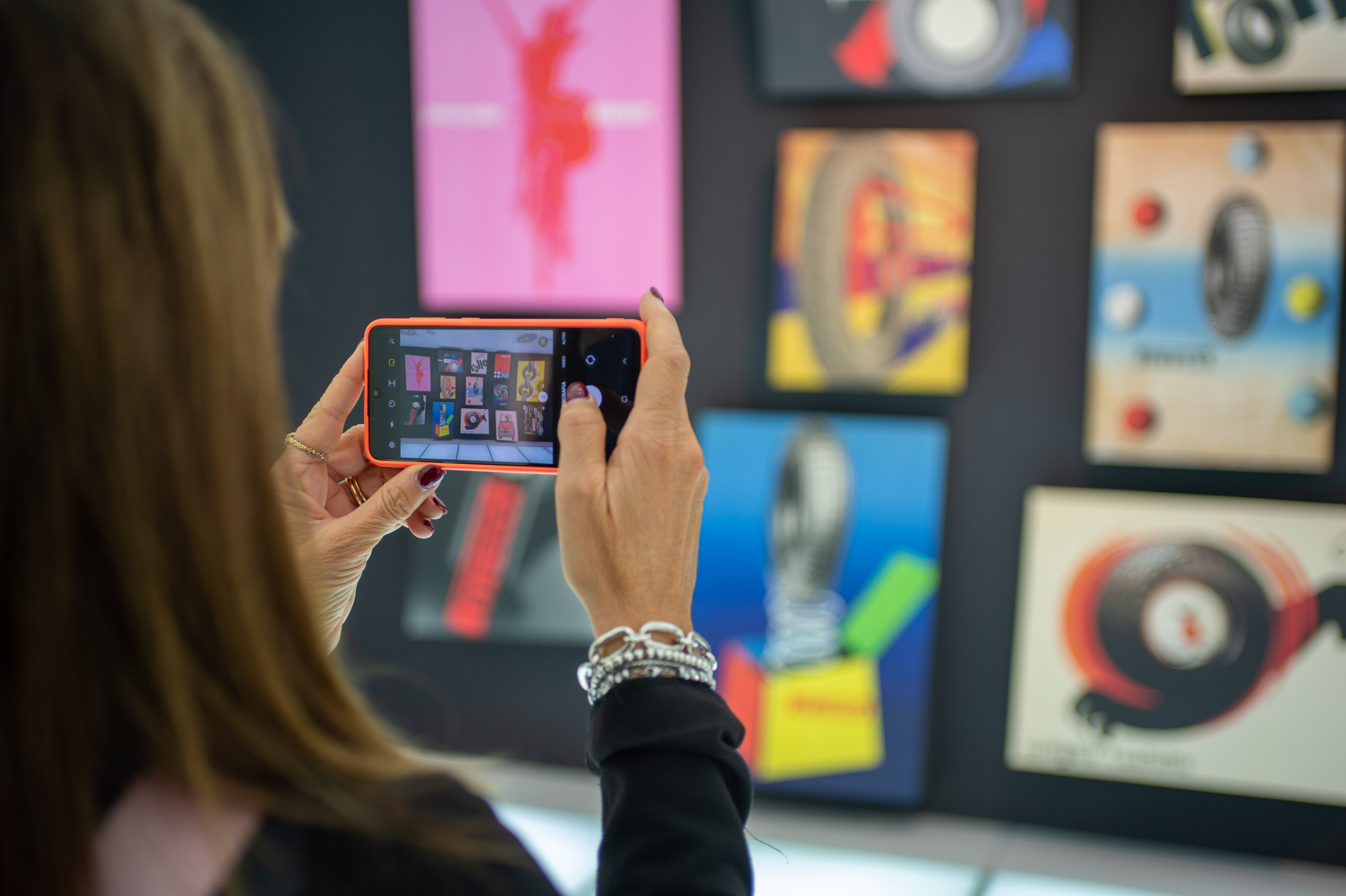
One of the courses in greatest demand, Under the Pirelli banner, which examined the evolution of the company’s advertising graphics, encouraged the students to try out their own creativity by making posters and “Save the date” cards to promote an exhibition on the history of Pirelli.

In the Planning and designing the workplace course, other classes virtually entered the workplaces at Pirelli, from those in Milan to the factory among the cherry trees in Settimo Torinese, and they tried to imagine and design what might be the ideal workplace for themselves in the future.

The students also tried creating podcasts in the On the road to innovation course, which looked at the innovations introduced by Pirelli in the design and manufacture of tyres.

Another course, Milan from the car window, was appreciated by younger primary school students for it took them on a virtual educational tour through the streets of the city with a special map and a guide.

Once again this year, about 200 teachers attended the online Cinema & History training and refresher course entitled Italy and its periods of decline and rebirth: an economic history, created in collaboration with the Fondazione Isec.

In-person guided tours for classes on school trips and groups of university students from all over Italy started up again in April.

The month of May brought a new venture, with support for the 20th National Chemistry Competition, hosted this year by the Istituto Molinari in Milan. This partnership meant that the teachers accompanying the students could visit the chemistry laboratories in the Pirelli research and development area in the Bicocca district of Milan.

The staff at the teaching department of Pirelli Foundation Educational are currently working on projects for the next school year, so stay in touch with us through our newsletter and through the Foundation’s social media channels to see when the new educational programme for 2022-2023 is published. See you soon!

This week we bid farewell to our students from across all Italy and we look forward to seeing them in September. The school year programme for 2021-2022, during which Pirelli celebrated its 150th anniversary, has now come to an end. Again, it was “all-digital”, in order to maintain our strong bond with the classes. And it made it possible for over 3,500 students to take part in the courses put on by Pirelli Foundation Educational, during which they learnt about the fundamental aspects of Pirelli’s corporate culture: from its “green” production of tyres to its focus on the quality of its workplaces, to sustainable mobility and its top innovations in the field of technology.

One of the courses in greatest demand, Under the Pirelli banner, which examined the evolution of the company’s advertising graphics, encouraged the students to try out their own creativity by making posters and “Save the date” cards to promote an exhibition on the history of Pirelli.

In the Planning and designing the workplace course, other classes virtually entered the workplaces at Pirelli, from those in Milan to the factory among the cherry trees in Settimo Torinese, and they tried to imagine and design what might be the ideal workplace for themselves in the future.

The students also tried creating podcasts in the On the road to innovation course, which looked at the innovations introduced by Pirelli in the design and manufacture of tyres.

Another course, Milan from the car window, was appreciated by younger primary school students for it took them on a virtual educational tour through the streets of the city with a special map and a guide.

Once again this year, about 200 teachers attended the online Cinema & History training and refresher course entitled Italy and its periods of decline and rebirth: an economic history, created in collaboration with the Fondazione Isec.

In-person guided tours for classes on school trips and groups of university students from all over Italy started up again in April.

The month of May brought a new venture, with support for the 20th National Chemistry Competition, hosted this year by the Istituto Molinari in Milan. This partnership meant that the teachers accompanying the students could visit the chemistry laboratories in the Pirelli research and development area in the Bicocca district of Milan.

The staff at the teaching department of Pirelli Foundation Educational are currently working on projects for the next school year, so stay in touch with us through our newsletter and through the Foundation’s social media channels to see when the new educational programme for 2022-2023 is published. See you soon!

Multimedia

Images

Companies with a unique slant

Seven stories by seven women who succeeded in becoming key company assets

Not “women-driven”, but all-round enterprises – basically, just enterprises. As they should always be, at least when a company really is an enterprise, that is, something that’s alive, grows and evolves. Thus, enterprises where the contribution of women is significant and representative, rather than a simple “extra” or a concession made by a dominant male majority. A key element of the enterprise itself, which is then enhanced and strengthened by different ways of conceiving production organisation, by the integration of diverse perspectives that, ultimately, will merge into a single one.

The theme of women’s and men’s roles at work is a sensitive one, and Adriano Moraglio – life-long economic journalist for Italian newspaper Il Sole 24 Ore – treats it with the due attention and perception in his L’impronta delle donne. Sette racconti: quando in azienda il contributo femminile diventa fondamentale (The impact of women. Seven stories: when women’s contribution becomes key in a company), which, as the title suggests, includes seven stories about women who succeeded in achieving significant roles in successful companies. Just to be clear, these are not women tycoons or women who have inherited large fortunes. These are people who, due to social conventions or particular circumstances, did not have the chance to act on their dreams at a young age and yet, thanks to their special ability to adapt to circumstances, have undertaken unexpected paths that led them to accomplish their career ambitions. Thus, women who, on the one hand, managed to climb up the ladder while, on the other hand, also fulfilled their maternal desire, without losing their individual attitude to life and work. Above all, women who succeeded in becoming who they are thanks to the equal relationship they established with their partners, which enables them to pursue their goals out of mutual respect, rather than having to fight for them.

In about 150 pages, the book narrates the stories of women managers working in enterprises that make pens or household accessories, in the food industry and in the field of robotics. Different stories that, nonetheless, share some common features – having to abandon certain dreams yet discovering new ones, the path to adulthood, a sense of duty, the struggle in reconciling life’s different aspects, as well as life’s defeats, victories, disappointments, joys and sorrows. Thus, this work outlines a corporate culture seen from a different, yet wholly comprehensive, perspective. Its main message is perfectly summarised in its Introduction by Marianna Carlini: we must be aware of how valuable diversity is – diversity understood not as “an issue related to the gender debate”, but as a feature that “when it transcends gender, becomes a universal value.”

L’impronta delle donne. Sette racconti: quando in azienda il contributo femminile diventa fondamentale (The impact of women. Seven stories: when women’s contribution becomes key in a company)

Adriano Moraglio

Rubbettino, 2022

Seven stories by seven women who succeeded in becoming key company assets

Not “women-driven”, but all-round enterprises – basically, just enterprises. As they should always be, at least when a company really is an enterprise, that is, something that’s alive, grows and evolves. Thus, enterprises where the contribution of women is significant and representative, rather than a simple “extra” or a concession made by a dominant male majority. A key element of the enterprise itself, which is then enhanced and strengthened by different ways of conceiving production organisation, by the integration of diverse perspectives that, ultimately, will merge into a single one.

The theme of women’s and men’s roles at work is a sensitive one, and Adriano Moraglio – life-long economic journalist for Italian newspaper Il Sole 24 Ore – treats it with the due attention and perception in his L’impronta delle donne. Sette racconti: quando in azienda il contributo femminile diventa fondamentale (The impact of women. Seven stories: when women’s contribution becomes key in a company), which, as the title suggests, includes seven stories about women who succeeded in achieving significant roles in successful companies. Just to be clear, these are not women tycoons or women who have inherited large fortunes. These are people who, due to social conventions or particular circumstances, did not have the chance to act on their dreams at a young age and yet, thanks to their special ability to adapt to circumstances, have undertaken unexpected paths that led them to accomplish their career ambitions. Thus, women who, on the one hand, managed to climb up the ladder while, on the other hand, also fulfilled their maternal desire, without losing their individual attitude to life and work. Above all, women who succeeded in becoming who they are thanks to the equal relationship they established with their partners, which enables them to pursue their goals out of mutual respect, rather than having to fight for them.

In about 150 pages, the book narrates the stories of women managers working in enterprises that make pens or household accessories, in the food industry and in the field of robotics. Different stories that, nonetheless, share some common features – having to abandon certain dreams yet discovering new ones, the path to adulthood, a sense of duty, the struggle in reconciling life’s different aspects, as well as life’s defeats, victories, disappointments, joys and sorrows. Thus, this work outlines a corporate culture seen from a different, yet wholly comprehensive, perspective. Its main message is perfectly summarised in its Introduction by Marianna Carlini: we must be aware of how valuable diversity is – diversity understood not as “an issue related to the gender debate”, but as a feature that “when it transcends gender, becomes a universal value.”

L’impronta delle donne. Sette racconti: quando in azienda il contributo femminile diventa fondamentale (The impact of women. Seven stories: when women’s contribution becomes key in a company)

Adriano Moraglio

Rubbettino, 2022