Access the Online Archive
Search the Historical Archive of the Pirelli Foundation for sources and materials. Select the type of support you are interested in and write the keywords of your research.
    Select one of the following categories
  • Documents
  • Photographs
  • Drawings and posters
  • Audio-visuals
  • Publications and magazines
  • All
Help with your research
To request to view the materials in the Historical Archive and in the libraries of the Pirelli Foundation for study and research purposes and/or to find out how to request the use of materials for loans and exhibitions, please fill in the form below. You will receive an email confirming receipt of the request and you will be contacted.
Pirelli Foundation Educational Courses

Select the education level of the school
Back
Primary schools
Pirelli Foundation Educational Courses
Please fill in your details and the staff of Pirelli Foundation Educational will contact you to arrange the dates of the course.

I declare I have read  the privacy policy, and authorise the Pirelli Foundation to process my personal data in order to send communications, also by email, about initiatives/conferences organised by the Pirelli Foundation.

Back
Lower secondary school
Pirelli Foundation Educational Courses
Please fill in your details and the staff of Pirelli Foundation Educational will contact you to arrange the dates of the course.
Back
Upper secondary school
Pirelli Foundation Educational Courses
Please fill in your details and the staff of Pirelli Foundation Educational will contact you to arrange the dates of the course.
Back
University
Pirelli Foundation Educational Courses

Do you want to organize a training programme with your students? For information and reservations, write to universita@fondazionepirelli.org

Visit the Foundation
For information about the Foundation’s activities, guided tours and accessibility,
please call +39 0264423971 or fill in the form below, providing details of your request in the notes field.

Social dimension and good entrepreneurship

A thesis discussed at the University of Padua examines this theme in the context of sustainability reports


How much do corporate activities integrate a social dimension? An important question, as it requires concrete answers about the attention that enterprises (really) pay to the complex aspects that connect human beings and the way they act to how much they care about production organisation. This is a major topic that, nowadays, has gained wide coverage in almost any debate concerning the balanced development not only of companies in the stricter sense, but also of modern social and economic systems more in general. It is around these themes, and with the aim of finding an answer to that initial question – including a focus on gender equality – that Elena Gerardo has developed her work La dimensione sociale all’interno del bilancio di sostenibilità: un’analisi empirica (The social dimension within sustainability reports: an empirical analysis), thesis discussed at the University of Padua, M. Fanno Department of Economics and Business Sciences, Master’s in Economics and Law.

“We are increasingly hearing about sustainability and, due to the 2030 Agenda, all European countries are striving to achieve economic and social prosperity, without compromising future generations,” writes Gerardo at the beginning of her research study, adding that, “If we look back over the past 20 years, the theme of sustainability started to become increasingly relevant in the behaviours of institutions, families and companies. With regard to the latter, many of them have embarked on a path that no longer only dwells on the economic sphere but that includes development and performance policies linked to ESG criteria, that is, respect for the environment and for people.”

Thus, the people who drive the company and its managers to get involved with wider corporate social issues and, as such, to implement actions and build relationships on the territory aimed at taking into account the social dimensions of its activities, without neglecting to do the same within its own organisation, too.

Building on all this, Elena Gerardo first clarifies the context in which sustainability reports should be placed, and then goes on to carefully examine that social dimension that takes shape both within and outside companies, before moving on to an empirical analysis that attempts to verify the theory’s feasibility in the real world, paying particular attention to gender equality.

Elena Gerardo’s research study and efforts are commendable, as not only they draw attention to a significant theoretical aspect of good corporate culture, but also attempt to verify their practical implementation.

La dimensione sociale all’interno del bilancio di sostenibilità: un’analisi empirica (The social dimension within sustainability reports: an empirical analysis)

Elena Gerardo

Thesis, University of Padua, M. Fanno Department of Economics and Business Sciences, Master’s in Economics and Law, 2021-2022

A thesis discussed at the University of Padua examines this theme in the context of sustainability reports


How much do corporate activities integrate a social dimension? An important question, as it requires concrete answers about the attention that enterprises (really) pay to the complex aspects that connect human beings and the way they act to how much they care about production organisation. This is a major topic that, nowadays, has gained wide coverage in almost any debate concerning the balanced development not only of companies in the stricter sense, but also of modern social and economic systems more in general. It is around these themes, and with the aim of finding an answer to that initial question – including a focus on gender equality – that Elena Gerardo has developed her work La dimensione sociale all’interno del bilancio di sostenibilità: un’analisi empirica (The social dimension within sustainability reports: an empirical analysis), thesis discussed at the University of Padua, M. Fanno Department of Economics and Business Sciences, Master’s in Economics and Law.

“We are increasingly hearing about sustainability and, due to the 2030 Agenda, all European countries are striving to achieve economic and social prosperity, without compromising future generations,” writes Gerardo at the beginning of her research study, adding that, “If we look back over the past 20 years, the theme of sustainability started to become increasingly relevant in the behaviours of institutions, families and companies. With regard to the latter, many of them have embarked on a path that no longer only dwells on the economic sphere but that includes development and performance policies linked to ESG criteria, that is, respect for the environment and for people.”

Thus, the people who drive the company and its managers to get involved with wider corporate social issues and, as such, to implement actions and build relationships on the territory aimed at taking into account the social dimensions of its activities, without neglecting to do the same within its own organisation, too.

Building on all this, Elena Gerardo first clarifies the context in which sustainability reports should be placed, and then goes on to carefully examine that social dimension that takes shape both within and outside companies, before moving on to an empirical analysis that attempts to verify the theory’s feasibility in the real world, paying particular attention to gender equality.

Elena Gerardo’s research study and efforts are commendable, as not only they draw attention to a significant theoretical aspect of good corporate culture, but also attempt to verify their practical implementation.

La dimensione sociale all’interno del bilancio di sostenibilità: un’analisi empirica (The social dimension within sustainability reports: an empirical analysis)

Elena Gerardo

Thesis, University of Padua, M. Fanno Department of Economics and Business Sciences, Master’s in Economics and Law, 2021-2022

All-round managers

A recently published book tells us how much management owes to the presence of women in companies

Talking about management means talking about women – this, at least, is what can be inferred not so much by current management practices but, above all, by looking at its history and evolution. And this is the thesis – confirmed with substantial “evidence” – that Luisa Pogliana develops in her work Una sorprendente genealogia.

L’autorità femminile nel management dall’800 a oggi (A surprising genealogy. Women’s authority in management from the 19th century to today), which reaches the conclusion that the notion of management itself, as well as of managers as social figures, was conceived by women. Corporate management, explains the author (who, for several years, was Director of Market Research and Studies for the Mondadori Group and then a consultant on international markets, in four continents) shows how women held leading roles starting from the 19th century, throughout the 20th century, and up to the present, and how, with impressive consistency, the theories of women’s researchers from the past two centuries tie in with today’s managerial practices.
The book is strictly organised into four sections: the first two concern, respectively, stories of women who studied management and women who, as managers, have shaped corporate history. Pogliana then goes on to clarify “the necessary shift” of paradigm in contemporary corporate management, before emphasising the presence of an “irreversible transformation” within corporate management and culture themselves.

But why women? Because, the author tells us, while men always seem to want more power, women – then as now – bring new visions to management, characterised by a different approach to power. The women included in the book attempt to transform the way in which companies are run, something that, as emphasised, cannot be achieved without women and their vision, although that is not enough: in other words, good enterprise (in all its aspects) can develop only through the collaboration of women and men.

Pogliana’s book is indeed aimed to women and men in managerial roles and is unquestionably stimulating – a must read, though not everyone might agree with all it says. “It is impressive,” we read in the last pages, “how, throughout the history of management, we find women who knew how to interpret their eras, and deeply understood the key principles from the very beginning, and up to today. We find continuity of thought, a passing of the torch. The genealogy of women in management not only makes for an interesting story. It also gives us confidence in our abilities to understand our contemporary times and find the answers we need.”

Una sorprendente genealogia. L’autorità femminile nel management dall’800 a oggi (A surprising genealogy. Women’s authority in management from the 19th century to today)

Luisa Pogliana

Guerini Next, 2022

A recently published book tells us how much management owes to the presence of women in companies

Talking about management means talking about women – this, at least, is what can be inferred not so much by current management practices but, above all, by looking at its history and evolution. And this is the thesis – confirmed with substantial “evidence” – that Luisa Pogliana develops in her work Una sorprendente genealogia.

L’autorità femminile nel management dall’800 a oggi (A surprising genealogy. Women’s authority in management from the 19th century to today), which reaches the conclusion that the notion of management itself, as well as of managers as social figures, was conceived by women. Corporate management, explains the author (who, for several years, was Director of Market Research and Studies for the Mondadori Group and then a consultant on international markets, in four continents) shows how women held leading roles starting from the 19th century, throughout the 20th century, and up to the present, and how, with impressive consistency, the theories of women’s researchers from the past two centuries tie in with today’s managerial practices.
The book is strictly organised into four sections: the first two concern, respectively, stories of women who studied management and women who, as managers, have shaped corporate history. Pogliana then goes on to clarify “the necessary shift” of paradigm in contemporary corporate management, before emphasising the presence of an “irreversible transformation” within corporate management and culture themselves.

But why women? Because, the author tells us, while men always seem to want more power, women – then as now – bring new visions to management, characterised by a different approach to power. The women included in the book attempt to transform the way in which companies are run, something that, as emphasised, cannot be achieved without women and their vision, although that is not enough: in other words, good enterprise (in all its aspects) can develop only through the collaboration of women and men.

Pogliana’s book is indeed aimed to women and men in managerial roles and is unquestionably stimulating – a must read, though not everyone might agree with all it says. “It is impressive,” we read in the last pages, “how, throughout the history of management, we find women who knew how to interpret their eras, and deeply understood the key principles from the very beginning, and up to today. We find continuity of thought, a passing of the torch. The genealogy of women in management not only makes for an interesting story. It also gives us confidence in our abilities to understand our contemporary times and find the answers we need.”

Una sorprendente genealogia. L’autorità femminile nel management dall’800 a oggi (A surprising genealogy. Women’s authority in management from the 19th century to today)

Luisa Pogliana

Guerini Next, 2022

‘Civil’ – the new buzzword to discuss economy and business

Fortunately, despite our current, difficult and controversial times, in the thick of a ‘risk society’, amongst wars being fought and pandemics still looming, environmental disasters and social resentment, the frequent usage of a particularly significant term – ‘civil’ – in public debates is nonetheless on the rise.

Milan is getting ready for a “Civil Week” (an initiative by Buone Notizie (Good news), the Corriere della Sera’s weekly publication) and, indeed, the relaunch documents issued by the Touring Club – the Italian national tourist organisation – emphasise the crucial role that territories and their inhabitants – that is, citizens – can play in “taking care of Italy as a common good”, in keeping with “civil values”. Further, many WhatsApp groups are busy discussing how consequential it would be to introduce the teaching of ‘civic education’ in schools. Civic is also the title of the magazine published by the Fondazione Italia Sociale, a foundation created four years ago by a group of enterprises and influential figures from the economic and cultural spheres to raise funds for initiatives of common interest (its president is philanthropic entrepreneur Enzo Manes): in collaboration with LUISS, it also offers a number of well attended courses on ‘civic culture’. Moreover, from CENSIS reports to reputable books on politics, the term ‘civil’ has now acquired positive connotations that suggest a desire to counteract the deterioration of social relationships and public debate, eroded by those blaring opinionists and the bigoted vulgarity so widespread on social media and TV talk shows.

Words exist for a reason, they embody a certain perspective. ‘Civil‘ means being aware, responsible, competent, able to listen carefully and ‘take charge’ of a community’s issues. A dialogue should be ‘civil’. Positive values should be ‘civil’. And – why not? – ‘civil’ should also stand for ‘kind’, as in such an uncertain and sorrowful period ‘kindness’ is essential, an ethical dimension for relationships and behaviours, a lifestyle.

How do we translate ‘civil’ into corporate culture terms? Lezioni di commercio o sia di economia civile (Lectures on civil economy) was the title of the treatise written in 1765 by Antonio Genovesi, the Neapolitan Enlightenment thinker considered by Adam Smith as the masterful inspiration for his own economic theory. And recent reflections by Stefano Zamagni, a brilliant economist and president of the Pontificia Accademia delle Scienze Sociali (the Pontifical academy of social sciences) has brought back to the forefront precisely that ‘civil economy’ rooted in ancient Italian history – “Since the Middle Ages, Italian people have been accustomed to make, under the shade of a bell tower, beautiful objects cherished by the world” (a concise description by economic historian Carlo Maria Cipolla).

Civil economy and circular economy are both at the heart of Pope Francis’s notion of a “just economy” and they’re also key reference points in widespread economic literature, which counts amongst their best representatives Joseph Stiglitz, Jean-Paul Fitoussi, Paul Krugman and, coming back to Italy, Franco Modigliani and Federico Caffè – the teachers of a younger generation of economists who, for some time now, have been reinterpreting and reviving John Maynard Keynes’s liberal thinking, marked by overt social purposes.

Civil economy and social and environmental sustainability, then. Civil economy as the context for a transition from shareholder values, obsessed with growth (of stock profits and prices) to the predominance of stakeholders values (comprising values and interests concerning workers, suppliers, customers, consumers, i.e. the people who make up the communities on which enterprises are built) – thus, we’re back to the relationship existing between ‘civil’ and cives, the citizens.

Going back to the notion that enterprises, too, are responsible for generating value (wealth) – and as such are active agents within a “social capital” founded on the concepts of widespread well-being, culture, social inclusion, solidarity, the promotion of community values. Indeed, other words and experiences related to civil economy and entrepreneurship come to mind: the “beautiful factory”, for instance, a well-designed, bright, transparent, sustainable factory immersed in nature, welcoming and safe, as, indeed, occupational safety should not be neglected. To this, we can add corporate libraries, which promote good reading – with plenty of children’s books – designed as spaces dedicated to reading and discussions, amongst subscribing employees, on literature, history, science or economics. And further, well-cared-for cafeterias, as per the criteria defined overtime through various pilot schemes (by Olivetti, Pirelli, Dalmine, etc.). Dispensaries and medical centres serving individual companies or industrial districts. Museums and corporate archives preserving the legacy encapsulated by the phrase “Do, do well and do good” and, as such, providing constant stimuli for innovation. Broader industrial relationships that, precisely because they are part of the ‘civil’ dialogue between companies and trade unions, can create new and better production environments. And so on, adding to that list of “good practices” leading the best Italian capitalism towards a “paradigm shift”, steering it towards an economy based on “fair and sustainable well-being” and thus higher-quality production, products and services, as well as greater competitiveness.

A particular phrase encapsulates this ongoing process, which is typically Italian: “industrial humanism”. Its origins go back to the 1950s, to the publication of Civiltà delle macchine (Civilised machinery) considered one of the greatest company magazine of the times, and today that same concept has evolved into notions entailing “civilised work”, care for people, “digital humanism” – in other words, into an attitude that conceives enterprise, society and development in a ‘civilised’ manner.

Fortunately, despite our current, difficult and controversial times, in the thick of a ‘risk society’, amongst wars being fought and pandemics still looming, environmental disasters and social resentment, the frequent usage of a particularly significant term – ‘civil’ – in public debates is nonetheless on the rise.

Milan is getting ready for a “Civil Week” (an initiative by Buone Notizie (Good news), the Corriere della Sera’s weekly publication) and, indeed, the relaunch documents issued by the Touring Club – the Italian national tourist organisation – emphasise the crucial role that territories and their inhabitants – that is, citizens – can play in “taking care of Italy as a common good”, in keeping with “civil values”. Further, many WhatsApp groups are busy discussing how consequential it would be to introduce the teaching of ‘civic education’ in schools. Civic is also the title of the magazine published by the Fondazione Italia Sociale, a foundation created four years ago by a group of enterprises and influential figures from the economic and cultural spheres to raise funds for initiatives of common interest (its president is philanthropic entrepreneur Enzo Manes): in collaboration with LUISS, it also offers a number of well attended courses on ‘civic culture’. Moreover, from CENSIS reports to reputable books on politics, the term ‘civil’ has now acquired positive connotations that suggest a desire to counteract the deterioration of social relationships and public debate, eroded by those blaring opinionists and the bigoted vulgarity so widespread on social media and TV talk shows.

Words exist for a reason, they embody a certain perspective. ‘Civil‘ means being aware, responsible, competent, able to listen carefully and ‘take charge’ of a community’s issues. A dialogue should be ‘civil’. Positive values should be ‘civil’. And – why not? – ‘civil’ should also stand for ‘kind’, as in such an uncertain and sorrowful period ‘kindness’ is essential, an ethical dimension for relationships and behaviours, a lifestyle.

How do we translate ‘civil’ into corporate culture terms? Lezioni di commercio o sia di economia civile (Lectures on civil economy) was the title of the treatise written in 1765 by Antonio Genovesi, the Neapolitan Enlightenment thinker considered by Adam Smith as the masterful inspiration for his own economic theory. And recent reflections by Stefano Zamagni, a brilliant economist and president of the Pontificia Accademia delle Scienze Sociali (the Pontifical academy of social sciences) has brought back to the forefront precisely that ‘civil economy’ rooted in ancient Italian history – “Since the Middle Ages, Italian people have been accustomed to make, under the shade of a bell tower, beautiful objects cherished by the world” (a concise description by economic historian Carlo Maria Cipolla).

Civil economy and circular economy are both at the heart of Pope Francis’s notion of a “just economy” and they’re also key reference points in widespread economic literature, which counts amongst their best representatives Joseph Stiglitz, Jean-Paul Fitoussi, Paul Krugman and, coming back to Italy, Franco Modigliani and Federico Caffè – the teachers of a younger generation of economists who, for some time now, have been reinterpreting and reviving John Maynard Keynes’s liberal thinking, marked by overt social purposes.

Civil economy and social and environmental sustainability, then. Civil economy as the context for a transition from shareholder values, obsessed with growth (of stock profits and prices) to the predominance of stakeholders values (comprising values and interests concerning workers, suppliers, customers, consumers, i.e. the people who make up the communities on which enterprises are built) – thus, we’re back to the relationship existing between ‘civil’ and cives, the citizens.

Going back to the notion that enterprises, too, are responsible for generating value (wealth) – and as such are active agents within a “social capital” founded on the concepts of widespread well-being, culture, social inclusion, solidarity, the promotion of community values. Indeed, other words and experiences related to civil economy and entrepreneurship come to mind: the “beautiful factory”, for instance, a well-designed, bright, transparent, sustainable factory immersed in nature, welcoming and safe, as, indeed, occupational safety should not be neglected. To this, we can add corporate libraries, which promote good reading – with plenty of children’s books – designed as spaces dedicated to reading and discussions, amongst subscribing employees, on literature, history, science or economics. And further, well-cared-for cafeterias, as per the criteria defined overtime through various pilot schemes (by Olivetti, Pirelli, Dalmine, etc.). Dispensaries and medical centres serving individual companies or industrial districts. Museums and corporate archives preserving the legacy encapsulated by the phrase “Do, do well and do good” and, as such, providing constant stimuli for innovation. Broader industrial relationships that, precisely because they are part of the ‘civil’ dialogue between companies and trade unions, can create new and better production environments. And so on, adding to that list of “good practices” leading the best Italian capitalism towards a “paradigm shift”, steering it towards an economy based on “fair and sustainable well-being” and thus higher-quality production, products and services, as well as greater competitiveness.

A particular phrase encapsulates this ongoing process, which is typically Italian: “industrial humanism”. Its origins go back to the 1950s, to the publication of Civiltà delle macchine (Civilised machinery) considered one of the greatest company magazine of the times, and today that same concept has evolved into notions entailing “civilised work”, care for people, “digital humanism” – in other words, into an attitude that conceives enterprise, society and development in a ‘civilised’ manner.

Waiting for the next edition of Premio Campiello Junior with few rhymes by Roberto Piumini

The first edition of the Premio Campiello Junior has come to an end with the victory of Quando la notte non torno by Antonella Sbuelz. The offspring of a partnership between the Fondazione Il Campiello and the Pirelli Foundation, the fledgling award honours works of fiction and poetry in Italian for children aged 10 to 14.

The final was hosted by Federico Russo and Virginia Stagni at the H-Farm in Roncade, under the watchful eyes of the young voters and the Selection Jury chaired by Roberto Piumini, to whose rhymes we entrust the invitation to the next edition:

Lettori amici,
siccome sono poeta,
vi parlerò di poesia,
dove ogni parola è un giuramento,
ogni parola vale,
ogni parola è davvero,
ogni parola ha un senso.
quest’oggi, lo sappiamo, è premiato
chi ha scritto storie, chi ha scritto parole,
perchè ci ha fatto un dono: ma che dono?
Io vi voglio parlare
di cosa accade leggendo
un racconto, un romanzo e, s’intende,
leggendo o ascoltando una poesia.
Sì, certamente, quando voi leggete,
avete la sorpresa di una storia,
di paesaggi e persone, e imparate
eventi eavventure, e questo è molto
perchè davvero soli noi saremmo
senza il conforto di altro e di altrove:
leggere di altri, vivi in altri luoghi,
in altri tempi, è buona compagnia.
Sicché, innanzitutto, quel che accade
È un patto fra chi scrive e chi legge:
uno dà le parole, uno dà l’attenzione.
Il patto è di passare un tempo insieme,
come fra amici: un tempo di presenza,
gioco e simpatia, tempo leale.
Accade anche un altro fatto, e patto:
leggendo, voi accettate, con l’autore,
di fare insieme un teatro, di giocare
di essere qualcuno che non siete,
fingere un’altra anima, e persino
un altro corpo.
Ma, voi direte, è solo l’autore
Quello che parla, che conduce il gioco,
che fa il regista nel teatro,
fa il maestro del coro: e invece
non è questo che accade.
Ecco quello che accade: ogni parola,
quando voi la leggete,
percorre tutta la vostra memoria,
a una velocità incalcolabile,
cerca e trova il vostro ricordo,
quello che voi sapete e ricordate,
e, a una velocità incalcolabile,
forma l’immagine.
Inizia una storia:
noi leggiamo: “Un cavallo,”
e prima che il nostro sguardo arrivi
alla terza parola,
a una velocità incalcolabile,
dentro il nostro cervello,
nel bianco santuario del cranio,
avviene una vertigine,
e ci tornano alla mente i cavalli
che abbiamo visto nella vita, oppure
quelli che abbiamo immaginato,
e il cavallo giocattolo
o quelli disegnati,
o visti un giorno al cinema,
in un cartone animato, o sognati.
Se poi abbiamo avuto la fortuna
di toccare un cavallo, o addirittura
di stargli in groppa, non solo
vediamo la sua immagine, ma sentiamo,
a una velocità incalcolabile,
anche il suo odore, e nelle gambe
lo sforzo di restare sulla sella,
e insomma, visto tutto, e ricordato,
a una velocità incalcolabile,
diamo a quella parola la sua immagine,
che è una nostra immagine segreta:
solo noi la sappiamo, solo noi,
e nemmeno l’autore che leggiamo.
Ogni parola, mentre la leggiamo,
ci ripercorre il tempo della vita,
ci pulisce le arterie del ricordo,
potente goccia di sangue sparviero,
ci rinfresca il pensiero di noi,
ci fruga e ci rinfresca l’esistenza.
E se dopo “Un cavallo” noi leggiamo,
appena dopo un attimo,
“galoppava in un bosco,” altri cavalli,
a una velocità incalcolabile,
ci correranno nella mente,
ricorderemo i boschi, ogni bosco,
con colori e odori,
e il fresco delle foglie sulla faccia,
l’intenso e vasto ronzio degli insetti,
e allora non vedremo, ma saremo
quel cavallo al galoppo, finchè, forse,
nell’attimo seguente, leggeremo
che in sella a quel cavallo, cavalcava,
“una giovane donna”.
Moltiplicate per ogni parola
La sciolta scorribanda che facciamo,
a una velocità incalcolabile,
nel santuario di ossa e di sangue,
nella memoria che è conoscenza.

Così, come l’autore, siamo autori.
Così, al profondo dono
che ha fatto chi ha scritto le parole,
con un profondo dono rispondiamo,
perchè le sue parole erano mute,
erano segni vuoti, fino a quando,
aprendo il libro, leggendo, le abbiamo
portate a pascolare nella mente,
a nutrirsi dei nostri ricordi,
e ciascuno di noi è un diverso pascolo,
e in diverse forme le parole
hanno avuto vita:
noi abbiamo immaginato, e le parole
hanno avuto infinito momento.
Quando donate un libro a un amico,
oltre a fargli il dono che sappiamo,
fate un nuovo dono all’autore:
un’altra vita e un’altra ricchezza
donate al dono delle sue parole:
un altro gioco e un altro teatro,
a una velocità incalcolabile.

The first edition of the Premio Campiello Junior has come to an end with the victory of Quando la notte non torno by Antonella Sbuelz. The offspring of a partnership between the Fondazione Il Campiello and the Pirelli Foundation, the fledgling award honours works of fiction and poetry in Italian for children aged 10 to 14.

The final was hosted by Federico Russo and Virginia Stagni at the H-Farm in Roncade, under the watchful eyes of the young voters and the Selection Jury chaired by Roberto Piumini, to whose rhymes we entrust the invitation to the next edition:

Lettori amici,
siccome sono poeta,
vi parlerò di poesia,
dove ogni parola è un giuramento,
ogni parola vale,
ogni parola è davvero,
ogni parola ha un senso.
quest’oggi, lo sappiamo, è premiato
chi ha scritto storie, chi ha scritto parole,
perchè ci ha fatto un dono: ma che dono?
Io vi voglio parlare
di cosa accade leggendo
un racconto, un romanzo e, s’intende,
leggendo o ascoltando una poesia.
Sì, certamente, quando voi leggete,
avete la sorpresa di una storia,
di paesaggi e persone, e imparate
eventi eavventure, e questo è molto
perchè davvero soli noi saremmo
senza il conforto di altro e di altrove:
leggere di altri, vivi in altri luoghi,
in altri tempi, è buona compagnia.
Sicché, innanzitutto, quel che accade
È un patto fra chi scrive e chi legge:
uno dà le parole, uno dà l’attenzione.
Il patto è di passare un tempo insieme,
come fra amici: un tempo di presenza,
gioco e simpatia, tempo leale.
Accade anche un altro fatto, e patto:
leggendo, voi accettate, con l’autore,
di fare insieme un teatro, di giocare
di essere qualcuno che non siete,
fingere un’altra anima, e persino
un altro corpo.
Ma, voi direte, è solo l’autore
Quello che parla, che conduce il gioco,
che fa il regista nel teatro,
fa il maestro del coro: e invece
non è questo che accade.
Ecco quello che accade: ogni parola,
quando voi la leggete,
percorre tutta la vostra memoria,
a una velocità incalcolabile,
cerca e trova il vostro ricordo,
quello che voi sapete e ricordate,
e, a una velocità incalcolabile,
forma l’immagine.
Inizia una storia:
noi leggiamo: “Un cavallo,”
e prima che il nostro sguardo arrivi
alla terza parola,
a una velocità incalcolabile,
dentro il nostro cervello,
nel bianco santuario del cranio,
avviene una vertigine,
e ci tornano alla mente i cavalli
che abbiamo visto nella vita, oppure
quelli che abbiamo immaginato,
e il cavallo giocattolo
o quelli disegnati,
o visti un giorno al cinema,
in un cartone animato, o sognati.
Se poi abbiamo avuto la fortuna
di toccare un cavallo, o addirittura
di stargli in groppa, non solo
vediamo la sua immagine, ma sentiamo,
a una velocità incalcolabile,
anche il suo odore, e nelle gambe
lo sforzo di restare sulla sella,
e insomma, visto tutto, e ricordato,
a una velocità incalcolabile,
diamo a quella parola la sua immagine,
che è una nostra immagine segreta:
solo noi la sappiamo, solo noi,
e nemmeno l’autore che leggiamo.
Ogni parola, mentre la leggiamo,
ci ripercorre il tempo della vita,
ci pulisce le arterie del ricordo,
potente goccia di sangue sparviero,
ci rinfresca il pensiero di noi,
ci fruga e ci rinfresca l’esistenza.
E se dopo “Un cavallo” noi leggiamo,
appena dopo un attimo,
“galoppava in un bosco,” altri cavalli,
a una velocità incalcolabile,
ci correranno nella mente,
ricorderemo i boschi, ogni bosco,
con colori e odori,
e il fresco delle foglie sulla faccia,
l’intenso e vasto ronzio degli insetti,
e allora non vedremo, ma saremo
quel cavallo al galoppo, finchè, forse,
nell’attimo seguente, leggeremo
che in sella a quel cavallo, cavalcava,
“una giovane donna”.
Moltiplicate per ogni parola
La sciolta scorribanda che facciamo,
a una velocità incalcolabile,
nel santuario di ossa e di sangue,
nella memoria che è conoscenza.

Così, come l’autore, siamo autori.
Così, al profondo dono
che ha fatto chi ha scritto le parole,
con un profondo dono rispondiamo,
perchè le sue parole erano mute,
erano segni vuoti, fino a quando,
aprendo il libro, leggendo, le abbiamo
portate a pascolare nella mente,
a nutrirsi dei nostri ricordi,
e ciascuno di noi è un diverso pascolo,
e in diverse forme le parole
hanno avuto vita:
noi abbiamo immaginato, e le parole
hanno avuto infinito momento.
Quando donate un libro a un amico,
oltre a fargli il dono che sappiamo,
fate un nuovo dono all’autore:
un’altra vita e un’altra ricchezza
donate al dono delle sue parole:
un altro gioco e un altro teatro,
a una velocità incalcolabile.

Premio Campiello Junior 2022. The winner of the first edition was announced

The winner of the first edition of the Premio Campiello Junior was announced today, 6 May 2022, in the Big Hall of H-Farm in Roncade (Treviso). The winner, chosen by the students who formed the Jury of Readers between the three finalist books, is:

Antonella Sbuelz, Questa notte non torno, Feltrinelli

During the event, which was presented by Federico Russo together with Virginia Stagni, the president of the Selection Jury Roberto Piumini and the juror members Chiara Lagani, Michela Possamai and David Tolin told the young people present and all those taking part online about their passion for books and reading.

See you in 2023 at the next edition of the Prize!

To watch the recording of the event, click here.

For further information on the Premio Campiello Junior events, please go to www.fondazionepirelli.org andwww.premiocampiello.org.

The winner of the first edition of the Premio Campiello Junior was announced today, 6 May 2022, in the Big Hall of H-Farm in Roncade (Treviso). The winner, chosen by the students who formed the Jury of Readers between the three finalist books, is:

Antonella Sbuelz, Questa notte non torno, Feltrinelli

During the event, which was presented by Federico Russo together with Virginia Stagni, the president of the Selection Jury Roberto Piumini and the juror members Chiara Lagani, Michela Possamai and David Tolin told the young people present and all those taking part online about their passion for books and reading.

See you in 2023 at the next edition of the Prize!

To watch the recording of the event, click here.

For further information on the Premio Campiello Junior events, please go to www.fondazionepirelli.org andwww.premiocampiello.org.

COLLECTOR’S TYRES: PIRELLI AND THE CINTURATO FOR THE MINI COOPER

Two very different but complementary spirits inspire the Pirelli Collezione line. These tyres have been created to offer the vintage car market tyres that perfectly satisfy the historical criteria demanded by the most attentive and passionate collectors. To do so, they combine the original look and driving dynamics for historic cars with the most advanced technologies, to ensure top performance and ever-greater safety.

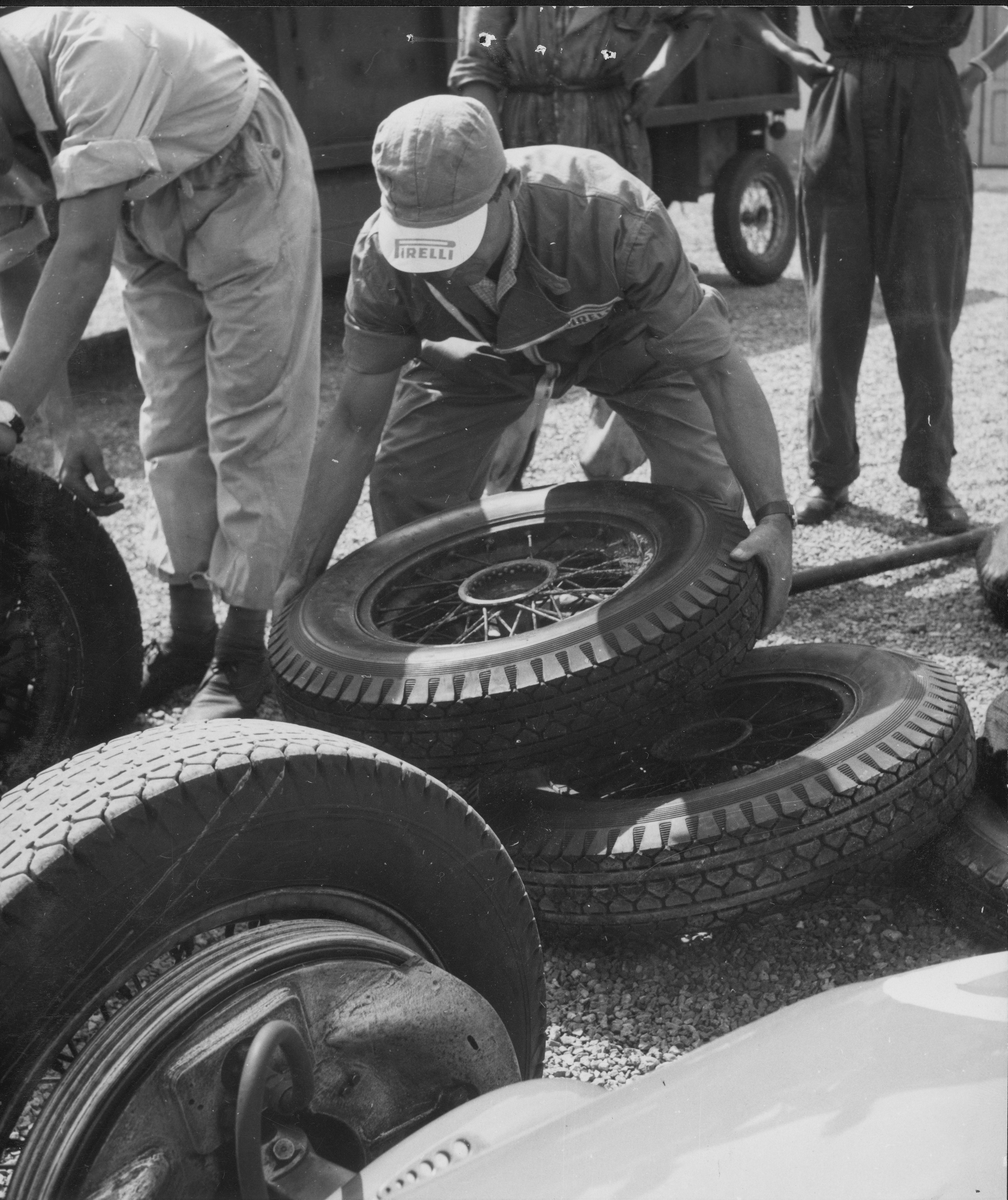
Since the 1950s, Pirelli has greatly expanded its range of tyres, making them increasingly specialised for different types of vehicles and different seasons, and for particular road conditions, speeds and loads. Hundreds of plates were made from the 1950s to the 1970s for each type of tyre, to advertise them and make them instantly recognisable: photographs touched up with ink and airbrush picked out the shapes and lines of the treads on advertisements, price lists, and catalogues.

Today, more than seventy years later, those plates – together with the original product specifications and other technical documentation now in our Historical Archive – are used to reproduce Pirelli tyres that are historically precise. This has led to the creation of new versions of the iconic Stella Bianca and the Stelvio, as well as the Cinturato models from the 1960s, through to the most recent, but already “historic” lines: the super-low-profile P7 and P5 ordered by Jaguar, or the P Zero Rosso from the early 2000s created for Porsche.

Our partnerships with leading car manufacturers are interactive relationships that date back many years and still continue today. One example among many is the remaking of the Cinturato tyre for the various versions of the BMW Mini. Today’s compounds and technologies, which have been used for the creation of the Pirelli Collezione line, ensure reliability and high levels of safety. They also maintain the original style, which has been recreated by using pictures and designs made available by the Pirelli Foundation. This has led to the return of a great icon of the 1960s, with the certification not only of the previous Cinturato 367F and P3, but also the special homologation of the Eufori@ Run Flat, a tyre that is synonymous with reliability on the road, capable of travelling for 150 kilometres at a 80 km/h even when totally flat. And there are lots more projects in the pipeline, all with a common aim: to bring the past into the present and take it into the future.

Two very different but complementary spirits inspire the Pirelli Collezione line. These tyres have been created to offer the vintage car market tyres that perfectly satisfy the historical criteria demanded by the most attentive and passionate collectors. To do so, they combine the original look and driving dynamics for historic cars with the most advanced technologies, to ensure top performance and ever-greater safety.

Since the 1950s, Pirelli has greatly expanded its range of tyres, making them increasingly specialised for different types of vehicles and different seasons, and for particular road conditions, speeds and loads. Hundreds of plates were made from the 1950s to the 1970s for each type of tyre, to advertise them and make them instantly recognisable: photographs touched up with ink and airbrush picked out the shapes and lines of the treads on advertisements, price lists, and catalogues.

Today, more than seventy years later, those plates – together with the original product specifications and other technical documentation now in our Historical Archive – are used to reproduce Pirelli tyres that are historically precise. This has led to the creation of new versions of the iconic Stella Bianca and the Stelvio, as well as the Cinturato models from the 1960s, through to the most recent, but already “historic” lines: the super-low-profile P7 and P5 ordered by Jaguar, or the P Zero Rosso from the early 2000s created for Porsche.

Our partnerships with leading car manufacturers are interactive relationships that date back many years and still continue today. One example among many is the remaking of the Cinturato tyre for the various versions of the BMW Mini. Today’s compounds and technologies, which have been used for the creation of the Pirelli Collezione line, ensure reliability and high levels of safety. They also maintain the original style, which has been recreated by using pictures and designs made available by the Pirelli Foundation. This has led to the return of a great icon of the 1960s, with the certification not only of the previous Cinturato 367F and P3, but also the special homologation of the Eufori@ Run Flat, a tyre that is synonymous with reliability on the road, capable of travelling for 150 kilometres at a 80 km/h even when totally flat. And there are lots more projects in the pipeline, all with a common aim: to bring the past into the present and take it into the future.

Multimedia

Images

Premio Campiello Junior 2022: The Finalists Talk About Their Books

The day when the winner of the first edition of the Premio Campiello Junior is announced is fast approaching – the ceremony will be on Friday, 6 May 2022 at 5.30 p.m. in the Big Hall at H-Farm in Roncade (Treviso).

As we wait to find out who the award-winning author will be, the Pirelli Foundation has conducted three interviews with the authors, who talk about how their stories and characters came to life and how important it is for them to be finalists in the first edition of this new literary contest.

The three interviews will be published on this page:

  • Antonella Sbuelz, Questa notte non torno, Feltrinelli – Wednesday, 27 April 2022, 11.30 a.m.
  • Guido QuarzoAnna Vivarelli, La scatola dei sogni, Editoriale Scienza – Thursday, 28 April 2022, 11.30 a.m.
  • Chiara Carminati, Un pinguino a Trieste, Bompiani – Friday, 29 April 2022, 11.30 a.m.

You can find out about all the Premio Campiello Junior events by visiting www.fondazionepirelli.org and www.premiocampiello.org.

The day when the winner of the first edition of the Premio Campiello Junior is announced is fast approaching – the ceremony will be on Friday, 6 May 2022 at 5.30 p.m. in the Big Hall at H-Farm in Roncade (Treviso).

As we wait to find out who the award-winning author will be, the Pirelli Foundation has conducted three interviews with the authors, who talk about how their stories and characters came to life and how important it is for them to be finalists in the first edition of this new literary contest.

The three interviews will be published on this page:

  • Antonella Sbuelz, Questa notte non torno, Feltrinelli – Wednesday, 27 April 2022, 11.30 a.m.
  • Guido QuarzoAnna Vivarelli, La scatola dei sogni, Editoriale Scienza – Thursday, 28 April 2022, 11.30 a.m.
  • Chiara Carminati, Un pinguino a Trieste, Bompiani – Friday, 29 April 2022, 11.30 a.m.

You can find out about all the Premio Campiello Junior events by visiting www.fondazionepirelli.org and www.premiocampiello.org.

Campiello Junior - First Edition - Interviews with the authors

Video

Campiello Junior Literary Prize: writing, publishing and recognising children’s books to “build up stores” for a better future

Who knows whether the world really was made “to end up in a beautiful book” as believed by Stéphane Mallarmé. What’s true is that both life experience and literature alike emphasise the crucial role that narration plays in anyone’s existential dimension, so that we can easily identify with the words of Gabriel Garcia Marquez, “What matters in life is not what happens to you but what you remember and how you remember it” or of Umberto Eco, “At the age of 70, those who don’t read will have led only one life – their own! Those who read will have lived 5,000 years: they were there when Cain killed Abel, when Renzo married Lucia, when Leopardi admired the infinite… Because literature is backwards immortality.”

Wandering between the lines of a book we encounter wisdom, pleasure, memories, and make discoveries. A melancholic thread that, from amongst the shadows of reminiscence and the sorrow of absence, drives us to create images and words that can fill that emptiness, while a cheerful wind ruffles ordinary thoughts and sets life in motion once more. Words have wings, yet they’re as hard as rocks, too. Words inspire thoughts and emotions to take flight, and experiences to take root. Words reveal the substance of things and open up worlds that, before they were put into words, did not exist. Narration is a journey and each journey fosters narration.

Words, essentially, are a very serious game, just like children’s play, and, indeed, we must teach children, sparing no effort and as soon as possible, about the prolific beauty that lies in reading and as such in imagining, discovering, planning – namely, narrating and living.

This is the frame of reference that led to the creation of the Campiello Junior Literary Prize, with the support of the Campiello Foundation and the Pirelli Foundation, an award dedicated to the recognition of authors of children’s books for ages 10 to 14 years, and whose first edition has just concluded. The three runners-up (Chiara Carminati with Un pinguino a Trieste (A penguin in Trieste), published by Bompiani; Guido Quarzo and Anna Vivarelli with La scatola dei sogni (The dream box), published by EditorialeScienza; and Antonella Sbuelz with Questa notte non torno (I’m not going back tonight), published by Feltrinelli), were selected by a jury chaired by Roberto Piumini and then voted upon by a panel comprising 160 very young readers (as per the Campiello Prize’s rules). The award ceremony takes place on 6 May, at the H-Farm Campus in Roncade (Treviso).

The aim of the initiative is best summarised by Roberto Piumini himself: “Those who write for children, who publish children’s books, who promote or reward children’s literature, achieve something that’s much more complex, praiseworthy and even riskier than in other kinds of writing, publishing and promotion, because they’re not attempting to convey existential, cultural or emotional concepts that readers will remember and that will become part of their literary taste; rather, they’re teaching children to express themselves, to learn a cognitive and emotional language, their own language, in the most substantial yet delicate anthropological sense.”

Piumini reiterates that, “Writing, publishing, promoting children’s fiction means providing ways to learn, feel, establish one’s identity, develop one’s imagination and purpose. This is not achieved, as in past literary works, through illustrative examples and role models, or through wise yet threatening admonitions, but through a rich, playful language that, with creativity and dynamism, invites children to enjoy variety and all that the world has to offer.”

Enrico Carraro, president of the Campiello Prize and of Confindustria Veneto, explains that, “Together with the Pirelli Foundation, we have established this prize to promote, once more, literary talent, and to propagate reading among children. This is a new project that reaffirms the commitment of Veneto entrepreneurs towards cultural activities and, as such, the development of the country.”

And, adds the Pirelli Foundation, “we support the Campiello Junior Literary Prize in order to stimulate the writing of children’s books, which are tools to enhance the pleasures of discovery, knowledge, quality of life. And it’s one more initiative, among the many we launched throughout our history, aimed at enhancing company libraries, the dissemination of culture, the nurturing of a ‘book culture’ as a crucial part of responsible citizenship from an early age.”

Here’s the underlying key cultural message: books are essential tools for the acquisition of knowledge and responsibility, for social, individual and human development, for building conscious relationships with the communities in which children grow up and reach adulthood. Reading blends pleasure with the shaping of one’s critical nature as, indeed, playing with the written word stimulates discussion, dialogue, appreciation of others, awareness of the value of individuality and diversity. The adventures narrated in books can enrich young readers’ experience from an early age, while the heroines and heroes of those stories make our lives more prolific, teaching us to use our imagination, build and explore new worlds.

Books are the foundations of a more open, welcoming and civilised “human city” and libraries are like stores of experiences, projects, dreams – stores preserving the staples of a good diet for body and soul, nourishing a better future.

“The founding of libraries was like constructing more public granaries, amassing reserves against a spiritual winter which by certain signs, in spite of myself, I see ahead.” writes Marguerite Yourcenar in her seminal book Memorie di Adriano (Memoirs of Hadrian) (a quote also found written on the inside pediment at the entry of the Pirelli Library in the Bicocca neighbourhood in Milan). A ‘winter of the spirit’ is a recurring threat and, at certain times – just like the ones we’re experiencing now – a particularly troubling one. Yet, playing with the written word, together with our children, does help to build and pass on hope, in spite of everything.

Who knows whether the world really was made “to end up in a beautiful book” as believed by Stéphane Mallarmé. What’s true is that both life experience and literature alike emphasise the crucial role that narration plays in anyone’s existential dimension, so that we can easily identify with the words of Gabriel Garcia Marquez, “What matters in life is not what happens to you but what you remember and how you remember it” or of Umberto Eco, “At the age of 70, those who don’t read will have led only one life – their own! Those who read will have lived 5,000 years: they were there when Cain killed Abel, when Renzo married Lucia, when Leopardi admired the infinite… Because literature is backwards immortality.”

Wandering between the lines of a book we encounter wisdom, pleasure, memories, and make discoveries. A melancholic thread that, from amongst the shadows of reminiscence and the sorrow of absence, drives us to create images and words that can fill that emptiness, while a cheerful wind ruffles ordinary thoughts and sets life in motion once more. Words have wings, yet they’re as hard as rocks, too. Words inspire thoughts and emotions to take flight, and experiences to take root. Words reveal the substance of things and open up worlds that, before they were put into words, did not exist. Narration is a journey and each journey fosters narration.

Words, essentially, are a very serious game, just like children’s play, and, indeed, we must teach children, sparing no effort and as soon as possible, about the prolific beauty that lies in reading and as such in imagining, discovering, planning – namely, narrating and living.

This is the frame of reference that led to the creation of the Campiello Junior Literary Prize, with the support of the Campiello Foundation and the Pirelli Foundation, an award dedicated to the recognition of authors of children’s books for ages 10 to 14 years, and whose first edition has just concluded. The three runners-up (Chiara Carminati with Un pinguino a Trieste (A penguin in Trieste), published by Bompiani; Guido Quarzo and Anna Vivarelli with La scatola dei sogni (The dream box), published by EditorialeScienza; and Antonella Sbuelz with Questa notte non torno (I’m not going back tonight), published by Feltrinelli), were selected by a jury chaired by Roberto Piumini and then voted upon by a panel comprising 160 very young readers (as per the Campiello Prize’s rules). The award ceremony takes place on 6 May, at the H-Farm Campus in Roncade (Treviso).

The aim of the initiative is best summarised by Roberto Piumini himself: “Those who write for children, who publish children’s books, who promote or reward children’s literature, achieve something that’s much more complex, praiseworthy and even riskier than in other kinds of writing, publishing and promotion, because they’re not attempting to convey existential, cultural or emotional concepts that readers will remember and that will become part of their literary taste; rather, they’re teaching children to express themselves, to learn a cognitive and emotional language, their own language, in the most substantial yet delicate anthropological sense.”

Piumini reiterates that, “Writing, publishing, promoting children’s fiction means providing ways to learn, feel, establish one’s identity, develop one’s imagination and purpose. This is not achieved, as in past literary works, through illustrative examples and role models, or through wise yet threatening admonitions, but through a rich, playful language that, with creativity and dynamism, invites children to enjoy variety and all that the world has to offer.”

Enrico Carraro, president of the Campiello Prize and of Confindustria Veneto, explains that, “Together with the Pirelli Foundation, we have established this prize to promote, once more, literary talent, and to propagate reading among children. This is a new project that reaffirms the commitment of Veneto entrepreneurs towards cultural activities and, as such, the development of the country.”

And, adds the Pirelli Foundation, “we support the Campiello Junior Literary Prize in order to stimulate the writing of children’s books, which are tools to enhance the pleasures of discovery, knowledge, quality of life. And it’s one more initiative, among the many we launched throughout our history, aimed at enhancing company libraries, the dissemination of culture, the nurturing of a ‘book culture’ as a crucial part of responsible citizenship from an early age.”

Here’s the underlying key cultural message: books are essential tools for the acquisition of knowledge and responsibility, for social, individual and human development, for building conscious relationships with the communities in which children grow up and reach adulthood. Reading blends pleasure with the shaping of one’s critical nature as, indeed, playing with the written word stimulates discussion, dialogue, appreciation of others, awareness of the value of individuality and diversity. The adventures narrated in books can enrich young readers’ experience from an early age, while the heroines and heroes of those stories make our lives more prolific, teaching us to use our imagination, build and explore new worlds.

Books are the foundations of a more open, welcoming and civilised “human city” and libraries are like stores of experiences, projects, dreams – stores preserving the staples of a good diet for body and soul, nourishing a better future.

“The founding of libraries was like constructing more public granaries, amassing reserves against a spiritual winter which by certain signs, in spite of myself, I see ahead.” writes Marguerite Yourcenar in her seminal book Memorie di Adriano (Memoirs of Hadrian) (a quote also found written on the inside pediment at the entry of the Pirelli Library in the Bicocca neighbourhood in Milan). A ‘winter of the spirit’ is a recurring threat and, at certain times – just like the ones we’re experiencing now – a particularly troubling one. Yet, playing with the written word, together with our children, does help to build and pass on hope, in spite of everything.

Premio Campiello Junior. The Young Members of the Readers’ Jury Select the Winning Book

The moment has come for the winner of the first edition of the Premio Campiello Junior to be announced. The 160 young people who form the Jury of Readers will now be able to express their opinions, which will be decisive for selecting the book that will be awarded the new accolade.

The winner will be announced today, 6 May 2022 at 5.30 p.m. in the Big Hall at H-Farm in Roncade (Treviso). The three finalists in the running are:

  • Chiara Carminati, Un pinguino a Trieste, Bompiani
  • Guido Quarzo – Anna Vivarelli, La scatola dei sogni, Editoriale Scienza
  • Antonella Sbuelz, Questa notte non torno, Feltrinelli

The event will be presented by Federico Russo with the participation of Virginia Stagni. The authors and some members of the Selection Jury of the Award – chaired by Roberto Piumini and consisting of Chiara Lagani, Martino Negri, Michela Possamai and David Tolin – will talk with the children directly, telling them about their own passion for books and reading.

You can follow the live-streamed event here.

For further information on the Premio Campiello Junior events, please go to www.fondazionepirelli.org  and www.premiocampiello.org.

The moment has come for the winner of the first edition of the Premio Campiello Junior to be announced. The 160 young people who form the Jury of Readers will now be able to express their opinions, which will be decisive for selecting the book that will be awarded the new accolade.

The winner will be announced today, 6 May 2022 at 5.30 p.m. in the Big Hall at H-Farm in Roncade (Treviso). The three finalists in the running are:

  • Chiara Carminati, Un pinguino a Trieste, Bompiani
  • Guido Quarzo – Anna Vivarelli, La scatola dei sogni, Editoriale Scienza
  • Antonella Sbuelz, Questa notte non torno, Feltrinelli

The event will be presented by Federico Russo with the participation of Virginia Stagni. The authors and some members of the Selection Jury of the Award – chaired by Roberto Piumini and consisting of Chiara Lagani, Martino Negri, Michela Possamai and David Tolin – will talk with the children directly, telling them about their own passion for books and reading.

You can follow the live-streamed event here.

For further information on the Premio Campiello Junior events, please go to www.fondazionepirelli.org  and www.premiocampiello.org.

A new way of working

The transformation affecting corporate organisations and production modes is paving the way for new operational models yet to be fully understood


A new hybrid balance between home and office, possibly resting on terms considered “naturally” better and more useful to any situation, from the most traditional to the newest one, extensively experienced throughout the COVID-19 pandemic – this is one of the most effective and, above all, positive accounts describing what has been happening within a large part of the production system in Italy (and elsewhere). And it is precisely such a theme that Francesca Manili Pessina and Francesco Rotondi discuss in Il lavoro ibrido (Hybrid working), a recently published book that deals, in an unusual yet very readable style, with the issues concerning the way in which working modes have changed after the COVID-19 pandemic.

Written like a story, but with the reliability of an accurate essay, this book fully draws on the two authors’ experience: Francesca Manili Pessina has been the Executive Vice President Human Resources, Organisation & Facility Management at Sky Italia since 2013, while Francesco Rotondi is Founding Member and Managing Partner LabLaw at the Studio Legale Rotondi & Partners law firm, as well as an employment solicitor holding a professorship at the LIUC – Università Carlo Cattaneo of Castellanza. Both Manili Pessina and Rotondi examine the much-talked-about “new normal”, whose meaning is encapsulated in the notion of “hybrid working”.

An occurrence, it should be emphasised, which the authors attribute to the natural evolution of working conditions, and then subsequently accentuated by the pandemic. In other words, they explain, the exceptional circumstances brought on by the pandemic have accelerated the pace of several different underlying trends that where already there.
An important aspect highlighted by the two authors is that this new hybrid condition will have a significant impact on customs and practices, organisational models, relationships, leadership, social processes, and so on.

The book, just under 100 pages long, can be easily read in one sitting and begins by exploring in depth the social dimension of smart working in connection to the human relationships existing within a company, before moving on to analyse hybrid working, understood as the result of conciliating virtual and in-person work. The book then goes on to tackle some more specific elements of this novel way to organise work, such as its spaces, the nature and role of leadership, the necessarily new mindset it requires, and its contractual and international aspects.

The book’s conclusion about the impact of COVID-19 is stated in its very first pages: “At the end of this extraordinary and episodic phase, which has accelerated the pace of things in general, we are nonetheless still only attempting to understand what this pandemic will really leave behind.” This work by Francesca Manili Pessina and Francesco Rotondi definitely makes for compelling reading.

Il lavoro ibrido (Hybrid working)

Francesca Manili Pessina, Francesco Rotondi

Franco Angeli, 2022

The transformation affecting corporate organisations and production modes is paving the way for new operational models yet to be fully understood


A new hybrid balance between home and office, possibly resting on terms considered “naturally” better and more useful to any situation, from the most traditional to the newest one, extensively experienced throughout the COVID-19 pandemic – this is one of the most effective and, above all, positive accounts describing what has been happening within a large part of the production system in Italy (and elsewhere). And it is precisely such a theme that Francesca Manili Pessina and Francesco Rotondi discuss in Il lavoro ibrido (Hybrid working), a recently published book that deals, in an unusual yet very readable style, with the issues concerning the way in which working modes have changed after the COVID-19 pandemic.

Written like a story, but with the reliability of an accurate essay, this book fully draws on the two authors’ experience: Francesca Manili Pessina has been the Executive Vice President Human Resources, Organisation & Facility Management at Sky Italia since 2013, while Francesco Rotondi is Founding Member and Managing Partner LabLaw at the Studio Legale Rotondi & Partners law firm, as well as an employment solicitor holding a professorship at the LIUC – Università Carlo Cattaneo of Castellanza. Both Manili Pessina and Rotondi examine the much-talked-about “new normal”, whose meaning is encapsulated in the notion of “hybrid working”.

An occurrence, it should be emphasised, which the authors attribute to the natural evolution of working conditions, and then subsequently accentuated by the pandemic. In other words, they explain, the exceptional circumstances brought on by the pandemic have accelerated the pace of several different underlying trends that where already there.
An important aspect highlighted by the two authors is that this new hybrid condition will have a significant impact on customs and practices, organisational models, relationships, leadership, social processes, and so on.

The book, just under 100 pages long, can be easily read in one sitting and begins by exploring in depth the social dimension of smart working in connection to the human relationships existing within a company, before moving on to analyse hybrid working, understood as the result of conciliating virtual and in-person work. The book then goes on to tackle some more specific elements of this novel way to organise work, such as its spaces, the nature and role of leadership, the necessarily new mindset it requires, and its contractual and international aspects.

The book’s conclusion about the impact of COVID-19 is stated in its very first pages: “At the end of this extraordinary and episodic phase, which has accelerated the pace of things in general, we are nonetheless still only attempting to understand what this pandemic will really leave behind.” This work by Francesca Manili Pessina and Francesco Rotondi definitely makes for compelling reading.

Il lavoro ibrido (Hybrid working)

Francesca Manili Pessina, Francesco Rotondi

Franco Angeli, 2022