Access the Online Archive
Search the Historical Archive of the Pirelli Foundation for sources and materials. Select the type of support you are interested in and write the keywords of your research.
    Select one of the following categories
  • Documents
  • Photographs
  • Drawings and posters
  • Audio-visuals
  • Publications and magazines
  • All
Help with your research
To request to view the materials in the Historical Archive and in the libraries of the Pirelli Foundation for study and research purposes and/or to find out how to request the use of materials for loans and exhibitions, please fill in the form below. You will receive an email confirming receipt of the request and you will be contacted.
Pirelli Foundation Educational Courses

Select the education level of the school
Back
Primary schools
Pirelli Foundation Educational Courses
Please fill in your details and the staff of Pirelli Foundation Educational will contact you to arrange the dates of the course.

I declare I have read  the privacy policy, and authorise the Pirelli Foundation to process my personal data in order to send communications, also by email, about initiatives/conferences organised by the Pirelli Foundation.

Back
Lower secondary school
Pirelli Foundation Educational Courses
Please fill in your details and the staff of Pirelli Foundation Educational will contact you to arrange the dates of the course.
Back
Upper secondary school
Pirelli Foundation Educational Courses
Please fill in your details and the staff of Pirelli Foundation Educational will contact you to arrange the dates of the course.
Back
University
Pirelli Foundation Educational Courses

Do you want to organize a training programme with your students? For information and reservations, write to universita@fondazionepirelli.org

Visit the Foundation
For information about the Foundation’s activities, guided tours and accessibility,
please call +39 0264423971 or fill in the form below, providing details of your request in the notes field.

Pirelli in Turkey through the pages of Turk Pirelli’s magazine

On 26 April 1960, the Pirelli Group expanded once again with Turk Pirelli Lastikleri SA, a new subsidiary headquartered in Istanbul. Just two years later, the company opened a factory in Izmit to produce radial textile tyres for cars, trucks and agricultural vehicles, making Pirelli the very first tyre manufacturer in Turkey. The move was prompted by the commercial success of its products, which had been imported into the country ever since 1948, and by the rapid growth of the local market driven by the rise of mass motorisation. This, too, was a bold decision, as Leopoldo Pirelli recalled 25 years later, for it was a time of political uncertainty—Turkey had just witnessed the first coup d’état in its history as a republic—and of “a general lack of confidence in the country’s economic and social future”. By 1985, the results spoke for themselves: the plant was producing 1.2 million tyres a year, employing 1,000 people, and had opened a new department for metal-belted radials. Pirelli had established a leading market position, supplying original equipment for every car model manufactured in Turkey and dominating the replacement market through a widespread network of over 500 dealers nationwide. In the 1960s, the Turkish subsidiary launched its own in-house publication. In 1965, the magazine Pirelli made its debut—the official voice of Turk Pirelli, as the subtitle proclaimed. Today, the entire collection can be browsed digitally in the Historical Archive section of our website. It was one of the later Pirelli house organs, coming after those published in Argentina, Brazil, Spain, the UK and, of course, the original Italian magazine Fatti e Notizie. The Turkish edition was unlike other magazines for employees, right from its name, and was something of a hybrid: part in-house publication, part glossy magazine like the Italian Pirelli. Rivista d’informazione e di tecnica. Together with company news, profiles of retailers, reports on company events, and technical articles on tyres and how to fit and maintain them, readers also found articles on cinema, theatre, art, music and sport. There were also many in-depth analyses of Turkish history, traditions and places, including a serialised feature on “The Legend of the Bosphorus”, which came out in 1967 and 1968, and illustrated articles on Atatürk, which were often previewed in evocative cover images. The early issues featured glamorous portraits of actresses such as Hülya Koçyiğit, Gina Lollobrigida, Sylva Koscina and İnci Çayırlı on the cover. Over time, these gave way to pictures showcasing Turkish landscapes and sites of historical and artistic significance.

The last page featured cartoons by Kemal Akkavuk, as well as a tribute to the Turkish cartoonist Cemal Nadir (issue no. 31, 1967), and there was a humour section titled “Let’s Laugh a Little”, edited by Engin Nur.

Each issue included a summary in French, and until 1968, several articles were also published in French—especially those on art and history, and reports, such as the one on the congress for 500 retailers in Yalova (issue nos. 21–22, 1966). From 1969 onwards, some articles were accompanied by abstracts in French.

The magazine came out once a month and was edited by Emil Elâgöz (later Nami A. Elâgöz), followed by Mustafa Özalay and Uğur Canal. Its run ended in 1979 after 183 issues. Pirelli, however, remained in Turkey, as did its communications activities, which have now gone digital. Today, the Turkish arm of the Pirelli Group celebrates 65 years. Its Izmit plant, affectionately known as “the factory of champions” due to its role in motorsport tyre production since 2007, now supplies every major racing series in which Pirelli competes—including Formula 1.

On 26 April 1960, the Pirelli Group expanded once again with Turk Pirelli Lastikleri SA, a new subsidiary headquartered in Istanbul. Just two years later, the company opened a factory in Izmit to produce radial textile tyres for cars, trucks and agricultural vehicles, making Pirelli the very first tyre manufacturer in Turkey. The move was prompted by the commercial success of its products, which had been imported into the country ever since 1948, and by the rapid growth of the local market driven by the rise of mass motorisation. This, too, was a bold decision, as Leopoldo Pirelli recalled 25 years later, for it was a time of political uncertainty—Turkey had just witnessed the first coup d’état in its history as a republic—and of “a general lack of confidence in the country’s economic and social future”. By 1985, the results spoke for themselves: the plant was producing 1.2 million tyres a year, employing 1,000 people, and had opened a new department for metal-belted radials. Pirelli had established a leading market position, supplying original equipment for every car model manufactured in Turkey and dominating the replacement market through a widespread network of over 500 dealers nationwide. In the 1960s, the Turkish subsidiary launched its own in-house publication. In 1965, the magazine Pirelli made its debut—the official voice of Turk Pirelli, as the subtitle proclaimed. Today, the entire collection can be browsed digitally in the Historical Archive section of our website. It was one of the later Pirelli house organs, coming after those published in Argentina, Brazil, Spain, the UK and, of course, the original Italian magazine Fatti e Notizie. The Turkish edition was unlike other magazines for employees, right from its name, and was something of a hybrid: part in-house publication, part glossy magazine like the Italian Pirelli. Rivista d’informazione e di tecnica. Together with company news, profiles of retailers, reports on company events, and technical articles on tyres and how to fit and maintain them, readers also found articles on cinema, theatre, art, music and sport. There were also many in-depth analyses of Turkish history, traditions and places, including a serialised feature on “The Legend of the Bosphorus”, which came out in 1967 and 1968, and illustrated articles on Atatürk, which were often previewed in evocative cover images. The early issues featured glamorous portraits of actresses such as Hülya Koçyiğit, Gina Lollobrigida, Sylva Koscina and İnci Çayırlı on the cover. Over time, these gave way to pictures showcasing Turkish landscapes and sites of historical and artistic significance.

The last page featured cartoons by Kemal Akkavuk, as well as a tribute to the Turkish cartoonist Cemal Nadir (issue no. 31, 1967), and there was a humour section titled “Let’s Laugh a Little”, edited by Engin Nur.

Each issue included a summary in French, and until 1968, several articles were also published in French—especially those on art and history, and reports, such as the one on the congress for 500 retailers in Yalova (issue nos. 21–22, 1966). From 1969 onwards, some articles were accompanied by abstracts in French.

The magazine came out once a month and was edited by Emil Elâgöz (later Nami A. Elâgöz), followed by Mustafa Özalay and Uğur Canal. Its run ended in 1979 after 183 issues. Pirelli, however, remained in Turkey, as did its communications activities, which have now gone digital. Today, the Turkish arm of the Pirelli Group celebrates 65 years. Its Izmit plant, affectionately known as “the factory of champions” due to its role in motorsport tyre production since 2007, now supplies every major racing series in which Pirelli competes—including Formula 1.

Multimedia

Images

The gender gap and good corporate culture

Research turned thesis focuses on gender inequality in companies

Good corporate culture is also about closing the gender gap. This is an important assumption for all, and one that seems to be shared by all within production organisations and social systems. However, there can be a long way between theory and practice. Even today. But once again, solving a company’s problems comes down to understanding the problem at hand and then finding the right tools to address it.

For this reason, it is useful to read “Gender gap: uno studio delle percezioni dei lavoratori e delle lavoratrici: età, genere e provenienza” (The gender gap: a study of the perceptions of male and female workers: age, gender and origin), a study by Sara Ferrario that has become a thesis discussed at the University of Padua as part of the degree course in Management of Educational Services and Continuing Education.

Ferrario points out that over the years, strategies and solutions to reduce the gender gap have been codified and implemented (such as corporate policies, more inclusive leadership, standards and new targets to overcome potential barriers to women’s employment). However, focusing on how to perceive the problem remains crucial.

The research therefore focused on the different aspects of the gender gap in order to understand its deeper causes, its evolution and the countermeasures taken by institutions to limit its impact on social and working life. It was possible to measure the perception of the problem in companies by using a questionnaire given to a representative sample of employees.

Sara Ferrario writes in her conclusions: “The gender gap (…) is not a static phenomenon, but one in the making.  It changes over time, depending on the historical period, the activist movements and the policies adopted. But (…) this phenomenon is closely linked to the vision of the family, and therefore to an education that must be predisposed to change and adapt to a cultural evolution”. And then, how “gender equality must be a lived reality in which we see the reflection of an idea that becomes a desire for a reality to be experienced. For there is little point in imagining, hoping and advocating what would be right if things do not become real and tangible”.

Gender gap: uno studio delle percezioni dei lavoratori e delle lavoratrici: età, genere e provenienza

Sara Ferrario

University of Padua, Department of Philosophy, Sociology, Pedagogy and Applied Psychology Degree Course in Management of Educational Services and Continuing Education, Academic Year 2024-2025

Research turned thesis focuses on gender inequality in companies

Good corporate culture is also about closing the gender gap. This is an important assumption for all, and one that seems to be shared by all within production organisations and social systems. However, there can be a long way between theory and practice. Even today. But once again, solving a company’s problems comes down to understanding the problem at hand and then finding the right tools to address it.

For this reason, it is useful to read “Gender gap: uno studio delle percezioni dei lavoratori e delle lavoratrici: età, genere e provenienza” (The gender gap: a study of the perceptions of male and female workers: age, gender and origin), a study by Sara Ferrario that has become a thesis discussed at the University of Padua as part of the degree course in Management of Educational Services and Continuing Education.

Ferrario points out that over the years, strategies and solutions to reduce the gender gap have been codified and implemented (such as corporate policies, more inclusive leadership, standards and new targets to overcome potential barriers to women’s employment). However, focusing on how to perceive the problem remains crucial.

The research therefore focused on the different aspects of the gender gap in order to understand its deeper causes, its evolution and the countermeasures taken by institutions to limit its impact on social and working life. It was possible to measure the perception of the problem in companies by using a questionnaire given to a representative sample of employees.

Sara Ferrario writes in her conclusions: “The gender gap (…) is not a static phenomenon, but one in the making.  It changes over time, depending on the historical period, the activist movements and the policies adopted. But (…) this phenomenon is closely linked to the vision of the family, and therefore to an education that must be predisposed to change and adapt to a cultural evolution”. And then, how “gender equality must be a lived reality in which we see the reflection of an idea that becomes a desire for a reality to be experienced. For there is little point in imagining, hoping and advocating what would be right if things do not become real and tangible”.

Gender gap: uno studio delle percezioni dei lavoratori e delle lavoratrici: età, genere e provenienza

Sara Ferrario

University of Padua, Department of Philosophy, Sociology, Pedagogy and Applied Psychology Degree Course in Management of Educational Services and Continuing Education, Academic Year 2024-2025

Business that “gives back”

A book has just been published that effectively recounts the life of Giovanni Cottino

Give back and do business. Look after others and make a profit. Be strict yet generous. Create wealth in a non-selfish way. These are attitudes shared by many more entrepreneurs than you might think.  But they are attitudes that, when well communicated and therefore well known, educate, surprise, and excite. And maybe encourage others to do the same. The attitudes of teachers. Perhaps this is why Francesco Antonioli’s latest literary work is entitled “Il maestro silenzioso. Giovanni Cottino (1927-2022): l’imprenditore che ha saputo «restituire»”. (“The silent teacher. Giovanni Cottino (1927-2022): the entrepreneur who knew how to “give back”). Antonioli, for years a distinguished economic journalist at Sole 24 Ore and now a careful observer of the latest developments in economic and local news, wanted to tell the story of an entrepreneur who is on one hand unique and on the other exemplary of a large category people who are public-spirited.

Giovanni Cottino was an engineer turned philanthropist who demonstrated that profit and social commitment can coexist. Described by many as the enlightened entrepreneur of Turin, Cottino is held up as an example to those who wish to combine transparency, generosity and work ethic. Antonioli’s book describes how, from nothing, Cottino created one of the world’s largest manufacturers of components for household appliances, a group that, between the 1970s and 1990s, became a world leader in the “white goods” sector in Turin, a city dedicated to the automobile industry. After a life dedicated to manufacturing, Cottino then guided his grandchildren and great-grandchildren towards what is now called venture philanthropy – that is, giving back – by asking them to run the Giovanni and Annamaria Cottino Foundation. The purpose was to “give back” to the local area the best of what you had received in life.

Cottino is therefore a “silent teacher”, one of those individuals who have kept Italy afloat and who can still show public and private decision-makers a convincing way to build the common good. And you can understand this by reading Francesco Antonioli’s charming pages, where essays alternate with personal testimonies, economic news with the history of a company.

Il maestro silenzioso. Giovanni Cottino (1927-2022): l’imprenditore che ha saputo «restituire»

Francesco Antonioli

GueriniNEXT, 2025

A book has just been published that effectively recounts the life of Giovanni Cottino

Give back and do business. Look after others and make a profit. Be strict yet generous. Create wealth in a non-selfish way. These are attitudes shared by many more entrepreneurs than you might think.  But they are attitudes that, when well communicated and therefore well known, educate, surprise, and excite. And maybe encourage others to do the same. The attitudes of teachers. Perhaps this is why Francesco Antonioli’s latest literary work is entitled “Il maestro silenzioso. Giovanni Cottino (1927-2022): l’imprenditore che ha saputo «restituire»”. (“The silent teacher. Giovanni Cottino (1927-2022): the entrepreneur who knew how to “give back”). Antonioli, for years a distinguished economic journalist at Sole 24 Ore and now a careful observer of the latest developments in economic and local news, wanted to tell the story of an entrepreneur who is on one hand unique and on the other exemplary of a large category people who are public-spirited.

Giovanni Cottino was an engineer turned philanthropist who demonstrated that profit and social commitment can coexist. Described by many as the enlightened entrepreneur of Turin, Cottino is held up as an example to those who wish to combine transparency, generosity and work ethic. Antonioli’s book describes how, from nothing, Cottino created one of the world’s largest manufacturers of components for household appliances, a group that, between the 1970s and 1990s, became a world leader in the “white goods” sector in Turin, a city dedicated to the automobile industry. After a life dedicated to manufacturing, Cottino then guided his grandchildren and great-grandchildren towards what is now called venture philanthropy – that is, giving back – by asking them to run the Giovanni and Annamaria Cottino Foundation. The purpose was to “give back” to the local area the best of what you had received in life.

Cottino is therefore a “silent teacher”, one of those individuals who have kept Italy afloat and who can still show public and private decision-makers a convincing way to build the common good. And you can understand this by reading Francesco Antonioli’s charming pages, where essays alternate with personal testimonies, economic news with the history of a company.

Il maestro silenzioso. Giovanni Cottino (1927-2022): l’imprenditore che ha saputo «restituire»

Francesco Antonioli

GueriniNEXT, 2025

The shadows of Milan beyond the “week”. And the history of Assolombarda from dynamism to social values

The splendour of Milan is intensified on the occasion of certain anniversaries, including fashion, interior design, culture and international glamour. Fashion Week, for example, between February and March and then between September and October. And, above all, Design Week in mid-April, with the world’s most important Salone del Mobile and the many events of the Fuori Salone, where trends, experiments and projects are discussed in an attempt to make the places where we live and work in our cities a little better.

An everyday party atmosphere, from the joy of getting together to the surprise of meeting new people. Welcoming and open to conversation. A frenzy of business. Money and ideas. All of this with that very Milanese and global chic that knows how to combine tradition, innovation, industrial pride in the best of Made in Italy and world knowledge. Precisely Milan.

This year, however, there was no shortage of shadows.

There was concern among the sector’s operators about the consequences of the seismic shocks caused by the White House’s policy of imposing tariffs on international trade (furniture has an international reach and Milan has always promoted the good culture of open and competitive markets). But beyond the tourist and commercial success of the events, the various aspects of Design Week have deepened the public’s critical reflection on the current state of Milan and the long-term effects that certain phenomena, linked to the cost of living and housing, are having on the city’s soul, on its capacity for integration and, therefore, on its future.

Recent articles have highlighted conflicting economic and social issues and growing inequalities.

Here is Milan, which has risen to 11th place among the richest cities in the world in terms of the number of billionaires and millionaires, after New York and San Francisco, Tokyo and Singapore, London, Paris and Hong Kong, with 115,000 of the very rich: a number that has grown by 24% in the last ten years. In short, an increasingly attractive metropolis, made even more attractive to millionaires fleeing London after the change in the UK’s less favourable tax laws. And it has long since been noticed by the most discerning circles of fashion and global commerce:  Monte Napoleon has higher property values than Fifth Avenue in New York.

The high prices of luxury buildings have infected much of the metropolitan real estate fabric, with damaging effects. “Police on the run from Milan. Housing costs are too high,” denounced Chief of Police Bruno Megale (la Repubblica, 11 April). Atm public transport can’t find drivers for trams, so it’s converting a former depot into affordable housing for its employees. Young university students (there are more than 200,000 in the city) live in student halls in the suburbs, in Mind (the former Expo area) or in the towns of the metropolitan area, in Sesto San Giovanni and Cologno Monzese. And even young middle-class couples are leaving the urban area for the hinterland towns. In short, Milan welcomes those who can afford to spend a lot of money, and drives out or turns away those with less income. Milan, a city of millionaires that leaves the crumbs to the others”, comments Giangiacomo Schiavi, one of the journalists most attuned to the inner workings of the city, “rich, yes, but happy?” (Corriere della Sera, 12 April).

The splendour of business and social tension. The charm of exclusive clubs and the hardships of the once working-class neighbourhoods now undergoing gentrification. A Milan of contrast and of struggle. And of old and new poverty (use of the charity Caritas Ambrosiana is a good barometer of this).

These are far from new issues (we have often discussed them in this blog). The positive thing is that it is finally being discussed, in a critical but also self-critical way.

“Milan is absorbing some of the international problems of metropolises, from high rents to safety. And the primary problem I feel is the growing gap between those who can afford a certain standard of living and those who cannot. And too many low-paid jobs are making rents unaffordable,” said Mayor Beppe Sala a few days ago in an interview with Agnese Pini, editor of Quotidiano Nazionale/ Il Giorno (QN, 11 April). And in newspapers and cultural circles (the Centro Studi Grande Milano, to name but one), the phenomenon of the relationship between the competitiveness and economic attractiveness of the metropolis and the crisis of the tradition of social inclusion and solidarity has been analysed for some years. With incentives for public administrations to better manage urban change and respond to citizens’ needs for development and quality of life. Something is changing.

To meet the challenge of the future, Milan must rethink itself. To capitalise on the virtues of economic dynamism and provide answers to the problems of quality of life and environmental and social sustainability. It remains the metropolis that hosts 36.4% of Italy’s multinationals and generates 13.4% of Italy’s GDP. But it is also the place where the values of a job well done, business ethics and hospitality prevail, and where, in the future too, “Milanese” will become “Milanese” through personal qualities and professional and social integrity.

Strong themes and values, which also recur in the industrial world. And whose echo can be clearly heard in the pages of “Insieme – Assolombarda, la nostra storia” (Together – Assolombarda, our story), the book edited by the Assolombarda Foundation, just published by Marsilio and presented yesterday at the Piccolo Teatro in Milan, a symbolic place for good relations between business and culture. Piccolo Teatro was founded in 1947 by Giorgio Strehler and Paolo Grassi also with the contribution of major Milanese entrepreneurs: Pirelli, Falck, Borletti, De Angeli Frua, Marinotti, as well as Edison and Snia Viscosa, etc.).

The book is a history of corporate and social responsibility, innovation, productivity and the ability to take on general values and interests, not just those of registered companies. It includes speeches of the former presidents of the Association (Bonomi, Rocca, Meomartini, Bracco, Perini, Benedini) and of the current president, Alessandro Spada, and of the general manager, Alessandro Scarabelli, as well as the analyses and judgements of external figures, such as Piero Bassetti and Mario Monti, Cardinal Ravasi and the rector of the University of Bicocca, Giovanna Iannantuoni, as well as Amalia Ercoli Finzi, Carlo Ratti, Carlo Sangalli, Ferruccio de Bortoli and Salvatore Carrubba.

A versatile and dynamic picture of Milan. Convinced that “we have to fly to make Italy fly” (the exemplary strategy of Gianfelice Rocca’s Assolombarda presidency).

The book provides a better understanding of the most obvious aspects and deep roots of economic and social developments, and of the insights that can be drawn from phenomena that involve not only politics and public administration, but also civil society, economic forces and culture.

“Cities, like dreams, are made of desires and fears, even if the thread of their discourse is secret, their rules are absurd, their perspectives deceitful, and everything conceals something else,” wrote Italo Calvino in 1972 in “Invisible Cities”. He added: “You take delight not in a city’s seven or seventy wonders, but in the answer it gives to a question of yours”.

So what questions are we asking in Milan today? To remain faithful, even in the midst of radical change, to the ability to combine personal initiative and social values, productivity and inclusion, economic competitiveness and solidarity. Wealth and measure, elegance and rigour. Success and good, open and creative culture. A special blend of capitalism and reformism, market and general interests. A special “social capital”. To serve as a national and European paradigm of how to effectively reject the synthesis of democracy, market and welfare. And how public and private enterprise, production and critical culture, the creation of economic value and the growing space for civil and social values can coexist in a synergy, albeit a laborious one.

The history of Assolombarda reveals some constant underlying characteristics. An open approach to economic and industrial relations, with the awareness of being in the circuits of international competition. An attitude to change that makes the city extremely receptive to innovative impulses, be they entrepreneurial, technological, cultural or organisational. And a solid understanding of the market as a well-organised and therefore effectively regulated competitive space.

In short, there is a sound industrial pride. And a dynamism that is also made up of exchanges and relationships, as well as production specialisation in the mechanical, electrical, rubber, steel, energy and chemical sectors, which flank the traditional textile and agri-food sectors. A peculiar model of development, in the “big Milan” and metropolitan area, with industry structured across several sectors and without a dominant presence (unlike Turin, an automotive city with a strong Fiat imprint). And industry itself, the cornerstone of growth, is confronted in the metropolitan economic fabric with other business cultures, finance and trade, services and newspaper and book publishing. And with universities. A real chorus. An interweaving of interests and values, forces and ideas, attentive to the discovery of what is changing.

Milanese culture is therefore “polytechnic”, an original synthesis of humanistic and scientific knowledge. The sense of beauty is accompanied by the intelligence of new technology. The awareness of the role of history is faced with a pronounced tendency to engage with the avant-garde. And in the economic field, “industrial humanism” is the benchmark for increasing the competitiveness of Italian-made products on global markets. A strength that remains even in times of crisis and radical change.

The installation Library Of Light for Salone del Mobile di Milano, April 2025 (photo Getty Images)

The splendour of Milan is intensified on the occasion of certain anniversaries, including fashion, interior design, culture and international glamour. Fashion Week, for example, between February and March and then between September and October. And, above all, Design Week in mid-April, with the world’s most important Salone del Mobile and the many events of the Fuori Salone, where trends, experiments and projects are discussed in an attempt to make the places where we live and work in our cities a little better.

An everyday party atmosphere, from the joy of getting together to the surprise of meeting new people. Welcoming and open to conversation. A frenzy of business. Money and ideas. All of this with that very Milanese and global chic that knows how to combine tradition, innovation, industrial pride in the best of Made in Italy and world knowledge. Precisely Milan.

This year, however, there was no shortage of shadows.

There was concern among the sector’s operators about the consequences of the seismic shocks caused by the White House’s policy of imposing tariffs on international trade (furniture has an international reach and Milan has always promoted the good culture of open and competitive markets). But beyond the tourist and commercial success of the events, the various aspects of Design Week have deepened the public’s critical reflection on the current state of Milan and the long-term effects that certain phenomena, linked to the cost of living and housing, are having on the city’s soul, on its capacity for integration and, therefore, on its future.

Recent articles have highlighted conflicting economic and social issues and growing inequalities.

Here is Milan, which has risen to 11th place among the richest cities in the world in terms of the number of billionaires and millionaires, after New York and San Francisco, Tokyo and Singapore, London, Paris and Hong Kong, with 115,000 of the very rich: a number that has grown by 24% in the last ten years. In short, an increasingly attractive metropolis, made even more attractive to millionaires fleeing London after the change in the UK’s less favourable tax laws. And it has long since been noticed by the most discerning circles of fashion and global commerce:  Monte Napoleon has higher property values than Fifth Avenue in New York.

The high prices of luxury buildings have infected much of the metropolitan real estate fabric, with damaging effects. “Police on the run from Milan. Housing costs are too high,” denounced Chief of Police Bruno Megale (la Repubblica, 11 April). Atm public transport can’t find drivers for trams, so it’s converting a former depot into affordable housing for its employees. Young university students (there are more than 200,000 in the city) live in student halls in the suburbs, in Mind (the former Expo area) or in the towns of the metropolitan area, in Sesto San Giovanni and Cologno Monzese. And even young middle-class couples are leaving the urban area for the hinterland towns. In short, Milan welcomes those who can afford to spend a lot of money, and drives out or turns away those with less income. Milan, a city of millionaires that leaves the crumbs to the others”, comments Giangiacomo Schiavi, one of the journalists most attuned to the inner workings of the city, “rich, yes, but happy?” (Corriere della Sera, 12 April).

The splendour of business and social tension. The charm of exclusive clubs and the hardships of the once working-class neighbourhoods now undergoing gentrification. A Milan of contrast and of struggle. And of old and new poverty (use of the charity Caritas Ambrosiana is a good barometer of this).

These are far from new issues (we have often discussed them in this blog). The positive thing is that it is finally being discussed, in a critical but also self-critical way.

“Milan is absorbing some of the international problems of metropolises, from high rents to safety. And the primary problem I feel is the growing gap between those who can afford a certain standard of living and those who cannot. And too many low-paid jobs are making rents unaffordable,” said Mayor Beppe Sala a few days ago in an interview with Agnese Pini, editor of Quotidiano Nazionale/ Il Giorno (QN, 11 April). And in newspapers and cultural circles (the Centro Studi Grande Milano, to name but one), the phenomenon of the relationship between the competitiveness and economic attractiveness of the metropolis and the crisis of the tradition of social inclusion and solidarity has been analysed for some years. With incentives for public administrations to better manage urban change and respond to citizens’ needs for development and quality of life. Something is changing.

To meet the challenge of the future, Milan must rethink itself. To capitalise on the virtues of economic dynamism and provide answers to the problems of quality of life and environmental and social sustainability. It remains the metropolis that hosts 36.4% of Italy’s multinationals and generates 13.4% of Italy’s GDP. But it is also the place where the values of a job well done, business ethics and hospitality prevail, and where, in the future too, “Milanese” will become “Milanese” through personal qualities and professional and social integrity.

Strong themes and values, which also recur in the industrial world. And whose echo can be clearly heard in the pages of “Insieme – Assolombarda, la nostra storia” (Together – Assolombarda, our story), the book edited by the Assolombarda Foundation, just published by Marsilio and presented yesterday at the Piccolo Teatro in Milan, a symbolic place for good relations between business and culture. Piccolo Teatro was founded in 1947 by Giorgio Strehler and Paolo Grassi also with the contribution of major Milanese entrepreneurs: Pirelli, Falck, Borletti, De Angeli Frua, Marinotti, as well as Edison and Snia Viscosa, etc.).

The book is a history of corporate and social responsibility, innovation, productivity and the ability to take on general values and interests, not just those of registered companies. It includes speeches of the former presidents of the Association (Bonomi, Rocca, Meomartini, Bracco, Perini, Benedini) and of the current president, Alessandro Spada, and of the general manager, Alessandro Scarabelli, as well as the analyses and judgements of external figures, such as Piero Bassetti and Mario Monti, Cardinal Ravasi and the rector of the University of Bicocca, Giovanna Iannantuoni, as well as Amalia Ercoli Finzi, Carlo Ratti, Carlo Sangalli, Ferruccio de Bortoli and Salvatore Carrubba.

A versatile and dynamic picture of Milan. Convinced that “we have to fly to make Italy fly” (the exemplary strategy of Gianfelice Rocca’s Assolombarda presidency).

The book provides a better understanding of the most obvious aspects and deep roots of economic and social developments, and of the insights that can be drawn from phenomena that involve not only politics and public administration, but also civil society, economic forces and culture.

“Cities, like dreams, are made of desires and fears, even if the thread of their discourse is secret, their rules are absurd, their perspectives deceitful, and everything conceals something else,” wrote Italo Calvino in 1972 in “Invisible Cities”. He added: “You take delight not in a city’s seven or seventy wonders, but in the answer it gives to a question of yours”.

So what questions are we asking in Milan today? To remain faithful, even in the midst of radical change, to the ability to combine personal initiative and social values, productivity and inclusion, economic competitiveness and solidarity. Wealth and measure, elegance and rigour. Success and good, open and creative culture. A special blend of capitalism and reformism, market and general interests. A special “social capital”. To serve as a national and European paradigm of how to effectively reject the synthesis of democracy, market and welfare. And how public and private enterprise, production and critical culture, the creation of economic value and the growing space for civil and social values can coexist in a synergy, albeit a laborious one.

The history of Assolombarda reveals some constant underlying characteristics. An open approach to economic and industrial relations, with the awareness of being in the circuits of international competition. An attitude to change that makes the city extremely receptive to innovative impulses, be they entrepreneurial, technological, cultural or organisational. And a solid understanding of the market as a well-organised and therefore effectively regulated competitive space.

In short, there is a sound industrial pride. And a dynamism that is also made up of exchanges and relationships, as well as production specialisation in the mechanical, electrical, rubber, steel, energy and chemical sectors, which flank the traditional textile and agri-food sectors. A peculiar model of development, in the “big Milan” and metropolitan area, with industry structured across several sectors and without a dominant presence (unlike Turin, an automotive city with a strong Fiat imprint). And industry itself, the cornerstone of growth, is confronted in the metropolitan economic fabric with other business cultures, finance and trade, services and newspaper and book publishing. And with universities. A real chorus. An interweaving of interests and values, forces and ideas, attentive to the discovery of what is changing.

Milanese culture is therefore “polytechnic”, an original synthesis of humanistic and scientific knowledge. The sense of beauty is accompanied by the intelligence of new technology. The awareness of the role of history is faced with a pronounced tendency to engage with the avant-garde. And in the economic field, “industrial humanism” is the benchmark for increasing the competitiveness of Italian-made products on global markets. A strength that remains even in times of crisis and radical change.

The installation Library Of Light for Salone del Mobile di Milano, April 2025 (photo Getty Images)

A Journey through the Pages of The Sports Workshop at the Biblioteca Archimede in Settimo Torinese

On Friday, 11 April, at 6 p.m., the Biblioteca Archimede in Settimo Torinese will host the presentation of The Sports Workshop: Team Work, Research, Technology, Passion and Social Value, a book edited by the Pirelli Foundation and published by Marsilio Arte. The event, introduced by Elena Piastra, the mayor of Settimo Torinese, will feature a conversation between Antonio Calabrò, director of the Pirelli Foundation, and Marcello Capucchio, team manager of the Italian women’s national volleyball team—gold medallists at the recent Paris Olympics—as well as of the Lilliput Settimo Torinese women’s volleyball team.

The event offers a chance to explore the central themes of the book: the culture of sport, not simply as a challenge and a form of competition but also as participation, involvement, community, and civic commitment. The volume sheds light on and takes a close-up look at aspects that do not appear on the pitch or track. It explores how science can enhance athletes’ performance, the factories that produce sports equipment, the construction sites, the music, and the anthems of sport, in which the key players are not only the athletes but the fans as well.

With photographs and documents from the Pirelli Historical Archive as well as original plates by the renowned artist Lorenzo Mattotti, the book weaves a collective narrative. It brings together the voices of key figures from the world of sport, such as Giovanni Malagò, President of CONI and of the Fondazione Milano Cortina 2026, and Stefano Domenicali, President and CEO of Formula 1. Alongside their insights are reflections on the history of sport by great names in the world of journalism, such as Emanuela Audisio and original stories by internationally acclaimed writers such as Joe R. Lansdale, the brilliant creator of the wacky detective duo Hap & Leonard.

On Friday, 11 April, at 6 p.m., the Biblioteca Archimede in Settimo Torinese will host the presentation of The Sports Workshop: Team Work, Research, Technology, Passion and Social Value, a book edited by the Pirelli Foundation and published by Marsilio Arte. The event, introduced by Elena Piastra, the mayor of Settimo Torinese, will feature a conversation between Antonio Calabrò, director of the Pirelli Foundation, and Marcello Capucchio, team manager of the Italian women’s national volleyball team—gold medallists at the recent Paris Olympics—as well as of the Lilliput Settimo Torinese women’s volleyball team.

The event offers a chance to explore the central themes of the book: the culture of sport, not simply as a challenge and a form of competition but also as participation, involvement, community, and civic commitment. The volume sheds light on and takes a close-up look at aspects that do not appear on the pitch or track. It explores how science can enhance athletes’ performance, the factories that produce sports equipment, the construction sites, the music, and the anthems of sport, in which the key players are not only the athletes but the fans as well.

With photographs and documents from the Pirelli Historical Archive as well as original plates by the renowned artist Lorenzo Mattotti, the book weaves a collective narrative. It brings together the voices of key figures from the world of sport, such as Giovanni Malagò, President of CONI and of the Fondazione Milano Cortina 2026, and Stefano Domenicali, President and CEO of Formula 1. Alongside their insights are reflections on the history of sport by great names in the world of journalism, such as Emanuela Audisio and original stories by internationally acclaimed writers such as Joe R. Lansdale, the brilliant creator of the wacky detective duo Hap & Leonard.

Campiello Junior: Winners of the Fourth Edition Announced

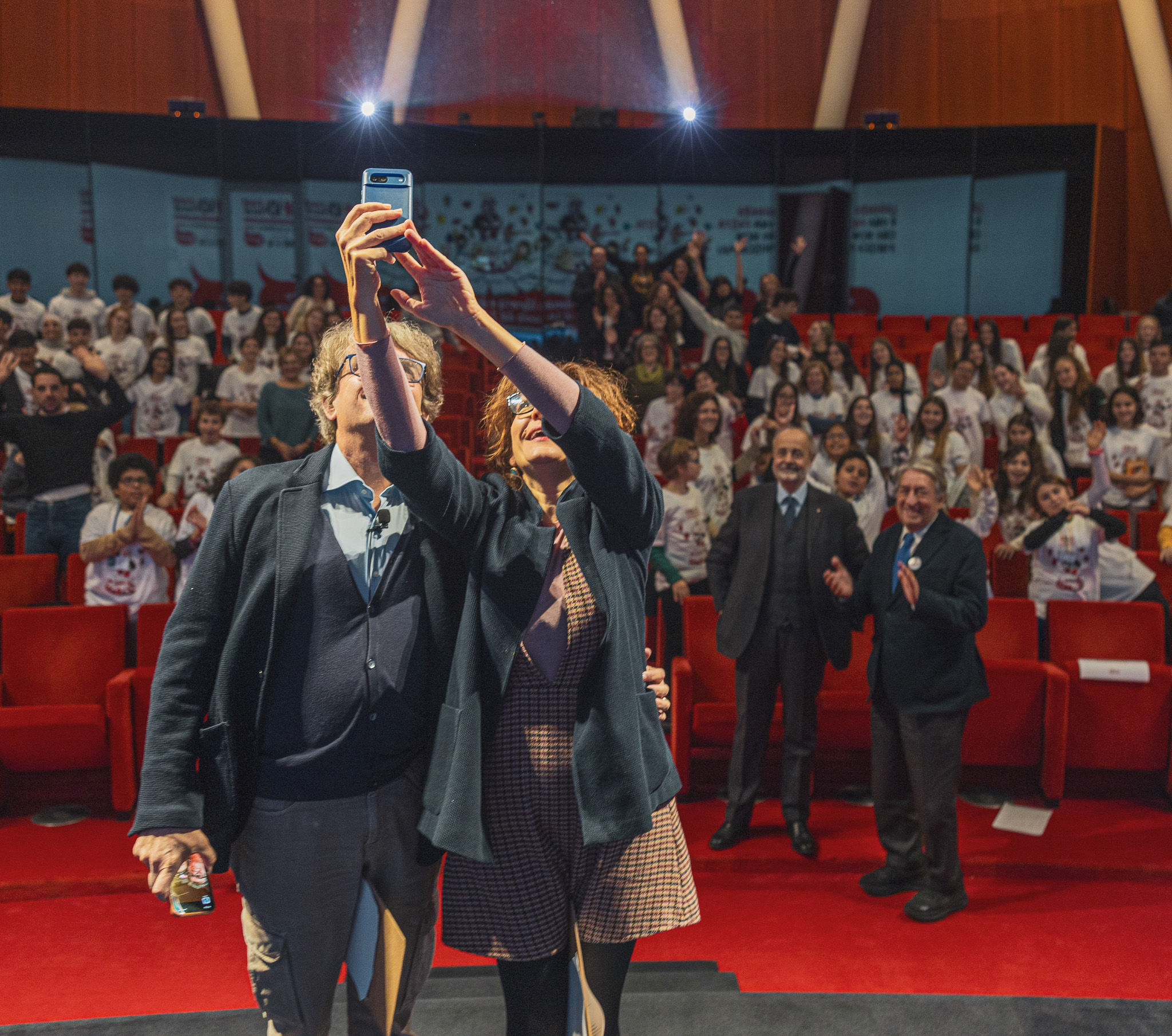
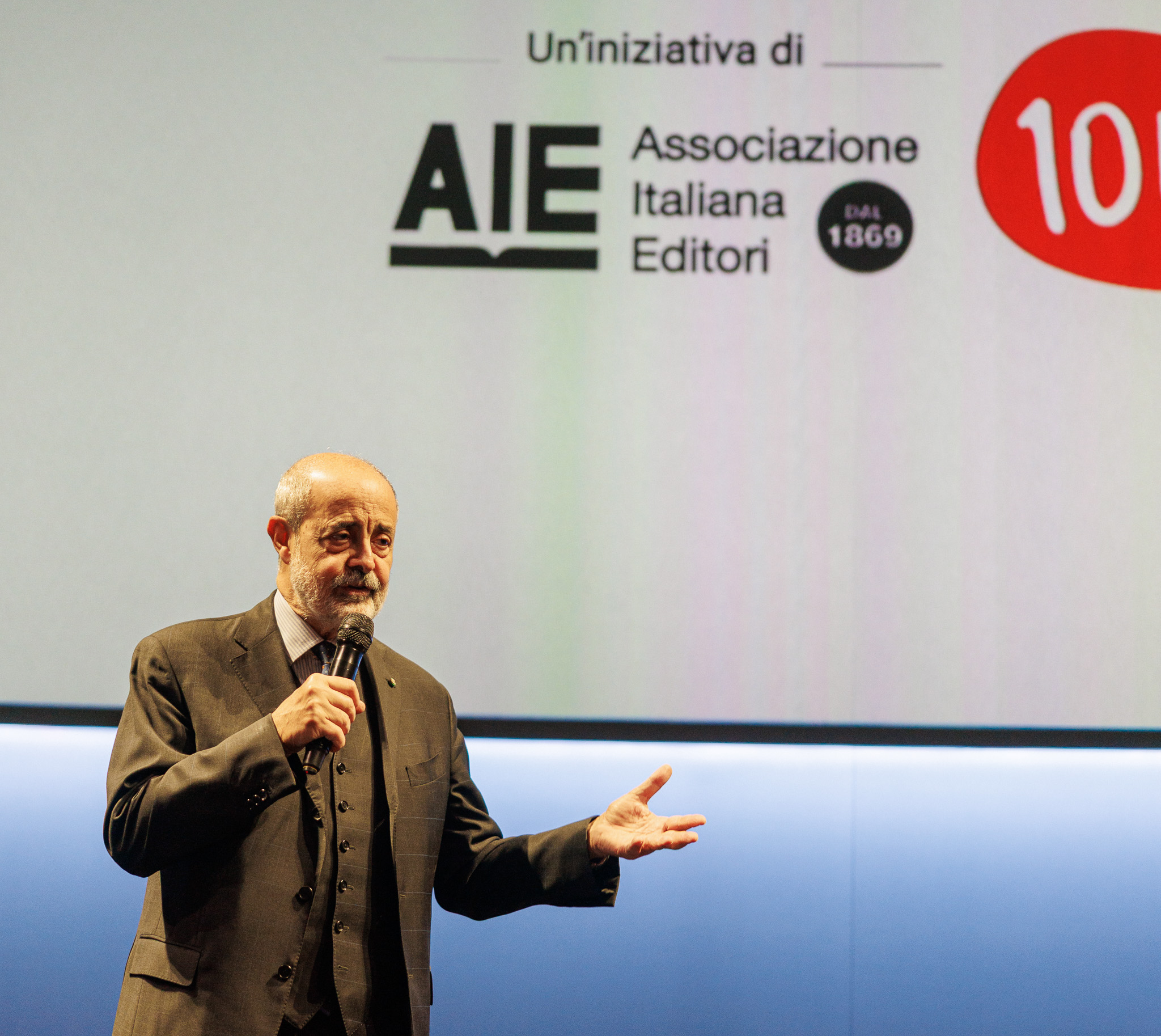
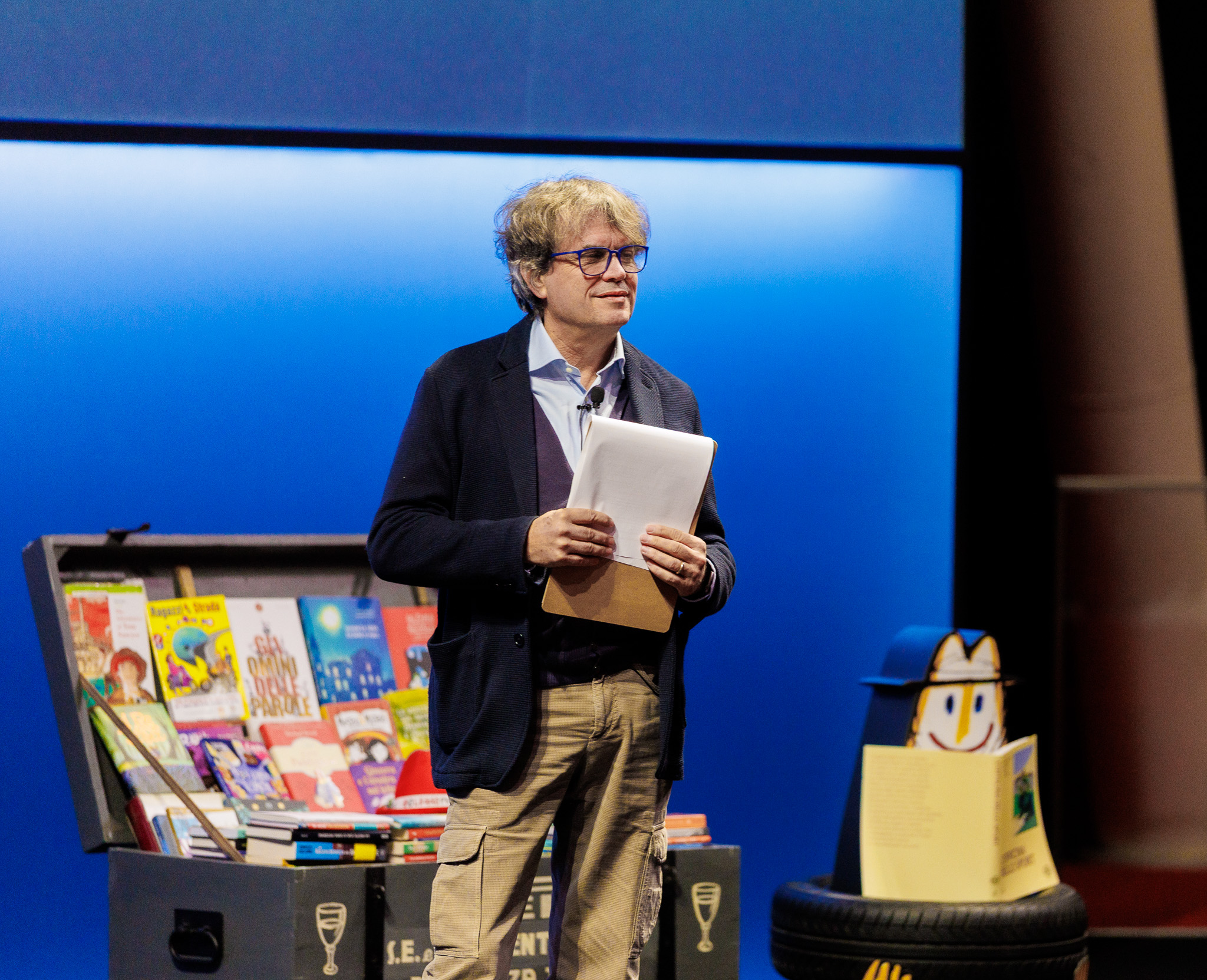
The fourth edition of the Campiello Junior award came to an end on 10 April 2025 in the Sala del Ridotto at the Teatro Comunale in Vicenza, where the names of the two winning authors were revealed.

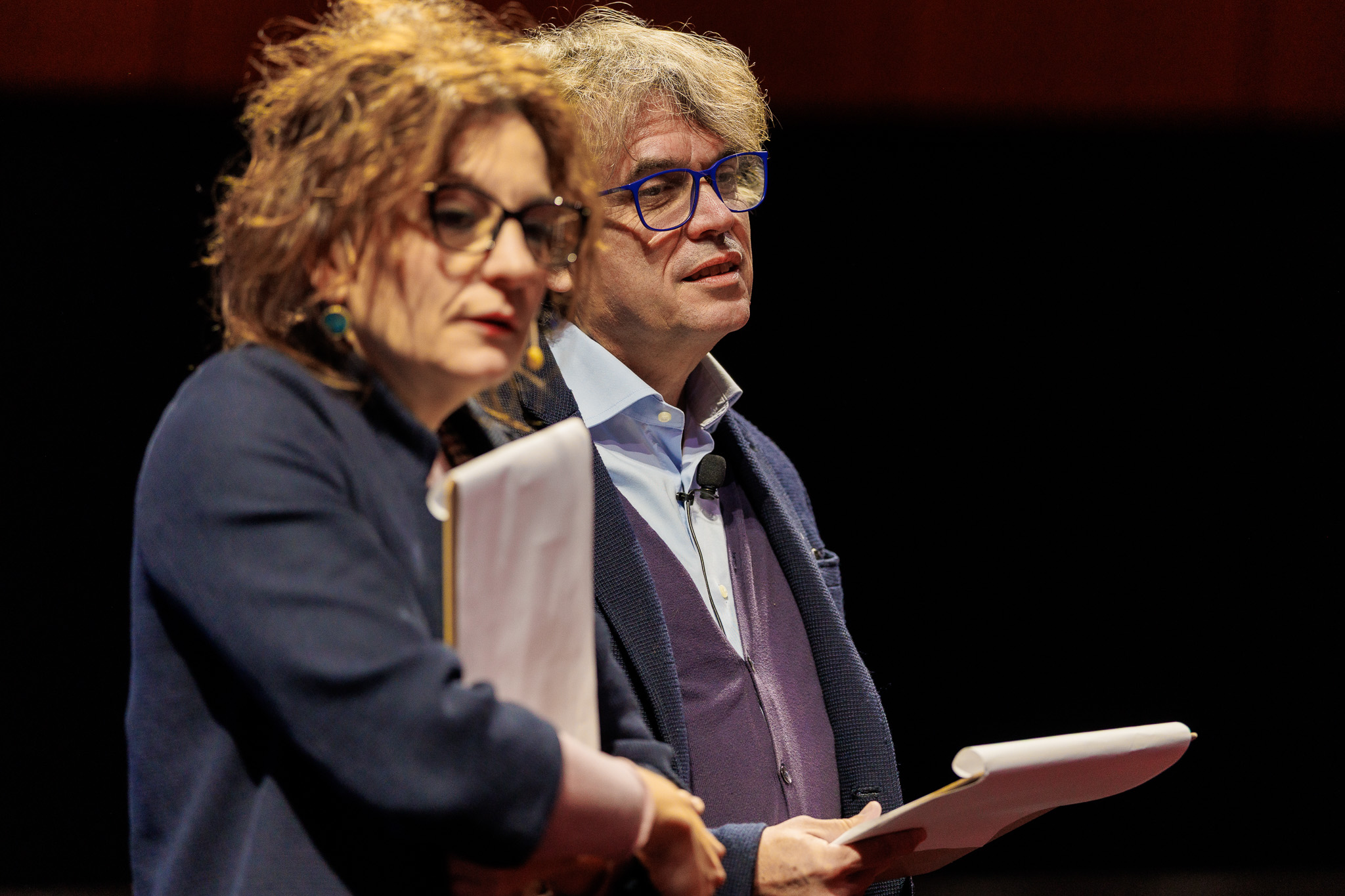
The prize-giving ceremony, streamed live on the Premio Campiello YouTube channel, was hosted by the journalist, author, and television and radio presenter Armando Traverso, together with the writer and director Davide Stefanato.

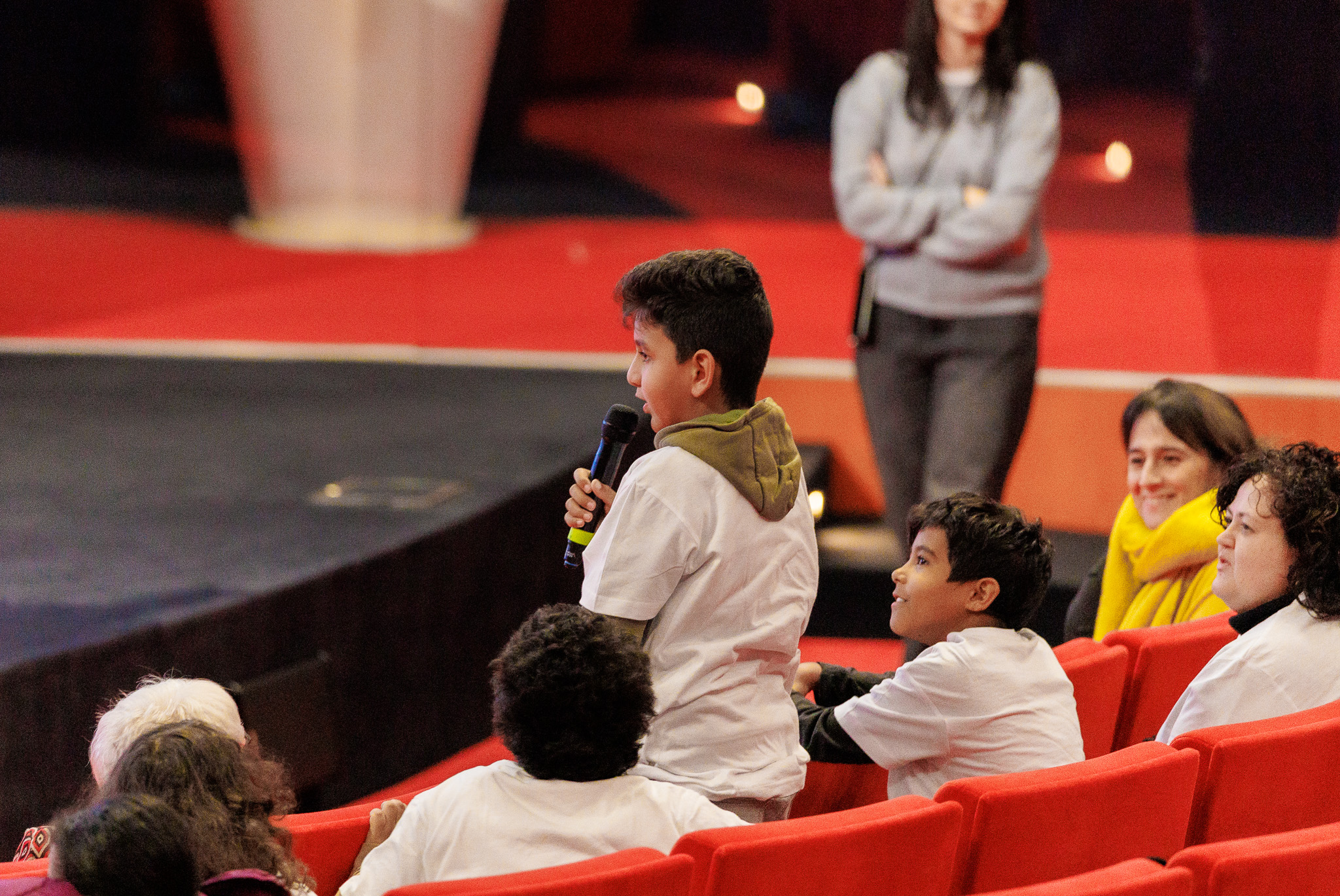
The event welcomed young people from schools across Italy, giving them the chance to meet the authors and experience the thrill of seeing the winners live. The prizes were awarded based on the votes of the Young Readers’ Jury, made up of 240 children from Italy and abroad.

The winners of the fourth edition of the Campiello Junior award are:

Ilaria Mattioni, La figlia del gigante, Feltrinelli, for the 7-10 years category

Chiara Carminati, Nella tua pelle, Bompiani, for the 11-14 years category

The speakers also included Ivan Tomasi, Education Delegate of Confindustria Vicenza; Mariacristina Gribaudi, President of the Premio Campiello Management Committee; and Antonio Calabrò, Director of the Pirelli Foundation.

Some members of the Selection Jury for the Award were also present: Pino Boero, former professor of Children’s Literature and Pedagogy of Reading, Chiara Lagani, actress and playwright; Michela Possamai, lecturer at IUSVE University in Venice and former member of the Campiello Giovani Technical Committee; Emma Beseghi, former professor of Children’s Literature at the University of Bologna; and Lea Martina Forti Grazzini, an author and screenwriter for Rai radio and TV programmes.

In addition, starting with the 2025 edition, the Turin International Book Fair, the Premio Campiello Junior and the Pirelli Foundation have launched a partnership to promote high-quality fiction for children and young adults.

On Thursday 15 May, a special meeting with the prize-winners will be held for schools in the Sala Azzurra at the Turin Fair: remember to share the date with the teachers you know! For further information, please write to junior@premiocampiello.it. The winners will be officially awarded on Saturday 13 September, during the Award Ceremony of the sixty-third edition of the Premio Campiello.

To relive the event, click here.

The fourth edition of the Campiello Junior award came to an end on 10 April 2025 in the Sala del Ridotto at the Teatro Comunale in Vicenza, where the names of the two winning authors were revealed.

The prize-giving ceremony, streamed live on the Premio Campiello YouTube channel, was hosted by the journalist, author, and television and radio presenter Armando Traverso, together with the writer and director Davide Stefanato.

The event welcomed young people from schools across Italy, giving them the chance to meet the authors and experience the thrill of seeing the winners live. The prizes were awarded based on the votes of the Young Readers’ Jury, made up of 240 children from Italy and abroad.

The winners of the fourth edition of the Campiello Junior award are:

Ilaria Mattioni, La figlia del gigante, Feltrinelli, for the 7-10 years category

Chiara Carminati, Nella tua pelle, Bompiani, for the 11-14 years category

The speakers also included Ivan Tomasi, Education Delegate of Confindustria Vicenza; Mariacristina Gribaudi, President of the Premio Campiello Management Committee; and Antonio Calabrò, Director of the Pirelli Foundation.

Some members of the Selection Jury for the Award were also present: Pino Boero, former professor of Children’s Literature and Pedagogy of Reading, Chiara Lagani, actress and playwright; Michela Possamai, lecturer at IUSVE University in Venice and former member of the Campiello Giovani Technical Committee; Emma Beseghi, former professor of Children’s Literature at the University of Bologna; and Lea Martina Forti Grazzini, an author and screenwriter for Rai radio and TV programmes.

In addition, starting with the 2025 edition, the Turin International Book Fair, the Premio Campiello Junior and the Pirelli Foundation have launched a partnership to promote high-quality fiction for children and young adults.

On Thursday 15 May, a special meeting with the prize-winners will be held for schools in the Sala Azzurra at the Turin Fair: remember to share the date with the teachers you know! For further information, please write to junior@premiocampiello.it. The winners will be officially awarded on Saturday 13 September, during the Award Ceremony of the sixty-third edition of the Premio Campiello.

To relive the event, click here.

Multimedia

Images

Formula 1 companies

A thesis discussed at the University of Padua links sports competitions to marketing and business.


Sport and business is a well-established combination in many sectors, including from the point of view of communication. A combination that suggests, among other things, a particular way of understanding the relationship between production and society. In addition, sport also conveys a certain image of productive activity. The aim of “La Formula 1 come Piattaforma di Marketing: analisi delle Partnership” (Formula 1 as a marketing platform: analysis of partnerships) is to analyse the many aspects of the relationship between sport – in particular Formula 1 – and business from a marketing perspective. This research by Erica Raiola took the form of a thesis discussed at the University of Padua.

Raiola places the collaboration between companies and Formula 1 in the context of the evolution of business communication, analysing first the more traditional tools available and then those described as “contemporary”. In the second part of the study, the field of high-level automotive competitions is explored, first with a general description and then with a series of specific cases. The empirical analysis concludes with a questionnaire designed to identify the relationships between competitions, marketing, the companies involved and the public. Erica Raiola points out that the relationship between sport and business, mediated by marketing techniques, has also changed its cultural characteristics over time.  “Over the years,” she concludes, “target audiences have developed new needs and are no longer satisfied and want not only to see a product advertised, but also to have a real experience around the purchase”. This was the birth of “experiential marketing”, which focuses on “creating something emotional around the product to retain customers and increase their engagement”. So emotion and product coming together through sport.

Erica Raiola’s research is a good example of how to deepen the links between activities and fields that are only seemingly distant.


La Formula 1 come Piattaforma di Marketing: analisi delle Partnership

Erica Raiola

University of Padua, Department of Linguistic and Literary Studies, Master’s in communication Strategies

A thesis discussed at the University of Padua links sports competitions to marketing and business.


Sport and business is a well-established combination in many sectors, including from the point of view of communication. A combination that suggests, among other things, a particular way of understanding the relationship between production and society. In addition, sport also conveys a certain image of productive activity. The aim of “La Formula 1 come Piattaforma di Marketing: analisi delle Partnership” (Formula 1 as a marketing platform: analysis of partnerships) is to analyse the many aspects of the relationship between sport – in particular Formula 1 – and business from a marketing perspective. This research by Erica Raiola took the form of a thesis discussed at the University of Padua.

Raiola places the collaboration between companies and Formula 1 in the context of the evolution of business communication, analysing first the more traditional tools available and then those described as “contemporary”. In the second part of the study, the field of high-level automotive competitions is explored, first with a general description and then with a series of specific cases. The empirical analysis concludes with a questionnaire designed to identify the relationships between competitions, marketing, the companies involved and the public. Erica Raiola points out that the relationship between sport and business, mediated by marketing techniques, has also changed its cultural characteristics over time.  “Over the years,” she concludes, “target audiences have developed new needs and are no longer satisfied and want not only to see a product advertised, but also to have a real experience around the purchase”. This was the birth of “experiential marketing”, which focuses on “creating something emotional around the product to retain customers and increase their engagement”. So emotion and product coming together through sport.

Erica Raiola’s research is a good example of how to deepen the links between activities and fields that are only seemingly distant.


La Formula 1 come Piattaforma di Marketing: analisi delle Partnership

Erica Raiola

University of Padua, Department of Linguistic and Literary Studies, Master’s in communication Strategies

Juggling financial balls

A just published book offers a compass to better understand the financial economy

Juggling the real economy and the financial economy. And managing to govern businesses with care and awareness. These are certainly among the challenges facing managers and shrewd entrepreneurs. Responsibilities that go beyond production in the strict sense, but which still need to be fulfilled. And “Eco delle Bolle. Conversazioni sulle frenesie finanziarie” (Echoes of balls. Conversations on financial frenzy), can help. This is the latest literary work by Alessandro Greppi, who, as he says in the book’s opening pages, did not intend to write a manual, but rather to create a kind of compass for recognising the signals that are often missed, learning from the successes and mistakes of the markets that live them every day.

Greppi argues that, whether we like it or not, we live and work in a world where financial speculation affects every aspect of business. “Eco delle Bolle” therefore aims to guide the reader through the market dynamics that have marked history and continue to repeat themselves. The book offers a perspective on interpreting markets, understanding the emotions that move them and seizing the opportunities that arise from crises. Because in finance especially, but in business more generally, and in every aspect of human life, emotions are as important as facts (and often more important).

Financial speculation is therefore the subject of this book, a subject that often seems incomprehensible and unpredictable and that needs to be observed and studied with particular care. To achieve this, the reader is first introduced to the financial markets, starting with their theory and history, and then moves on to emotions as an important element to take into account. It then goes on to look in more detail at what is happening in Italy and around the world, but also at specific issues such as the new financial markets and periods of chaos in them.

Greppi recalls in his conclusions: “Financial systems, generally perceived as a cold and rational realm dominated by numbers, are actually a real-time snapshot of the consequences of our choices, emotions, and vulnerabilities.”

Eco delle Bolle. Conversazioni sulle frenesie finanziarie

Alessandro Greppi

Franco Angeli, 2025

A just published book offers a compass to better understand the financial economy

Juggling the real economy and the financial economy. And managing to govern businesses with care and awareness. These are certainly among the challenges facing managers and shrewd entrepreneurs. Responsibilities that go beyond production in the strict sense, but which still need to be fulfilled. And “Eco delle Bolle. Conversazioni sulle frenesie finanziarie” (Echoes of balls. Conversations on financial frenzy), can help. This is the latest literary work by Alessandro Greppi, who, as he says in the book’s opening pages, did not intend to write a manual, but rather to create a kind of compass for recognising the signals that are often missed, learning from the successes and mistakes of the markets that live them every day.

Greppi argues that, whether we like it or not, we live and work in a world where financial speculation affects every aspect of business. “Eco delle Bolle” therefore aims to guide the reader through the market dynamics that have marked history and continue to repeat themselves. The book offers a perspective on interpreting markets, understanding the emotions that move them and seizing the opportunities that arise from crises. Because in finance especially, but in business more generally, and in every aspect of human life, emotions are as important as facts (and often more important).

Financial speculation is therefore the subject of this book, a subject that often seems incomprehensible and unpredictable and that needs to be observed and studied with particular care. To achieve this, the reader is first introduced to the financial markets, starting with their theory and history, and then moves on to emotions as an important element to take into account. It then goes on to look in more detail at what is happening in Italy and around the world, but also at specific issues such as the new financial markets and periods of chaos in them.

Greppi recalls in his conclusions: “Financial systems, generally perceived as a cold and rational realm dominated by numbers, are actually a real-time snapshot of the consequences of our choices, emotions, and vulnerabilities.”

Eco delle Bolle. Conversazioni sulle frenesie finanziarie

Alessandro Greppi

Franco Angeli, 2025

Now it is Europe’s turn to attract scientists and young people seeking better research and working conditions

“Tariffs are redrawing the map of world trade”, writes Il Sole24Ore (6 April), trying to understand not only the extent of the general shock caused by the decisions of Donald Trump’s White House and the consequences of US protectionism, but also the possible next moves of the various international players. This is true both of the necessary negotiations with the United States and of the possible new relationships between the Asian giants (China and India in particular), Europe, Mercosur, two large American nations such as Canada and Mexico, the Arab countries and the most dynamic players in the recovery of Africa. But it is difficult, treacherous and slippery terrain, amidst tensions and new players in the difficult climate of the Great World Disorder.

It is to be hoped that the wisdom of those who, like the economist Nouriel Rubini, insist that “we must negotiate with America” because “without an agreement global growth will collapse” will prevail, knowing full well that “the financial markets are afraid of a US trade war” and that, in such a tense situation, “the European Union can avoid the worst by increasing fiscal stimulus and defence spending” (La Stampa, 6 April). Some wisdom that, unfortunately unheeded, was already present in the thoughts of the Governor of the Bank of Italy, Fabio Panetta, at the Assiom Forex in Turin on 15th February: “In a context already marked by geopolitical, trade and war tensions, the US strategy of using tariff announcements as a bargaining chip to redefine economic and political relations with other regions of the world could spiral out of control, producing effects far beyond those intended, exacerbating existing disagreements and opening new rifts”. So, better to negotiate: “Negotiated solutions based on cooperation are not only a preferable alternative, but are necessary to avoid a spiral of conflict that would threaten global stability’.

In short, we need far-sighted and wide-ranging responses, away from the escalation of tariffs and counter-tariffs, threats and retaliation.

Beyond commercial action, business and academic circles are beginning to think about research and science, and thus long-term sustainable development. In summary: economic growth and better social equilibrium, especially in the era of the primacy of the “knowledge economy”, are strongly influenced by human capital, or rather the intellectual and productive capacities of people. The US has traditionally been very attractive with its large universities, which are among the best in the world, and research centres with solid financial resources. Now, however, the landscape is changing. “American academics are fleeing the country,” writes Viviana Mazza in Corriere della Sera (2 April), reporting on the cuts and reductions in federal funding for public research institutes and the most prestigious universities (Harvard, Columbia, Penn).

Journalistic tensions and disputes aside, it is worthwhile for Europe to address the question of how to make itself more attractive to the intelligence of so many young people who can now look to French and German, English and Italian, Spanish and Dutch universities and European companies. The answer is to provide robust support for training and research programmes, and for the reception of ‘brains’, including returnees. And by using both the leverage of joint programme funding (with an EU-UK agreement) and attractive policy choices for young researchers, professors and students from around the world (salaries, housing, schools and kindergartens for children, etc.). Facilitating the return of the thousands of European academics who have left. And a call to those who might want to study and work in Europe.

Such a strategy could be most appropriate for Italy, not least to try to slow down and then reverse the ‘record exodus’ of our young people abroad: 352,000, in the decade 2013-2022, in the 25-34 age group (ISTAT data on those who have moved abroad), including 132,000 graduates. The phenomenon is increasing dramatically over time:  191,000 Italians emigrated in 2024, 20% more than in the previous year. And so the picture of an Italy that is experiencing a deepening ‘demographic winter’ (only 370,000 children were born in 2024), an ageing population and the exodus of the youngest, most qualified and innovative energies. A burden on the future, not only in terms of production, but also in terms of culture and society.

What is needed is a “new pact for the future” that invests in education but also in the quality of work and life, argues Francesco Profumo, former rector of Turin Polytechnic and former president of the Compagna di San Paolo (La Stampa, 6 April). And Carlo Rosa, CEO of Diasorin, a high-tech company in the pharmaceutical sector with a strong international presence, adds: “We can get our brains back”. And already “the EU is giving an extra bonus to researchers and scientists returning from the US with the ERC (European Research Council) programmes”. We can do better, and more.

What is needed, in short, is good policy-making, with far-sighted intelligence and imagination, beyond the much-needed negotiations on tariffs. Relaunching European industry. Leveraging our productive and cultural capacities. “Go back to thinking about factories and build a European autonomy from the US in terms of digitalisation and energy decarbonisation,” argues Patrizio Bianchi, one of Italy’s leading economists (QN/ Il Resto del Carlino, 6 April). And how do we compete with the US giants? ” We have to consider what we already have, such as the research centres and technohubs in Bologna, Trieste, Ispra, Brussels and Luxembourg. Not least because with the research cuts imposed by Trump, many academics are considering leaving the US. We have to attract them, instead of feeling sorry for ourselves”. And it is in Bologna that the new Leonardo supercomputing centre can act as a high-level European technostructure for the relationship between artificial intelligence, scientific research and industrial competitiveness.

A good example of the attractiveness of high-tech industrial projects comes from Emilia Romagna, a reality characterised by a strong industrial vocation, a robust dialogue between companies and regional and local public administrations, active “pocket-sized multinationals”, a strong link with the production know-how of the territory and a social capital that has, over time, privileged the values of cooperation rather than the tensions of confrontation with competitors and adversaries. Knowing the true meaning of competition, a word that comes from the Latin cum and petere, moving together towards a common goal.

“No company can think of being competitive if it does not make the place where it is located competitive,” says Andrea Pontremoli, CEO of Dallara, one of the high-tech automotive companies in the Emilian Motor Valley, an area where other leading automotive industries are also concentrated, from Ferrari to Lamborghini and then Maserati, Pagani, Ducati, Hass Formula One, Racing Bull and Marelli HP. Ten internationally renowned manufacturing champions. With solid roots in an area historically devoted to mechanical excellence. And the wings to fly in the international universe. Driven by a strong spirit of competition between them, but also capable of working together with foresighted intelligence.  This is how the Motor University of Emilia Romagna was born, a centre of excellence that attracts talented young people from all over the world.

Pontremoli, guest speaker at the Assolombarda conference on growth strategies for the Monza and Brianza area, the manufacturing heart of Greater Milan (QN/ Il Giorno, 2 April), had this to say: “We are an ecosystem, thanks to the relationship between local businesses and the four major universities in Emilia-Romagna.  And we have designed nine master’s degrees, all in English, in sectors that we believe will be our future:  race car design, supercar design, motorbike design, supercar production, electric vehicles, self-driving vehicles. And this year we have two hundred Masters graduates. 25% of students come from outside Europe to study the car of the future by working with the world’s best brands. And the majority of graduates stay and work here: beautiful surroundings, good jobs, friendly towns and villages. And of course, you eat well”

Pontremoli goes on:  “In addition to the university, we have also invested in the ITS.  Two thousand students a year come to Fornovo from all over Italy to be trained in five skills:  3D printers, Cad, robotics, carbon fibre and CNC machines.”

And the investment? “We have invested ourselves, the ten car companies and the other fifty related companies because it is in our interest to invest and have motivated, passionate, qualified people.

Research, training, technology and quality work. In short, “competing in the world means working together in Italy to build the talent of the future.” And, indeed, knowing how to attract the best intellectual and entrepreneurial energy from the rest of the world.

(photo Getty Images)

“Tariffs are redrawing the map of world trade”, writes Il Sole24Ore (6 April), trying to understand not only the extent of the general shock caused by the decisions of Donald Trump’s White House and the consequences of US protectionism, but also the possible next moves of the various international players. This is true both of the necessary negotiations with the United States and of the possible new relationships between the Asian giants (China and India in particular), Europe, Mercosur, two large American nations such as Canada and Mexico, the Arab countries and the most dynamic players in the recovery of Africa. But it is difficult, treacherous and slippery terrain, amidst tensions and new players in the difficult climate of the Great World Disorder.

It is to be hoped that the wisdom of those who, like the economist Nouriel Rubini, insist that “we must negotiate with America” because “without an agreement global growth will collapse” will prevail, knowing full well that “the financial markets are afraid of a US trade war” and that, in such a tense situation, “the European Union can avoid the worst by increasing fiscal stimulus and defence spending” (La Stampa, 6 April). Some wisdom that, unfortunately unheeded, was already present in the thoughts of the Governor of the Bank of Italy, Fabio Panetta, at the Assiom Forex in Turin on 15th February: “In a context already marked by geopolitical, trade and war tensions, the US strategy of using tariff announcements as a bargaining chip to redefine economic and political relations with other regions of the world could spiral out of control, producing effects far beyond those intended, exacerbating existing disagreements and opening new rifts”. So, better to negotiate: “Negotiated solutions based on cooperation are not only a preferable alternative, but are necessary to avoid a spiral of conflict that would threaten global stability’.

In short, we need far-sighted and wide-ranging responses, away from the escalation of tariffs and counter-tariffs, threats and retaliation.

Beyond commercial action, business and academic circles are beginning to think about research and science, and thus long-term sustainable development. In summary: economic growth and better social equilibrium, especially in the era of the primacy of the “knowledge economy”, are strongly influenced by human capital, or rather the intellectual and productive capacities of people. The US has traditionally been very attractive with its large universities, which are among the best in the world, and research centres with solid financial resources. Now, however, the landscape is changing. “American academics are fleeing the country,” writes Viviana Mazza in Corriere della Sera (2 April), reporting on the cuts and reductions in federal funding for public research institutes and the most prestigious universities (Harvard, Columbia, Penn).

Journalistic tensions and disputes aside, it is worthwhile for Europe to address the question of how to make itself more attractive to the intelligence of so many young people who can now look to French and German, English and Italian, Spanish and Dutch universities and European companies. The answer is to provide robust support for training and research programmes, and for the reception of ‘brains’, including returnees. And by using both the leverage of joint programme funding (with an EU-UK agreement) and attractive policy choices for young researchers, professors and students from around the world (salaries, housing, schools and kindergartens for children, etc.). Facilitating the return of the thousands of European academics who have left. And a call to those who might want to study and work in Europe.

Such a strategy could be most appropriate for Italy, not least to try to slow down and then reverse the ‘record exodus’ of our young people abroad: 352,000, in the decade 2013-2022, in the 25-34 age group (ISTAT data on those who have moved abroad), including 132,000 graduates. The phenomenon is increasing dramatically over time:  191,000 Italians emigrated in 2024, 20% more than in the previous year. And so the picture of an Italy that is experiencing a deepening ‘demographic winter’ (only 370,000 children were born in 2024), an ageing population and the exodus of the youngest, most qualified and innovative energies. A burden on the future, not only in terms of production, but also in terms of culture and society.

What is needed is a “new pact for the future” that invests in education but also in the quality of work and life, argues Francesco Profumo, former rector of Turin Polytechnic and former president of the Compagna di San Paolo (La Stampa, 6 April). And Carlo Rosa, CEO of Diasorin, a high-tech company in the pharmaceutical sector with a strong international presence, adds: “We can get our brains back”. And already “the EU is giving an extra bonus to researchers and scientists returning from the US with the ERC (European Research Council) programmes”. We can do better, and more.

What is needed, in short, is good policy-making, with far-sighted intelligence and imagination, beyond the much-needed negotiations on tariffs. Relaunching European industry. Leveraging our productive and cultural capacities. “Go back to thinking about factories and build a European autonomy from the US in terms of digitalisation and energy decarbonisation,” argues Patrizio Bianchi, one of Italy’s leading economists (QN/ Il Resto del Carlino, 6 April). And how do we compete with the US giants? ” We have to consider what we already have, such as the research centres and technohubs in Bologna, Trieste, Ispra, Brussels and Luxembourg. Not least because with the research cuts imposed by Trump, many academics are considering leaving the US. We have to attract them, instead of feeling sorry for ourselves”. And it is in Bologna that the new Leonardo supercomputing centre can act as a high-level European technostructure for the relationship between artificial intelligence, scientific research and industrial competitiveness.

A good example of the attractiveness of high-tech industrial projects comes from Emilia Romagna, a reality characterised by a strong industrial vocation, a robust dialogue between companies and regional and local public administrations, active “pocket-sized multinationals”, a strong link with the production know-how of the territory and a social capital that has, over time, privileged the values of cooperation rather than the tensions of confrontation with competitors and adversaries. Knowing the true meaning of competition, a word that comes from the Latin cum and petere, moving together towards a common goal.

“No company can think of being competitive if it does not make the place where it is located competitive,” says Andrea Pontremoli, CEO of Dallara, one of the high-tech automotive companies in the Emilian Motor Valley, an area where other leading automotive industries are also concentrated, from Ferrari to Lamborghini and then Maserati, Pagani, Ducati, Hass Formula One, Racing Bull and Marelli HP. Ten internationally renowned manufacturing champions. With solid roots in an area historically devoted to mechanical excellence. And the wings to fly in the international universe. Driven by a strong spirit of competition between them, but also capable of working together with foresighted intelligence.  This is how the Motor University of Emilia Romagna was born, a centre of excellence that attracts talented young people from all over the world.

Pontremoli, guest speaker at the Assolombarda conference on growth strategies for the Monza and Brianza area, the manufacturing heart of Greater Milan (QN/ Il Giorno, 2 April), had this to say: “We are an ecosystem, thanks to the relationship between local businesses and the four major universities in Emilia-Romagna.  And we have designed nine master’s degrees, all in English, in sectors that we believe will be our future:  race car design, supercar design, motorbike design, supercar production, electric vehicles, self-driving vehicles. And this year we have two hundred Masters graduates. 25% of students come from outside Europe to study the car of the future by working with the world’s best brands. And the majority of graduates stay and work here: beautiful surroundings, good jobs, friendly towns and villages. And of course, you eat well”

Pontremoli goes on:  “In addition to the university, we have also invested in the ITS.  Two thousand students a year come to Fornovo from all over Italy to be trained in five skills:  3D printers, Cad, robotics, carbon fibre and CNC machines.”

And the investment? “We have invested ourselves, the ten car companies and the other fifty related companies because it is in our interest to invest and have motivated, passionate, qualified people.

Research, training, technology and quality work. In short, “competing in the world means working together in Italy to build the talent of the future.” And, indeed, knowing how to attract the best intellectual and entrepreneurial energy from the rest of the world.

(photo Getty Images)

Work, Products, and Communication in the Photographic Archives: The Pirelli Foundation at “Una Rete in Viaggio” 2025

On Tuesday, 8 April 2025, the Pirelli Foundation hosted the second event of Una Rete in Viaggio. Storie, idee, progetti, a programme of meetings curated by Rete Fotografia , which fosters dialogue between members and institutions in the search for new points of connection.

Centred on the theme of “Products and Communication”, the discussion featured contributions from the Pirelli Foundation, Fondazione Fiera Milano, and Fondazione 3M. The event began at 5:30 pm with a tour of the Pirelli Foundation and of the exhibition The Sports Workshop.

The evolution of photographic advertising in Pirelli’s history has witnessed the gradual creation of a distinct style that can be seen in all aspects of its corporate communication. The Foundation’s presentation, entitled Products in Photographs Now in the Pirelli Archive, from Neorealist Communication to the Advertising Industry traced the evolution of this journey from the 1940s to the 1970s. It explored the gradual consolidation of an approach that increasingly reaffirmed advertising’s role as a form of artistic expression. It ranged from Federico Patellani’s neorealist photographic advertising—with illustrated articles and behind-the-scenes sports imagery—to the metacommunicative approach of photographs on road-side hoardings, through to Aldo Ballo’s and Ugo Mulas’s still lifes and artistic reportages, as well as the imagery of trade fairs with their interactive and design-led stands. It looked at the creation of Agenzia Centro, which shifted advertising’s focus towards the consumer. A highlight was the “Long P” campaign, photographed by Adrian Hamilton, an iconic example of transmedia communication.

In other words, it adopted a behind-the-scenes perspective, like the one we have tried to give in this meeting on the product photographs in our Historical Archive and on the “Pirelli style” in communication. It showed how the collaboration between photographers and the business world led to a convergence of visions that was essential not only for showcasing a product’s features, functions, and applications but also for communicating the company’s history and values to the wider public.

On Tuesday, 8 April 2025, the Pirelli Foundation hosted the second event of Una Rete in Viaggio. Storie, idee, progetti, a programme of meetings curated by Rete Fotografia , which fosters dialogue between members and institutions in the search for new points of connection.

Centred on the theme of “Products and Communication”, the discussion featured contributions from the Pirelli Foundation, Fondazione Fiera Milano, and Fondazione 3M. The event began at 5:30 pm with a tour of the Pirelli Foundation and of the exhibition The Sports Workshop.

The evolution of photographic advertising in Pirelli’s history has witnessed the gradual creation of a distinct style that can be seen in all aspects of its corporate communication. The Foundation’s presentation, entitled Products in Photographs Now in the Pirelli Archive, from Neorealist Communication to the Advertising Industry traced the evolution of this journey from the 1940s to the 1970s. It explored the gradual consolidation of an approach that increasingly reaffirmed advertising’s role as a form of artistic expression. It ranged from Federico Patellani’s neorealist photographic advertising—with illustrated articles and behind-the-scenes sports imagery—to the metacommunicative approach of photographs on road-side hoardings, through to Aldo Ballo’s and Ugo Mulas’s still lifes and artistic reportages, as well as the imagery of trade fairs with their interactive and design-led stands. It looked at the creation of Agenzia Centro, which shifted advertising’s focus towards the consumer. A highlight was the “Long P” campaign, photographed by Adrian Hamilton, an iconic example of transmedia communication.

In other words, it adopted a behind-the-scenes perspective, like the one we have tried to give in this meeting on the product photographs in our Historical Archive and on the “Pirelli style” in communication. It showed how the collaboration between photographers and the business world led to a convergence of visions that was essential not only for showcasing a product’s features, functions, and applications but also for communicating the company’s history and values to the wider public.

Multimedia

Images