Access the Online Archive
Search the Historical Archive of the Pirelli Foundation for sources and materials. Select the type of support you are interested in and write the keywords of your research.
    Select one of the following categories
  • Documents
  • Photographs
  • Drawings and posters
  • Audio-visuals
  • Publications and magazines
  • All
Help with your research
To request to view the materials in the Historical Archive and in the libraries of the Pirelli Foundation for study and research purposes and/or to find out how to request the use of materials for loans and exhibitions, please fill in the form below. You will receive an email confirming receipt of the request and you will be contacted.
Pirelli Foundation Educational Courses

Select the education level of the school
Back
Primary schools
Pirelli Foundation Educational Courses
Please fill in your details and the staff of Pirelli Foundation Educational will contact you to arrange the dates of the course.

I declare I have read  the privacy policy, and authorise the Pirelli Foundation to process my personal data in order to send communications, also by email, about initiatives/conferences organised by the Pirelli Foundation.

Back
Lower secondary school
Pirelli Foundation Educational Courses
Please fill in your details and the staff of Pirelli Foundation Educational will contact you to arrange the dates of the course.
Back
Upper secondary school
Pirelli Foundation Educational Courses
Please fill in your details and the staff of Pirelli Foundation Educational will contact you to arrange the dates of the course.
Back
University
Pirelli Foundation Educational Courses

Do you want to organize a training programme with your students? For information and reservations, write to universita@fondazionepirelli.org

Visit the Foundation
For information about the Foundation’s activities, guided tours and accessibility,
please call +39 0264423971 or fill in the form below, providing details of your request in the notes field.

Pirelli and made in Italy in Venice: M9 – Museum of the 20th century welcomes the icons of “Identitalia”

Identitalia – The Iconic Italian Brands, the exhibition celebrating the great names of Italian industry, curated by the Ministry of Business and Made in Italy, arrives in Venice on September 26, 2025 at FONDAZIONE M9 – MUSEO DEL 900 in Venice Mestre. This new edition reprises the show originally staged in 2024 at the Palazzo Piacentini in Rome to mark the 140th anniversary of the Italian Patent and Trademark Office.

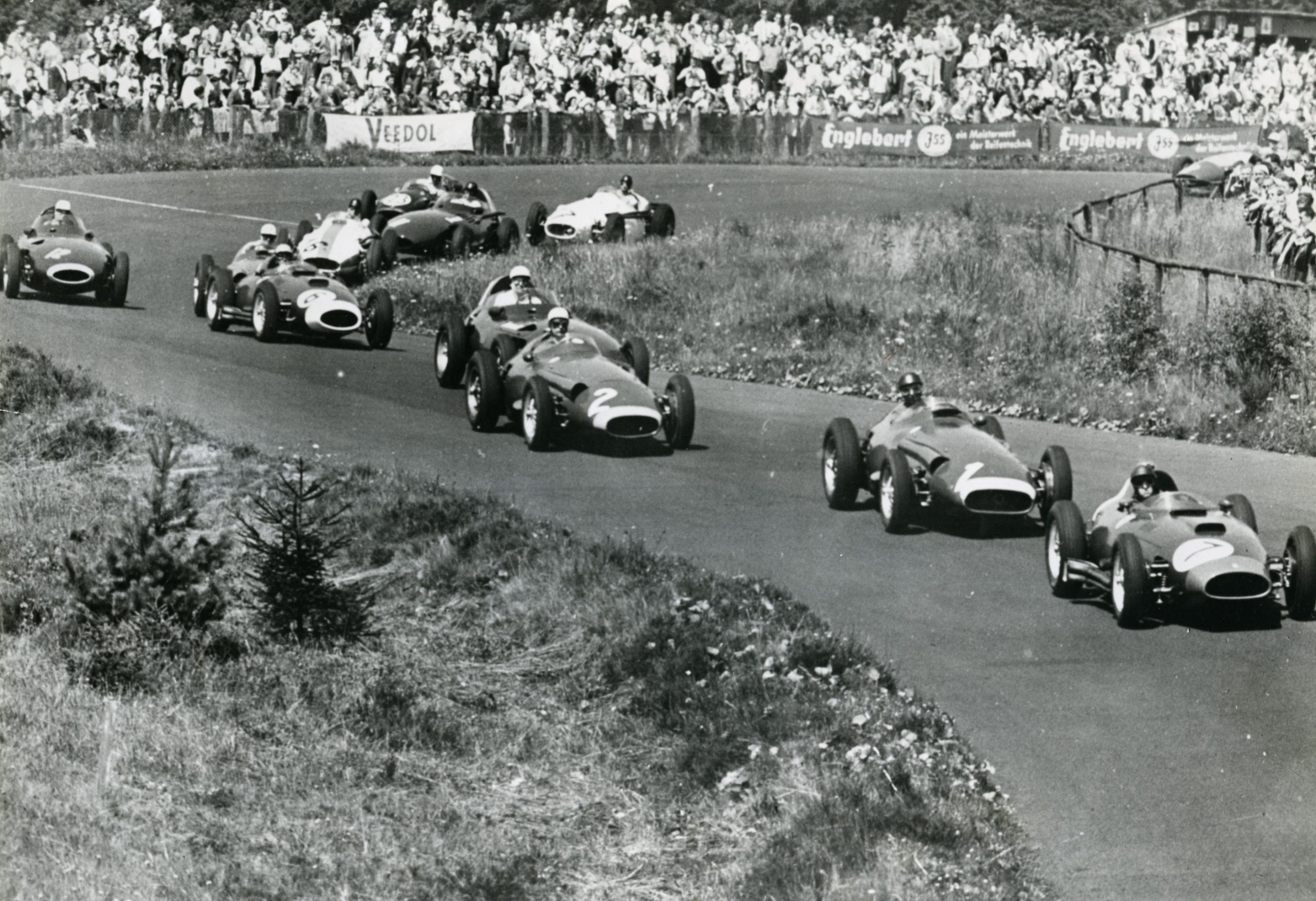
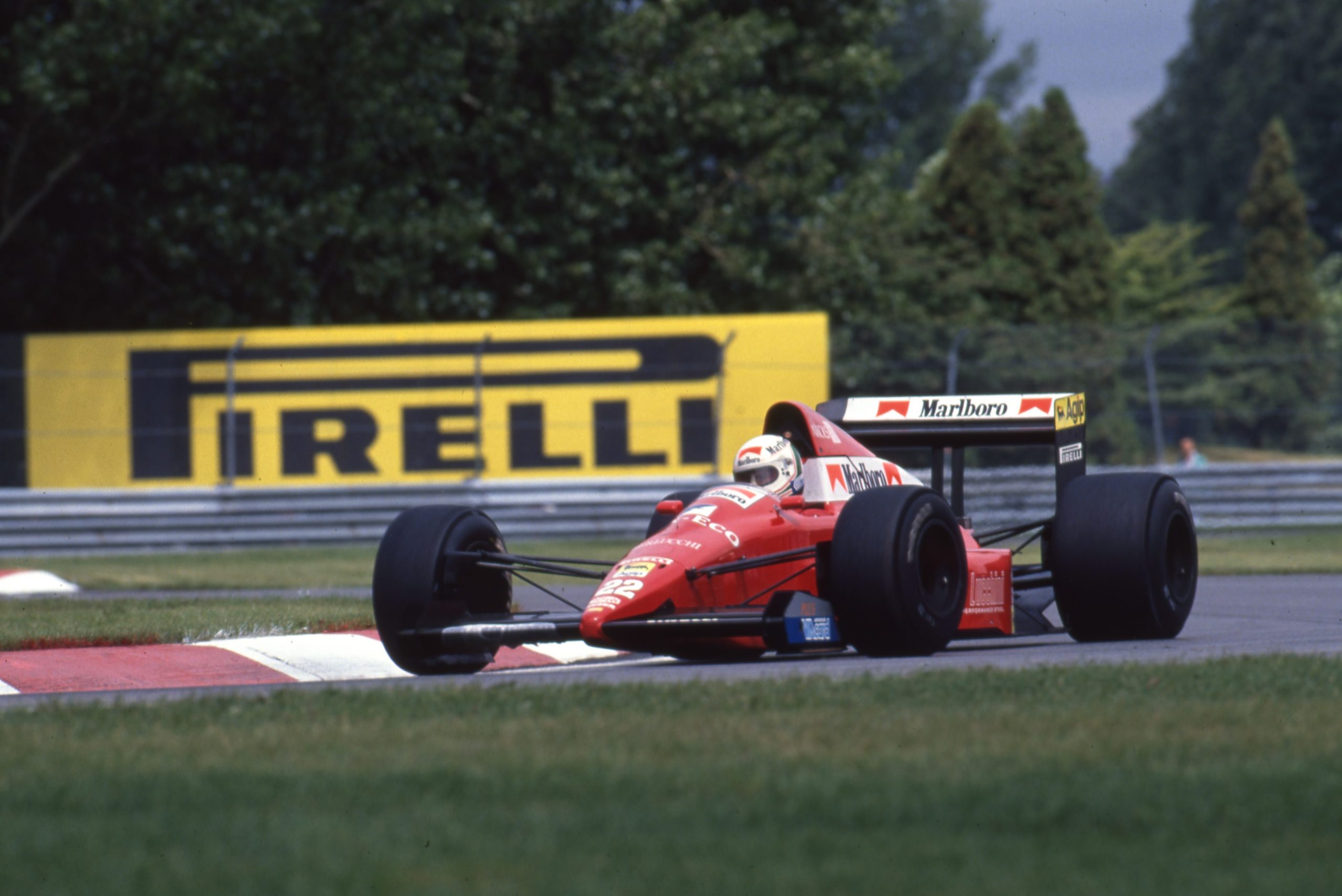
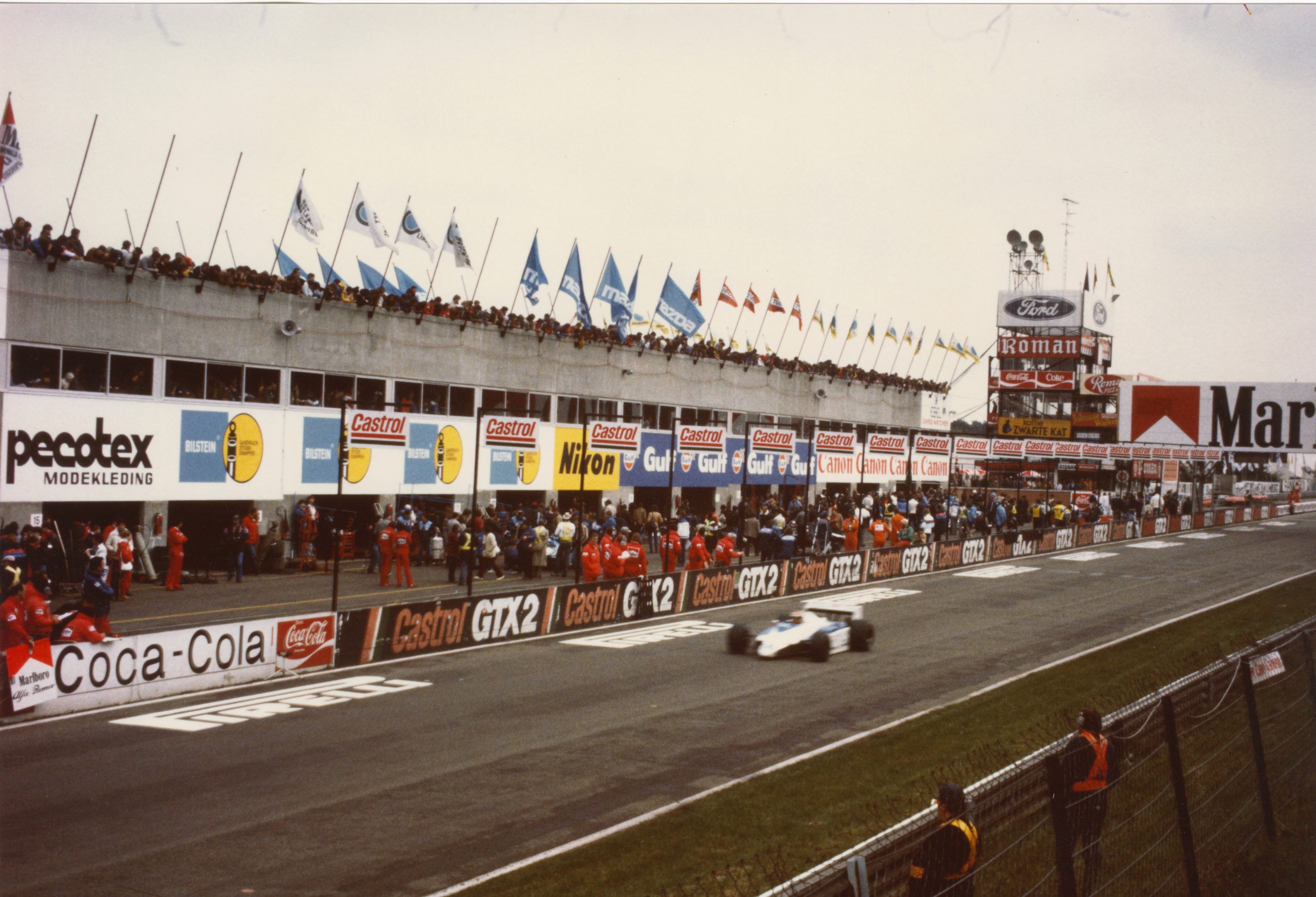
Pirelli once again plays a central role in the event, with a curated selection of documents, objects, photographs and audiovisual materials tracing the company’s history over time. From the earliest logo designs of the late nineteenth century to the instantly recognisable “Long P”; from the high-octane world of motor racing, with photographs of triumphs on both two and four wheels—from the epic Peking-Paris race to the circuits of Formula 1—by way of the company’s factories and R&D labs. The show also features the distinctive visual language of Pirelli advertising campaigns, from the Futurist visions of the 1930s to the visionary designs of the international graphic artists in the years of the economic boom. Highlights include the unforgettable 1994 image by Annie Leibovitz, portraying Carl Lewis in stiletto heels—the first Olympic icon to embody the legendary slogan “Power is Nothing without Control”.

The display also includes the 2007 Pirelli Calendar, shot by the Dutch photography duo Inez van Lamsweerde and Vinoodh Matadin, adorned on the cover by none other than Sophia Loren, a diva divine in black and white.

Through its renewed collaboration with MIMIT, the exhibition reaffirms Pirelli’s place among the great ambassadors of excellence Made in Italy. A “Long P” that started out in Milan over 150 years ago, and that is now a truly global icon.

Identitalia – The Iconic Italian Brands, the exhibition celebrating the great names of Italian industry, curated by the Ministry of Business and Made in Italy, arrives in Venice on September 26, 2025 at FONDAZIONE M9 – MUSEO DEL 900 in Venice Mestre. This new edition reprises the show originally staged in 2024 at the Palazzo Piacentini in Rome to mark the 140th anniversary of the Italian Patent and Trademark Office.

Pirelli once again plays a central role in the event, with a curated selection of documents, objects, photographs and audiovisual materials tracing the company’s history over time. From the earliest logo designs of the late nineteenth century to the instantly recognisable “Long P”; from the high-octane world of motor racing, with photographs of triumphs on both two and four wheels—from the epic Peking-Paris race to the circuits of Formula 1—by way of the company’s factories and R&D labs. The show also features the distinctive visual language of Pirelli advertising campaigns, from the Futurist visions of the 1930s to the visionary designs of the international graphic artists in the years of the economic boom. Highlights include the unforgettable 1994 image by Annie Leibovitz, portraying Carl Lewis in stiletto heels—the first Olympic icon to embody the legendary slogan “Power is Nothing without Control”.

The display also includes the 2007 Pirelli Calendar, shot by the Dutch photography duo Inez van Lamsweerde and Vinoodh Matadin, adorned on the cover by none other than Sophia Loren, a diva divine in black and white.

Through its renewed collaboration with MIMIT, the exhibition reaffirms Pirelli’s place among the great ambassadors of excellence Made in Italy. A “Long P” that started out in Milan over 150 years ago, and that is now a truly global icon.

Compassi d’Oro: the Italian international design awards confirm the country’s vocation and destiny as a great industrial nation

Italian companies are renowned for their unique blend of beautiful products, sophisticated technology, quality, functionality, innovation, and environmental and social sustainability. In this season of particularly tough and selective international competition, exacerbated by dramatic geopolitical events that destabilise the markets and American tariffs, our industrial world’s response to the crisis lies in pursuing technical excellence and strengthening the ethical and aesthetic values that inspire manufacturing — the so-called ‘beautiful and well-made’ Made in Italy.

The competitive strength of such an approach is confirmed by the list of twenty Compasso d’Oro (Golden Compass) winners and thirty-five special mention recipients, announced in early September by the jury chaired by Maite García Sanchís in the Italian Pavilion at the Osaka Expo, designed by Mario Cucinella.

This year’s theme for the award, which was created in 1954 by Gio Ponti and is promoted by the Industrial Design Association (ADI) in conjunction with the International Exhibitions, is ‘Designing the Future of Society for Our Lives’. Twelve of the twenty Compasso winners are products from Italian companies, including Pirelli, Generali Italia, Kartell, Bonotto, Fratelli Guzzini, iGuzzini, Campagnolo, Caimi Brevetti, Martinelli Luce, Vimar, Vetreria Vistosi and the Italian Institute of Technology for the INAIL Prosthetics Centre. This is indeed a sign of the excellence of Italian polytechnic culture, which combines humanistic values and scientific knowledge, and of its international competitiveness. The resilience of Italian exports, which exceed €620 billion despite the turbulence affecting global trade relations, is exemplary testimony to this. Most of the companies receiving the 35 mentions are also Italian, such as Irinox, Poliform, Archivi Olivetti, Fondazione Rovati, Mandelli 1953, Smeg, Elica, EssilorLuxottica and Venini.

What do the award-winning products tell us? Let’s take a closer look at the P Zero E tyre, which is an excellent example of ‘Design for Mobility’. It is made mostly from natural or recycled materials and is an innovative synthesis of quality, performance and sustainability.  ‘It was the first tyre to win the prestigious Compasso d’Oro award, which celebrates Pirelli’s design excellence and the innovative nature of products like the P Zero E. This confirms the important role that research and development play in driving progress and sustainability. This is partly thanks to the increasingly widespread use of advanced artificial intelligence techniques in all phases of development’, as Piero Misani, Executive Vice President and Chief Technical Officer of Pirelli, commented.

Other products that have been awarded include a bicycle wheel and a range of sustainable fabrics for luxury fashion, as well as sound-absorbing fabrics for work environments. The list also includes lighting systems and lamps, ergonomic seats, urban projectors, a digital services platform, and a modular exoskeleton. The result is an indication of Italian companies’ ability to market innovative products and services that provide original and effective solutions to living, dwelling and working needs. These solutions are tailored towards efficiency, well-being and quality, offering an alternative to mass consumerism that has a positive impact on the environment and social communities. In short, these are companies that are aligned with stakeholder values — the values and interests of the people and regions with which the industry interacts, and from which it draws its culture and social legitimacy.

Quality and sustainability are now values incorporated into the production systems and business models of ‘Italy that does Italy well’, as Symbola would put it. This involves doing business in a way that secures better positions in the highest value-added market niches and strengthens the consensus of sophisticated and demanding consumers. These values also signify an advanced corporate culture, with roots in the Italian manufacturing tradition and a vision for a future that prioritises quality of life, work and social customs.

Luciano Galimberti, president of the ADI, asserts that ‘design is experienced as a discipline that permeates our lives, transcending national borders and addressing global challenges through innovation, quality and sustainability’. Headed by Andrea Cancellato, the director of the ‘Osaka operation’, the Adi Design Museum offers an outstanding range of historical evidence. Kartell, Guzzini and Pirelli are recurring brands that exemplify a tradition of ‘design culture’ and ‘product culture’ which has stood the test of time and continues to evolve.

In her note in the Corriere della Sera on 6 September, Annachiara Sacchi wrote: ‘Solutions for a more aware humanity:  connected and responsible, attentive to the circular economy and low environmental impact projects.  We must also consider the choices that put design at the service of life, imagining it as a sort of Esperanto — a universal language that connects needs and visions.’

In short, design is a defining feature of contemporary Italy. It was one of the main tools that enabled the country to recover from the war, experience an economic boom and become a leading industrial power with a strong international market presence.  It is a continually current, design-led characteristic.

Mario Vattani, Commissioner of the Italian Pavilion in Osaka, says, ‘It is precisely this idea of Italy that we want to promote:  a nation capable of uniting culture and industry, creativity and innovation, and tradition and strategic vision.’

In other words, the Compasso d’Oro confirms and reinforces production and cultural decisions. In the wise words of Gio Ponti, ‘In Italy, art fell in love with industry, which is why industry is a cultural fact.’ It’s a strategic indication with a simple and essential name:  design.  And a qualifying adjective:  sustainable.

This is a sustainability that must be insisted upon, despite headwinds blowing even within public opinion in major industrialised countries, starting with the USA. This involves overcoming regulatory and bureaucratic rigidities, which are affecting the EU Green Deal and causing serious damage to the European industrial system. The crisis in the automotive sector is an example of this. Instead, we need to establish effective common industrial policy tools that stimulate innovation, investment and productivity, and create a better ‘knowledge economy’. Valuable insights can be found in the reports prepared by Mario Draghi and Enrico Letta on behalf of the EU Commission last year. These reports must be retrieved and swiftly transformed into tangible choices, measures and investment decisions.

‘In the face of tensions over tariffs and geopolitics, and in the face of digital and environmental challenges, Europe must find strength in unity and in the valorisation of skills and innovation,’ advises Joseph Stiglitz, Nobel Prize winner in economics (IlSole24Ore, 8 September).

Moreover, this is a terrain in which Italian companies can move with ease. As documented in the seventh Consob Report on ‘non-financial reporting’, which was presented recently and covers what are commonly known as sustainability reports, 150 companies listed on Euronext Milan published such reports in 2024. This represents 72% of listed companies and 97% of market capitalisation. According to ItaliaOggi on 8 September, this is ‘a demonstration of how Italian companies are incorporating sustainability into their governance, long-term strategies, and even their top management incentive systems’.

In short, we need to become more competitive in a more effective and sustainable way.  No less will do if we are to ensure that Italy continues to be a manufacturing country with an industrial future on which the quality and solidity of our economic, social and civil future also depend.

Courtesy of Padiglione Italia

Italian companies are renowned for their unique blend of beautiful products, sophisticated technology, quality, functionality, innovation, and environmental and social sustainability. In this season of particularly tough and selective international competition, exacerbated by dramatic geopolitical events that destabilise the markets and American tariffs, our industrial world’s response to the crisis lies in pursuing technical excellence and strengthening the ethical and aesthetic values that inspire manufacturing — the so-called ‘beautiful and well-made’ Made in Italy.

The competitive strength of such an approach is confirmed by the list of twenty Compasso d’Oro (Golden Compass) winners and thirty-five special mention recipients, announced in early September by the jury chaired by Maite García Sanchís in the Italian Pavilion at the Osaka Expo, designed by Mario Cucinella.

This year’s theme for the award, which was created in 1954 by Gio Ponti and is promoted by the Industrial Design Association (ADI) in conjunction with the International Exhibitions, is ‘Designing the Future of Society for Our Lives’. Twelve of the twenty Compasso winners are products from Italian companies, including Pirelli, Generali Italia, Kartell, Bonotto, Fratelli Guzzini, iGuzzini, Campagnolo, Caimi Brevetti, Martinelli Luce, Vimar, Vetreria Vistosi and the Italian Institute of Technology for the INAIL Prosthetics Centre. This is indeed a sign of the excellence of Italian polytechnic culture, which combines humanistic values and scientific knowledge, and of its international competitiveness. The resilience of Italian exports, which exceed €620 billion despite the turbulence affecting global trade relations, is exemplary testimony to this. Most of the companies receiving the 35 mentions are also Italian, such as Irinox, Poliform, Archivi Olivetti, Fondazione Rovati, Mandelli 1953, Smeg, Elica, EssilorLuxottica and Venini.

What do the award-winning products tell us? Let’s take a closer look at the P Zero E tyre, which is an excellent example of ‘Design for Mobility’. It is made mostly from natural or recycled materials and is an innovative synthesis of quality, performance and sustainability.  ‘It was the first tyre to win the prestigious Compasso d’Oro award, which celebrates Pirelli’s design excellence and the innovative nature of products like the P Zero E. This confirms the important role that research and development play in driving progress and sustainability. This is partly thanks to the increasingly widespread use of advanced artificial intelligence techniques in all phases of development’, as Piero Misani, Executive Vice President and Chief Technical Officer of Pirelli, commented.

Other products that have been awarded include a bicycle wheel and a range of sustainable fabrics for luxury fashion, as well as sound-absorbing fabrics for work environments. The list also includes lighting systems and lamps, ergonomic seats, urban projectors, a digital services platform, and a modular exoskeleton. The result is an indication of Italian companies’ ability to market innovative products and services that provide original and effective solutions to living, dwelling and working needs. These solutions are tailored towards efficiency, well-being and quality, offering an alternative to mass consumerism that has a positive impact on the environment and social communities. In short, these are companies that are aligned with stakeholder values — the values and interests of the people and regions with which the industry interacts, and from which it draws its culture and social legitimacy.

Quality and sustainability are now values incorporated into the production systems and business models of ‘Italy that does Italy well’, as Symbola would put it. This involves doing business in a way that secures better positions in the highest value-added market niches and strengthens the consensus of sophisticated and demanding consumers. These values also signify an advanced corporate culture, with roots in the Italian manufacturing tradition and a vision for a future that prioritises quality of life, work and social customs.

Luciano Galimberti, president of the ADI, asserts that ‘design is experienced as a discipline that permeates our lives, transcending national borders and addressing global challenges through innovation, quality and sustainability’. Headed by Andrea Cancellato, the director of the ‘Osaka operation’, the Adi Design Museum offers an outstanding range of historical evidence. Kartell, Guzzini and Pirelli are recurring brands that exemplify a tradition of ‘design culture’ and ‘product culture’ which has stood the test of time and continues to evolve.

In her note in the Corriere della Sera on 6 September, Annachiara Sacchi wrote: ‘Solutions for a more aware humanity:  connected and responsible, attentive to the circular economy and low environmental impact projects.  We must also consider the choices that put design at the service of life, imagining it as a sort of Esperanto — a universal language that connects needs and visions.’

In short, design is a defining feature of contemporary Italy. It was one of the main tools that enabled the country to recover from the war, experience an economic boom and become a leading industrial power with a strong international market presence.  It is a continually current, design-led characteristic.

Mario Vattani, Commissioner of the Italian Pavilion in Osaka, says, ‘It is precisely this idea of Italy that we want to promote:  a nation capable of uniting culture and industry, creativity and innovation, and tradition and strategic vision.’

In other words, the Compasso d’Oro confirms and reinforces production and cultural decisions. In the wise words of Gio Ponti, ‘In Italy, art fell in love with industry, which is why industry is a cultural fact.’ It’s a strategic indication with a simple and essential name:  design.  And a qualifying adjective:  sustainable.

This is a sustainability that must be insisted upon, despite headwinds blowing even within public opinion in major industrialised countries, starting with the USA. This involves overcoming regulatory and bureaucratic rigidities, which are affecting the EU Green Deal and causing serious damage to the European industrial system. The crisis in the automotive sector is an example of this. Instead, we need to establish effective common industrial policy tools that stimulate innovation, investment and productivity, and create a better ‘knowledge economy’. Valuable insights can be found in the reports prepared by Mario Draghi and Enrico Letta on behalf of the EU Commission last year. These reports must be retrieved and swiftly transformed into tangible choices, measures and investment decisions.

‘In the face of tensions over tariffs and geopolitics, and in the face of digital and environmental challenges, Europe must find strength in unity and in the valorisation of skills and innovation,’ advises Joseph Stiglitz, Nobel Prize winner in economics (IlSole24Ore, 8 September).

Moreover, this is a terrain in which Italian companies can move with ease. As documented in the seventh Consob Report on ‘non-financial reporting’, which was presented recently and covers what are commonly known as sustainability reports, 150 companies listed on Euronext Milan published such reports in 2024. This represents 72% of listed companies and 97% of market capitalisation. According to ItaliaOggi on 8 September, this is ‘a demonstration of how Italian companies are incorporating sustainability into their governance, long-term strategies, and even their top management incentive systems’.

In short, we need to become more competitive in a more effective and sustainable way.  No less will do if we are to ensure that Italy continues to be a manufacturing country with an industrial future on which the quality and solidity of our economic, social and civil future also depend.

Courtesy of Padiglione Italia

Artificial Intelligence to be understood, regulated and disseminated

A recent study provides an accurate summary of the current state of AI in Italy


Artificial intelligence is a tool that must be governed, and to do that it must first be understood.  An instrument of competitiveness and of extraordinary potential, AI could provide a significant boost to the Italian economy and its businesses.  It is with these considerations in mind that Raffaella Girone, Francesco Scalera and Eusebio De Marco (of the University of Bari) conducted their recent study, ‘AI: Possible Developments and Ethical Implications in the Global market’ published by the International Journal of Business Management and Economic Research.

Girone, Scalera and De Marco have successfully set out the key features of artificial intelligence, considering both its potential and characteristics, and the ways in which it could be integrated into the Italian economy and society.

As they demonstrate, it is a question of understanding, and then of use and rules. The research team’s conclusions are clear:  diverse and contemporary paths of dissemination are needed. Firstly, the ‘technology quotient’ of the new workforce must be accelerated by properly guiding the younger generations to raise their awareness of the impact that generative artificial intelligence will have on the world of work in the years to come. This training and awareness must also be provided to the current workforce. Thirdly, and more generally, it is necessary to spread a corporate culture focused on AI-based innovation that involves employees in decision-making processes, not just by informing them, but by engaging them in technological change.  Fourthly, the digitisation of businesses, particularly small and medium-sized ones, needs to be accelerated with government financial support.

This is a journey of stages and obstacles; therefore, the approach proposed by Girone, Scalera and De Marco in their research is one that necessarily begins and continues with a cultural change before a technological one.


AI: Possible Developments and Ethical Implications in the Global market

Raffaella Girone, Francesco Scalera and Eusebio De Marco

International Journal of Business Management and Economic Research (IJBMER), Vol 15(5),2024, 2522-2528

A recent study provides an accurate summary of the current state of AI in Italy


Artificial intelligence is a tool that must be governed, and to do that it must first be understood.  An instrument of competitiveness and of extraordinary potential, AI could provide a significant boost to the Italian economy and its businesses.  It is with these considerations in mind that Raffaella Girone, Francesco Scalera and Eusebio De Marco (of the University of Bari) conducted their recent study, ‘AI: Possible Developments and Ethical Implications in the Global market’ published by the International Journal of Business Management and Economic Research.

Girone, Scalera and De Marco have successfully set out the key features of artificial intelligence, considering both its potential and characteristics, and the ways in which it could be integrated into the Italian economy and society.

As they demonstrate, it is a question of understanding, and then of use and rules. The research team’s conclusions are clear:  diverse and contemporary paths of dissemination are needed. Firstly, the ‘technology quotient’ of the new workforce must be accelerated by properly guiding the younger generations to raise their awareness of the impact that generative artificial intelligence will have on the world of work in the years to come. This training and awareness must also be provided to the current workforce. Thirdly, and more generally, it is necessary to spread a corporate culture focused on AI-based innovation that involves employees in decision-making processes, not just by informing them, but by engaging them in technological change.  Fourthly, the digitisation of businesses, particularly small and medium-sized ones, needs to be accelerated with government financial support.

This is a journey of stages and obstacles; therefore, the approach proposed by Girone, Scalera and De Marco in their research is one that necessarily begins and continues with a cultural change before a technological one.


AI: Possible Developments and Ethical Implications in the Global market

Raffaella Girone, Francesco Scalera and Eusebio De Marco

International Journal of Business Management and Economic Research (IJBMER), Vol 15(5),2024, 2522-2528

Humanistic strategies for every business

A book on how models designed for large organisations can be applied to small companies

Big business strategy can be implemented even in small and medium-sized companies. It can be done, and it is worth the effort to try.  It is a question of changing organisational paradigms, which can reap rewards.   This is the premise of the recently published book

‘Manuale di corporate strategy. Strategia umanistica:

la via italiana’ (A handbook on corporate strategy. Humanistic strategies:  the Italian way) by Valerio Malvezzi, which proposes a systematic analysis of well-known business strategy models widely adopted by large companies, with the aim of adapting them for use by Italian micro and small enterprises.  The underlying assumption is that these models can be successfully adapted for use in smaller businesses, offering practical tools for growth, differentiation and sustainability in the long term.

Malvezzi’s interesting hypothesis is explored step by step by presenting organisational models created for large companies and adapting them to the particular features of micro and small enterprises. After this initial section, the author delves into the areas of application of each model, finally analysing a real business case.

The results demonstrate that the application of strategic tools originally designed for large organisations can also offer real potential for development in smaller businesses, provided limited resources and necessary process customisation are considered. Of course, Valerio Malvezzi’s theses must be verified for each business individually, but they contain the human element that sets each enterprise apart and can make a real difference.

Manuale di corporate strategy. Strategia umanistica: la via italiana

Valerio Malvezzi

Eurilink University Press, 2025

A book on how models designed for large organisations can be applied to small companies

Big business strategy can be implemented even in small and medium-sized companies. It can be done, and it is worth the effort to try.  It is a question of changing organisational paradigms, which can reap rewards.   This is the premise of the recently published book

‘Manuale di corporate strategy. Strategia umanistica:

la via italiana’ (A handbook on corporate strategy. Humanistic strategies:  the Italian way) by Valerio Malvezzi, which proposes a systematic analysis of well-known business strategy models widely adopted by large companies, with the aim of adapting them for use by Italian micro and small enterprises.  The underlying assumption is that these models can be successfully adapted for use in smaller businesses, offering practical tools for growth, differentiation and sustainability in the long term.

Malvezzi’s interesting hypothesis is explored step by step by presenting organisational models created for large companies and adapting them to the particular features of micro and small enterprises. After this initial section, the author delves into the areas of application of each model, finally analysing a real business case.

The results demonstrate that the application of strategic tools originally designed for large organisations can also offer real potential for development in smaller businesses, provided limited resources and necessary process customisation are considered. Of course, Valerio Malvezzi’s theses must be verified for each business individually, but they contain the human element that sets each enterprise apart and can make a real difference.

Manuale di corporate strategy. Strategia umanistica: la via italiana

Valerio Malvezzi

Eurilink University Press, 2025

Premio Campiello 2025: The Winner of the Sixty-Third Edition

The winner of the sixty-third edition of the Premio Campiello was announced on Saturday, 13 September, at the Teatro La Fenice in Venice. The event was hosted by Giorgia Cardinaletti with the participation of Luca Barbarossa and broadcast live on RAI 5.

The book chosen from among the five finalists by the Jury of Three Hundred Readers was Di spalle a questo mondo by Wanda Marasco, published by Neri Pozza. On the stage of La Fenice, the author received the “vera da pozzo,” the emblem of the Prize, a reproduction of the typical Venetian well or “campiello” that gives the award its name.

The Pirelli Foundation has spoken with the five finalists. To find out more about the winning book, you can watch the interview with the author on this page.

During the ceremony, Antonio Calabrò, the director of the Pirelli Foundation, together with Raffaele Boscaini, the president of the Fondazione Il Campiello, presented the prizes to the winners of the fourth edition of Campiello Junior, whose name were first announced in Vicenza last April: Ilaria Mattioni, with her novel La figlia del gigante (Feltrinelli), in the 7–10 age category, and Chiara Carminati, with her Nella tua pelle (Bompiani), in the 11–14 age category.

To find out more about the Campiello Junior winners, you can watch the Pirelli Foundation interviews on this page.

For all the latest on upcoming Campiello Junior events, you can follow us on this site and on the Foundation’s social media channels.

The winner of the sixty-third edition of the Premio Campiello was announced on Saturday, 13 September, at the Teatro La Fenice in Venice. The event was hosted by Giorgia Cardinaletti with the participation of Luca Barbarossa and broadcast live on RAI 5.

The book chosen from among the five finalists by the Jury of Three Hundred Readers was Di spalle a questo mondo by Wanda Marasco, published by Neri Pozza. On the stage of La Fenice, the author received the “vera da pozzo,” the emblem of the Prize, a reproduction of the typical Venetian well or “campiello” that gives the award its name.

The Pirelli Foundation has spoken with the five finalists. To find out more about the winning book, you can watch the interview with the author on this page.

During the ceremony, Antonio Calabrò, the director of the Pirelli Foundation, together with Raffaele Boscaini, the president of the Fondazione Il Campiello, presented the prizes to the winners of the fourth edition of Campiello Junior, whose name were first announced in Vicenza last April: Ilaria Mattioni, with her novel La figlia del gigante (Feltrinelli), in the 7–10 age category, and Chiara Carminati, with her Nella tua pelle (Bompiani), in the 11–14 age category.

To find out more about the Campiello Junior winners, you can watch the Pirelli Foundation interviews on this page.

For all the latest on upcoming Campiello Junior events, you can follow us on this site and on the Foundation’s social media channels.

Research and enterprise, how to get it right

A study by the Bank of Italy highlights the positive relationships and the challenges that need to be overcome in order to promote innovation in Italy

Innovation and business growth. But what kind of innovation? And which enterprises? And, above all, by which route? These are important questions that require careful consideration and do not have clear-cut answers. In fact, the answers change depending on the regions and social and economic systems involved. Monica Andini, Fabio Bertolotti, Luca Citino, Francesco D’Amuri, Andrea Linarello and Giulia Mattei of the Bank of Italy worked to try and answer these questions. The results of the efforts of this study group are summarised in the research paper ‘Ricerca, innovazione e trasferimento tecnologico in Italia’ (Research, Innovation and Technology Transfer in Italy), which was published a few weeks ago in the Questioni di Economia e Finanza (Occasional Papers) series.

As explained in the first few pages, the work provides a systematic overview of the entire innovation chain in Italy, paying particular attention to the relationship between public research and the innovative capacity of the production system. The analysis is structured around three main themes:  academic research in STEM subjects (science, technology, engineering and mathematics); patenting by private companies, universities and public research organisations (ERPs); and technology transfer initiatives. These areas are, of course, intertwined and are analysed to provide a reasoned summary of the state of the art and outline the strengths and weaknesses of each area, with the aim of strengthening the country’s innovative capacity. It is emphasised that this is a significant capacity which could grow in terms of dissemination and results by working more on relationships and effective technology transfer from research centres to companies.

This is certainly a question of organisation and resources, as well as a vision of the importance of consolidating the production and relationship culture that can enrich an area’s production system.

Ricerca, innovazione e trasferimento tecnologico in Italia

(The recent dynamics of productivity and the transformations of the production system)

Monica Andini, Fabio Bertolotti, Luca Citino, Francesco D’Amuri, Andrea Linarello,  Giulia Mattei

Bank of Italy, Questioni di Economia e Finanza (Occasional Papers), no. 954 – July 2025

A study by the Bank of Italy highlights the positive relationships and the challenges that need to be overcome in order to promote innovation in Italy

Innovation and business growth. But what kind of innovation? And which enterprises? And, above all, by which route? These are important questions that require careful consideration and do not have clear-cut answers. In fact, the answers change depending on the regions and social and economic systems involved. Monica Andini, Fabio Bertolotti, Luca Citino, Francesco D’Amuri, Andrea Linarello and Giulia Mattei of the Bank of Italy worked to try and answer these questions. The results of the efforts of this study group are summarised in the research paper ‘Ricerca, innovazione e trasferimento tecnologico in Italia’ (Research, Innovation and Technology Transfer in Italy), which was published a few weeks ago in the Questioni di Economia e Finanza (Occasional Papers) series.

As explained in the first few pages, the work provides a systematic overview of the entire innovation chain in Italy, paying particular attention to the relationship between public research and the innovative capacity of the production system. The analysis is structured around three main themes:  academic research in STEM subjects (science, technology, engineering and mathematics); patenting by private companies, universities and public research organisations (ERPs); and technology transfer initiatives. These areas are, of course, intertwined and are analysed to provide a reasoned summary of the state of the art and outline the strengths and weaknesses of each area, with the aim of strengthening the country’s innovative capacity. It is emphasised that this is a significant capacity which could grow in terms of dissemination and results by working more on relationships and effective technology transfer from research centres to companies.

This is certainly a question of organisation and resources, as well as a vision of the importance of consolidating the production and relationship culture that can enrich an area’s production system.

Ricerca, innovazione e trasferimento tecnologico in Italia

(The recent dynamics of productivity and the transformations of the production system)

Monica Andini, Fabio Bertolotti, Luca Citino, Francesco D’Amuri, Andrea Linarello,  Giulia Mattei

Bank of Italy, Questioni di Economia e Finanza (Occasional Papers), no. 954 – July 2025

Working together, it can be done

Two books tackle a crucial topic for businesses from different points of view

Working together to grow together. This applies to all organisations, but is of particular importance for companies. And especially today. However, working together effectively is difficult to achieve  and is the result of a journey that needs to be undertaken,  possibly with some help from manuals and guides. Here are two complementary books that can help. They both start from the premise  that organisations really work when people can contribute, decide and create together.

‘Leadership collegiale. Per organizzazioni agili, dinamiche, performanti’ (Collegial leadership. For agile, dynamic, high-performance organisations) written by Monica Margoni, focuses on the reality that companies face, which requires the ability to adapt to change, attract new talent and experiment with new ways of understanding leadership. It is a question of decision-making processes, which have to be fast, and organisational structures, which have to be flexible and provide room for the assumption of responsibility. Much depends on the ability of the ‘leaders’ to create the right conditions. The book therefore presents different methods of leadership not as personal competencies, but as functions that can be exercised by anyone within an organisation. It is an evolutionary path that today’s managers can take with their employees, because responding to complexity requires more than the intelligence of a few.

Working together is key. This is also the premise of ‘Facilitation for growth. Come ottenere risultati straordinari dai gruppi (How to get extraordinary results from groups) by Giancarlo Manzoni and Marco Ossani. The book considers organisations as human groups and teams that can only function if everyone is moving in the same direction.  This is why ‘facilitation’ is considered a fundamental tool for all companies. The book illustrates the techniques of this discipline, which make it possible to improve collaboration in groups. However, they also serve another purpose:  to generate ideas, achieve consensus, and give the experience shared meaning. Full of practical case studies, this is a book to read and apply.

Leadership collegiale. Per organizzazioni agili, dinamiche, performanti

Monica Margoni

Guerini NEXT, 2025

Facilitation for growth. Come ottenere risultati straordinari dai gruppi

Giancarlo Manzoni, Marco Ossani

Guerini NEXT, 2025

Two books tackle a crucial topic for businesses from different points of view

Working together to grow together. This applies to all organisations, but is of particular importance for companies. And especially today. However, working together effectively is difficult to achieve  and is the result of a journey that needs to be undertaken,  possibly with some help from manuals and guides. Here are two complementary books that can help. They both start from the premise  that organisations really work when people can contribute, decide and create together.

‘Leadership collegiale. Per organizzazioni agili, dinamiche, performanti’ (Collegial leadership. For agile, dynamic, high-performance organisations) written by Monica Margoni, focuses on the reality that companies face, which requires the ability to adapt to change, attract new talent and experiment with new ways of understanding leadership. It is a question of decision-making processes, which have to be fast, and organisational structures, which have to be flexible and provide room for the assumption of responsibility. Much depends on the ability of the ‘leaders’ to create the right conditions. The book therefore presents different methods of leadership not as personal competencies, but as functions that can be exercised by anyone within an organisation. It is an evolutionary path that today’s managers can take with their employees, because responding to complexity requires more than the intelligence of a few.

Working together is key. This is also the premise of ‘Facilitation for growth. Come ottenere risultati straordinari dai gruppi (How to get extraordinary results from groups) by Giancarlo Manzoni and Marco Ossani. The book considers organisations as human groups and teams that can only function if everyone is moving in the same direction.  This is why ‘facilitation’ is considered a fundamental tool for all companies. The book illustrates the techniques of this discipline, which make it possible to improve collaboration in groups. However, they also serve another purpose:  to generate ideas, achieve consensus, and give the experience shared meaning. Full of practical case studies, this is a book to read and apply.

Leadership collegiale. Per organizzazioni agili, dinamiche, performanti

Monica Margoni

Guerini NEXT, 2025

Facilitation for growth. Come ottenere risultati straordinari dai gruppi

Giancarlo Manzoni, Marco Ossani

Guerini NEXT, 2025

‘Words that give life’: teacher, kindness, respect, balance and integrity

There are words that give life. In his poem, Paul Éluard — one of the most intense French poets of the 20th century — listed them as follows: ‘The word warmth the word trust/ love justice and the word freedom/ the word child and the word kindness/ the word courage/ and the word discover/ the word brother and the word comrade…’. ‘Innocent words,’ he called them, also to recall ‘certain country names of villages and certain names of women and of friends.’ Like Gabriel Péri, a hero of the Resistance, to whom the poem was dedicated.

We can try to continue this list today as a kind of antidote to the difficult times we are living through. A time of violence, vulgarity, narcissism and politics ‘full of nightmares and short on dreams’ (Il Foglio, 6 September), of lies and deceit, which makes it increasingly difficult to write stories that reflect humanity.

Let’s list the word teacher, for example. And the word integrity. The word work, the word respect and the word balance. The word thanks and the word sorry. The word others. And, after Eluard, we could reimagine the word justice and the word kindness.

The reference examples in our discussion are taken from newspaper articles. This shows that reading well-written and edited newspapers provides news, insights and cultural references that offer hope, despite the insults and contempt directed at journalists by serial haters on social media and high-profile politicians. One could say Minima Moralia, a deference to, and a respectful nod to, much more illustrious precedents, without any pretension of comparison.

A person is defined by the adventures they have had, the happiness and pain they have experienced, the books they have read, the people they have loved, their friends and their teachers.

Let’s take a moment to reflect on the word ‘teacher’ (without, however, inappropriately attributing it to too many people). One of the tools we use is the new book by Massimo Recalcati, published ten years after the captivating The Hour of Lesson:  it is The Light and the Wave, published by Einaudi, with the essential subtitle  What does it mean to teach? The word for teacher in Italian is maestro and comes from the Latin magis, which means ‘more’. More knowledge to acquire, more questions to ask, more answers to seek, more points of view to consider. This is not nihilistic relativism. Rather, it is an attitude that transmits knowledge as a critical ability and a habit of viewing the world through ‘the eyes of others’.

In his book, Recalcati discusses 20th-century teachers such as Jacques Lacan, Gilles Deleuze, and Pier Paolo Pasolini. And each of us could write our own additional list. Among ‘the just who are saving the world’, Jorge Luis Borges counts ‘a man who cultivates his garden as Voltaire wanted’ and ‘those who discover an etymology with pleasure’. Someone attentive to Sicilian culture, and thus to the world, would point to Pirandello, Vittorini, Sciascia and Camilleri, the latter of whom is the subject of much discussion this year, marking the centenary of his birth. In Milan, it is worth rereading Manzoni and Testori, as well as Gadda. And remembering the irony of Alberto Arbasino, as discussed by Edmondo Berselli:  ‘In Italy, there is a magical moment when one transitions from the category of beautiful promise to that of being the usual jerk. Only a few lucky ones are then granted the age to access the dignity of being a revered teacher’.

Few lucky and capable ones, indeed. Giuliano Ferrara is absolutely right in his reflection on the excessive number of pages dedicated to memories and praise for recently deceased illustrious figures and celebrities:  ‘Exaggerating tires even the memory’ (Il Foglio, 6 September). Beauty, style, and elegance (here are other words to emphasise) are the result of a sober and sophisticated sense of measure.

Teachers in the heights of the great culture. And teachers are fundamental in life and in daily school.

My paternal grandmother Lucia was a teacher who taught hundreds of children to read and do arithmetic in Caronia, a Norman village on the Tyrrhenian coast of Sicily, at the turn of the twentieth century. Over time, I discovered that many had fond memories of her.  She taught them how to learn,  how to understand words and numbers, and how to understand the world.  She helped them  to become people,  as teachers do today and will do again tomorrow. Recalcati asserts: ‘it is only through contagion with the teacher’s desire that the student’s desire is produced,  and that the teacher’s task is to ignite the desire to know.’

There is another key word that is linked to the teacher, thinking about the lives of others  and that is respect. Once again, Sergio Mattarella, the President of the Republic, emphasised that  ‘only in a world founded on respect can progress be achieved’. In a message to the European House Ambrosetti Forum in Cernobbio (Corriere della Sera, 7 September), he urged Europe to ‘rebuild the centrality of international law’ and ‘not yield to autocratic regimes’, also criticising ‘the overwhelming weight of global corporations’, particularly Big Tech. ‘They are the new East India Companies.’ , Human respect, against the arrogant technocracies. Respect for rules and values. Respect for a better economic and social balance.

And here is another essential word: balance. What does it mean to seek new dimensions of compatibility between economic growth and social justice, productivity and sustainability, and competitiveness and solidarity? According to the principles of a ‘reformist enterprise’, this can be a driving force for a new and better era of development, not just growth. Economic and civil progress should be measured not only by GDP (gross domestic product, or the wealth created), but also by BES (fair and sustainable well-being), an authoritative indicator developed by Istat years ago. It should also be measured by the HDI (human development index, introduced by the UN in the 1990s to measure well-being and quality of life). This index considers not only income, but also health and education. The Knowledge Economic Index was developed by the World Bank Institute to assess a country’s position in the global knowledge economy. This is because the dissemination of knowledge, and thus critical thinking, is closely linked to freedom, responsibility and the quality of development.

A fundamental theory to consider  is that developed by Martha Nussbaum on the idea of the Capability Approach, which evaluates well-being and quality of life in terms of the real opportunities a person has to live a life they desire and consider worthy of living. And here is another ‘word that gives life’:  dignity.

All this, to focus on just one of many examples, means taking responsibility on the part of politics and the ruling classes in general for responding to the 1.4 million young people aged 15 to 24 who are ‘NEET’ (not in education, employment or training). This represents a significant amount of ‘wasted human capital’ (Chiara Saraceno, La Stampa, 6 September), which indicates dramatic personal and social distress and creates unacceptable imbalances in the country’s structure. This is the exact opposite of the inclusivity on which a solid democracy is based,  as well as of personal and social dignity.

Laura Linda Sabbadini is therefore right to argue in her new book The Country That Matters (Marsilio) that we must reason based on data and facts, not factoids, post-truth and convenient statistics. Measuring inequalities also contributes to saving democracy.

Regarding balance, it might be worth providing another small but significant example on the relationship between life and work. It is worth noting that one of Milan’s most famous trattorias, Trippa in Porta Romana, has decided to close on Saturdays and Sundays. It is so successful that one has to wait months for a reservation thanks to the good food. ‘Less money, but happier  and a better life,’ says Pietro Caroli, the founder, alongside chef Diego Rossi (Corriere della Sera, 4 September). In frantic, glittering Milan, prioritising quality of life and work over making money is indicative of a minority trend that must be embraced and valued.

Another word that can be linked to the idea of a fair and sustainable economy is probity. Marco Tronchetti Provera, the CEO of Pirelli, used it to commemorate Leopoldo Pirelli on the centenary of his birth:  ‘An entrepreneur, one of the most visionary of his generation.  A decent man, as one would have said in the past; sensitive to social and cultural issues, and endowed with a great sense of responsibility towards the company he led and the country’s institutions’ (Corriere della Sera, 25 August).  ‘An Enlightenment thinker in business;  it is ethics that support the mission of an entrepreneur’.

In the difficult and competitive world of the market economy, values and passions are  all the more important. In this period of innovation, work and profitability, it is all the more important to be able to speak  of a better future.

The ethics of doing and of doing things well have been discussed recently in relation to Giorgio Armani, a prominent figure in the worlds of fashion and culture who has just passed away. This links the moral dimension to an idea that goes beyond fashion and encompasses the deepest sense of elegance as a style of work and life  that includes moderation,  good taste and  kindness. Here we are again with words ‘that give life’.

These are indeed challenging words, all of which we are reflecting on.  Last utopias, as some might say. And rightly so. Yet, in times of swift and heavy change, it is necessary to insist on the fertile words of good feelings and behaviours. This conviction is strengthened by the comfort of classic, wise and severe pages. Take Lewis Mumford, for example, who invites us to distinguish ‘the utopia of escape’ (fantasy, building castles in the air) from the ‘utopia of reconstruction’ (trying to make the world a little better — a topic we have already discussed on this blog).

Or those with which Italo Calvino concludes Invisible Cities, inviting us to ‘seek and recognise, who and what, amidst hell, is not hell, and make it last, and give it space’.

Therefore, it is worth continuing the list of ‘words that give life’, Eluard’s ‘innocent words’. Each of us in our own way.

Emilio Isgrò, Libro cancellato, 1964, Museo del Novecento, Milan 

Getty Images

There are words that give life. In his poem, Paul Éluard — one of the most intense French poets of the 20th century — listed them as follows: ‘The word warmth the word trust/ love justice and the word freedom/ the word child and the word kindness/ the word courage/ and the word discover/ the word brother and the word comrade…’. ‘Innocent words,’ he called them, also to recall ‘certain country names of villages and certain names of women and of friends.’ Like Gabriel Péri, a hero of the Resistance, to whom the poem was dedicated.

We can try to continue this list today as a kind of antidote to the difficult times we are living through. A time of violence, vulgarity, narcissism and politics ‘full of nightmares and short on dreams’ (Il Foglio, 6 September), of lies and deceit, which makes it increasingly difficult to write stories that reflect humanity.

Let’s list the word teacher, for example. And the word integrity. The word work, the word respect and the word balance. The word thanks and the word sorry. The word others. And, after Eluard, we could reimagine the word justice and the word kindness.

The reference examples in our discussion are taken from newspaper articles. This shows that reading well-written and edited newspapers provides news, insights and cultural references that offer hope, despite the insults and contempt directed at journalists by serial haters on social media and high-profile politicians. One could say Minima Moralia, a deference to, and a respectful nod to, much more illustrious precedents, without any pretension of comparison.

A person is defined by the adventures they have had, the happiness and pain they have experienced, the books they have read, the people they have loved, their friends and their teachers.

Let’s take a moment to reflect on the word ‘teacher’ (without, however, inappropriately attributing it to too many people). One of the tools we use is the new book by Massimo Recalcati, published ten years after the captivating The Hour of Lesson:  it is The Light and the Wave, published by Einaudi, with the essential subtitle  What does it mean to teach? The word for teacher in Italian is maestro and comes from the Latin magis, which means ‘more’. More knowledge to acquire, more questions to ask, more answers to seek, more points of view to consider. This is not nihilistic relativism. Rather, it is an attitude that transmits knowledge as a critical ability and a habit of viewing the world through ‘the eyes of others’.

In his book, Recalcati discusses 20th-century teachers such as Jacques Lacan, Gilles Deleuze, and Pier Paolo Pasolini. And each of us could write our own additional list. Among ‘the just who are saving the world’, Jorge Luis Borges counts ‘a man who cultivates his garden as Voltaire wanted’ and ‘those who discover an etymology with pleasure’. Someone attentive to Sicilian culture, and thus to the world, would point to Pirandello, Vittorini, Sciascia and Camilleri, the latter of whom is the subject of much discussion this year, marking the centenary of his birth. In Milan, it is worth rereading Manzoni and Testori, as well as Gadda. And remembering the irony of Alberto Arbasino, as discussed by Edmondo Berselli:  ‘In Italy, there is a magical moment when one transitions from the category of beautiful promise to that of being the usual jerk. Only a few lucky ones are then granted the age to access the dignity of being a revered teacher’.

Few lucky and capable ones, indeed. Giuliano Ferrara is absolutely right in his reflection on the excessive number of pages dedicated to memories and praise for recently deceased illustrious figures and celebrities:  ‘Exaggerating tires even the memory’ (Il Foglio, 6 September). Beauty, style, and elegance (here are other words to emphasise) are the result of a sober and sophisticated sense of measure.

Teachers in the heights of the great culture. And teachers are fundamental in life and in daily school.

My paternal grandmother Lucia was a teacher who taught hundreds of children to read and do arithmetic in Caronia, a Norman village on the Tyrrhenian coast of Sicily, at the turn of the twentieth century. Over time, I discovered that many had fond memories of her.  She taught them how to learn,  how to understand words and numbers, and how to understand the world.  She helped them  to become people,  as teachers do today and will do again tomorrow. Recalcati asserts: ‘it is only through contagion with the teacher’s desire that the student’s desire is produced,  and that the teacher’s task is to ignite the desire to know.’

There is another key word that is linked to the teacher, thinking about the lives of others  and that is respect. Once again, Sergio Mattarella, the President of the Republic, emphasised that  ‘only in a world founded on respect can progress be achieved’. In a message to the European House Ambrosetti Forum in Cernobbio (Corriere della Sera, 7 September), he urged Europe to ‘rebuild the centrality of international law’ and ‘not yield to autocratic regimes’, also criticising ‘the overwhelming weight of global corporations’, particularly Big Tech. ‘They are the new East India Companies.’ , Human respect, against the arrogant technocracies. Respect for rules and values. Respect for a better economic and social balance.

And here is another essential word: balance. What does it mean to seek new dimensions of compatibility between economic growth and social justice, productivity and sustainability, and competitiveness and solidarity? According to the principles of a ‘reformist enterprise’, this can be a driving force for a new and better era of development, not just growth. Economic and civil progress should be measured not only by GDP (gross domestic product, or the wealth created), but also by BES (fair and sustainable well-being), an authoritative indicator developed by Istat years ago. It should also be measured by the HDI (human development index, introduced by the UN in the 1990s to measure well-being and quality of life). This index considers not only income, but also health and education. The Knowledge Economic Index was developed by the World Bank Institute to assess a country’s position in the global knowledge economy. This is because the dissemination of knowledge, and thus critical thinking, is closely linked to freedom, responsibility and the quality of development.

A fundamental theory to consider  is that developed by Martha Nussbaum on the idea of the Capability Approach, which evaluates well-being and quality of life in terms of the real opportunities a person has to live a life they desire and consider worthy of living. And here is another ‘word that gives life’:  dignity.

All this, to focus on just one of many examples, means taking responsibility on the part of politics and the ruling classes in general for responding to the 1.4 million young people aged 15 to 24 who are ‘NEET’ (not in education, employment or training). This represents a significant amount of ‘wasted human capital’ (Chiara Saraceno, La Stampa, 6 September), which indicates dramatic personal and social distress and creates unacceptable imbalances in the country’s structure. This is the exact opposite of the inclusivity on which a solid democracy is based,  as well as of personal and social dignity.

Laura Linda Sabbadini is therefore right to argue in her new book The Country That Matters (Marsilio) that we must reason based on data and facts, not factoids, post-truth and convenient statistics. Measuring inequalities also contributes to saving democracy.

Regarding balance, it might be worth providing another small but significant example on the relationship between life and work. It is worth noting that one of Milan’s most famous trattorias, Trippa in Porta Romana, has decided to close on Saturdays and Sundays. It is so successful that one has to wait months for a reservation thanks to the good food. ‘Less money, but happier  and a better life,’ says Pietro Caroli, the founder, alongside chef Diego Rossi (Corriere della Sera, 4 September). In frantic, glittering Milan, prioritising quality of life and work over making money is indicative of a minority trend that must be embraced and valued.

Another word that can be linked to the idea of a fair and sustainable economy is probity. Marco Tronchetti Provera, the CEO of Pirelli, used it to commemorate Leopoldo Pirelli on the centenary of his birth:  ‘An entrepreneur, one of the most visionary of his generation.  A decent man, as one would have said in the past; sensitive to social and cultural issues, and endowed with a great sense of responsibility towards the company he led and the country’s institutions’ (Corriere della Sera, 25 August).  ‘An Enlightenment thinker in business;  it is ethics that support the mission of an entrepreneur’.

In the difficult and competitive world of the market economy, values and passions are  all the more important. In this period of innovation, work and profitability, it is all the more important to be able to speak  of a better future.

The ethics of doing and of doing things well have been discussed recently in relation to Giorgio Armani, a prominent figure in the worlds of fashion and culture who has just passed away. This links the moral dimension to an idea that goes beyond fashion and encompasses the deepest sense of elegance as a style of work and life  that includes moderation,  good taste and  kindness. Here we are again with words ‘that give life’.

These are indeed challenging words, all of which we are reflecting on.  Last utopias, as some might say. And rightly so. Yet, in times of swift and heavy change, it is necessary to insist on the fertile words of good feelings and behaviours. This conviction is strengthened by the comfort of classic, wise and severe pages. Take Lewis Mumford, for example, who invites us to distinguish ‘the utopia of escape’ (fantasy, building castles in the air) from the ‘utopia of reconstruction’ (trying to make the world a little better — a topic we have already discussed on this blog).

Or those with which Italo Calvino concludes Invisible Cities, inviting us to ‘seek and recognise, who and what, amidst hell, is not hell, and make it last, and give it space’.

Therefore, it is worth continuing the list of ‘words that give life’, Eluard’s ‘innocent words’. Each of us in our own way.

Emilio Isgrò, Libro cancellato, 1964, Museo del Novecento, Milan 

Getty Images

The growth of the Italian economy, a question of enterprise culture

A Bank of Italy study shows that companies are expanding, but at an uneven rate


Contrary to the predictions of the pessimists, the Italian economy has grown, according to data and analysis from the Bank of Italy in a recently published research paper. This is due to productivity and ‘industrial intelligence’, but these do not hide the problems that need to be addressed, which are rooted in the need to spread a business culture that is still often for the few.

‘Le recenti dinamiche della produttività e le trasformazioni del sistema produttivo’ (The recent dynamics of productivity and the transformations of the production system) is a research paper published in the Occasional Papers series ‘Questioni di Economia e Finanza’, conducted by a large group of economists at the Central Institute. The paper takes its cue from an observation: ‘Between 2019 and 2024, the GDP growth rate was 5.6 per cent, despite the shocks related to the pandemic, energy crisis and geopolitical tensions. This was slightly higher than the previous five-year period (5.1 per cent) and higher than that of the euro area (4.8 per cent). The expansion of activity levels was most pronounced in the private sector, with growth in value added reaching almost 10 per cent. The increase has benefited significantly from generous fiscal policies, but has lost momentum in the last two years.’ This expansion primarily impacted construction and services, while manufacturing slowed, and employment grew, though productivity weakened and declined over the past two years.  These are the core facts that the Bank of Italy’s team of economists sought to examine in depth.

One of the survey’s conclusions was that the average size of companies had increased, as had their profitability and propensity to invest.  This demonstrates that a large proportion of Italian entrepreneurs tried to respond to difficulties by reallocating resources, investing, and trying to increase production efficiency. However, the problem that has emerged is no small one:  the gap between the best companies and the rest of the productive sector has increased, meaning that while the Italian economy has grown, it has done so unevenly, leaving many companies behind.

What can we do, then? The research explains: ‘In order to close the productivity gap with the main European countries and in light of recent signs of weakening, it will be crucial to promote a wider adoption of advanced technologies and strengthen the productive fabric more widely.’  In short, this means speeding up the spread of the improved corporate culture that has driven only a fraction of companies to innovate. This is not a small challenge, but it is one that must be addressed.

Le recenti dinamiche della produttività e le trasformazioni del sistema produttivo

Antonio Accetturo, Audinga Baltrunaite, Emanuele Ciani, Federico Cingano, Federica Daniele, Roberta De Luca, Irene Di Marzio, Rosalia Greco, Andrea Linarello, Francesco Manaresi and Sauro Mocetti

Bank of Italy, Questioni di Economia e Finanza (Occasional Papers), no. 953 – July 2025

A Bank of Italy study shows that companies are expanding, but at an uneven rate


Contrary to the predictions of the pessimists, the Italian economy has grown, according to data and analysis from the Bank of Italy in a recently published research paper. This is due to productivity and ‘industrial intelligence’, but these do not hide the problems that need to be addressed, which are rooted in the need to spread a business culture that is still often for the few.

‘Le recenti dinamiche della produttività e le trasformazioni del sistema produttivo’ (The recent dynamics of productivity and the transformations of the production system) is a research paper published in the Occasional Papers series ‘Questioni di Economia e Finanza’, conducted by a large group of economists at the Central Institute. The paper takes its cue from an observation: ‘Between 2019 and 2024, the GDP growth rate was 5.6 per cent, despite the shocks related to the pandemic, energy crisis and geopolitical tensions. This was slightly higher than the previous five-year period (5.1 per cent) and higher than that of the euro area (4.8 per cent). The expansion of activity levels was most pronounced in the private sector, with growth in value added reaching almost 10 per cent. The increase has benefited significantly from generous fiscal policies, but has lost momentum in the last two years.’ This expansion primarily impacted construction and services, while manufacturing slowed, and employment grew, though productivity weakened and declined over the past two years.  These are the core facts that the Bank of Italy’s team of economists sought to examine in depth.

One of the survey’s conclusions was that the average size of companies had increased, as had their profitability and propensity to invest.  This demonstrates that a large proportion of Italian entrepreneurs tried to respond to difficulties by reallocating resources, investing, and trying to increase production efficiency. However, the problem that has emerged is no small one:  the gap between the best companies and the rest of the productive sector has increased, meaning that while the Italian economy has grown, it has done so unevenly, leaving many companies behind.

What can we do, then? The research explains: ‘In order to close the productivity gap with the main European countries and in light of recent signs of weakening, it will be crucial to promote a wider adoption of advanced technologies and strengthen the productive fabric more widely.’  In short, this means speeding up the spread of the improved corporate culture that has driven only a fraction of companies to innovate. This is not a small challenge, but it is one that must be addressed.

Le recenti dinamiche della produttività e le trasformazioni del sistema produttivo

Antonio Accetturo, Audinga Baltrunaite, Emanuele Ciani, Federico Cingano, Federica Daniele, Roberta De Luca, Irene Di Marzio, Rosalia Greco, Andrea Linarello, Francesco Manaresi and Sauro Mocetti

Bank of Italy, Questioni di Economia e Finanza (Occasional Papers), no. 953 – July 2025

Finding yourself at the helm of a business

Ten CEO stories tell ten life stories

CEOs, yes, but first and foremost human beings, with all their dreams but also their problems, their aspirations and their anxieties. People who often find themselves unexpectedly running businesses and succeeding at it, driven by their innate sense of self. This is what Marco Rosetti, an entrepreneur with a background in industrial psychology, shares in ten interviews in his book ‘CEO per caso’ (CEO by accident), with a subtitle that speaks for itself: ‘Vite, imprese, probabilità’ (Lives, businesses, chances).

Rosetti explores territory that is rarely touched upon in the world of management:  the role of chance, the unexpected, and vulnerability in the lives and careers of company leaders. As mentioned, he achieves this through a collection of ten authentic and face to face interviews with the CEOs of well-known companies such as Geox, Artsana and Omnicom Media Group Italy, who share their experiences of discontinuity, uncertainty and disorientation that led them to where they are today. So these are not stories of machines programmed for efficiency, but true stories of real people’s lives, which are all enlightening for those who read them.

They are about human beings grappling with the adventures of doing business.

However, all this comes with a warning: the book doesn’t aim to teach you how to become a CEO. Instead, it explores the value of intuition, adaptability, and imperfection in an age that celebrates control and planning. What’s more, the author considers how the digital economy legitimises what the traditional economy has always rejected. Success is not always the result of a linear trajectory or rational choices; sometimes, on the contrary, it stems from setbacks, coincidences and mistakes.

In the ten stories contained in the book, readers won’t find any acts of arrogance or presumption, but they will find ambition and willpower. Empathy is also evident, in the way people are involved in the projects, and loneliness during those final moments of decision-making (companies, however attentive to nuances and differences, ultimately require clear decisions). These are all attitudes, characteristics and ways of being that stem from an awareness of inevitable mistakes, limitations and frailties. Something we can all relate to during difficult times.

Marco Rosetti’s book is well worth reading.  It helps to raise awareness of the fact that the lives of true entrepreneurs encompass much more than just efficiency and profit. They have a responsibility to act as social and cultural agents of change, driving progress and improvement in the world in which we live.

CEO per caso. Vite, imprese, probabilità

Marco Rosetti

Guerini Next, 2025

Ten CEO stories tell ten life stories

CEOs, yes, but first and foremost human beings, with all their dreams but also their problems, their aspirations and their anxieties. People who often find themselves unexpectedly running businesses and succeeding at it, driven by their innate sense of self. This is what Marco Rosetti, an entrepreneur with a background in industrial psychology, shares in ten interviews in his book ‘CEO per caso’ (CEO by accident), with a subtitle that speaks for itself: ‘Vite, imprese, probabilità’ (Lives, businesses, chances).

Rosetti explores territory that is rarely touched upon in the world of management:  the role of chance, the unexpected, and vulnerability in the lives and careers of company leaders. As mentioned, he achieves this through a collection of ten authentic and face to face interviews with the CEOs of well-known companies such as Geox, Artsana and Omnicom Media Group Italy, who share their experiences of discontinuity, uncertainty and disorientation that led them to where they are today. So these are not stories of machines programmed for efficiency, but true stories of real people’s lives, which are all enlightening for those who read them.

They are about human beings grappling with the adventures of doing business.

However, all this comes with a warning: the book doesn’t aim to teach you how to become a CEO. Instead, it explores the value of intuition, adaptability, and imperfection in an age that celebrates control and planning. What’s more, the author considers how the digital economy legitimises what the traditional economy has always rejected. Success is not always the result of a linear trajectory or rational choices; sometimes, on the contrary, it stems from setbacks, coincidences and mistakes.

In the ten stories contained in the book, readers won’t find any acts of arrogance or presumption, but they will find ambition and willpower. Empathy is also evident, in the way people are involved in the projects, and loneliness during those final moments of decision-making (companies, however attentive to nuances and differences, ultimately require clear decisions). These are all attitudes, characteristics and ways of being that stem from an awareness of inevitable mistakes, limitations and frailties. Something we can all relate to during difficult times.

Marco Rosetti’s book is well worth reading.  It helps to raise awareness of the fact that the lives of true entrepreneurs encompass much more than just efficiency and profit. They have a responsibility to act as social and cultural agents of change, driving progress and improvement in the world in which we live.

CEO per caso. Vite, imprese, probabilità

Marco Rosetti

Guerini Next, 2025