Access the Online Archive
Search the Historical Archive of the Pirelli Foundation for sources and materials. Select the type of support you are interested in and write the keywords of your research.
    Select one of the following categories
  • Documents
  • Photographs
  • Drawings and posters
  • Audio-visuals
  • Publications and magazines
  • All
Help with your research
To request to view the materials in the Historical Archive and in the libraries of the Pirelli Foundation for study and research purposes and/or to find out how to request the use of materials for loans and exhibitions, please fill in the form below. You will receive an email confirming receipt of the request and you will be contacted.
Pirelli Foundation Educational Courses

Select the education level of the school
Back
Primary schools
Pirelli Foundation Educational Courses
Please fill in your details and the staff of Pirelli Foundation Educational will contact you to arrange the dates of the course.

I declare I have read  the privacy policy, and authorise the Pirelli Foundation to process my personal data in order to send communications, also by email, about initiatives/conferences organised by the Pirelli Foundation.

Back
Lower secondary school
Pirelli Foundation Educational Courses
Please fill in your details and the staff of Pirelli Foundation Educational will contact you to arrange the dates of the course.
Back
Upper secondary school
Pirelli Foundation Educational Courses
Please fill in your details and the staff of Pirelli Foundation Educational will contact you to arrange the dates of the course.
Back
University
Pirelli Foundation Educational Courses

Do you want to organize a training programme with your students? For information and reservations, write to universita@fondazionepirelli.org

Visit the Foundation
For information about the Foundation’s activities, guided tours and accessibility,
please call +39 0264423971 or fill in the form below, providing details of your request in the notes field.

Companies as communities of people – the true value of competitiveness

In such a difficult and controversial period, it’s worth taking the time to reflect about the value of words, their deepest meaning, their etymology, and try to rescue public debate from rhetorical nonsense, the excesses of propaganda and venomous fake news. All that chit-chat about “merit” – whether emphasising it in education is a “right” or “left” move, and how and how much we should connect it with “equality” – reveal, amongst other things, a breakdown in ideas and values that doesn’t help us understand what should be accomplished in order to set the wheels of economic and social development back in motion in this uncertain and lost country, and rebuild a Republican spirit, civil values and a sense of community.

Words, then. Let’s take one of the most talked about: competitiveness. Nomina sunt consequentia rerum (Words are consequences of things), warned those wise ancient Romans, and indeed, looking at the roots of words to gain a better understanding is a useful activity. The term ‘competitiveness’ derives, for instance, from cum and petere.

Cum meaning ‘together’, just as in ‘common’, ‘communion’, ‘community’ (the latter from cum and munus, ‘gift’) but also ‘constitution’ (cum and statuere, i.e. establish together, write together the rules for a common life).

Petere meaning ‘to make for’, ‘to seek’, ‘to ask’, to ‘beseech’.

That is, moving together towards a common objective.

In the most recent sense, as used in contemporary economic language, competitiveness is selective, it distinguishes winners from losers, it’s exclusive. However, looking at its etymology, its deeper meaning is inclusive, rich in values connected to notions of community. In order to bridge the gap between its origins and its current usage (‘collaboration’ v. ‘competition’), someone has coined, in economic writing, the expression ‘competitive collaboration’. Better than nothing.

These thoughts about competitiveness and ‘skills’ such as cum and petere can also be found among the wise, wholesome pages of a book recently published by Garzanti, Si vince solo insieme (Only together we can win), a conversation between Claudia Parzani and Sandro Catani, with a very inspiring subheading: Undici parole per scoprire il valore della diversità e immaginare il futuro (Eleven words to discover the value of diversity and imagine the future).

Parzani is a corporate lawyer, senior partner of international legal firm Linklaters and Chair of the Italian Stock Exchange and Allianz Italia. Catani is an advisor for large companies, with extensive experience in human resources management. In this clear-headed and ironic conversation, they discuss sustainable, environmental and social development, limits and opportunities of new digital technologies, an economy inspired by stakeholder values rather than shareholder values (stock profits and prices), geopolitical challenges in an unbalanced yet global and interconnected world, smart-working and work-life balance, civic rights and duties, power and responsibility, fragility and the search for happiness. Considerations about companies, where the inclusion of women, as well as listening skills, emotional intelligence and new concepts of social innovations, brings extraordinary value, as well as debates centred on community, Italy, the social and cultural reforms and political choices required to kick-start a social elevator that’s been broken for too long and rebuild a fairer and more balanced economic development.

Reading Parzani and Catani’s pages, a fundamental teaching by Pope Francis comes to mind: “The European economy was conceived by a spirit larger than the trading spirit. And if it were to lose this larger spirit, it’d be in serious danger of extinguishing itself.”

Going beyond the unyielding spirit of trading then, beyond an economy perceived as “the sad science” and really talk about people, not merely careers, roles, money.

Here’s the crux of the matter: we need to insist on a notion of “fair economy”, civil and inclusive, where competitiveness and solidarity, productivity and social inclusion go hand in hand, also thanks to a sense of responsibility embodied in “reformist enterprises” acting as responsible social players, able to generate wealth, widespread well-being, innovation, and a fairer future for the new generations.

And Italian enterprises, as Parzani and Catani tell us and demonstrate, include some prime examples of this.

Thus, the conversation turns into a veritable journey, a journey of discovery in which, in true Proustian style, one needs “new eyes to see”. A learning journey, based on three shared beliefs: “Firstly, listening to others is a prerequisite in order to face any future challenge. Secondly, fate may influence everyone’s future, but passion and determination increase the chances to reach the desired goal. Thirdly, and lastly, enterprises are communities of people united by shared emotions and fates, not merely machines whose purpose is production.”

There is, in the end, looking at young people getting ready to enter the world of employment and learn the languages of competitiveness and collaboration, a certain awareness concerning responsibility: “To have the chance and the responsibility to ignite a spark, to show that becoming who we want to be is possible, that limits are only in the mind, and that if we don’t compete, we can’t win.” Together, of course.

In such a difficult and controversial period, it’s worth taking the time to reflect about the value of words, their deepest meaning, their etymology, and try to rescue public debate from rhetorical nonsense, the excesses of propaganda and venomous fake news. All that chit-chat about “merit” – whether emphasising it in education is a “right” or “left” move, and how and how much we should connect it with “equality” – reveal, amongst other things, a breakdown in ideas and values that doesn’t help us understand what should be accomplished in order to set the wheels of economic and social development back in motion in this uncertain and lost country, and rebuild a Republican spirit, civil values and a sense of community.

Words, then. Let’s take one of the most talked about: competitiveness. Nomina sunt consequentia rerum (Words are consequences of things), warned those wise ancient Romans, and indeed, looking at the roots of words to gain a better understanding is a useful activity. The term ‘competitiveness’ derives, for instance, from cum and petere.

Cum meaning ‘together’, just as in ‘common’, ‘communion’, ‘community’ (the latter from cum and munus, ‘gift’) but also ‘constitution’ (cum and statuere, i.e. establish together, write together the rules for a common life).

Petere meaning ‘to make for’, ‘to seek’, ‘to ask’, to ‘beseech’.

That is, moving together towards a common objective.

In the most recent sense, as used in contemporary economic language, competitiveness is selective, it distinguishes winners from losers, it’s exclusive. However, looking at its etymology, its deeper meaning is inclusive, rich in values connected to notions of community. In order to bridge the gap between its origins and its current usage (‘collaboration’ v. ‘competition’), someone has coined, in economic writing, the expression ‘competitive collaboration’. Better than nothing.

These thoughts about competitiveness and ‘skills’ such as cum and petere can also be found among the wise, wholesome pages of a book recently published by Garzanti, Si vince solo insieme (Only together we can win), a conversation between Claudia Parzani and Sandro Catani, with a very inspiring subheading: Undici parole per scoprire il valore della diversità e immaginare il futuro (Eleven words to discover the value of diversity and imagine the future).

Parzani is a corporate lawyer, senior partner of international legal firm Linklaters and Chair of the Italian Stock Exchange and Allianz Italia. Catani is an advisor for large companies, with extensive experience in human resources management. In this clear-headed and ironic conversation, they discuss sustainable, environmental and social development, limits and opportunities of new digital technologies, an economy inspired by stakeholder values rather than shareholder values (stock profits and prices), geopolitical challenges in an unbalanced yet global and interconnected world, smart-working and work-life balance, civic rights and duties, power and responsibility, fragility and the search for happiness. Considerations about companies, where the inclusion of women, as well as listening skills, emotional intelligence and new concepts of social innovations, brings extraordinary value, as well as debates centred on community, Italy, the social and cultural reforms and political choices required to kick-start a social elevator that’s been broken for too long and rebuild a fairer and more balanced economic development.

Reading Parzani and Catani’s pages, a fundamental teaching by Pope Francis comes to mind: “The European economy was conceived by a spirit larger than the trading spirit. And if it were to lose this larger spirit, it’d be in serious danger of extinguishing itself.”

Going beyond the unyielding spirit of trading then, beyond an economy perceived as “the sad science” and really talk about people, not merely careers, roles, money.

Here’s the crux of the matter: we need to insist on a notion of “fair economy”, civil and inclusive, where competitiveness and solidarity, productivity and social inclusion go hand in hand, also thanks to a sense of responsibility embodied in “reformist enterprises” acting as responsible social players, able to generate wealth, widespread well-being, innovation, and a fairer future for the new generations.

And Italian enterprises, as Parzani and Catani tell us and demonstrate, include some prime examples of this.

Thus, the conversation turns into a veritable journey, a journey of discovery in which, in true Proustian style, one needs “new eyes to see”. A learning journey, based on three shared beliefs: “Firstly, listening to others is a prerequisite in order to face any future challenge. Secondly, fate may influence everyone’s future, but passion and determination increase the chances to reach the desired goal. Thirdly, and lastly, enterprises are communities of people united by shared emotions and fates, not merely machines whose purpose is production.”

There is, in the end, looking at young people getting ready to enter the world of employment and learn the languages of competitiveness and collaboration, a certain awareness concerning responsibility: “To have the chance and the responsibility to ignite a spark, to show that becoming who we want to be is possible, that limits are only in the mind, and that if we don’t compete, we can’t win.” Together, of course.

The Pirelli Foundation at the 21st Corporate Culture Week of Museimpresa

 The 21st Corporate Culture Week, the festival of events promoted by Confindustria under the title A scuola d’impresa (“At business school”), will be held from 7 to 21 November 2022. The ambitious programme of events will open up the cultural heritage preserved by the museums and archives of large, small and medium-sized companies.

The Pirelli Foundation will be taking part with activities to promote the values of Pirelli’s multidisciplinary corporate culture, strengthening the positive interaction between the company and schools, with an emphasis on training the new generations.

There will be four guided tours of the Pirelli Foundation with Pirelli: When History Builds the Future, the exhibition that, through the company’s historical heritage, celebrates a 150-year industrial history of people, passion and innovation. From research into raw materials to new technologies, from sports racing to styles of visual communication, from memories of the past to visions for the future.

The events are planned for Friday 11 November and Friday 18 November. Both days will feature two visits (each lasting about 60 minutes), at 5 p.m. and 6.30 p.m. Admission is free. Booking required, while places last. To take part, please register here.

 Other events in the programme include Thinking Ahead: Business Stories in Research, Innovation, and Culture”, a conversation about business culture, innovation and the future, with readings of some excerpts from the volume by the actress Isabella Ragonese. Please register here.


For further information on the event, please write to info@fondazionepirelli.org.

 The 21st Corporate Culture Week, the festival of events promoted by Confindustria under the title A scuola d’impresa (“At business school”), will be held from 7 to 21 November 2022. The ambitious programme of events will open up the cultural heritage preserved by the museums and archives of large, small and medium-sized companies.

The Pirelli Foundation will be taking part with activities to promote the values of Pirelli’s multidisciplinary corporate culture, strengthening the positive interaction between the company and schools, with an emphasis on training the new generations.

There will be four guided tours of the Pirelli Foundation with Pirelli: When History Builds the Future, the exhibition that, through the company’s historical heritage, celebrates a 150-year industrial history of people, passion and innovation. From research into raw materials to new technologies, from sports racing to styles of visual communication, from memories of the past to visions for the future.

The events are planned for Friday 11 November and Friday 18 November. Both days will feature two visits (each lasting about 60 minutes), at 5 p.m. and 6.30 p.m. Admission is free. Booking required, while places last. To take part, please register here.

 Other events in the programme include Thinking Ahead: Business Stories in Research, Innovation, and Culture”, a conversation about business culture, innovation and the future, with readings of some excerpts from the volume by the actress Isabella Ragonese. Please register here.


For further information on the event, please write to info@fondazionepirelli.org.

Inclusion rather than exclusion

A collaboratively written book reviews all aspects connected to inclusion in modern organisations


Inclusion. A term that outlines a significant future, for everyone, and comprises organisations at all levels. A term deriving not only from European and Italian laws put in place to prevent discrimination but also from the morals and ethics of a progressive society that, indeed, pays attention to all possible forms of human life. Inclusion and non-discrimination, then, have become imperatives that can no longer be ignored and that need to be addressed with conceptual and practical tools, in order to understand these ongoing social phenomena and be able to positively respond to them.

This is why reading L’organizzazione inclusiva (Inclusive organisations), a book written collaboratively by Stefano Basaglia, Simona Cuomo and Zenia Simonella, proves very useful. Availing themselves of fieldwork carried out by the Diversity, Inclusion & Smart Working Observatory by the SDA Bocconi School of Management, the book is aimed at all those who deal with diversity in the workplace. In particular, it helps managers to compare their own state of affairs with the various examples included in this work, and understand where their company sits within the process of adopting inclusive policies and, if necessary, whether to introduce further ones.

The book – a little over 200 pages – deals with gender and LGBTQI+ issues, but also with generational aspects, ethno-cultural diversities, disabilities, parenthood, inclusive leadership and the role of diversity managers. Some pages are also meaningfully dedicated to the balance between ethics and profit.

The outcome of theoretical analysis and practical experience, this book succeeds in providing both ideas and operational tools, keeping a sharp eye on the situation in Italy and the particular context in which organisations and companies operate.

L’organizzazione inclusiva is kind of a good guide to inclusion, to be read and reread at turning points within an organisation’s life.

L’organizzazione inclusiva (Inclusive organisations)

Stefano Basaglia, Simona Cuomo, Zenia Simonella

Egea, 2022

A collaboratively written book reviews all aspects connected to inclusion in modern organisations


Inclusion. A term that outlines a significant future, for everyone, and comprises organisations at all levels. A term deriving not only from European and Italian laws put in place to prevent discrimination but also from the morals and ethics of a progressive society that, indeed, pays attention to all possible forms of human life. Inclusion and non-discrimination, then, have become imperatives that can no longer be ignored and that need to be addressed with conceptual and practical tools, in order to understand these ongoing social phenomena and be able to positively respond to them.

This is why reading L’organizzazione inclusiva (Inclusive organisations), a book written collaboratively by Stefano Basaglia, Simona Cuomo and Zenia Simonella, proves very useful. Availing themselves of fieldwork carried out by the Diversity, Inclusion & Smart Working Observatory by the SDA Bocconi School of Management, the book is aimed at all those who deal with diversity in the workplace. In particular, it helps managers to compare their own state of affairs with the various examples included in this work, and understand where their company sits within the process of adopting inclusive policies and, if necessary, whether to introduce further ones.

The book – a little over 200 pages – deals with gender and LGBTQI+ issues, but also with generational aspects, ethno-cultural diversities, disabilities, parenthood, inclusive leadership and the role of diversity managers. Some pages are also meaningfully dedicated to the balance between ethics and profit.

The outcome of theoretical analysis and practical experience, this book succeeds in providing both ideas and operational tools, keeping a sharp eye on the situation in Italy and the particular context in which organisations and companies operate.

L’organizzazione inclusiva is kind of a good guide to inclusion, to be read and reread at turning points within an organisation’s life.

L’organizzazione inclusiva (Inclusive organisations)

Stefano Basaglia, Simona Cuomo, Zenia Simonella

Egea, 2022

What’s happening?

The latest research collection by the Einaudi centre in Turin makes for a good guide to understand change


Change (not always necessarily negative) is what the world is experiencing. A condition that must be understood and as such analysed with care, by everyone. Above all, a condition whose key terms need to be clarified by those who, not just in institutions but also in enterprises and social organisations, hold particularly responsible roles. Thus, having clear and accurate information is of the essence and that is precisely what readers get with Il mondo postglobale (A postglobal world), the latest research collection curated by Mario Deaglio for the Luigi Einaudi research and documentation centre in Turin, with the contribution of Intesa Sanpaolo.

This research collection starts from a clearly outlined scope: in the 1920s, and in the 20th century – that is, our own times – the world finds itself at the intersection of four crises: the pandemic crisis, not yet concluded, which has accelerated the pace of ongoing changes and given rise to new ones; the climate-environmental crisis, which, this summer, really started affecting several parts of the planet; the geopolitical crisis, with an ongoing war at the heart of the old continent; and, finally, the economic-social crisis, partly triggered by technological innovation and exacerbated by climate, pandemic and war. These are not, the authors of the various analyses immediately clarify, necessarily negative crises, but “crises in the Greek sense of the term”, that is, attempting a most faithful translation, “decisive moments”. In other words, the world is changing, and the direction that change will take depends on a number of responsible choices made by society, and certainly not merely by choices imposed top-down, while also considering the loss of some features from the “world before”: global ones, for instance, but also those linked to the ability to grow. In order to better understand, and make better choices, it is necessary to find and try out new paths, and look at reality with fresh eyes.

Hence, the collection of essays curated by Deaglio explores, above all, the features of 2022, described as “the year that changed the world” and then goes on to investigate more in depth the reasons for change, which lead to the notion that “the world will never be the same again” and subsequently the approaches (yielding different responses) that the United States and Europe have taken to tackle what is happening. The focus then shifts onto Italy and an effort is made to suggests what should be done.

In his conclusion, Deaglio writes, “Past thinkers and schools of thought cannot provide us with solutions suited to our issues. The concept of freedom needs to be deeply reviewed, and projected from an abstract, timeless present towards a future where generations are ‘interlinked’, where living individuals are part of a relationship that includes those who lived before and will live after them, and the same applies to concepts of production and its costs, wealth and income distribution and so on.”

Il mondo postglobale (A postglobal world)

Mario Deaglio (curated by)

Guerini e Associati, 2022

The latest research collection by the Einaudi centre in Turin makes for a good guide to understand change


Change (not always necessarily negative) is what the world is experiencing. A condition that must be understood and as such analysed with care, by everyone. Above all, a condition whose key terms need to be clarified by those who, not just in institutions but also in enterprises and social organisations, hold particularly responsible roles. Thus, having clear and accurate information is of the essence and that is precisely what readers get with Il mondo postglobale (A postglobal world), the latest research collection curated by Mario Deaglio for the Luigi Einaudi research and documentation centre in Turin, with the contribution of Intesa Sanpaolo.

This research collection starts from a clearly outlined scope: in the 1920s, and in the 20th century – that is, our own times – the world finds itself at the intersection of four crises: the pandemic crisis, not yet concluded, which has accelerated the pace of ongoing changes and given rise to new ones; the climate-environmental crisis, which, this summer, really started affecting several parts of the planet; the geopolitical crisis, with an ongoing war at the heart of the old continent; and, finally, the economic-social crisis, partly triggered by technological innovation and exacerbated by climate, pandemic and war. These are not, the authors of the various analyses immediately clarify, necessarily negative crises, but “crises in the Greek sense of the term”, that is, attempting a most faithful translation, “decisive moments”. In other words, the world is changing, and the direction that change will take depends on a number of responsible choices made by society, and certainly not merely by choices imposed top-down, while also considering the loss of some features from the “world before”: global ones, for instance, but also those linked to the ability to grow. In order to better understand, and make better choices, it is necessary to find and try out new paths, and look at reality with fresh eyes.

Hence, the collection of essays curated by Deaglio explores, above all, the features of 2022, described as “the year that changed the world” and then goes on to investigate more in depth the reasons for change, which lead to the notion that “the world will never be the same again” and subsequently the approaches (yielding different responses) that the United States and Europe have taken to tackle what is happening. The focus then shifts onto Italy and an effort is made to suggests what should be done.

In his conclusion, Deaglio writes, “Past thinkers and schools of thought cannot provide us with solutions suited to our issues. The concept of freedom needs to be deeply reviewed, and projected from an abstract, timeless present towards a future where generations are ‘interlinked’, where living individuals are part of a relationship that includes those who lived before and will live after them, and the same applies to concepts of production and its costs, wealth and income distribution and so on.”

Il mondo postglobale (A postglobal world)

Mario Deaglio (curated by)

Guerini e Associati, 2022

Here’s why factories are good for Italy and for bridging the gap with the South, too

Perché le fabbriche fanno bene all’Italia (Why factories are good for Italy) – a very effective title for the book written by Rachele Sessa, director of the Ergo Foundation (an organisation based in Varese that unites companies, trade unions and universities to research industry-related topics) and published by Rubbettino. Her book gained an honourable mention at Potenza’s Premio Basilicata literary prize, held last Sunday and won by Maurizio de Giovanni’s L’equazione del cuore (The heart equation), published by Mondadori (Fiction category) and Paolo Bricco’s Adriano Olivetti, un italiano del Novecento (Adriano Olivetti, an Italian man from the 20th century), published by Rizzoli (Economics category). And it’s really important that nowadays, in such a difficult period rife with crises and uncertainties, and especially in a city of the South, the word “factory” is heard, a term that evokes the cornerstone of Italy’s development, including that of its southern regions.

We need to safeguard industry to guarantee Italy’s future, keeps on insisting, in recent weeks too, the president of territorial entrepreneurial institution Confindustria Carlo Bonomi, as we face the economic and social storm unleashed by the energy crisis, the war in Ukraine, inflation and the dark, looming shadows of recession. We need to enhance Italy’s industrial skills, conducive to a prompt recovery after the most critical phase of the COVID-19 pandemic and that continue to be key to yet another possible recovery, as economists, research centres and entrepreneurs with an eye on innovation and export reiterate.

Rachele Sessa’s book provides data and analyses that support this stance. Italy can’t do without its industry, its industrial history and its deep-rooted territorial expertise, or it wouldn’t be able to hold on to its current global positioning. Sessa maintains that, “If we describe ourselves as the most beautiful country in the world, it’s not merely because of our monuments, arts or scenery, but also because of our ability to produce objects and machinery appreciated all over the world for their efficiency and elegance, a typically Italian industrial added value.”

Unfortunately, nowadays our public opinion is not sufficiently conscious of this heritage and of the value of industry (as we repeated several time in this blog). Furthermore, over time, neither politicians nor the public administration implemented coherent and long-term decisions aimed at enhancing industry’s “polytechnic culture”, strengthening the link between the old “do well” approach and new competitive needs (Museimpresa, the Italian association of business archives and corporate museums, with its over 120 members including large, medium and small enterprises, it’s a prime example of this link) or promoting factories’ tendency towards innovation and their propensity to become effective means for social cohesion and the promotion of wealth – for the new generations, too.

Now, as Sessa demonstrates, in order to face the two great intertwined challenges that are soon to come, i.e. the digital and environmental transitions – or, the twin transition – “it is essential that we stop conceiving factories through 20th-century stereotypes.”

Indeed, factories, “by their nature and when properly managed, actually represent hubs of modernisation scattered throughout the territory. As such, it’s about time for the public opinion to better recognise the opportunities that the industrial world entails, not just from a technological perspective but also in terms of its proclivity to generate innovation and experimentation that will benefit the whole of society.”

This is why, in a nation like Italy, policies need to place industry at the centre and, as stated by Sessa, rallying for “the industry party is a civic, rather than strictly political, choice.” Words that the new Italian government led by Giorgia Meloni (leader of a right-wing party whose culture, up to now, has shown no sign of wise or deep-rooted industrial and productive traits) will really have to take into account, not only through its declared political aims (which are however notable, such as the introduction of significant tax cuts) but also through coherent and forward-looking decisions. Namely, by spurring the twin transition, and keeping Italy’s position within the European context and the maps tracing the new boundaries of a “selective globalisation” firmly in place (our industry has a strong aptitude for international trade, export and investments, and has no calling for sovereignist or protectionist attitudes).

While the North is playing a more dynamic and integrated role within European development trends, “factory” is also a term that’d suit the South very well, as industry could tackle the widening North-South divide between income and opportunities.

The Premio Basilicata literary prize’s winners we mentioned above are further proof that at least a section of Italy’s more informed public opinion is aware of all this (Bricco’s book about Olivetti also includes some incredibly interesting pages about the company’s investments in Pozzuoli as well as notions that, from Ivrea, aspire to develop the South’s economy and expertise). In fact, if we must think in terms of sustainable, environmental, social, economic and cultural development, then we also need to think more critically and proactively about industry as a driving force that generates employment, income and wealth. A process of change that should also include agriculture, tourism and health. A kind of “metamorphosis”, almost: from an embittered South currently relying on welfare assistance and warped decisions such as the “citizenship income” (which neither boosts employment nor adequately addresses the region’s widespread needs and poverty) and Neo-Bourbon nostalgia, to a South acquiring a leading role in manufacturing processes, part of the European recovery context and embodying the response to the Mediterranean region’s newly rediscovered geopolitical central position.

A South that, basically, could thrive on manufacturing, the market, merit (where ‘merit’ is the reward of initiative, creativity, the quality of a job well done).

Here’s why, then, it makes sense to talk about “factories” – or, even better, “neo-factories” – manufacturers where high-tech solutions, production, research, services and logistics combine with regional expertise and scientific innovation. All qualities that the South, over the years, has brilliantly displayed.

Lately, the attention that large and medium companies – Google and Accenture, Apple and Microsoft, KPMG and Bosch, Pirelli and Bip, STM and Technoprobe, and so on – are paying to young women and men in the South has been featuring in economic news, a process led by the digital economy and the spread of Artificial Intelligence.

Thus, even if ISTAT data show a widening in the North-South divide, lack of investments, brain drain, material and intellectual impoverishment, the challenge to overturn this situation is still on – and factories are of the essence, precisely because they’re a good thing. For the South of Italy, too.

Perché le fabbriche fanno bene all’Italia (Why factories are good for Italy) – a very effective title for the book written by Rachele Sessa, director of the Ergo Foundation (an organisation based in Varese that unites companies, trade unions and universities to research industry-related topics) and published by Rubbettino. Her book gained an honourable mention at Potenza’s Premio Basilicata literary prize, held last Sunday and won by Maurizio de Giovanni’s L’equazione del cuore (The heart equation), published by Mondadori (Fiction category) and Paolo Bricco’s Adriano Olivetti, un italiano del Novecento (Adriano Olivetti, an Italian man from the 20th century), published by Rizzoli (Economics category). And it’s really important that nowadays, in such a difficult period rife with crises and uncertainties, and especially in a city of the South, the word “factory” is heard, a term that evokes the cornerstone of Italy’s development, including that of its southern regions.

We need to safeguard industry to guarantee Italy’s future, keeps on insisting, in recent weeks too, the president of territorial entrepreneurial institution Confindustria Carlo Bonomi, as we face the economic and social storm unleashed by the energy crisis, the war in Ukraine, inflation and the dark, looming shadows of recession. We need to enhance Italy’s industrial skills, conducive to a prompt recovery after the most critical phase of the COVID-19 pandemic and that continue to be key to yet another possible recovery, as economists, research centres and entrepreneurs with an eye on innovation and export reiterate.

Rachele Sessa’s book provides data and analyses that support this stance. Italy can’t do without its industry, its industrial history and its deep-rooted territorial expertise, or it wouldn’t be able to hold on to its current global positioning. Sessa maintains that, “If we describe ourselves as the most beautiful country in the world, it’s not merely because of our monuments, arts or scenery, but also because of our ability to produce objects and machinery appreciated all over the world for their efficiency and elegance, a typically Italian industrial added value.”

Unfortunately, nowadays our public opinion is not sufficiently conscious of this heritage and of the value of industry (as we repeated several time in this blog). Furthermore, over time, neither politicians nor the public administration implemented coherent and long-term decisions aimed at enhancing industry’s “polytechnic culture”, strengthening the link between the old “do well” approach and new competitive needs (Museimpresa, the Italian association of business archives and corporate museums, with its over 120 members including large, medium and small enterprises, it’s a prime example of this link) or promoting factories’ tendency towards innovation and their propensity to become effective means for social cohesion and the promotion of wealth – for the new generations, too.

Now, as Sessa demonstrates, in order to face the two great intertwined challenges that are soon to come, i.e. the digital and environmental transitions – or, the twin transition – “it is essential that we stop conceiving factories through 20th-century stereotypes.”

Indeed, factories, “by their nature and when properly managed, actually represent hubs of modernisation scattered throughout the territory. As such, it’s about time for the public opinion to better recognise the opportunities that the industrial world entails, not just from a technological perspective but also in terms of its proclivity to generate innovation and experimentation that will benefit the whole of society.”

This is why, in a nation like Italy, policies need to place industry at the centre and, as stated by Sessa, rallying for “the industry party is a civic, rather than strictly political, choice.” Words that the new Italian government led by Giorgia Meloni (leader of a right-wing party whose culture, up to now, has shown no sign of wise or deep-rooted industrial and productive traits) will really have to take into account, not only through its declared political aims (which are however notable, such as the introduction of significant tax cuts) but also through coherent and forward-looking decisions. Namely, by spurring the twin transition, and keeping Italy’s position within the European context and the maps tracing the new boundaries of a “selective globalisation” firmly in place (our industry has a strong aptitude for international trade, export and investments, and has no calling for sovereignist or protectionist attitudes).

While the North is playing a more dynamic and integrated role within European development trends, “factory” is also a term that’d suit the South very well, as industry could tackle the widening North-South divide between income and opportunities.

The Premio Basilicata literary prize’s winners we mentioned above are further proof that at least a section of Italy’s more informed public opinion is aware of all this (Bricco’s book about Olivetti also includes some incredibly interesting pages about the company’s investments in Pozzuoli as well as notions that, from Ivrea, aspire to develop the South’s economy and expertise). In fact, if we must think in terms of sustainable, environmental, social, economic and cultural development, then we also need to think more critically and proactively about industry as a driving force that generates employment, income and wealth. A process of change that should also include agriculture, tourism and health. A kind of “metamorphosis”, almost: from an embittered South currently relying on welfare assistance and warped decisions such as the “citizenship income” (which neither boosts employment nor adequately addresses the region’s widespread needs and poverty) and Neo-Bourbon nostalgia, to a South acquiring a leading role in manufacturing processes, part of the European recovery context and embodying the response to the Mediterranean region’s newly rediscovered geopolitical central position.

A South that, basically, could thrive on manufacturing, the market, merit (where ‘merit’ is the reward of initiative, creativity, the quality of a job well done).

Here’s why, then, it makes sense to talk about “factories” – or, even better, “neo-factories” – manufacturers where high-tech solutions, production, research, services and logistics combine with regional expertise and scientific innovation. All qualities that the South, over the years, has brilliantly displayed.

Lately, the attention that large and medium companies – Google and Accenture, Apple and Microsoft, KPMG and Bosch, Pirelli and Bip, STM and Technoprobe, and so on – are paying to young women and men in the South has been featuring in economic news, a process led by the digital economy and the spread of Artificial Intelligence.

Thus, even if ISTAT data show a widening in the North-South divide, lack of investments, brain drain, material and intellectual impoverishment, the challenge to overturn this situation is still on – and factories are of the essence, precisely because they’re a good thing. For the South of Italy, too.

The Golden Age of Formula 1

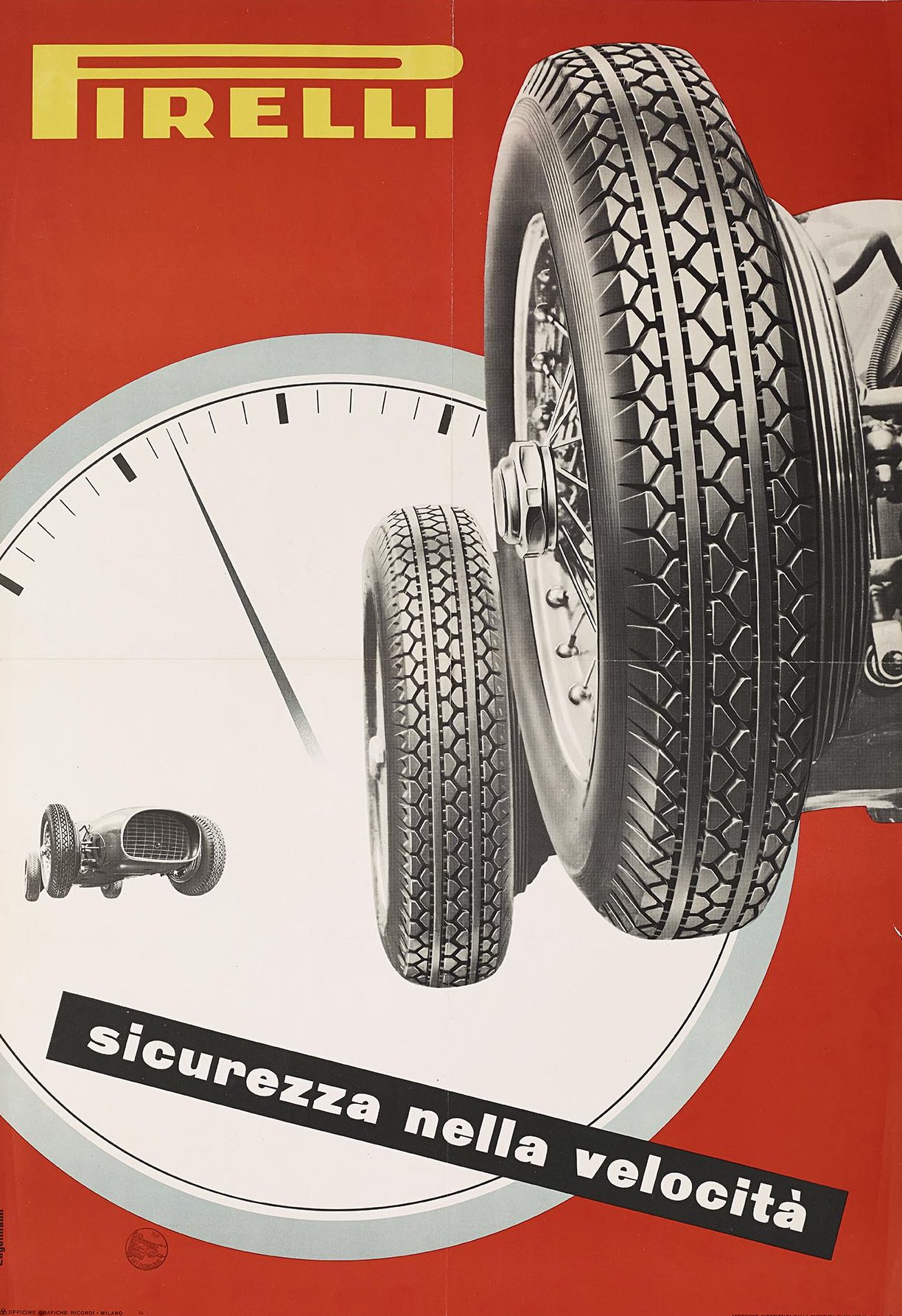
The first Formula 1 race was held in 1950, opening a new chapter in the world of motor racing. The partnership with Alfa Romeo continued, and the first World Championship in the history of Formula 1 was won at the Monza Grand Prix, on 3 September 1950, by Nino Farina in an Alfa 158. The tyre was a Stella Bianca Corsa and the wheels displayed the hand that had formed the company logo since 1939, the year when the “Italiana Rudge Whitworth” changed its name to “Carlo Borrani”. We can see this in a number of shots taken by the photographer Federico Patellani, who became known for his reportages in the years of recovery after the war. At the historic Grand Prix he showed the Pirelli Racing Service mechanics in the pits, checking and balancing the wheels of the Alfa 158. The historic partnership with Alfa Romeo and Maserati had started in the years of the pre-war Grand Prix races and it continued into the 1950s, but now a new marque appeared in the racing world: Ferrari. Borrani’s relationship with Enzo Ferrari began during the 1924 Coppa Acerbo, when the young driver achieved one of the greatest results of his sporting career in an Alfa Romeo fitted with Rudge Whitworth wheels. After his triumph he chose Pirelli tyres and Borrani wheels for his Scuderia Ferrari at Alfa Romeo and later for the cars he produced with the prancing horse logo.

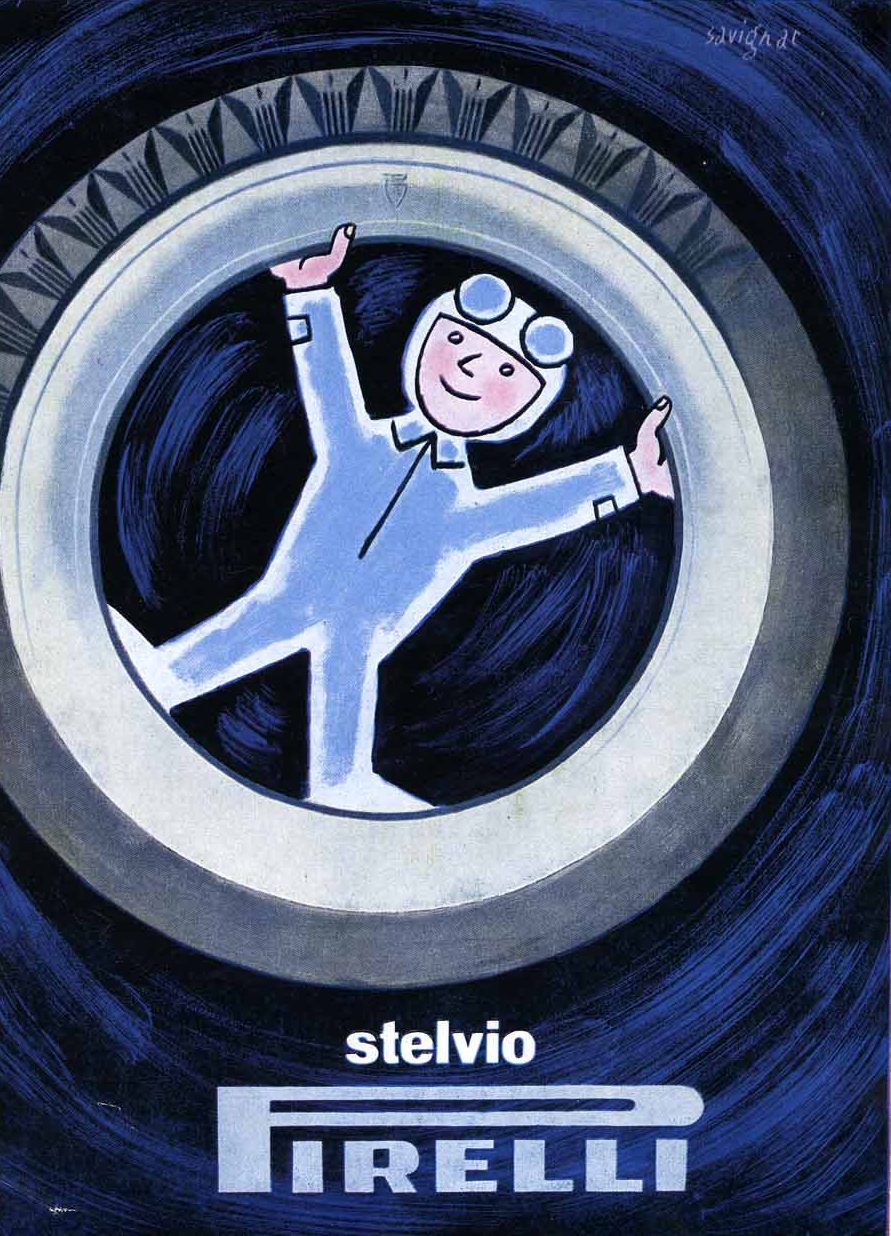
Whether for an Alfa Romeo, a Maserati or a Ferrari, Victory Tyres were the first choice for every car manufacturer in racing, and successes came one after the other throughout the 1950s. The Stella Bianca was followed by the Stelvio, while Borrani aluminium rims, made from 1948 without joint plates thanks to the use of modern welding techniques, were named “Record”.

Back to main page 

The first Formula 1 race was held in 1950, opening a new chapter in the world of motor racing. The partnership with Alfa Romeo continued, and the first World Championship in the history of Formula 1 was won at the Monza Grand Prix, on 3 September 1950, by Nino Farina in an Alfa 158. The tyre was a Stella Bianca Corsa and the wheels displayed the hand that had formed the company logo since 1939, the year when the “Italiana Rudge Whitworth” changed its name to “Carlo Borrani”. We can see this in a number of shots taken by the photographer Federico Patellani, who became known for his reportages in the years of recovery after the war. At the historic Grand Prix he showed the Pirelli Racing Service mechanics in the pits, checking and balancing the wheels of the Alfa 158. The historic partnership with Alfa Romeo and Maserati had started in the years of the pre-war Grand Prix races and it continued into the 1950s, but now a new marque appeared in the racing world: Ferrari. Borrani’s relationship with Enzo Ferrari began during the 1924 Coppa Acerbo, when the young driver achieved one of the greatest results of his sporting career in an Alfa Romeo fitted with Rudge Whitworth wheels. After his triumph he chose Pirelli tyres and Borrani wheels for his Scuderia Ferrari at Alfa Romeo and later for the cars he produced with the prancing horse logo.

Whether for an Alfa Romeo, a Maserati or a Ferrari, Victory Tyres were the first choice for every car manufacturer in racing, and successes came one after the other throughout the 1950s. The Stella Bianca was followed by the Stelvio, while Borrani aluminium rims, made from 1948 without joint plates thanks to the use of modern welding techniques, were named “Record”.

Back to main page 

Multimedia

Images

The 1920s: The Tyres and Wheels of Victory

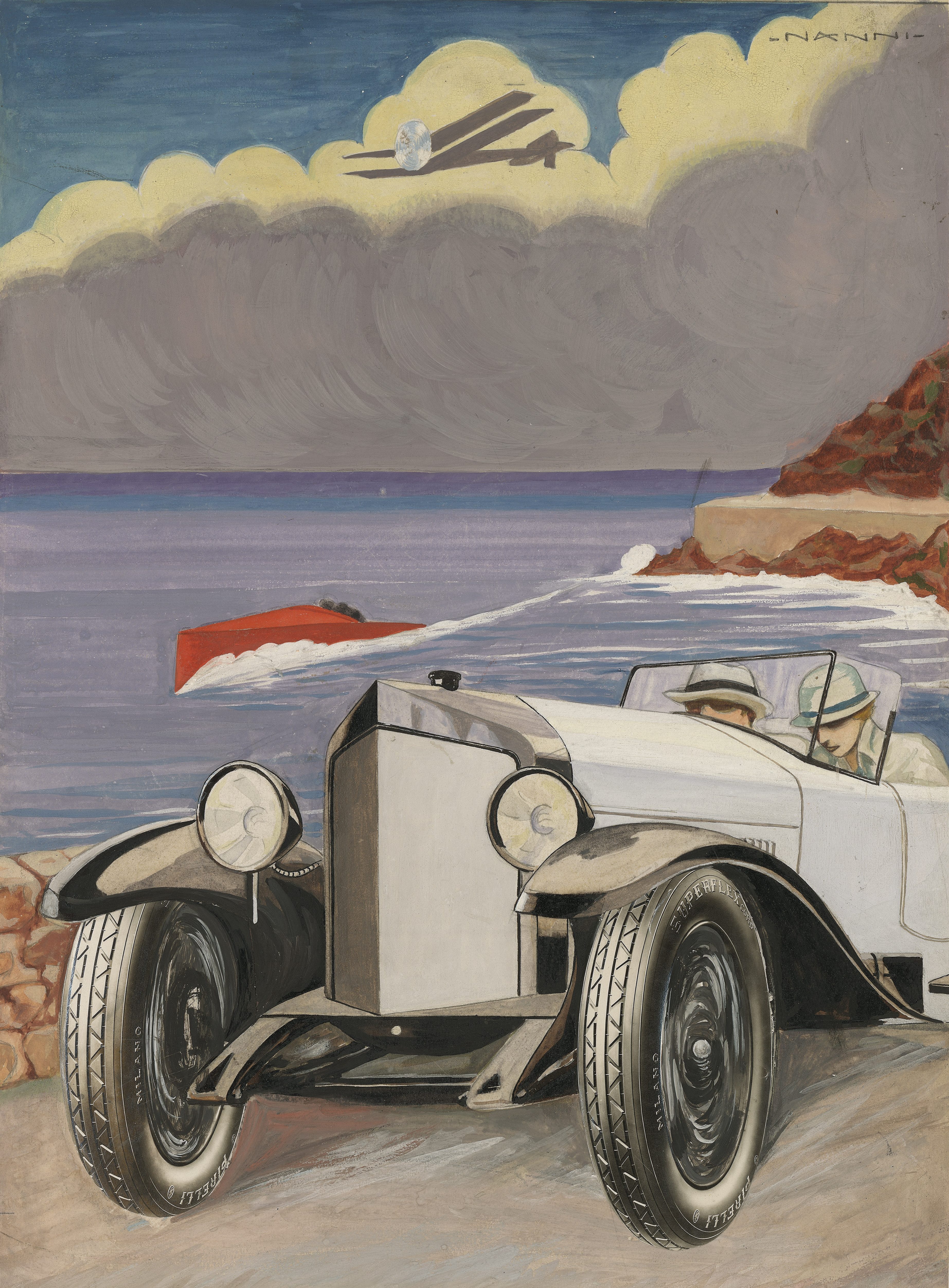
In 1872, a hundred and fifty years ago, G.B. Pirelli & C. was set up in Milan and rapidly established itself in all applications of elastic rubber: technical and consumable items, cables, and tyres. In 1902 it became the first Italian company to start manufacturing abroad. On 22 April 1922, also in Milan, Carlo Borrani and Ettore Ambrosetti set up the Italiana Rudge Whitworth company for the production of spoked metal wheels, under licence from the British company that held the patent for a rapid assembly system. This, coupled with the lightness of the spoked rim, meant that Rudge Whitworth wheels quickly caught the eye of the leading car manufacturers of the time, especially in the field of sports competitions. It was here that the paths of Borrani and Pirelli crossed.

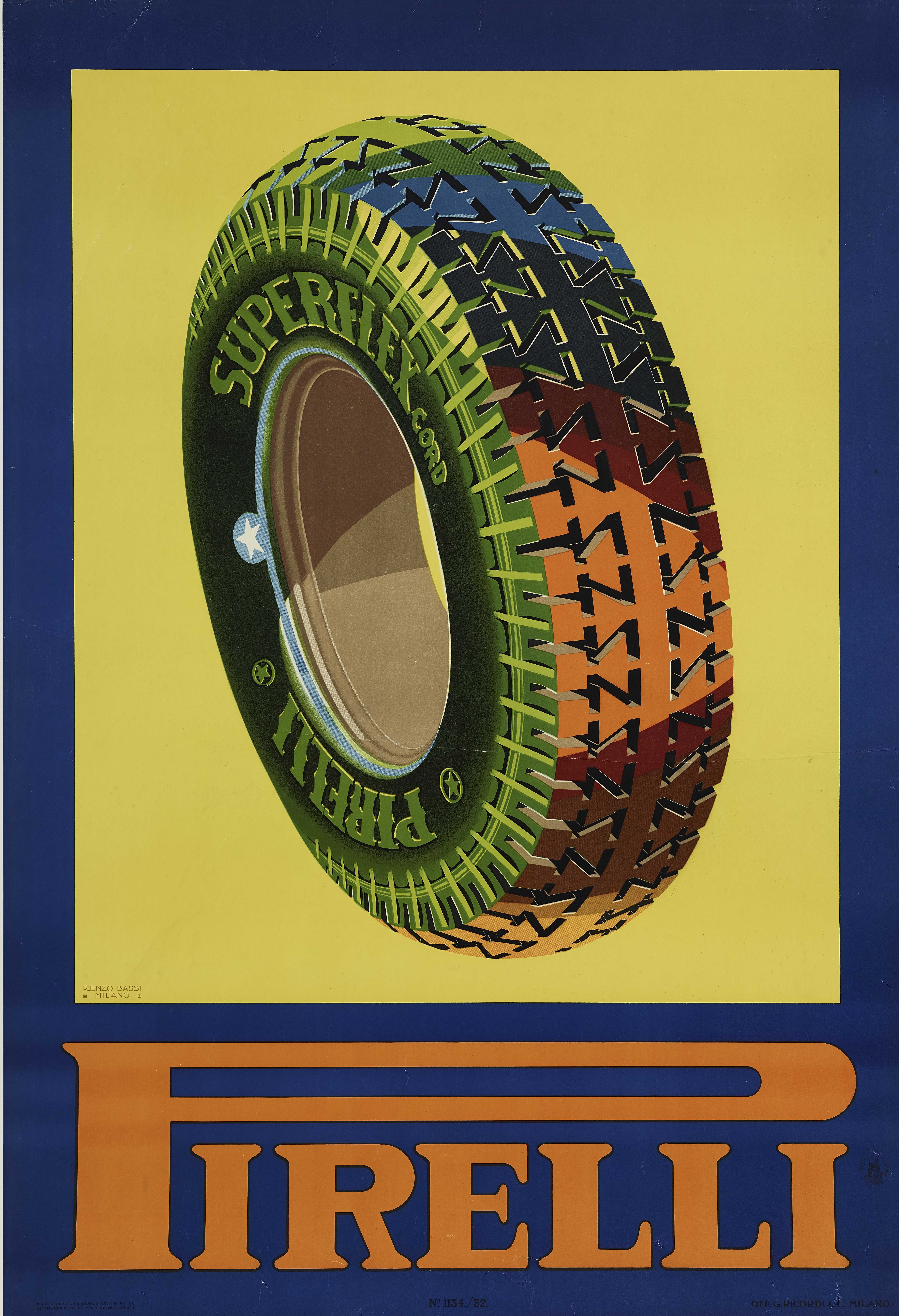
By 1922 Pirelli had already been up and running for 50 years and, with its substantial international expansion, it launched a technological innovation that was destined to spread rapidly across the world of sports: the casing of the Cord tyre featured a rubber-coated fabric without weft, consisting solely of a warp made with rubber-coated cords. By eliminating the problem of friction between the cords that appeared in normal fabrics, the Cord tyre offered greater resistance and durability than the “traditional” type of tyre. In 1924 came the Superflex, a version that halved the inflation pressure and increased the width of the tyre to ensure a more comfortable ride. An advertising leaflet of 1924, now in our Historical Archive, shows how the low-pressure Superflex version was supplied complete with rims for the Fiat 501 and 502, and the Ansaldo, OM 4 Cilindri, Bianchi 18 and Ford cars: the rim is a Rudge Whitworth. In a very short time, Pirelli and Borrani won over all the racing and luxury road cars. When motor racing started up again after the war, they won numerous victories with Fiat and Alfa Romeo cars, becoming known as the Victory Tyre and Victory Wheel respectively. In 1924, Alfa Romeo cars – which that year entered the Grand Prix with the glorious P2 tyres – triumphed at the European Grand Prix in Lyon. The following year, Gastone Brilli-Peri’s legendary victory in an Alfa won him the World Championship on the Monza track.

Back to main page 

In 1872, a hundred and fifty years ago, G.B. Pirelli & C. was set up in Milan and rapidly established itself in all applications of elastic rubber: technical and consumable items, cables, and tyres. In 1902 it became the first Italian company to start manufacturing abroad. On 22 April 1922, also in Milan, Carlo Borrani and Ettore Ambrosetti set up the Italiana Rudge Whitworth company for the production of spoked metal wheels, under licence from the British company that held the patent for a rapid assembly system. This, coupled with the lightness of the spoked rim, meant that Rudge Whitworth wheels quickly caught the eye of the leading car manufacturers of the time, especially in the field of sports competitions. It was here that the paths of Borrani and Pirelli crossed.

By 1922 Pirelli had already been up and running for 50 years and, with its substantial international expansion, it launched a technological innovation that was destined to spread rapidly across the world of sports: the casing of the Cord tyre featured a rubber-coated fabric without weft, consisting solely of a warp made with rubber-coated cords. By eliminating the problem of friction between the cords that appeared in normal fabrics, the Cord tyre offered greater resistance and durability than the “traditional” type of tyre. In 1924 came the Superflex, a version that halved the inflation pressure and increased the width of the tyre to ensure a more comfortable ride. An advertising leaflet of 1924, now in our Historical Archive, shows how the low-pressure Superflex version was supplied complete with rims for the Fiat 501 and 502, and the Ansaldo, OM 4 Cilindri, Bianchi 18 and Ford cars: the rim is a Rudge Whitworth. In a very short time, Pirelli and Borrani won over all the racing and luxury road cars. When motor racing started up again after the war, they won numerous victories with Fiat and Alfa Romeo cars, becoming known as the Victory Tyre and Victory Wheel respectively. In 1924, Alfa Romeo cars – which that year entered the Grand Prix with the glorious P2 tyres – triumphed at the European Grand Prix in Lyon. The following year, Gastone Brilli-Peri’s legendary victory in an Alfa won him the World Championship on the Monza track.

Back to main page 

Multimedia

Images

The Innovations of the 1930s: The Stella Bianca and Extra-light DD Rims

In the 1930s Pirelli concentrated in particular on the world of racing and speed, with the Superflex Cord now becoming the Stella Bianca: the tread pattern was more complex and sporty and the five-pointed star of the Pirelli brand was coloured white. 1932 brought the Supersport, a full line of racing tyres, initially with the basic tread and later with the Stella Bianca pattern. This was the Stella Bianca Corsa line. The 1930s turned out to be particularly fruitful for Borrani too: a rim specially designed for racing came out in 1931, named DD after duralumin, the light alloy used. This material was lighter than steel, and meant that the wheel could be made perfectly round, with a special assembly pattern with external spokes on three rows, making the wheel more resistant and its response to direct perpendicular forces more elastic. The “magnificent” DD light alloy wheels, as an advertisement proclaimed at the time, were Borrani’s flagship product.

Our Foundation has preserved one rare Supersport tyre from that period with a Borrani DD rim, probably made for Auto Union, a German car manufacturer founded in 1932.

Back to main page 

In the 1930s Pirelli concentrated in particular on the world of racing and speed, with the Superflex Cord now becoming the Stella Bianca: the tread pattern was more complex and sporty and the five-pointed star of the Pirelli brand was coloured white. 1932 brought the Supersport, a full line of racing tyres, initially with the basic tread and later with the Stella Bianca pattern. This was the Stella Bianca Corsa line. The 1930s turned out to be particularly fruitful for Borrani too: a rim specially designed for racing came out in 1931, named DD after duralumin, the light alloy used. This material was lighter than steel, and meant that the wheel could be made perfectly round, with a special assembly pattern with external spokes on three rows, making the wheel more resistant and its response to direct perpendicular forces more elastic. The “magnificent” DD light alloy wheels, as an advertisement proclaimed at the time, were Borrani’s flagship product.

Our Foundation has preserved one rare Supersport tyre from that period with a Borrani DD rim, probably made for Auto Union, a German car manufacturer founded in 1932.

Back to main page 

Multimedia

Images

The Advent of Mass Motorisation

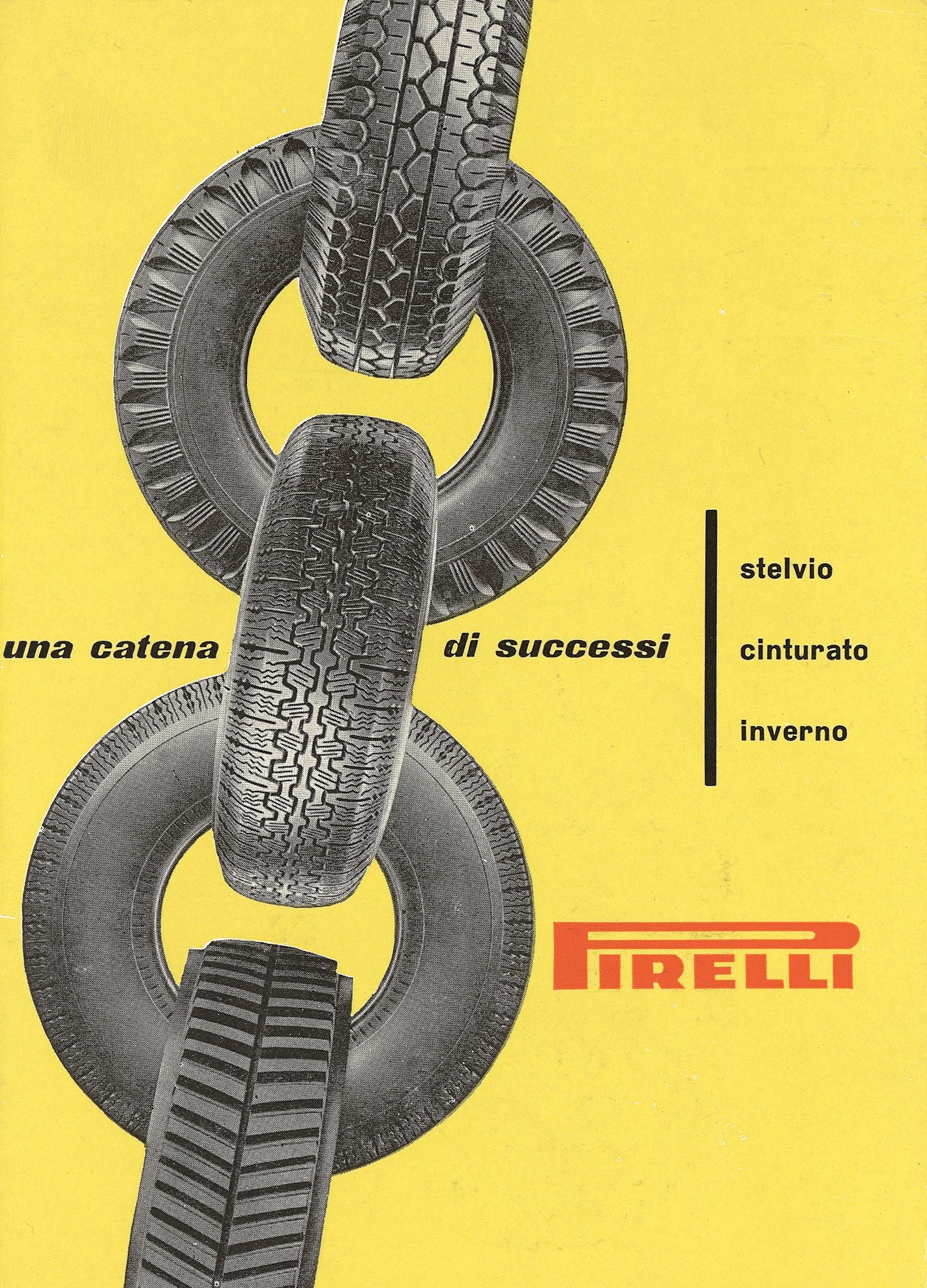
Pirelli left the world of racing in 1957 to focus on road tyres, so that it could meet the needs of the nascent mass motorisation. The price list reflected the segmentation of the automotive market, with the Rolle for the Fiat 600, the Cisa for the Fiat 500, and the Sempione for the Fiat 1800. In the 1950s, also Borrani diversified its production, with new rims for lower-end cars: the “Cabo” wheel (taking its name from the founder’s initials) for the Fiat 500, 1100, 1400 and 1500, now featured disks in place of spokes and a chrome-plated hub cap that could be customised with the car manufacturer’s logo (also in a sports version, with the Rudge Whitworth quick assembly system).

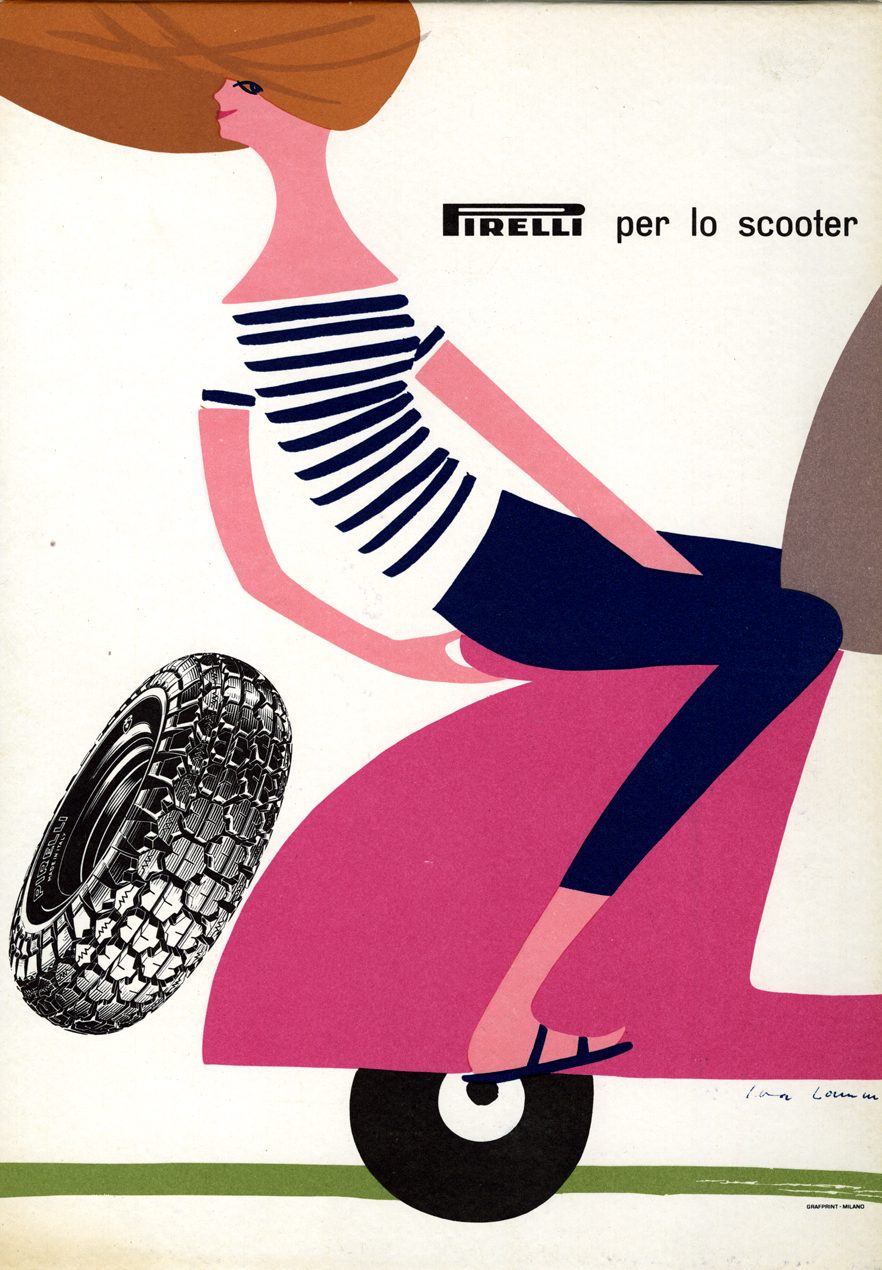
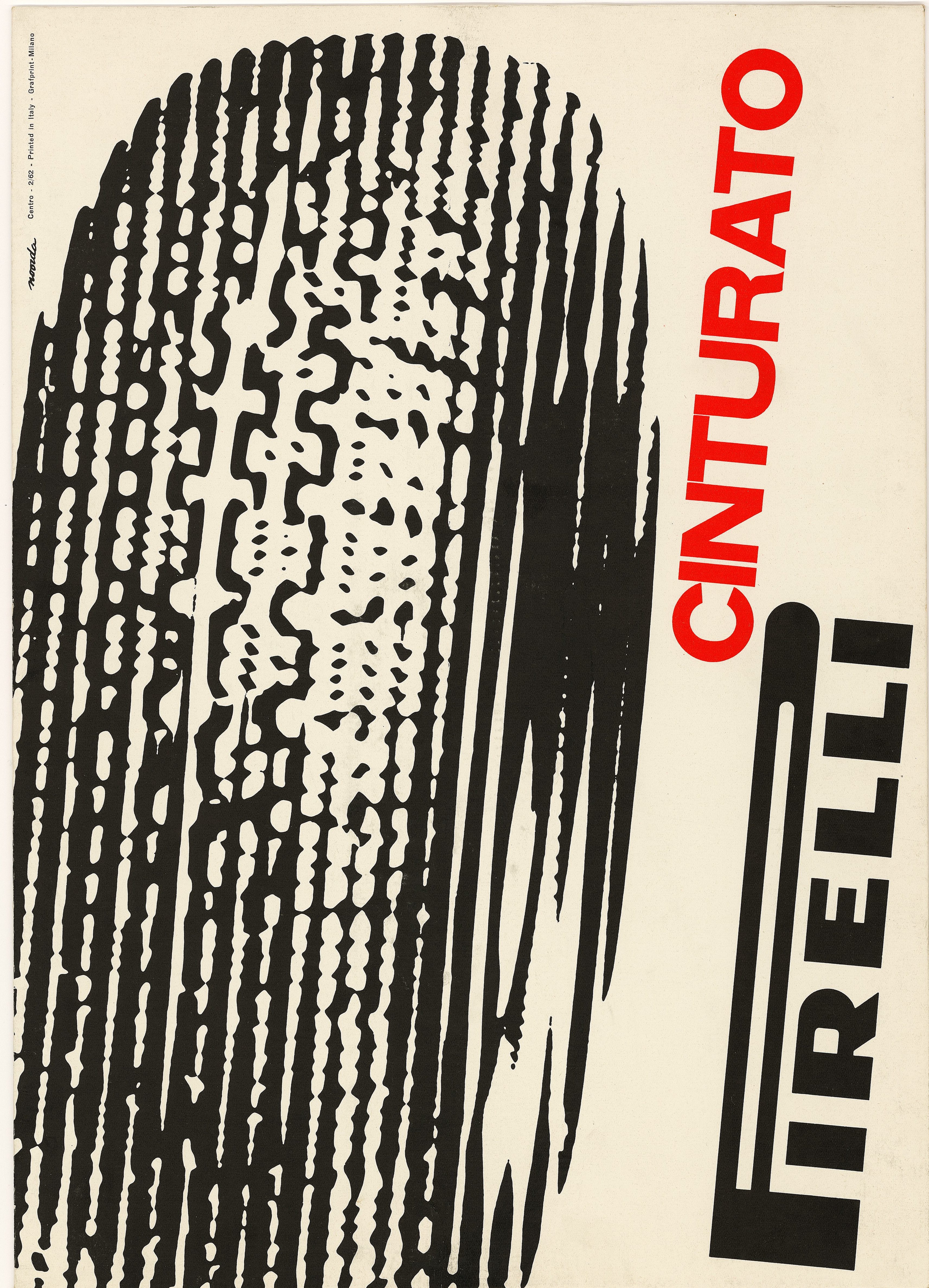
The 1960s brought a new revolution to the world of tyres: the age of the traditional cross-ply tyre came to an end and the radial era arrived. Pirelli launched the Cinturato, which was patented in 1951, specially designed for sports users who preferred grip and speed over “comfort”. It was initially recommended for sport touring cars and high-powered saloons, such as the Alfa Romeo Giulietta Sprint, the Lancia Aurelia B20, and the Fiat 8V. For these cars, Borrani perfected its Turbo wheels, with the sport version in light alloy and the normal in steel. The Cinturato was soon adopted by all segments of the market and became the tyre of mass motorisation – while continuing to be used on sports cars, such as the Lamborghini Miura, the ISO Grifo, the Maserati Ghibli, and the Alfa Romeo Junior Zeta. This time it was Ugo Mulas, another great name in photography, who created an advertising campaign for Simplon and Cinturato tyres, with young people shown alongside cars fitted, of course, with Pirelli tyres. It was the beginning of a long journey, in a world that was increasingly on the move.

Back to main page 

Pirelli left the world of racing in 1957 to focus on road tyres, so that it could meet the needs of the nascent mass motorisation. The price list reflected the segmentation of the automotive market, with the Rolle for the Fiat 600, the Cisa for the Fiat 500, and the Sempione for the Fiat 1800. In the 1950s, also Borrani diversified its production, with new rims for lower-end cars: the “Cabo” wheel (taking its name from the founder’s initials) for the Fiat 500, 1100, 1400 and 1500, now featured disks in place of spokes and a chrome-plated hub cap that could be customised with the car manufacturer’s logo (also in a sports version, with the Rudge Whitworth quick assembly system).

The 1960s brought a new revolution to the world of tyres: the age of the traditional cross-ply tyre came to an end and the radial era arrived. Pirelli launched the Cinturato, which was patented in 1951, specially designed for sports users who preferred grip and speed over “comfort”. It was initially recommended for sport touring cars and high-powered saloons, such as the Alfa Romeo Giulietta Sprint, the Lancia Aurelia B20, and the Fiat 8V. For these cars, Borrani perfected its Turbo wheels, with the sport version in light alloy and the normal in steel. The Cinturato was soon adopted by all segments of the market and became the tyre of mass motorisation – while continuing to be used on sports cars, such as the Lamborghini Miura, the ISO Grifo, the Maserati Ghibli, and the Alfa Romeo Junior Zeta. This time it was Ugo Mulas, another great name in photography, who created an advertising campaign for Simplon and Cinturato tyres, with young people shown alongside cars fitted, of course, with Pirelli tyres. It was the beginning of a long journey, in a world that was increasingly on the move.

Back to main page 

Multimedia

Images

Rallying and GT Racing in the 1970s

The 1970s saw the triumph of Pirelli in rally racing and the dawn of a new revolution: the P7, the first low-profile radial tyre, fully put into practice the concept of the transition of technology from track to road. Developed for the world of rallying and later also used on track, its high performance led to its being chosen as original equipment by various sports car manufacturers. The first to fit it was the Porsche 911 Carrera Turbo, and this was followed by Lamborghini, De Tomaso, and Ferrari. The way was open for the development of a new low-profile road tyre, codenamed Zeta: the Pirelli PZero.

Throughout the 1960s, Borrani continued to equip sports and GT cars, and in the following decade it came out with a new spoked wheel. The Dial, an evolution of the Turbo, was adopted by car manufacturers, which by this time were moving towards the cheaper cast alloy wheel (which dominated in track cars). Despite its central disc in moulded cast alloy, the Dial needed the traditional Borrani manual assembly and could not compete with industrialised cast wheels, which gained the upper hand. Ferrari and Maserati were the last manufacturers to break off their long partnerships with Borrani, which continued its business in the aftermarket.

Back to main page

The 1970s saw the triumph of Pirelli in rally racing and the dawn of a new revolution: the P7, the first low-profile radial tyre, fully put into practice the concept of the transition of technology from track to road. Developed for the world of rallying and later also used on track, its high performance led to its being chosen as original equipment by various sports car manufacturers. The first to fit it was the Porsche 911 Carrera Turbo, and this was followed by Lamborghini, De Tomaso, and Ferrari. The way was open for the development of a new low-profile road tyre, codenamed Zeta: the Pirelli PZero.

Throughout the 1960s, Borrani continued to equip sports and GT cars, and in the following decade it came out with a new spoked wheel. The Dial, an evolution of the Turbo, was adopted by car manufacturers, which by this time were moving towards the cheaper cast alloy wheel (which dominated in track cars). Despite its central disc in moulded cast alloy, the Dial needed the traditional Borrani manual assembly and could not compete with industrialised cast wheels, which gained the upper hand. Ferrari and Maserati were the last manufacturers to break off their long partnerships with Borrani, which continued its business in the aftermarket.

Back to main page

Multimedia

Images