

When advertising tells the story of safety: three campaigns by Pirelli


The third article in “The Road to Safety”, an in-depth series on Pirelli’s work and role in ensuring road safety. Through three classic advertising campaigns, we look back at how safety shifted from a technical requirement to become a shared cultural value.
In the two articles “Promoting Road Safety: The Role of Company Magazines” and “On the Road to Safety”, we drew on documents from our Historical Archive going back to the 1950s and the rise of mass motoring. They showed how Pirelli’s focus on road safety – both past and present – has always gone beyond just products and technology. It is also put into effect by promoting a broader culture of safe driving, built on values, awareness, and daily habits behind the wheel.
Throughout its history, Pirelli has helped spread this culture through advertising too. From the post-war economic boom to the great global advertising campaigns of the 1990s, pictures, slogans, and stories have tracked how people’s view of safety has changed. Safety was no longer seen as just a technical product feature; it became increasingly tied to freedom of movement, individual and collective responsibility, and staying in control in all kinds of conditions. This shift can be seen particularly clearly in three campaigns that made advertising history.
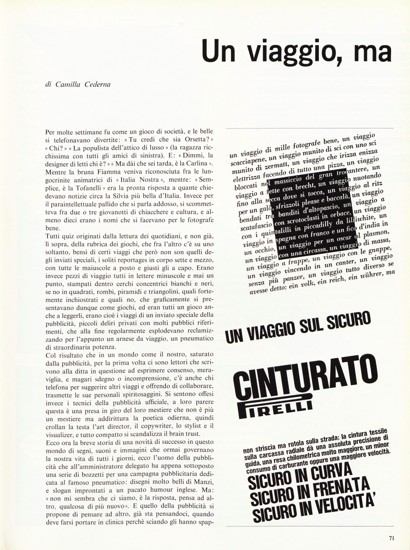
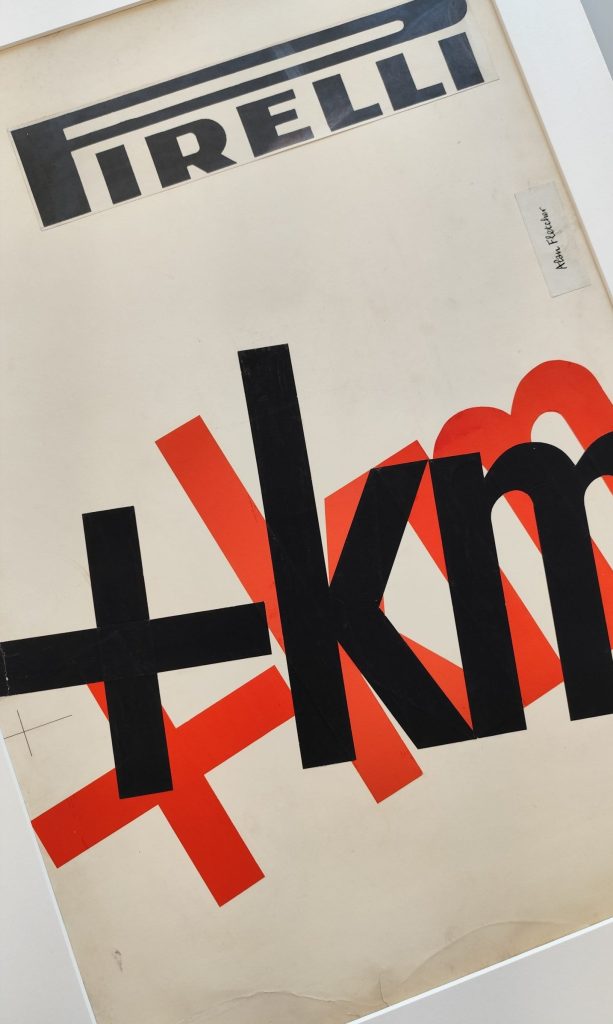
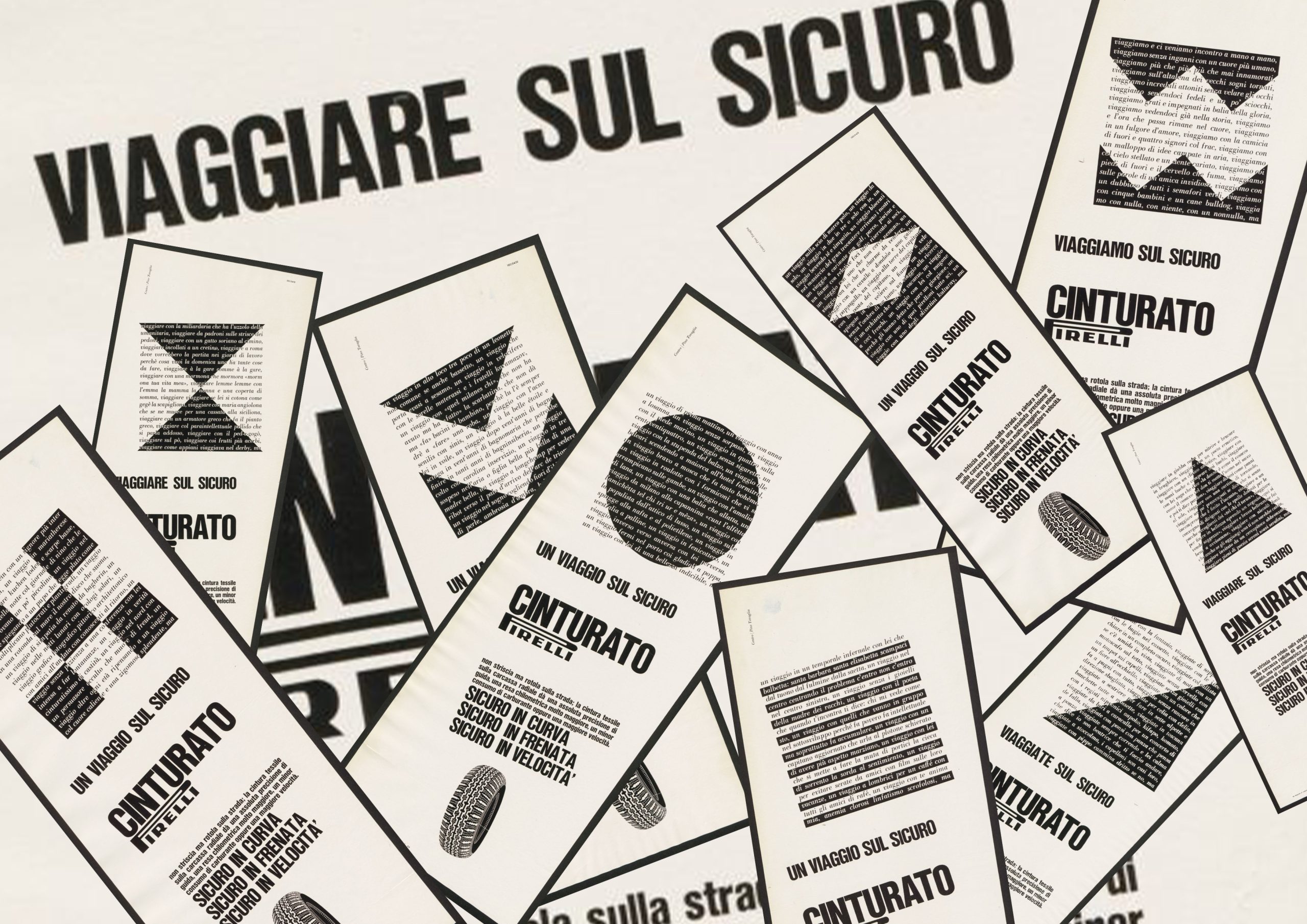
Un viaggio sul sicuro – Cinturato Pirelli [A Journey on the Safe Side – Cinturato Pirelli] The brainchild of Arrigo Castellani, Pirelli’s head of advertising at the time, and the graphic designer and art director Pino Tovaglia, this 1966 campaign broke new ground in Italian advertising. It drew on the stylistic features of avant-garde art, Op Art, minimalism, and visual poetry (a movement of artists and writers who, during this period, were rethinking the way words and images were being used in mass media), setting up a new form of interaction between words, pictures, and shapes.
Camilla Cederna wrote about it in her article “Un viaggio, ma…” [“A Journey, But…”] in Pirelli magazine issue 4 of 1966: “These were the journeys of an adman sent out on assignment – small private daydreams with plenty of public references that always ended with a splash, plugging a travel gadget: a tyre of extraordinary power.”
In Castellani and Tovaglia’s layouts, the journey is at the heart of the story, with the road becoming a place of freedom and discovery. These were the years when the car was very much a part of Italy’s economic and social development, changing people’s way of life and their leisure time and travel. In this setting, safety is not shown simply as a response to danger, but rather as the very condition that makes the journey possible.
Following Arrigo Castellani’s sudden passing, Pirelli magazine issue 1 of 1969 devoted several noteworthy comments and images to the campaign, capturing its creative heart and Castellani’s visionary spirit and his personality.
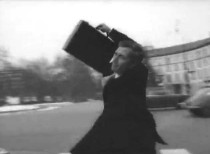
La nostra vita sulle strade [“Our Life on the Roads”]. A few years later, in 1970, came a series of short films for the Carosello programme of television commercials showing off the Cinturato. This was the work of Agenzia Centro – Pirelli’s in-house ad agency – together with the director Roberto Gavioli. Here, the ten episodes, each lasting one minute and fifty seconds, address practical aspects of road traffic, such as overtaking, pedestrian crossings, and road signs. In other words, the right habits for everyday traffic.
Right from the title of the series we see a clear shift in perspective. The road is no longer just a way to commute to and from work or to go on a solo trip; it becomes a shared space that is used every day by countless others, each with their own needs, driving style, and life. Safety therefore depends not only on the quality of vehicles and roads (the second part of each film shows us Pirelli’s new tyre testing ground in Vizzola Ticino, where the tyres that, as the clip points out, are engineered for road safety are put through their paces), but also on every driver’s care and personal responsibility.
Through the much-loved and familiar language of Carosello and thanks to the witty tone that is a feature of the campaign, the communication has an almost educational and civic function, helping to raise greater awareness of behaviour at the wheel and respect for the rules that govern our coexistence on the road.
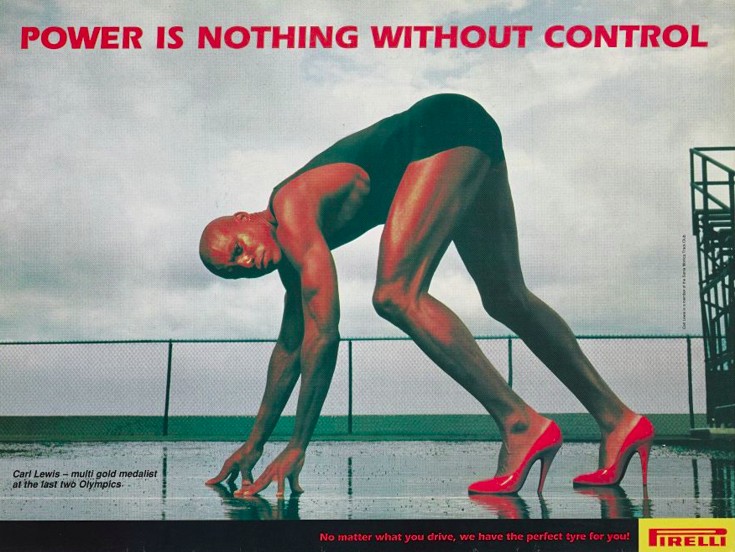
“Power is nothing without control”. In 1994 Pirelli launched one of the most famous campaigns in modern advertising history. The picture of sprinter Carl Lewis – captured on the starting blocks by photographer Annie Leibovitz – wearing an iconic pair of red stiletto heels, instantly grabbed the popular imagination and turned the slogan into one of the world’s most recognizable taglines. It marked the start of global campaigns entrusted to large agencies – in this case Young & Rubicam, which also made the 1995 TV spot.
The scale of the product itself – specifically the P6000 tyre – is evoked through the link between performance and road-holding (in other words, power and control), which is at the heart of the campaign’s safety message. But the message quickly rises above technical talk and physical goods: it becomes a timeless reflection on mastering force, directing energy, and striking a balance between power and responsibility. In a car, as in life, “power is nothing without control”, and safety rest on the balance between the two.
These three campaigns illustrate how the idea of safety evolved over a period of more than thirty years. Adopting different styles and forms of expression, Pirelli’s advertising shows that safety has never been just a technical matter.
Today, road safety lies at the heart of Pirelli’s sustainability targets, both in terms of products and technology – led by the Pirelli Cyber Tyre hardware and software system – and for the planet, This can be seen in its support for the United Nations Road Safety Fund, which was set up in 2018 to finance projects around the globe. Objective: to halve the number of road traffic deaths and injuries by 2030.