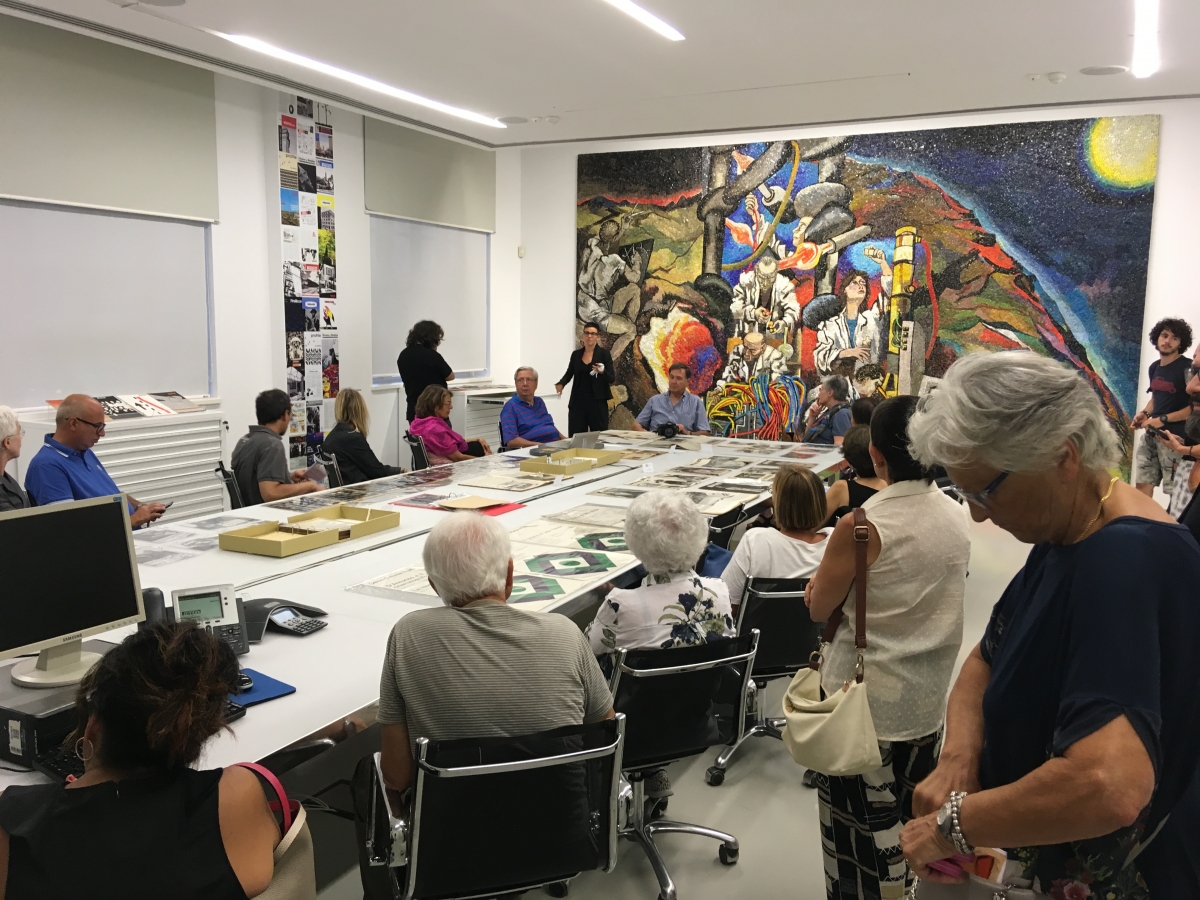

Access the Online Archive
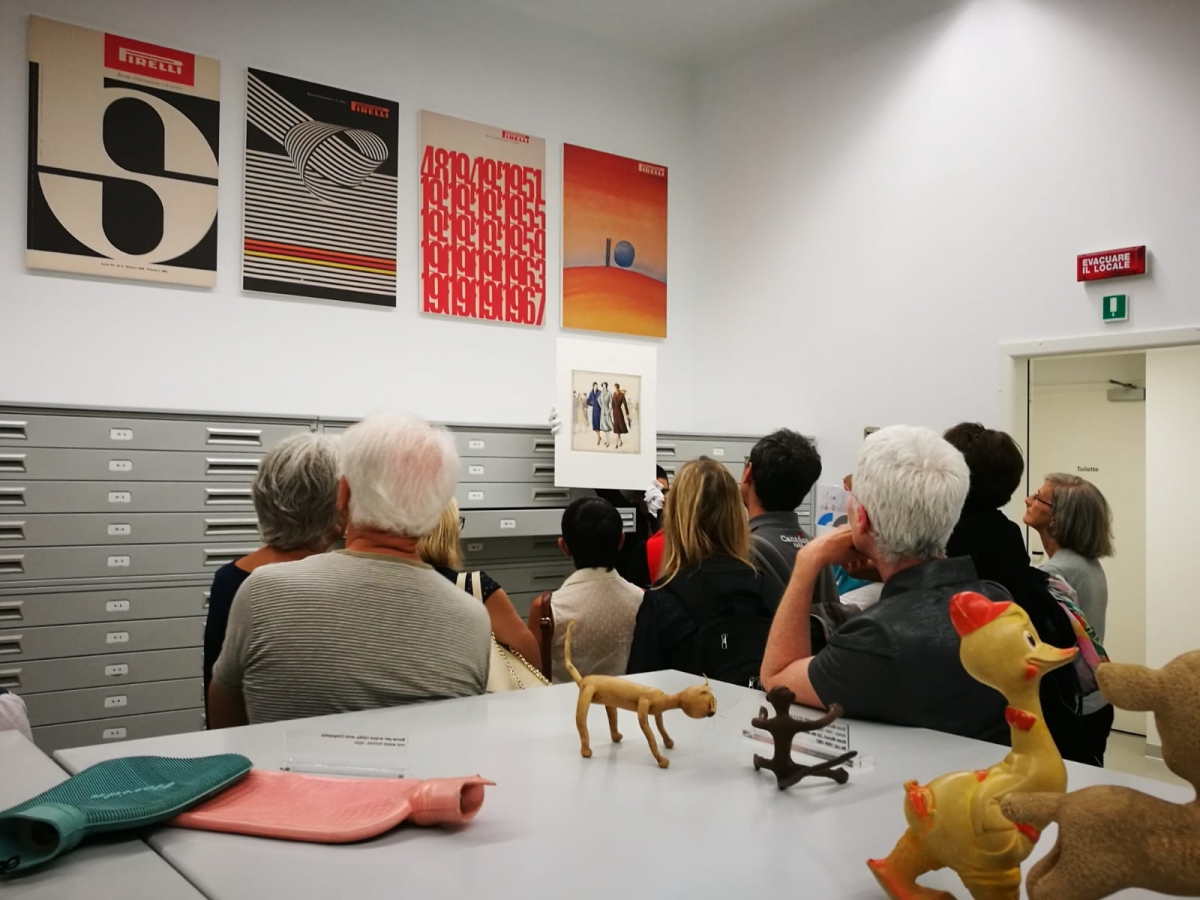
Search the Historical Archive of the Pirelli Foundation for sources and materials. Select the type of support you are interested in and write the keywords of your research.
    Select one of the following categories
  • Documents
  • Photographs
  • Drawings and posters
  • Audio-visuals
  • Publications and magazines
  • All
Help with your research
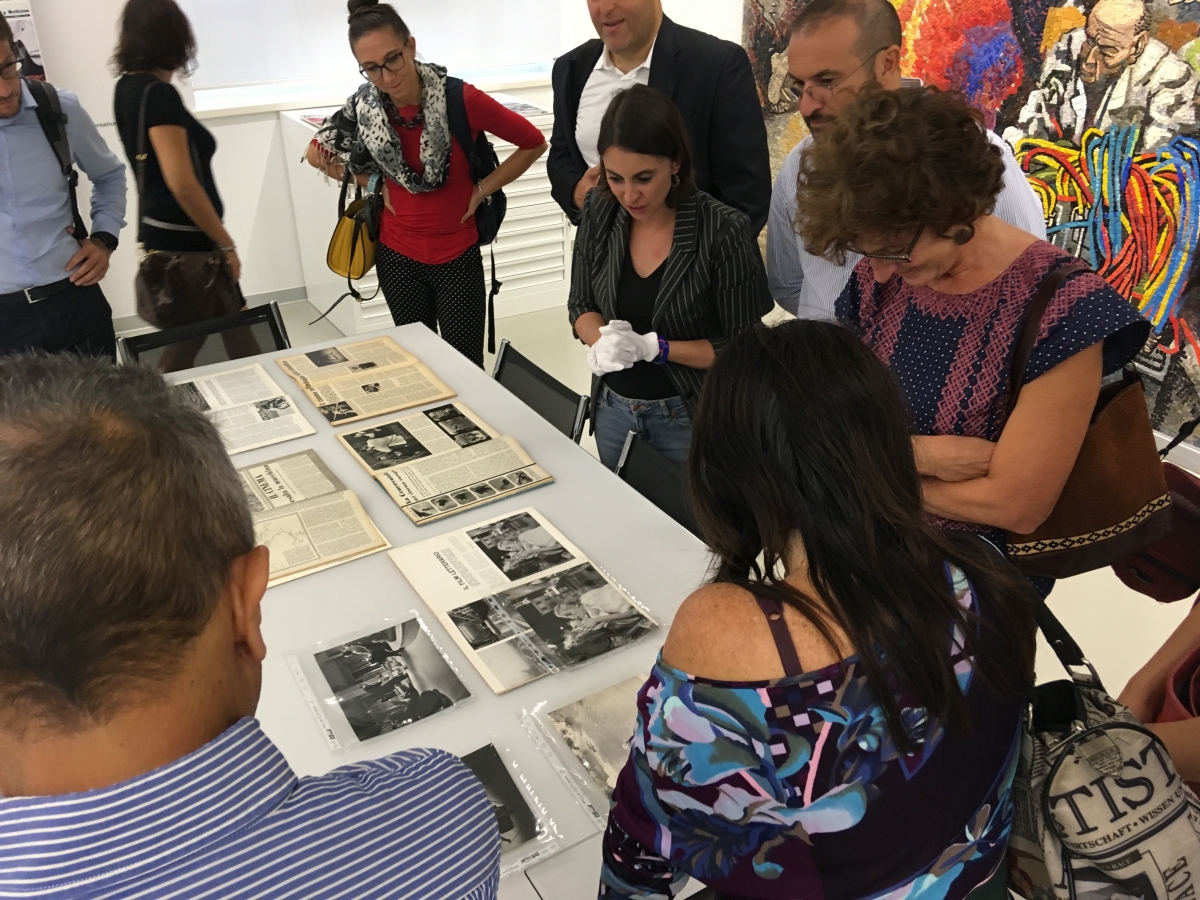
To request to view the materials in the Historical Archive and in the libraries of the Pirelli Foundation for study and research purposes and/or to find out how to request the use of materials for loans and exhibitions, please fill in the form below. You will receive an email confirming receipt of the request and you will be contacted.
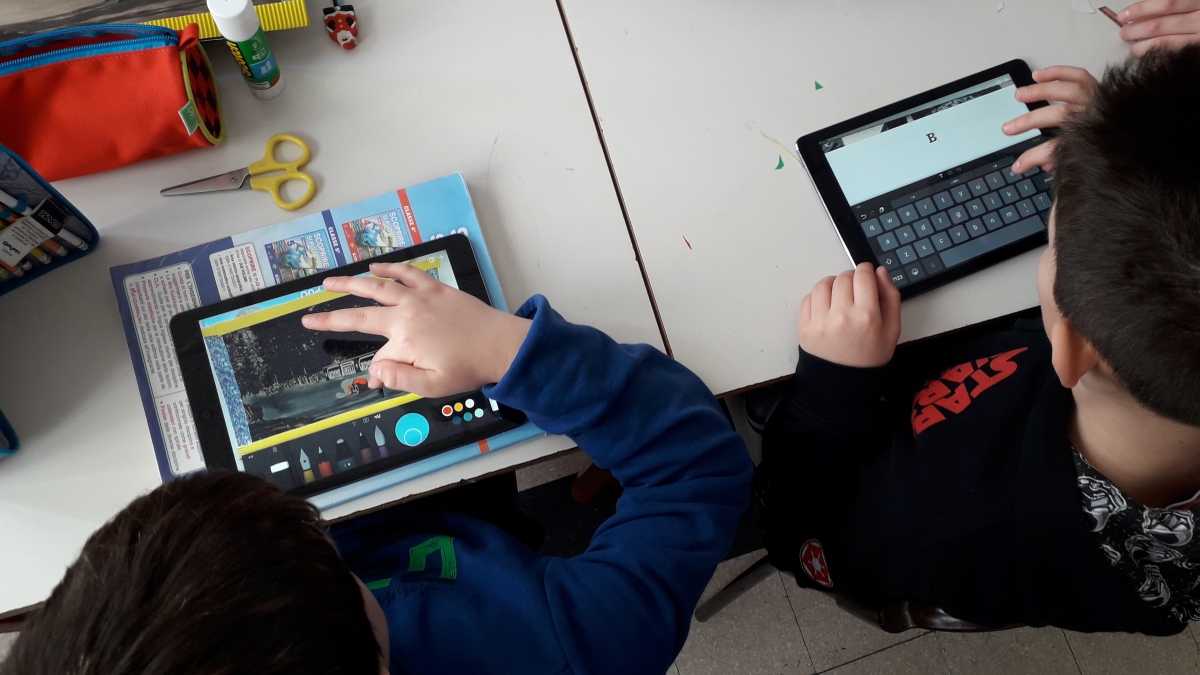
Pirelli Foundation Educational Courses

Select the education level of the school
Back
Primary schools
Pirelli Foundation Educational Courses
Please fill in your details and the staff of Pirelli Foundation Educational will contact you to arrange the dates of the course.

I declare I have read  the privacy policy, and authorise the Pirelli Foundation to process my personal data in order to send communications, also by email, about initiatives/conferences organised by the Pirelli Foundation.

Back
Lower secondary school
Pirelli Foundation Educational Courses
Please fill in your details and the staff of Pirelli Foundation Educational will contact you to arrange the dates of the course.
Back
Upper secondary school
Pirelli Foundation Educational Courses
Please fill in your details and the staff of Pirelli Foundation Educational will contact you to arrange the dates of the course.
Back
University
Pirelli Foundation Educational Courses

Do you want to organize a training programme with your students? For information and reservations, write to universita@fondazionepirelli.org

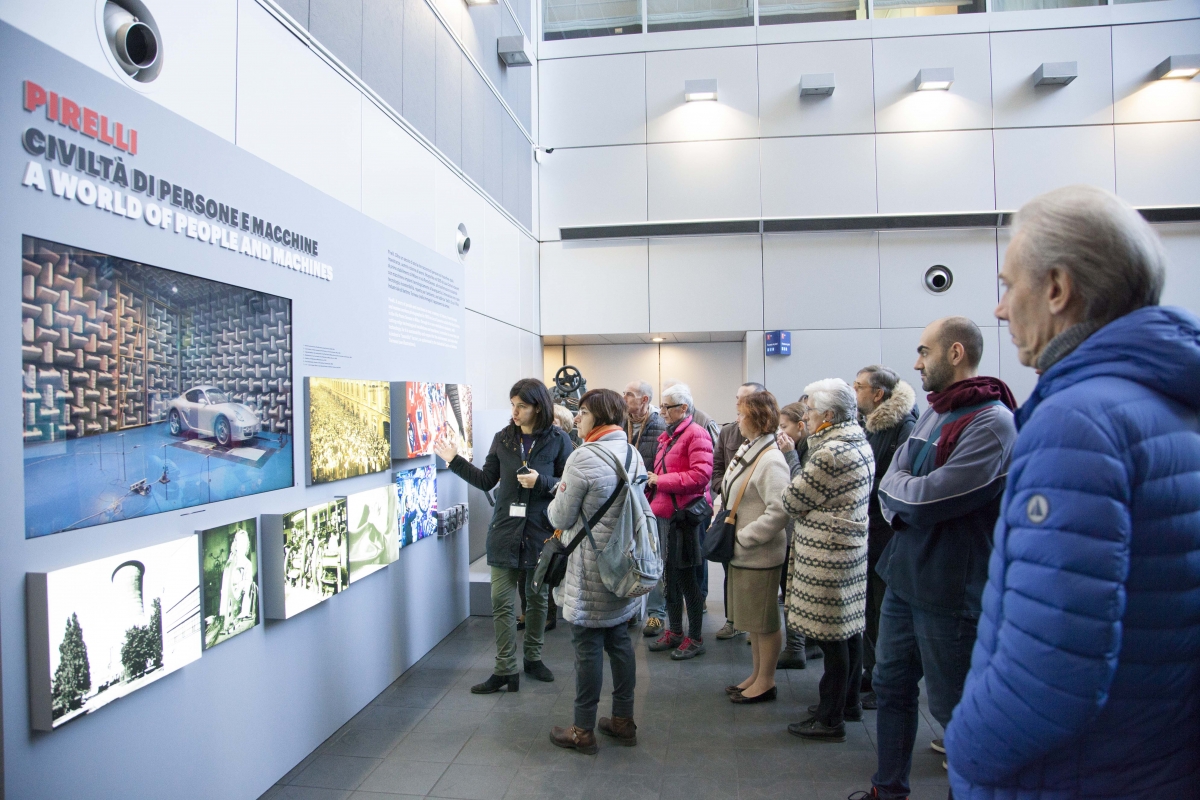
Visit the Foundation
For information about the Foundation’s activities, guided tours and accessibility,
please call +39 0264423971 or fill in the form below, providing details of your request in the notes field.

Finding out How a Tyre is Born in Industry 4.0.
With Pirelli Foundation Educational

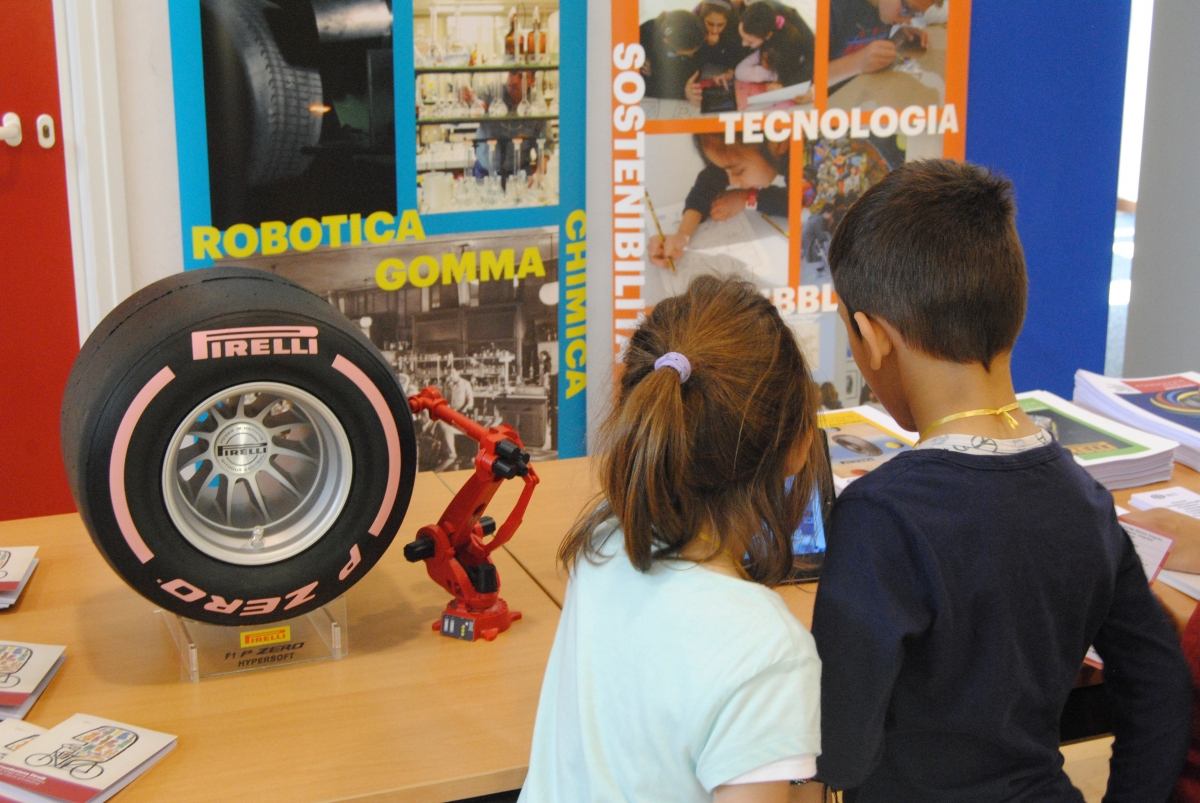
Like last year, the Pirelli Foundation Educational programme for upper and lower secondary schools again put on visits to the chemical laboratories, to the Research and Development centre and to the Next MIRS plant in the Pirelli area of Milano Bicocca.

The Bicocca research centre in Milan plays a key role in experimenting with new compounds, and designing and manufacturing prototypes of Pirelli high-performance tyres, which are some of the most innovative in terms of safety and sustainability.

These “journeys through history and scientific research” made it possible for many classes not only to find out about the properties of rubber and the key moments in manufacturing a tyre, but also to watch compounds being analysed, performance tests on prototypes, and the robotic production process.

Accompanied by experts in the chemical laboratories, the students were able to see how the raw materials and all the components of the compounds are subjected to strict tests, as well as how the main instruments of advanced analysis work.

In the Research and Development (R&D) laboratories, they came into contact with various types of expertise, ranging from the engineering design of new treads to the technical implementation of static and dynamic indoor tests, which are needed to make sure the level of quality keeps on rising.

Students who chose to visit the Milanese plant based on the Next MIRS (Modular Integrated Robotized System) had a precious opportunity to have expert staff show them round the factory and follow all the various stages of its robotic manufacturing process, which is here used for creating prototypes.

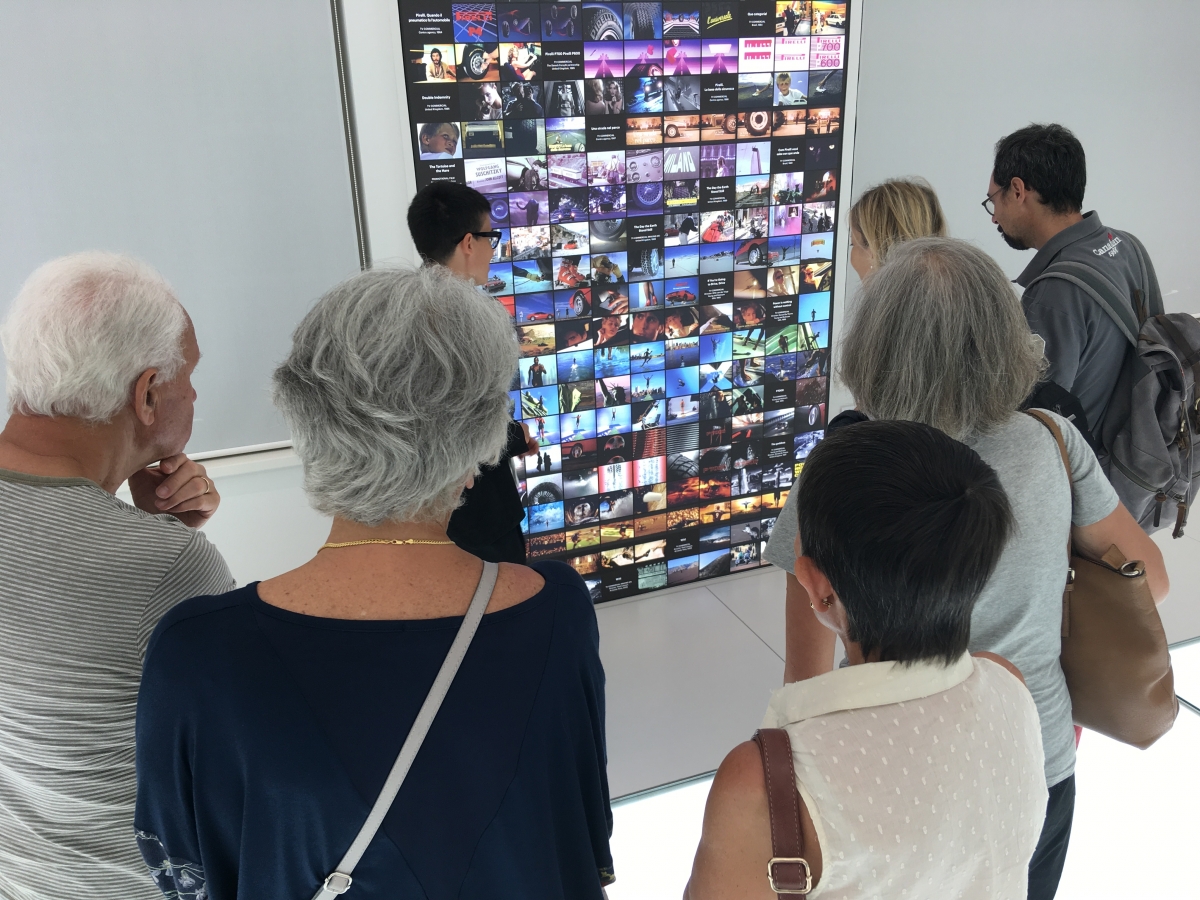
With the main educational objective of introducing students to the world of work, the visits are always introduced by a historic overview given by the Pirelli Foundation. The introduction retraces the key moments in the adventure of the Group, starting with the founding of the first factory in Via Ponte Seveso in Milan, in 1872, and continuing through to the opening of the most advanced Pirelli industrial complex in Settimo Torinese, and to plants around the world, with images, photographs and audio-visuals from the Historical Archive.

In 2018, the educational programme will continue to involve hundreds of students throughout the school year.

Like last year, the Pirelli Foundation Educational programme for upper and lower secondary schools again put on visits to the chemical laboratories, to the Research and Development centre and to the Next MIRS plant in the Pirelli area of Milano Bicocca.

The Bicocca research centre in Milan plays a key role in experimenting with new compounds, and designing and manufacturing prototypes of Pirelli high-performance tyres, which are some of the most innovative in terms of safety and sustainability.

These “journeys through history and scientific research” made it possible for many classes not only to find out about the properties of rubber and the key moments in manufacturing a tyre, but also to watch compounds being analysed, performance tests on prototypes, and the robotic production process.

Accompanied by experts in the chemical laboratories, the students were able to see how the raw materials and all the components of the compounds are subjected to strict tests, as well as how the main instruments of advanced analysis work.

In the Research and Development (R&D) laboratories, they came into contact with various types of expertise, ranging from the engineering design of new treads to the technical implementation of static and dynamic indoor tests, which are needed to make sure the level of quality keeps on rising.

Students who chose to visit the Milanese plant based on the Next MIRS (Modular Integrated Robotized System) had a precious opportunity to have expert staff show them round the factory and follow all the various stages of its robotic manufacturing process, which is here used for creating prototypes.

With the main educational objective of introducing students to the world of work, the visits are always introduced by a historic overview given by the Pirelli Foundation. The introduction retraces the key moments in the adventure of the Group, starting with the founding of the first factory in Via Ponte Seveso in Milan, in 1872, and continuing through to the opening of the most advanced Pirelli industrial complex in Settimo Torinese, and to plants around the world, with images, photographs and audio-visuals from the Historical Archive.

In 2018, the educational programme will continue to involve hundreds of students throughout the school year.

Multimedia

Images

Sport Club Pirelli: A Trip to Mottarone in 1923

The Sport Club Pirelli was founded on 13 December 1922, with its headquarters in Via Ponte Seveso, and its pitches and gym in Bicocca di Niguarda. The chairman, nominated by acclamation, was Cavaliere Ufficiale Ingegner Giuseppe Venosta, who had always been the right-hand man of the founder, Ingegner Giovanni Battista, and an “ardent advocate of all forms of physical and moral education”. The co-chairman was Giuseppe Vigorelli, director of the Agenzia Lombarda Gomme Pirelli and an expert on cycling, who a few years later would make his dream of creating a velodrome in Milan come true. Another expert was the Club’s cashier and timekeeper, the Anglo-Italian Gilberto Marley who, after an unbroken streak as the winner of the Italian Championship from 1887 to 1889, had ended up in the company that made the Tipo Milano bicycle tyres that had taken him to so many victories. The photographs on the grey-green paper of the Bollettino dello Sport Club Pirelli show an obstacle race and weightlifting, high jump and football, cycling and javelin throwing. The Club was for men but also for “atletesse” like the fierce Zebrette of the Pro Patria in Busto Arsizio, who filled the Bicocca stadium with admiration during the Adunata Sportiva in June 1923: the undisputed star was Signorina Lina Banzi, the high jump record-breaker. And there were pleasure trips up and down the country, in both summer and winter. Exactly ninety-four years on, we can tell you how, on 8 and 9 December 1923, a merry band of Pirelli sports lovers tackled the snowy slopes of the Mottarone, a mountain now in the province of Verbano-Cusio-Ossola but then in that of Novara. The following tale is taken straight from “Gita al Mottarone”, an article by Cesare Piantanida.

«The picturesque mountain costumes, with heavy-duty boots, thick woollen sweaters, caps with bows, “skees” and sticks – the skees in particular looking somewhat anachronistic, as though Tartarin himself had stepped into the station square in the damp, trickling air of the town. The trip could hardly have begun under better auspices: the tireless Meloni had gone on ahead to reconnoitre the accommodation and victualling services, and Gironi, assisted by Anselmi, had taken command of the expedition. And, at last, came the long-desired and much-invoked cry, the cry that ushers forth spontaneously from the chest: “Snow! Snow!”. A few more minutes and here we are at the summit. And now Signor Valentini, accompanied by his charming consort, dons his skees and departs for the slopes. Bagnato follows suit, anxious to emulate his exploits, and here come Mascherpa, Muggia, Dottor Prestini and so many others, including many courageous young ladies on their skees. The others follow them to admire the sport or to wander across the mountain. Cavalier Marley is soon standing with his Signora and Signorina. Ingegner Avanzini, Ingegner Giussani, Signor Bianchi and Ragionier Gogna have all come with their respective consorts and other family members. Ragionier Crosio, looking very Far Eastern in his sporting outfit, appears together with Ingegner Chiesa. Signor Sberze has come with his son. Then there are the Signorine Banchieri and Benincasa, the ever-faithful Signorine Verga and Pissasegale, Signori Brizza, Bagnato, Berti, and Saroldi and so many others that it would be impossible to name them all. The skiers come hurtling down the slope, flashing by in front of the spectators, turning and sometimes falling, though gracefully, and then they are back to the ascent. Much admired are the flights of Signor Valentini, a master of the telemark and the stem christie. Bagnato, his worthy pupil, shows he has what it takes. Signor Muggia is elegant and Signorina Muggia intrepid as she unhesitatingly sweeps down fast and free. Other young ladies show the men how the sport is done, while the latter demonstrate how to fall with insouciance. But now it is time to leave and, with much regret, to put back the skees, pack their bags, and set off for the railway station. Now the warmth of the train, as it rushes headlong through the night, and the jollity brought on by the delightful day bring out songs that reveal the most exceptional talent where one might least expect it. It is much to the chagrin of all when the train enters under the vast canopy of the station in Milan, perfectly on time. The trip ends with fond farewells and much gratitude, and the travellers find their own separate ways through the muddy streets of the city, which has been enshrouded in fog and rain all day».

The Sport Club Pirelli was founded on 13 December 1922, with its headquarters in Via Ponte Seveso, and its pitches and gym in Bicocca di Niguarda. The chairman, nominated by acclamation, was Cavaliere Ufficiale Ingegner Giuseppe Venosta, who had always been the right-hand man of the founder, Ingegner Giovanni Battista, and an “ardent advocate of all forms of physical and moral education”. The co-chairman was Giuseppe Vigorelli, director of the Agenzia Lombarda Gomme Pirelli and an expert on cycling, who a few years later would make his dream of creating a velodrome in Milan come true. Another expert was the Club’s cashier and timekeeper, the Anglo-Italian Gilberto Marley who, after an unbroken streak as the winner of the Italian Championship from 1887 to 1889, had ended up in the company that made the Tipo Milano bicycle tyres that had taken him to so many victories. The photographs on the grey-green paper of the Bollettino dello Sport Club Pirelli show an obstacle race and weightlifting, high jump and football, cycling and javelin throwing. The Club was for men but also for “atletesse” like the fierce Zebrette of the Pro Patria in Busto Arsizio, who filled the Bicocca stadium with admiration during the Adunata Sportiva in June 1923: the undisputed star was Signorina Lina Banzi, the high jump record-breaker. And there were pleasure trips up and down the country, in both summer and winter. Exactly ninety-four years on, we can tell you how, on 8 and 9 December 1923, a merry band of Pirelli sports lovers tackled the snowy slopes of the Mottarone, a mountain now in the province of Verbano-Cusio-Ossola but then in that of Novara. The following tale is taken straight from “Gita al Mottarone”, an article by Cesare Piantanida.

«The picturesque mountain costumes, with heavy-duty boots, thick woollen sweaters, caps with bows, “skees” and sticks – the skees in particular looking somewhat anachronistic, as though Tartarin himself had stepped into the station square in the damp, trickling air of the town. The trip could hardly have begun under better auspices: the tireless Meloni had gone on ahead to reconnoitre the accommodation and victualling services, and Gironi, assisted by Anselmi, had taken command of the expedition. And, at last, came the long-desired and much-invoked cry, the cry that ushers forth spontaneously from the chest: “Snow! Snow!”. A few more minutes and here we are at the summit. And now Signor Valentini, accompanied by his charming consort, dons his skees and departs for the slopes. Bagnato follows suit, anxious to emulate his exploits, and here come Mascherpa, Muggia, Dottor Prestini and so many others, including many courageous young ladies on their skees. The others follow them to admire the sport or to wander across the mountain. Cavalier Marley is soon standing with his Signora and Signorina. Ingegner Avanzini, Ingegner Giussani, Signor Bianchi and Ragionier Gogna have all come with their respective consorts and other family members. Ragionier Crosio, looking very Far Eastern in his sporting outfit, appears together with Ingegner Chiesa. Signor Sberze has come with his son. Then there are the Signorine Banchieri and Benincasa, the ever-faithful Signorine Verga and Pissasegale, Signori Brizza, Bagnato, Berti, and Saroldi and so many others that it would be impossible to name them all. The skiers come hurtling down the slope, flashing by in front of the spectators, turning and sometimes falling, though gracefully, and then they are back to the ascent. Much admired are the flights of Signor Valentini, a master of the telemark and the stem christie. Bagnato, his worthy pupil, shows he has what it takes. Signor Muggia is elegant and Signorina Muggia intrepid as she unhesitatingly sweeps down fast and free. Other young ladies show the men how the sport is done, while the latter demonstrate how to fall with insouciance. But now it is time to leave and, with much regret, to put back the skees, pack their bags, and set off for the railway station. Now the warmth of the train, as it rushes headlong through the night, and the jollity brought on by the delightful day bring out songs that reveal the most exceptional talent where one might least expect it. It is much to the chagrin of all when the train enters under the vast canopy of the station in Milan, perfectly on time. The trip ends with fond farewells and much gratitude, and the travellers find their own separate ways through the muddy streets of the city, which has been enshrouded in fog and rain all day».

A Company for Families: The Pietraligure Holiday Camp

In his speech in 1957 to celebrate the tenth anniversary of Pirelli’s Colonia Marina, the seaside holiday camp in Pietraligure, Franco Brambilla, then managing director of the company, mentioned a fact that would startle parents and dieticians today: “It is as though the holiday camp had produced 1,245 new children over the past ten years.” At the end of their month’s stay, the children did indeed weigh an average of 1.6 kg more than when they arrived: Rina Gagliardi and Francesco Beretta, who were some of the first guests at the camp, way back in the early post-war period, broke every record by putting on 5 kilos in just four weeks. When the Colonia was opened in 1947, the prime objective had been to restore the health of young children after the deprivations of war. Over 20,000 children of employees were guests between 1947 and 1957. “To transport all those children, you’d need a 250-carriage train, about 2½ km long,” wrote Brambilla in his article on the event for the house organ Fatti e Notizie. “And if you wanted to take all those children in 600s (the Fiat runabout launched in 1955) – each with a driver, of course – you’d need 6,680 of these cars, which, if driven at a minimum safe distance from each other, would form a 47-kilometre-long convoy.

The Pietraligure holiday camp had already been designed in late 1946, taking up the Pirelli Group’s long tradition of attending to all aspects of company welfare: first and foremost, the well-being of workers’ children during the summer holidays. This had been the case since before the war, when the company paid external organisations a fixed monthly rate for every child hosted. However, the idea now, for the first time, was to have facilities that would belong entirely to the company. In the 15 February 1947 issue of the Notiziario Pirelli, the house organ that, between 1946 and 1949, preceded the launch of Fatti e Notizie, Mario Pangrazzi wrote about the Pietraligure project and the expectations it brought with it: “As we gradually realised that we were going to be without a seaside home for our children in the summer of 1947, a special bond came about between the present writer and an architect-engineer who is known to ‘Pirelliani’ but who does not wish to be mentioned here.” Even so, in the footnote is a rendering of the future holiday camp, with a credit that states “Prog. Ing. Alberto Alberti”. “Holding hands as we returned to our long-lost childhood, we roamed the dormitories, the refectory, and the playroom, across terraces and classrooms that, barely traced out on the paper, acquired real substance for us…”. The design was complete, and all that was needed was funding. When the designers went to meet Pirelli management, their requests “found only smiles and approval”.

An entirely “Pirelliano” facility and a great desire to break with a past that, in the spring of 1947, was still fairly recent: “In the Nuova Colonia there shall be no blaring trumpets, no flag-raising, no compulsory singing, but only the constant encouragement to behave well, to be good little men and women, and to acquire fresh energy and ever-better health.” Towards the end of the article in the Notiziario Pirelli, the tone becomes increasingly lyrical, especially when Mario Pangrazzi imagines a future when those children, twenty or thirty years later, would return to Pietraligure as fine, upstanding Pirelliani to accompany their children, and later their children’s children…

The Colonia in Pietraligure was destined to be handed over, in the early 1970s, to the municipality of Cinisello Balsamo, but it maintained its historic function as a summer home for children.

In his speech in 1957 to celebrate the tenth anniversary of Pirelli’s Colonia Marina, the seaside holiday camp in Pietraligure, Franco Brambilla, then managing director of the company, mentioned a fact that would startle parents and dieticians today: “It is as though the holiday camp had produced 1,245 new children over the past ten years.” At the end of their month’s stay, the children did indeed weigh an average of 1.6 kg more than when they arrived: Rina Gagliardi and Francesco Beretta, who were some of the first guests at the camp, way back in the early post-war period, broke every record by putting on 5 kilos in just four weeks. When the Colonia was opened in 1947, the prime objective had been to restore the health of young children after the deprivations of war. Over 20,000 children of employees were guests between 1947 and 1957. “To transport all those children, you’d need a 250-carriage train, about 2½ km long,” wrote Brambilla in his article on the event for the house organ Fatti e Notizie. “And if you wanted to take all those children in 600s (the Fiat runabout launched in 1955) – each with a driver, of course – you’d need 6,680 of these cars, which, if driven at a minimum safe distance from each other, would form a 47-kilometre-long convoy.

The Pietraligure holiday camp had already been designed in late 1946, taking up the Pirelli Group’s long tradition of attending to all aspects of company welfare: first and foremost, the well-being of workers’ children during the summer holidays. This had been the case since before the war, when the company paid external organisations a fixed monthly rate for every child hosted. However, the idea now, for the first time, was to have facilities that would belong entirely to the company. In the 15 February 1947 issue of the Notiziario Pirelli, the house organ that, between 1946 and 1949, preceded the launch of Fatti e Notizie, Mario Pangrazzi wrote about the Pietraligure project and the expectations it brought with it: “As we gradually realised that we were going to be without a seaside home for our children in the summer of 1947, a special bond came about between the present writer and an architect-engineer who is known to ‘Pirelliani’ but who does not wish to be mentioned here.” Even so, in the footnote is a rendering of the future holiday camp, with a credit that states “Prog. Ing. Alberto Alberti”. “Holding hands as we returned to our long-lost childhood, we roamed the dormitories, the refectory, and the playroom, across terraces and classrooms that, barely traced out on the paper, acquired real substance for us…”. The design was complete, and all that was needed was funding. When the designers went to meet Pirelli management, their requests “found only smiles and approval”.

An entirely “Pirelliano” facility and a great desire to break with a past that, in the spring of 1947, was still fairly recent: “In the Nuova Colonia there shall be no blaring trumpets, no flag-raising, no compulsory singing, but only the constant encouragement to behave well, to be good little men and women, and to acquire fresh energy and ever-better health.” Towards the end of the article in the Notiziario Pirelli, the tone becomes increasingly lyrical, especially when Mario Pangrazzi imagines a future when those children, twenty or thirty years later, would return to Pietraligure as fine, upstanding Pirelliani to accompany their children, and later their children’s children…

The Colonia in Pietraligure was destined to be handed over, in the early 1970s, to the municipality of Cinisello Balsamo, but it maintained its historic function as a summer home for children.

Multimedia

Images

Pirelli and Bicycles: Hundreds of Photos from the Company’s Historical Archive Now Available Online

The history of Pirelli in the world of cycling goes back a very, very long way. After making its first technical and consumer items in rubber, Pirelli started a purely experimental production run of tyres for velocipedes in 1890. This was just two years after the Scottish veterinary surgeon J.B. Dunlop had patented them. In 1893, the Tipo Milano tyre for velocipedes, named after the city where the company was based, was patented and by the following year sales had already reached 825,000 lire, accounting for 12% of Pirelli’s annual turnover. In 1899, a racing version joined the road models. Pirelli was also at the forefront in cycling competitions from the moment they started, just as it would become in motorcar racing a few years later.

The history of bicycle tyre production has been preserved in the company’s Historical Archive, as has that of its countless other operations in the world of rubber. In the oldest section of the Archive – that of “Documents on the History of Pirelli Industries”, which can be accessed in the “Documents” section – we find the first patents, catalogues, and advertisements, such as the stunning postcard designed by the artist Aleandro Terzi to celebrate Pirelli’s participation in the first Giro d’Italia in 1909. In another section of the Archive – the one produced by the “Propaganda” department – there are records of the communication and advertising activities carried out in the “velo” sector, as well as in the various other production sectors.

The company used a variety of means of communication, and one of these was racing. There was an awareness that the success of the tyres (for bicycles but also for motorcycles and cars) in the most important sports contests was a perfect way of demonstrating the quality of the product that consumers would then find in the standard road models. This led to hundreds of photographs and advertisements showing how Pirelli took part – and, in particular, achieved victory – in races on two and four wheels. The photographs of the cycling races produced by the Direzione Propaganda, which now join those of motorcar racing already available online, tell the story of the teams fitted out by Pirelli from the 1920s to the 1950s (Bianchi, Wolsit, Stucchi, Legnano), of epic competitions (the Giro d’Italia, the Tour de France, and the Milano-Sanremo) and of less-well-known ones (such as the Six Days of New York and the Six Hours of the Velodromo Sempione), as well as of great champions who made the history of cycling, such as Alfredo Binda, Costante Girardengo, Fausto Coppi, and Gino Bartali. Then there are countless photos of the Gran Premio Pirelli, an international cycling race for amateurs, and the brainchild of Arturo Pozzo. This was promoted by Pirelli with a substantial prize pool, which made it the richest race for amateurs, with a number of regional elimination rounds and a final race in Milan.

Another aspect of Pirelli communication that emerges from these historic photos of the world of cycling is how they were used to convey a sort of indirect advertising message. The finest expression of this can be seen in Pirelli magazine, which published many articles that were of a generic nature, but that made indirect reference to Pirelli products. There were also compositions by poets and writers who took inspiration from the company’s creations. Here we find some photographic shoots that might at first sight seem out of place among photos of products and cycle races, but that were clearly made for advertising purposes. In the post-war period, the great photographer Federico Patellani did a shoot in the countryside, capturing moments of work and leisure. But the real protagonist is the bicycle, which was used to reach the meadows with a scythe or pitchfork, or the banks of a stream to bathe and do the washing. One of these photos was published in Pirelli magazine in 1950 to illustrate an article on the use of rubber in the countryside. In the 1940s, Milani did a service on bicycles in town, in Milan: a sea of parked bicycles, bicycles going by with the Arco della Pace or Piazza Cordusio as a backdrop – chimneysweeps, priests, engaged couples, all riding their bicycles.

The photos of the 1910s are fascinating. They were touched up with white lead in order to be printed on price lists and they can be seen in the Documents on the History of Pirelli Industries section. The work of cataloguing the photographs and other materials has brought out the interconnections between the various archival sources, while the opportunities that the site gives for cross-referencing multiplies the potential for making these links.

The work that has been carried out to enable the publication of, and access to, these photographs starts with restoration work, to ensure the safety of the materials, which were originally fastened to cards with metal staples. Then the photographic shoots are reconstructed, as are the series collected by the production office (these are often pictures of the same event taken by different photographers). The items are then catalogued, with research work into sources both inside and outside the Archive, in order to attribute the photographers, dates, and subjects shown. Lastly, the work ends with digitisation of the original documents.

The Pirelli Foundation is continuing its plans to catalogue and promote this historic legacy, making new archival holdings accessible, in order to tell the story of our corporate history.

The history of Pirelli in the world of cycling goes back a very, very long way. After making its first technical and consumer items in rubber, Pirelli started a purely experimental production run of tyres for velocipedes in 1890. This was just two years after the Scottish veterinary surgeon J.B. Dunlop had patented them. In 1893, the Tipo Milano tyre for velocipedes, named after the city where the company was based, was patented and by the following year sales had already reached 825,000 lire, accounting for 12% of Pirelli’s annual turnover. In 1899, a racing version joined the road models. Pirelli was also at the forefront in cycling competitions from the moment they started, just as it would become in motorcar racing a few years later.

The history of bicycle tyre production has been preserved in the company’s Historical Archive, as has that of its countless other operations in the world of rubber. In the oldest section of the Archive – that of “Documents on the History of Pirelli Industries”, which can be accessed in the “Documents” section – we find the first patents, catalogues, and advertisements, such as the stunning postcard designed by the artist Aleandro Terzi to celebrate Pirelli’s participation in the first Giro d’Italia in 1909. In another section of the Archive – the one produced by the “Propaganda” department – there are records of the communication and advertising activities carried out in the “velo” sector, as well as in the various other production sectors.

The company used a variety of means of communication, and one of these was racing. There was an awareness that the success of the tyres (for bicycles but also for motorcycles and cars) in the most important sports contests was a perfect way of demonstrating the quality of the product that consumers would then find in the standard road models. This led to hundreds of photographs and advertisements showing how Pirelli took part – and, in particular, achieved victory – in races on two and four wheels. The photographs of the cycling races produced by the Direzione Propaganda, which now join those of motorcar racing already available online, tell the story of the teams fitted out by Pirelli from the 1920s to the 1950s (Bianchi, Wolsit, Stucchi, Legnano), of epic competitions (the Giro d’Italia, the Tour de France, and the Milano-Sanremo) and of less-well-known ones (such as the Six Days of New York and the Six Hours of the Velodromo Sempione), as well as of great champions who made the history of cycling, such as Alfredo Binda, Costante Girardengo, Fausto Coppi, and Gino Bartali. Then there are countless photos of the Gran Premio Pirelli, an international cycling race for amateurs, and the brainchild of Arturo Pozzo. This was promoted by Pirelli with a substantial prize pool, which made it the richest race for amateurs, with a number of regional elimination rounds and a final race in Milan.

Another aspect of Pirelli communication that emerges from these historic photos of the world of cycling is how they were used to convey a sort of indirect advertising message. The finest expression of this can be seen in Pirelli magazine, which published many articles that were of a generic nature, but that made indirect reference to Pirelli products. There were also compositions by poets and writers who took inspiration from the company’s creations. Here we find some photographic shoots that might at first sight seem out of place among photos of products and cycle races, but that were clearly made for advertising purposes. In the post-war period, the great photographer Federico Patellani did a shoot in the countryside, capturing moments of work and leisure. But the real protagonist is the bicycle, which was used to reach the meadows with a scythe or pitchfork, or the banks of a stream to bathe and do the washing. One of these photos was published in Pirelli magazine in 1950 to illustrate an article on the use of rubber in the countryside. In the 1940s, Milani did a service on bicycles in town, in Milan: a sea of parked bicycles, bicycles going by with the Arco della Pace or Piazza Cordusio as a backdrop – chimneysweeps, priests, engaged couples, all riding their bicycles.

The photos of the 1910s are fascinating. They were touched up with white lead in order to be printed on price lists and they can be seen in the Documents on the History of Pirelli Industries section. The work of cataloguing the photographs and other materials has brought out the interconnections between the various archival sources, while the opportunities that the site gives for cross-referencing multiplies the potential for making these links.

The work that has been carried out to enable the publication of, and access to, these photographs starts with restoration work, to ensure the safety of the materials, which were originally fastened to cards with metal staples. Then the photographic shoots are reconstructed, as are the series collected by the production office (these are often pictures of the same event taken by different photographers). The items are then catalogued, with research work into sources both inside and outside the Archive, in order to attribute the photographers, dates, and subjects shown. Lastly, the work ends with digitisation of the original documents.

The Pirelli Foundation is continuing its plans to catalogue and promote this historic legacy, making new archival holdings accessible, in order to tell the story of our corporate history.

Multimedia

Images

When Welfare is a Global System

Pirelli company welfare has been going a hundred and forty years, and indeed the Historical Archive of the Group, which is kept at the Pirelli Foundation, contains a cutting from La Lega Lombarda newspaper, dated 8-9 May 1894, with an article entitled “The Pirelli & C. Factory”. This recalls that “as far back as 1877, the factory had its own Mutual Assistance Fund for sick workers. It was financed by fines and by the smallest deductions – between 10 and 15 cents a fortnight – from workers’ pay.”

In the unique, priceless collection of documents that constitutes the History of Pirelli Industries collection, the newspaper bears witness to the first experiments in company welfare, and its entry number is 331. But one need only go through a few more entries and – at no. 531, dated 29 September 1901 – we find another milestone in the history of Pirelli welfare: a little picture postcard that the Società Anonima di Consumo, set up among the staff of the Pirelli & C. factory in Milan, sent to the manager Giovanni Battista upon the completion of his first year of work. Immediately after, at no. 553 of 3 May 1902, comes a little book entitled “Agreement between the Company and the Workers’ Commission for the Improvement of Treatment, and Miscellaneous Provisions”: by this time, the focus on the welfare of its employees had become an authentic feature of the company. And indeed, it guaranteed a “sustainable” future, as we would say today. Firmly rooted in the social fabric of the areas where it works, both in Italy and abroad, the Pirelli Group has worked and still works in a variety of welfare sectors, ranging from health to leisure activities, and from training to support for maternity and the family, through to nutrition and culture.

The Group’s vast archives contain plenty of stories about pensioners finding a home and care at the retirement home in Induno Olona, near Varese, along with pictures of the canteens and factory shops for the workers. And then there are news items about the factory healthcare centre, as well as initiatives for the young and for women. Children in the 1950s would look out of the windows of the Bicocca degli Arcimboldi, because that is where they had their nursery school, or they would diligently follow their lessons at the after-school centre. Children would be able to get over the terrors of war at holiday camps at the seaside or in the mountains, in Pietrasanta or in the Bergamo valleys. They would go to see “where daddy works”, with open days in Italy as well as in Brazil and Argentina. And, of course, they would celebrate Christmas, smiling from the covers of the house organs across the entire Pirelli universe. There are grainy pictures turning green of girls way back in 1923, taking part in – and winning – the sports meeting on the playing fields at Bicocca, while on the same grounds a not-yet-twenty-year-old Adolfo Consolini trained in the late 1930s to become a future Olympic champion. There are young mothers in the 1970s who reveal to the Fatti e Notizie house organ their hopes and needs in the difficult task of reconciling family and work. There are countless young people going to the company libraries and showing up at meetings with the author – authors of the calibre of Montale and Quasimodo – and watching shows by the I Rabdomanti group at the theatre specially built by the company in Viale Sarca, just opposite the factory. Young people can be seen crossing the Viale Fulvio Testi to go and learn a trade at the Istituto Pieri Pirelli, the internal school that remained open until 1958.

Stories and faces of entire generations of “Pirelliani”, of those who, together with the company, went through the huge changes that swept through society, helping create a model welfare system that is unlike any other. Just as they still do today

Pirelli company welfare has been going a hundred and forty years, and indeed the Historical Archive of the Group, which is kept at the Pirelli Foundation, contains a cutting from La Lega Lombarda newspaper, dated 8-9 May 1894, with an article entitled “The Pirelli & C. Factory”. This recalls that “as far back as 1877, the factory had its own Mutual Assistance Fund for sick workers. It was financed by fines and by the smallest deductions – between 10 and 15 cents a fortnight – from workers’ pay.”

In the unique, priceless collection of documents that constitutes the History of Pirelli Industries collection, the newspaper bears witness to the first experiments in company welfare, and its entry number is 331. But one need only go through a few more entries and – at no. 531, dated 29 September 1901 – we find another milestone in the history of Pirelli welfare: a little picture postcard that the Società Anonima di Consumo, set up among the staff of the Pirelli & C. factory in Milan, sent to the manager Giovanni Battista upon the completion of his first year of work. Immediately after, at no. 553 of 3 May 1902, comes a little book entitled “Agreement between the Company and the Workers’ Commission for the Improvement of Treatment, and Miscellaneous Provisions”: by this time, the focus on the welfare of its employees had become an authentic feature of the company. And indeed, it guaranteed a “sustainable” future, as we would say today. Firmly rooted in the social fabric of the areas where it works, both in Italy and abroad, the Pirelli Group has worked and still works in a variety of welfare sectors, ranging from health to leisure activities, and from training to support for maternity and the family, through to nutrition and culture.

The Group’s vast archives contain plenty of stories about pensioners finding a home and care at the retirement home in Induno Olona, near Varese, along with pictures of the canteens and factory shops for the workers. And then there are news items about the factory healthcare centre, as well as initiatives for the young and for women. Children in the 1950s would look out of the windows of the Bicocca degli Arcimboldi, because that is where they had their nursery school, or they would diligently follow their lessons at the after-school centre. Children would be able to get over the terrors of war at holiday camps at the seaside or in the mountains, in Pietrasanta or in the Bergamo valleys. They would go to see “where daddy works”, with open days in Italy as well as in Brazil and Argentina. And, of course, they would celebrate Christmas, smiling from the covers of the house organs across the entire Pirelli universe. There are grainy pictures turning green of girls way back in 1923, taking part in – and winning – the sports meeting on the playing fields at Bicocca, while on the same grounds a not-yet-twenty-year-old Adolfo Consolini trained in the late 1930s to become a future Olympic champion. There are young mothers in the 1970s who reveal to the Fatti e Notizie house organ their hopes and needs in the difficult task of reconciling family and work. There are countless young people going to the company libraries and showing up at meetings with the author – authors of the calibre of Montale and Quasimodo – and watching shows by the I Rabdomanti group at the theatre specially built by the company in Viale Sarca, just opposite the factory. Young people can be seen crossing the Viale Fulvio Testi to go and learn a trade at the Istituto Pieri Pirelli, the internal school that remained open until 1958.

Stories and faces of entire generations of “Pirelliani”, of those who, together with the company, went through the huge changes that swept through society, helping create a model welfare system that is unlike any other. Just as they still do today

Multimedia

Images

26th Corporate Culture Week. Pirelli, 145 years of innovation, 2017

The Pirelli Champion Cyclist Girardengo

The destinies of Girardengo and Pirelli just kept on coming together, under so many different jerseys. He was from Novi Ligure and, from when he was just a little boy, he would see the Milano-Sanremo and the Giro d’Italia passing by. When Giovanni Cervi beat him in the sprint through the Ravenna pinewoods, he was already a twenty-year-old professional, Italian Champion, winner of two stages of the Giro, and winner of the Rome-Naples-Rome Gran Fondo race the previous year. True, he had not yet become the “Campionissimo” but being “Il Gira” was enough for him to enter the sights of the great teams. Certainly those of Bianchi. And then those of Stucchi, which in 1921 was the “Stucchi-Pirelli”. Wearing the jersey of the Milanese workshop – sewing machines, bicycles, motor tricycles – set up by Giulio Prinetti and Augusto Stucchi, “Il Gira” won the Milano-Sanremo in April 1921, and immediately went on to win the first four stages of the Giro d’Italia. On the fifth, in Abruzzo, he had a catastrophic collision with other cyclists. Legend has it that, with his eyes on Castel di Sangro, he traced out a cross on the dusty road, bellowing out that “Girardengo stops here!”. In the end, the race was won by his arch rival Giovanni Brunero of Legnano.

After Bianchi and Stucchi, he again crossed paths with Pirelli. It was now in 1925-6 and he was wearing the jersey of Wolsit, the Italian licensee of the English Wolseley. Aged thirty-two, Girardengo felt more the Campionissimo than ever. He snapped up two more Milano-Sanremos, once again ahead of Brunero in ’25, beating Nello Chiaccheri of Legnano the following year. He also secured another Italian Championship in ’25, bringing his total to nine. Then, of course, there was the Giro d’Italia, but this is where the first creaks began. In the Giro that started on 16 May 1925, his six stage victories were not enough for him to keep the pink jersey all the way to the end: a young fellow from Cittiglio, in the province of Varese, had popped up. A young fellow who had returned to Italy from Nice, where he had worked as a stuccoist, to race with Legnano – and who won the Giro ahead of the Campionissimo. A young fellow by the name of Alfredo Binda, whose bond with Pirelli would turn out to be even longer than Girardengo’s. The creaks became cracks in the 1926 Giro, with just two stages won and withdrawal half-way through. Ahead of him was not Binda but, worse still, his all-time enemy Brunero, backed up by the young fellow from Cittiglio for a Legnano duo on the last stretch.

There is a photo in the Pirelli Historical Archive, among countless others, taken by Ferruccio Testi in October 1931 in which we see Girardengo. It’s in Modena. The now former Campionissimo is in his Fiat 509 with Alessandria registration plates. Standing nearby is Enzo Ferrari. Behind him, frowning as always, is Tazio Nuvolari, and next to him Eugenio Siena, the Alfa Romeo test driver who is carefully studying matters. We like to think that he, the Campionissimo of cycling, has come to pay tribute to the Campionissimi of the accelerator – hardly of the brake – of the new-born Scuderia Ferrari.

This is what our Historical Archive has to say about Costante Girardengo, the Pirelli cyclist. The story of his alleged friendship with the bandit Sante Pollastri, his fellow townsman and great fan, is left to the music of Francesco De Gregori.

The destinies of Girardengo and Pirelli just kept on coming together, under so many different jerseys. He was from Novi Ligure and, from when he was just a little boy, he would see the Milano-Sanremo and the Giro d’Italia passing by. When Giovanni Cervi beat him in the sprint through the Ravenna pinewoods, he was already a twenty-year-old professional, Italian Champion, winner of two stages of the Giro, and winner of the Rome-Naples-Rome Gran Fondo race the previous year. True, he had not yet become the “Campionissimo” but being “Il Gira” was enough for him to enter the sights of the great teams. Certainly those of Bianchi. And then those of Stucchi, which in 1921 was the “Stucchi-Pirelli”. Wearing the jersey of the Milanese workshop – sewing machines, bicycles, motor tricycles – set up by Giulio Prinetti and Augusto Stucchi, “Il Gira” won the Milano-Sanremo in April 1921, and immediately went on to win the first four stages of the Giro d’Italia. On the fifth, in Abruzzo, he had a catastrophic collision with other cyclists. Legend has it that, with his eyes on Castel di Sangro, he traced out a cross on the dusty road, bellowing out that “Girardengo stops here!”. In the end, the race was won by his arch rival Giovanni Brunero of Legnano.

After Bianchi and Stucchi, he again crossed paths with Pirelli. It was now in 1925-6 and he was wearing the jersey of Wolsit, the Italian licensee of the English Wolseley. Aged thirty-two, Girardengo felt more the Campionissimo than ever. He snapped up two more Milano-Sanremos, once again ahead of Brunero in ’25, beating Nello Chiaccheri of Legnano the following year. He also secured another Italian Championship in ’25, bringing his total to nine. Then, of course, there was the Giro d’Italia, but this is where the first creaks began. In the Giro that started on 16 May 1925, his six stage victories were not enough for him to keep the pink jersey all the way to the end: a young fellow from Cittiglio, in the province of Varese, had popped up. A young fellow who had returned to Italy from Nice, where he had worked as a stuccoist, to race with Legnano – and who won the Giro ahead of the Campionissimo. A young fellow by the name of Alfredo Binda, whose bond with Pirelli would turn out to be even longer than Girardengo’s. The creaks became cracks in the 1926 Giro, with just two stages won and withdrawal half-way through. Ahead of him was not Binda but, worse still, his all-time enemy Brunero, backed up by the young fellow from Cittiglio for a Legnano duo on the last stretch.

There is a photo in the Pirelli Historical Archive, among countless others, taken by Ferruccio Testi in October 1931 in which we see Girardengo. It’s in Modena. The now former Campionissimo is in his Fiat 509 with Alessandria registration plates. Standing nearby is Enzo Ferrari. Behind him, frowning as always, is Tazio Nuvolari, and next to him Eugenio Siena, the Alfa Romeo test driver who is carefully studying matters. We like to think that he, the Campionissimo of cycling, has come to pay tribute to the Campionissimi of the accelerator – hardly of the brake – of the new-born Scuderia Ferrari.

This is what our Historical Archive has to say about Costante Girardengo, the Pirelli cyclist. The story of his alleged friendship with the bandit Sante Pollastri, his fellow townsman and great fan, is left to the music of Francesco De Gregori.

Multimedia

Images

A year of Pirelli libraries. Conversation between books and food

On 20th November, we celebrated the first-year anniversary of Pirelli corporate libraries, discussing books, good food and Milan. A sociable dialogue between the writer Alessandro Robecchi and Chef Filippo La Mantia, in the company of the director of the Pirelli Foundation, Antonio Calabrò.

Alessandro Robecchi has written noir books set in Milan and, in good tradition for this genre, from Black Wolfe to Inspector Montalbano, and Carlo Monterossi, the table has always been the focus around which we have conversed and cooked. There was talk of Milan, the Milan where Alessandro Robecchi grew up, and the Milan that has been able and continues to welcome immigrants from all over the world, as Filippo La Mantia recalled. Food was one of the main topics of the evening, from spleen sandwich to famous Adalgisa di Gadda risotto, and even the couscous prepared for the occasion by the chef from Palermo. Food and books: a combination that is also about cultural exploration.

A year for the new corporate libraries but almost a century of Pirelli libraries and initiatives aimed at promoting reading and culture. The evening was an opportunity to tell the story of a company that wanted to and continues to want to play a leading role in the promotion of culture on the Milanese territory, formerly with the first Pirelli library founded in 1928, which was active during the last century, and now also with the Pirelli Cultural Centre, a place of great cultural ferment, which has welcomed many artists and writers of the Milanese culture and beyond.

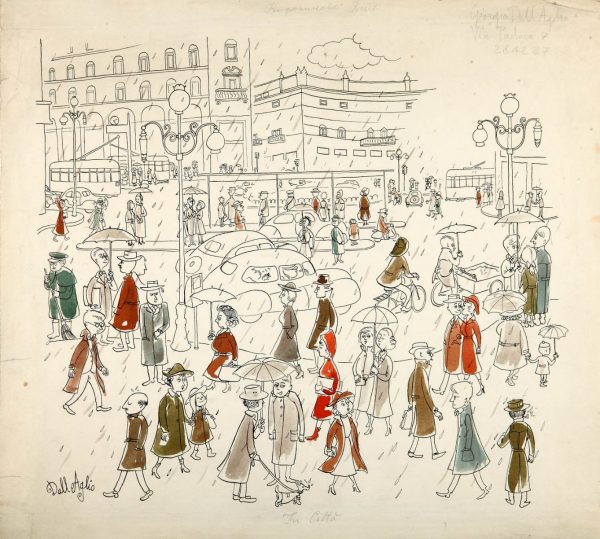
And then Milan, at the centre of the exhibition entitled “Visioni milanesi: Pirelli racconta la città” (Milanese views: Pirelli recounts the city) which aims at illustrating the city through pictures from Pirelli Magazine and the historical material preserved at the Pirelli Foundation. A visual journey that also portrays the transformation of Pirelli, a company with an international outlook, but deeply rooted to Milan and a constant presence in the city’s social and cultural life.

On 20th November, we celebrated the first-year anniversary of Pirelli corporate libraries, discussing books, good food and Milan. A sociable dialogue between the writer Alessandro Robecchi and Chef Filippo La Mantia, in the company of the director of the Pirelli Foundation, Antonio Calabrò.

Alessandro Robecchi has written noir books set in Milan and, in good tradition for this genre, from Black Wolfe to Inspector Montalbano, and Carlo Monterossi, the table has always been the focus around which we have conversed and cooked. There was talk of Milan, the Milan where Alessandro Robecchi grew up, and the Milan that has been able and continues to welcome immigrants from all over the world, as Filippo La Mantia recalled. Food was one of the main topics of the evening, from spleen sandwich to famous Adalgisa di Gadda risotto, and even the couscous prepared for the occasion by the chef from Palermo. Food and books: a combination that is also about cultural exploration.

A year for the new corporate libraries but almost a century of Pirelli libraries and initiatives aimed at promoting reading and culture. The evening was an opportunity to tell the story of a company that wanted to and continues to want to play a leading role in the promotion of culture on the Milanese territory, formerly with the first Pirelli library founded in 1928, which was active during the last century, and now also with the Pirelli Cultural Centre, a place of great cultural ferment, which has welcomed many artists and writers of the Milanese culture and beyond.

And then Milan, at the centre of the exhibition entitled “Visioni milanesi: Pirelli racconta la città” (Milanese views: Pirelli recounts the city) which aims at illustrating the city through pictures from Pirelli Magazine and the historical material preserved at the Pirelli Foundation. A visual journey that also portrays the transformation of Pirelli, a company with an international outlook, but deeply rooted to Milan and a constant presence in the city’s social and cultural life.

Multimedia

All
Images
Video

Corporate culture in the third sector

A thesis presented at the Sapienza University of Rome discusses the links between changes in the structure and the market for labour and the social economy

Companies and employment change in line with the transformations in technology which are available to them. This is a fundamental and, in appearance, a basic assumption, although in reality the links between companies, employment and technology hide important problems and also imply an ongoing transformation in the culture of manufacturing. The complexity of the relationships between these elements is enormous. And needs to be investigated with caution and care. And this is what Federico Fiorelli has attempted to do by looking into one aspect of the question, in his research for his doctorate in Sociology and Social Sciences presented to the “La Sapienza” University.

“Verso una nuova economia sociale. Il ruolo del Terzo Settore nel riassorbimento della disoccupazione tecnologica e nella soddisfazione dei nuovi bisogni sociali in Italia” (Towards a new social economy. The role of the Third Sector in the reduction of technological unemployment and in the satisfaction of the new social needs in Italy) is a complex work which seeks to correlate the evolution of the current industrial system with the employment prospects offered by the third sector. In greater detail, Fiorelli explains that the intention is that of “analysing the connection which arises between the evolution of capitalist society, by observing principally the changes in social needs, and the employment effects attributable to technological change”. The change in employment, according to the author, can be contrasted in its negative effects by thinking of a “greater hybridisation between the current structure of the capitalist market (tertiary, global and digital) and the third sector”. Furthermore: the third sector should not be “analysed as a dangerous anomaly of the economic system which occurs in the event that market failures persist”. On the contrary, it is seen “as a possible contribution to the economic structure faced with the emergence of profound social changes. The market and the third sector do not represent two opposing poles but, on the contrary, two phases of the same process which moves from a material dimension to transform itself towards a dimension where production becomes ever more virtual and distribution ever more relational”. Different corporate cultures but nevertheless similar ones, which intersect each other, and which develop complementary functions.

The journey taken by Fiorelli follows a classical route. First of all, a setting showing connections between society’s methods of study and the method of industrial manufacturing; then an investigation into the historical and organisational evolution of manufacturing sites, of technologies and of manufacturing methods; finally an examination of the relationships between the third sector and the employment market.

Towards the end of his thesis Fiorelli writes: “From a global perspective, technological unemployment becomes the effect of a market which is not always able to satisfy the social needs of individuals. Imposing new material needs and having recourse to technologies to reduce the prices of consumer goods, even when the latter represent “the incarnation of the superfluous”, involves continuing and unpredictable changes in the structure of employment”. Fiorelli then concludes by explaining that “the growth of manufacturing units which operate in the social economy determines the possibility of rebuilding a relationship between economic efficiency and social sustainability. Technological change requires a human capital which is better trained compared with the past, in the same way that the change in demand for social needs requires the production of new goods of a relational nature. Responding actively to these changes means recognising the importance of a hybridisation of the market economy”.

In the way it is written by Federico Fiorelli, this is not always an easy approach to the subject, but it makes the reader think and therefore represents a useful read.

Verso una nuova economia sociale. Il ruolo del Terzo Settore nel riassorbimento della disoccupazione tecnologica e nella soddisfazione dei nuovi bisogni sociali in Italia (Towards a new social economy. The role of the Third Sector in the reduction of technological unemployment and in the satisfaction of the new social needs in Italy)

Federico Fiorelli

Doctorate thesis, “La Sapienza” University of Rome Department of social and economic sciences, Doctorate Course in Sociology and Applied Social Sciences (‘SESSA’) XXIX Cycle, 2017

Verso una nuova economia sociale.

A thesis presented at the Sapienza University of Rome discusses the links between changes in the structure and the market for labour and the social economy

Companies and employment change in line with the transformations in technology which are available to them. This is a fundamental and, in appearance, a basic assumption, although in reality the links between companies, employment and technology hide important problems and also imply an ongoing transformation in the culture of manufacturing. The complexity of the relationships between these elements is enormous. And needs to be investigated with caution and care. And this is what Federico Fiorelli has attempted to do by looking into one aspect of the question, in his research for his doctorate in Sociology and Social Sciences presented to the “La Sapienza” University.

“Verso una nuova economia sociale. Il ruolo del Terzo Settore nel riassorbimento della disoccupazione tecnologica e nella soddisfazione dei nuovi bisogni sociali in Italia” (Towards a new social economy. The role of the Third Sector in the reduction of technological unemployment and in the satisfaction of the new social needs in Italy) is a complex work which seeks to correlate the evolution of the current industrial system with the employment prospects offered by the third sector. In greater detail, Fiorelli explains that the intention is that of “analysing the connection which arises between the evolution of capitalist society, by observing principally the changes in social needs, and the employment effects attributable to technological change”. The change in employment, according to the author, can be contrasted in its negative effects by thinking of a “greater hybridisation between the current structure of the capitalist market (tertiary, global and digital) and the third sector”. Furthermore: the third sector should not be “analysed as a dangerous anomaly of the economic system which occurs in the event that market failures persist”. On the contrary, it is seen “as a possible contribution to the economic structure faced with the emergence of profound social changes. The market and the third sector do not represent two opposing poles but, on the contrary, two phases of the same process which moves from a material dimension to transform itself towards a dimension where production becomes ever more virtual and distribution ever more relational”. Different corporate cultures but nevertheless similar ones, which intersect each other, and which develop complementary functions.

The journey taken by Fiorelli follows a classical route. First of all, a setting showing connections between society’s methods of study and the method of industrial manufacturing; then an investigation into the historical and organisational evolution of manufacturing sites, of technologies and of manufacturing methods; finally an examination of the relationships between the third sector and the employment market.

Towards the end of his thesis Fiorelli writes: “From a global perspective, technological unemployment becomes the effect of a market which is not always able to satisfy the social needs of individuals. Imposing new material needs and having recourse to technologies to reduce the prices of consumer goods, even when the latter represent “the incarnation of the superfluous”, involves continuing and unpredictable changes in the structure of employment”. Fiorelli then concludes by explaining that “the growth of manufacturing units which operate in the social economy determines the possibility of rebuilding a relationship between economic efficiency and social sustainability. Technological change requires a human capital which is better trained compared with the past, in the same way that the change in demand for social needs requires the production of new goods of a relational nature. Responding actively to these changes means recognising the importance of a hybridisation of the market economy”.

In the way it is written by Federico Fiorelli, this is not always an easy approach to the subject, but it makes the reader think and therefore represents a useful read.

Verso una nuova economia sociale. Il ruolo del Terzo Settore nel riassorbimento della disoccupazione tecnologica e nella soddisfazione dei nuovi bisogni sociali in Italia (Towards a new social economy. The role of the Third Sector in the reduction of technological unemployment and in the satisfaction of the new social needs in Italy)

Federico Fiorelli

Doctorate thesis, “La Sapienza” University of Rome Department of social and economic sciences, Doctorate Course in Sociology and Applied Social Sciences (‘SESSA’) XXIX Cycle, 2017

Verso una nuova economia sociale.

Cinema & History 2017-2018
Interpreting Today’s World

Teachers can now register for the new “Cinema & History” training and refresher course created by the Pirelli Foundation in cooperation with Fondazione ISEC – Institute for the Study of Contemporary History – and Fondazione Cineteca Italiana. This year’s course, entitled “For a Lexicon of Modernity: Understanding and Teaching the Contemporary Age”, addresses some of the great issues of the contemporary world: geopolitics, the new frontiers of work, and the relationship between the world of finance and the real economy.

The course, now in its sixth edition, consists of three lessons, three workshops and a film screening. And, in particular, the Pirelli thematic workshop. A history of work, from the twentieth-century factory to digital robots, will allow participants to follow an itinerary that goes from today’s Pirelli Headquarters inside the former cooling tower to the Milano Bicocca plant, where they will see Next MIRS digital robots at work.

The activities for teachers also come with two film screenings introduced by film history scholars. The screenings will be held in the morning and will also be open to student classes who may be interested.

The course is free of charge and registration is required by Monday 15 January. Please write to didattica@fondazioneisec.it

Teachers can now register for the new “Cinema & History” training and refresher course created by the Pirelli Foundation in cooperation with Fondazione ISEC – Institute for the Study of Contemporary History – and Fondazione Cineteca Italiana. This year’s course, entitled “For a Lexicon of Modernity: Understanding and Teaching the Contemporary Age”, addresses some of the great issues of the contemporary world: geopolitics, the new frontiers of work, and the relationship between the world of finance and the real economy.

The course, now in its sixth edition, consists of three lessons, three workshops and a film screening. And, in particular, the Pirelli thematic workshop. A history of work, from the twentieth-century factory to digital robots, will allow participants to follow an itinerary that goes from today’s Pirelli Headquarters inside the former cooling tower to the Milano Bicocca plant, where they will see Next MIRS digital robots at work.

The activities for teachers also come with two film screenings introduced by film history scholars. The screenings will be held in the morning and will also be open to student classes who may be interested.

The course is free of charge and registration is required by Monday 15 January. Please write to didattica@fondazioneisec.it