

The changing relationship between capital and labour in business


A book describing the various forms of relationship between the two fundamental components of a company is published
Capital and labour come together to create and operate a business. The two are inseparable, even with the advent of new technologies. Human relationships within companies are fundamental, and these companies also become businesses for this reason.
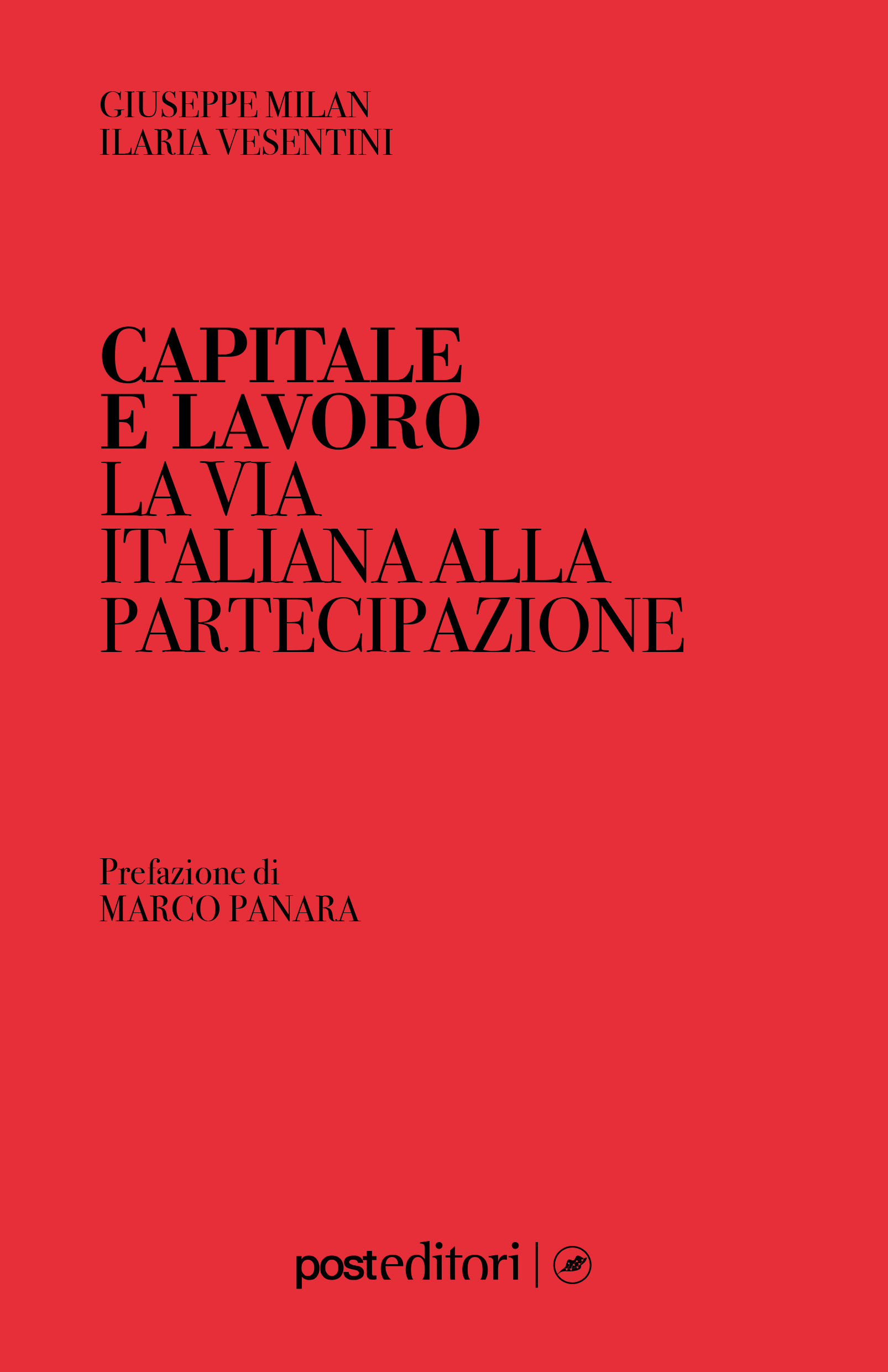
Giuseppe Milan and Ilaria Vesentini capture this well in their book, ‘Capitale e lavoro la via italiana alla partecipazione’ (Capital and work: The Italian way to participation), which begins with the law on worker participation, and goes on to explore the wide range of business relationships. The authors examine the subject from five different perspectives: that of the entrepreneur, worker, lender, professional and manager. The analysis is consequently carried out from the institutions’ perspective, examining a series of real-life cases: Sonepar, Bonfiglioli, Umbra Group, Zordan, Duferco and Sogno Veneto. The same theme is then explored in greater depth on the basis of current experiences in other countries.
Milan and Vesentini observe that ‘without capital and labour, there is no enterprise, no wealth creation and no growth. However, for growth to occur, it is not enough to simply have businesses; they must also constantly increase their productivity. This is what the Italian system has been unable to achieve for at least a generation: it is the starting point for any reasoning, reform or policy that aims to ensure a prosperous future for the country. Stagnating productivity is the reason for the lack of wage growth and the decline in Italian per capita income, both relative to comparable countries and the European average. This has led to the general impoverishment of the country and the weakening of its welfare system, which is essentially funded by labour, given that investment income enjoys preferential tax treatment in Italy.
Capitale e lavoro la via italiana alla partecipazione
Giuseppe Milan, Ilaria Vesentini
POST Editori, 2025