
To combat violence against women, we need accessible and civilised language to educate people about emotions and respect


‘We must educate in the language of respect,’ says President of the Republic Sergio Mattarella, emphasising the need for a commitment from institutions, cultural organisations, schools, families and the wider community to try to stop the increasing violence against women. This political and moral commitment is presented as a long-term strategy and a basic condition of civil coexistence and, therefore, of a full democracy founded on the combination of freedom and responsibility.
Anniversaries such as the celebration of 25 November, the ‘International Day for the Elimination of Violence against Women’, are fundamental in raising public awareness, and initiatives in this vein are therefore welcome, such as the ‘minute of noise’ organised in Piazza della Signoria in Florence by Quotidiano Nazionale/La Nazione, which is the opposite of the fearful silence of the victims and the often complicit silence of many others. Other examples of events in Italian cities include the ‘red wave’ of ten thousand women in Milan’s square (accompanied by many men) and the recent protests against a ‘rape list’, which appeared on the walls of the boy’s toilets at ‘Giulio Cesare’ high school in Rome just the day after the 25 November anniversary.
However, we must go beyond the symbolism of designated days and insist on fundamental choices that will reverse the increasingly serious, dramatic and intolerable climate of violence and rape, including femicide (77 cases in 2025 according to the NonUnaDiMeno Observatory), harassment, verbal insults and hate speech online, manipulation and discrimination. We need to work on education, culture and norms, and indeed on ‘educating in the language of respect’ and caring about feelings.
Parliament has addressed this issue with a law that was unanimously approved by the Chamber of Deputies. This law introduces the crime of femicide and defines consent in sexual acts as ‘free and current’, meaning it must be evident at every moment of the act. ‘Only yes means yes’, as Il Sole24Ore summarised on 25 November. But progress ground to a halt in the Senate on the anniversary of the protests against violence towards women due to resistance from Lega, who held back the centre-right and the government. ‘Missed opportunity’, read the headline in La Stampa on 26 November. The parliamentary majority assures that it will be discussed again in January.
Setting aside political manoeuvring, it is worth heeding President Mattarella’s advice to raise our eyes. The law is important, of course, but enforcement alone is not enough. We continue to be confronted with deep divisions in society regarding gender equality. This was recently exemplified by a government minister’s statement that ‘there is a resistance to gender equality in man’s DNA’. This divide affects rights, labour, wages, incomes and the values that characterise a civilised society. The goal must be to promote female independence, including economic independence.
Let’s talk about language. La Stampa (25 November) ran a headline reading ‘The violence of words’ for an article by Massimiliano Panarari documenting how ‘hatred flows every day, especially against women’, and how ‘from politics to sport, even language becomes a weapon to crush those perceived as weaker’. Words are stones, not because of their solid, incisive importance (in the sense of Carlo Levi’s beautiful literary synthesis) but because they are capable of striking, hurting and upsetting. In male-dominated and patriarchal societies, stoning is used as a form of punishment against women.
The context is one of degradation. For years, we have been facing an increasing impoverishment of language: a drying up of vocabulary (everything is ‘cute’, ‘cool’, ‘extraordinary’ or ‘fantastic’), and emotions are being reduced to basic social media tools such as ‘likes’ and emojis. So, crude expressions that open the door to love/hate dynamics. Tribal and clan logic (friends and enemies). And violence.
However, feelings, even those concerning affection, are a complex mix of often conflicting emotions. Accurately representing them requires words and images capable of doing justice to their rich complexity. As evidenced by the verses of the Song of Songs and the Greek lyricists, as well as the contrasting works of Catullus and Ovid (‘I can live neither with you nor without you’) and Prevert (‘Young people in love embrace standing up, leaning against the gates of the night’), not to mention the countless songs that speak of love (‘…empty is the city if you are not there’ by Mina), love is a universal theme.
Educating on love and feelings is essentially educating on language, and the richness, variety and strength of words.
Looking again at Shakespeare’s The Merchant of Venice, with Portia’s legal trickery and romantic twist that reverses the fortunes of Antonio, the debtor. Then Mozart’s Don Giovanni, with Zerlina’s emotional turmoil and Donna Elvira’s torment and redemption. These are extraordinary women who deserve our attention and respect. Then there is Leopardi with his Silvia. Then Szimborska’s ‘Love at First Sight’: ‘Every beginning, in fact, is only a continuation, and the book of events is always open in the middle’. And Alda Merini: ‘Last night was love, you and I, fugitives and runaways…’. Listening again to Schubert’s music and Brahms’ compositions dedicated to his beloved Clara Schumann. And thinking about great works of art, like Antonello da Messina’s depiction of the face of the Annunciation, with her hand stretched forward to ask the Angel with gentle firmness to stop time and thus allow her to understand what that act of love, that conception, of which she had just been made aware was (the model for that Madonna was the woman intensely loved by the painter).
Working with words and stories told through images that evoke intense feelings and values, insisting on the importance of emotions, even in the inevitable cycle of love and pain, waiting and meeting, ecstasy and mourning. In recognising that all love is imperfect because we are all imperfect, men and women alike, and that in the intertwining of feelings, truth is a fire that burns away the dross of silence and misunderstanding, opening up new, unexplored paths.
A lesson in literature, art and everyday life. It is an unusual and surprising way of life that overturns apparent oxymorons. Lucio Piccolo, the elegant and melancholic poet and cousin of Giuseppe Tomasi di Lampedusa, wrote, ‘Even the bramble had its bends of sweetness, even the plum tree had its whiteness.’ It is about learning to look beyond the banality of appearances. Knowing that even in the worst moments, there is hope for change, the ‘sweetness of the bramble’, as it were.
The emotional, sexual and relational education that schools are asked to provide is just that: far from a rigid manual on gender, it is the thoughtful reading of the classics and current affairs (the reasons of the heart, even plumbing the depths of the ‘heart of darkness’). It is a cultural and civil education. Words indicating the quality of relationships are emphasised: kindness, for example; listening; gentleness; the attitude of ‘taking charge’; the ability to recognise ‘the other’s gaze’ and thus recognise oneself; the habit of using ‘we’ instead of the egocentric ‘I’ in love stories.
And so, we should avoid the unhappy and mournful myth of Narcissus (unfortunately so fashionable today, especially among powerful men). Instead, we should reflect on the myth of Ulysses, a man capable of loving knowledge and a woman, Penelope, and the other precious women who have given meaning to our lives. My patient grandmother was a teacher, for example.
There it is: education in the language of feelings, and the ability to come to terms with one’s emotions; to understand, process and renew them; and to keep them alive. It means avoiding the intoxication of success, and accepting the heaviness of defeat and the loneliness of night, as in every human story. It means going ‘beyond fragility’ and taking an example from the Japanese art of kintsugi: repairing precious things with a golden thread and giving them life again. Trying to find harmonies in our lives and relationships, with patience and perseverance. Love is passion and impetus, of course, but also the careful cultivation of feelings and bonds.
Life, even love life, is a sense of limits, of falling and recovering. ‘The daring descents and the climbs,’ sang the lovable musical poet, Lucio Battisti.
It is in this complex wealth of values that we must build and strengthen the ‘family lexicon’, in order to cope with violence against women and to understand the meaning of love that is not based on domination, prevarication, manipulation or violence, but on care and respect,
good manners and consideration, from childhood onwards, at school and in workplaces and in society as a whole.
This is precisely the ‘language of respect’ of which President Mattarella speaks. It is up to each of us to build and strengthen this language, as a social, cultural and civil duty and responsibility, starting with ourselves as individuals.
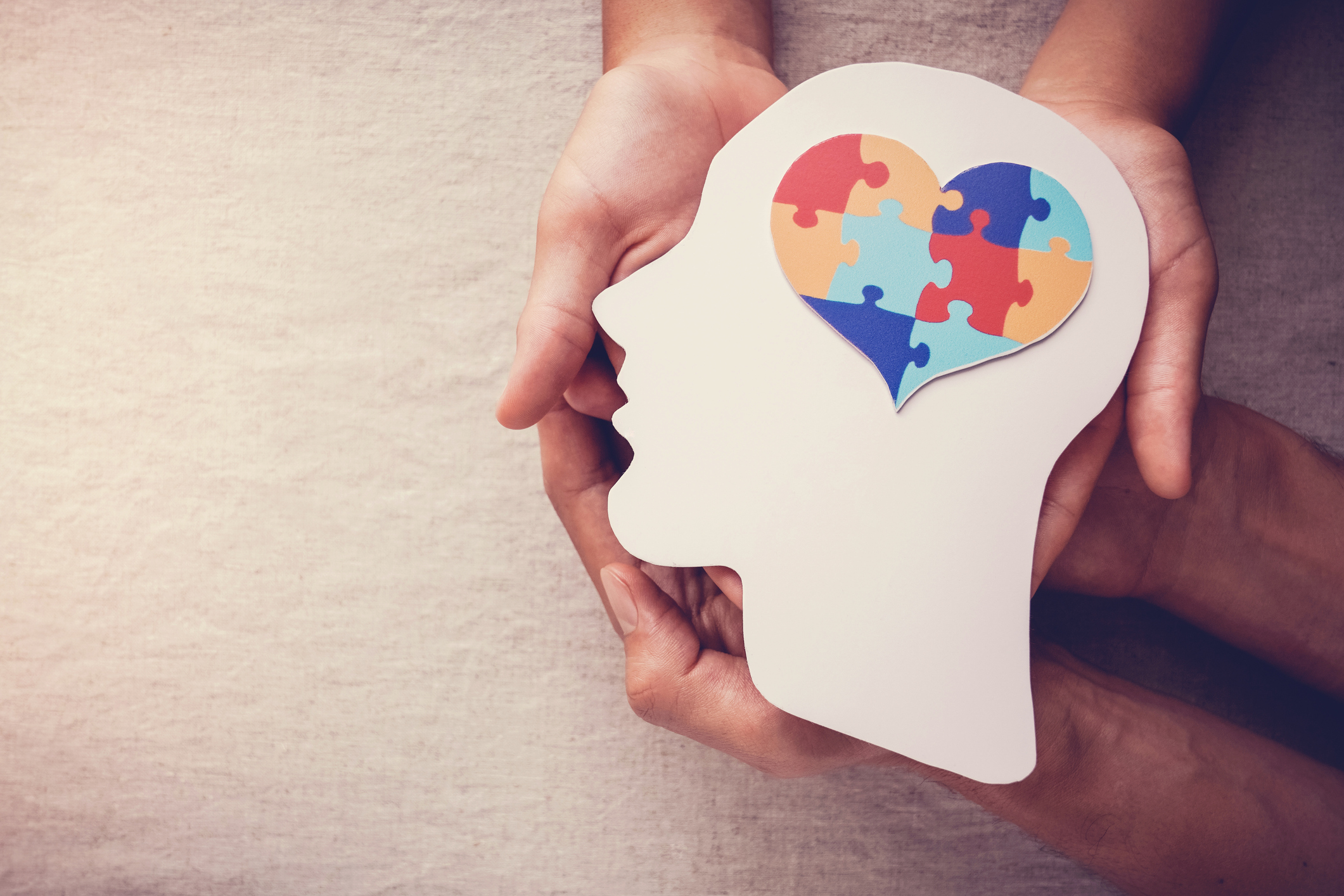
(Photo Getty Images)