

Miracle in Milan: living in a tiny 13-square-metre flat


Miracle in Milan: attempting life in a 13-square-metre micro-flat in an old council block dating from 1881. It has been renovated, but only just. It has its own bathroom, which is no longer located on the balcony (although it is only 1.09 square metres in size). Amidst the whirlwind of changes sweeping through one of the world’s most expensive cities, the story of this little home has quite rightly made the news (Il Corriere and Il Giorno, 11 April). And it has started yet another debate about the quality of life in a city that is becoming increasingly divided. On the one hand, there are the myriad lights of luxury shop windows and buildings changing hands for over a billion euros as they pass from one property fund to another. On the other hand, there are the new and old forms of poverty affecting the middle and working classes, who are struggling with a basic necessity: housing.
The story of the ‘micro-home’ (Can you live in it? Can you sell it?) is complicated by disputes over certificates and planning permissions that have been granted but then called into question. There are also bureaucratic doubts about how anyone can live in an area of just 13 square metres (less than 10 square metres if you exclude the bathroom and kitchen), when Milan’s building regulations stipulate a minimum of 28 square metres for a property to be considered habitable. However, the building dates from the 19th century, so the rules are more recent. Finally, there is a ruling from the TAR (Regional Administrative Court) that allows the owner to sell their tiny home to someone who wanted it and has already paid a deposit. It looks like the case will continue like this for some time.
The bitter aftertaste left behind is that of a story about people struggling to make ends meet while the affluent middle class no longer bat an eyelid at ordinary homes costing ten thousand euros per square metre.
A Miracle in Milan, indeed.
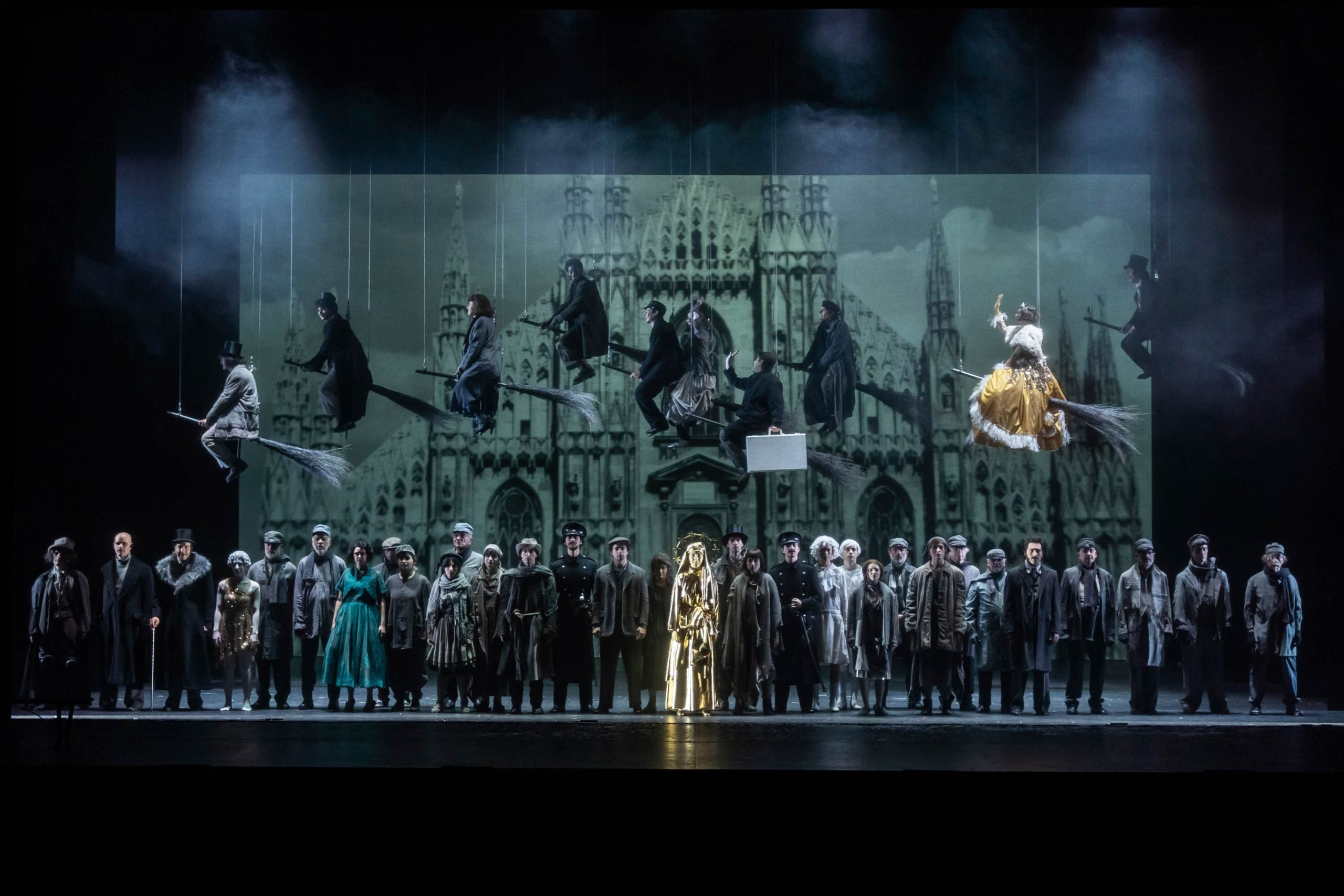
And yet Milan used to be something else. Without succumbing to false nostalgia or becoming too melancholic, it is worth taking a trip down memory lane and heading to the Piccolo Teatro in Milan one evening, where Claudio Longhi, the great director, is staging ‘Miracolo a Milano’ (Miracle in Milan), a ‘theatrical fairy tale in twenty chapters and a prologue’, based on the screenplay of the 1951 film by Cesare Zavattini and Vittorio De Sica and adapted by Paolo Di Paolo and Lino Guanciale (who also gives an excellent performance in the play).
This is a story of the poor, who display imagination and creativity in the art of making do. They have a strong sense of social solidarity and the ability to carve out a life for themselves, however ramshackle it may be. They also have a matter-of-fact, yet never cynical, approach to coming to terms with life as it is, with all its pain, losses, loneliness, disappointments, abandonment, unrequited love, and not having enough money to afford the luxury of nostalgia. In fact, you will laugh if you can, or at least you will smile, as dreams follow the canals and the orphan Totò ‘the Good’ wisely remains optimistic despite everything.
Zavattini and De Sica wrote Miracle in Milan to depict the lives of the poor and their struggle to make ends meet while awaiting the imminent economic boom, when shop windows would be filled with double-breasted, camel-coloured coats for businessmen and fur coats for the women of the town. The film was a success, moving from the bleakness of neorealism to a gentle, ironic melancholy.
‘Perhaps we never truly love a city in its entirety, nor do we ever truly know it in its entirety. There’s always too much going on elsewhere, a life we know nothing about. A city is, above all, everything else apart from us, apart from me, apart from you, the infinite points at which we exist,’ wrote De Sica and Zavattini at the time.
‘It’s a fairy tale,’ says Claudio Longhi. How much can a fairy tale encompass? How many hopes? How many times have we waited for someone or something that never arrives? How many tears? How many laughs? How many 13-square-metre flats? Is it possible to live out a love story in one’s dreams?
The time has come for Milan, thanks in part to the thoughtful work of its theatres, to start coming to terms with itself once more, and to learn to listen to its heart again in the spirit of Savinio.
The news reports are merciless, telling us that ‘after the gentrification of NoLo, it’s Via Padova’s turn, with rising house prices driving out the poorest families’. On 27 March, La Repubblica cited data from a Polytechnic University study on the ongoing transformation of the area, reporting that 44% of the new residents have a university degree, while 60% of those who left have moved out of town. The Polytechnic also explains that property prices in the working-class districts of Gorla, Precotto and Adriano have risen by 61% over the past 20 years, while incomes have risen by just 7%. The detailed reports state that ‘cohousing’ is becoming increasingly popular. Corriere della Sera (27 March) reports that elderly families in Cinisello have created a new kind of community in which lonely elderly people and young people struggling to find accommodation exchange hospitality for services provided to this unique, small community.
There is no doubt that cities are creative. Neither lament nor amazement is appropriate here. Cities are living, ever-changing, dynamic entities that follow market trends, though they should not be left entirely at the mercy of market forces. They do not concern themselves with dreams or ‘miracles’. Nevertheless, even without expecting miracles, good governance is required, and the council assures us that it is taking action. Milan has repeatedly shown that, despite everything, it is capable of being a community.
This is indeed part of what makes Milan so special. It’s not about performing miracles, but helping people to live dignified lives through good governance and civic responsibility. And if you do go to the theatre, the Piccolo, it is also to remember the importance of a humanity that never turns a blind eye, to remember hospitality and solidarity, perhaps wearing something between a smirk and a smile.
The magic can also return when you reread a poem. As Umberto Saba might suggest: ‘Among your stones, in your fog, I go on holiday. I rest in Piazza del Duomo. Instead of stars every evening the words light up.’
A Miracle in Milan?
Foto © Masiar Pasquali / Piccolo Teatro di Milano – Teatro d’Europa