

The limitations of Milan, a city of singles and the ‘lonely crowd’


In 1950, David Riesman, one of America’s leading sociologists, wrote ‘The Lonely Crowd’. Within just a few years, the book had become essential reading for anyone seeking to understand the social dynamics of America’s major cities. Published in Italy in 1956 by Einaudi, it sparked some debate, as was often the case with the publication of sociological works in Italy at the time. Hollywood films had gradually introduced us to bustling streets full of people in a hurry, each going about their own business; detached houses in the suburbs; tiny flats in Manhattan; and underground carriages packed with strangers who were indifferent to one another. But for us, this was still all just a film, a story set in another world. We lived in bustling villages with close-knit families, bustling squares where everyone knew one another, and had complex family ties.
The situation here changed, too, when large waves of migration emptied the southern villages and swelled the ranks of the industrial cities from the mid-1950s right through to the late 1960s. A whole new world.
New jobs, new urban rhythms and new forms of social interaction. Here too, between Milan and Turin, Riesman could now find his solitary crowds. In just over half a century, cities have changed in terms of their pace of life, social make-up, and habits. They are also having to come to terms with new forms of loneliness, which are often linked to deprivation in the form of not just economics, but also society and culture.
A recent article in ‘Il Giorno’ (11 March) reveals the figures behind the phenomenon: ‘The lives of Milan’s 435,000 singles’. Let’s take a look at those numbers: 57% of the more than 780,000 households consist of a single person. These include the elderly, pensioners, widows and widowers, as well as young people flocking to university courses. Milan, with around 230,000 students, is Italy’s largest university city and remains highly sought-after, offering a guarantee of academic quality, job opportunities and good salaries. At the Politecnico, 61% of young foreign students remain in Italy (la Repubblica, 15 October).
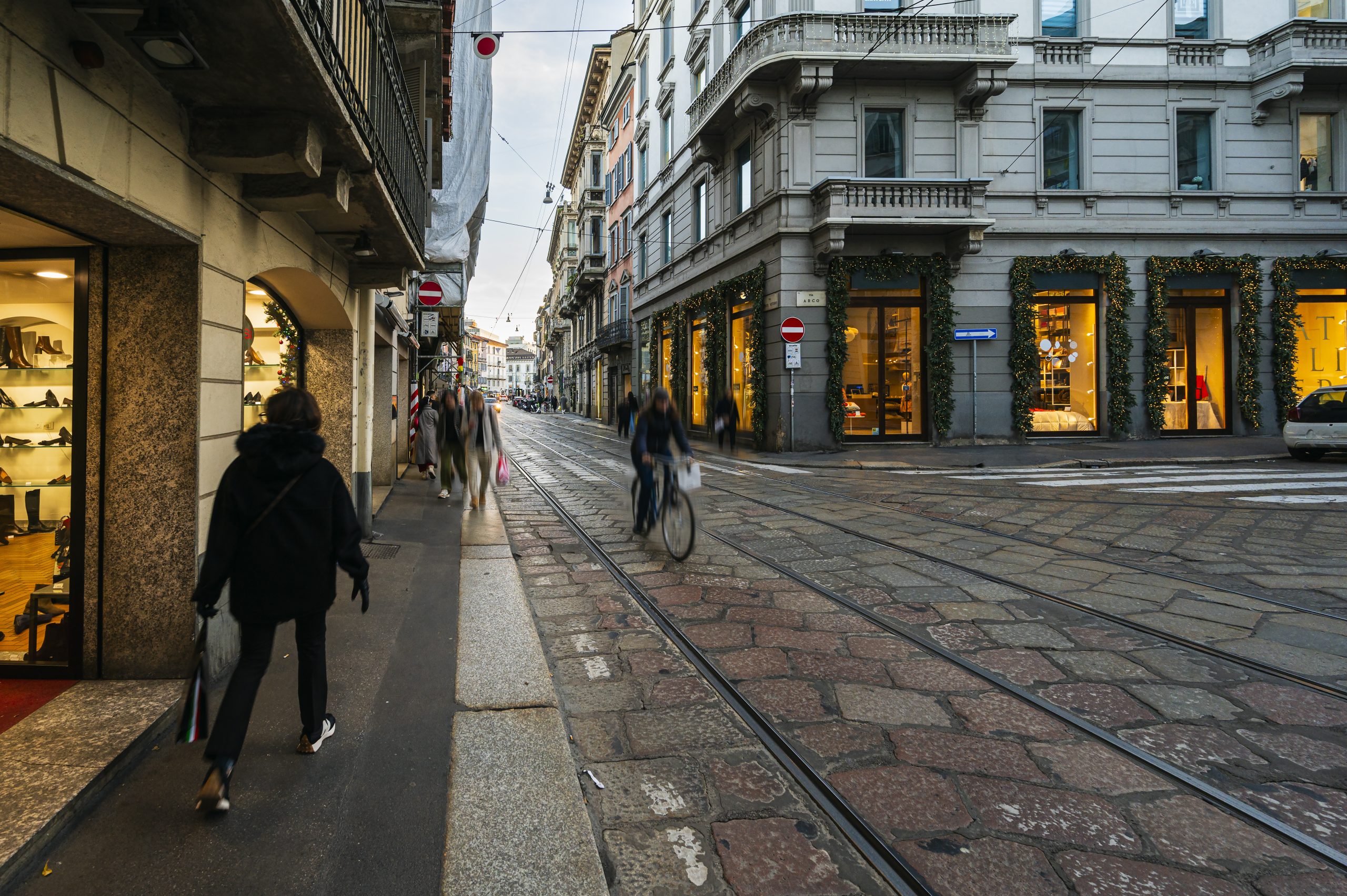
An extraordinary transformation is currently underway in Milan, affecting services, urban planning, the property market, transport, leisure and even the daily commute between the city and its surrounding areas. Every day, around a million people arrive in the city, adding to its current population of 1.4 million and radically changing things.
The situation has changed considerably over the last thirty years: in 1990, there were 295,000 single-person households, a figure which rose to 368,000 in 2011 and exceeded 400,000 in 2019. The latest data, from 2024, puts this figure at 434,000. And the trend is on the rise: a city of older people whose numbers are growing, while the number of children is falling. Birth rates have fallen by 14% over the past five years, and forecasts suggest that 40% of nurseries will close by 2036.
Naturally, statistics and forecasts should be treated with caution. But one thing is certain: the services being prioritised are primarily those related to healthcare and the elderly, rather than early childhood education and care. This is despite the fact that Milan boasts some outstanding provision thanks to its mix of public and private facilities.
Milan is an expensive city, especially since the Renzi law introduced a flat-rate tax of €200,000 a year for those looking to take up residence there.
While it has certainly led to an increase in the number of five-star hotels, top-class restaurants and luxury shopping, it does not appear that the measure has attracted significant industrial, commercial or financial investment to the city.
However, cities are living, dynamic entities that are constantly changing and cannot be attributed solely to market forces. Milan has finally realised that a proper welfare plan is needed, following years of great success in attracting visitors, a tourism boom and the arrival of tens of thousands of young university students. The city must rebuild new chains of solidarity in neighbourhoods, schools and community centres. And in libraries. In the city where the most books are sold in Italy, the Department of Culture has launched a plan to increase the number of libraries and link them together, including school, corporate, local and residents’ association libraries, as well as hospitals and prisons.
Because, sometimes, the loneliness of the crowd can be eased simply by having a place to go and read a good book.
(photo Getty Images)