
War paves the way for recession, as well as for destruction, suffering and death


War benefits few. Arms dealers and manufacturers, major financial speculators in commodities (oil, for instance), and those who raze entire cities (Gaza, for example) only to rebuild them. With a few other exceptions, for the rest it is a disaster. First and foremost, for the destruction and the deaths; for the orphaned children; for the shattered lives of the many who so much more peacefully deserved better. And for the poverty that spreads, burning through resources that could have been put to far better use.
Except for a few, war is a terrible business. Yet they carry on.
Rightly set against a dark brick-red background, Il Sole24Ore ran a disturbing front-page story a few days ago (on 3 April, to be precise). The full-page headline read: ‘Europe at risk of a technical recession’. The figures are all negative. GDP is slowing, inflation is rising, the economy is struggling and jobs are being lost. These are all familiar phenomena to those who deal with the economy on a daily basis. More generally, in simple terms, this means there is far less money available in the coffers of national governments and the EU to fund a range of essential expenditure and investment, for public services and for wages. Recession is a nightmare and a threat of further political and social tensions.
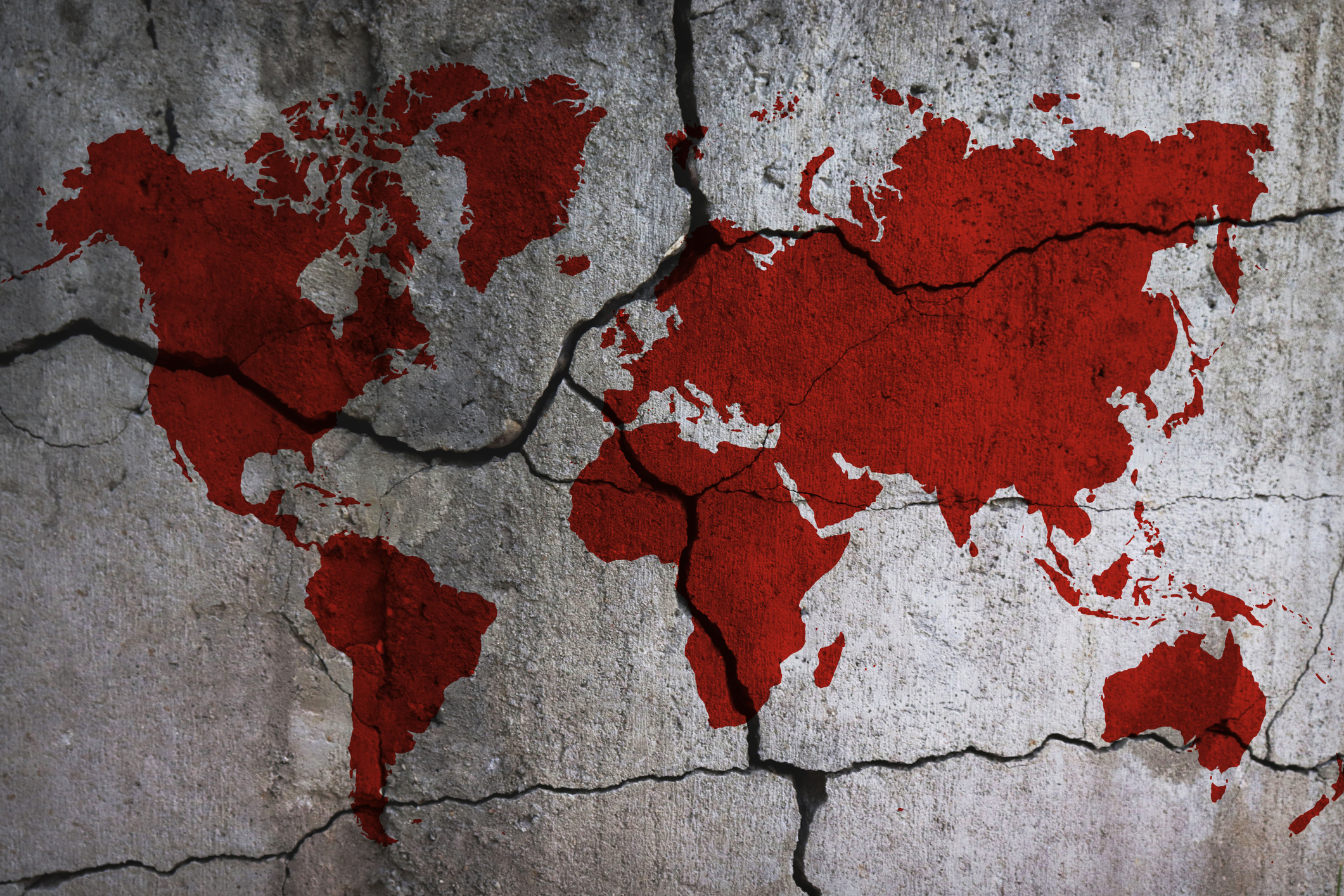
Towards the end of his pontificate, Pope Francis spoke of a ‘piecemeal third world war’. He was right. Just look at a map and mark out the conflict zones: the Strait of Hormuz, the tense areas of the Middle East, Gaza and Ukraine, and the skies criss-crossed by warplanes at perpetual risk of collision. Fleets on the move towards strategic locations, starting with the waters around Taiwan, Greenland being claimed by fair means or foul, and so on, the situation is getting worse. The latest reports tell us of a massive military standoff in the space above us.
This might bring to mind a giant game of Risk, except that it is not a game; history concerns us all. If we pay attention to the words that fill our everyday language, we realise that the number of words used in an aggressive way has increased. Terrible threats have become commonplace in political discourse. Trump: ‘Another two or three weeks of conflict. We will send Iran back to the Stone Age’.
The Stone Age…
Apart from the realisation that no terrible action exists that does not provoke equally terrible ones (common sense, not sophisticated studies from West Point; and Iran is armed with intercontinental missiles capable of reaching major European cities), the issue on which those who still reason, politicians, and people of culture and knowledge who still know how to deal with a conscience should focus their utmost attention is how to play the few cards on the table to prevent disaster. Today it’s recession, tomorrow it’s the hell of Hormuz, and the day after it’s Star Wars.
In this dire scenario, Europe plays a far from marginal role. It has solid democracies (although these are too often thrown into crisis by the mediocrity of its ruling elites), a robust ability to balance welfare, business and freedom, and a well-established tradition of negotiation. Its limitations in terms of political clout have been laid bare during this period of dramatic crisis. But its diplomatic capabilities remain intact when dealing with vast regions of the world, such as India, Latin America and Canada. There remains a solid shared culture upon which to build policies and institutions to re-establish a period of exchange and find ways to avoid muscular confrontation between the US and China. We are the democratic West and we have cultures and capabilities to champion and assert.
In short, what is needed is a Europe that, first and foremost, develops a sense of its own identity and, together with an initial group of countries, tackles the issues of security, energy, innovation and the patient rebuilding of international trade networks. The ‘Draghi Plan’ offers useful guidance in this regard.
Amidst the confusion of bellicose rhetoric and the growing difficulties facing Western institutions and NATO itself, Europe is showing small but significant signs of resilience and of strengthening its role, this is an essential path to follow.
In terms of language and popular culture, while some refer to the ‘Stone Age’, it could also be beneficial to draw on cinema to remind people, particularly the younger generations, of the reality of war. This is not to glorify spectacular scenes, but to highlight the burden of destruction, suffering and death beyond them.
Maybe it would be useful if the world’s major television networks began to broadcast films about the folly and devastation of war. From classics such as ‘All Quiet on the Western Front’ and ‘The Desert of the Tartars’, to ‘The Great War’ starring Gassman and Sordi, Clint Eastwood’s ‘Flags of Our Fathers’ and ‘Darkest Hour’ starring Gary Oldman. Lest we forget.