
The world saved by kids and the return of political passion


‘I was learning so many things while I taught. For instance, that others’ problems are like mine. To come out of them together is good politics. To come out alone is stinginess.’ This now famous passage appears in Letter to a Teacher by Don Lorenzo Milani, a seminal work on pedagogy, civic education and good politics. It was essential reading for the tens of thousands of young people who discovered the injustices of the school system in the mid-1960s. The system with a tendency to marginalise the weakest and poorest children and contradict the Constitution’s aim to pave the way for and favour ‘the capable and the deserving’.
Don Milani’s words are worth reading carefully once again, particularly at a time when the younger generation is facing a barrage of conflicting judgements: a lack of interest and apathy towards civic engagement and solidarity, and emotional reactions to major global issues alongside an excess of fickle emotionalism.
According to Don Milani, there is one word that deserves our attention: ‘together’. It was precisely this combination of commitment and mobilisation that had a significant influence on the outcome of the recent referendum on the separation of judicial careers, resulting in a resounding victory for the ‘no’ vote. This was largely due to the younger generation’s decision to vote in large numbers and reject what they perceived as an amendment to the Constitution that touched upon its fundamental principles.
It is still too early to say that there is a certain political wind blowing or that renewed interest in the country’s future is emerging. Of course, anyone observing the ideas, tensions and passions of younger generations will notice a growing awareness of major social issues, such as uncertainties about the future against the backdrop of ongoing conflicts, sweeping changes to the world of work, a lack of authoritative points of reference, and a school system that is perceived as failing to provide students with the tools to understand radical global changes or the skills to navigate technological shifts and enter and progress in the world of work.
These are times of uncertainty and hardship. But now there is something more to it, as demonstrated by the voting trends in the referendum: the desire to be part of the process, combined with a willingness to have their say without placing their trust in traditional political leaders. ‘If young people vote for an idea rather than specific politicians, voting “No” in the referendum is not a vote of confidence in the centre-left, but an expression of their personal opinion,’ comments Matteo Lancini, a scholar specialising in the turbulent years of adolescence (La Stampa, 27 March).
It’s good that people are taking an interest in politics and civic values again. For what are known as ‘republican virtues’, the ability to breathe new life into the political sphere and the values cast aside by decades of cynicism and the mere exercise of power for power’s sake.
Indeed, the world of volunteering, in all its forms, both Catholic and secular, demonstrates a profound social and civic commitment. It shows a growing willingness to work together to overcome problems, which is the very opposite of selfishness.
However, there are also other signs that are worth picking up on and turning into expressions of engagement, an understanding of changing circumstances and personal commitment. These include the emergence of political schools distinct from traditional party schools, associations such as Vedrò (which enjoyed success in terms of debate and political analysis a few years ago), and above all, growing participation in literary and historical festivals, book clubs, discussions and shared reading groups. There is a community spirit, but also a desire for debate beyond the confines of a political landscape that, sadly, seems to have little to say about the future, such as the environment, employment, peace, social and civil rights, and equality. And the hope of a better future.
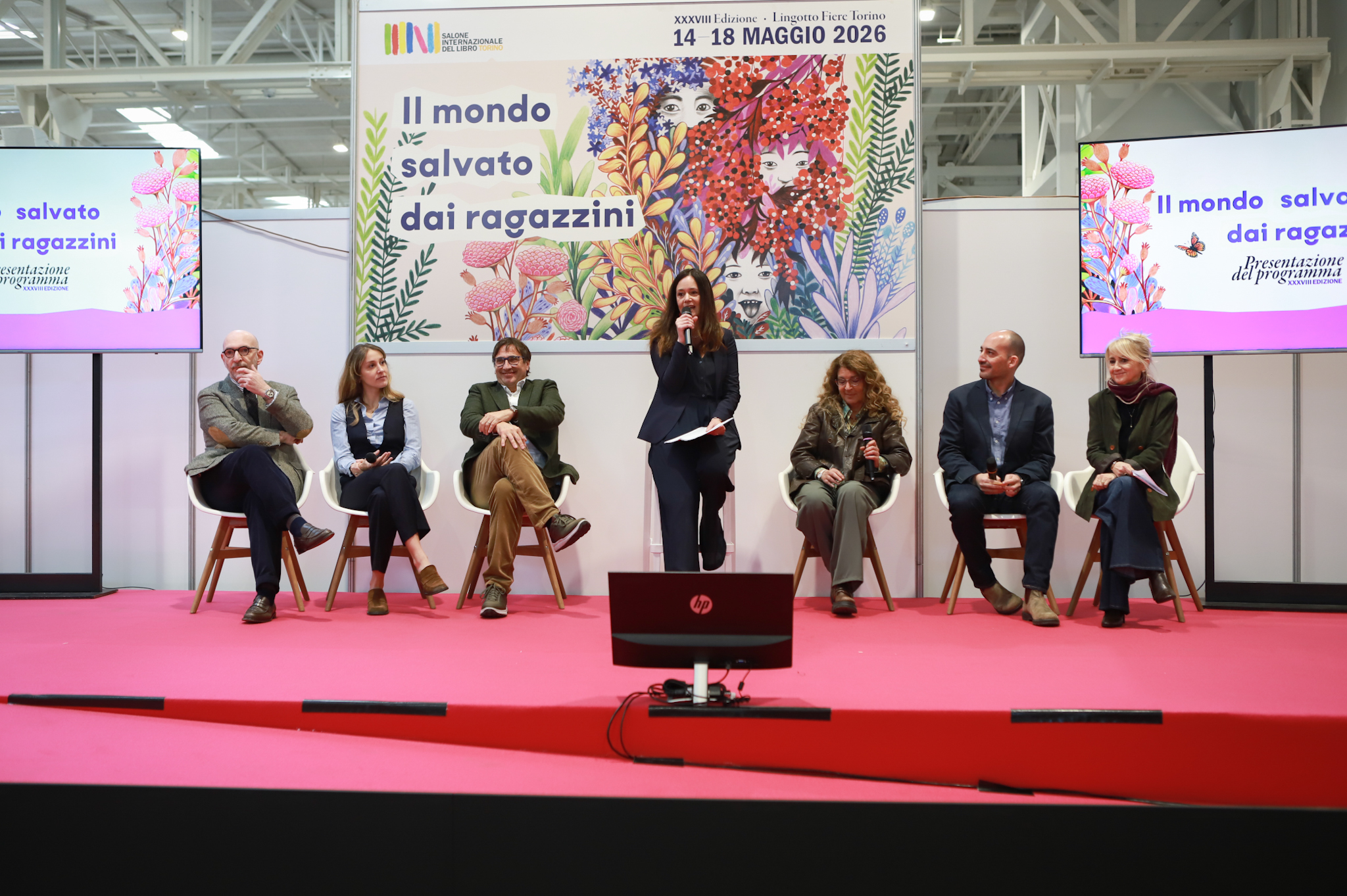
In light of these considerations, the theme of the new Turin Book Fair, which opens in a few days’ time, seems perfectly apt: ‘The world saved by kids‘.
The title is inspired by one of Elsa Morante’s finest books: a collection of poems, songs, nursery rhymes, games, and reflections. It is a movement ‘against the hypocrisy of adults’, encouraging us to break down the barriers of power and selfishness.
The title carries the weight of a glimmer of hope. The kids at the Book Fair could really bring its spirit to life.
(photo by Giulia Travaglio)