Help with your research

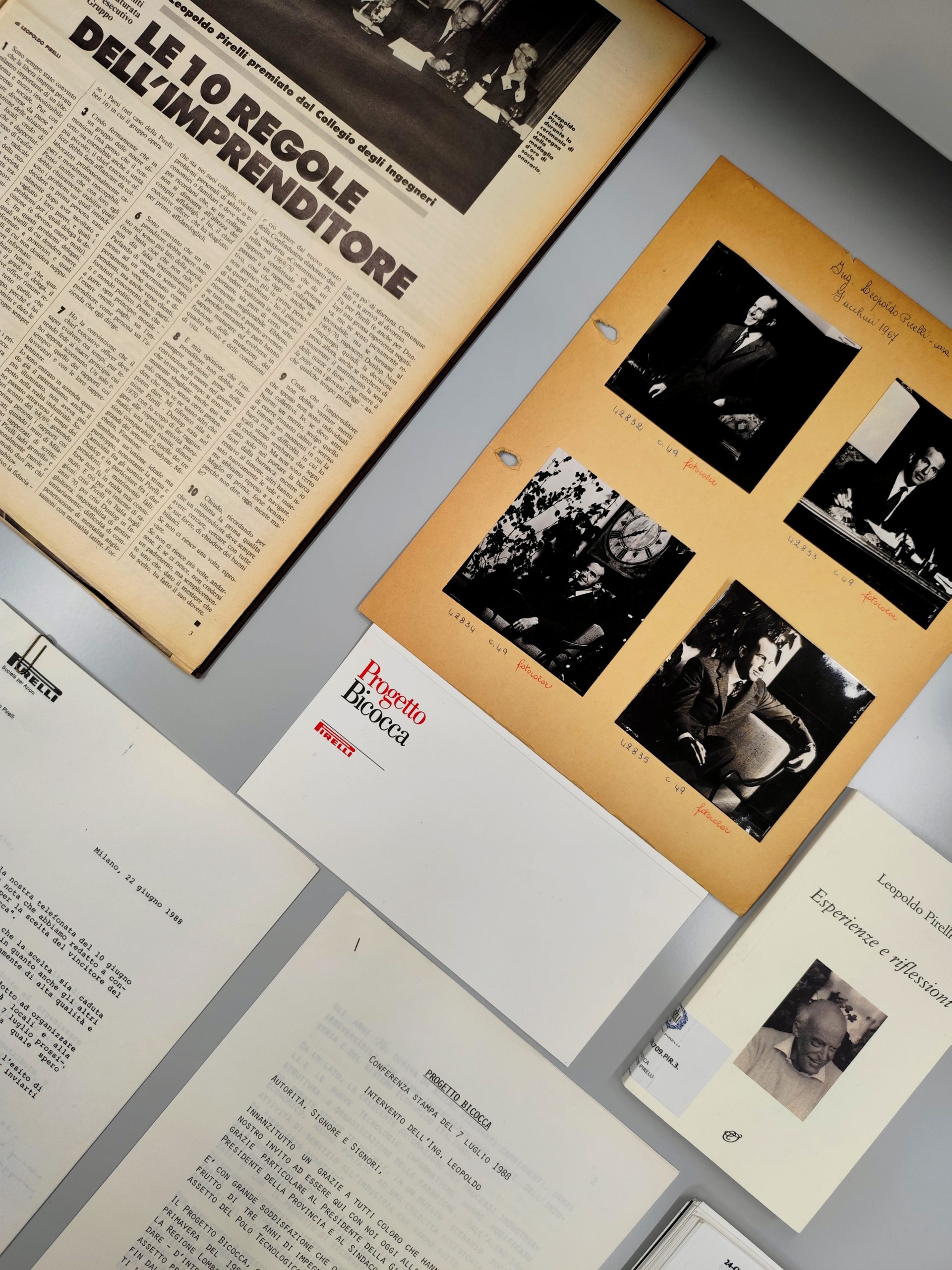
To request to view the materials in the Historical Archive and in the libraries of the Pirelli Foundation for study and research purposes and/or to find out how to request the use of materials for loans and exhibitions, please fill in the form below. You will receive an email confirming receipt of the request and you will be contacted.

Pirelli Foundation Educational Courses

Select the education level of the school

Visit the Foundation

For information about the Foundation's activities, guided tours and accessibility, please call +39 0264423971 or fill in the form below, providing details of your request in the notes field.

From the traditional economy to the green economy

Doctoral research aims to verify the theory by looking at two regional case studies

The term ‘ecological transition’ is increasingly common.  This is because the transition from the current rather generalised state of production to one that is more attentive to environmental aspects is a path that all companies must take, albeit in different ways and forms. Understanding their social and economic impacts is certainly beneficial, particularly with regard to gender policies. This is precisely what Elisa Errico set out to achieve in her doctoral thesis, ‘Le PMI alla prova della green economy: impatti sociali e inclusione di genere’ (SMEs testing the green economy: social impact and gender inclusion).

In the opening pages of the research, Errico herself explains that the work aims to

explore ‘the ecological transition of Italian small and medium-sized enterprises (SMEs), with a specific focus on the distributional, social, and gender impacts generated by these processes of change’.

The work therefore adopts the literature on regional and sectoral innovation systems and local development as theoretical references, relating them to the international literature on the governance of transitions and the relationship between capitalist systems and the impact on inequalities. The research has four main objectives. To analyse whether the ecological transition of SMEs represents a different innovation process to that of more structured companies, and if so, why. To consider how particular contextual factors that govern the ecological transition influence the capacity of SMEs to absorb eco-innovations.  To evaluate if and how different governance models have different distributional impacts. Finally, to provide useful suggestions for future research and policies to help public decision makers and sector operators improve and make transition processes more inclusive. Errico combines theoretical reasoning and field analysis in two case studies: the Bergamo Rubber Valley and the Turin rubber district.

Elisa Errico’s research is an important step towards understanding the spread of the so-called green economy in Italy.

Le PMI alla prova della green economy: impatti sociali e inclusione di genere

Elisa Errico

Doctoral thesis in Sociology, XXXVII cycle, Doctoral School of Social and Economic Sciences

Sapienza University of Rome, 2025

Doctoral research aims to verify the theory by looking at two regional case studies

The term ‘ecological transition’ is increasingly common.  This is because the transition from the current rather generalised state of production to one that is more attentive to environmental aspects is a path that all companies must take, albeit in different ways and forms. Understanding their social and economic impacts is certainly beneficial, particularly with regard to gender policies. This is precisely what Elisa Errico set out to achieve in her doctoral thesis, ‘Le PMI alla prova della green economy: impatti sociali e inclusione di genere’ (SMEs testing the green economy: social impact and gender inclusion).

In the opening pages of the research, Errico herself explains that the work aims to

explore ‘the ecological transition of Italian small and medium-sized enterprises (SMEs), with a specific focus on the distributional, social, and gender impacts generated by these processes of change’.

The work therefore adopts the literature on regional and sectoral innovation systems and local development as theoretical references, relating them to the international literature on the governance of transitions and the relationship between capitalist systems and the impact on inequalities. The research has four main objectives. To analyse whether the ecological transition of SMEs represents a different innovation process to that of more structured companies, and if so, why. To consider how particular contextual factors that govern the ecological transition influence the capacity of SMEs to absorb eco-innovations.  To evaluate if and how different governance models have different distributional impacts. Finally, to provide useful suggestions for future research and policies to help public decision makers and sector operators improve and make transition processes more inclusive. Errico combines theoretical reasoning and field analysis in two case studies: the Bergamo Rubber Valley and the Turin rubber district.

Elisa Errico’s research is an important step towards understanding the spread of the so-called green economy in Italy.

Le PMI alla prova della green economy: impatti sociali e inclusione di genere

Elisa Errico

Doctoral thesis in Sociology, XXXVII cycle, Doctoral School of Social and Economic Sciences

Sapienza University of Rome, 2025

Doing (good) business in a complex and multifaceted context

The role and function of geopolitics in corporate management

The landscape —  and, above all, the system of relations — within which companies must operate today can be defined as complex and multifaceted. It is a context that is new in many respects and must first be understood before it can be approached with great care. Although readings on the issue may not provide an instruction manual, they can offer a way of interpreting reality that can inform the best choices. This is why ‘Geopolitica per le imprese.  Ripensare il business nei mercati post-globali’ (Geopolitics for business. Rethinking business in post-global markets) written by Marco Valigi, a political scientist and lecturer at ESCP Business School and the University Cattolica, is a useful read.

The book opens with the following observation: since 2020, a series of events that have been incorrectly labelled ‘geopolitical’ have had a significant impact on individuals, societies, and economic activities. Faced with a globalisation that has become patchy, with interconnectedness and divisions coexisting and fuelling increasingly identity- and, in many cases, military-based trade conflicts, ‘business’ has become much more complicated than in the past. As mentioned at the beginning, this is an activity that has to take place in a complex and multifaceted landscape.

Entrepreneurs and managers must respond to this challenge, often without the necessary knowledge. In other words, there is an increasing demand for individuals who can perceive and interpret signals beyond the scope of companies, as well as for leadership training and greater sensitivity among those involved.

This is where Valigi’s book comes in useful, as it seeks to shed light on the link between business and geopolitics, and thus demonstrate the usefulness of taking the latter into account in business activities. The book begins with a definition of geopolitics and then moves on to consider the international context as a potential source of value generation, before examining this subject in the context of production organisations. It then goes on to consider some specific elements of the relationships that need to be established,  such as the training of people, sensitivity to risk, company size and the ability to ‘look beyond the company’.

In the last few pages of his book, the author concludes that, ‘Taking a geopolitical approach to thinking about one’s business (…) and designing an organisation structured in a way that is adequate to operate in today’s internationalised context will require one to go in search of the financial resources to build it, the specialist know-how needed to make it work, and, finally, the human capital suitable to govern it’.

Geopolitica per le imprese. Ripensare il business nei mercati post-globali

Marco Valigi

Egea, 2025

The role and function of geopolitics in corporate management

The landscape —  and, above all, the system of relations — within which companies must operate today can be defined as complex and multifaceted. It is a context that is new in many respects and must first be understood before it can be approached with great care. Although readings on the issue may not provide an instruction manual, they can offer a way of interpreting reality that can inform the best choices. This is why ‘Geopolitica per le imprese.  Ripensare il business nei mercati post-globali’ (Geopolitics for business. Rethinking business in post-global markets) written by Marco Valigi, a political scientist and lecturer at ESCP Business School and the University Cattolica, is a useful read.

The book opens with the following observation: since 2020, a series of events that have been incorrectly labelled ‘geopolitical’ have had a significant impact on individuals, societies, and economic activities. Faced with a globalisation that has become patchy, with interconnectedness and divisions coexisting and fuelling increasingly identity- and, in many cases, military-based trade conflicts, ‘business’ has become much more complicated than in the past. As mentioned at the beginning, this is an activity that has to take place in a complex and multifaceted landscape.

Entrepreneurs and managers must respond to this challenge, often without the necessary knowledge. In other words, there is an increasing demand for individuals who can perceive and interpret signals beyond the scope of companies, as well as for leadership training and greater sensitivity among those involved.

This is where Valigi’s book comes in useful, as it seeks to shed light on the link between business and geopolitics, and thus demonstrate the usefulness of taking the latter into account in business activities. The book begins with a definition of geopolitics and then moves on to consider the international context as a potential source of value generation, before examining this subject in the context of production organisations. It then goes on to consider some specific elements of the relationships that need to be established,  such as the training of people, sensitivity to risk, company size and the ability to ‘look beyond the company’.

In the last few pages of his book, the author concludes that, ‘Taking a geopolitical approach to thinking about one’s business (…) and designing an organisation structured in a way that is adequate to operate in today’s internationalised context will require one to go in search of the financial resources to build it, the specialist know-how needed to make it work, and, finally, the human capital suitable to govern it’.

Geopolitica per le imprese. Ripensare il business nei mercati post-globali

Marco Valigi

Egea, 2025

Milan thrives on market and innovation but it also needs good policy

‘In a city, it is not the seven or seventy-seven wonders that you enjoy, but the answers it provides to your questions,’ wrote Italo Calvino in The Invisible Cities, considered ‘a final love poem to cities at a time when experiencing them is becoming increasingly difficult’. This was in 1972, at the start of a challenging and contentious period marked by terrorist and criminal violence (the ‘years of lead’), as well as political and social tensions, aspirations, and reforms, including the introduction of the Workers’ Statute, the establishment of the National Health Service, and the passage of laws on divorce and abortion, alongside the abolition of mental asylums, among other developments.

After the economic boom of the Roaring Sixties, Italy was trying to come to terms with a modernity full of shadows and contrast. Consumption and customs were changing, but many national vices remained, starting with the widespread lack of civic sense. Cities were the greatest focal point and the most obvious symbol of this struggle. “Hard to live in”, in fact. It is indispensable, if anything, over time, ‘to look for and recognise who and what, in the middle of hell, is not hell, and to make it last, and give it space.’.

In these days when we are once again reflecting on current events and the future of Milan, Calvino’s wise and poignant words come to mind. Like any true poet, he reminds us to balance our satisfaction at the positive news (such as the preparations for the 2026 Milan-Cortina Olympics, the completion of the Torre Velasca restoration project, the launch of the City Council’s housing plan for 10,000 affordable homes, and the San Cristoforo and Scalo Farini real estate projects— to name just a few) with our concerns over unresolved issues. The aim is to understand how to cope with the ‘Urgencies of Milan’, the theme of the latest meeting of the Centro Studi Grande Milano. Chaired by Daniela Mainini, the meeting was attended by a wide range of scholars and key figures from the worlds of economics, culture and society. It took place in a hall at the Triennale, next to the spaces where the large international exhibition on ‘Shapes of Inequalities’ is being set up.

The point is this: Milan must finally try to answer the Calvinian question. How can it reproduce its historic capacity to be productive and supportive, competitive and socially inclusive? In short, how can it build wealth and social cohesion? This is important because the economic, cultural, geopolitical, generational and cognitive gaps — the ‘inequalities’ of the exhibition at the Triennale — are growing and becoming increasingly intolerable. Strategic choices are therefore needed to avoid fractures that undermine the relationship between democracy, the market economy and welfare, and alter the balance between freedom, resourcefulness and well-being, even here in Italy and in other Western societies. In short, to be able to continue to be ‘free and equal’, even in our uncertain and lacerating times, using the terms of the ‘Manifesto for a Just Society’ written by Daniel Chandler, an economist and philosopher at the London School of Economics (the book just published by Laterza has been described by Amartya Sen, Nobel Prize winner for economics, as ‘a lucid and important essay’).

What is the answer? It is not the nostalgia of the past or the melancholic amusement of being ‘with one’s heart in one’s hand’. Nor is it the arrogance of success, or the boast of always working and producing, despite everything. It is not the exasperation of the fear of insecurity — violent crime and robberies have decreased, yet there are still those who remember the seventies, when terrorism and massacres dominated the city, as did shootings between criminal gangs such as those of Turatello, Vallanzasca and Epaminonda. Nor is it the indifference to social hardship in the suburbs, nor the just concern for microcrime and scams against the elderly.

Milan is a city of contradictions because it ‘contains multitudes’. To face these contradictions, it needs intelligent planning and a strong cultural, economic, political and administrative foundation. For example, we should heed the words of Lewis Mumford, one of the greatest sociologists of the 20th century, who distinguished between the ‘utopia of flight’ (building castles in the sky while leaving the world as it is) and the ‘utopia of reconstruction’, which involves positive thinking in order to imagine and find the tools and methods needed to create the future.

Let’s return to the Torre Velasca. A symbol of Milan’s dynamic and innovative Fifties and Sixties, it was not initially popular with many Milanese, who called it ‘the skyscraper with suspenders’. After years of restoration, it has returned to the top of the luxury rankings. Owned by Hines American, it has 26 floors of offices and apartments. It opens onto a well-kept pedestrian area in front of the Assolombarda palace, which was designed by Gio Ponti and has recently been renovated. It is also well connected to the solemn Renaissance building of the Ca’ Granda on Via Festa del Perdono, which is home to the State University. It is therefore located in a unique urban space: the Milan of history and innovation, of great architecture and enterprise, of visible prosperity and of the most sophisticated knowledge economy.

But Milan is also much more. It is both the flashy ‘thousand lights’ of the new international elite, attracted by post-Expo Milan’s reputation as the place to be, and the fashionable events. And the housing hardship of tens of thousands of middle-class people who are unable to cope with the boom in real estate values. This is a disparity that needs to be addressed through political choices and good administration.
Milan is, in fact, a metropolis with a strong corporate and market culture, and it can only continue to be so. However, it must not be left to market dynamics alone; otherwise, it will deteriorate into a ‘city of the rich’ that pushes out young people, scholars, novice entrepreneurs, researchers, tram drivers, company and bank employees, high school professors and traders who are unfamiliar with luxury but who are indispensable to daily life.
In short, it risks continuing to lose citizens who are attentive to the positive dynamics of daily life, and who follow the fashions and rhythms of city users. Losing its very soul and its complex ‘social capital’, which is strong in diversity of backgrounds, characters and aspirations, as well as in a solid sense of belonging.

So it is good news that the Municipality, led by Mayor Beppe Sala, has announced a housing plan for 10 thousand low-cost homes over the next ten years. The first 24 offers for the areas to be developed have already been received (Il Sole24Ore, 29 May). In the real estate world, alongside the large international funds, new players in the affordable housing sector are emerging.
Discussions are ongoing on the urgent issues for the city’s relaunch, considering it is a large metropolitan area and its interconnectedness with other metropolises (Turin, Bologna) and medium and medium-sized cities (Brescia, Bergamo, Verona, Pavia, etc.). Milan has the ability to be critical and self-critical and to recover in the face of crises, such as after the end of the boom, the years of lead and the storm of Tangentopoli, and the end of the ‘moral capital’ myth. It can also count on its available resources: its continued appeal to people, ideas and capital; the spread of the ‘knowledge economy’, thanks to its growing prestigious universities; and widespread resourcefulness in relations between cities and their industrial areas. Not to mention the solidity of its civil virtues, which are both ancient and contemporary.

It is crucial that political forces address these issues responsibly in view of the upcoming mayoral elections in 2027. Rather than discussing potential candidates or power games between parties and factions, it is crucial to address real issues, such as balanced development, security, relations with Europe, the impact on national life, quality of life, the increasing ageing and loneliness of citizens (28% of Milan’s population is over 60, compared to a national average of 21%, and 56.7% of Milanese households consist of one person), new poverty, and the legitimate concerns of the younger generations, who continue to view Milan with interest and hope.

So, once again, we return to Calvino and the qualities a city needs: combining security and the pursuit of happiness, growth and sustainability, individual needs and general values, and pragmatism with a long-term vision. Thanks to the effective leadership of its mayors in the recent past, Milan has succeeded in being a virtuous mixture of reformism, political wisdom and administrative skills. It is worth revisiting and repeating this lesson.

(photo Getty Images)

‘In a city, it is not the seven or seventy-seven wonders that you enjoy, but the answers it provides to your questions,’ wrote Italo Calvino in The Invisible Cities, considered ‘a final love poem to cities at a time when experiencing them is becoming increasingly difficult’. This was in 1972, at the start of a challenging and contentious period marked by terrorist and criminal violence (the ‘years of lead’), as well as political and social tensions, aspirations, and reforms, including the introduction of the Workers’ Statute, the establishment of the National Health Service, and the passage of laws on divorce and abortion, alongside the abolition of mental asylums, among other developments.

After the economic boom of the Roaring Sixties, Italy was trying to come to terms with a modernity full of shadows and contrast. Consumption and customs were changing, but many national vices remained, starting with the widespread lack of civic sense. Cities were the greatest focal point and the most obvious symbol of this struggle. “Hard to live in”, in fact. It is indispensable, if anything, over time, ‘to look for and recognise who and what, in the middle of hell, is not hell, and to make it last, and give it space.’.

In these days when we are once again reflecting on current events and the future of Milan, Calvino’s wise and poignant words come to mind. Like any true poet, he reminds us to balance our satisfaction at the positive news (such as the preparations for the 2026 Milan-Cortina Olympics, the completion of the Torre Velasca restoration project, the launch of the City Council’s housing plan for 10,000 affordable homes, and the San Cristoforo and Scalo Farini real estate projects— to name just a few) with our concerns over unresolved issues. The aim is to understand how to cope with the ‘Urgencies of Milan’, the theme of the latest meeting of the Centro Studi Grande Milano. Chaired by Daniela Mainini, the meeting was attended by a wide range of scholars and key figures from the worlds of economics, culture and society. It took place in a hall at the Triennale, next to the spaces where the large international exhibition on ‘Shapes of Inequalities’ is being set up.

The point is this: Milan must finally try to answer the Calvinian question. How can it reproduce its historic capacity to be productive and supportive, competitive and socially inclusive? In short, how can it build wealth and social cohesion? This is important because the economic, cultural, geopolitical, generational and cognitive gaps — the ‘inequalities’ of the exhibition at the Triennale — are growing and becoming increasingly intolerable. Strategic choices are therefore needed to avoid fractures that undermine the relationship between democracy, the market economy and welfare, and alter the balance between freedom, resourcefulness and well-being, even here in Italy and in other Western societies. In short, to be able to continue to be ‘free and equal’, even in our uncertain and lacerating times, using the terms of the ‘Manifesto for a Just Society’ written by Daniel Chandler, an economist and philosopher at the London School of Economics (the book just published by Laterza has been described by Amartya Sen, Nobel Prize winner for economics, as ‘a lucid and important essay’).

What is the answer? It is not the nostalgia of the past or the melancholic amusement of being ‘with one’s heart in one’s hand’. Nor is it the arrogance of success, or the boast of always working and producing, despite everything. It is not the exasperation of the fear of insecurity — violent crime and robberies have decreased, yet there are still those who remember the seventies, when terrorism and massacres dominated the city, as did shootings between criminal gangs such as those of Turatello, Vallanzasca and Epaminonda. Nor is it the indifference to social hardship in the suburbs, nor the just concern for microcrime and scams against the elderly.

Milan is a city of contradictions because it ‘contains multitudes’. To face these contradictions, it needs intelligent planning and a strong cultural, economic, political and administrative foundation. For example, we should heed the words of Lewis Mumford, one of the greatest sociologists of the 20th century, who distinguished between the ‘utopia of flight’ (building castles in the sky while leaving the world as it is) and the ‘utopia of reconstruction’, which involves positive thinking in order to imagine and find the tools and methods needed to create the future.

Let’s return to the Torre Velasca. A symbol of Milan’s dynamic and innovative Fifties and Sixties, it was not initially popular with many Milanese, who called it ‘the skyscraper with suspenders’. After years of restoration, it has returned to the top of the luxury rankings. Owned by Hines American, it has 26 floors of offices and apartments. It opens onto a well-kept pedestrian area in front of the Assolombarda palace, which was designed by Gio Ponti and has recently been renovated. It is also well connected to the solemn Renaissance building of the Ca’ Granda on Via Festa del Perdono, which is home to the State University. It is therefore located in a unique urban space: the Milan of history and innovation, of great architecture and enterprise, of visible prosperity and of the most sophisticated knowledge economy.

But Milan is also much more. It is both the flashy ‘thousand lights’ of the new international elite, attracted by post-Expo Milan’s reputation as the place to be, and the fashionable events. And the housing hardship of tens of thousands of middle-class people who are unable to cope with the boom in real estate values. This is a disparity that needs to be addressed through political choices and good administration.
Milan is, in fact, a metropolis with a strong corporate and market culture, and it can only continue to be so. However, it must not be left to market dynamics alone; otherwise, it will deteriorate into a ‘city of the rich’ that pushes out young people, scholars, novice entrepreneurs, researchers, tram drivers, company and bank employees, high school professors and traders who are unfamiliar with luxury but who are indispensable to daily life.
In short, it risks continuing to lose citizens who are attentive to the positive dynamics of daily life, and who follow the fashions and rhythms of city users. Losing its very soul and its complex ‘social capital’, which is strong in diversity of backgrounds, characters and aspirations, as well as in a solid sense of belonging.

So it is good news that the Municipality, led by Mayor Beppe Sala, has announced a housing plan for 10 thousand low-cost homes over the next ten years. The first 24 offers for the areas to be developed have already been received (Il Sole24Ore, 29 May). In the real estate world, alongside the large international funds, new players in the affordable housing sector are emerging.
Discussions are ongoing on the urgent issues for the city’s relaunch, considering it is a large metropolitan area and its interconnectedness with other metropolises (Turin, Bologna) and medium and medium-sized cities (Brescia, Bergamo, Verona, Pavia, etc.). Milan has the ability to be critical and self-critical and to recover in the face of crises, such as after the end of the boom, the years of lead and the storm of Tangentopoli, and the end of the ‘moral capital’ myth. It can also count on its available resources: its continued appeal to people, ideas and capital; the spread of the ‘knowledge economy’, thanks to its growing prestigious universities; and widespread resourcefulness in relations between cities and their industrial areas. Not to mention the solidity of its civil virtues, which are both ancient and contemporary.

It is crucial that political forces address these issues responsibly in view of the upcoming mayoral elections in 2027. Rather than discussing potential candidates or power games between parties and factions, it is crucial to address real issues, such as balanced development, security, relations with Europe, the impact on national life, quality of life, the increasing ageing and loneliness of citizens (28% of Milan’s population is over 60, compared to a national average of 21%, and 56.7% of Milanese households consist of one person), new poverty, and the legitimate concerns of the younger generations, who continue to view Milan with interest and hope.

So, once again, we return to Calvino and the qualities a city needs: combining security and the pursuit of happiness, growth and sustainability, individual needs and general values, and pragmatism with a long-term vision. Thanks to the effective leadership of its mayors in the recent past, Milan has succeeded in being a virtuous mixture of reformism, political wisdom and administrative skills. It is worth revisiting and repeating this lesson.

(photo Getty Images)

Beyond the dollar

A book on monetary history helps to better understand the economy’s evolution and prospects

Although it is often said that understanding the past helps us to better navigate the present,  it is always worth remembering,  even when the topic seems far removed from one’s own area of interest. This is the case with monetary economics and economic history, which Kenneth Rogoff discusses in his book, ‘Our Dollar, Your Problem’, just published in Italy under the title ‘L’impero del dollaro’.

In the book, Rogoff — who was chief economist at the International Monetary Fund for many years — argues that the rise of the US currency to global prominence was also due to a certain amount of luck. This is a thesis that certainly needs to be carefully evaluated and verified, but it is based on his direct experience of interacting with policymakers and world leaders. In particular, the author recounts the exceptional post-war period of the ‘greenback’,  how it outperformed the Japanese yen, the Soviet rouble and the euro. The book then moves on to discuss the challenges the dollar faces today,  from cryptocurrencies and the Chinese yuan to the end of an era of persistently low interest rates and inflation, and political instability and the possible break-up of the dollar bloc.

The narrative begins with a description of past ‘challengers’ to the dollar’s dominance, moves on to explore the situation of the current ‘challenger’ (China), and then considers the implications of ‘living with the dollar’ and the potential for alternative currencies.  Indeed, Rogoff believes that the era of the so-called Pax Dollar is by no means destined to last forever. Rogoff analyses how the US currency has managed to maintain its supremacy despite widespread discontent among many countries with the global monetary system. He shows how unchallenged power and an unrivalled set of privileges can lead to a future of increasing financial instability worldwide.

Kenneth Rogoff’s book on economics and monetary history is one that should be read carefully, as doing so can help readers develop a more conscious understanding of reality.

L’impero del dollaro

Kenneth Rogoff

Egea, 2025

A book on monetary history helps to better understand the economy’s evolution and prospects

Although it is often said that understanding the past helps us to better navigate the present,  it is always worth remembering,  even when the topic seems far removed from one’s own area of interest. This is the case with monetary economics and economic history, which Kenneth Rogoff discusses in his book, ‘Our Dollar, Your Problem’, just published in Italy under the title ‘L’impero del dollaro’.

In the book, Rogoff — who was chief economist at the International Monetary Fund for many years — argues that the rise of the US currency to global prominence was also due to a certain amount of luck. This is a thesis that certainly needs to be carefully evaluated and verified, but it is based on his direct experience of interacting with policymakers and world leaders. In particular, the author recounts the exceptional post-war period of the ‘greenback’,  how it outperformed the Japanese yen, the Soviet rouble and the euro. The book then moves on to discuss the challenges the dollar faces today,  from cryptocurrencies and the Chinese yuan to the end of an era of persistently low interest rates and inflation, and political instability and the possible break-up of the dollar bloc.

The narrative begins with a description of past ‘challengers’ to the dollar’s dominance, moves on to explore the situation of the current ‘challenger’ (China), and then considers the implications of ‘living with the dollar’ and the potential for alternative currencies.  Indeed, Rogoff believes that the era of the so-called Pax Dollar is by no means destined to last forever. Rogoff analyses how the US currency has managed to maintain its supremacy despite widespread discontent among many countries with the global monetary system. He shows how unchallenged power and an unrivalled set of privileges can lead to a future of increasing financial instability worldwide.

Kenneth Rogoff’s book on economics and monetary history is one that should be read carefully, as doing so can help readers develop a more conscious understanding of reality.

L’impero del dollaro

Kenneth Rogoff

Egea, 2025

A ‘new’ future

The latest research collection from the Luigi Einaudi Centre comprises a series of analyses offering different perspectives on potential outcomes


Sometimes, a pair of new glasses is needed to see reality more clearly. This is also true of today’s complex, unpredictable and ever-changing economy and society.  Everyone ought to try on these new glasses, but first they must find them. The annual research series published by the Luigi Einaudi Centre in Turin might provide an answer by offering insights into the reality that surrounds us.

‘Un futuro da riprogettare’ (A future to be redesigned) is the title of the collection coordinated by Mario Deaglio.  It is based on the idea that the already unstable global balances are becoming increasingly ‘under stress’.  To this, the effects of what has happened in recent months are added. This raises the question of not only what future we can expect, but also the fate of democracies. In an attempt to answer these questions, Deaglio’s collection of studies does not analyse what is changing in terms of economics, geopolitics, society, the production system and the climate, nor does it attempt to ‘put the pieces of shattered globalisation back together again’. This year, the Luigi Einaudi Centre starts with an analysis — albeit a summary one — of the new traits that can be glimpsed, which could lead to a structure that differs from the traditional one. The aim is to offer a fresh perspective on the world around us.

The collection provides insights into the role of the United States, the new characteristics of capitalism, the changing role of electricity, food and nutrition, artificial intelligence and the labour market, and the growing presence of Africa, Islam and the Middle East. It also covers the changing role of Europe, environmental issues and the relationship between the Old Continent and the rest of the world. The research coordinated by the Einaudi Centre covers all aspects of Italy, from its economic problems and social issues to its political attitudes, and even some positive surprises. Each study is entrusted to a different author (and, this year, to new authors for the Centre, such as Marco Zatterin and Marco Cantamessa).

The Luigi Einaudi Centre’s annual report is once again a vital and thought-provoking resource, essential for those looking for new glasses to grasp our current situation and gain new perspectives.

Un futuro da riprogettare

Mario Deaglio (curated by)

Guerini e Associati, 2025

The latest research collection from the Luigi Einaudi Centre comprises a series of analyses offering different perspectives on potential outcomes


Sometimes, a pair of new glasses is needed to see reality more clearly. This is also true of today’s complex, unpredictable and ever-changing economy and society.  Everyone ought to try on these new glasses, but first they must find them. The annual research series published by the Luigi Einaudi Centre in Turin might provide an answer by offering insights into the reality that surrounds us.

‘Un futuro da riprogettare’ (A future to be redesigned) is the title of the collection coordinated by Mario Deaglio.  It is based on the idea that the already unstable global balances are becoming increasingly ‘under stress’.  To this, the effects of what has happened in recent months are added. This raises the question of not only what future we can expect, but also the fate of democracies. In an attempt to answer these questions, Deaglio’s collection of studies does not analyse what is changing in terms of economics, geopolitics, society, the production system and the climate, nor does it attempt to ‘put the pieces of shattered globalisation back together again’. This year, the Luigi Einaudi Centre starts with an analysis — albeit a summary one — of the new traits that can be glimpsed, which could lead to a structure that differs from the traditional one. The aim is to offer a fresh perspective on the world around us.

The collection provides insights into the role of the United States, the new characteristics of capitalism, the changing role of electricity, food and nutrition, artificial intelligence and the labour market, and the growing presence of Africa, Islam and the Middle East. It also covers the changing role of Europe, environmental issues and the relationship between the Old Continent and the rest of the world. The research coordinated by the Einaudi Centre covers all aspects of Italy, from its economic problems and social issues to its political attitudes, and even some positive surprises. Each study is entrusted to a different author (and, this year, to new authors for the Centre, such as Marco Zatterin and Marco Cantamessa).

The Luigi Einaudi Centre’s annual report is once again a vital and thought-provoking resource, essential for those looking for new glasses to grasp our current situation and gain new perspectives.

Un futuro da riprogettare

Mario Deaglio (curated by)

Guerini e Associati, 2025

Anti-Mafia Investigation Directorate warning: never underestimate the mafia, which has its eye on public contracts and invests with ‘opaque’ financial flows

‘The truth is a losing currency,’ writes Beatrice Monroy in her intense and poignant novel, which has just been published by Zolfo. The novel tells the story of the desperation experienced by the people of Palermo, and their subsequent cultural and civil revolt against the Mafia massacres and the silence imposed by complicity and fear towards the bosses of the ‘Cosa Nostra’ and the ‘grey world’ of those who turn a blind eye. The story begins with the murders of Giovanni Falcone, Paolo Borsellino, and the men and women of their security detail in May and then July 1992. And that provocative phrase about the defeat of truth actually highlights its opposite:  the irrepressible need for truth and justice, for civil life and democracy, which is growing within the city and Sicily. This will finally mark the end of the mafia era and the beginning of a society based on rights, duties, freedoms and responsibilities. The exact opposite, in fact, of Cosa Nostra, the ‘ndrangheta and the Camorra.

The need for truth, legality, civil life, the market economy, social development and sustainable entrepreneurship naturally extends beyond the island’s borders. It is back in the spotlight right now due to certain news events. The warning from the Anti-Mafia Investigation Directorate (DIA) about criminal clans’ renewed interest in public contracts throughout Italy (we will discuss this in more detail below). And the release from prison of Giovanni Brusca, a ferocious mafia murderer who has served his sentence for 150 murders and for pressing the detonator that caused Falcone’s death. After 25 years in prison and 4 years of probation, he was granted freedom as a consequence of his decision to become a ‘collaborator of justice’, informing magistrates on Mafia activities, crimes and strategies. This was an application of the ‘pentiti’ law, whereby informants receive reduced sentences or even freedom in exchange for information. Advocated by Giovanni Falcone himself, the law was introduced in an attempt to break the Mafia’s code of silence and prevent the massacres organised by the ‘Corleonesi’, led by Totò Riina. Brusca was one of the leaders of this group and one of its most ruthless assassins.

A law to be respected and applied. However, if we read the statements of the victims’ relatives carefully, it is clear that there is a feeling that justice is not being served. Among them is Alfredo Morvillo, the brother of Francesca Morvillo, who was married to Falcone and was also killed in the Capaci massacre along the Punta Raisi highway. Morvillo said:  ‘Brusca has served his sentence, but he remains a criminal.’ And Maria Falcone, sister of the magistrate: “The law was applied, but I am very bitter. I don’t believe that this is justice, either for the family members or for decent people” (Corriere della Sera, 6 June).

Setting aside the bitterness, the excellent work carried out by the magistrates of Palermo against Cosa Nostra in the last fifteen years of the twentieth century remains a positive legacy. This work was made possible thanks to the contribution of two ‘collaborators of justice’, Tommaso Buscetta in particular, but also Salvatore Contorno. The work culminated in the large-scale trial that began in February 1986 and concluded with hundreds of convictions, confirmed by the Court of Cassation in spring 1992.

‘The State has won, the Mafia has lost’ is an accurate summary of that period, given that the bosses are in prison and Mafia activity has been drastically reduced. Taking into account the fact that the trials were conducted in full compliance with the procedures and guarantees, and based on serious police and carabiniere investigations, it is a fair summary.  However, unfortunately, this is not the full story. Other criminal organisations, starting with the Calabrian ‘Ndrangheta, have replaced the Sicilian clans in the international drug trafficking circuit, forming alliances with South American and Eastern ‘narcos’. And, in any case, the links between organised crime and ‘grey areas’ in economic, political and public administration circles have been restored, despite being disrupted by judicial investigations in Palermo, Rome and Milan.

Several comments on the anniversary of the Capaci massacre bear witness to this: ‘Falcone and Borsellino, the still open accounts and the risk of new pollution’ (Corriere della Sera, 23 May); ‘33 years after the massacre, the mafia still has its troops’ (Il Sole24Ore, 24 May).

And the President of the Republic, Sergio Mattarella, offered words of commemoration that are important for collective memory and civil conscience: ‘The mafia has suffered very heavy blows, but the work of eradication must continue, taking into account its transformations, its new links with economic and financial activities, and the grey areas that emerge where civic commitment gives way to indifference’.

Here we are again, reminded that the need for truth cannot be a ‘losing currency’. And neither can the need for effective government action and responsible political commitment against organised crime, with preventive and repressive interventions and transparent administration.

Moreover, the law introducing new, more severe, specific and effective measures to combat the Mafia was developed by parliamentarians of different political persuasions: the Communist Pio La Torre and the Christian Democrat Virginio Rognoni, who was Minister of the Interior at the time. It was approved by a large majority in Parliament on 13 September 1982, just a few days after General Carlo Alberto Dalla Chiesa was assassinated in Palermo. He had been sent there by the government as Prefect, but without the necessary powers of authority. It is a well-constructed law capable of tackling mafia associations by following the threads of their interests and business criminal ties. The investigations of Falcone, Borsellino and the other anti-Mafia magistrates would have made intelligent and competent use of it.

The latest Anti-Mafia Investigation Directorate report (Il Sole24Ore, 28 May) reveals the reality of the mafia threat. In 2024, it identified ‘opaque’ financial activities totalling 49.2 billion euros, and detailed investment operations and money laundering from illicit sources within seemingly legitimate activities. The ‘Ndrangheta is at the forefront, but the Camorra and Sicilian clans are also active, particularly in Milan (‘Mafia, the shadows over Lombardy. A spotlight on contracts, football ultras and the Olympics’, was the headline in La Repubblica, 28 May) but also in Piedmont, Liguria, Veneto and Emilia. And there is a timely focus on subcontracting in the public works sector and related activities, particularly in finance and services, which are susceptible to money laundering.

In short, the risk of market and economic pollution, and of business activity being disrupted, is always high. In addition to the necessary commemorations, it is worthwhile intensifying political and administrative initiatives to guarantee legality, transparency and the functioning of markets and competition. This is an essential economic and civil choice.

(photo Getty Images)

‘The truth is a losing currency,’ writes Beatrice Monroy in her intense and poignant novel, which has just been published by Zolfo. The novel tells the story of the desperation experienced by the people of Palermo, and their subsequent cultural and civil revolt against the Mafia massacres and the silence imposed by complicity and fear towards the bosses of the ‘Cosa Nostra’ and the ‘grey world’ of those who turn a blind eye. The story begins with the murders of Giovanni Falcone, Paolo Borsellino, and the men and women of their security detail in May and then July 1992. And that provocative phrase about the defeat of truth actually highlights its opposite:  the irrepressible need for truth and justice, for civil life and democracy, which is growing within the city and Sicily. This will finally mark the end of the mafia era and the beginning of a society based on rights, duties, freedoms and responsibilities. The exact opposite, in fact, of Cosa Nostra, the ‘ndrangheta and the Camorra.

The need for truth, legality, civil life, the market economy, social development and sustainable entrepreneurship naturally extends beyond the island’s borders. It is back in the spotlight right now due to certain news events. The warning from the Anti-Mafia Investigation Directorate (DIA) about criminal clans’ renewed interest in public contracts throughout Italy (we will discuss this in more detail below). And the release from prison of Giovanni Brusca, a ferocious mafia murderer who has served his sentence for 150 murders and for pressing the detonator that caused Falcone’s death. After 25 years in prison and 4 years of probation, he was granted freedom as a consequence of his decision to become a ‘collaborator of justice’, informing magistrates on Mafia activities, crimes and strategies. This was an application of the ‘pentiti’ law, whereby informants receive reduced sentences or even freedom in exchange for information. Advocated by Giovanni Falcone himself, the law was introduced in an attempt to break the Mafia’s code of silence and prevent the massacres organised by the ‘Corleonesi’, led by Totò Riina. Brusca was one of the leaders of this group and one of its most ruthless assassins.

A law to be respected and applied. However, if we read the statements of the victims’ relatives carefully, it is clear that there is a feeling that justice is not being served. Among them is Alfredo Morvillo, the brother of Francesca Morvillo, who was married to Falcone and was also killed in the Capaci massacre along the Punta Raisi highway. Morvillo said:  ‘Brusca has served his sentence, but he remains a criminal.’ And Maria Falcone, sister of the magistrate: “The law was applied, but I am very bitter. I don’t believe that this is justice, either for the family members or for decent people” (Corriere della Sera, 6 June).

Setting aside the bitterness, the excellent work carried out by the magistrates of Palermo against Cosa Nostra in the last fifteen years of the twentieth century remains a positive legacy. This work was made possible thanks to the contribution of two ‘collaborators of justice’, Tommaso Buscetta in particular, but also Salvatore Contorno. The work culminated in the large-scale trial that began in February 1986 and concluded with hundreds of convictions, confirmed by the Court of Cassation in spring 1992.

‘The State has won, the Mafia has lost’ is an accurate summary of that period, given that the bosses are in prison and Mafia activity has been drastically reduced. Taking into account the fact that the trials were conducted in full compliance with the procedures and guarantees, and based on serious police and carabiniere investigations, it is a fair summary.  However, unfortunately, this is not the full story. Other criminal organisations, starting with the Calabrian ‘Ndrangheta, have replaced the Sicilian clans in the international drug trafficking circuit, forming alliances with South American and Eastern ‘narcos’. And, in any case, the links between organised crime and ‘grey areas’ in economic, political and public administration circles have been restored, despite being disrupted by judicial investigations in Palermo, Rome and Milan.

Several comments on the anniversary of the Capaci massacre bear witness to this: ‘Falcone and Borsellino, the still open accounts and the risk of new pollution’ (Corriere della Sera, 23 May); ‘33 years after the massacre, the mafia still has its troops’ (Il Sole24Ore, 24 May).

And the President of the Republic, Sergio Mattarella, offered words of commemoration that are important for collective memory and civil conscience: ‘The mafia has suffered very heavy blows, but the work of eradication must continue, taking into account its transformations, its new links with economic and financial activities, and the grey areas that emerge where civic commitment gives way to indifference’.

Here we are again, reminded that the need for truth cannot be a ‘losing currency’. And neither can the need for effective government action and responsible political commitment against organised crime, with preventive and repressive interventions and transparent administration.

Moreover, the law introducing new, more severe, specific and effective measures to combat the Mafia was developed by parliamentarians of different political persuasions: the Communist Pio La Torre and the Christian Democrat Virginio Rognoni, who was Minister of the Interior at the time. It was approved by a large majority in Parliament on 13 September 1982, just a few days after General Carlo Alberto Dalla Chiesa was assassinated in Palermo. He had been sent there by the government as Prefect, but without the necessary powers of authority. It is a well-constructed law capable of tackling mafia associations by following the threads of their interests and business criminal ties. The investigations of Falcone, Borsellino and the other anti-Mafia magistrates would have made intelligent and competent use of it.

The latest Anti-Mafia Investigation Directorate report (Il Sole24Ore, 28 May) reveals the reality of the mafia threat. In 2024, it identified ‘opaque’ financial activities totalling 49.2 billion euros, and detailed investment operations and money laundering from illicit sources within seemingly legitimate activities. The ‘Ndrangheta is at the forefront, but the Camorra and Sicilian clans are also active, particularly in Milan (‘Mafia, the shadows over Lombardy. A spotlight on contracts, football ultras and the Olympics’, was the headline in La Repubblica, 28 May) but also in Piedmont, Liguria, Veneto and Emilia. And there is a timely focus on subcontracting in the public works sector and related activities, particularly in finance and services, which are susceptible to money laundering.

In short, the risk of market and economic pollution, and of business activity being disrupted, is always high. In addition to the necessary commemorations, it is worthwhile intensifying political and administrative initiatives to guarantee legality, transparency and the functioning of markets and competition. This is an essential economic and civil choice.

(photo Getty Images)

#Dallapartedelfuturo. Fondazione Pirelli for Archivissima 25

As part of the new edition of Archivissima – the cultural festival entirely dedicated to promoting and celebrating historical archives, held this year from June 5 to 8, 2025 – the students of the Istituto Comprensivo Paganelli in Cinisello Balsamo (Milan) explored the rich photographic collection preserved in the Pirelli Historical Archive: thousands of shots, including glass plates, slides, paper prints, and digital photos that tell over a century of history, from the early 1900s to the present day. Through the analysis of these precious visual testimonies, the students retraced significant moments in the company’s history and our country’s past, including changes in customs, urban transformations, and new ways of moving and traveling.

A journey through time made of innovation, passion, and key moments. Looking at the past is also a way to open up to the future: starting from the photographs, the students imagined possible futures — already written, visionary, or yet to be built — giving voice to the images with creativity. An exercise in memory and imagination, where the past becomes fertile ground to reinvent tomorrow.

Enjoy the video!

As part of the new edition of Archivissima – the cultural festival entirely dedicated to promoting and celebrating historical archives, held this year from June 5 to 8, 2025 – the students of the Istituto Comprensivo Paganelli in Cinisello Balsamo (Milan) explored the rich photographic collection preserved in the Pirelli Historical Archive: thousands of shots, including glass plates, slides, paper prints, and digital photos that tell over a century of history, from the early 1900s to the present day. Through the analysis of these precious visual testimonies, the students retraced significant moments in the company’s history and our country’s past, including changes in customs, urban transformations, and new ways of moving and traveling.

A journey through time made of innovation, passion, and key moments. Looking at the past is also a way to open up to the future: starting from the photographs, the students imagined possible futures — already written, visionary, or yet to be built — giving voice to the images with creativity. An exercise in memory and imagination, where the past becomes fertile ground to reinvent tomorrow.

Enjoy the video!

Multimedia

Video

Economy and sustainability, balance is key

Research work carried out at Sapienza University highlights the constraints to be respected

Integrating sustainability processes into the company organisation is a fundamental task for almost all companies, and one that is never easy. The challenge lies in balancing the various factors involved in production, as well as the people and their professional experience. In short, it is a matter of corporate culture that must be developed and adapted.

Ilenia Ceglia addressed this complex set of issues in her PhD thesis, which was presented at the Management Department of Sapienza University in Rome.

‘Equilibrio tra pressioni economiche, sociali e ambientali:  una visione paradossale per la sostenibilità’ (Balancing economic, social and environmental pressures: a paradoxical vision for sustainability) is the culmination of extensive research combining business theory and practice in relation to sustainability. The research focused particularly on corporate sustainability management and the measurement of environmental, social, and business competitiveness performance. Key chapters on general themes such as social and sustainability reporting, the assessment of corporate sustainability performance, socio-economic analysis, stakeholder engagement, non-financial risk management, and the design of ‘key performance indicators’ (KPIs) for corporate sustainability monitoring systems are covered.

The research is divided into three parts: a theoretical framework and two case studies of a food and a steel company, which serve to demonstrate the theory.

In general, the research demonstrates the absolute necessity of carefully and effectively integrating economic growth objectives with environmental protection objectives: an ever-evolving process in which maintaining the balance between the individual elements is fundamental.

Equilibrio tra pressioni economiche, sociali e ambientali: una visione paradossale per la sostenibilità

Ilenia Ceglia

Thesis, Sapienza University, Faculty of Economics Management Department PhD in Management, Banking and Commodity Sciences XXXVII Cycle, 2025

Research work carried out at Sapienza University highlights the constraints to be respected

Integrating sustainability processes into the company organisation is a fundamental task for almost all companies, and one that is never easy. The challenge lies in balancing the various factors involved in production, as well as the people and their professional experience. In short, it is a matter of corporate culture that must be developed and adapted.

Ilenia Ceglia addressed this complex set of issues in her PhD thesis, which was presented at the Management Department of Sapienza University in Rome.

‘Equilibrio tra pressioni economiche, sociali e ambientali:  una visione paradossale per la sostenibilità’ (Balancing economic, social and environmental pressures: a paradoxical vision for sustainability) is the culmination of extensive research combining business theory and practice in relation to sustainability. The research focused particularly on corporate sustainability management and the measurement of environmental, social, and business competitiveness performance. Key chapters on general themes such as social and sustainability reporting, the assessment of corporate sustainability performance, socio-economic analysis, stakeholder engagement, non-financial risk management, and the design of ‘key performance indicators’ (KPIs) for corporate sustainability monitoring systems are covered.

The research is divided into three parts: a theoretical framework and two case studies of a food and a steel company, which serve to demonstrate the theory.

In general, the research demonstrates the absolute necessity of carefully and effectively integrating economic growth objectives with environmental protection objectives: an ever-evolving process in which maintaining the balance between the individual elements is fundamental.

Equilibrio tra pressioni economiche, sociali e ambientali: una visione paradossale per la sostenibilità

Ilenia Ceglia

Thesis, Sapienza University, Faculty of Economics Management Department PhD in Management, Banking and Commodity Sciences XXXVII Cycle, 2025

Business management, heart and technique

A ‘manual’ for dealing with the present-day complexities of companies has just been published

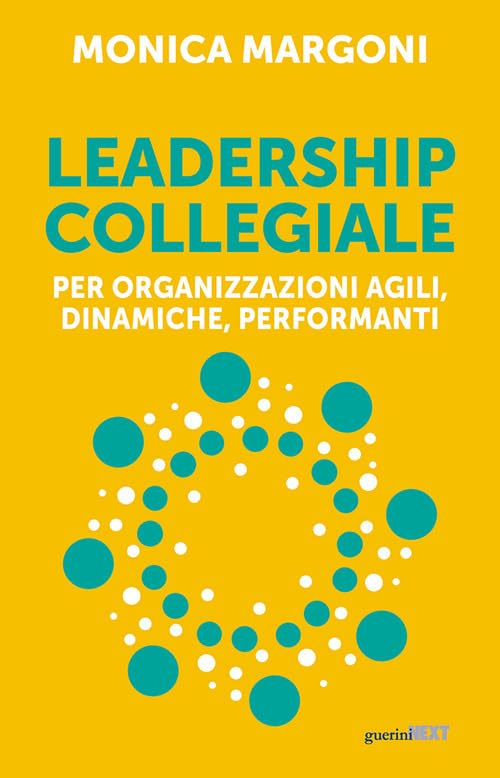
Dealing with the complexity and speed of the present in a shrewd, careful, effective and efficient way is the challenge faced by all entrepreneurs and managers struggling with business management. Perhaps an even more difficult challenge today than yesterday. But one that has always been there for every category of company. In order to deal with it, we need technical preparation and human capacity, and this requires an up-to-date corporate culture. The recently published book, ‘Pensiero e approccio strategico. Patrimonio comune dell’impresa’ (Strategic thinking and approach: common equity of enterprise)’, by Marco Vitale and Vittorio Coda (the former a business economist and the latter the ‘father’ of teaching business strategy), serves precisely this purpose.

Drawing on the experience of an academy organised by Vitale Zane & Co., this book brings together contributions from some of the most influential figures in Italian economics and business management. It offers entrepreneurs methods, perspectives and insights into social responsibility. In other words, the book’s collection of essays aims to serve as an indispensable guide for those who wish to understand and practise the strategic art of a discipline that is constantly evolving. It is a kind of ‘toolbox’ for the good entrepreneur and manager, rather than the good economist.

Although it is an ensemble work, it is strongly cohesive and offers an in-depth, interdisciplinary reflection on the world of production and management. Ultimately, it promotes a civil, conscious and courageous approach to business,

which is a significant achievement, especially today. It is an achievement that requires the authors to combine their knowledge and approaches, in which psychology, organisation and strategy are intertwined. The result is a new model that aims to address contemporary challenges and embrace uncertainty as an opportunity for growth.

The reader is guided along a path that begins with an examination of the past, in order to ‘look ahead’. This involves a careful analysis of the work produced on the topic so far, at both the international and Italian levels. Next, two first business cases are considered. The second part of the book starts with the task of translating strategy into action, before moving on to discuss continuing education as the main tool for growth. The book then continues with a series of insights, including ‘external line’ development, the role of innovation and artificial intelligence, research, sustainability and environmental issues, the contribution of psychology, and the need for critical thinking. It also considers the influence of company conditions and size. A business case illustrates the theoretical reasoning whenever it is relevant. The book concludes with two chapters by the authors, each characterised by three keywords:  ‘meaning, purpose and why’ (by Vittorio Coda) and ‘sustainability, equity and responsibility’ (by Marco Vitale).

What Vitale and Coda have contributed to the world of print is certainly not to be taken lightly. It is a genuine guide for modern businesses.

Pensiero e approccio strategico. Patrimonio comune dell’impresa

Marco Vitale and Vittorio Coda (edited by)

Guerini NEXT, 2025

A ‘manual’ for dealing with the present-day complexities of companies has just been published

Dealing with the complexity and speed of the present in a shrewd, careful, effective and efficient way is the challenge faced by all entrepreneurs and managers struggling with business management. Perhaps an even more difficult challenge today than yesterday. But one that has always been there for every category of company. In order to deal with it, we need technical preparation and human capacity, and this requires an up-to-date corporate culture. The recently published book, ‘Pensiero e approccio strategico. Patrimonio comune dell’impresa’ (Strategic thinking and approach: common equity of enterprise)’, by Marco Vitale and Vittorio Coda (the former a business economist and the latter the ‘father’ of teaching business strategy), serves precisely this purpose.

Drawing on the experience of an academy organised by Vitale Zane & Co., this book brings together contributions from some of the most influential figures in Italian economics and business management. It offers entrepreneurs methods, perspectives and insights into social responsibility. In other words, the book’s collection of essays aims to serve as an indispensable guide for those who wish to understand and practise the strategic art of a discipline that is constantly evolving. It is a kind of ‘toolbox’ for the good entrepreneur and manager, rather than the good economist.

Although it is an ensemble work, it is strongly cohesive and offers an in-depth, interdisciplinary reflection on the world of production and management. Ultimately, it promotes a civil, conscious and courageous approach to business,

which is a significant achievement, especially today. It is an achievement that requires the authors to combine their knowledge and approaches, in which psychology, organisation and strategy are intertwined. The result is a new model that aims to address contemporary challenges and embrace uncertainty as an opportunity for growth.

The reader is guided along a path that begins with an examination of the past, in order to ‘look ahead’. This involves a careful analysis of the work produced on the topic so far, at both the international and Italian levels. Next, two first business cases are considered. The second part of the book starts with the task of translating strategy into action, before moving on to discuss continuing education as the main tool for growth. The book then continues with a series of insights, including ‘external line’ development, the role of innovation and artificial intelligence, research, sustainability and environmental issues, the contribution of psychology, and the need for critical thinking. It also considers the influence of company conditions and size. A business case illustrates the theoretical reasoning whenever it is relevant. The book concludes with two chapters by the authors, each characterised by three keywords:  ‘meaning, purpose and why’ (by Vittorio Coda) and ‘sustainability, equity and responsibility’ (by Marco Vitale).

What Vitale and Coda have contributed to the world of print is certainly not to be taken lightly. It is a genuine guide for modern businesses.

Pensiero e approccio strategico. Patrimonio comune dell’impresa

Marco Vitale and Vittorio Coda (edited by)

Guerini NEXT, 2025

The soft power of Italian companies: culture and quality to relaunch industrial areas and digital high tech

There is a real soft power that underlies the competitive capacity of the Italian industry on international markets. It is shaped by the quality, beauty and functionality of our products; our creativity and innovative approach; and our commitment to environmental and social sustainability. A real ‘polytechnic culture’, capable of combining humanistic and scientific knowledge in an original way. And by the extraordinary appeal of Made in Italy and Italy in general, not only for financial investment, but also for the commitment of entrepreneurs, managers, scientists, technologists and students, who are increasingly considering Italy to be ‘the place to be’, to paraphrase the brilliant definition of Milan given by the ‘New York Times’ in 2015, at the height of Expo’s success.

In early May, Joseph S. Nye, one of the greatest political scientists of our restless times, passed away. It is worth remembering him for his ideas on soft power as cultural diplomacy, the ability to build positive relationships, attractiveness and empathy, which are founded on shared interests and values instead of overbearing displays of political and military force. Pragmatically, this should also form the basis of a genuine Italian industrial policy with a European focus, capable of saving and revitalising our manufacturing and related industries (high-tech services, logistics, corporate finance, scientific research, design, technology and training). This would consolidate our identity as a major industrial nation.

In fact, as Confindustria president Emanuele Orsini said at the National Assembly of the Association in Bologna, an ‘Extraordinary Industrial Plan’ is needed to relaunch the European and national economy. This would involve three to five years of public investment in tangible and intangible infrastructure, as well as legislative and fiscal support for private investment. There must be robust cuts in the cost of energy for businesses, which are far greater than in the rest of Europe and therefore reduce our level of competitiveness. There must be anti-bureaucratic reforms in Rome and Brussels, as well as in the regions (e.g. to the ‘internal tariffs’ in Europe, which are a heavy constraint on development and innovation). There must be political and economic choices for a true European ‘single market’, starting with the free movement of capital, to make us more competitive (which means quickly implementing the plans signed by Mario Draghi and Enrico Letta, which were positively received by the EU authorities — another example of Italian soft power).

In short, good politics involves the dual and convergent meanings of ‘policy’ and ‘policies’ (i.e. strategies and projects that are then translated into government acts, laws and administrative measures). It also involves making far-sighted choices to create a ‘better Europe’, including improving governance rules to make them faster and more effective, while freeing themselves from the constraints of unanimity, except in exceptional cases. This would involve addressing the ongoing geopolitical and technological challenges more resolutely, allowing for a ‘European’ culture that is distinct from the dominance of the US and China, and which is perhaps more balanced in relation to other players on the international stage. In this respect, we are witnessing the primacy of soft power and its reemergence in these turbulent 2000s.

Shifting our focus from geopolitics to the challenges and competitive strengths of our companies, we can strive to transform this line of reasoning about production systems into a tangible ‘positive social capital’. This involves manufacturers, territories, research centres, universities, historical roots, and the construction of the future, offering a vision of the ‘future of memory’ and fostering trust and hope among new generations.

This will be discussed again at the Symbola Summer Seminar in Mantua in mid-June. Building on the strategic, values-based theme of ‘When Italy does Italy’, the seminar will address ‘sustainability, Europe and the future’, alongside productivity, work, social transformations, the knowledge economy and artificial intelligence in relation to business, scientific research and quality of life. It will bring together people from the worlds of business, culture, and social and civil commitment who are ready to confront the challenges of ‘modernity’ and issues such as security, development, market culture, and economic democracy, without being either apocalyptic or integrated.

From this point of view, companies’ know-how is an extraordinary strength, even more valuable in times of difficulty and tension. This must be accompanied by a complementary dimension: ‘making it known’. This involves building a new and improved account of companies’ characteristics and qualities, enhancing their status as not only economic actors capable of withstanding increasingly selective and severe markets, but also as social and cultural actors and essential components of communities with roots in productive territories and a broad view of the world. This is a story that can express the value of an original combination of competitiveness and inclusion, paying attention not only to productivity, but also to sophisticated business ethics —  a ‘morality of the machine’ that deserves better recognition.

The purpose of the relaunch is to reinforce and develop an idea that has long held increasing importance in the strategy of entrepreneurial and Confindustria values. Doing business means creating culture. This culture encompasses not only literature, figurative arts, music, theatre, cinema and photography, but also the worlds of scientific and technological knowledge, and economics and professional relations in the workplace.

In fact, culture is a new chemical formula, a dynamic mechanical and mechatronic production process (read The Periodic Table and The Star Key by Primo Levi to confirm this), a patent or a new high-tech industrial material, the architecture of a sustainable factory (with occupational safety at its core), an artificial intelligence algorithm that improves research into cutting-edge products, or a pharmaceutical molecule that innovates the world of life sciences in a profound way, having a positive effect on the health and quality of life of millions of people.

This idea of corporate culture is rooted in a famous phrase by Gio Ponti, one of the most creative and productive minds in architecture and design: ‘In Italy, art fell in love with industry. That’s why industry is now a cultural phenomenon.’

‘Open factories’ are therefore the goal of initiatives that have already been tried and tested, such as those implemented by Federchimica for some time now, as well as in Piedmont, the North East and Puglia during the Day of Small Enterprises, and in the many activities of Museimpresa. There are also connections with the Made in Italy Day promoted by the Ministry of Industry in mid-April, and the organisation of new initiatives coinciding with the opening of Corporate Culture Week in mid-November. The spirit of community and social capital is evident.

Businesses are open to the public, including stakeholders, schools and fans of industrial tourism. It is increasingly interesting to see where and how the best Made in Italy products are produced. They are also open to women and men who, by profession, tell stories and document things: writers, directors, photographers and actors. The aim is to create a new, more realistic representation of our companies’ quality and sustainability, in terms of both the environment and society. We must also help to overcome the anti-industrial, anti-scientific and anti-technological culture that is, unfortunately, still so widespread in our country.

It is an ambitious example of the ‘polytechnic culture’ we have discussed, going far beyond the self-referential and rhetorical representations of traditional storytelling. And a strategic choice that supports and strengthens the competitive capabilities of the production system: history and memory, beauty and quality, creativity and cutting-edge technology as essential parts of an ‘industrial pride’ that relaunches Made in Italy globally. Our soft power, indeed.

There is a real soft power that underlies the competitive capacity of the Italian industry on international markets. It is shaped by the quality, beauty and functionality of our products; our creativity and innovative approach; and our commitment to environmental and social sustainability. A real ‘polytechnic culture’, capable of combining humanistic and scientific knowledge in an original way. And by the extraordinary appeal of Made in Italy and Italy in general, not only for financial investment, but also for the commitment of entrepreneurs, managers, scientists, technologists and students, who are increasingly considering Italy to be ‘the place to be’, to paraphrase the brilliant definition of Milan given by the ‘New York Times’ in 2015, at the height of Expo’s success.

In early May, Joseph S. Nye, one of the greatest political scientists of our restless times, passed away. It is worth remembering him for his ideas on soft power as cultural diplomacy, the ability to build positive relationships, attractiveness and empathy, which are founded on shared interests and values instead of overbearing displays of political and military force. Pragmatically, this should also form the basis of a genuine Italian industrial policy with a European focus, capable of saving and revitalising our manufacturing and related industries (high-tech services, logistics, corporate finance, scientific research, design, technology and training). This would consolidate our identity as a major industrial nation.

In fact, as Confindustria president Emanuele Orsini said at the National Assembly of the Association in Bologna, an ‘Extraordinary Industrial Plan’ is needed to relaunch the European and national economy. This would involve three to five years of public investment in tangible and intangible infrastructure, as well as legislative and fiscal support for private investment. There must be robust cuts in the cost of energy for businesses, which are far greater than in the rest of Europe and therefore reduce our level of competitiveness. There must be anti-bureaucratic reforms in Rome and Brussels, as well as in the regions (e.g. to the ‘internal tariffs’ in Europe, which are a heavy constraint on development and innovation). There must be political and economic choices for a true European ‘single market’, starting with the free movement of capital, to make us more competitive (which means quickly implementing the plans signed by Mario Draghi and Enrico Letta, which were positively received by the EU authorities — another example of Italian soft power).

In short, good politics involves the dual and convergent meanings of ‘policy’ and ‘policies’ (i.e. strategies and projects that are then translated into government acts, laws and administrative measures). It also involves making far-sighted choices to create a ‘better Europe’, including improving governance rules to make them faster and more effective, while freeing themselves from the constraints of unanimity, except in exceptional cases. This would involve addressing the ongoing geopolitical and technological challenges more resolutely, allowing for a ‘European’ culture that is distinct from the dominance of the US and China, and which is perhaps more balanced in relation to other players on the international stage. In this respect, we are witnessing the primacy of soft power and its reemergence in these turbulent 2000s.

Shifting our focus from geopolitics to the challenges and competitive strengths of our companies, we can strive to transform this line of reasoning about production systems into a tangible ‘positive social capital’. This involves manufacturers, territories, research centres, universities, historical roots, and the construction of the future, offering a vision of the ‘future of memory’ and fostering trust and hope among new generations.

This will be discussed again at the Symbola Summer Seminar in Mantua in mid-June. Building on the strategic, values-based theme of ‘When Italy does Italy’, the seminar will address ‘sustainability, Europe and the future’, alongside productivity, work, social transformations, the knowledge economy and artificial intelligence in relation to business, scientific research and quality of life. It will bring together people from the worlds of business, culture, and social and civil commitment who are ready to confront the challenges of ‘modernity’ and issues such as security, development, market culture, and economic democracy, without being either apocalyptic or integrated.

From this point of view, companies’ know-how is an extraordinary strength, even more valuable in times of difficulty and tension. This must be accompanied by a complementary dimension: ‘making it known’. This involves building a new and improved account of companies’ characteristics and qualities, enhancing their status as not only economic actors capable of withstanding increasingly selective and severe markets, but also as social and cultural actors and essential components of communities with roots in productive territories and a broad view of the world. This is a story that can express the value of an original combination of competitiveness and inclusion, paying attention not only to productivity, but also to sophisticated business ethics —  a ‘morality of the machine’ that deserves better recognition.

The purpose of the relaunch is to reinforce and develop an idea that has long held increasing importance in the strategy of entrepreneurial and Confindustria values. Doing business means creating culture. This culture encompasses not only literature, figurative arts, music, theatre, cinema and photography, but also the worlds of scientific and technological knowledge, and economics and professional relations in the workplace.

In fact, culture is a new chemical formula, a dynamic mechanical and mechatronic production process (read The Periodic Table and The Star Key by Primo Levi to confirm this), a patent or a new high-tech industrial material, the architecture of a sustainable factory (with occupational safety at its core), an artificial intelligence algorithm that improves research into cutting-edge products, or a pharmaceutical molecule that innovates the world of life sciences in a profound way, having a positive effect on the health and quality of life of millions of people.

This idea of corporate culture is rooted in a famous phrase by Gio Ponti, one of the most creative and productive minds in architecture and design: ‘In Italy, art fell in love with industry. That’s why industry is now a cultural phenomenon.’

‘Open factories’ are therefore the goal of initiatives that have already been tried and tested, such as those implemented by Federchimica for some time now, as well as in Piedmont, the North East and Puglia during the Day of Small Enterprises, and in the many activities of Museimpresa. There are also connections with the Made in Italy Day promoted by the Ministry of Industry in mid-April, and the organisation of new initiatives coinciding with the opening of Corporate Culture Week in mid-November. The spirit of community and social capital is evident.

Businesses are open to the public, including stakeholders, schools and fans of industrial tourism. It is increasingly interesting to see where and how the best Made in Italy products are produced. They are also open to women and men who, by profession, tell stories and document things: writers, directors, photographers and actors. The aim is to create a new, more realistic representation of our companies’ quality and sustainability, in terms of both the environment and society. We must also help to overcome the anti-industrial, anti-scientific and anti-technological culture that is, unfortunately, still so widespread in our country.

It is an ambitious example of the ‘polytechnic culture’ we have discussed, going far beyond the self-referential and rhetorical representations of traditional storytelling. And a strategic choice that supports and strengthens the competitive capabilities of the production system: history and memory, beauty and quality, creativity and cutting-edge technology as essential parts of an ‘industrial pride’ that relaunches Made in Italy globally. Our soft power, indeed.

Sign up for the newsletter