Help with your research

To request to view the materials in the Historical Archive and in the libraries of the Pirelli Foundation for study and research purposes and/or to find out how to request the use of materials for loans and exhibitions, please fill in the form below. You will receive an email confirming receipt of the request and you will be contacted.

Pirelli Foundation Educational Courses

Select the education level of the school

Visit the Foundation

For information about the Foundation's activities, guided tours and accessibility, please call +39 0264423971 or fill in the form below, providing details of your request in the notes field.

Moravia, the factory and the tale of a missing film. Unresolved conflicts between industry and literature

In a discussion about factories, work, creativity, technology, fatigue, conflict, production routines and transformation, we must come to terms with an industrial civilisation marked by complex tensions that cannot be reduced to traditional class conflict patterns. To do so, we must analyse all of its characteristics and enter into the tensions and conflicts. To better understand its nuances, we should not only use the frameworks of economics and sociology, but also those of literature, figurative art, film, and photography. Indeed, a real conversation. To use a term favoured by the Enlightenment and Elio Vittorini, the writer who, from 1945 to 1947, tried to radically renew Italian culture with Il Politecnico, linking humanism and science and leaving a profound imprint on publishing and literature.

“We come to converse with you,” wrote Alberto Pirelli, president of the Milanese multinational founded by his father Giovanni Battista, together with his brother Piero, in the editorial of the first issue of the “Pirelli” magazine in November 1948, an “information and technical” periodical. This was an open and unprejudiced conversation that lasted until 1972 and covered major themes such as economics, technology, art, science, politics, and economic and social transformation. It was guided by prominent intellectuals such as Giuseppe Luraghi, Vittorio Sereni and Leonardo Sinisgalli. Leading figures in Italian culture also contributed, including Eugenio Montale, Salvatore Quasimodo, Giuseppe Ungaretti, Elio Vittorini, Carlo Emilio Gadda, Gio Ponti, Leonardo Sciascia, Italo Calvino, Umberto Eco, Enzo Biagi and Camilla Cederna.

From the post-war period of dynamic reconstruction to the economic boom of the 1950s and 1960s, it was the season that had also seen the main corporate magazines — including Pirelli’s, Finmeccanica IRI’s Civiltà delle Macchine, Olivetti’s Comunità and Eni’s Il gatto selvatico — among the protagonists of the cultural debate. It was a time where a number of writers, directors, photographers and artists tried to come to terms with modernity in terms of the economy, technology, urbanisation, mass culture, and the radical transformation of consumption and customs.

At the beginning of that season, in the spring and summer of 1947, Pirelli met with director Roberto Rossellini and writer Alberto Moravia to discuss a film that would portray the development of industry through the story of a working-class family. Rossellini was enthusiastic about the project. Moravia quickly set to work, producing a script in a short time. The 109 typewritten pages tell the story of the trials and tribulations of the Riva family, who were Pirelli workers with peasant origins, but who had worked at the Bicocca factory for three generations: grandfather, son, and three grandchildren (Carlo, Angela, and Ida).

It was set against the backdrop of the war that had just ended, the Resistance against the Nazi-fascists, the Liberation and the intense yet arduous beginnings of democracy, civil recovery and productivity. There was also a difficult crossroads between strong hopes for a better quality of life and work, and initial disillusionment about the potential for renewal.

However, the film would never see the light of day. The script, which was kept in the Historical Archives of the Pirelli Foundation for a long time, has now been published by Bompiani under the original title This is Our City. It has been edited by Alessandra Grandelis and features an afterword by Giuseppe Lupo.

So, what happened? The problem lay in the high production costs (75 million lire, a significant sum at a time of difficult recovery, inflation and strict financial controls), but above all in the disagreement between the Pirelli and Moravia patrons.

The script keeps the factory and the combination of antifascism and the world of work that characterised Milan from 1943 to 1945 in the background.  It focuses on the conflicts of the latest generation of Rivas, who reject the working-class condition and its values. Instead, they dream of an easy life, quick enrichment and carefree attitudes, even becoming involving in the illegal activities of a criminal gang. This has a tragic outcome:  Angela’s death, the blackening of the soul and despair.

In a letter to Alberto Pirelli, Giuseppe Luraghi — a highly cultured manager who would later play a key role in Alfa Romeo’s success, as well as being a publisher — expressed his clear reservations: “It strikes me that, as a Pirelli film, too much emphasis is placed on the shady machinations that form the crux of the narrative.  The factory remains peripheral and conventional when it should be the protagonist, not the backdrop, of the story”.

Lupo’s afterword echoes Luraghi’s negative judgement, commenting: “What Luraghi dislikes is that the factory has little impact on the lives of ordinary people or the nation, and is even tinged with immorality, with some characters colluding with petty suburban crime, almost suggesting a link between industrialisation and the underworld — the price to be paid for expanding modernity.”

The headline in the Sunday edition of “Il Sole24Ore” reads “Moravia and the factory: history of a failure”, with excerpts from Lupo’s afterword (18 May).

“Moravia stayed out of the factory”, declares Paolo Di Stefano in an article in the “Corriere della Sera” (12 May) on the publication of “This is our city”. Di Stefano notes: “Perhaps what is missing from Moravia’s account is the technical context of the work that was most important to the client, who was very dissatisfied. However, after the tragedy, the story ends with the factory offering a glimmer of hope.”

Moravia writes: ‘The sirens repeat their call. The train puffs away.  The thousand noises of the working factory fill the air, harsh and almost inexorable.  In its majestic grandeur and power, the factory seems to level everything, enclosing it in its great embrace. Life and the hard, heavy but necessary and beneficial work of every day begin again.”

In his afterword, Lupo also notes: Moravia “conceived of a film imbued with neo-realism, in the manner of a poetics that, in those years, intertwined existentialism and social issues, loneliness and Fordism.” But it had its limits, including the author’s lack of knowledge of industrial culture and working-class language: “The Milanese periphery does not have the same characteristics as the Roman suburbs. It has a decidedly more civilised feel to it and is the domain of the proletariat, as described by Testori, rather than the under-proletariat, described by Pasolini.”

Ultimately, this was a missed opportunity for a conversation and a film that was never made.

What remains, in the newly published text, is the quality of Moravia’s writing, his taste for imagery, the sophisticated visual language of an intellectual who loves cinema. However, the profound sense of the original relationship between literature and industrial modernity is lost.

Throughout the second half of the 20th century, a large part of contemporary intellectuality missed this challenge, with the exception of Vittorini, Sinisgalli, Sereni, the “Olivettians” (Zorzi, Ottieri and Volponi, to name a few) and the contributors to the aforementioned company magazines. Giuseppe Lupo himself documented its tensions and downfalls in an outstanding essay, “Misunderstood modernity – A counter-history of Italian industry” (Marsilio, 2023).

However, the question of the relationship between literature and modernity remains relevant. It is crucial to develop a new and improved representation of industry and labour at a time when digital technologies and environmental and social sustainability are transforming products, production systems, trade and consumption. The aim is to present the company as not only an economic actor, but also a social, cultural and civil one.

This is an essential challenge. It concerns businesses, which must learn to be increasingly “open” and “connected” — the two terms that characterise the Confindustria Technical Group for Culture’s projects — and thus speak with sincerity and transparency to all stakeholders. This allows them to create economic value by leveraging the general values and interests of the communities they serve.

However, it is also a challenge that engages with cultural, communication and educational environments, involving writers, artists, film and theatre directors, photographers, journalists, TV writers, architects, designers and experts in the digital world and artificial intelligence. With an awareness that doing business means engaging with culture. Cultural enterprise, in all its creative forms, must ultimately recognise an underlying characteristic of Italy: despite the new technological and competitive environment, it remains a major industrial country.

In a discussion about factories, work, creativity, technology, fatigue, conflict, production routines and transformation, we must come to terms with an industrial civilisation marked by complex tensions that cannot be reduced to traditional class conflict patterns. To do so, we must analyse all of its characteristics and enter into the tensions and conflicts. To better understand its nuances, we should not only use the frameworks of economics and sociology, but also those of literature, figurative art, film, and photography. Indeed, a real conversation. To use a term favoured by the Enlightenment and Elio Vittorini, the writer who, from 1945 to 1947, tried to radically renew Italian culture with Il Politecnico, linking humanism and science and leaving a profound imprint on publishing and literature.

“We come to converse with you,” wrote Alberto Pirelli, president of the Milanese multinational founded by his father Giovanni Battista, together with his brother Piero, in the editorial of the first issue of the “Pirelli” magazine in November 1948, an “information and technical” periodical. This was an open and unprejudiced conversation that lasted until 1972 and covered major themes such as economics, technology, art, science, politics, and economic and social transformation. It was guided by prominent intellectuals such as Giuseppe Luraghi, Vittorio Sereni and Leonardo Sinisgalli. Leading figures in Italian culture also contributed, including Eugenio Montale, Salvatore Quasimodo, Giuseppe Ungaretti, Elio Vittorini, Carlo Emilio Gadda, Gio Ponti, Leonardo Sciascia, Italo Calvino, Umberto Eco, Enzo Biagi and Camilla Cederna.

From the post-war period of dynamic reconstruction to the economic boom of the 1950s and 1960s, it was the season that had also seen the main corporate magazines — including Pirelli’s, Finmeccanica IRI’s Civiltà delle Macchine, Olivetti’s Comunità and Eni’s Il gatto selvatico — among the protagonists of the cultural debate. It was a time where a number of writers, directors, photographers and artists tried to come to terms with modernity in terms of the economy, technology, urbanisation, mass culture, and the radical transformation of consumption and customs.

At the beginning of that season, in the spring and summer of 1947, Pirelli met with director Roberto Rossellini and writer Alberto Moravia to discuss a film that would portray the development of industry through the story of a working-class family. Rossellini was enthusiastic about the project. Moravia quickly set to work, producing a script in a short time. The 109 typewritten pages tell the story of the trials and tribulations of the Riva family, who were Pirelli workers with peasant origins, but who had worked at the Bicocca factory for three generations: grandfather, son, and three grandchildren (Carlo, Angela, and Ida).

It was set against the backdrop of the war that had just ended, the Resistance against the Nazi-fascists, the Liberation and the intense yet arduous beginnings of democracy, civil recovery and productivity. There was also a difficult crossroads between strong hopes for a better quality of life and work, and initial disillusionment about the potential for renewal.

However, the film would never see the light of day. The script, which was kept in the Historical Archives of the Pirelli Foundation for a long time, has now been published by Bompiani under the original title This is Our City. It has been edited by Alessandra Grandelis and features an afterword by Giuseppe Lupo.

So, what happened? The problem lay in the high production costs (75 million lire, a significant sum at a time of difficult recovery, inflation and strict financial controls), but above all in the disagreement between the Pirelli and Moravia patrons.

The script keeps the factory and the combination of antifascism and the world of work that characterised Milan from 1943 to 1945 in the background.  It focuses on the conflicts of the latest generation of Rivas, who reject the working-class condition and its values. Instead, they dream of an easy life, quick enrichment and carefree attitudes, even becoming involving in the illegal activities of a criminal gang. This has a tragic outcome:  Angela’s death, the blackening of the soul and despair.

In a letter to Alberto Pirelli, Giuseppe Luraghi — a highly cultured manager who would later play a key role in Alfa Romeo’s success, as well as being a publisher — expressed his clear reservations: “It strikes me that, as a Pirelli film, too much emphasis is placed on the shady machinations that form the crux of the narrative.  The factory remains peripheral and conventional when it should be the protagonist, not the backdrop, of the story”.

Lupo’s afterword echoes Luraghi’s negative judgement, commenting: “What Luraghi dislikes is that the factory has little impact on the lives of ordinary people or the nation, and is even tinged with immorality, with some characters colluding with petty suburban crime, almost suggesting a link between industrialisation and the underworld — the price to be paid for expanding modernity.”

The headline in the Sunday edition of “Il Sole24Ore” reads “Moravia and the factory: history of a failure”, with excerpts from Lupo’s afterword (18 May).

“Moravia stayed out of the factory”, declares Paolo Di Stefano in an article in the “Corriere della Sera” (12 May) on the publication of “This is our city”. Di Stefano notes: “Perhaps what is missing from Moravia’s account is the technical context of the work that was most important to the client, who was very dissatisfied. However, after the tragedy, the story ends with the factory offering a glimmer of hope.”

Moravia writes: ‘The sirens repeat their call. The train puffs away.  The thousand noises of the working factory fill the air, harsh and almost inexorable.  In its majestic grandeur and power, the factory seems to level everything, enclosing it in its great embrace. Life and the hard, heavy but necessary and beneficial work of every day begin again.”

In his afterword, Lupo also notes: Moravia “conceived of a film imbued with neo-realism, in the manner of a poetics that, in those years, intertwined existentialism and social issues, loneliness and Fordism.” But it had its limits, including the author’s lack of knowledge of industrial culture and working-class language: “The Milanese periphery does not have the same characteristics as the Roman suburbs. It has a decidedly more civilised feel to it and is the domain of the proletariat, as described by Testori, rather than the under-proletariat, described by Pasolini.”

Ultimately, this was a missed opportunity for a conversation and a film that was never made.

What remains, in the newly published text, is the quality of Moravia’s writing, his taste for imagery, the sophisticated visual language of an intellectual who loves cinema. However, the profound sense of the original relationship between literature and industrial modernity is lost.

Throughout the second half of the 20th century, a large part of contemporary intellectuality missed this challenge, with the exception of Vittorini, Sinisgalli, Sereni, the “Olivettians” (Zorzi, Ottieri and Volponi, to name a few) and the contributors to the aforementioned company magazines. Giuseppe Lupo himself documented its tensions and downfalls in an outstanding essay, “Misunderstood modernity – A counter-history of Italian industry” (Marsilio, 2023).

However, the question of the relationship between literature and modernity remains relevant. It is crucial to develop a new and improved representation of industry and labour at a time when digital technologies and environmental and social sustainability are transforming products, production systems, trade and consumption. The aim is to present the company as not only an economic actor, but also a social, cultural and civil one.

This is an essential challenge. It concerns businesses, which must learn to be increasingly “open” and “connected” — the two terms that characterise the Confindustria Technical Group for Culture’s projects — and thus speak with sincerity and transparency to all stakeholders. This allows them to create economic value by leveraging the general values and interests of the communities they serve.

However, it is also a challenge that engages with cultural, communication and educational environments, involving writers, artists, film and theatre directors, photographers, journalists, TV writers, architects, designers and experts in the digital world and artificial intelligence. With an awareness that doing business means engaging with culture. Cultural enterprise, in all its creative forms, must ultimately recognise an underlying characteristic of Italy: despite the new technological and competitive environment, it remains a major industrial country.

Becoming entrepreneurs, from ideas to action…

The GEM Report 2024-2025 has been published, providing valuable information to help understand and overcome difficulties

Starting a business can be an important, complex and serious decision. And one that requires commitment and will. A propensity for entrepreneurship indicates an understanding of a place, as well as its economic and social systems. Moreover, thinking of “being an entrepreneur” implies accepting the risk of production as part of the culture of production. The just published (in open access) “L’attivazione imprenditoriale in Italia. (Business startups in Italy.) GEM Report 2024-2025” edited by Alessandra Micozzi has some interesting ideas to offer on this topic.

The GEM (Global Entrepreneurship Monitor) survey, a US/UK project that originated in 1999 and now involves over 100 countries worldwide, is the primary means of studying entrepreneurial activity and guiding support and development policies for entrepreneurship.

The research shows that around half of those who say they want to start a business in Italy ultimately give up. And despite the recovery in recent years, it remains one of the countries with the lowest entrepreneurial propensity.

In addition to the data, the research suggests reasons for this and the useful measures that could be taken. The document reveals that new companies are facing increasingly significant financial issues. There is also a need for support for these companies in setting economic, environmental and social sustainability objectives. The GEM Report, however, goes further and tries to identify the underlying causes of the discrepancy noted between business intention and the actual start-up of new businesses in Italy. These underlying causes are indicated by subjective, contextual and cultural factors.

The summary pages of the survey emphasise that, in order to put the entrepreneur back at the heart of the matter, it is necessary to investigate their personal motivations, the obstacles they encounter and the expectations of those who are attempting to do the same. It is also noted that work needs to be done “on the ground to link entrepreneurship, culture and local areas.”

L’attivazione imprenditoriale in Italia. GEM Report 2024-2025

Alessandra Micozzi (edited by)

Franco Angeli, 2025


The GEM Report 2024-2025 has been published, providing valuable information to help understand and overcome difficulties

Starting a business can be an important, complex and serious decision. And one that requires commitment and will. A propensity for entrepreneurship indicates an understanding of a place, as well as its economic and social systems. Moreover, thinking of “being an entrepreneur” implies accepting the risk of production as part of the culture of production. The just published (in open access) “L’attivazione imprenditoriale in Italia. (Business startups in Italy.) GEM Report 2024-2025” edited by Alessandra Micozzi has some interesting ideas to offer on this topic.

The GEM (Global Entrepreneurship Monitor) survey, a US/UK project that originated in 1999 and now involves over 100 countries worldwide, is the primary means of studying entrepreneurial activity and guiding support and development policies for entrepreneurship.

The research shows that around half of those who say they want to start a business in Italy ultimately give up. And despite the recovery in recent years, it remains one of the countries with the lowest entrepreneurial propensity.

In addition to the data, the research suggests reasons for this and the useful measures that could be taken. The document reveals that new companies are facing increasingly significant financial issues. There is also a need for support for these companies in setting economic, environmental and social sustainability objectives. The GEM Report, however, goes further and tries to identify the underlying causes of the discrepancy noted between business intention and the actual start-up of new businesses in Italy. These underlying causes are indicated by subjective, contextual and cultural factors.

The summary pages of the survey emphasise that, in order to put the entrepreneur back at the heart of the matter, it is necessary to investigate their personal motivations, the obstacles they encounter and the expectations of those who are attempting to do the same. It is also noted that work needs to be done “on the ground to link entrepreneurship, culture and local areas.”

L’attivazione imprenditoriale in Italia. GEM Report 2024-2025

Alessandra Micozzi (edited by)

Franco Angeli, 2025


Sustainable business ethics

Newly published research attempts to summarise and connect a number of concepts that are essential to a good production culture

Sustainable enterprise and sustainable society. “Sustainability” has become a mantra in almost every area of human activity, including the business world. A mantra that must be approached with care and clarity, bearing in mind the many nuances and potential misunderstandings it carries. Therefore, there are many factors to consider when thinking about sustainability. This is especially important to bear in mind, given that sustainability often goes hand in hand with ethics and is now one of the foundations of a positive production culture. This is the basis of Dipak R. Pant’s research, recently published in the International Scientific Journal.

According to the author’s opening statements, “Business ethics, environmental justice, and the path to sustainability. Interdisciplinary reflections across anthropology and economics” aims to share some interdisciplinary reflections based on observations of business ethics and environmental justice in different cultural contexts. Pant begins by observing that the term “sustainability” has acquired various meanings in recent times. Essentially, however, it denotes social responsibility, environmental justice, and ethical business practices. Concepts that apply to both production organisations and social systems. Pant goes on to explain that business ethics refers not only to the fair treatment of those directly involved in the business (employees, suppliers, intermediaries, customers, etc.), but also to the fairness of all business operations and their impact on society and the environment.

And, as Pant points out, the complex concept of equity; a concept that touches on several aspects of human action as well as the environment as a whole. Corporate sustainability is achieved through the responsible use and sharing of natural resources. As active economic actors, corporate organisations are under increasing pressure to reduce their negative impact and conduct their business in an ethical and just way. According to Pant, the quest for sustainability is essentially about ethical business practices and environmental justice.

Dipak R. Pant’s study provides an excellent overview of complex and ever-changing issues.  These are important topics for every entrepreneur and manager, and ultimately for everyone within an organisation.

Business ethics, environmental justice, and the path to sustainability. Interdisciplinary reflections across anthropology and economics

Dipak R. Pant

International Scientific Journal “Science and innovation” Special issue: green energy and economics May 2-3, 2025

Newly published research attempts to summarise and connect a number of concepts that are essential to a good production culture

Sustainable enterprise and sustainable society. “Sustainability” has become a mantra in almost every area of human activity, including the business world. A mantra that must be approached with care and clarity, bearing in mind the many nuances and potential misunderstandings it carries. Therefore, there are many factors to consider when thinking about sustainability. This is especially important to bear in mind, given that sustainability often goes hand in hand with ethics and is now one of the foundations of a positive production culture. This is the basis of Dipak R. Pant’s research, recently published in the International Scientific Journal.

According to the author’s opening statements, “Business ethics, environmental justice, and the path to sustainability. Interdisciplinary reflections across anthropology and economics” aims to share some interdisciplinary reflections based on observations of business ethics and environmental justice in different cultural contexts. Pant begins by observing that the term “sustainability” has acquired various meanings in recent times. Essentially, however, it denotes social responsibility, environmental justice, and ethical business practices. Concepts that apply to both production organisations and social systems. Pant goes on to explain that business ethics refers not only to the fair treatment of those directly involved in the business (employees, suppliers, intermediaries, customers, etc.), but also to the fairness of all business operations and their impact on society and the environment.

And, as Pant points out, the complex concept of equity; a concept that touches on several aspects of human action as well as the environment as a whole. Corporate sustainability is achieved through the responsible use and sharing of natural resources. As active economic actors, corporate organisations are under increasing pressure to reduce their negative impact and conduct their business in an ethical and just way. According to Pant, the quest for sustainability is essentially about ethical business practices and environmental justice.

Dipak R. Pant’s study provides an excellent overview of complex and ever-changing issues.  These are important topics for every entrepreneur and manager, and ultimately for everyone within an organisation.

Business ethics, environmental justice, and the path to sustainability. Interdisciplinary reflections across anthropology and economics

Dipak R. Pant

International Scientific Journal “Science and innovation” Special issue: green energy and economics May 2-3, 2025

“Thinking hands” keeping the Italian industry afloat, combining design with craftsmanship and artificial intelligence

“It was a dark and stormy night.” This is the opening line of an imaginary novel that is much more famous than the opening pages of many real novels.  It was written by Snoopy on the roof of his doghouse, using a typewriter that looked just like an Olivetti Lettera 22. An extraordinary combination of icons. First of all, there’s the adorable, imaginative and ironic cartoon character created by Schulz. Then there’s an industrial product that exemplifies the best of Italian design in terms of its beauty and functionality (in fact, an example is on display at the MoMA in New York). Finally, storytelling in book form, an ancient yet extraordinarily current activity (we dedicated last week’s blog to books).

Three icons that embody good culture. And the Lettera 22 is a prime example the universal value of the best of Made in Italy (I have a 1950’s version on my desk, a deeply appreciated gift from my colleagues and a reminder of the year I was born). It is, in fact, an exemplary synthesis of form and function, and it still bears witness today to the creative relationship between historical roots and contemporaneity that characterises the widespread attitude of the Italian industry to invest in the relationship between tradition and innovation as a competitive advantage.

“Artisan intelligence”, says Diego Della Valle, president of the Tod’s Group, as he recounts the 40-year history of the “gommino”, the shoe that made the Casette d’Ete factory famous. Della Valle builds a comparison with artificial intelligence, for the sake of discussion, in an article in Il Sole 24 Ore on 16 May and Corriere della Sera on 17 May. This is certainly not to deny the importance of the ongoing digital revolution. AI is fundamental to industry in terms of research, experimentation, quality control, plant functionality, and marketing processes in international markets. Above all, it is important to emphasise the values that characterise the “beautiful and well-made” products of our industry:  the importance of people, relationships with local communities, quality processes and products, and environmental and social sustainability in the “beautiful factory”, which is well-designed, bright and safe. These are the values of craftsmanship. Which Diego Della Valle also translated into the opening, in 2012, of a “Bottega dei mestieri”, to train young people with a passion and intelligence for good manufacturing. “Italian hands”, as the title of the latest book just published by the Tod’s Group suggests.

The theme of Business Culture Week ’24, an event organised by Confindustria and Museimpresa each November, was “Thinking Hands”. This year’s event focused on “Artificial Intelligence, art and culture for the relaunch of business”. And it is indeed our manufacturing capabilities that are the strong point of Made in Italy exports, even in times of geopolitical tensions and devastating trade wars, and therefore of the struggling growth of the country’s GDP, well-being and employment.

The story of “Italian know-how”, which still carries a strong resonance in international economic and cultural circles, is vividly illustrated in a recently published book by ADI (the Italian Design Association), produced in collaboration with Treccani and edited by Beppe Finessi.  Spanning over one thousand pages, this book is the first comprehensive work on the “Compasso d’Oro” award, conceived by Gio Ponti in the early 1950s. It contains the history of its 27 editions up to 1922, as well as presentations of all the winning products and manufacturing companies, and portraits of the designers who received lifetime achievement awards. This is a rich series of reflections on the role of museums, the relationship between industry, craftsmanship and design, and the synergies between project and product culture. Contributors include Aldo Bonomi, Massimo Bray, Andrea Cancellato, Paola Antonelli, Chiara Alessi, Stefano Micelli, Luca Molinari and Carlo Branzaglia. There are also reflections on the “civilisation of machines”, the construction of a true “imaginary” of Italian know-how over time, and the need to invest more in creativity, industrial quality and innovation, as well as the relationship between such a solid tradition and the stimuli for innovation that come from the digital transformations of the “knowledge economy”.

Cultural and social values create positive social capital and, of course, economic value from the perspective of businesses and the market.

These are factors that remain relevant.

It is worth going back to the start and looking at the winners of the first edition of the “Compasso d’Oro” in 1954: Zizi the monkey, an innovative foam rubber toy designed by Bruno Munari and produced by Pirelli; and the Lettera 22 designed by Marcello Nizzoli and produced by Olivetti.

The fact that the prize was awarded to Olivetti highlights the relationship between the object and its context, and between design and manufacturing. Indeed, in the introduction to the book, Luciano Galimberti, president of ADI, notes that: “The first edition reveals the pride of a country that was tested both economically and morally by the Second World War, interpreting freedom as a fundamental component of its future project. The Lettera 22 portable typewriter breaks down the rigid bond between work and the workplace. While it is now normal to work and study anywhere, it was the extraordinary freedom of thought of those years that made such a change possible”.

Today’s theme is the need for a real industrial policy of European scope to collect and enhance the legacy of such a rich history of quality design and manufacturing. This policy should define investments in research and innovation, European AI systems and tools (to escape absolute dependence on American and Chinese Big Tech), training and security. It should also untie the knots that prevent European and Italian companies from being competitive. This includes productivity, the high cost of energy, work, bureaucracy and broad-based investments. Financing should come from both the EU budget and the budgets of individual European states, as well as from international financial markets through the use of common European debt instruments.

To put it succinctly: not only “artisan intelligence” and “artificial intelligence” but also and above all “political intelligence” for a better future for the next generation.

In short, during a “dark and stormy night”, work hard to catch a glimpse the dawn as soon as possible.

“It was a dark and stormy night.” This is the opening line of an imaginary novel that is much more famous than the opening pages of many real novels.  It was written by Snoopy on the roof of his doghouse, using a typewriter that looked just like an Olivetti Lettera 22. An extraordinary combination of icons. First of all, there’s the adorable, imaginative and ironic cartoon character created by Schulz. Then there’s an industrial product that exemplifies the best of Italian design in terms of its beauty and functionality (in fact, an example is on display at the MoMA in New York). Finally, storytelling in book form, an ancient yet extraordinarily current activity (we dedicated last week’s blog to books).

Three icons that embody good culture. And the Lettera 22 is a prime example the universal value of the best of Made in Italy (I have a 1950’s version on my desk, a deeply appreciated gift from my colleagues and a reminder of the year I was born). It is, in fact, an exemplary synthesis of form and function, and it still bears witness today to the creative relationship between historical roots and contemporaneity that characterises the widespread attitude of the Italian industry to invest in the relationship between tradition and innovation as a competitive advantage.

“Artisan intelligence”, says Diego Della Valle, president of the Tod’s Group, as he recounts the 40-year history of the “gommino”, the shoe that made the Casette d’Ete factory famous. Della Valle builds a comparison with artificial intelligence, for the sake of discussion, in an article in Il Sole 24 Ore on 16 May and Corriere della Sera on 17 May. This is certainly not to deny the importance of the ongoing digital revolution. AI is fundamental to industry in terms of research, experimentation, quality control, plant functionality, and marketing processes in international markets. Above all, it is important to emphasise the values that characterise the “beautiful and well-made” products of our industry:  the importance of people, relationships with local communities, quality processes and products, and environmental and social sustainability in the “beautiful factory”, which is well-designed, bright and safe. These are the values of craftsmanship. Which Diego Della Valle also translated into the opening, in 2012, of a “Bottega dei mestieri”, to train young people with a passion and intelligence for good manufacturing. “Italian hands”, as the title of the latest book just published by the Tod’s Group suggests.

The theme of Business Culture Week ’24, an event organised by Confindustria and Museimpresa each November, was “Thinking Hands”. This year’s event focused on “Artificial Intelligence, art and culture for the relaunch of business”. And it is indeed our manufacturing capabilities that are the strong point of Made in Italy exports, even in times of geopolitical tensions and devastating trade wars, and therefore of the struggling growth of the country’s GDP, well-being and employment.

The story of “Italian know-how”, which still carries a strong resonance in international economic and cultural circles, is vividly illustrated in a recently published book by ADI (the Italian Design Association), produced in collaboration with Treccani and edited by Beppe Finessi.  Spanning over one thousand pages, this book is the first comprehensive work on the “Compasso d’Oro” award, conceived by Gio Ponti in the early 1950s. It contains the history of its 27 editions up to 1922, as well as presentations of all the winning products and manufacturing companies, and portraits of the designers who received lifetime achievement awards. This is a rich series of reflections on the role of museums, the relationship between industry, craftsmanship and design, and the synergies between project and product culture. Contributors include Aldo Bonomi, Massimo Bray, Andrea Cancellato, Paola Antonelli, Chiara Alessi, Stefano Micelli, Luca Molinari and Carlo Branzaglia. There are also reflections on the “civilisation of machines”, the construction of a true “imaginary” of Italian know-how over time, and the need to invest more in creativity, industrial quality and innovation, as well as the relationship between such a solid tradition and the stimuli for innovation that come from the digital transformations of the “knowledge economy”.

Cultural and social values create positive social capital and, of course, economic value from the perspective of businesses and the market.

These are factors that remain relevant.

It is worth going back to the start and looking at the winners of the first edition of the “Compasso d’Oro” in 1954: Zizi the monkey, an innovative foam rubber toy designed by Bruno Munari and produced by Pirelli; and the Lettera 22 designed by Marcello Nizzoli and produced by Olivetti.

The fact that the prize was awarded to Olivetti highlights the relationship between the object and its context, and between design and manufacturing. Indeed, in the introduction to the book, Luciano Galimberti, president of ADI, notes that: “The first edition reveals the pride of a country that was tested both economically and morally by the Second World War, interpreting freedom as a fundamental component of its future project. The Lettera 22 portable typewriter breaks down the rigid bond between work and the workplace. While it is now normal to work and study anywhere, it was the extraordinary freedom of thought of those years that made such a change possible”.

Today’s theme is the need for a real industrial policy of European scope to collect and enhance the legacy of such a rich history of quality design and manufacturing. This policy should define investments in research and innovation, European AI systems and tools (to escape absolute dependence on American and Chinese Big Tech), training and security. It should also untie the knots that prevent European and Italian companies from being competitive. This includes productivity, the high cost of energy, work, bureaucracy and broad-based investments. Financing should come from both the EU budget and the budgets of individual European states, as well as from international financial markets through the use of common European debt instruments.

To put it succinctly: not only “artisan intelligence” and “artificial intelligence” but also and above all “political intelligence” for a better future for the next generation.

In short, during a “dark and stormy night”, work hard to catch a glimpse the dawn as soon as possible.

The story of a businessman

The story of Enrico Loccioni’s life from land to industry

A life of business, in the truest sense of the word: a life spent doing business. And, like all true undertakings, it is an original one. Everyone can benefit from learning about stories like this, even those who aren’t thinking of becoming entrepreneurs. Because they are stories of lives well spent, dedicated to creating something of value — not just material things.

This is what makes “La terra e le idee” (The land and ideas), a recently published book by Mario Bartocci, such a good read. The book’s subtitle sums it up perfectly “Enrico Loccioni e l’impresa come bene comune” (Enrico Loccioni and the enterprise as a common good). The book tells the story of a man – Enrico Loccioni, to be specific – and his determination to establish a business that would benefit everyone.

The story is almost like a novel, recounting the personal and professional history of entrepreneur Enrico Loccioni. Born and raised “above a stable” in the Marche hinterland, Loccioni lived his life against the backdrop of the country’s history, from the economic boom to the challenges of today. His childhood in the countryside, living in a house without electricity or running water; attending a rural school; his desire for redemption; and the arrival of electricity. His desire for freedom, his stubbornness and his intelligence. Over time, all this leads the protagonist to develop a business model based on people and knowledge. It is a proven model that weathers crises, changes and transitions while maintaining its focus on a future defined by “beauty, well-being and sustainability”. “Even for those that produce measurement and control systems” for large companies that make cars, household appliances, energy, pharmaceuticals, airplanes, trains.

Although it is a story, it is more about how you can build a business that really works by learning about Enrico Loccioni than it is about him. At a certain point in the book, the protagonist says: ‘Ever since I became an entrepreneur, I have tried to view the company as a community of people rather than a corporation. I have tried to use technology as a tool rather than an end in itself, and to see the relationship with nature as integration rather than opposition. I have also considered the development of knowledge to be essential to the enterprise’s growth and affirmation.”

La terra e le idee. Enrico Loccioni e l’impresa come bene comune

Mario Bartocci

Desiderio Editore, 2025

The story of Enrico Loccioni’s life from land to industry

A life of business, in the truest sense of the word: a life spent doing business. And, like all true undertakings, it is an original one. Everyone can benefit from learning about stories like this, even those who aren’t thinking of becoming entrepreneurs. Because they are stories of lives well spent, dedicated to creating something of value — not just material things.

This is what makes “La terra e le idee” (The land and ideas), a recently published book by Mario Bartocci, such a good read. The book’s subtitle sums it up perfectly “Enrico Loccioni e l’impresa come bene comune” (Enrico Loccioni and the enterprise as a common good). The book tells the story of a man – Enrico Loccioni, to be specific – and his determination to establish a business that would benefit everyone.

The story is almost like a novel, recounting the personal and professional history of entrepreneur Enrico Loccioni. Born and raised “above a stable” in the Marche hinterland, Loccioni lived his life against the backdrop of the country’s history, from the economic boom to the challenges of today. His childhood in the countryside, living in a house without electricity or running water; attending a rural school; his desire for redemption; and the arrival of electricity. His desire for freedom, his stubbornness and his intelligence. Over time, all this leads the protagonist to develop a business model based on people and knowledge. It is a proven model that weathers crises, changes and transitions while maintaining its focus on a future defined by “beauty, well-being and sustainability”. “Even for those that produce measurement and control systems” for large companies that make cars, household appliances, energy, pharmaceuticals, airplanes, trains.

Although it is a story, it is more about how you can build a business that really works by learning about Enrico Loccioni than it is about him. At a certain point in the book, the protagonist says: ‘Ever since I became an entrepreneur, I have tried to view the company as a community of people rather than a corporation. I have tried to use technology as a tool rather than an end in itself, and to see the relationship with nature as integration rather than opposition. I have also considered the development of knowledge to be essential to the enterprise’s growth and affirmation.”

La terra e le idee. Enrico Loccioni e l’impresa come bene comune

Mario Bartocci

Desiderio Editore, 2025

The exemplary story of a businessman

A study recently published that highlights the importance of middle workers in factories and offices

Workers or big business owners – in almost all historical business literature, these two categories occupy the most pages. In a recently published essay analysing the “middle class” of businesses, Andrea Negro, a PhD student in historical, geographical and anthropological studies at the University of Padua, sums up this tendency well.
His essay “Il progresso tecnico non è mai nato da sogni e favole’. La storia di Mario Croce, dalla Società per azioni ferriere e acciaierie di Udine (Safau) al mondo” (Technical progress has never been born from dreams and fairy tales. The story of Mario Croce, from the Udine iron and steelworks joint stock company (Safau) to the world) starts specifically with this observation. In the opening lines of his research, the author writes: “Overshadowed on the one hand by the study of entrepreneurial events and on the other by the history of workers’ labour, the intermediate levels of the factory, such as foremen, technicians, engineers and designers, have received less attention in historical studies.” This is certainly not the case in general literature dealing with corporate history, but, as mentioned, the phenomenon is relevant in literature paying more attention to historical aspects. Andrea Negro aims to address this shortcoming.
The research intertwines theory with the real-life story of Mario Croce, who worked in a factory. A steelmaking technician from 1947, he first worked for Safau in Udine and then for Danieli & C. Croce. He made a significant contribution to the development of continuous casting, a major innovation in the global steel industry, and directed the installation of almost 110 plants worldwide. He was, however, always a somewhat intermediate figure, important and decisive but still a “halfway” piece in the organisational charts. Andrea Negro bases his investigation on the story of Mario Croce, who is taken as a representative example of a category of workers. This is how the business culture of industry, which is often attributed to either the entrepreneurial or working classes depending on the study, finds other champions who are essential for its growth and diffusion.
Negro’s research, which was conducted through documents from Mario Croce’s private archive, is worth reading and appreciating. It demonstrates, if there were any doubt, that the history of businesses must always be traced back to the people who make them.

“Il progresso tecnico non è mai nato da sogni e favole”. La storia di Mario Croce, dalla Società per azioni ferriere e acciaierie di Udine (Safau) al mondo
Andrea Negro
SOCIETÀ E STORIA (society and history), 2025/187

A study recently published that highlights the importance of middle workers in factories and offices

Workers or big business owners – in almost all historical business literature, these two categories occupy the most pages. In a recently published essay analysing the “middle class” of businesses, Andrea Negro, a PhD student in historical, geographical and anthropological studies at the University of Padua, sums up this tendency well.
His essay “Il progresso tecnico non è mai nato da sogni e favole’. La storia di Mario Croce, dalla Società per azioni ferriere e acciaierie di Udine (Safau) al mondo” (Technical progress has never been born from dreams and fairy tales. The story of Mario Croce, from the Udine iron and steelworks joint stock company (Safau) to the world) starts specifically with this observation. In the opening lines of his research, the author writes: “Overshadowed on the one hand by the study of entrepreneurial events and on the other by the history of workers’ labour, the intermediate levels of the factory, such as foremen, technicians, engineers and designers, have received less attention in historical studies.” This is certainly not the case in general literature dealing with corporate history, but, as mentioned, the phenomenon is relevant in literature paying more attention to historical aspects. Andrea Negro aims to address this shortcoming.
The research intertwines theory with the real-life story of Mario Croce, who worked in a factory. A steelmaking technician from 1947, he first worked for Safau in Udine and then for Danieli & C. Croce. He made a significant contribution to the development of continuous casting, a major innovation in the global steel industry, and directed the installation of almost 110 plants worldwide. He was, however, always a somewhat intermediate figure, important and decisive but still a “halfway” piece in the organisational charts. Andrea Negro bases his investigation on the story of Mario Croce, who is taken as a representative example of a category of workers. This is how the business culture of industry, which is often attributed to either the entrepreneurial or working classes depending on the study, finds other champions who are essential for its growth and diffusion.
Negro’s research, which was conducted through documents from Mario Croce’s private archive, is worth reading and appreciating. It demonstrates, if there were any doubt, that the history of businesses must always be traced back to the people who make them.

“Il progresso tecnico non è mai nato da sogni e favole”. La storia di Mario Croce, dalla Società per azioni ferriere e acciaierie di Udine (Safau) al mondo
Andrea Negro
SOCIETÀ E STORIA (society and history), 2025/187

Publishing and reading good books fosters an “ecology of words” that strengthens civic values and improves the prospects for a better future for young people

Does erasing words from books emphasise their importance and essentiality? Does it emphasise the centrality of the written word? The answer is, of course, yes — provided that the “erasure” is an artistic gesture, a creative choice, a paradox that leads to truth. Especially if that artist is Emilio Isgrò. In fact, he made an exemplary poetic gesture of erasure, which was aesthetic and also ethical.

A major anthological exhibition by Emilio Isgrò, one of the greatest contemporary artists, has just been inaugurated to open the new MACC (Museum of Contemporary Art) in Scicli, Sicily. The museum is located in a building with astonishing Baroque architecture and is surrounded by rugged hillsides of dry stone walls (as Stefano Salis writes in Domenica de Il Sole 24 Ore on 11 May). The works in the exhibition, sixty years after the first erasures by the profoundly Sicilian — and therefore Mediterranean and universal — artist, highlight phrases and letters that feed criticism, dreams, reality and fantasy.

In short, says Isgrò, creating culture means knowing how to write, read, criticise and imagine. Constructing word games seasoned with fundamental silences, as if underlining them (in the manner of Isgrò’s “erasure”, in fact).

We live in an age of meaningless speech, syntactical and conceptual grammatical errors, loud and vulgar gossip, unreliable factoids, fake news and propaganda-filled public speeches. This is the era of “presentism”, where the present moment is prioritised over the depth of history, culture and the sacredness of life, thwarting the weight of the word. This context also means that new generations are finding it increasingly difficult to understand written texts, even with high levels of formal schooling.

We are facing a crisis of discourse. And it is a growing crisis. Therefore, it is essential to build a true “ecology of words” and restore the essential values that underpin discursive public opinion — the lesson of Jurgen Habermas — to speech. This will not only benefit democracy, but also the proper functioning of the market economy and the construction of positive social capital. This topic was discussed at length at the recent Communication Forum organised by Assolombarda. Books are the cornerstone of this. “Più libri, più liberi” (More books, more freedom), is the slogan of the National Fair of Small and Medium-sized Publishers held every year in December in Rome on the initiative of the Aie, the Association of Publishers.

Thought turns to wise words from Umberto Eco‘s “This is Not the End of the Book” (co-written with Jean-Claude Carrière and published by La nave di Teseo in 2009), in which he discusses the beneficial habit of using books as everyday objects, “like spoons”, and how books do not resist fire (the Library of Alexandria and the Nazi book burnings are prime examples of this), but instead survive “the global blackout”.

“A sign of vitality and salvation”, comments Cardinal Gianfranco Ravasi (IlSole24Ore, 11 May), also drawing on the theologian Romano Guardini‘s “Praise of the Book”. In this story, a military chaplain distributes the pages of his Gospel to soldiers as a source of comfort in the midst of battle. Pages of consolation and remembrance of the essence of life, right at the moment of death.

“Everything in the world exists in order to end up as a book,” Stéphane Mallarmé was fond of saying. And even if it is true that “life is either lived or written”, as Luigi Pirandello said, books certainly help us to understand life better and convey its meaning and values to readers. This gives a narrated experience the characteristics of a challenge to time and oblivion.

Reading and falling in love with books, then. Keeping them in the fabric of our everyday life.

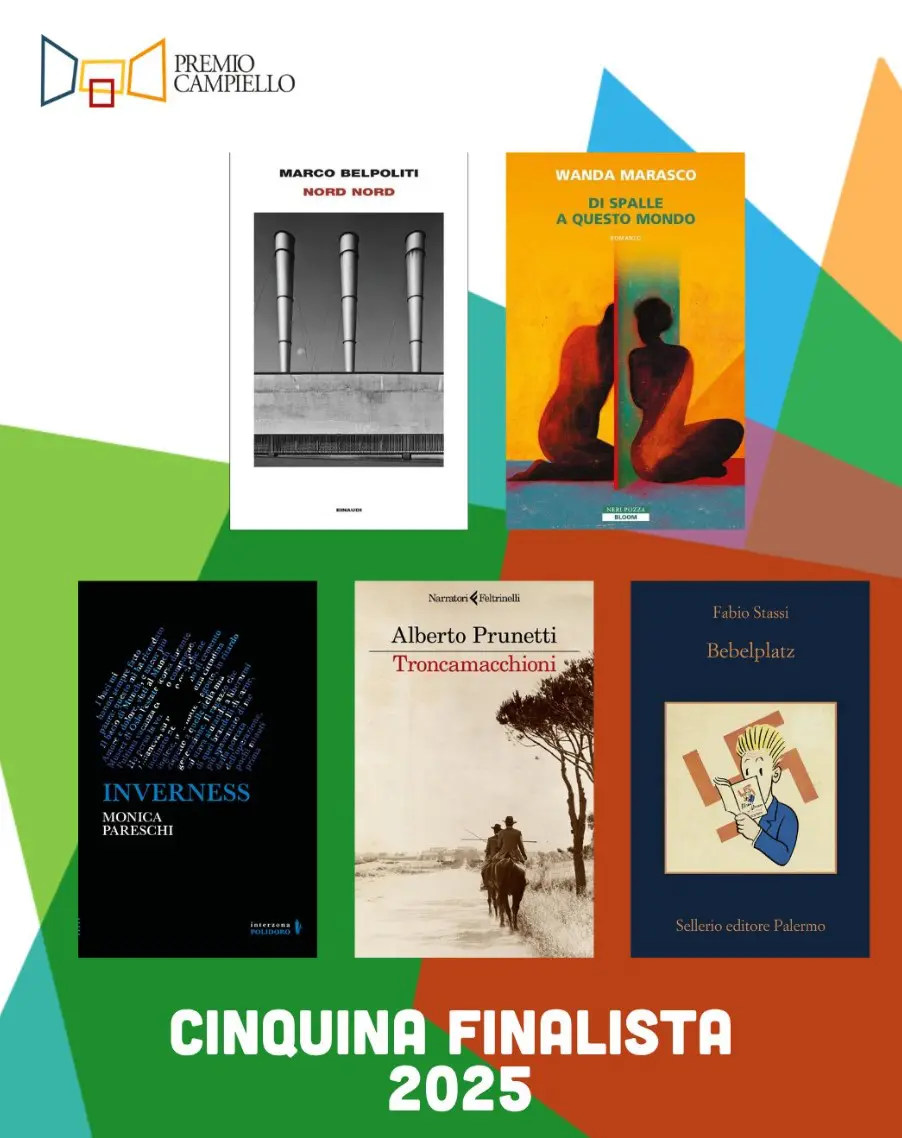
The just beginning season helps us to think better about words, the power of writing and the pleasure of reading. From 14 to 18 May, Turin will host the Book Fair, with over two thousand events, meetings and dialogues to inspire a love of reading. Then begins the Grand Tour of awardsthe Strega, the Campiello, the Viareggio, the Bancarella, and so on — which involve hundreds of events. There are also festivals in Mantua, Pordenone, Taormina, Polignano a Mare, Salerno, Trani, and so on, including cities and towns all over Italy. Books are discussed, writers are interviewed, and ideas and emotions are exchanged. “Thanks to books, we can recognise ourselves as a community,” comments Giuseppe Laterza, a publisher who is particularly committed to organising initiatives that support reading (La Stampa, 10 May).

It is true that we read very little in Italy.  Book sales have become lacklustre again after the post-Covid boom.  However, it is encouraging that many surveys indicate that the younger generation still values books as a source of knowledge and mental stimulation. The thriving state of children’s and young adult publishing testifies to the possibility of a better future, thanks to the widespread habit in schools and among more discerning families of embracing paper books alongside digital reading tools.

Even the world of publishing, which is rarely explored by most Italians and is not popular in many political circles, has some interesting news. For example, there is the growing influence of capable and competent women at the top, who are adept at drawing on the experience and memory of notable figures such as Elvira Sellerio, Inge Feltrinelli and Laura Lepetit. This influence is emphasised by the recent appointment of Longanesi’s new president, Agnese Pini, director of Quotidiano Nazionale, Resto del Carlino, La Nazione and Il Giorno; the Turin Book Fair’s management by Annalena Benini; the renewal of Feltrinelli by Alessandra Carra; managing director; the activism of Elisabetta Sgarbi for the growth of La nave di Teseo; and the successes of Laura Donnini at HarperCollins and Elena Campominosi at Bollati Boringhieri. Once again, we must acknowledge the unwavering commitment of Rosellina Archinto and the skilful, innovative editorial choices of Chicca Dubini at NN Editore. They have a keen eye for the most promising American writers, building on the success of introducing a great author such as Kent Haruf to the Italian market. The consistent quality of Iperborea’s publications is a testament to the leadership of Emilia Lodigiani. Not to be overlooked are the initiatives of Annamaria Malato at Salerno Editrice and Patrizia Alma Pacini at the family publishing house.

The list of positive female stories could go on and on.  It is an important sign of quality and modernity in the world of publishing. On the other hand, the majority of women are strong readers, more so than men.  There is also a long list of successful female authors.

They publish books that are read (perhaps in smaller quantities than the 80,000-plus titles published each year, but of a higher quality). What is needed is the fostering of meetings and reading groups. And tax relief for those who want to open a bookshop. Investment in libraries, both public and private, is also necessary. This could be achieved by linking municipal libraries, school libraries, and company and workplace libraries. The Confindustria Culture Group and Museimpresa are studying initiatives to this end. Pirelli’s company libraries, both at the Milan headquarters in Bicocca and at the Settimo Torinese and Bollate factories, have a long positive history and could serve as a good reference.

In an era of the “knowledge economy” and responsible AI usage, making use of books is a choice that is cultural, social and civil.

An example? The works of Jorge Luis Borges, such as The Aleph, which has just been republished in Feltrinelli’s Universale Economica series, are among the many possibilities. This series contains many classic titles and is a must-have for anyone who loves culture and reading.  “’When I opened my eyes, I saw the Aleph’. ‘The Aleph?’ I echoed. ‘Yes, the place where, without any possible confusion, all the places in the world are found’.”

The Aleph, the first letter of the alphabet of the scared Hebrew language. The symbolic beginning of the Book. And books. Until we find ourselves, again from a book by Borges, at the “Library of Babel”. It is the chaos of the infinity of sheets that chase each other and repeat themselves. But it also a chaos that can be reconstructed and understood. And here we are again. Back to the positive significance of books.

(Photo Getty Images)

Does erasing words from books emphasise their importance and essentiality? Does it emphasise the centrality of the written word? The answer is, of course, yes — provided that the “erasure” is an artistic gesture, a creative choice, a paradox that leads to truth. Especially if that artist is Emilio Isgrò. In fact, he made an exemplary poetic gesture of erasure, which was aesthetic and also ethical.

A major anthological exhibition by Emilio Isgrò, one of the greatest contemporary artists, has just been inaugurated to open the new MACC (Museum of Contemporary Art) in Scicli, Sicily. The museum is located in a building with astonishing Baroque architecture and is surrounded by rugged hillsides of dry stone walls (as Stefano Salis writes in Domenica de Il Sole 24 Ore on 11 May). The works in the exhibition, sixty years after the first erasures by the profoundly Sicilian — and therefore Mediterranean and universal — artist, highlight phrases and letters that feed criticism, dreams, reality and fantasy.

In short, says Isgrò, creating culture means knowing how to write, read, criticise and imagine. Constructing word games seasoned with fundamental silences, as if underlining them (in the manner of Isgrò’s “erasure”, in fact).

We live in an age of meaningless speech, syntactical and conceptual grammatical errors, loud and vulgar gossip, unreliable factoids, fake news and propaganda-filled public speeches. This is the era of “presentism”, where the present moment is prioritised over the depth of history, culture and the sacredness of life, thwarting the weight of the word. This context also means that new generations are finding it increasingly difficult to understand written texts, even with high levels of formal schooling.

We are facing a crisis of discourse. And it is a growing crisis. Therefore, it is essential to build a true “ecology of words” and restore the essential values that underpin discursive public opinion — the lesson of Jurgen Habermas — to speech. This will not only benefit democracy, but also the proper functioning of the market economy and the construction of positive social capital. This topic was discussed at length at the recent Communication Forum organised by Assolombarda. Books are the cornerstone of this. “Più libri, più liberi” (More books, more freedom), is the slogan of the National Fair of Small and Medium-sized Publishers held every year in December in Rome on the initiative of the Aie, the Association of Publishers.

Thought turns to wise words from Umberto Eco‘s “This is Not the End of the Book” (co-written with Jean-Claude Carrière and published by La nave di Teseo in 2009), in which he discusses the beneficial habit of using books as everyday objects, “like spoons”, and how books do not resist fire (the Library of Alexandria and the Nazi book burnings are prime examples of this), but instead survive “the global blackout”.

“A sign of vitality and salvation”, comments Cardinal Gianfranco Ravasi (IlSole24Ore, 11 May), also drawing on the theologian Romano Guardini‘s “Praise of the Book”. In this story, a military chaplain distributes the pages of his Gospel to soldiers as a source of comfort in the midst of battle. Pages of consolation and remembrance of the essence of life, right at the moment of death.

“Everything in the world exists in order to end up as a book,” Stéphane Mallarmé was fond of saying. And even if it is true that “life is either lived or written”, as Luigi Pirandello said, books certainly help us to understand life better and convey its meaning and values to readers. This gives a narrated experience the characteristics of a challenge to time and oblivion.

Reading and falling in love with books, then. Keeping them in the fabric of our everyday life.

The just beginning season helps us to think better about words, the power of writing and the pleasure of reading. From 14 to 18 May, Turin will host the Book Fair, with over two thousand events, meetings and dialogues to inspire a love of reading. Then begins the Grand Tour of awardsthe Strega, the Campiello, the Viareggio, the Bancarella, and so on — which involve hundreds of events. There are also festivals in Mantua, Pordenone, Taormina, Polignano a Mare, Salerno, Trani, and so on, including cities and towns all over Italy. Books are discussed, writers are interviewed, and ideas and emotions are exchanged. “Thanks to books, we can recognise ourselves as a community,” comments Giuseppe Laterza, a publisher who is particularly committed to organising initiatives that support reading (La Stampa, 10 May).

It is true that we read very little in Italy.  Book sales have become lacklustre again after the post-Covid boom.  However, it is encouraging that many surveys indicate that the younger generation still values books as a source of knowledge and mental stimulation. The thriving state of children’s and young adult publishing testifies to the possibility of a better future, thanks to the widespread habit in schools and among more discerning families of embracing paper books alongside digital reading tools.

Even the world of publishing, which is rarely explored by most Italians and is not popular in many political circles, has some interesting news. For example, there is the growing influence of capable and competent women at the top, who are adept at drawing on the experience and memory of notable figures such as Elvira Sellerio, Inge Feltrinelli and Laura Lepetit. This influence is emphasised by the recent appointment of Longanesi’s new president, Agnese Pini, director of Quotidiano Nazionale, Resto del Carlino, La Nazione and Il Giorno; the Turin Book Fair’s management by Annalena Benini; the renewal of Feltrinelli by Alessandra Carra; managing director; the activism of Elisabetta Sgarbi for the growth of La nave di Teseo; and the successes of Laura Donnini at HarperCollins and Elena Campominosi at Bollati Boringhieri. Once again, we must acknowledge the unwavering commitment of Rosellina Archinto and the skilful, innovative editorial choices of Chicca Dubini at NN Editore. They have a keen eye for the most promising American writers, building on the success of introducing a great author such as Kent Haruf to the Italian market. The consistent quality of Iperborea’s publications is a testament to the leadership of Emilia Lodigiani. Not to be overlooked are the initiatives of Annamaria Malato at Salerno Editrice and Patrizia Alma Pacini at the family publishing house.

The list of positive female stories could go on and on.  It is an important sign of quality and modernity in the world of publishing. On the other hand, the majority of women are strong readers, more so than men.  There is also a long list of successful female authors.

They publish books that are read (perhaps in smaller quantities than the 80,000-plus titles published each year, but of a higher quality). What is needed is the fostering of meetings and reading groups. And tax relief for those who want to open a bookshop. Investment in libraries, both public and private, is also necessary. This could be achieved by linking municipal libraries, school libraries, and company and workplace libraries. The Confindustria Culture Group and Museimpresa are studying initiatives to this end. Pirelli’s company libraries, both at the Milan headquarters in Bicocca and at the Settimo Torinese and Bollate factories, have a long positive history and could serve as a good reference.

In an era of the “knowledge economy” and responsible AI usage, making use of books is a choice that is cultural, social and civil.

An example? The works of Jorge Luis Borges, such as The Aleph, which has just been republished in Feltrinelli’s Universale Economica series, are among the many possibilities. This series contains many classic titles and is a must-have for anyone who loves culture and reading.  “’When I opened my eyes, I saw the Aleph’. ‘The Aleph?’ I echoed. ‘Yes, the place where, without any possible confusion, all the places in the world are found’.”

The Aleph, the first letter of the alphabet of the scared Hebrew language. The symbolic beginning of the Book. And books. Until we find ourselves, again from a book by Borges, at the “Library of Babel”. It is the chaos of the infinity of sheets that chase each other and repeat themselves. But it also a chaos that can be reconstructed and understood. And here we are again. Back to the positive significance of books.

(Photo Getty Images)

Innovation happens locally

Research presented at the Polytechnic University of Turin emphasises the importance of collaboration between various elements in business development

Switching from one technological setup to another happens many times and continues to happen.  Understanding the steps involved is crucial. And not only from a technical point of view, but also human and geographically. This is what Marco Milanesio has attempted with his research discussed at the Polytechnic University of Turin a few weeks ago.

“La transizione verso l’industria 5.0. Gli Incentivi, le Tecnologie e il ruolo dei Distretti Industriali” (The transition to Industry 5.0. Incentives, Technologies and the Role of Industrial Districts) investigates the evolution of Italian production systems, with a particular focus on the transition from Industry 4.0, characterised by the adoption of digital technologies and automated systems, to Industry 5.0, oriented towards responsible and environmentally friendly growth.

Milanesio points out that the analysed transformation does not only concern the “internal dynamics of companies”, but is also closely linked to the “political and economic context”, in which a number of factors exert their influence: tax incentives and industrial districts in particular. Elements that are put in place to foster innovation and technological upgrading but whose effectiveness must be evaluated each time.

Marco Milanesio’s work provides a detailed analysis of the tax measures introduced to support businesses in promoting strategic investments, fostering organisational transformation, and increasing the competitiveness of the national production system. The paper also emphasises the positive effects of adopting digital solutions and intelligent systems on variables such as employment, profitability, and access to financial resources.

Then there is the issue of geographical location, with industrial districts functioning as catalysts and multipliers of growth possibilities. “It emerges,” explains Milanesio, “that companies located in areas with higher company densities and well-established support networks generally have easier access to tax incentives.”

Marco Milanesio’s research focuses on two key areas:  the importance of synergy between technological innovation and targeted fiscal policies,  and the fundamental role of the local area in ensuring the equitable distribution of innovation’s benefits through complementary strategies.

La transizione verso l’industria 5.0. Gli Incentivi, le Tecnologie e il ruolo dei Distretti Industriali

Marco Milanesio

Thesis, Polytechnic University of Turin, College of Management Engineering – Class LM/31, Master’s Degree in Management Engineering, 2025

Research presented at the Polytechnic University of Turin emphasises the importance of collaboration between various elements in business development

Switching from one technological setup to another happens many times and continues to happen.  Understanding the steps involved is crucial. And not only from a technical point of view, but also human and geographically. This is what Marco Milanesio has attempted with his research discussed at the Polytechnic University of Turin a few weeks ago.

“La transizione verso l’industria 5.0. Gli Incentivi, le Tecnologie e il ruolo dei Distretti Industriali” (The transition to Industry 5.0. Incentives, Technologies and the Role of Industrial Districts) investigates the evolution of Italian production systems, with a particular focus on the transition from Industry 4.0, characterised by the adoption of digital technologies and automated systems, to Industry 5.0, oriented towards responsible and environmentally friendly growth.

Milanesio points out that the analysed transformation does not only concern the “internal dynamics of companies”, but is also closely linked to the “political and economic context”, in which a number of factors exert their influence: tax incentives and industrial districts in particular. Elements that are put in place to foster innovation and technological upgrading but whose effectiveness must be evaluated each time.

Marco Milanesio’s work provides a detailed analysis of the tax measures introduced to support businesses in promoting strategic investments, fostering organisational transformation, and increasing the competitiveness of the national production system. The paper also emphasises the positive effects of adopting digital solutions and intelligent systems on variables such as employment, profitability, and access to financial resources.

Then there is the issue of geographical location, with industrial districts functioning as catalysts and multipliers of growth possibilities. “It emerges,” explains Milanesio, “that companies located in areas with higher company densities and well-established support networks generally have easier access to tax incentives.”

Marco Milanesio’s research focuses on two key areas:  the importance of synergy between technological innovation and targeted fiscal policies,  and the fundamental role of the local area in ensuring the equitable distribution of innovation’s benefits through complementary strategies.

La transizione verso l’industria 5.0. Gli Incentivi, le Tecnologie e il ruolo dei Distretti Industriali

Marco Milanesio

Thesis, Polytechnic University of Turin, College of Management Engineering – Class LM/31, Master’s Degree in Management Engineering, 2025

Lessons from business to culture

A book that encapsulates a life of production and teaching


The idea that doing business is equivalent to cultural practice is now commonplace in many areas of economics, but not in all. Since time immemorial, methods of production and the organisations of production themselves have been an expression of the culture in which they emerge and evolve. Therefore, it is always necessary to consider the broader nature of the economy and production, and this is particularly timely. In his latest book, “Lezioni. Un percorso autobiografico” (Lessons. An autobiographical journey), Gianfranco Dioguardi, an engineer and professor of economics and business organisation who is considered one of the fathers of management engineering in Italy, does just that.

The book is a collection of the author’s professional experiences, ranging from academia and civic engagement to teaching and research, as expressed through his writing. In the first section, “Incontri con il Pubblico” (Meetings with the Public), Dioguardi brings together texts for companies and public institutions, as well as insights on various topics and lectures for specific events. In the second part of the book “Lezioni” (Lessons), the author presents speeches with a more didactic focus, dedicated to the management engineering that he helped create.

All with a unique approach, since Dioguardi is both a professor and a businessman. And it is precisely this characteristic that gives the book its extra dimension. A trait that emerges more in some places in the book, such as in the speech “For a Private Company”, which refers to the family business itself. “Our company is a living, vital, pulsating system,” writes Dioguardi, “and I am sure it will survive into the future with the philosophy I have outlined for you, despite unfavourable macro-environmental situations, because you have the will, the ability, the means and the class to make it survive.” This is a collection of must-read “lessons” from Gianfranco Dioguardi.

Lezioni. Un percorso autobiografico

Gianfranco Dioguardi

Guerini Next, 2025

A book that encapsulates a life of production and teaching


The idea that doing business is equivalent to cultural practice is now commonplace in many areas of economics, but not in all. Since time immemorial, methods of production and the organisations of production themselves have been an expression of the culture in which they emerge and evolve. Therefore, it is always necessary to consider the broader nature of the economy and production, and this is particularly timely. In his latest book, “Lezioni. Un percorso autobiografico” (Lessons. An autobiographical journey), Gianfranco Dioguardi, an engineer and professor of economics and business organisation who is considered one of the fathers of management engineering in Italy, does just that.

The book is a collection of the author’s professional experiences, ranging from academia and civic engagement to teaching and research, as expressed through his writing. In the first section, “Incontri con il Pubblico” (Meetings with the Public), Dioguardi brings together texts for companies and public institutions, as well as insights on various topics and lectures for specific events. In the second part of the book “Lezioni” (Lessons), the author presents speeches with a more didactic focus, dedicated to the management engineering that he helped create.

All with a unique approach, since Dioguardi is both a professor and a businessman. And it is precisely this characteristic that gives the book its extra dimension. A trait that emerges more in some places in the book, such as in the speech “For a Private Company”, which refers to the family business itself. “Our company is a living, vital, pulsating system,” writes Dioguardi, “and I am sure it will survive into the future with the philosophy I have outlined for you, despite unfavourable macro-environmental situations, because you have the will, the ability, the means and the class to make it survive.” This is a collection of must-read “lessons” from Gianfranco Dioguardi.

Lezioni. Un percorso autobiografico

Gianfranco Dioguardi

Guerini Next, 2025

Rebuilding trust and investing in culture and the future, Mattarella’s words on the fiftieth anniversary of Fai

Rebuilding trust. And to restore hope, especially to the young people, many, too many of whom leave Italy in search of better working and living conditions. In times of crisis, such as the one we are currently going through, it is necessary to have a clear awareness of the tensions, fractures and risks of deterioration of political, economic and social conditions. But also trying to catch a glimpse and build projects of recovery, of redemption. Beyond the common sense that tells us that the darkest point of the night is precisely the eve of the dawn, the most luminous pages of our literature contribute to setting a limit to despair. Like the one that concludes “Invisible Cities” by Italo Calvino: “The hell of living people is not something to come; if there is one, it is here already, it’s the hell we live in every day, which we form staying together. There are two ways not to suffer from it. The first comes easy to many: accept hell and become part of it, to the point you don’t see it any more. The second is risky and requires continuous attention and learning: to look for and recognise who and what, in the middle of hell, is not hell, and to make it last, and give it space.”

Calvino’s lesson is an integral part of a responsible approach to intellectual work and, therefore, to political commitment. And it is worth remembering this in the face of the many signs of crisis that crowd our troubled times. Looking for traces of it in the very fabric of the public discourse we live with, we tell, we plan a more satisfying condition in our being cives, responsible citizens of a community.

A good example of this are the words of the President of the Republic, Sergio Mattarella, who recently spoke at the Quirinale ceremony to mark the fiftieth anniversary of the Fai, the fund that meritoriously protects and enhances Italy’s environmental assets, including the countryside, monuments and historical testimonies of an extraordinary civilisation. This is in line with the latest version of Article 9 of the Constitution, which, in the amendment of February 2022, added “the protection of the environment, biodiversity and ecosystems, also in the interest of future generations” to “the development of culture”, “scientific and technical research” and the protection of “the landscape and the historical and artistic heritage of the nation”.

President Mattarella believes that culture has the responsibility to “build common and shared identities, respecting the identity of each person” and defines a civilisation “that generates social capital, encounters, peace and development”. This Italy is in fact “an evocative mosaic”, the result of “many stories and events”, “patiently assembled” for the benefit of new generations. It is up to them to “find nourishment in the history from which they come” and from there to “raise the horizon of our gaze”. In other words, “the fate of man and the fate of the environment have never been so closely linked”.

The environment, culture, history and sustainable development are essential cornerstones of more balanced economic and social growth (as we have also discussed in the blogs over the last two weeks). And if, at a time of radical upheaval in geopolitical balances and profound market disturbances due to the serious trade wars underway, the reasons and methods of competition and the reconstruction of value chains need to be redefined, Italy itself, in the context of Europe, cannot fail to capitalise on the cultural, economic and civil characteristics that characterise its history and its future.

This is why President Mattarella reminds us that “it is not a question of embalming places, but of making resources available to the community that are in danger of being lost if they are no longer valued”.

In fact, they are places full of beauty and culture. And the 72 properties entrusted to the Fai (56 of which are open to the public), protected and enhanced thanks to the commitment of 300,000 members and 16,000 volunteers, are a sample of that extraordinary Italian wealth that is worth not only as a stimulus for cultivated, slow, conscious and responsible tourism, but above all as cultural heritage and social capital to be used as a lever for sustainable development.

In his meeting with the delegates of the Fai (led by President Marco Magnifico and former President Andrea Carandini), President Mattarella rightly recalled the words of Benedetto Croce, who in 1922 promoted the first law on landscape and was convinced that “the spirit of a community is linked to the territories and the landscape, whose degradation risks weakening and eradicating its own historical and cultural reasons”. A risk that unfortunately still exists, even in the face of serious protection regulations.

Cultural and moral values, and values of economic significance. Italian culture, in which the best Made in Italy has its vital roots, is in fact a rich fabric interwoven with a sense of beauty and scientific and technological knowledge, literary, artistic and philosophical wisdom and mathematical spirit, original creativity and the ability to produce “beautiful things that the world likes”.

The best Made in Italy companies are aware of this. They have made ESG values an integral part of the way they produce, operate, market, grow and compete. And they know that their history is a distinguishing factor in a competition where unfair competition and imitation have a negative impact. And that the link with the regions is a factor of identity, of quality and sustainability, of passing on knowledge and creating new knowledge. The experiences of the more than 160 museums and historical company archives registered with Museimpresa (the association set up by Assolombarda and Confindustria more than twenty years ago) are clear evidence of this. And the long-standing collaboration between Fai, the world of supporting companies (Pirelli is one of them) and the Museimpresa itself is proof of a shared commitment with strong economic and cultural values.

How to move forward and build on this? If this is our legacy of sustainable development, we need strong public investment in culture, scientific research, schools and long-term training, trying to reach European standards quickly. Strong tax incentives for private companies that invest in this field would also be useful (an extension of the art bonus would be highly appropriate, finally listening to those who have been asking for it for some time, such as Museimpresa).

Our future, in fact, has an ancient heart (to paraphrase the title of a book by Carlo Levi). And it is essential to face the challenges of a contemporary world that is full of complexity and controversy, but also of extraordinary opportunities. In terms of complexity, the Italian cultural and social experience itself has always been extraordinarily dense. And this “mosaic of different stories” that President Mattarella recalled today is an element that can be used. To rebuild trust and provide incentives for young people to invest, work, research and develop their creativity and initiative.

Traces of history, paths to the future.

(photo Getty Images)

Rebuilding trust. And to restore hope, especially to the young people, many, too many of whom leave Italy in search of better working and living conditions. In times of crisis, such as the one we are currently going through, it is necessary to have a clear awareness of the tensions, fractures and risks of deterioration of political, economic and social conditions. But also trying to catch a glimpse and build projects of recovery, of redemption. Beyond the common sense that tells us that the darkest point of the night is precisely the eve of the dawn, the most luminous pages of our literature contribute to setting a limit to despair. Like the one that concludes “Invisible Cities” by Italo Calvino: “The hell of living people is not something to come; if there is one, it is here already, it’s the hell we live in every day, which we form staying together. There are two ways not to suffer from it. The first comes easy to many: accept hell and become part of it, to the point you don’t see it any more. The second is risky and requires continuous attention and learning: to look for and recognise who and what, in the middle of hell, is not hell, and to make it last, and give it space.”

Calvino’s lesson is an integral part of a responsible approach to intellectual work and, therefore, to political commitment. And it is worth remembering this in the face of the many signs of crisis that crowd our troubled times. Looking for traces of it in the very fabric of the public discourse we live with, we tell, we plan a more satisfying condition in our being cives, responsible citizens of a community.

A good example of this are the words of the President of the Republic, Sergio Mattarella, who recently spoke at the Quirinale ceremony to mark the fiftieth anniversary of the Fai, the fund that meritoriously protects and enhances Italy’s environmental assets, including the countryside, monuments and historical testimonies of an extraordinary civilisation. This is in line with the latest version of Article 9 of the Constitution, which, in the amendment of February 2022, added “the protection of the environment, biodiversity and ecosystems, also in the interest of future generations” to “the development of culture”, “scientific and technical research” and the protection of “the landscape and the historical and artistic heritage of the nation”.

President Mattarella believes that culture has the responsibility to “build common and shared identities, respecting the identity of each person” and defines a civilisation “that generates social capital, encounters, peace and development”. This Italy is in fact “an evocative mosaic”, the result of “many stories and events”, “patiently assembled” for the benefit of new generations. It is up to them to “find nourishment in the history from which they come” and from there to “raise the horizon of our gaze”. In other words, “the fate of man and the fate of the environment have never been so closely linked”.

The environment, culture, history and sustainable development are essential cornerstones of more balanced economic and social growth (as we have also discussed in the blogs over the last two weeks). And if, at a time of radical upheaval in geopolitical balances and profound market disturbances due to the serious trade wars underway, the reasons and methods of competition and the reconstruction of value chains need to be redefined, Italy itself, in the context of Europe, cannot fail to capitalise on the cultural, economic and civil characteristics that characterise its history and its future.

This is why President Mattarella reminds us that “it is not a question of embalming places, but of making resources available to the community that are in danger of being lost if they are no longer valued”.

In fact, they are places full of beauty and culture. And the 72 properties entrusted to the Fai (56 of which are open to the public), protected and enhanced thanks to the commitment of 300,000 members and 16,000 volunteers, are a sample of that extraordinary Italian wealth that is worth not only as a stimulus for cultivated, slow, conscious and responsible tourism, but above all as cultural heritage and social capital to be used as a lever for sustainable development.

In his meeting with the delegates of the Fai (led by President Marco Magnifico and former President Andrea Carandini), President Mattarella rightly recalled the words of Benedetto Croce, who in 1922 promoted the first law on landscape and was convinced that “the spirit of a community is linked to the territories and the landscape, whose degradation risks weakening and eradicating its own historical and cultural reasons”. A risk that unfortunately still exists, even in the face of serious protection regulations.

Cultural and moral values, and values of economic significance. Italian culture, in which the best Made in Italy has its vital roots, is in fact a rich fabric interwoven with a sense of beauty and scientific and technological knowledge, literary, artistic and philosophical wisdom and mathematical spirit, original creativity and the ability to produce “beautiful things that the world likes”.

The best Made in Italy companies are aware of this. They have made ESG values an integral part of the way they produce, operate, market, grow and compete. And they know that their history is a distinguishing factor in a competition where unfair competition and imitation have a negative impact. And that the link with the regions is a factor of identity, of quality and sustainability, of passing on knowledge and creating new knowledge. The experiences of the more than 160 museums and historical company archives registered with Museimpresa (the association set up by Assolombarda and Confindustria more than twenty years ago) are clear evidence of this. And the long-standing collaboration between Fai, the world of supporting companies (Pirelli is one of them) and the Museimpresa itself is proof of a shared commitment with strong economic and cultural values.

How to move forward and build on this? If this is our legacy of sustainable development, we need strong public investment in culture, scientific research, schools and long-term training, trying to reach European standards quickly. Strong tax incentives for private companies that invest in this field would also be useful (an extension of the art bonus would be highly appropriate, finally listening to those who have been asking for it for some time, such as Museimpresa).

Our future, in fact, has an ancient heart (to paraphrase the title of a book by Carlo Levi). And it is essential to face the challenges of a contemporary world that is full of complexity and controversy, but also of extraordinary opportunities. In terms of complexity, the Italian cultural and social experience itself has always been extraordinarily dense. And this “mosaic of different stories” that President Mattarella recalled today is an element that can be used. To rebuild trust and provide incentives for young people to invest, work, research and develop their creativity and initiative.

Traces of history, paths to the future.

(photo Getty Images)

Sign up for the newsletter