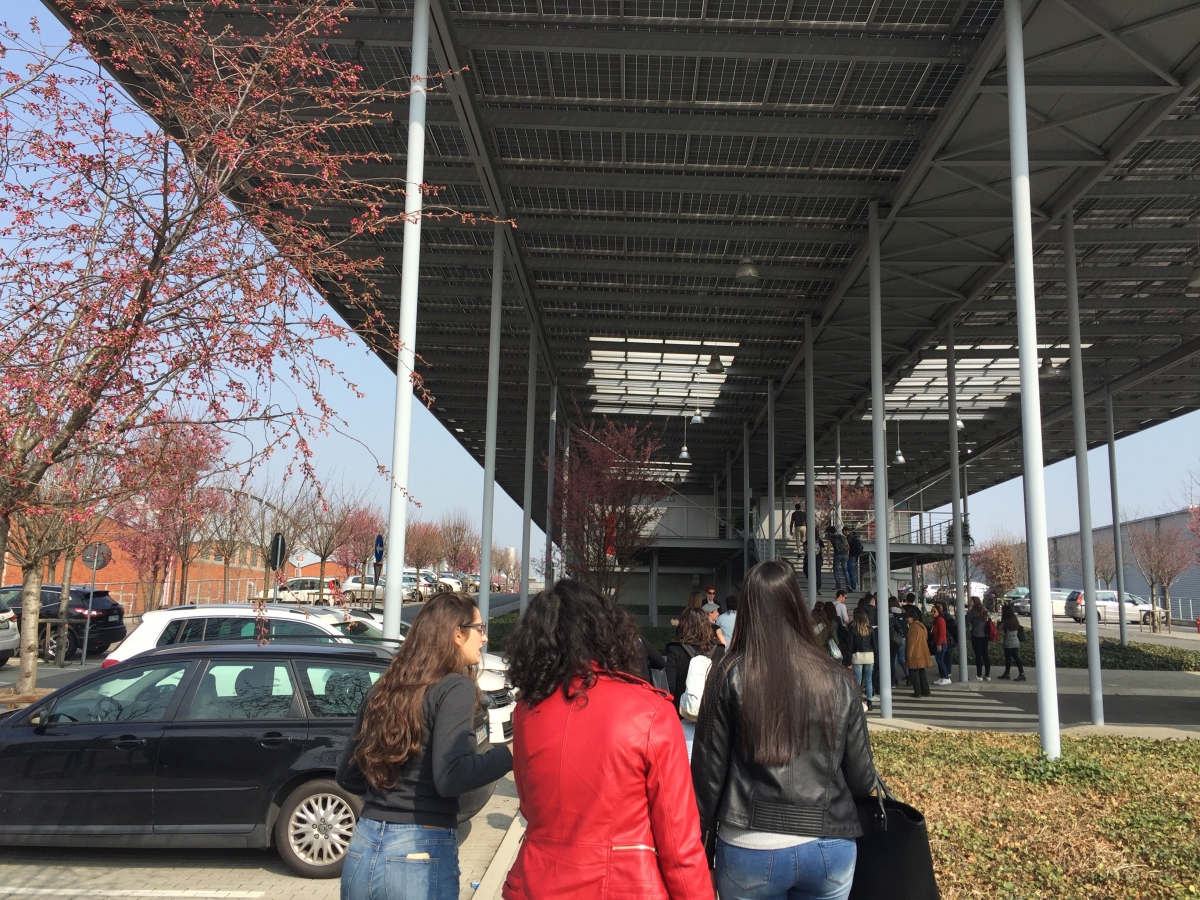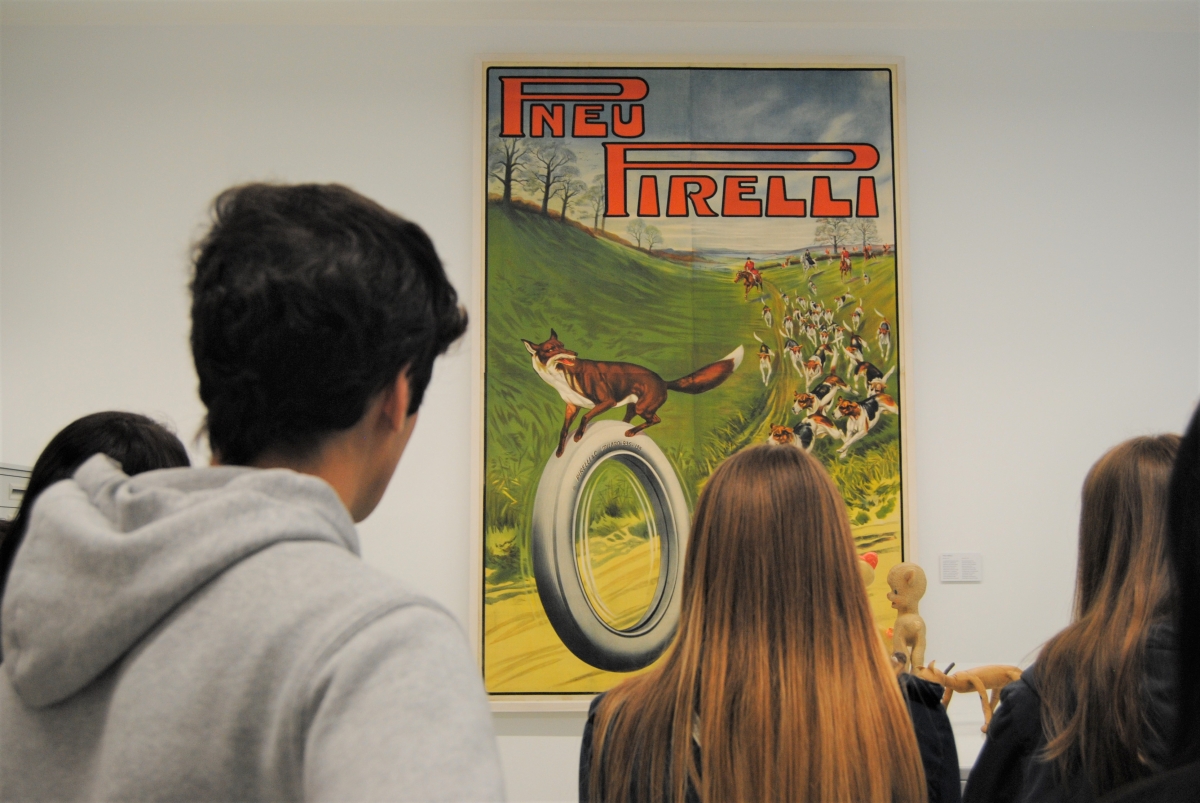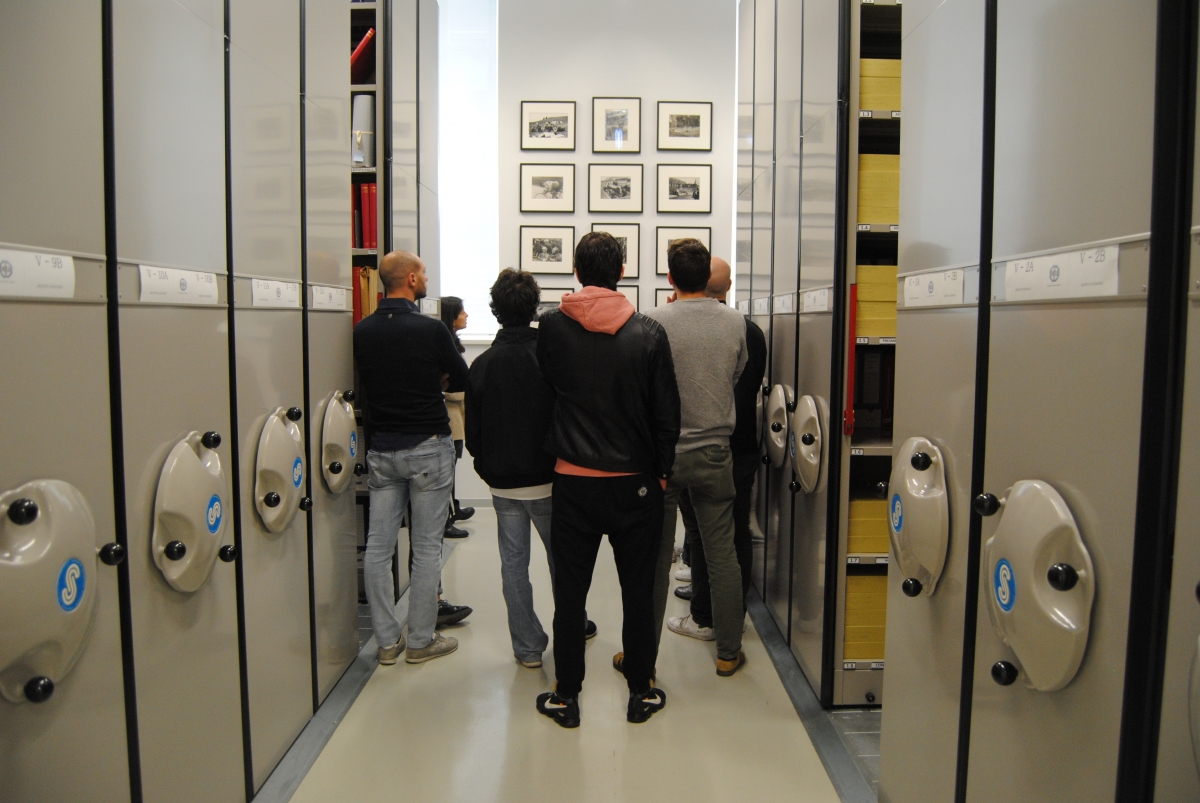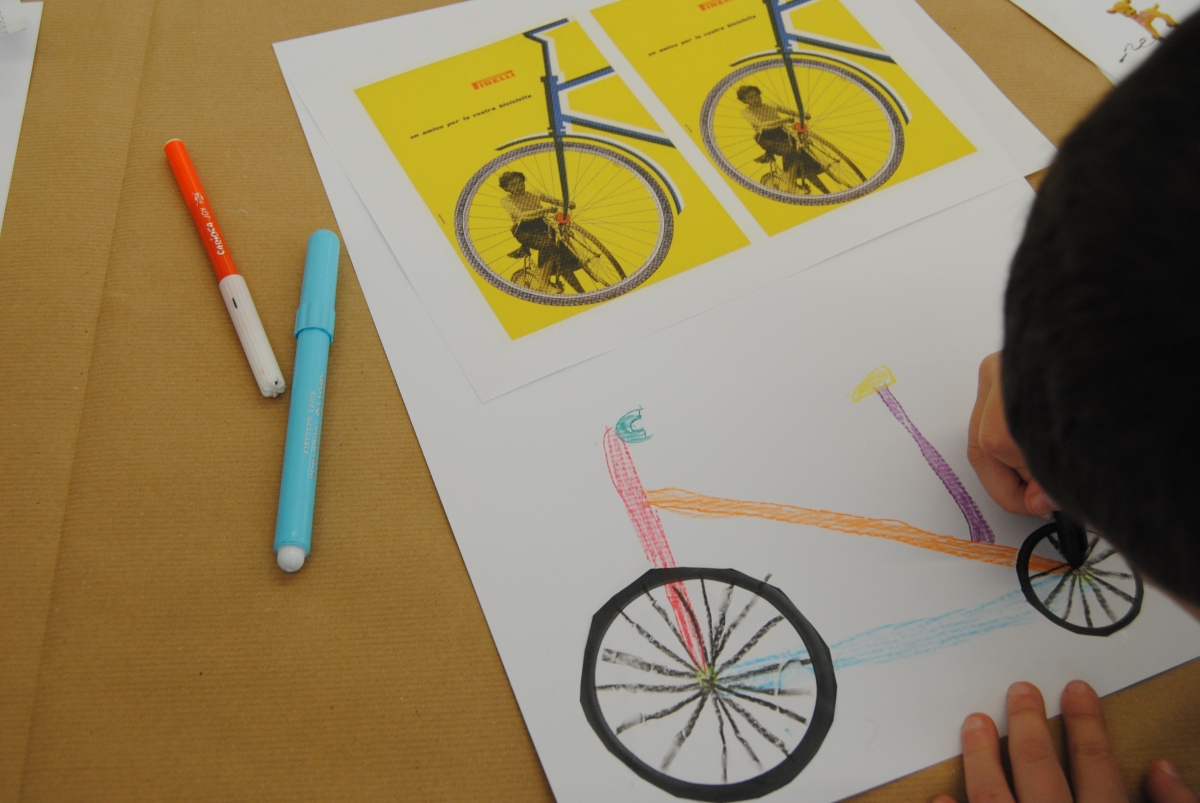
Help with your research

To request to view the materials in the Historical Archive and in the libraries of the Pirelli Foundation for study and research purposes and/or to find out how to request the use of materials for loans and exhibitions, please fill in the form below. You will receive an email confirming receipt of the request and you will be contacted.

Pirelli Foundation Educational Courses

Select the education level of the school

Visit the Foundation

For information about the Foundation's activities, guided tours and accessibility, please call +39 0264423971 or fill in the form below, providing details of your request in the notes field.

Biblioteche Pirelli – Leggere in azienda – Pirelli e Milano – Impresa e cultura

Sustainability and business values: a choice for the competitiveness of Italian industry

At the end of May, ten major business associations including Confindustria, Confcommercio, the co-operative federations, Agriculture and Artisan Associations, FEBAF (finance companies) and Unioncamere, signed a document with a challenging title: “Accelerating the transition to sustainability”. This document was submitted to the government with an appeal to remove the regulatory, bureaucratic and cultural obstacles hindering the widespread dissemination of values linked to the UN Sustainable Development Goals. It is unlikely that the current government will be able to devote its full attention to the issue given its involvement in other conflicting matters. Nevertheless, a lot of meaning and value can be attributed to this initiative which confirms the front-line role that Italian industry is playing with regard to the green economy.

The appeal was presented a few days ago at Assolombarda during the ASVIS Sustainable Development Festival held in Milan (ASVIS is the sustainability association headed by Enrico Giovannini). A debate was held among business owners, economists and opinion leaders on “Businesses and finance for sustainable development: opportunities to exploit and obstacles to remove”. Around one issue there was unanimity: environmental and social sustainability must be regarded as one of the key selling points of the most active Italian businesses on the international markets.

Assolombarda made its position clear some time ago, reiterating it during the ASVIS conference: “If sustainability is a short-term communication choice then it won’t have a great future”. Rather, it must be a “strategic” and long-term choice, “a civil economy choice, a circular economy choice, an assumption of social responsibility versus the areas that are home to our businesses and all stakeholders”. At the same time, it must also be an indication of competitiveness. To survive on the luxury products and services markets requires having great respect for the environment, people, rights, social inclusion, quality and safety. All these elements legitimise businesses, helping them to grow and compete. Assolombarda said: “Sustainability resides within the way we do business”.

Some sectors are particularly advanced in their ability to merge green economy with social values, sectors that have a more direct relationship with the community and with people and that are more committed to the concepts of quality and global competition: the automotive industry, chemicals, pharmaceuticals, rubber, mechanics and mechatronics, as well as traditional areas of Italian excellence like interior design, agroindustry and fashion. In short, the sectors in which research, innovation and the quality of products and services are more advanced handle this well.

At a time of great technological transformations, the digital economy also aids economic processes in the area of quality, even if tricky new sustainability problems are arising in the job market. Some trades and professions are undergoing major changes, others are disappearing, and others are being created. Economic and social equilibriums are coming under extreme stress. Discomfort increases. New hopes develop. The whole world is in flux.

On the topic of sustainability and the SDG (Sustainable Development Goals), Assolombarda believes that businesses have a responsibility to invest more in innovation and to champion public spending on training, research and new social shock absorbers connected with professional retraining. The necessary skills need to be developed so that they evolve gradually as the digital economy changes production relationships and creates new ones.

The keywords are innovation, sustainability and competitiveness: “Conducting our businesses with an eye on the environment is not about doing good, it is a necessary choice that creates value and is fundamental for our future. It is an economic and social goal we must continue to pursue”, emphasised Sergio Dompè, chairman of the Dompè pharmaceuticals company and vice chairman of Assolombarda, during a recent Sodalitas conference.

Good examples of all these aspects are given by the most innovative companies. The case studies presented at the Milan ASVIS conference by Pirelli, Enel, Unipol, Lega delle Cooperative, Cassa Depositi e Prestiti, Invitalia, etc. are proof of this.

“For us, sustainability means focusing on both people and the community”, commented Marco Tronchetti Provera, CEO of Pirelli. “It is a commitment which, in addition to ecological factors, also involves helping communities to develop in a more balanced way”. These communities are inside the plant, working on the issues of the safety and quality in the workplace, and outside the plants, jointly investing in hospitals and shelters, schools and sports centres. As Tronchetti asserts: “There can’t be sustainable growth over time if the society around the business doesn’t grow”.

There are of course various obstacles to overcome: “The many different regulations should all be harmonised” at both national and EU level, giving rise to a new and better system of rules that allows the business system time to get up-to-date and to meet the challenges of competition and innovation”. Tronchetti goes on: “Sustainability is fundamental for the future of businesses. And we are the industry leaders in all of the international indexes”.

At the end of May, ten major business associations including Confindustria, Confcommercio, the co-operative federations, Agriculture and Artisan Associations, FEBAF (finance companies) and Unioncamere, signed a document with a challenging title: “Accelerating the transition to sustainability”. This document was submitted to the government with an appeal to remove the regulatory, bureaucratic and cultural obstacles hindering the widespread dissemination of values linked to the UN Sustainable Development Goals. It is unlikely that the current government will be able to devote its full attention to the issue given its involvement in other conflicting matters. Nevertheless, a lot of meaning and value can be attributed to this initiative which confirms the front-line role that Italian industry is playing with regard to the green economy.

The appeal was presented a few days ago at Assolombarda during the ASVIS Sustainable Development Festival held in Milan (ASVIS is the sustainability association headed by Enrico Giovannini). A debate was held among business owners, economists and opinion leaders on “Businesses and finance for sustainable development: opportunities to exploit and obstacles to remove”. Around one issue there was unanimity: environmental and social sustainability must be regarded as one of the key selling points of the most active Italian businesses on the international markets.

Assolombarda made its position clear some time ago, reiterating it during the ASVIS conference: “If sustainability is a short-term communication choice then it won’t have a great future”. Rather, it must be a “strategic” and long-term choice, “a civil economy choice, a circular economy choice, an assumption of social responsibility versus the areas that are home to our businesses and all stakeholders”. At the same time, it must also be an indication of competitiveness. To survive on the luxury products and services markets requires having great respect for the environment, people, rights, social inclusion, quality and safety. All these elements legitimise businesses, helping them to grow and compete. Assolombarda said: “Sustainability resides within the way we do business”.

Some sectors are particularly advanced in their ability to merge green economy with social values, sectors that have a more direct relationship with the community and with people and that are more committed to the concepts of quality and global competition: the automotive industry, chemicals, pharmaceuticals, rubber, mechanics and mechatronics, as well as traditional areas of Italian excellence like interior design, agroindustry and fashion. In short, the sectors in which research, innovation and the quality of products and services are more advanced handle this well.

At a time of great technological transformations, the digital economy also aids economic processes in the area of quality, even if tricky new sustainability problems are arising in the job market. Some trades and professions are undergoing major changes, others are disappearing, and others are being created. Economic and social equilibriums are coming under extreme stress. Discomfort increases. New hopes develop. The whole world is in flux.

On the topic of sustainability and the SDG (Sustainable Development Goals), Assolombarda believes that businesses have a responsibility to invest more in innovation and to champion public spending on training, research and new social shock absorbers connected with professional retraining. The necessary skills need to be developed so that they evolve gradually as the digital economy changes production relationships and creates new ones.

The keywords are innovation, sustainability and competitiveness: “Conducting our businesses with an eye on the environment is not about doing good, it is a necessary choice that creates value and is fundamental for our future. It is an economic and social goal we must continue to pursue”, emphasised Sergio Dompè, chairman of the Dompè pharmaceuticals company and vice chairman of Assolombarda, during a recent Sodalitas conference.

Good examples of all these aspects are given by the most innovative companies. The case studies presented at the Milan ASVIS conference by Pirelli, Enel, Unipol, Lega delle Cooperative, Cassa Depositi e Prestiti, Invitalia, etc. are proof of this.

“For us, sustainability means focusing on both people and the community”, commented Marco Tronchetti Provera, CEO of Pirelli. “It is a commitment which, in addition to ecological factors, also involves helping communities to develop in a more balanced way”. These communities are inside the plant, working on the issues of the safety and quality in the workplace, and outside the plants, jointly investing in hospitals and shelters, schools and sports centres. As Tronchetti asserts: “There can’t be sustainable growth over time if the society around the business doesn’t grow”.

There are of course various obstacles to overcome: “The many different regulations should all be harmonised” at both national and EU level, giving rise to a new and better system of rules that allows the business system time to get up-to-date and to meet the challenges of competition and innovation”. Tronchetti goes on: “Sustainability is fundamental for the future of businesses. And we are the industry leaders in all of the international indexes”.

Technological innovation and company culture

An extensive study reports on the relationship between Industry 4.0 and working conditions

Technological innovation is not merely a question of machines; it is above all a question of women and men at work. It appears to have always been this way, since the times of the first Industrial Revolution. And so it is today as well, in our years of the Industry 4.0 revolution. It is thus wise and useful for everyone to have access to the cognitive tools needed to understand fully what is happening. This applies not only for workers in the traditional sense of the word, but also for the entrepreneurs and managers who are dealing with Industry 4.0.

Michele Faioli (University of Rome Tor Vergata), Gualtiero Fantoni (University of Pisa) and Manuelita Mancini (Giacomo Brodolini Foundation) have set out to present in an orderly manner all the effects of today’s technological innovation, publishing their broad study in the Giacomo Brodolini Foundation Working Papers series.

‘Work and organisation under Logistics 4.0,’ as explained at the start of the study, ‘entails the objective to understand how and to what extent the novelties generated by technological innovation can have (and, in cases, have already had), repercussions in our sectors in terms of concepts, professional categories, declarations and wages. This also includes the effects that automation can have on the organisation of work schedules.’ The study focused special attention on the logistics sector. Its transformation under the impact of innovation is analysed first from the technical angle and then more closely from the role of the workers.

The study thus begins with an accurate description of various links between logistics and innovation as seen in the context of various applications: harbour and airport systems, hubs, the cold chain. The three authors then consider the same topic from a legal point of view, before discussing in-depth what occurs in the realm of training and salaries.

The paper concludes by focusing on the ‘right to computer literacy’ as the springboard to improving work conditions and thus the production organisation itself. More than anything, there emerges not only the need to revise and update contractual aspects of work, but also to completely rethink the culture of production that must involve all the players who are a part of the specific production cycle.

Lavoro e organizzazione della logistica 4.0” (Work and Organisation of Logistics 4.0)

Michele Faioli, Gualtiero Fantoni, Manuelita Mancini

Working Papers of the Giacomo Brodolini Foundation, 2018

Click here to download PDF

An extensive study reports on the relationship between Industry 4.0 and working conditions

Technological innovation is not merely a question of machines; it is above all a question of women and men at work. It appears to have always been this way, since the times of the first Industrial Revolution. And so it is today as well, in our years of the Industry 4.0 revolution. It is thus wise and useful for everyone to have access to the cognitive tools needed to understand fully what is happening. This applies not only for workers in the traditional sense of the word, but also for the entrepreneurs and managers who are dealing with Industry 4.0.

Michele Faioli (University of Rome Tor Vergata), Gualtiero Fantoni (University of Pisa) and Manuelita Mancini (Giacomo Brodolini Foundation) have set out to present in an orderly manner all the effects of today’s technological innovation, publishing their broad study in the Giacomo Brodolini Foundation Working Papers series.

‘Work and organisation under Logistics 4.0,’ as explained at the start of the study, ‘entails the objective to understand how and to what extent the novelties generated by technological innovation can have (and, in cases, have already had), repercussions in our sectors in terms of concepts, professional categories, declarations and wages. This also includes the effects that automation can have on the organisation of work schedules.’ The study focused special attention on the logistics sector. Its transformation under the impact of innovation is analysed first from the technical angle and then more closely from the role of the workers.

The study thus begins with an accurate description of various links between logistics and innovation as seen in the context of various applications: harbour and airport systems, hubs, the cold chain. The three authors then consider the same topic from a legal point of view, before discussing in-depth what occurs in the realm of training and salaries.

The paper concludes by focusing on the ‘right to computer literacy’ as the springboard to improving work conditions and thus the production organisation itself. More than anything, there emerges not only the need to revise and update contractual aspects of work, but also to completely rethink the culture of production that must involve all the players who are a part of the specific production cycle.

Lavoro e organizzazione della logistica 4.0” (Work and Organisation of Logistics 4.0)

Michele Faioli, Gualtiero Fantoni, Manuelita Mancini

Working Papers of the Giacomo Brodolini Foundation, 2018

Click here to download PDF

Good Company Energy

The new edition of the book addresses the strength of sharing and teamwork

A good entrepreneur never works alone. And a good company can only be built if it is an adventure that hinges on humans. A fusion of calculations and feelings is what gives birth to that culture of producing that can turn a production organisation into something greater. It becomes a production mechanism that is not steady but resilient, not rigid but flexible, not built solely from cold calculations but also from ardent human feelings. Learning the stories of companies that exemplify these principles is a useful lesson. For this reason, we suggest reading the new edition of Samurai Manager. La montagna inaccessibile (Samurai Manager. The Unreachable Mountain) written by Pierluigi Tosato. The book is based on his experience as an international manager, first at Zoppas Industries before moving to Interpump and Global Garden Products SA, then to Acqua Minerale San Benedetto and presently DeOleo SA, the Spanish olive oil multinational that carries the brands Bertolli and Carapelli.

As a paradigm for his managerial activities, Tosato chose the Samurai, understood as the catalyst of energy that is synthesised by a circumstance. When ‘all minds coincide, energies become harmonised and when energy is harmonised, strength is single-minded and identical’. The author has sought to transmit this ‘work method’ to the companies where he has worked, whose stories he narrates in his book.

The result is the story of a multi-faceted adventure rich in challenges and daring, running parallel with management guidance to further a company’s success.  The book thus comments on a range of subjects: the existential crises of a manager, the need to seek perfection, the observation that companies in decline are led by ‘negative managers’, the good that comes from resiliency, the need to have faith in oneself, building a ‘shared vision” and the importance of ‘starting from the Person’.

Tosato’s book should be read attentively despite it being a quick read. It is not a management guide, nor is it the memoir of a manager who stands out from the crowd. It is a bit of all this and much more. It is a book that combines – with skill and readability – concepts and experience that are the cornerstones of good company management (with examples ranging from Toyota to Coca Cola, from Nestlé to Apple, etc.). He also shares ideas and suggestions deriving from philosophy and major works of literature. Names such as Kant, Plato, da Vinci, Dostoevsky, Bulgakov, García Márquez, Pessoa and Yourcenar, to list only a few, are cited more frequently than those of the “gurus” of economics or management.

In the final chapters, and running through all the pages, emerge the basic notions underlying the book: today’s world suffers from the disease of narcissism, the very concept of success is observed through the distorted lens of individualism and short-term gains at any cost. The cure for narcissism implies moving from Me to All, from alienation to authenticity, from ephemeral domination of people and things to the attainment of a shared value.

Readers do not necessarily have to agree with all that Tosato says, but they will certainly feel the need to think over his words.

Samurai Manager. La montagna inaccessibile

Pierluigi Tosato

Guerini Next, New edition, 2019

The new edition of the book addresses the strength of sharing and teamwork

A good entrepreneur never works alone. And a good company can only be built if it is an adventure that hinges on humans. A fusion of calculations and feelings is what gives birth to that culture of producing that can turn a production organisation into something greater. It becomes a production mechanism that is not steady but resilient, not rigid but flexible, not built solely from cold calculations but also from ardent human feelings. Learning the stories of companies that exemplify these principles is a useful lesson. For this reason, we suggest reading the new edition of Samurai Manager. La montagna inaccessibile (Samurai Manager. The Unreachable Mountain) written by Pierluigi Tosato. The book is based on his experience as an international manager, first at Zoppas Industries before moving to Interpump and Global Garden Products SA, then to Acqua Minerale San Benedetto and presently DeOleo SA, the Spanish olive oil multinational that carries the brands Bertolli and Carapelli.

As a paradigm for his managerial activities, Tosato chose the Samurai, understood as the catalyst of energy that is synthesised by a circumstance. When ‘all minds coincide, energies become harmonised and when energy is harmonised, strength is single-minded and identical’. The author has sought to transmit this ‘work method’ to the companies where he has worked, whose stories he narrates in his book.

The result is the story of a multi-faceted adventure rich in challenges and daring, running parallel with management guidance to further a company’s success.  The book thus comments on a range of subjects: the existential crises of a manager, the need to seek perfection, the observation that companies in decline are led by ‘negative managers’, the good that comes from resiliency, the need to have faith in oneself, building a ‘shared vision” and the importance of ‘starting from the Person’.

Tosato’s book should be read attentively despite it being a quick read. It is not a management guide, nor is it the memoir of a manager who stands out from the crowd. It is a bit of all this and much more. It is a book that combines – with skill and readability – concepts and experience that are the cornerstones of good company management (with examples ranging from Toyota to Coca Cola, from Nestlé to Apple, etc.). He also shares ideas and suggestions deriving from philosophy and major works of literature. Names such as Kant, Plato, da Vinci, Dostoevsky, Bulgakov, García Márquez, Pessoa and Yourcenar, to list only a few, are cited more frequently than those of the “gurus” of economics or management.

In the final chapters, and running through all the pages, emerge the basic notions underlying the book: today’s world suffers from the disease of narcissism, the very concept of success is observed through the distorted lens of individualism and short-term gains at any cost. The cure for narcissism implies moving from Me to All, from alienation to authenticity, from ephemeral domination of people and things to the attainment of a shared value.

Readers do not necessarily have to agree with all that Tosato says, but they will certainly feel the need to think over his words.

Samurai Manager. La montagna inaccessibile

Pierluigi Tosato

Guerini Next, New edition, 2019

Ornella canta per Tronchetti – L’Umanesimo di Pirelli

Le intelligenze creative della Rivista Pirelli

Businesses: investing more in innovation and infrastructure to fight international competition

‘We need more investment,’ say Italian companies. They are holding their own against international competition but often find their growth checked by a lack of infrastructure, heavy bureaucracy, a slow justice system and meagre state commitment towards research, training, innovation and technology transfer. More state investment is needed. Naturally, companies must also enjoy conditions that let them continue working and increasing their investments. They need financial incentives and above all rebuilt confidence.

This is what they’re saying from Milan to Turin, the Veneto to Emilia, where our country’s most dynamic industries players have been doing their utmost to recover from the years of the Great Recession and create new and better motives for competitiveness. Confindustria President Vincenzo Boccia reflected their views when, at the organisation’s general assembly on 22 May, he spoke about the three ‘yeses’: ‘Yes to the Turin-Lyon high-speed railway, yes to infrastructure and yes to growth.’ He also stressed the ‘urgent need to reopen work sites and launch a long period of public investment.’ Other speakers included President of the Republic Sergio Mattarella, who was welcomed with long, determined applause. Prime Minister Giuseppe Conte and Minister of Economic Development and Labour Luigi Di Maio, on the other hand, were both unable to move beyond banalities when it came to the economic and industrial policy that the government should adopt and translate into real choices. They were met with brief, cold, barely polite applause.

The Partito del PIL (GDP Group) is made up of the companies that produce the wealth, well-being, work and social inclusion so vital in Italy, a country that is badly governed and wracked by bitterness and fear, stoked by irresponsible populists. The group’s opinions have been proved extremely relevant by the results of the European elections, which show that EU countries, rather than embracing national self-interest, want to relaunch and be more balanced and attentive both to development and improving social cohesion.

Confindustria is asking to ‘transform the Pact of Stability and Growth into the Pact of Growth and Stability,’ in the knowledge that ‘only through growth can stability be guaranteed.’ It is therefore calling for ‘a more cohesive and stronger Europe,’ in other words the exact opposite of the nationalistic and fearful protectionism of the sovereigntists. ‘Europe remains the solid base for building the future,’ Confindustria states. This view, furthermore, matches completely that of the other large trade and industry organisations in France and Germany, where over 100,000 large and medium businesses and a million SMEs, with a total of 15 million employees, have clearly expressed their own support for the relaunch and improvement of the EU.

Businesses are right when they say there can be no development without a stronger EU. They worry about being crushed by the consequences of the China-USA trade war and by geopolitical tensions, in which Putin’s Russia plays a dangerous, unbalancing and mysterious role.

This line of thought is even more relevant in Italy, where economic growth appears once again to be fragile, precarious and fleeting. Besides burdening public expenditure and aggravating the deficit and public debt, the current government has made few attempts to pull the country out of stagnation. ‘This government relegates companies to Serie B,’ in the words of Michelangelo Agrusti, President of Unindustria in Pordenone, a town with dynamic manufacturing and cutting-edge services, where 60% of production is for export.

Prime Minister Conte says he is ‘firmly convinced’ that the worst has passed and that Italy has resumed growth after six months of recession. The data, however, does not confirm this reckless judgement. Istat predicts barely 0.3% growth for 2019, so essentially flat. Many of the main research centres (Prometeia, REF, Intesa San Paolo and Confindustria) fear that ‘the economic downturn is getting worse’ and are concerned about the vacillation between halts and negatives in investments, industrial production, consumption and thus employment. ‘Exports and investments are freezing GDP,’ stated Il Sole 24 Ore‘s headline on 25 May. The article spoke of ‘low consumption and falling foreign demand’ and predicted ‘negative growth in the second half of the year,’ caused in part by ‘international uncertainty: not only is the eurozone slowing down, but the situation in the USA and Asian countries is also deteriorating.’

In a more in-depth look at Italy’s economic data, the ‘Industrial Sector Analysis’ report from Prometeia and Intesa San Paolo, edited by Assolombarda, notes that ‘Italian industry had stable turnover in 2018,’ with ‘slow growth’ predicted for 2020-2023. Investment ‘is contracting’ as it is ‘weighed down by national and international uncertainty.’ One key point is: ‘In the past 10 years, Italy has accrued an investment gap to fill that is 35% higher than Germany’s.’ Therefore, the timid recovery in investments themselves, estimated for 2020 at 1.1% for machinery and equipment, 2.5% for means of transport and 1.8% for construction, is thoroughly insufficient for keeping up with our competitors. ‘This recovery in investments is still too weak.’

Another point worth reflecting on is that our companies experienced growth during the Great Recession and are more ‘resilient’ than they were a decade ago. They have ‘broader shoulders’ than in 2008. They are stronger when it comes to profitability and capital balance, but they do not invest, precisely because of the prevailing climate of uncertainty. They are not confident. Confindustria President Boccia is right. He is fully aware of the climate among his associates when he rebukes, ‘Words that produce mistrust go against the national interest.’

We are moving towards a period that will still be hard, with a confused spring and a worrying autumn, when a financial law needs to be prepared that will involve at least €30 billion in interventions, including budget cuts and taxes. There is also the nightmare of the safeguard clauses, which would increase the weight of Italy’s VAT, with extremely negative consequences for trade, consumption and employment.

This is another reason why the EU needs relaunching. Without rules, investments and ambitious development projects as part of a sweeping new plan of interventions in material, intangible and digital infrastructure – what companies call ‘a new Delors plan’, as discussed in last week’s blog – Italy will also suffer immensely. Our growth will remain feeble, incapable of meeting the needs of large swathes of Italian public opinion in terms of well-being, work, safety and prospects for a better future.

‘We need more investment,’ say Italian companies. They are holding their own against international competition but often find their growth checked by a lack of infrastructure, heavy bureaucracy, a slow justice system and meagre state commitment towards research, training, innovation and technology transfer. More state investment is needed. Naturally, companies must also enjoy conditions that let them continue working and increasing their investments. They need financial incentives and above all rebuilt confidence.

This is what they’re saying from Milan to Turin, the Veneto to Emilia, where our country’s most dynamic industries players have been doing their utmost to recover from the years of the Great Recession and create new and better motives for competitiveness. Confindustria President Vincenzo Boccia reflected their views when, at the organisation’s general assembly on 22 May, he spoke about the three ‘yeses’: ‘Yes to the Turin-Lyon high-speed railway, yes to infrastructure and yes to growth.’ He also stressed the ‘urgent need to reopen work sites and launch a long period of public investment.’ Other speakers included President of the Republic Sergio Mattarella, who was welcomed with long, determined applause. Prime Minister Giuseppe Conte and Minister of Economic Development and Labour Luigi Di Maio, on the other hand, were both unable to move beyond banalities when it came to the economic and industrial policy that the government should adopt and translate into real choices. They were met with brief, cold, barely polite applause.

The Partito del PIL (GDP Group) is made up of the companies that produce the wealth, well-being, work and social inclusion so vital in Italy, a country that is badly governed and wracked by bitterness and fear, stoked by irresponsible populists. The group’s opinions have been proved extremely relevant by the results of the European elections, which show that EU countries, rather than embracing national self-interest, want to relaunch and be more balanced and attentive both to development and improving social cohesion.

Confindustria is asking to ‘transform the Pact of Stability and Growth into the Pact of Growth and Stability,’ in the knowledge that ‘only through growth can stability be guaranteed.’ It is therefore calling for ‘a more cohesive and stronger Europe,’ in other words the exact opposite of the nationalistic and fearful protectionism of the sovereigntists. ‘Europe remains the solid base for building the future,’ Confindustria states. This view, furthermore, matches completely that of the other large trade and industry organisations in France and Germany, where over 100,000 large and medium businesses and a million SMEs, with a total of 15 million employees, have clearly expressed their own support for the relaunch and improvement of the EU.

Businesses are right when they say there can be no development without a stronger EU. They worry about being crushed by the consequences of the China-USA trade war and by geopolitical tensions, in which Putin’s Russia plays a dangerous, unbalancing and mysterious role.

This line of thought is even more relevant in Italy, where economic growth appears once again to be fragile, precarious and fleeting. Besides burdening public expenditure and aggravating the deficit and public debt, the current government has made few attempts to pull the country out of stagnation. ‘This government relegates companies to Serie B,’ in the words of Michelangelo Agrusti, President of Unindustria in Pordenone, a town with dynamic manufacturing and cutting-edge services, where 60% of production is for export.

Prime Minister Conte says he is ‘firmly convinced’ that the worst has passed and that Italy has resumed growth after six months of recession. The data, however, does not confirm this reckless judgement. Istat predicts barely 0.3% growth for 2019, so essentially flat. Many of the main research centres (Prometeia, REF, Intesa San Paolo and Confindustria) fear that ‘the economic downturn is getting worse’ and are concerned about the vacillation between halts and negatives in investments, industrial production, consumption and thus employment. ‘Exports and investments are freezing GDP,’ stated Il Sole 24 Ore‘s headline on 25 May. The article spoke of ‘low consumption and falling foreign demand’ and predicted ‘negative growth in the second half of the year,’ caused in part by ‘international uncertainty: not only is the eurozone slowing down, but the situation in the USA and Asian countries is also deteriorating.’

In a more in-depth look at Italy’s economic data, the ‘Industrial Sector Analysis’ report from Prometeia and Intesa San Paolo, edited by Assolombarda, notes that ‘Italian industry had stable turnover in 2018,’ with ‘slow growth’ predicted for 2020-2023. Investment ‘is contracting’ as it is ‘weighed down by national and international uncertainty.’ One key point is: ‘In the past 10 years, Italy has accrued an investment gap to fill that is 35% higher than Germany’s.’ Therefore, the timid recovery in investments themselves, estimated for 2020 at 1.1% for machinery and equipment, 2.5% for means of transport and 1.8% for construction, is thoroughly insufficient for keeping up with our competitors. ‘This recovery in investments is still too weak.’

Another point worth reflecting on is that our companies experienced growth during the Great Recession and are more ‘resilient’ than they were a decade ago. They have ‘broader shoulders’ than in 2008. They are stronger when it comes to profitability and capital balance, but they do not invest, precisely because of the prevailing climate of uncertainty. They are not confident. Confindustria President Boccia is right. He is fully aware of the climate among his associates when he rebukes, ‘Words that produce mistrust go against the national interest.’

We are moving towards a period that will still be hard, with a confused spring and a worrying autumn, when a financial law needs to be prepared that will involve at least €30 billion in interventions, including budget cuts and taxes. There is also the nightmare of the safeguard clauses, which would increase the weight of Italy’s VAT, with extremely negative consequences for trade, consumption and employment.

This is another reason why the EU needs relaunching. Without rules, investments and ambitious development projects as part of a sweeping new plan of interventions in material, intangible and digital infrastructure – what companies call ‘a new Delors plan’, as discussed in last week’s blog – Italy will also suffer immensely. Our growth will remain feeble, incapable of meeting the needs of large swathes of Italian public opinion in terms of well-being, work, safety and prospects for a better future.

The social implications of business and a legal view

Regulations, laws and requirements for an activity in constant movement

There is nothing new about wise firms paying attention to the social implications of their own business. Even if it has only recently come into focus within good management, what is now called Corporate Social Responsibility has, in fact, been known (if by other names) by a large portion of the Italian industrial system, and beyond. Vittorio Traversa, with his thesis ‘I “fini sociali” dell’impresa. Dall’impresa sociale alla società benefit’ (The ‘social purposes’ of companies. From the social firm to the benefit corporation), defended at the University of Turin, is an attempt to organise a chronology regarding the topic of the social effects of business activities, starting from an observation: what is called social business ‘occasionally runs the risk of assuming a generic and atechnical meaning and it is therefore useful to make a few things clear’.

Traversa starts with an analysis of the ‘social firm’ example provided by microcredit. He then moves on to discuss more sweeping subjects, the very definition of ‘social firm’ and the new structure of the so-called ‘benefit corporation’, before returning to an in-depth discussion on aspects of corporate social responsibility. He concludes his work with two chapters on the financing and budgetary aspects of companies with social purposes.

When he addresses the topic, Traversa uses legal interpretation schemes, but his reasoning is applicable even in general terms. The whole work helps us understand how the culture of a company with social purposes advanced beyond the legal and budgetary rules that were built around it, thus creating a situation of risk for the very activity that they are intended to regulate and stimulate. ‘As regards laws on the social firm,’ Traversa explains, ‘we can affirm that the results are not entirely satisfactory. (…) the lack of specific fiscal benefits, at least when it comes to undistributed profits, runs the risk of discouraging the adoption of the social firm scheme.’ However, Traversa then adds: “These limits, nonetheless, more than warranting an overall negative judgement, rather confirm how hard it is to blend business and social purposes, which until now have been kept well apart in the world of law.’

Vittorio Traversa’s work is a frank panorama of the overview of the social implications of business activities seen from a legal angle; it is also a useful approach for greater and better understanding of something that is complicated and in continual movement.

I ‘fini sociali’ dell’impresa. Dall’impresa sociale alla società benefit (The ‘social purposes’ of firms. From the social firm to the benefit corporation)

Vittorio Traversa

Thesis, University of Turin. Department of Jurisprudence

Click here to download PDF

Regulations, laws and requirements for an activity in constant movement

There is nothing new about wise firms paying attention to the social implications of their own business. Even if it has only recently come into focus within good management, what is now called Corporate Social Responsibility has, in fact, been known (if by other names) by a large portion of the Italian industrial system, and beyond. Vittorio Traversa, with his thesis ‘I “fini sociali” dell’impresa. Dall’impresa sociale alla società benefit’ (The ‘social purposes’ of companies. From the social firm to the benefit corporation), defended at the University of Turin, is an attempt to organise a chronology regarding the topic of the social effects of business activities, starting from an observation: what is called social business ‘occasionally runs the risk of assuming a generic and atechnical meaning and it is therefore useful to make a few things clear’.

Traversa starts with an analysis of the ‘social firm’ example provided by microcredit. He then moves on to discuss more sweeping subjects, the very definition of ‘social firm’ and the new structure of the so-called ‘benefit corporation’, before returning to an in-depth discussion on aspects of corporate social responsibility. He concludes his work with two chapters on the financing and budgetary aspects of companies with social purposes.

When he addresses the topic, Traversa uses legal interpretation schemes, but his reasoning is applicable even in general terms. The whole work helps us understand how the culture of a company with social purposes advanced beyond the legal and budgetary rules that were built around it, thus creating a situation of risk for the very activity that they are intended to regulate and stimulate. ‘As regards laws on the social firm,’ Traversa explains, ‘we can affirm that the results are not entirely satisfactory. (…) the lack of specific fiscal benefits, at least when it comes to undistributed profits, runs the risk of discouraging the adoption of the social firm scheme.’ However, Traversa then adds: “These limits, nonetheless, more than warranting an overall negative judgement, rather confirm how hard it is to blend business and social purposes, which until now have been kept well apart in the world of law.’

Vittorio Traversa’s work is a frank panorama of the overview of the social implications of business activities seen from a legal angle; it is also a useful approach for greater and better understanding of something that is complicated and in continual movement.

I ‘fini sociali’ dell’impresa. Dall’impresa sociale alla società benefit (The ‘social purposes’ of firms. From the social firm to the benefit corporation)

Vittorio Traversa

Thesis, University of Turin. Department of Jurisprudence

Click here to download PDF

A history of the Made in Italy culture

A book that discusses how the image of national industrial knowledge took shape

Good corporate culture also produces beauty. This can express itself in many ways, each making its mark not only on production but also related areas. This is also the sense of what is called Made in Italy (always stated in English) which has been the subject of so many writings and ideas, and which obviously plays a vital economic role, beyond any cultural meaning. However, Made in Italy was inspired primarily by a distinct production culture. It is important to understand the history of this culture in order to keep sight of its possible evolution.

This is precisely what Carlo Marco Belfanti (Full Professor of History of Economics at the University of Brescia) has done with ‘Storia culturale del Made in Italy’ (‘The Cultural History of Made in Italy‘ . Indeed, the book is a true history of the links between Italian culture and Italian production, but it also tells the story of the interlinkings that over centuries gave life to what is now called Made in Italy, which was born in the fashion industry, but not solely.

But why write a cultural history? Belfanti himself answers that question at the start of his book, explaining: ‘It is a cultural history because the forging of the image of Made in Italy deserves as much attention as that dedicated to production dynamics. It represents the way that Italy’s cultural capital, both material and intangible, found a form of valorisation, and perhaps this is the true element of continuity.’

The book thus opens with the Renaissance, before passing on to the Italian peninsula’s period of economic decline and discovery of its resilience. It then moves on to the 19th century when historians shaped a certain idea of the Renaissance which spread, especially in America, feeding a strong drive to collect Italian objects and works of art. The book then goes on to discuss the situation after the Second World War in depth, with the birth of the Italian fashion industry.

Although Belfanti’s arguments and narrative are mainly grounded in fashion as the paradigm of Made in Italy,, the elements of his discussion can to a certain extent be transferred to other national production sectors. What emerges overall is the sense of a production culture described and traced through a range of narratives which, in turn, reflect the high points of Italian manufacturing and industrial knowledge. Despite a writing style that is not always simple and sections that are perhaps overly complex, Belfanti’s latest book is a must read to understand fully and deeply the true nature of Made in Italy, in our days as well.

Storia culturale del Made in Italy (The Cultural History of Made in Italy)

Carlo Marco Belfanti

Il Mulino, 2019

A book that discusses how the image of national industrial knowledge took shape

Good corporate culture also produces beauty. This can express itself in many ways, each making its mark not only on production but also related areas. This is also the sense of what is called Made in Italy (always stated in English) which has been the subject of so many writings and ideas, and which obviously plays a vital economic role, beyond any cultural meaning. However, Made in Italy was inspired primarily by a distinct production culture. It is important to understand the history of this culture in order to keep sight of its possible evolution.

This is precisely what Carlo Marco Belfanti (Full Professor of History of Economics at the University of Brescia) has done with ‘Storia culturale del Made in Italy’ (‘The Cultural History of Made in Italy‘ . Indeed, the book is a true history of the links between Italian culture and Italian production, but it also tells the story of the interlinkings that over centuries gave life to what is now called Made in Italy, which was born in the fashion industry, but not solely.

But why write a cultural history? Belfanti himself answers that question at the start of his book, explaining: ‘It is a cultural history because the forging of the image of Made in Italy deserves as much attention as that dedicated to production dynamics. It represents the way that Italy’s cultural capital, both material and intangible, found a form of valorisation, and perhaps this is the true element of continuity.’

The book thus opens with the Renaissance, before passing on to the Italian peninsula’s period of economic decline and discovery of its resilience. It then moves on to the 19th century when historians shaped a certain idea of the Renaissance which spread, especially in America, feeding a strong drive to collect Italian objects and works of art. The book then goes on to discuss the situation after the Second World War in depth, with the birth of the Italian fashion industry.

Although Belfanti’s arguments and narrative are mainly grounded in fashion as the paradigm of Made in Italy,, the elements of his discussion can to a certain extent be transferred to other national production sectors. What emerges overall is the sense of a production culture described and traced through a range of narratives which, in turn, reflect the high points of Italian manufacturing and industrial knowledge. Despite a writing style that is not always simple and sections that are perhaps overly complex, Belfanti’s latest book is a must read to understand fully and deeply the true nature of Made in Italy, in our days as well.

Storia culturale del Made in Italy (The Cultural History of Made in Italy)

Carlo Marco Belfanti

Il Mulino, 2019

Pirelli a Villa d’Este

Sign up for the newsletter