Help with your research

To request to view the materials in the Historical Archive and in the libraries of the Pirelli Foundation for study and research purposes and/or to find out how to request the use of materials for loans and exhibitions, please fill in the form below. You will receive an email confirming receipt of the request and you will be contacted.

Pirelli Foundation Educational Courses

Select the education level of the school

Visit the Foundation

For information about the Foundation's activities, guided tours and accessibility, please call +39 0264423971 or fill in the form below, providing details of your request in the notes field.

A journey through books to understand the Milan crisis and develop responses that are neither justicialist nor populist

‘There’s no such thing as having too many books; only not having enough shelves,’ reads the caption of a beautiful photo of a stack of books, which has been circulating on Facebook (it must be thanks to an algorithm aimed at lovers of literature and readers). In these uncertain times, with so many questions about the future of Milan, amid a new storm of judicial, media, political and administrative issues, it is worth taking a break from the news for a moment and turning to books. Among their wise and witty pages, we can find useful ideas for critical reflection, following the suggestions of Alberto Manguel in Vivere con i libri (Einaudi) as he takes us on a journey through his library.

Firstly, take Italo Calvino‘s ‘Invisible Cities’. Let us turn to the final page of the dialogue between the mighty Kublai Khan and the wise Marco Polo. They discuss how to deal with ‘the hell of the living’, or ‘the hell we inhabit every day and create through our interactions’. Calvino’s Marco Polo says, ‘There are two ways to escape suffering it. The first is easy for many:  accept the inferno and become such a part of it that you can no longer see it.  The second is risky and demands constant vigilance and apprehension:  seek and learn to recognise who and what, in the midst of inferno, are not inferno, then make them endure, give them space.’

An indication of method, then. With a solid ethical foundation:  no resignation to degradation in the grey area of indifference, but rather a commitment to understanding and choosing how to act. Face the crisis by evaluating its implications, dangers and opportunities, and remember that the word ‘crisis’ comes from the Greek verb krino, meaning to distinguish, to separate, to judge. Taking a ‘risk’ (the word Calvin uses) in giving space and time to what ‘is not hell’. In Milan today, the challenge of designing the city as a community moving along the controversial and conflicting paths of modernity is political and cultural.  The aim is to build a better, less unbalanced and more socially acceptable future.

Milan is a reformist city, as evidenced by the politically diverse experiences of its mayors, from the socialist Antonio Greppi during the reconstruction of the immediate post-war period, to Carlo Tognoli during the dynamic 1980s, and from centre-right mayors such as Luigi Albertini and Letizia Moratti, to centre-left mayors such as Giuliano Pisapia and the current mayor, Beppe Sala. It is dynamic,  productive, sensitive to social dimensions and inclusive, and animated by the anxiety of ‘doing’. And at the same time by the sense of responsibility of ‘doing well’. And driven by the desire to ‘do good’. Its citizens have a civic spirit, and are certainly not hasty users of the city who are heedless of the community’s well-being. This civic spirit also affects its enterprises, both historically and in the present day.

In home libraries, it’s easy to find the medieval pages of Bonvesin della Riva (Le Meraviglie di Milano, which is not limited to architecture) and those of Bishop Ariberto d’Intimiano (‘Those who know what work is come to Milan. And those who come to Milan are free men’), work as identity and citizenship, the open city, the sense of change and progress, which occurred in the times of feudal power and corporations). Reproductions of Leonardo da Vinci‘s technical drawings of the ‘machines’ and gears of an ingenious and industrious city (the originals are in the ‘Atlantic Codex’ at the Ambrosiana). The civil lucidity of ‘Il Caffè’ by Verri and the other Milanese Enlightenment thinkers, who were attentive to ‘good government’ and the relationship between rights and duties, laws and justice, as indicated by Cesare Beccaria.  And again, the economic intelligence of Carlo Cattaneo, and the literature marked by a strong moral sense of Alessandro Manzoni. And the widespread idea of progress and civilisation, social coexistence and development, the pain of living and the hope to be cultivated, community spirit and the passion for competitiveness (the two words have a common origin that connects them in an original way). All of these dimensions are found in the works of Testori, Gadda, Vittorini, Buzzati, Bianciardi and Scerbanenco over time. Light and shadow, civil society and social marginality, and even the spaces occupied by crime — to get an idea, just read Elementi di urbanistica noir by Gianni Biondillo, architect and writer, published by EuroMilano.

In short, the bookshelves are laden with intelligence and wisdom, not to mention novels and essays of more topical interest. Because ‘Milan is like the tip of an iceberg.  Beneath lies its vast history. You can say “Milan, Milan” over and over, you can try writing it again and again’, to use Aldo Nove‘s description in ‘Milan is not Milan’ (Laterza) of the difficult and controversial representation of the city.

What emerges from this intellectual — and, ultimately, sentimental — journey (cities have a soul; they exert a fascination over those who live in, visit or observe them; they can make one fall in love) on the walls of a house full of books? The strong idea of a Milan that is multiple, plural and even contradictory — it ‘contains multitudes’, to borrow Walt Whitman’s wise words, loved by Vittorini — and, in any case, attentive to the concept of a ‘city that rises’ (Boccioni’s painting is a useful reference here). It is an awareness of history as a path that is bumpy rather than linear, a ‘sinuous course of things’, as Merleau-Ponty would say, and a strong will to emerge from recurrent historical crises. Thus, it recognises the characteristics of hell and is at peace with them, knowing full well that there is no heaven on leaving. However, there is the possibility of a better Milan until a new era of change requires us to define and establish new values and balances.

There are other writings to consider:  those of Stendhal, who was so passionately attached to Milan that he requested that his epitaph in the Montmartre cemetery read ‘Milanese’. He was fascinated by the city’s blend of theatre and fashion, commerce and beautiful architecture, elegant wealth and popular vivacity (‘this people born for beauty…’), enterprise and the desire to ‘build a house or at least renovate the façade of the one inherited from his father’.

Examples of this trend, linking economic success to urban decorum and wealth to architecture, can be found in Nicolò Biddau‘s photographs in I cortili di Milano, Photo Publisher, (‘The courtyards of Milan are silent settings of an ancient theatre, where every stone and every detail tells a hidden story’) and in ‘Case milanesi’ by Orsina Simona Pierini and Alessandro Isastia, published by Hoepli. The beauty and dynamism of building.

In short, Stendhal recognised the characteristics of his time and cultivated a perspective that linked current events with future trends. His observations can now be found in the work of Carlo Ratti, an architect and academic who splits his time between Turin and the Massachusetts Institute of Technology (MIT) in Boston. Ratti is the curator of the 19th International Architecture Exhibition at the Venice Biennale, and is deeply involved in Smart City issues through his studio CRA – Carlo Ratti Associati, which is working on the master plan for the Porta Romana area of Milan. In an article in La Stampa on 18 July, he claims that ‘Milan has never had a contemplative soul, but has always been mercantile and pragmatic, combining business and culture, as Stendhal also recounted.  It is a successful city, Italy’s gateway to the global economy. What my colleague Saskia Sassen calls a “global city”, and this is certainly not something to apologise for. The point now is not to eliminate the spectacle of modernity, but to ensure that the backstage still exists for students, migrants and innovators — for those who try and fail.’

In short, Milan, with its skyscrapers, finance, fashion and glamorous events, is keeping up with international trends.  It is a place to live and yet also to be governed. Ratti argues that ‘the theme is success. When a city thrives and attracts people and capital, prices rise and the risk of exclusion increases. I believe we will see changes in the coming years, such as more affordable housing and tools to curb gentrification.’

These have been ‘boom years’. The city has been ‘a laboratory’. Now, Ratti says in Il Giorno on 20 July, ‘speculative bubbles must be avoided using effective tools to ensure the balance of the civitas — the city community — with incentives to build more affordable housing and a way to balance growth and inclusiveness’.

In fact, Milan is among the top ten cities in the world where the wealthy want to live, alongside Singapore, London, Hong Kong, Munich, Zurich and Paris, and ahead of Frankfurt and Barcelona (according to the Julius Baer Global Report, Il Sole24ore, 15 July).  It is a record with many facets. However, if Milan were to become an exclusive city for the world’s rich, it would lose its soul and marginalise the middle classes, young people, new entrepreneurs who have not yet achieved economic success, intellectuals, creative people and ordinary, hard-working individuals. It would have restaurants and luxury shops, but not books, nor critical culture, nor therefore civil conscience.

To understand more, we can find other books on the shelves:  ‘Milanesi si diventa’ by Carlo Castellaneta (Mondadori, 1991) is a novel about the welcoming capacity of a strict yet inclusive city that is generous with opportunities. Another is ‘Sulla formazione della classe dirigente – L’ultimo progetto di Raffaele Mattioli’, edited by Francesca Pino (Aragno, 2023), a collection of essays on the life and work of Raffaele Mattioli, a great banker, patron of the arts and leader of the Banca Commerciale Italiana from the early 1930s to the 1960s. Mattioli was one of the leaders of the reconstruction and then the Italian economic boom, as recounted by Elena Grazioli in ‘Raffaele Mattioli oltre la banca. published by Luni Editrice.  Mattioli was originally from Abruzzo, but he was deeply Milanese in his economic style, as well as in his humanistic and financial culture.  In summary, he was in favour of finance for enterprise, especially industry, rather than for speculators and those who want to ‘make money out of money’.

What do these books (and the many others we could read and quote) tell us? They tell us that Milan, with all its dynamism and eagerness to keep pace with, and sometimes even anticipate, change and innovation, suffers from the constraints of formal rules and bureaucracies. It is an enterprising city, that instead of obsessing about procedures, aims for results.

Today, without of course going into the merits of the ongoing judicial investigations, it is worth tackling the crisis without limiting ourselves to the chronicles and skirmishes of political propaganda  (noting, however, that we do not seem to be facing a ‘new Tangentopoli’, as argued by Michele Serra in La Repubblica and Goffredo Buccini in Corriere della Sera on 20 July). In the necessary public debate, we must address the crux of the problems.

Milan’s pride is productive and can be used to its advantage.  The social wounds of the metropolis must be healed and growth must be governed. But the laws must also be rewritten to overcome the stalemate imposed by ‘a labyrinth of rules, often opaque and contradictory’ (Carlo Ratti’s definition) that were written in the mid-twentieth century when the needs of urban planning, interests, finance and companies were different. Public administration must be made efficient and effective, working by results and not by procedures.  Imbalances must be understood and addressed in an attempt to resolve them. Public services and common goods must be guaranteed.  This is what citizenship means.  

These are indeed the tasks of the ‘ruling class’, and they must be capable of seriously discussing the future as an alert civil conscience.

Milan, in fact, deserves it. Without being dazzled by the ‘thousand lights’, the greed of rents, or the ephemerality of events; nor by populist justicialism or the temptations of ‘degrowth’, however unfortunate they may be.

This is what the tour of the library shelves shows us:  the robust and sensitive soul of a great city which asks to continue growing in a productive, inclusive, innovative and supportive way, as it has always done.

A journey through books to understand the Milan crisis and develop responses that are neither justicialist nor populist

‘There’s no such thing as having too many books; only not having enough shelves,’ reads the caption of a beautiful photo of a stack of books, which has been circulating on Facebook (it must be thanks to an algorithm aimed at lovers of literature and readers). In these uncertain times, with so many questions about the future of Milan, amid a new storm of judicial, media, political and administrative issues, it is worth taking a break from the news for a moment and turning to books. Among their wise and witty pages, we can find useful ideas for critical reflection, following the suggestions of Alberto Manguel in Vivere con i libri (Einaudi) as he takes us on a journey through his library.

Firstly, take Italo Calvino‘s ‘Invisible Cities’. Let us turn to the final page of the dialogue between the mighty Kublai Khan and the wise Marco Polo. They discuss how to deal with ‘the hell of the living’, or ‘the hell we inhabit every day and create through our interactions’. Calvino’s Marco Polo says, ‘There are two ways to escape suffering it. The first is easy for many:  accept the inferno and become such a part of it that you can no longer see it.  The second is risky and demands constant vigilance and apprehension:  seek and learn to recognise who and what, in the midst of inferno, are not inferno, then make them endure, give them space.’

An indication of method, then. With a solid ethical foundation:  no resignation to degradation in the grey area of indifference, but rather a commitment to understanding and choosing how to act. Face the crisis by evaluating its implications, dangers and opportunities, and remember that the word ‘crisis’ comes from the Greek verb krino, meaning to distinguish, to separate, to judge. Taking a ‘risk’ (the word Calvin uses) in giving space and time to what ‘is not hell’. In Milan today, the challenge of designing the city as a community moving along the controversial and conflicting paths of modernity is political and cultural.  The aim is to build a better, less unbalanced and more socially acceptable future.

Milan is a reformist city, as evidenced by the politically diverse experiences of its mayors, from the socialist Antonio Greppi during the reconstruction of the immediate post-war period, to Carlo Tognoli during the dynamic 1980s, and from centre-right mayors such as Luigi Albertini and Letizia Moratti, to centre-left mayors such as Giuliano Pisapia and the current mayor, Beppe Sala. It is dynamic,  productive, sensitive to social dimensions and inclusive, and animated by the anxiety of ‘doing’. And at the same time by the sense of responsibility of ‘doing well’. And driven by the desire to ‘do good’. Its citizens have a civic spirit, and are certainly not hasty users of the city who are heedless of the community’s well-being. This civic spirit also affects its enterprises, both historically and in the present day.

In home libraries, it’s easy to find the medieval pages of Bonvesin della Riva (Le Meraviglie di Milano, which is not limited to architecture) and those of Bishop Ariberto d’Intimiano (‘Those who know what work is come to Milan. And those who come to Milan are free men’), work as identity and citizenship, the open city, the sense of change and progress, which occurred in the times of feudal power and corporations). Reproductions of Leonardo da Vinci‘s technical drawings of the ‘machines’ and gears of an ingenious and industrious city (the originals are in the ‘Atlantic Codex’ at the Ambrosiana). The civil lucidity of ‘Il Caffè’ by Verri and the other Milanese Enlightenment thinkers, who were attentive to ‘good government’ and the relationship between rights and duties, laws and justice, as indicated by Cesare Beccaria.  And again, the economic intelligence of Carlo Cattaneo, and the literature marked by a strong moral sense of Alessandro Manzoni. And the widespread idea of progress and civilisation, social coexistence and development, the pain of living and the hope to be cultivated, community spirit and the passion for competitiveness (the two words have a common origin that connects them in an original way). All of these dimensions are found in the works of Testori, Gadda, Vittorini, Buzzati, Bianciardi and Scerbanenco over time. Light and shadow, civil society and social marginality, and even the spaces occupied by crime — to get an idea, just read Elementi di urbanistica noir by Gianni Biondillo, architect and writer, published by EuroMilano.

In short, the bookshelves are laden with intelligence and wisdom, not to mention novels and essays of more topical interest. Because ‘Milan is like the tip of an iceberg.  Beneath lies its vast history. You can say “Milan, Milan” over and over, you can try writing it again and again’, to use Aldo Nove‘s description in ‘Milan is not Milan’ (Laterza) of the difficult and controversial representation of the city.

What emerges from this intellectual — and, ultimately, sentimental — journey (cities have a soul; they exert a fascination over those who live in, visit or observe them; they can make one fall in love) on the walls of a house full of books? The strong idea of a Milan that is multiple, plural and even contradictory — it ‘contains multitudes’, to borrow Walt Whitman’s wise words, loved by Vittorini — and, in any case, attentive to the concept of a ‘city that rises’ (Boccioni’s painting is a useful reference here). It is an awareness of history as a path that is bumpy rather than linear, a ‘sinuous course of things’, as Merleau-Ponty would say, and a strong will to emerge from recurrent historical crises. Thus, it recognises the characteristics of hell and is at peace with them, knowing full well that there is no heaven on leaving. However, there is the possibility of a better Milan until a new era of change requires us to define and establish new values and balances.

There are other writings to consider:  those of Stendhal, who was so passionately attached to Milan that he requested that his epitaph in the Montmartre cemetery read ‘Milanese’. He was fascinated by the city’s blend of theatre and fashion, commerce and beautiful architecture, elegant wealth and popular vivacity (‘this people born for beauty…’), enterprise and the desire to ‘build a house or at least renovate the façade of the one inherited from his father’.

Examples of this trend, linking economic success to urban decorum and wealth to architecture, can be found in Nicolò Biddau‘s photographs in I cortili di Milano, Photo Publisher, (‘The courtyards of Milan are silent settings of an ancient theatre, where every stone and every detail tells a hidden story’) and in ‘Case milanesi’ by Orsina Simona Pierini and Alessandro Isastia, published by Hoepli. The beauty and dynamism of building.

In short, Stendhal recognised the characteristics of his time and cultivated a perspective that linked current events with future trends. His observations can now be found in the work of Carlo Ratti, an architect and academic who splits his time between Turin and the Massachusetts Institute of Technology (MIT) in Boston. Ratti is the curator of the 19th International Architecture Exhibition at the Venice Biennale, and is deeply involved in Smart City issues through his studio CRA – Carlo Ratti Associati, which is working on the master plan for the Porta Romana area of Milan. In an article in La Stampa on 18 July, he claims that ‘Milan has never had a contemplative soul, but has always been mercantile and pragmatic, combining business and culture, as Stendhal also recounted.  It is a successful city, Italy’s gateway to the global economy. What my colleague Saskia Sassen calls a “global city”, and this is certainly not something to apologise for. The point now is not to eliminate the spectacle of modernity, but to ensure that the backstage still exists for students, migrants and innovators — for those who try and fail.’

In short, Milan, with its skyscrapers, finance, fashion and glamorous events, is keeping up with international trends.  It is a place to live and yet also to be governed. Ratti argues that ‘the theme is success. When a city thrives and attracts people and capital, prices rise and the risk of exclusion increases. I believe we will see changes in the coming years, such as more affordable housing and tools to curb gentrification.’

These have been ‘boom years’. The city has been ‘a laboratory’. Now, Ratti says in Il Giorno on 20 July, ‘speculative bubbles must be avoided using effective tools to ensure the balance of the civitas — the city community — with incentives to build more affordable housing and a way to balance growth and inclusiveness’.

In fact, Milan is among the top ten cities in the world where the wealthy want to live, alongside Singapore, London, Hong Kong, Munich, Zurich and Paris, and ahead of Frankfurt and Barcelona (according to the Julius Baer Global Report, Il Sole24ore, 15 July).  It is a record with many facets. However, if Milan were to become an exclusive city for the world’s rich, it would lose its soul and marginalise the middle classes, young people, new entrepreneurs who have not yet achieved economic success, intellectuals, creative people and ordinary, hard-working individuals. It would have restaurants and luxury shops, but not books, nor critical culture, nor therefore civil conscience.

To understand more, we can find other books on the shelves:  ‘Milanesi si diventa’ by Carlo Castellaneta (Mondadori, 1991) is a novel about the welcoming capacity of a strict yet inclusive city that is generous with opportunities. Another is ‘Sulla formazione della classe dirigente – L’ultimo progetto di Raffaele Mattioli’, edited by Francesca Pino (Aragno, 2023), a collection of essays on the life and work of Raffaele Mattioli, a great banker, patron of the arts and leader of the Banca Commerciale Italiana from the early 1930s to the 1960s. Mattioli was one of the leaders of the reconstruction and then the Italian economic boom, as recounted by Elena Grazioli in ‘Raffaele Mattioli oltre la banca. published by Luni Editrice.  Mattioli was originally from Abruzzo, but he was deeply Milanese in his economic style, as well as in his humanistic and financial culture.  In summary, he was in favour of finance for enterprise, especially industry, rather than for speculators and those who want to ‘make money out of money’.

What do these books (and the many others we could read and quote) tell us? They tell us that Milan, with all its dynamism and eagerness to keep pace with, and sometimes even anticipate, change and innovation, suffers from the constraints of formal rules and bureaucracies. It is an enterprising city, that instead of obsessing about procedures, aims for results.

Today, without of course going into the merits of the ongoing judicial investigations, it is worth tackling the crisis without limiting ourselves to the chronicles and skirmishes of political propaganda  (noting, however, that we do not seem to be facing a ‘new Tangentopoli’, as argued by Michele Serra in La Repubblica and Goffredo Buccini in Corriere della Sera on 20 July). In the necessary public debate, we must address the crux of the problems.

Milan’s pride is productive and can be used to its advantage.  The social wounds of the metropolis must be healed and growth must be governed. But the laws must also be rewritten to overcome the stalemate imposed by ‘a labyrinth of rules, often opaque and contradictory’ (Carlo Ratti’s definition) that were written in the mid-twentieth century when the needs of urban planning, interests, finance and companies were different. Public administration must be made efficient and effective, working by results and not by procedures.  Imbalances must be understood and addressed in an attempt to resolve them. Public services and common goods must be guaranteed.  This is what citizenship means.  

These are indeed the tasks of the ‘ruling class’, and they must be capable of seriously discussing the future as an alert civil conscience.

Milan, in fact, deserves it. Without being dazzled by the ‘thousand lights’, the greed of rents, or the ephemerality of events; nor by populist justicialism or the temptations of ‘degrowth’, however unfortunate they may be.

This is what the tour of the library shelves shows us:  the robust and sensitive soul of a great city which asks to continue growing in a productive, inclusive, innovative and supportive way, as it has always done.
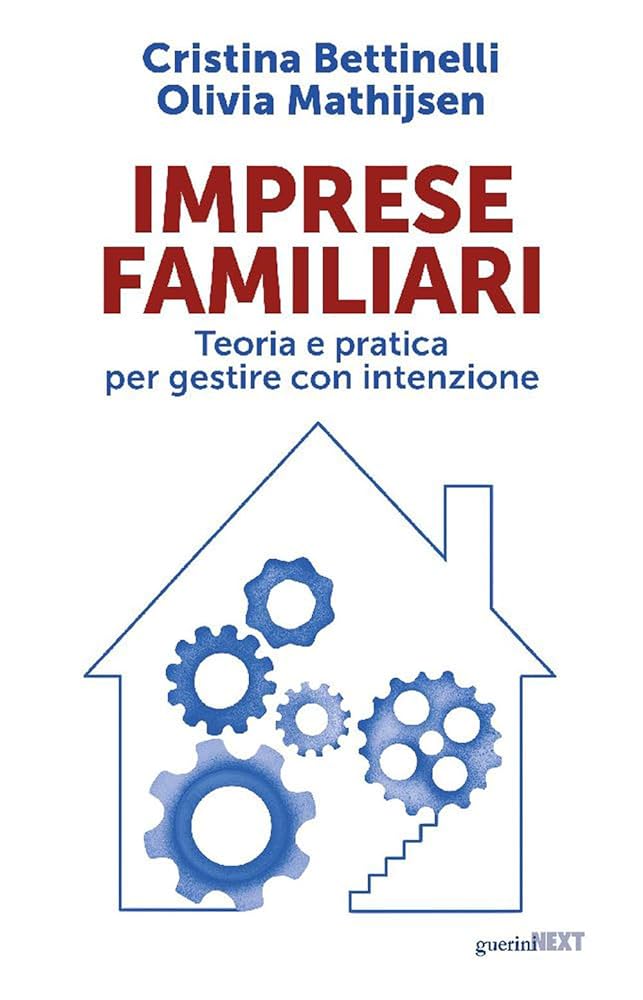

Family businesses, the hows and the whys

The description, analysis and management of a widespread and particular way of doing business

Family businesses are considered the ‘backbone’ of many economies, yet they are little known and burdened by a series of myths that often bear no relation to reality. Understanding their true nature and how they operate and evolve is key to understanding an important part of a country’s (and Italy’s in particular) production culture. This is what ‘Imprese familiari. Teoria e pratica per gestire con intenzione’ (Family businesses. Theory and practice for managing with intention) tries – and succeeds – to do.Co-authored by Cristina Bettinelli and Olivia Mathijsen, it offers an analysis of this category of entrepreneurial activities, guiding the reader through an understanding of their complexities and evolutionary trajectories.
Using theoretical models, case studies and practical tools, the book reflects on issues such as governance, conflicts, values and culture. The book addresses the issue of generational transition by illustrating how to cultivate management skills (stewardship) in future generations. The common thread is the intentionality in consciously addressing these topics.

The book begins with an important passage that addresses and debunks six myths related to the image of family businesses. It then moves on to the criteria for defining family businesses, before addressing the ‘three evolutionary dimensions’ of these production organisations:  property, family, and the business itself. The authors then turn to the complex and varied topic of managing the various dimensions that come together in a family business, before moving on to other fundamental themes,  such as the intertwining of values and culture in family businesses, and the conflicts, communications, and emotions that can characterise these activities. Bettinelli and Mathijsen’s work concludes with two further key arguments:  the crux of generational transition, and the importance of passing on the necessary managerial skills to new generations. Two case studies—Pastificio Rana SpA and Distillatori Nonino SRL- complete the theory illustrated in the book.

Cristina Bettinelli and Olivia Mathijsen have written an excellent introduction to understanding a unique way of doing business.

Imprese familiari. Teoria e pratica per gestire con intenzione

Cristina Bettinelli, Olivia Mathijsen

Guerini Next, 2024

Family businesses, the hows and the whys

The description, analysis and management of a widespread and particular way of doing business

Family businesses are considered the ‘backbone’ of many economies, yet they are little known and burdened by a series of myths that often bear no relation to reality. Understanding their true nature and how they operate and evolve is key to understanding an important part of a country’s (and Italy’s in particular) production culture. This is what ‘Imprese familiari. Teoria e pratica per gestire con intenzione’ (Family businesses. Theory and practice for managing with intention) tries – and succeeds – to do.Co-authored by Cristina Bettinelli and Olivia Mathijsen, it offers an analysis of this category of entrepreneurial activities, guiding the reader through an understanding of their complexities and evolutionary trajectories.
Using theoretical models, case studies and practical tools, the book reflects on issues such as governance, conflicts, values and culture. The book addresses the issue of generational transition by illustrating how to cultivate management skills (stewardship) in future generations. The common thread is the intentionality in consciously addressing these topics.

The book begins with an important passage that addresses and debunks six myths related to the image of family businesses. It then moves on to the criteria for defining family businesses, before addressing the ‘three evolutionary dimensions’ of these production organisations:  property, family, and the business itself. The authors then turn to the complex and varied topic of managing the various dimensions that come together in a family business, before moving on to other fundamental themes,  such as the intertwining of values and culture in family businesses, and the conflicts, communications, and emotions that can characterise these activities. Bettinelli and Mathijsen’s work concludes with two further key arguments:  the crux of generational transition, and the importance of passing on the necessary managerial skills to new generations. Two case studies—Pastificio Rana SpA and Distillatori Nonino SRL- complete the theory illustrated in the book.

Cristina Bettinelli and Olivia Mathijsen have written an excellent introduction to understanding a unique way of doing business.

Imprese familiari. Teoria e pratica per gestire con intenzione

Cristina Bettinelli, Olivia Mathijsen

Guerini Next, 2024

What happens when cultures cross-pollinate?

Two published studies have recently addressed the topic in different fields

Knowing and understanding each other. Breaking down barriers. Cross-pollinating cultures to make them greater. Finding shared paths.  And goals to achieve together. It is all a question of approach and attitude. This is an issue that affects everyone, often taking on decisive importance in business relationships and in organisations in general. Two recently published studies address this issue from different perspectives.

Firstly, Faruk Ahmed, Anupam Saha, Abdullah At Tasrif and Joyshree Das – with their research “Cultural Intelligence and Strategic Adaptation: ‘Unpacking the Dynamics of Successful International Business Negotiations Between US and Chinese Technology Firms’ – address the topic of relationships between different cultures by looking at globalisation and successful international business negotiations: areas where success depends heavily on the negotiators.  In other words, a strong ability to “navigate complex cultural and strategic landscapes” is required. The research investigates the critical role of culture and strategic adaptability in shaping the outcomes of negotiations between US and Chinese firms in the modern technology sector. Faruk Ahmed and his colleagues then explore how different cultural norms, communication styles and business practices influence negotiation dynamics,  even starting from case studies such as joint ventures and strategic partnerships between major technology companies in both countries. Their findings suggest that negotiators who demonstrate a high level of strategic and behavioural culture, coupled with a high degree of strategic flexibility, are better able to reach sustainable and mutually beneficial agreements. The key is to learn about each other in order to understand each other.

Secondly, Alina Omirzak explores another area of intercultural relations with her research project, ‘Exploring approaches to improving communication and engagement of job seekers from different cultural contexts’. This study focuses on the process of selecting and engaging candidates from various cultural backgrounds within companies. The research analyses the main barriers and challenges that arise during interaction between people of different cultural backgrounds, as well as modern approaches and effective methods for overcoming these barriers. She also examines some practical examples of international companies that have successfully adopted a multicultural approach.  Even in this area, the ability to overcome barriers and ‘cross-pollinate individual cultures’ appears to be crucial.

Cultural Intelligence and Strategic Adaptation: Unpacking the Dynamics

of Successful International Business Negotiations Between U.S. and

Chinese Technology Firms

Faruk Ahmed, Anupam Saha, Abdullah At Tasrif, Joyshree Das

Pacific Journal of Business Innovation and Strategy, Vol. 2, Issue 3, 2025

Exploring approaches to improving communication and engagement of job seekers from different cultural contexts

Alina Omirzak, University Admissions Expert Almaty, Kazakhstan

Journal of Multidisciplinary Research, Volume 3, Issue 6, June – 2025

What happens when cultures cross-pollinate?

Two published studies have recently addressed the topic in different fields

Knowing and understanding each other. Breaking down barriers. Cross-pollinating cultures to make them greater. Finding shared paths.  And goals to achieve together. It is all a question of approach and attitude. This is an issue that affects everyone, often taking on decisive importance in business relationships and in organisations in general. Two recently published studies address this issue from different perspectives.

Firstly, Faruk Ahmed, Anupam Saha, Abdullah At Tasrif and Joyshree Das – with their research “Cultural Intelligence and Strategic Adaptation: ‘Unpacking the Dynamics of Successful International Business Negotiations Between US and Chinese Technology Firms’ – address the topic of relationships between different cultures by looking at globalisation and successful international business negotiations: areas where success depends heavily on the negotiators.  In other words, a strong ability to “navigate complex cultural and strategic landscapes” is required. The research investigates the critical role of culture and strategic adaptability in shaping the outcomes of negotiations between US and Chinese firms in the modern technology sector. Faruk Ahmed and his colleagues then explore how different cultural norms, communication styles and business practices influence negotiation dynamics,  even starting from case studies such as joint ventures and strategic partnerships between major technology companies in both countries. Their findings suggest that negotiators who demonstrate a high level of strategic and behavioural culture, coupled with a high degree of strategic flexibility, are better able to reach sustainable and mutually beneficial agreements. The key is to learn about each other in order to understand each other.

Secondly, Alina Omirzak explores another area of intercultural relations with her research project, ‘Exploring approaches to improving communication and engagement of job seekers from different cultural contexts’. This study focuses on the process of selecting and engaging candidates from various cultural backgrounds within companies. The research analyses the main barriers and challenges that arise during interaction between people of different cultural backgrounds, as well as modern approaches and effective methods for overcoming these barriers. She also examines some practical examples of international companies that have successfully adopted a multicultural approach.  Even in this area, the ability to overcome barriers and ‘cross-pollinate individual cultures’ appears to be crucial.

Cultural Intelligence and Strategic Adaptation: Unpacking the Dynamics

of Successful International Business Negotiations Between U.S. and

Chinese Technology Firms

Faruk Ahmed, Anupam Saha, Abdullah At Tasrif, Joyshree Das

Pacific Journal of Business Innovation and Strategy, Vol. 2, Issue 3, 2025

Exploring approaches to improving communication and engagement of job seekers from different cultural contexts

Alina Omirzak, University Admissions Expert Almaty, Kazakhstan

Journal of Multidisciplinary Research, Volume 3, Issue 6, June – 2025

The time of the elderly serves to build memory and critical thinking, and to prepare for a better future

It is a slim book of barely 86 pages, flowing skilfully. The title is I venti (The Winds). Mario Vargas Llosa wrote it shortly before his death in April this year, and Einaudi has just published it. It can be read in just an hour. And it is the viewpoint of a noble father of world literature, a memoir and a kind of testament. It deserves our intelligent and heartfelt attention.

It is said that in Madrid, implicitly a metaphor for other cities, cinemas are closing because no one frequents them any more, and before long, deserted libraries and bookshops will also close, due to lack of visitors, and the same will happen to museums. Saddened and melancholic, only a few elderly people go to the protest rallies against these signs of waning knowledge and the civilised spirit of a community, and they are ignored.

All about them, technology and images triumph: the dystopia of the ‘Society of the Spectacle’, critically prophesied by Guy Debord in the mid-1960s, is worsened.  Digital reproductions of works of art on mobile phone and computer displays replace live paintings. Foolish passions arise for a ‘paper-free’ society without books or newspapers. Novels are written by artificial intelligence instead of the works of Tolstoy, Cervantes and Virginia Woolf. Algorithms instead of creativity of artists.

What of this artist, then? The book’s protagonist gets lost near the Biblioteca Nacional on Paseo de Recoletos, in the heart of the city. He is fragile and confused; he can’t even remember how to get home. He wanders, overwhelmed by memories and regrets. An old man adrift. The sharp headline “Triste, solitario y final” in the Sunday cultural supplement Robinson of La Repubblica quotes Osvaldo Soriano in support of Paolo Di Paolo‘s review of the sparse, ironic and compelling pages of Vargas Llosa’s posthumous novel that we mentioned. It is a conservative elegy to high culture. And a warning of the extent to which its degradation affects even social, economic and political freedoms.

The old masters are dying. To this writer’s great sorrow, the latest to pass away were Marco Onado and Goffredo Fofi, who died just a few days ago. They leave behind legacies of thoughts and words, in the hope that those of us who remain will continue to bring them to life and bear fruit in the form of new knowledge and intense stories, animated by intelligence and passion.

We are anxiously going through difficult times. The reality of armed wars and trade conflicts has upset the world’s balance, despite an international order and a series of economic understandings that we believed to be established values and practices. The gaps are widening – geographical, social, racial, cultural, gender-based and generational – and the world is restless, sorrowful and resentful. Disoriented by the crisis of traditional principles of authority and authoritativeness, invaded by sophisticated technologies. Yet we are becoming increasingly uncertain of the critical thinking that we all so desperately need to navigate the high-tech universe with sense and awareness.

Perhaps this is also why the death of an elderly person, strong in experience and capable of memory, affects us so much, darkening our controversial and precarious days.

In an era of widespread youthfulness and narcissism, this is a counterintuitive idea that praises the importance of the elderly. It is an interpretation of The Picture of Dorian Gray that tries to cheat the passing of time and avoid the related responsibilities. Perhaps, it is even a bad habit that the elderly cultivate for themselves.

Nevertheless, there must be an underlying imbalance if newspapers, economic reports and sociological surveys tell us that Italy is neither ‘a country for young people’ nor ‘a country for old people’.

In terms of young people, one fact stands out:  in the last ten years, 97,000 young graduates have left the country in search of better working and living conditions, and this figure is set to worsen over time. In 2023 alone, 21,000 left, which is 21% more than the previous year (we blogged about this on 24 June).

But Italy is not a good country for the old either.  The elderly population is large, but they are often lonely, vulnerable and frightened, and estranged from the frenetic pace of modern life. ISTAT certifies that a quarter of the Italian population is over 65 years old (a population of almost 59 million as of 1 January 2025), and 4,591,000 people are over 80 (50,000 more than in 2024). Life expectancy at birth is now 81.4 years for men and 85.5 years for women (an increase of almost five months since 2023). On the other hand, births continue to decline:  370,000 in 2024, with the fertility rate falling to 1.18 children per woman — one of the lowest in Europe.

People are living longer and better, but we are a country with a socially stagnant population. While it is true that 75 per cent of wealth is in the hands of those over 50 (La Stampa, 10 July, according to data from the Proof Society Report), the growing malfunctioning of welfare structures, as evidenced by the tragedy of ever-lengthening waiting lists for healthcare, and new family and social structures, are exacerbating the marginalisation of impoverished and semi-independent elderly individuals.

Here’s the deal: there is an Italy that needs to be understood more deeply, with a more balanced perspective and a more solid foundation of hope. Slogans aside, it is necessary to take a closer look at the country as a whole, and to learn to see beyond the stereotypes to understand the conditions in metropolitan suburbs, mountain villages and neglected rural areas. We must also care much more about issues of ‘common goods’ and the general values of communities. In short, we must build the foundations for good politics and effective public administration.

‘The Old and the Young’, to borrow the title of a great Luigi Pirandello novel, cannot be a theme played out in contrasts and juxtapositions. Rather, it should be considered in new and original ways. Across different social and generational groups. It should be considered at the fertile intersection of memory and future, historical awareness and open space for innovation. The events of Italian society itself offer exemplary testimony to this understanding.

Italo Calvino‘s words in ‘Invisible Cities’ are poignant: ‘A city can go through catastrophes and dark ages, see different generations follow one another in its houses, see those houses change stone by stone, but at the right moment and in different forms it must find its gods once again.’

Remembrance, therefore, is the responsibility of the elderly. Without succumbing to youthful narcissism and a desire for power, they should be useful by suggesting paths, nurturing doubts and questions, and providing material for critical thinking.

Our lifetime is naturally moving towards its end. It is therefore worth treasuring Enzo Bianchi‘s lesson:  add ‘life to days’, as you cannot add ‘days to life’.

In short, know how to be a teacher with a lower-case ‘t’ and have a story to tell:  teach, show, get people to read and re-read.

Let’s return, then, to where we started:  to the ‘winds’ of Vargas Llosa.  To literature and to the words that we elders must write and repeat.

Reading again, for example, José Saramago, who introduces the poems of Fernando Pessoa: ‘He was a man who knew languages and wrote verse.  He earned his bread and wine by putting words in the place of words; he wrote verses as they should be written, as if for the first time. He began by calling himself Fernando Pessoa — a person like everyone else.’

(photo Getty Images)

The time of the elderly serves to build memory and critical thinking, and to prepare for a better future

It is a slim book of barely 86 pages, flowing skilfully. The title is I venti (The Winds). Mario Vargas Llosa wrote it shortly before his death in April this year, and Einaudi has just published it. It can be read in just an hour. And it is the viewpoint of a noble father of world literature, a memoir and a kind of testament. It deserves our intelligent and heartfelt attention.

It is said that in Madrid, implicitly a metaphor for other cities, cinemas are closing because no one frequents them any more, and before long, deserted libraries and bookshops will also close, due to lack of visitors, and the same will happen to museums. Saddened and melancholic, only a few elderly people go to the protest rallies against these signs of waning knowledge and the civilised spirit of a community, and they are ignored.

All about them, technology and images triumph: the dystopia of the ‘Society of the Spectacle’, critically prophesied by Guy Debord in the mid-1960s, is worsened.  Digital reproductions of works of art on mobile phone and computer displays replace live paintings. Foolish passions arise for a ‘paper-free’ society without books or newspapers. Novels are written by artificial intelligence instead of the works of Tolstoy, Cervantes and Virginia Woolf. Algorithms instead of creativity of artists.

What of this artist, then? The book’s protagonist gets lost near the Biblioteca Nacional on Paseo de Recoletos, in the heart of the city. He is fragile and confused; he can’t even remember how to get home. He wanders, overwhelmed by memories and regrets. An old man adrift. The sharp headline “Triste, solitario y final” in the Sunday cultural supplement Robinson of La Repubblica quotes Osvaldo Soriano in support of Paolo Di Paolo‘s review of the sparse, ironic and compelling pages of Vargas Llosa’s posthumous novel that we mentioned. It is a conservative elegy to high culture. And a warning of the extent to which its degradation affects even social, economic and political freedoms.

The old masters are dying. To this writer’s great sorrow, the latest to pass away were Marco Onado and Goffredo Fofi, who died just a few days ago. They leave behind legacies of thoughts and words, in the hope that those of us who remain will continue to bring them to life and bear fruit in the form of new knowledge and intense stories, animated by intelligence and passion.

We are anxiously going through difficult times. The reality of armed wars and trade conflicts has upset the world’s balance, despite an international order and a series of economic understandings that we believed to be established values and practices. The gaps are widening – geographical, social, racial, cultural, gender-based and generational – and the world is restless, sorrowful and resentful. Disoriented by the crisis of traditional principles of authority and authoritativeness, invaded by sophisticated technologies. Yet we are becoming increasingly uncertain of the critical thinking that we all so desperately need to navigate the high-tech universe with sense and awareness.

Perhaps this is also why the death of an elderly person, strong in experience and capable of memory, affects us so much, darkening our controversial and precarious days.

In an era of widespread youthfulness and narcissism, this is a counterintuitive idea that praises the importance of the elderly. It is an interpretation of The Picture of Dorian Gray that tries to cheat the passing of time and avoid the related responsibilities. Perhaps, it is even a bad habit that the elderly cultivate for themselves.

Nevertheless, there must be an underlying imbalance if newspapers, economic reports and sociological surveys tell us that Italy is neither ‘a country for young people’ nor ‘a country for old people’.

In terms of young people, one fact stands out:  in the last ten years, 97,000 young graduates have left the country in search of better working and living conditions, and this figure is set to worsen over time. In 2023 alone, 21,000 left, which is 21% more than the previous year (we blogged about this on 24 June).

But Italy is not a good country for the old either.  The elderly population is large, but they are often lonely, vulnerable and frightened, and estranged from the frenetic pace of modern life. ISTAT certifies that a quarter of the Italian population is over 65 years old (a population of almost 59 million as of 1 January 2025), and 4,591,000 people are over 80 (50,000 more than in 2024). Life expectancy at birth is now 81.4 years for men and 85.5 years for women (an increase of almost five months since 2023). On the other hand, births continue to decline:  370,000 in 2024, with the fertility rate falling to 1.18 children per woman — one of the lowest in Europe.

People are living longer and better, but we are a country with a socially stagnant population. While it is true that 75 per cent of wealth is in the hands of those over 50 (La Stampa, 10 July, according to data from the Proof Society Report), the growing malfunctioning of welfare structures, as evidenced by the tragedy of ever-lengthening waiting lists for healthcare, and new family and social structures, are exacerbating the marginalisation of impoverished and semi-independent elderly individuals.

Here’s the deal: there is an Italy that needs to be understood more deeply, with a more balanced perspective and a more solid foundation of hope. Slogans aside, it is necessary to take a closer look at the country as a whole, and to learn to see beyond the stereotypes to understand the conditions in metropolitan suburbs, mountain villages and neglected rural areas. We must also care much more about issues of ‘common goods’ and the general values of communities. In short, we must build the foundations for good politics and effective public administration.

‘The Old and the Young’, to borrow the title of a great Luigi Pirandello novel, cannot be a theme played out in contrasts and juxtapositions. Rather, it should be considered in new and original ways. Across different social and generational groups. It should be considered at the fertile intersection of memory and future, historical awareness and open space for innovation. The events of Italian society itself offer exemplary testimony to this understanding.

Italo Calvino‘s words in ‘Invisible Cities’ are poignant: ‘A city can go through catastrophes and dark ages, see different generations follow one another in its houses, see those houses change stone by stone, but at the right moment and in different forms it must find its gods once again.’

Remembrance, therefore, is the responsibility of the elderly. Without succumbing to youthful narcissism and a desire for power, they should be useful by suggesting paths, nurturing doubts and questions, and providing material for critical thinking.

Our lifetime is naturally moving towards its end. It is therefore worth treasuring Enzo Bianchi‘s lesson:  add ‘life to days’, as you cannot add ‘days to life’.

In short, know how to be a teacher with a lower-case ‘t’ and have a story to tell:  teach, show, get people to read and re-read.

Let’s return, then, to where we started:  to the ‘winds’ of Vargas Llosa.  To literature and to the words that we elders must write and repeat.

Reading again, for example, José Saramago, who introduces the poems of Fernando Pessoa: ‘He was a man who knew languages and wrote verse.  He earned his bread and wine by putting words in the place of words; he wrote verses as they should be written, as if for the first time. He began by calling himself Fernando Pessoa — a person like everyone else.’

(photo Getty Images)

Medtec graduates its first medical engineers, Milan relaunches the soft power of polytechnic culture

Medical engineers have a unique combination of different skills. They can bridge the gap between anatomy and sophisticated technological machinery, paying close attention to health and using all digital tools for diagnosis, therapy and health prevention. In short, they understand the extraordinary, complex and fragile creation that is the human body in depth and can use the possibilities offered by artificial intelligence to their advantage. Last week, the first 37 students graduated from the interdisciplinary Medtec School course, founded six years ago in collaboration with Humanitas University and the Polytechnic University (Corriere della Sera, 3 July). The city thus confirms one of its defining characteristics:  to be at the forefront of high-level training and an international point of reference for Life Sciences. It is a cultural centre for experimentation, cross-fertilisation and the synthesis of different types of knowledge along the new high-tech frontiers — a polytechnic metropolis.

Donatella Sciuto, rector of the Polytechnic, said: ‘The convergence between Medicine and Engineering is a driver of economic and social development on a global scale, and it originated in Italy. And we hope that new graduates will choose to specialise here and work in hospitals and companies in Italy.’ And Luigi Maria Terracciano, rector of Humanitas University: ‘Our goal is to train professionals who can manage technological evolution in the medical field while maintaining a human perspective and a relationship with patients. This is a university experience offering significant opportunities in both the hospital sector and advanced research.’

Today, the Medtec School has 389 students, 58% of whom are female. The school has a strong international appeal, with 17% of students coming from abroad, particularly from France, Greece and Turkey. This year there will be 42 graduates in total. The courses are naturally taught in English and take place at the Polytechnic and Humanitas University in alternating semesters. They also benefit from the extensive network of relationships that the two universities have with professors and researchers from leading universities and research centres around the world. This is proof of the advantages of a critical, dialectical scientific culture that is open to innovation and sensitive to stimuli for change.

In history and in the controversial contemporary age, this is precisely a fundamental characteristic of Milan, now the main Italian university city with over 220,000 students at a dozen or so universities (which are consistently ranked among the most prestigious internationally) and higher education institutions specialising in design and fashion. Those who welcome others (however demanding, severe or productive) know how to stimulate growth, balancing competitiveness and social inclusion, citizenship and enterprise, the market and welfare. Even if these attitudes are experiencing a period of crisis today due to underlying trends such as many superficial city users and a growing number of people experiencing housing and living cost difficulties, we still hear frequent criticisms and self-criticisms regarding the transformation of ‘Milaneseness’ (Milan is the Italian city most inclined to discuss itself). Nevertheless, it is precisely here that cultures, economic and social phenomena and processes that anticipate and structure ways of being, working and producing continue to be born and mature, thereby influencing other areas of Greater Milan, Italy and the most dynamic and productive part of Europe. Milan is an open metropolis where relationships and cross-pollination of ideas are the norm.

Moreover, it was in Milan that the foundations of the ‘polytechnic culture’ were laid, becoming widespread among its companies and cultural and educational centres. This culture had solid foundations in the nineteenth century with figures such as Carlo Cattaneo, and underwent frequent transformations in the fertile years of the early twentieth century, such as the 1906 Universal Exhibition. Then, during the economic boom and dynamic corporate magazines of Pirelli, Olivetti, Eni and Finmeccanica, it was a testament to a fruitful ‘machine civilisation’. Finally, it was evident in the restless contemporary transition of the century and millennium (‘We are astonished’, as the caustic wit Enzo Sellerio would have ironically commented).

Here, in the rooms of Assolombarda, characterised by Gio Ponti’s architecture, emphasis is placed on the need for greater and better STEM (Science, Technology, Engineering and Mathematics) education, to strengthen and relaunch the international competitiveness of businesses. However, an essential addition is also emphasised:  the ‘A’ of arts, or humanistic knowledge and the culture of beauty. This idea was developed and publicised during Gianfelice Rocca’s presidency of Assolombarda (2013–2017) and is now being adopted in various national and European economic circles. Rocca, in fact, is president of Humanitas. Doctor-engineers are proof of this.  Just like the engineer-philosophers that the Polytechnic of Milan and Turin have been promoting for years.

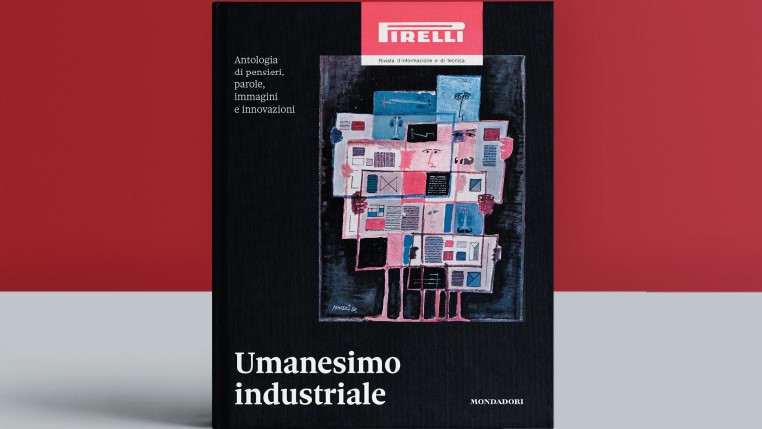
This dimension of ‘polytechnic culture’, also known as ‘industrial humanism’, is expressed today as ‘digital humanism’ (a topic we discussed in last week’s blog). It is also useful for reflecting on the soft power of ‘Made in Italy’. Téchne, or know-how and a taste for beauty, is also understood as a sense of measure, balance and form that expresses quality of function.  This was discussed recently at the UniCredit Territories Forum for Lombardy. Design culture permeates product culture; the objects exhibited at the ADI Design Museum and awarded the ‘Compasso d’Oro’ over the years are clear evidence of this. There is quality production in sectors such as mechanics, mechatronics, aerospace, shipbuilding, rubber and plastics, robotics, automotive, chemicals, pharmaceuticals (Life Sciences, specifically), and the traditional sectors of furniture, clothing, and agri-food.

Innovation, cutting-edge technologies and beauty. This is an inimitable soft power that could be utilised more effectively in international competition thanks to a new and improved national and European industrial policy. This soft power should be valued not only for its productivity, but also for its ability to attract people seeking a better quality of life and work.

The Medtec School, where our discussion began, is a good example of this. Cross-fertilisation to be valued.

Medtec graduates its first medical engineers, Milan relaunches the soft power of polytechnic culture

Medical engineers have a unique combination of different skills. They can bridge the gap between anatomy and sophisticated technological machinery, paying close attention to health and using all digital tools for diagnosis, therapy and health prevention. In short, they understand the extraordinary, complex and fragile creation that is the human body in depth and can use the possibilities offered by artificial intelligence to their advantage. Last week, the first 37 students graduated from the interdisciplinary Medtec School course, founded six years ago in collaboration with Humanitas University and the Polytechnic University (Corriere della Sera, 3 July). The city thus confirms one of its defining characteristics:  to be at the forefront of high-level training and an international point of reference for Life Sciences. It is a cultural centre for experimentation, cross-fertilisation and the synthesis of different types of knowledge along the new high-tech frontiers — a polytechnic metropolis.

Donatella Sciuto, rector of the Polytechnic, said: ‘The convergence between Medicine and Engineering is a driver of economic and social development on a global scale, and it originated in Italy. And we hope that new graduates will choose to specialise here and work in hospitals and companies in Italy.’ And Luigi Maria Terracciano, rector of Humanitas University: ‘Our goal is to train professionals who can manage technological evolution in the medical field while maintaining a human perspective and a relationship with patients. This is a university experience offering significant opportunities in both the hospital sector and advanced research.’

Today, the Medtec School has 389 students, 58% of whom are female. The school has a strong international appeal, with 17% of students coming from abroad, particularly from France, Greece and Turkey. This year there will be 42 graduates in total. The courses are naturally taught in English and take place at the Polytechnic and Humanitas University in alternating semesters. They also benefit from the extensive network of relationships that the two universities have with professors and researchers from leading universities and research centres around the world. This is proof of the advantages of a critical, dialectical scientific culture that is open to innovation and sensitive to stimuli for change.

In history and in the controversial contemporary age, this is precisely a fundamental characteristic of Milan, now the main Italian university city with over 220,000 students at a dozen or so universities (which are consistently ranked among the most prestigious internationally) and higher education institutions specialising in design and fashion. Those who welcome others (however demanding, severe or productive) know how to stimulate growth, balancing competitiveness and social inclusion, citizenship and enterprise, the market and welfare. Even if these attitudes are experiencing a period of crisis today due to underlying trends such as many superficial city users and a growing number of people experiencing housing and living cost difficulties, we still hear frequent criticisms and self-criticisms regarding the transformation of ‘Milaneseness’ (Milan is the Italian city most inclined to discuss itself). Nevertheless, it is precisely here that cultures, economic and social phenomena and processes that anticipate and structure ways of being, working and producing continue to be born and mature, thereby influencing other areas of Greater Milan, Italy and the most dynamic and productive part of Europe. Milan is an open metropolis where relationships and cross-pollination of ideas are the norm.

Moreover, it was in Milan that the foundations of the ‘polytechnic culture’ were laid, becoming widespread among its companies and cultural and educational centres. This culture had solid foundations in the nineteenth century with figures such as Carlo Cattaneo, and underwent frequent transformations in the fertile years of the early twentieth century, such as the 1906 Universal Exhibition. Then, during the economic boom and dynamic corporate magazines of Pirelli, Olivetti, Eni and Finmeccanica, it was a testament to a fruitful ‘machine civilisation’. Finally, it was evident in the restless contemporary transition of the century and millennium (‘We are astonished’, as the caustic wit Enzo Sellerio would have ironically commented).

Here, in the rooms of Assolombarda, characterised by Gio Ponti’s architecture, emphasis is placed on the need for greater and better STEM (Science, Technology, Engineering and Mathematics) education, to strengthen and relaunch the international competitiveness of businesses. However, an essential addition is also emphasised:  the ‘A’ of arts, or humanistic knowledge and the culture of beauty. This idea was developed and publicised during Gianfelice Rocca’s presidency of Assolombarda (2013–2017) and is now being adopted in various national and European economic circles. Rocca, in fact, is president of Humanitas. Doctor-engineers are proof of this.  Just like the engineer-philosophers that the Polytechnic of Milan and Turin have been promoting for years.

This dimension of ‘polytechnic culture’, also known as ‘industrial humanism’, is expressed today as ‘digital humanism’ (a topic we discussed in last week’s blog). It is also useful for reflecting on the soft power of ‘Made in Italy’. Téchne, or know-how and a taste for beauty, is also understood as a sense of measure, balance and form that expresses quality of function.  This was discussed recently at the UniCredit Territories Forum for Lombardy. Design culture permeates product culture; the objects exhibited at the ADI Design Museum and awarded the ‘Compasso d’Oro’ over the years are clear evidence of this. There is quality production in sectors such as mechanics, mechatronics, aerospace, shipbuilding, rubber and plastics, robotics, automotive, chemicals, pharmaceuticals (Life Sciences, specifically), and the traditional sectors of furniture, clothing, and agri-food.

Innovation, cutting-edge technologies and beauty. This is an inimitable soft power that could be utilised more effectively in international competition thanks to a new and improved national and European industrial policy. This soft power should be valued not only for its productivity, but also for its ability to attract people seeking a better quality of life and work.

The Medtec School, where our discussion began, is a good example of this. Cross-fertilisation to be valued.

What is the impact of a focus on the environment?

Corporate sustainability measures evaluated with the principles of civil economy

Taking into account the company’s environmental impact is a fundamental requirement for almost all productive enterprises in developed economies nowadays. However, this is an requirement that must deal with more than just awareness of the problem. It must also deal with the key principles of production and civil economy. ‘Dare un senso all’agire delle imprese: uno sguardo civile sulla valutazione d’impatto’ (Making sense of business action: a civil perspective on impact assessment) – is research by Sabrina Bonomi, an associate of the business organisation. It attempts to delve deeper into the relationships between the concerns and environmental implications of production organisations’ actions and the dictates of the civil economy, which is seen as the last frontier of good business culture.

In particular, Bonomi investigates the relationship between production techniques and tools that address environmental sustainability issues, and their effect on the surrounding society of the organisation that implements them.

The research emphasises that selecting appropriate tools requires skills in analysing and managing the value created in accordance with the principles of civil economy. To develop operational guidelines, Bonomi first considers the civil economy paradigm, then the role of companies within it and finally techniques for assessing their impact, introducing MindSEC: a verification method based on civil economy principles. This theoretical approach is then ‘proven’ through a series of empirical cases.

In her conclusions, Bonomi writes that the ‘method of impact assessment based on the paradigm of civil economy leads entrepreneurs and managers to choose virtuous behaviours consistent with it, in the interest of the common good as well as their own. Cultural, environmental, social, economic and relational advantages are generated by the ability to engage diverse skills and passions, which guarantee the quality and continuity of the commitment taken and generate others that lead to positive change in the community and environment, which is needed more than ever today’.


Dare un senso all’agire delle imprese: uno sguardo civile sulla valutazione d’impatto

Sabrina Bonomi

ImpresaProgetto. Electronic Journal of management, 2, 2025

What is the impact of a focus on the environment?

Corporate sustainability measures evaluated with the principles of civil economy

Taking into account the company’s environmental impact is a fundamental requirement for almost all productive enterprises in developed economies nowadays. However, this is an requirement that must deal with more than just awareness of the problem. It must also deal with the key principles of production and civil economy. ‘Dare un senso all’agire delle imprese: uno sguardo civile sulla valutazione d’impatto’ (Making sense of business action: a civil perspective on impact assessment) – is research by Sabrina Bonomi, an associate of the business organisation. It attempts to delve deeper into the relationships between the concerns and environmental implications of production organisations’ actions and the dictates of the civil economy, which is seen as the last frontier of good business culture.

In particular, Bonomi investigates the relationship between production techniques and tools that address environmental sustainability issues, and their effect on the surrounding society of the organisation that implements them.

The research emphasises that selecting appropriate tools requires skills in analysing and managing the value created in accordance with the principles of civil economy. To develop operational guidelines, Bonomi first considers the civil economy paradigm, then the role of companies within it and finally techniques for assessing their impact, introducing MindSEC: a verification method based on civil economy principles. This theoretical approach is then ‘proven’ through a series of empirical cases.

In her conclusions, Bonomi writes that the ‘method of impact assessment based on the paradigm of civil economy leads entrepreneurs and managers to choose virtuous behaviours consistent with it, in the interest of the common good as well as their own. Cultural, environmental, social, economic and relational advantages are generated by the ability to engage diverse skills and passions, which guarantee the quality and continuity of the commitment taken and generate others that lead to positive change in the community and environment, which is needed more than ever today’.


Dare un senso all’agire delle imprese: uno sguardo civile sulla valutazione d’impatto

Sabrina Bonomi

ImpresaProgetto. Electronic Journal of management, 2, 2025

The dignity of man in the face of machines

Paolo Benanti’s reasoning on AI puts humanity back at the heart of the awareness that we must all have


Human activity versus machines. It is an age-old challenge that, however, seems to be taking on new connotations in recent times with the advent of artificial intelligence in the form of ChatGPT and Large Language Models (LLMs). These new developments are capable of confounding human action itself. So much so that one must question whether these new technologies are truly instruments of progress or of the oppression and subjugation of human nature. These are important questions that everyone should consider, whatever their role. This also applies to businesspeople who may find themselves making use of new technologies.

In light of these issues, a careful reading of the short book by Paolo Benanti — a theologian and innovation expert — is highly recommended.

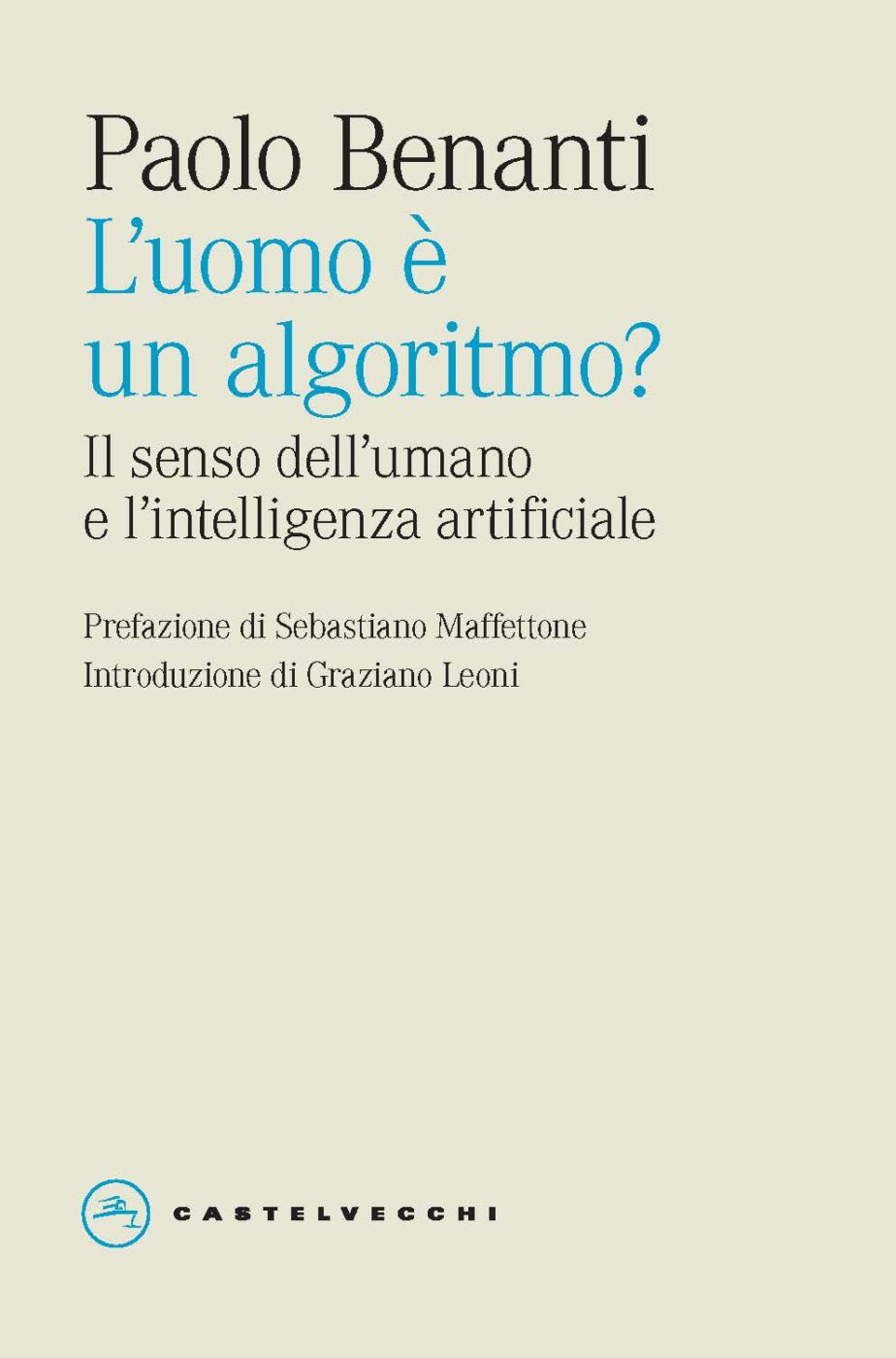
‘L’uomo è un algoritmo? Il senso dell’umano e l’intelligenza artificiale’ (Is man an algorithm? The sense of the human and artificial intelligence) is an expanded version of the lecture that the author delivered at the University of Camerino upon receiving an honorary doctorate in Computer Science and Mathematics. Above all, however, it is a narrative journey exploring the latest innovations related to human life and action.

The author begins by asking what it means to be human today and recalls the myth of Ulysses, which teaches us that the human search for meaning is guided by intelligence in two forms: νοῦς and μῆτις, intuition and practice. It is from the interaction of these faculties that our species’ great inventions were born, starting with the ‘great invention of language’. However, language no longer seems to be an exclusively human prerogative today. The introduction of a computational language by means of AI that reconfigures speech and thought in new ways seems to call everything into question, either threatening or exalting human action.

Benanti then takes the reader on a brief and evocative ethical journey through the paradox of technology. So how do we avoid being confused and overwhelmed? Moving between information technology, philosophy, and spirituality, he puts forward a simple yet disruptive proposal capable of restoring the centrality of the human dimension. Adopting a ‘humanist bias’ today does not mean rejecting progress, but rather reaffirming its most authentic purpose: to live a good and conscious life with dignity. This can be achieved by making use of AI, which must once again become a tool at our service, promoting full human dignity. This is a challenge that cannot be led or won by individuals, but by the community of individuals.

Paolo Benanti’s book is one to read and reread (as Sebastiano Maffettone, who wrote the foreword, did).  One of the book’s concluding passages is particularly poignant: ‘Human dignity represents the threshold beyond which human coexistence can no longer regress, not even in an era characterised by machines’ remarkable communication capabilities, which offer a fresh perspective on the semantics and meaning of our human condition’.

L’uomo è un algoritmo? Il senso dell’umano e l’intelligenza artificiale

Paolo Benanti

Castelvecchio, 2025

The dignity of man in the face of machines

Paolo Benanti’s reasoning on AI puts humanity back at the heart of the awareness that we must all have


Human activity versus machines. It is an age-old challenge that, however, seems to be taking on new connotations in recent times with the advent of artificial intelligence in the form of ChatGPT and Large Language Models (LLMs). These new developments are capable of confounding human action itself. So much so that one must question whether these new technologies are truly instruments of progress or of the oppression and subjugation of human nature. These are important questions that everyone should consider, whatever their role. This also applies to businesspeople who may find themselves making use of new technologies.

In light of these issues, a careful reading of the short book by Paolo Benanti — a theologian and innovation expert — is highly recommended.

‘L’uomo è un algoritmo? Il senso dell’umano e l’intelligenza artificiale’ (Is man an algorithm? The sense of the human and artificial intelligence) is an expanded version of the lecture that the author delivered at the University of Camerino upon receiving an honorary doctorate in Computer Science and Mathematics. Above all, however, it is a narrative journey exploring the latest innovations related to human life and action.

The author begins by asking what it means to be human today and recalls the myth of Ulysses, which teaches us that the human search for meaning is guided by intelligence in two forms: νοῦς and μῆτις, intuition and practice. It is from the interaction of these faculties that our species’ great inventions were born, starting with the ‘great invention of language’. However, language no longer seems to be an exclusively human prerogative today. The introduction of a computational language by means of AI that reconfigures speech and thought in new ways seems to call everything into question, either threatening or exalting human action.

Benanti then takes the reader on a brief and evocative ethical journey through the paradox of technology. So how do we avoid being confused and overwhelmed? Moving between information technology, philosophy, and spirituality, he puts forward a simple yet disruptive proposal capable of restoring the centrality of the human dimension. Adopting a ‘humanist bias’ today does not mean rejecting progress, but rather reaffirming its most authentic purpose: to live a good and conscious life with dignity. This can be achieved by making use of AI, which must once again become a tool at our service, promoting full human dignity. This is a challenge that cannot be led or won by individuals, but by the community of individuals.

Paolo Benanti’s book is one to read and reread (as Sebastiano Maffettone, who wrote the foreword, did).  One of the book’s concluding passages is particularly poignant: ‘Human dignity represents the threshold beyond which human coexistence can no longer regress, not even in an era characterised by machines’ remarkable communication capabilities, which offer a fresh perspective on the semantics and meaning of our human condition’.

L’uomo è un algoritmo? Il senso dell’umano e l’intelligenza artificiale

Paolo Benanti

Castelvecchio, 2025

Like a City

Milan and Pirelli: centres of cultural production and key players in the latest chapter in the “Pirelli, a City and a Vision” series. Documents and testimonies from our Historical Archive trace the story of a company that has long placed the promotion of art and culture at the heart of its policy

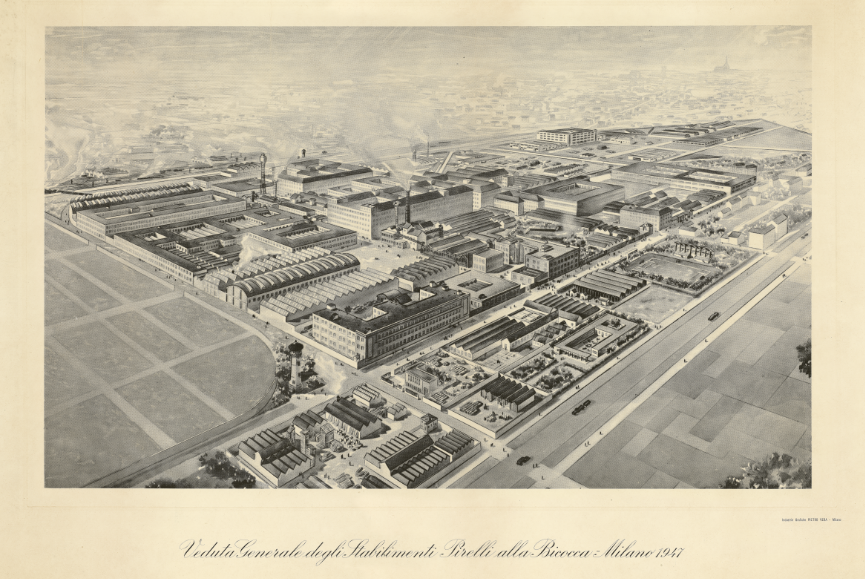
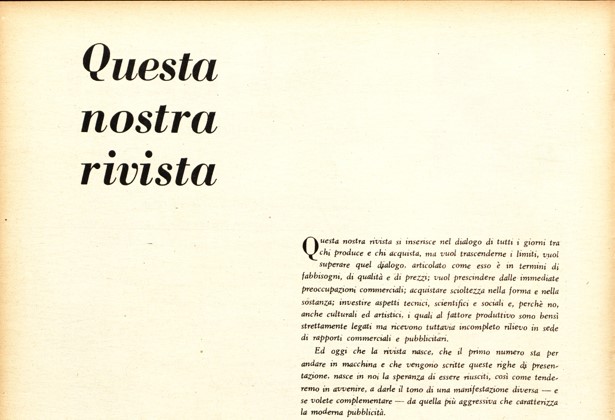
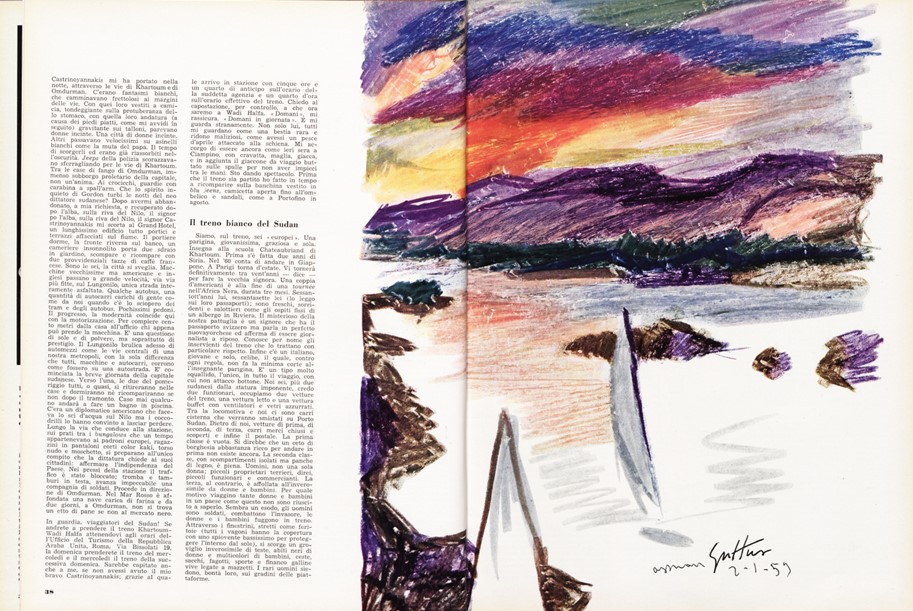
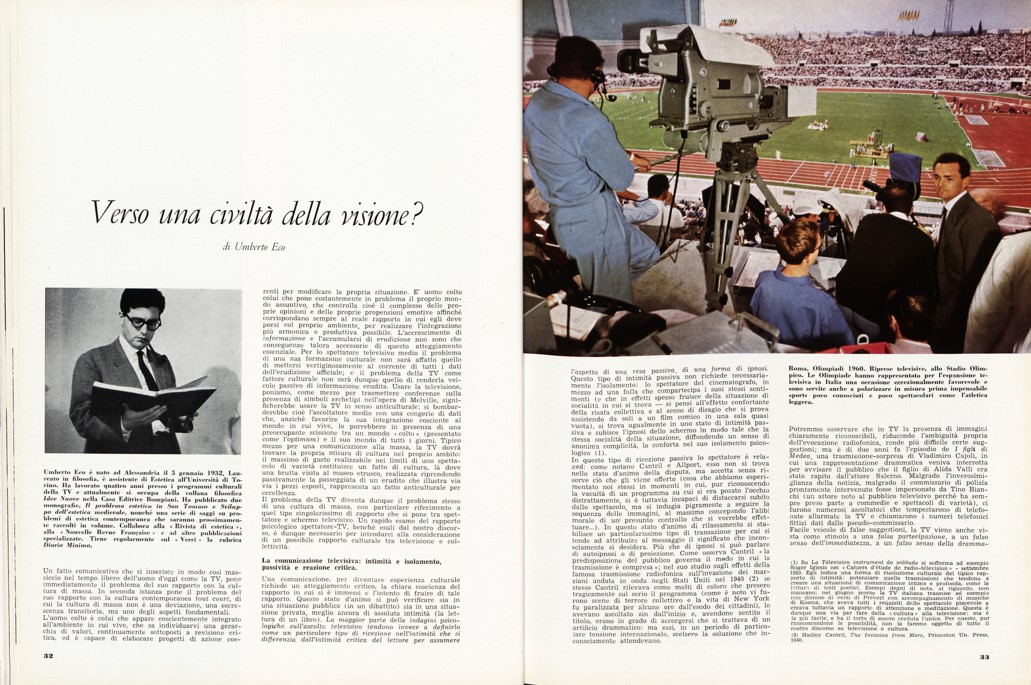
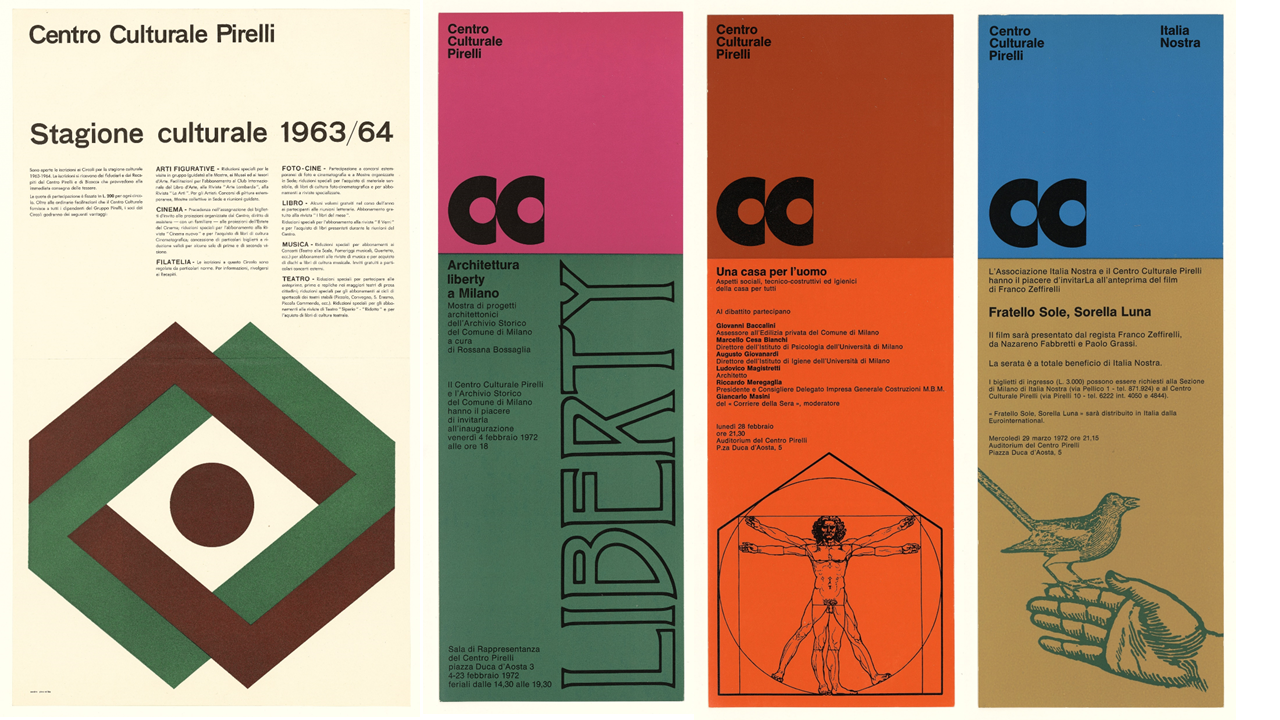
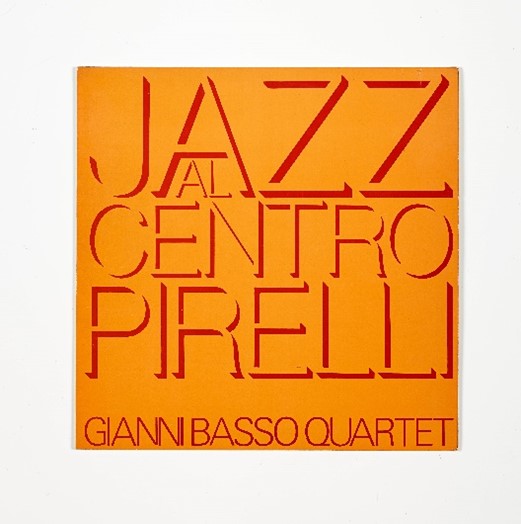
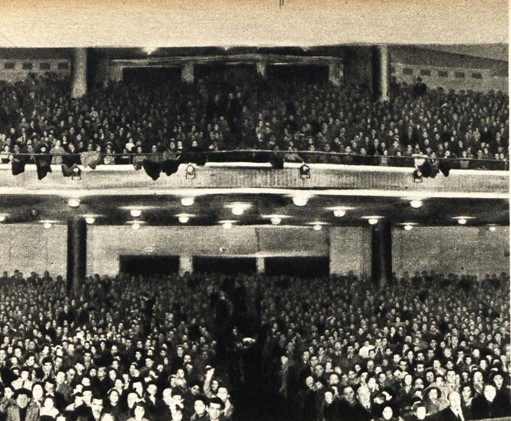
From the post-war years to the 1960s, Italy’s major companies were not just hubs of manufacturing for they were also cultural powerhouses. They worked with writers, intellectuals and artists to create business models that would combine scientific and technical expertise with humanistic ideas, while also helping to bring about cultural progress in society. Among these, Pirelli was going through a particularly prolific period of what might be called “industrial humanism”, inspired by the vibrant cultural life of Milan. This was a city that, in those same years, was emerging as an exciting international centre for artists and thinkers.

One year, in particular, stands out as a beacon in this story: 1947. This was the year when the Piccolo Teatro della Città di Milano was founded. It was to be a public theatre “for everyone”, and was the brainchild of Giorgio Strehler, Paolo Grassi and Nina Vinchi with the support of the City of Milan. The year also marked the launch of the Pirelli Cultural Centre, a company club run by Silvestro Severgnini, a friend of Paolo Grassi. Its aim was to offer employees access to music, theatre, the visual arts, cinema and literature.

As Severgnini himself put it in Pirelli magazine no. 1 of 1951, it adopted “a new and pretty successful formula to increase workers’ interest in culture”. The company “provides the means so that its employees, if they feel so inclined, can take part in the liveliest and most vital expressions of knowledge”

A natural partnership was soon formed between the Piccolo Teatro and the Pirelli Cultural Centre, symbolising a common objective adopted by both the city and the company. After all, could a company that now sprawled across a million square metres not be considered as a city in its own right?

Also the worker shall not live by bread alone,” read a 1947 headline in the company newsletter, which was produced by Pirelli workers in the aftermath of the war. And it continued: “If you wish to calm the workers’ spirits […] you must bring them closer to art, to an art that is intelligible and life-giving […]. A new cultural initiative has been launched under the auspices of the Mayor of Milan in order to achieve this. A low-cost season ticket is all it takes to access this theatre (and our Cultural Centre itself has already signed up to it).”

As the years went by, the Cultural Centre had more and more to offer, and Pirelli forged ties with other cultural institutions in Milan, such as La Scala, the Pomeriggi Musicali, and the Teatro del Popolo. In 1952 the Centre registered 12,495 attendances in the city’s opera and concert season, becoming “a notable presence in the cultural life of the city due to its size “ (Pirelli magazine, La fabbrica è aperta ai movimenti della cultura (“The factory is open to cultural movements”) and, from 1960, it enjoyed a prestigious space of its own. This was the auditorium in the Pirelli Tower, after it abandoned the premises of the “Ritrovo” in the old Brusada factory which escaped the bombings of 1943. This marked the beginning of a new chapter of cultural activities, with concerts, lectures, readings, screenings and presentations with prominent guests, including political and academic personalities, as well as writers, poets, and journalists, such as Italo Calvino, Umberto Eco, Guido Lopez, Salvatore Quasimodo and Mario Soldati.

At the same time, one of the country’s most advanced cultural forums was taking shape within the pages of Pirelli. Rivista d’informazione e di tecnica. Published from 1948 to 1972, generally bi-monthly and available at newsstands, Pirelli magazine bridged the gap between scientific-technical and humanistic culture. Its articles looked at issues concerning industrial production, science and technology alongside reflections on art, architecture, sociology, economics, urbanism and literature. The magazine had a wide range of illustrious contributors: Giulio Carlo Argan, Dino Buzzati, Camilla Cederna, Gillo Dorfles, Arrigo Levi, Eugenio Montale, Fernanda Pivano, Franco Quadri, Alberto Ronchey, Elio Vittorini and dozens of others. Its striking visuals were enriched by splendid photographic essays by masters such as Arno Hammacher, Pepi Merisio, Ugo Mulas, Federico Patellani, Fulvio Roiter, Enzo Sellerio, and illustrations by artists including Renato Guttuso, Riccardo Manzi and Alessandro Mendini.

The legacy of Pirelli magazine is preserved in the volume Industrial Humanism. An Anthology of Thoughts, Words, Images and Innovations, edited by the Pirelli Foundation and published by Mondadori in 2019. All 131 issues, along with a photographic archive comprising 6,000 images—3,500 published and 2,500 unprinted—are now kept in our Historical Archive. The collection includes the very first issue, with an editorial by Alberto Pirelli, who explains the original and authentic purpose of the publication: “This industry uses an enormous variety of materials […] it relies on the most diverse array of machines and tools […] So many ways to contribute to the evolution of modern life […] But if, in this magazine, we may at times allow ourselves to rise a little higher, we shall do so in the belief that every contribution to the mechanised world needs to come about within the broader framework of life’s highest social and cultural values.

Like a City
Like a City

Milan and Pirelli: centres of cultural production and key players in the latest chapter in the “Pirelli, a City and a Vision” series. Documents and testimonies from our Historical Archive trace the story of a company that has long placed the promotion of art and culture at the heart of its policy

From the post-war years to the 1960s, Italy’s major companies were not just hubs of manufacturing for they were also cultural powerhouses. They worked with writers, intellectuals and artists to create business models that would combine scientific and technical expertise with humanistic ideas, while also helping to bring about cultural progress in society. Among these, Pirelli was going through a particularly prolific period of what might be called “industrial humanism”, inspired by the vibrant cultural life of Milan. This was a city that, in those same years, was emerging as an exciting international centre for artists and thinkers.

One year, in particular, stands out as a beacon in this story: 1947. This was the year when the Piccolo Teatro della Città di Milano was founded. It was to be a public theatre “for everyone”, and was the brainchild of Giorgio Strehler, Paolo Grassi and Nina Vinchi with the support of the City of Milan. The year also marked the launch of the Pirelli Cultural Centre, a company club run by Silvestro Severgnini, a friend of Paolo Grassi. Its aim was to offer employees access to music, theatre, the visual arts, cinema and literature.

As Severgnini himself put it in Pirelli magazine no. 1 of 1951, it adopted “a new and pretty successful formula to increase workers’ interest in culture”. The company “provides the means so that its employees, if they feel so inclined, can take part in the liveliest and most vital expressions of knowledge”

A natural partnership was soon formed between the Piccolo Teatro and the Pirelli Cultural Centre, symbolising a common objective adopted by both the city and the company. After all, could a company that now sprawled across a million square metres not be considered as a city in its own right?

Also the worker shall not live by bread alone,” read a 1947 headline in the company newsletter, which was produced by Pirelli workers in the aftermath of the war. And it continued: “If you wish to calm the workers’ spirits […] you must bring them closer to art, to an art that is intelligible and life-giving […]. A new cultural initiative has been launched under the auspices of the Mayor of Milan in order to achieve this. A low-cost season ticket is all it takes to access this theatre (and our Cultural Centre itself has already signed up to it).”

As the years went by, the Cultural Centre had more and more to offer, and Pirelli forged ties with other cultural institutions in Milan, such as La Scala, the Pomeriggi Musicali, and the Teatro del Popolo. In 1952 the Centre registered 12,495 attendances in the city’s opera and concert season, becoming “a notable presence in the cultural life of the city due to its size “ (Pirelli magazine, La fabbrica è aperta ai movimenti della cultura (“The factory is open to cultural movements”) and, from 1960, it enjoyed a prestigious space of its own. This was the auditorium in the Pirelli Tower, after it abandoned the premises of the “Ritrovo” in the old Brusada factory which escaped the bombings of 1943. This marked the beginning of a new chapter of cultural activities, with concerts, lectures, readings, screenings and presentations with prominent guests, including political and academic personalities, as well as writers, poets, and journalists, such as Italo Calvino, Umberto Eco, Guido Lopez, Salvatore Quasimodo and Mario Soldati.

At the same time, one of the country’s most advanced cultural forums was taking shape within the pages of Pirelli. Rivista d’informazione e di tecnica. Published from 1948 to 1972, generally bi-monthly and available at newsstands, Pirelli magazine bridged the gap between scientific-technical and humanistic culture. Its articles looked at issues concerning industrial production, science and technology alongside reflections on art, architecture, sociology, economics, urbanism and literature. The magazine had a wide range of illustrious contributors: Giulio Carlo Argan, Dino Buzzati, Camilla Cederna, Gillo Dorfles, Arrigo Levi, Eugenio Montale, Fernanda Pivano, Franco Quadri, Alberto Ronchey, Elio Vittorini and dozens of others. Its striking visuals were enriched by splendid photographic essays by masters such as Arno Hammacher, Pepi Merisio, Ugo Mulas, Federico Patellani, Fulvio Roiter, Enzo Sellerio, and illustrations by artists including Renato Guttuso, Riccardo Manzi and Alessandro Mendini.

The legacy of Pirelli magazine is preserved in the volume Industrial Humanism. An Anthology of Thoughts, Words, Images and Innovations, edited by the Pirelli Foundation and published by Mondadori in 2019. All 131 issues, along with a photographic archive comprising 6,000 images—3,500 published and 2,500 unprinted—are now kept in our Historical Archive. The collection includes the very first issue, with an editorial by Alberto Pirelli, who explains the original and authentic purpose of the publication: “This industry uses an enormous variety of materials […] it relies on the most diverse array of machines and tools […] So many ways to contribute to the evolution of modern life […] But if, in this magazine, we may at times allow ourselves to rise a little higher, we shall do so in the belief that every contribution to the mechanised world needs to come about within the broader framework of life’s highest social and cultural values.

Multimedia

Images

Which technique and to what end?

A study of a collection of 19 keywords has been published to help readers better understand the evolution of the economy and society

Technology and so progress, production, growth, development but also exploitation, alienation, control and much more. ‘Technique’ is certainly one of today’s buzzwords, as it conjures up images of human action and thought that seem obvious and unquestionable.  These are scenarios in which humans, as conscious beings, play a role in relation to both history and nature. On the other hand, the Earth has undoubtedly never before been wrapped in a web of technical activity to the extent that no place remains untouched by human transformation. Yet humanity as a whole has never before seemed so unable to direct its actions towards an acceptable and shared goal.  Environmental disaster, war and economic injustice are increasingly prevalent. This is a paradoxical and dramatic situation, given that any solution on the part of humanity — specifically in terms of technical design — seems only capable of accelerating the impending apocalypse. However, technology should be ‘useful’ and not ‘harmful’; it should be a ‘friend’ and not a ‘foe’.

Maurizio Guerri, a lecturer in aesthetics at the Brera Academy, drew inspiration from this set of complex ideas when putting together ‘Le parole della tecnica.  Concetti, ideologie, prospettive’ (The words of technique. Concepts, ideologies, perspectives), a project involving several contributors featuring a collection of 19 words related to technology. According to the editor, this undertaking is based on the possibility of ‘practising a knowledge that is capable of imposing itself as a form of resistance, redemption, or at least desertion’ with respect to conventional thinking. In other words, it is a return to the knowledge of the meaning of words and thus to their real content, in order to better understand where one is and, above all, where one can go.

In alphabetical order, the words considered are alienation, artefact, artificial intelligence, automation, biopolitics, body, capitalism, control, design, device, gamification, globalisation, image, metropolis, progress, space, time, war and work. For each word, an analysis is provided, but above all, an illustration is given to encourage the reader to look beyond the conventional meaning.

This book, edited by Maurizio Guerri, is certainly not an easy read, nor is it something to be read casually. However, it is certainly a valuable resource for understanding the true meaning of concepts that are all too often misused and distorted.

Le parole della tecnica. Concetti, ideologie, prospettive

Maurizio Guerri (editor)

Einaudi, 2025

Which technique and to what end?

A study of a collection of 19 keywords has been published to help readers better understand the evolution of the economy and society

Technology and so progress, production, growth, development but also exploitation, alienation, control and much more. ‘Technique’ is certainly one of today’s buzzwords, as it conjures up images of human action and thought that seem obvious and unquestionable.  These are scenarios in which humans, as conscious beings, play a role in relation to both history and nature. On the other hand, the Earth has undoubtedly never before been wrapped in a web of technical activity to the extent that no place remains untouched by human transformation. Yet humanity as a whole has never before seemed so unable to direct its actions towards an acceptable and shared goal.  Environmental disaster, war and economic injustice are increasingly prevalent. This is a paradoxical and dramatic situation, given that any solution on the part of humanity — specifically in terms of technical design — seems only capable of accelerating the impending apocalypse. However, technology should be ‘useful’ and not ‘harmful’; it should be a ‘friend’ and not a ‘foe’.

Maurizio Guerri, a lecturer in aesthetics at the Brera Academy, drew inspiration from this set of complex ideas when putting together ‘Le parole della tecnica.  Concetti, ideologie, prospettive’ (The words of technique. Concepts, ideologies, perspectives), a project involving several contributors featuring a collection of 19 words related to technology. According to the editor, this undertaking is based on the possibility of ‘practising a knowledge that is capable of imposing itself as a form of resistance, redemption, or at least desertion’ with respect to conventional thinking. In other words, it is a return to the knowledge of the meaning of words and thus to their real content, in order to better understand where one is and, above all, where one can go.

In alphabetical order, the words considered are alienation, artefact, artificial intelligence, automation, biopolitics, body, capitalism, control, design, device, gamification, globalisation, image, metropolis, progress, space, time, war and work. For each word, an analysis is provided, but above all, an illustration is given to encourage the reader to look beyond the conventional meaning.

This book, edited by Maurizio Guerri, is certainly not an easy read, nor is it something to be read casually. However, it is certainly a valuable resource for understanding the true meaning of concepts that are all too often misused and distorted.

Le parole della tecnica. Concetti, ideologie, prospettive

Maurizio Guerri (editor)

Einaudi, 2025

Balancing modernity and speed with tradition and care

A research thesis discussed at the University of Milan which, through the analysis of the fashion industry, reveals a significant leap forward in production culture


Balancing sustainability with competitiveness, and tradition with modernity.  These are objectives common to most Italian companies, and are becoming increasingly urgent for some sectors. Fashion companies, in particular, are under pressure to balance the need for constant speed and change with the need to make their activities increasingly environmentally friendly.  All without losing sight of the product’s essence in terms of quality and originality.

These are the themes on which Serena Autorino based her PhD thesis, which was recently discussed at the University of Milan. ‘Valorizzazione dell’Heritage, Circolarità, Vintage e Upcycling. Opportunità per le aziende per una Moda più Sostenibile’ (Embracing heritage, circularity, vintage and upcycling. Opportunities for companies for more sustainable fashion) is a comprehensive and in-depth analysis of the complex and ongoing transformation of the fashion industry, which is caught between the need for increased competitiveness and its responsibility to consider the environmental and social impact of its actions.

Although Autorino’s study initially focuses on contradictions, it ultimately recognises several positive examples within the Italian corporate landscape. ‘While such a wide-ranging issue still seems far from being resolved,’ the author explains, ‘it is important to recognise that many companies are making great efforts to offer products, implement more ethical production cycles, and positively influence the system by collaborating with external actors.’ Among the cases cited are those of Ermenegildo Zegna and Successori Reda in the Biella district, and Rifò Lab, a Prato-based brand that makes garments from regenerated fabrics.  The aim was also to look at brands that exploit upcycling, as well as small, vintage-related businesses with contemporary and innovative approaches that put garments from the past back into circulation while catering to the needs and tastes of new generations.

Serena Autorino’s work highlights the importance of a circular system that starts with design and ends with the management of end-of-life garments, for which companies and consumers alike are responsible.

However, her research does not stop there, as further relevant aspects that emerge are the historical Italian practice of textile recovery, which has great potential for the future; the value of corporate archives, which offer inspiration for capsule collections, projects, and more conscious design by preserving and reinterpreting the past, thereby promoting quality and durability; the emergence of second hand and vintage as increasingly popular consumer choices; the use of heritage in the strategies of some Italian luxury brands, which demonstrates the central role of tradition in driving change; the importance of raising awareness and education for both the future generation of designers and consumers. In short, Serena Autorino takes her cue from the complex and diverse Italian fashion system to outline a significant leap forward in production culture.

Valorizzazione dell’Heritage, Circolarità, Vintage e Upcycling. Opportunità per le aziende per una Moda più Sostenibile

Serena Autorino

PhD thesis, University of Milan, Doctorate Course in Historical Studies, Cycle XXXVII, Department of Historical Studies, 2024

Balancing modernity and speed with tradition and care

A research thesis discussed at the University of Milan which, through the analysis of the fashion industry, reveals a significant leap forward in production culture


Balancing sustainability with competitiveness, and tradition with modernity.  These are objectives common to most Italian companies, and are becoming increasingly urgent for some sectors. Fashion companies, in particular, are under pressure to balance the need for constant speed and change with the need to make their activities increasingly environmentally friendly.  All without losing sight of the product’s essence in terms of quality and originality.

These are the themes on which Serena Autorino based her PhD thesis, which was recently discussed at the University of Milan. ‘Valorizzazione dell’Heritage, Circolarità, Vintage e Upcycling. Opportunità per le aziende per una Moda più Sostenibile’ (Embracing heritage, circularity, vintage and upcycling. Opportunities for companies for more sustainable fashion) is a comprehensive and in-depth analysis of the complex and ongoing transformation of the fashion industry, which is caught between the need for increased competitiveness and its responsibility to consider the environmental and social impact of its actions.

Although Autorino’s study initially focuses on contradictions, it ultimately recognises several positive examples within the Italian corporate landscape. ‘While such a wide-ranging issue still seems far from being resolved,’ the author explains, ‘it is important to recognise that many companies are making great efforts to offer products, implement more ethical production cycles, and positively influence the system by collaborating with external actors.’ Among the cases cited are those of Ermenegildo Zegna and Successori Reda in the Biella district, and Rifò Lab, a Prato-based brand that makes garments from regenerated fabrics.  The aim was also to look at brands that exploit upcycling, as well as small, vintage-related businesses with contemporary and innovative approaches that put garments from the past back into circulation while catering to the needs and tastes of new generations.

Serena Autorino’s work highlights the importance of a circular system that starts with design and ends with the management of end-of-life garments, for which companies and consumers alike are responsible.

However, her research does not stop there, as further relevant aspects that emerge are the historical Italian practice of textile recovery, which has great potential for the future; the value of corporate archives, which offer inspiration for capsule collections, projects, and more conscious design by preserving and reinterpreting the past, thereby promoting quality and durability; the emergence of second hand and vintage as increasingly popular consumer choices; the use of heritage in the strategies of some Italian luxury brands, which demonstrates the central role of tradition in driving change; the importance of raising awareness and education for both the future generation of designers and consumers. In short, Serena Autorino takes her cue from the complex and diverse Italian fashion system to outline a significant leap forward in production culture.

Valorizzazione dell’Heritage, Circolarità, Vintage e Upcycling. Opportunità per le aziende per una Moda più Sostenibile

Serena Autorino

PhD thesis, University of Milan, Doctorate Course in Historical Studies, Cycle XXXVII, Department of Historical Studies, 2024

Sign up for the newsletter