
Help with your research

To request to view the materials in the Historical Archive and in the libraries of the Pirelli Foundation for study and research purposes and/or to find out how to request the use of materials for loans and exhibitions, please fill in the form below. You will receive an email confirming receipt of the request and you will be contacted.

Pirelli Foundation Educational Courses

Select the education level of the school

Visit the Foundation

For information about the Foundation's activities, guided tours and accessibility, please call +39 0264423971 or fill in the form below, providing details of your request in the notes field.

How to build ethics in companies

The ethics culture of a company is revealed by the conduct of those working there, rather than in the documents and appearance of the same. This is a fascinating idea which conceals a different and complex approach to the issue of corporate culture and its ethical and behavioural aspects. 

This is a topic handled effectively by Andrew Leigh, who for some time has analysed management methods in relation to their ethical and cultural repercussions, in his newly published Ethical Leadership: Creating and Sustaining an Ethical Business Culture. The book, as the author himself says, aims at analysing the role of culture and ethics in organisations. In particular it seeks to make the connections between the two concepts accessible and transparent. 

Above all the approximately 200 pages which make up the book also mention the fact that managers of companies have to be enabled responsibly to demonstrate that their policies are ethically correct. For this reason, in the book, after setting out the theories and starting with the question of what “culture” is in actual fact, some important “work” stages are covered. There is talk therefore of systems and procedures, strategies communication and also of training and skills. Leigh then moves from a corporate horizon to a more global one, discussing the future of corporate ethics in a world where connections are increasingly tight and fast and in which the relationships between ethics and profit appear at times to be volatile and fragile. Everything finally closes with a sort of test in order to assess the actual degree of ethics in an organisation and its people. 

Leigh has written an “American” book which is however suitable reading also for European companies. A book which also contains ideas and provocations yet which questions concepts set in stone and discusses the actual substance of corporate ethics? 

Ethical Leadership: Creating and Sustaining an Ethical Business Culture

Andrew Leigh

Kogan Page, 2013

The ethics culture of a company is revealed by the conduct of those working there, rather than in the documents and appearance of the same. This is a fascinating idea which conceals a different and complex approach to the issue of corporate culture and its ethical and behavioural aspects. 

This is a topic handled effectively by Andrew Leigh, who for some time has analysed management methods in relation to their ethical and cultural repercussions, in his newly published Ethical Leadership: Creating and Sustaining an Ethical Business Culture. The book, as the author himself says, aims at analysing the role of culture and ethics in organisations. In particular it seeks to make the connections between the two concepts accessible and transparent. 

Above all the approximately 200 pages which make up the book also mention the fact that managers of companies have to be enabled responsibly to demonstrate that their policies are ethically correct. For this reason, in the book, after setting out the theories and starting with the question of what “culture” is in actual fact, some important “work” stages are covered. There is talk therefore of systems and procedures, strategies communication and also of training and skills. Leigh then moves from a corporate horizon to a more global one, discussing the future of corporate ethics in a world where connections are increasingly tight and fast and in which the relationships between ethics and profit appear at times to be volatile and fragile. Everything finally closes with a sort of test in order to assess the actual degree of ethics in an organisation and its people. 

Leigh has written an “American” book which is however suitable reading also for European companies. A book which also contains ideas and provocations yet which questions concepts set in stone and discusses the actual substance of corporate ethics? 

Ethical Leadership: Creating and Sustaining an Ethical Business Culture

Andrew Leigh

Kogan Page, 2013

Comparing family businesses

Family-run businesses still exist and it is likely that they will continue to exist for a considerable time. How did these firms come into being and, above all, how are they developing today, tackling social and economic turbulence which could not be predicted up to a few years ago? The subject is an important one in many respects, last but not least because some of the most important and representative family-run businesses trading today are in Italy. A better understanding of these special enterprises therefore means a better understanding also of the path taken by many of our companies in past decades. All in all it also aids in understanding some of the reasons behind our current economic situation. If then a survey of this kind is performed by comparing Italy with other countries then everything is even more interesting.

A similar survey has been carried out by Andrea Colli and Mats Larsson, the former from the Bocconi University in Milan and the latter from Uppsala University, in their Family business and business history: An example of comparative research, a study recently published in Business History which has two objectives: efficient use of the method of comparative economic analysis and the identification, by this method, of how family firms have evolved in Italy and Sweden. More important still is the result achieved by the two academics and which they themselves effectively explain in their work.

“A comparison between family firms in Italy and Sweden shows that the development of family business in these two countries exhibited extensive similarities during the early decades of the twentieth century. However after World War II the two countries became more diversified in terms of their industrial structure. While Swedish family firms became an important part of national big business, Italian family businesses developed into smaller and more flexible organisations”. However this is not enough as the two continue by explaining how in Sweden family-run businesses have succeeded in covering important roles in industries of high technological intensity; whereas in Italy “even if present among the largest in the country”, the same types of company are mostly found in areas other than high-tech ones and demonstrate an inferior organisational sophistication compared to similar firms in Sweden.

A question of corporate culture or of social and institutional context? Difficult to say for sure. One thing certain is that the work by Colli and Larsson aids in understanding how much has happened and what is still happening.

Family business and business history: An example of comparative research

Andrea Colli, Mats Larsson

Business History – Taylor and Francis, 23 September 2013

Download pdf

Family-run businesses still exist and it is likely that they will continue to exist for a considerable time. How did these firms come into being and, above all, how are they developing today, tackling social and economic turbulence which could not be predicted up to a few years ago? The subject is an important one in many respects, last but not least because some of the most important and representative family-run businesses trading today are in Italy. A better understanding of these special enterprises therefore means a better understanding also of the path taken by many of our companies in past decades. All in all it also aids in understanding some of the reasons behind our current economic situation. If then a survey of this kind is performed by comparing Italy with other countries then everything is even more interesting.

A similar survey has been carried out by Andrea Colli and Mats Larsson, the former from the Bocconi University in Milan and the latter from Uppsala University, in their Family business and business history: An example of comparative research, a study recently published in Business History which has two objectives: efficient use of the method of comparative economic analysis and the identification, by this method, of how family firms have evolved in Italy and Sweden. More important still is the result achieved by the two academics and which they themselves effectively explain in their work.

“A comparison between family firms in Italy and Sweden shows that the development of family business in these two countries exhibited extensive similarities during the early decades of the twentieth century. However after World War II the two countries became more diversified in terms of their industrial structure. While Swedish family firms became an important part of national big business, Italian family businesses developed into smaller and more flexible organisations”. However this is not enough as the two continue by explaining how in Sweden family-run businesses have succeeded in covering important roles in industries of high technological intensity; whereas in Italy “even if present among the largest in the country”, the same types of company are mostly found in areas other than high-tech ones and demonstrate an inferior organisational sophistication compared to similar firms in Sweden.

A question of corporate culture or of social and institutional context? Difficult to say for sure. One thing certain is that the work by Colli and Larsson aids in understanding how much has happened and what is still happening.

Family business and business history: An example of comparative research

Andrea Colli, Mats Larsson

Business History – Taylor and Francis, 23 September 2013

Download pdf

Pirelli signs 5-years agreement with Princeton

“Pirelli Visiting Professorship In Italian Studies” established to promote the study of italian history and culture.

Pirelli and the prestigious Princeton University have established the Pirelli Visiting Professorship in Italian Studies, a five-year programme within the university’s Department of French and Italian.

Each school year, Princeton University will be inviting a prominent professor or other expert to conduct an on-campus course and to promote activities designed to enhance the Princeton learning experience and expand the reach of its interdisciplinary programmes. Princeton has assigned the 2014 visiting position to the journalist Gianni Riotta, who, assisted by professor Gaetana Marrone-Puglia, will focus on Italian history from post-war to the present day through the study of the Italian films that best depict the traits and dynamics of Italian politics, culture and customs.

The partnership between Pirelli and Princeton is to be launched in January by the university’s Department of French and Italian, and students will be called upon to analyse the period through the preparation of multimedia projects. For these projects, the Pirelli Foundation will be contributing the material and content of its Historical Archives, which exemplify aspects of working life in Italy, the urbanisation of Italian cities, and the modernisation of the country’s technology, culture and customs.

This partnership with Princeton in the fields of mass media and the humanities will enable Pirelli both to contribute to promoting Italian culture abroad and to have a better view of the trends and developments in new media, a field which is of increasing importance in business.

“Pirelli Visiting Professorship In Italian Studies” established to promote the study of italian history and culture.

Pirelli and the prestigious Princeton University have established the Pirelli Visiting Professorship in Italian Studies, a five-year programme within the university’s Department of French and Italian.

Each school year, Princeton University will be inviting a prominent professor or other expert to conduct an on-campus course and to promote activities designed to enhance the Princeton learning experience and expand the reach of its interdisciplinary programmes. Princeton has assigned the 2014 visiting position to the journalist Gianni Riotta, who, assisted by professor Gaetana Marrone-Puglia, will focus on Italian history from post-war to the present day through the study of the Italian films that best depict the traits and dynamics of Italian politics, culture and customs.

The partnership between Pirelli and Princeton is to be launched in January by the university’s Department of French and Italian, and students will be called upon to analyse the period through the preparation of multimedia projects. For these projects, the Pirelli Foundation will be contributing the material and content of its Historical Archives, which exemplify aspects of working life in Italy, the urbanisation of Italian cities, and the modernisation of the country’s technology, culture and customs.

This partnership with Princeton in the fields of mass media and the humanities will enable Pirelli both to contribute to promoting Italian culture abroad and to have a better view of the trends and developments in new media, a field which is of increasing importance in business.

Change afoot in family-run capitalism

Family and business. These two words describe Italy’s economy and still apply today, even in this season in which new rules of international competition are at play, calling for radical transformations in production, organisation and management. Of the 7,000 Italian firms earning over 50 million in total revenues, 4,000 are family owned, and the families of the founders control a great many of the 4,600 medium to large-scale manufacturers surveyed each year by Mediobanca and Unioncamere, which represent the core of Italy’s production system. These “pocket-sized” multinationals, those that innovate the most, exporting and investing abroad, have made Italy the second largest European manufacturer behind Germany and are the heart of Italy’s “fourth capitalism” (after the first industrial revolution, the second capitalism of the publicly owned corporations such as IRI and Eni, and third represented by the multitude of “small but beautiful” businesses which, fortunately, evolved into manufacturing districts and value chains).

The challenge faced by these family-run businesses now is that of change, while bringing together in original ways the ownership of the founders’ heirs (with many businesses being in the hands of the third generation) and management by outsiders, control through shareholdings and openness to new shareholders (listing on the stock market or investment by corporate banks and investment funds to finance growth), keeping ties with the company’s hometown (with roots to an organization’s local community being particularly strong in northern Italy and in many parts of central Italy) and international expansion, continuity in values and changing in response to the input from new cultures. These are complex issues that call for a new, flexible culture of enterprise centred around a link between past and future and based on an open, mobile identity that is able to take on the necessary contamination from the outside without losing site of the original values.

And how can this be achieved? This was discussed at length in September during a conference of the Aspen Institute Italia dedicated to the topic of “family businesses for responsible development”, which was held at the Vicenza headquarters of Zambon, an innovative multinational pharmaceuticals firm (featuring high-tech excellence in an elegant workplace designed by Michele De Lucchi) lead by Elena Zambon, the granddaughter of the company’s founder, Gaetano Zambon, and who is a keen believer in one of the organisation’s founding principles of both operations and social responsibility: “An economically free (capitalist) society can be morally acceptable only if individual wealth becomes collective wellbeing through the creation of the means of production, facts, jobs and opportunity for others. Any honest businessman should act this way.”

In other words, family can be a source of business values and of business ethics that drive growth in a socially responsible direction. A “multiform capitalism”, according to the Aspen Institute, one that concretely demonstrates its particular approach to combating the crisis. Since 2008, family businesses have grown more rapidly than other businesses, in terms of both revenues and workforce, thereby proving to be vibrant and able to adapt when needed.

And for the future? The basic idea is that of an open approach – open to partnerships with other firms (with original forms of value and supply chains, of consortia and other associations in order to make headway into international markets where size is key), to creating a new form of governance that selects and rewards managers based on merit, all the way up to the CEO, rather than on ties to the family, and to new shareholders so as to have the resources needed to grow, through acquisitions, into more dynamic markets.

Of course, the road forward is not an easy one, as fraught as it is with implications that are not purely financial, but also psychological, affective and historical, made up of contrast and contradiction, but it is a road that must be followed, led by the best organisations that have already begun. To remain vibrant, Italy’s family-run capitalism must avoid the traps of pure familism and continue to show that the primary concern of the family is the development of the business.

Family and business. These two words describe Italy’s economy and still apply today, even in this season in which new rules of international competition are at play, calling for radical transformations in production, organisation and management. Of the 7,000 Italian firms earning over 50 million in total revenues, 4,000 are family owned, and the families of the founders control a great many of the 4,600 medium to large-scale manufacturers surveyed each year by Mediobanca and Unioncamere, which represent the core of Italy’s production system. These “pocket-sized” multinationals, those that innovate the most, exporting and investing abroad, have made Italy the second largest European manufacturer behind Germany and are the heart of Italy’s “fourth capitalism” (after the first industrial revolution, the second capitalism of the publicly owned corporations such as IRI and Eni, and third represented by the multitude of “small but beautiful” businesses which, fortunately, evolved into manufacturing districts and value chains).

The challenge faced by these family-run businesses now is that of change, while bringing together in original ways the ownership of the founders’ heirs (with many businesses being in the hands of the third generation) and management by outsiders, control through shareholdings and openness to new shareholders (listing on the stock market or investment by corporate banks and investment funds to finance growth), keeping ties with the company’s hometown (with roots to an organization’s local community being particularly strong in northern Italy and in many parts of central Italy) and international expansion, continuity in values and changing in response to the input from new cultures. These are complex issues that call for a new, flexible culture of enterprise centred around a link between past and future and based on an open, mobile identity that is able to take on the necessary contamination from the outside without losing site of the original values.

And how can this be achieved? This was discussed at length in September during a conference of the Aspen Institute Italia dedicated to the topic of “family businesses for responsible development”, which was held at the Vicenza headquarters of Zambon, an innovative multinational pharmaceuticals firm (featuring high-tech excellence in an elegant workplace designed by Michele De Lucchi) lead by Elena Zambon, the granddaughter of the company’s founder, Gaetano Zambon, and who is a keen believer in one of the organisation’s founding principles of both operations and social responsibility: “An economically free (capitalist) society can be morally acceptable only if individual wealth becomes collective wellbeing through the creation of the means of production, facts, jobs and opportunity for others. Any honest businessman should act this way.”

In other words, family can be a source of business values and of business ethics that drive growth in a socially responsible direction. A “multiform capitalism”, according to the Aspen Institute, one that concretely demonstrates its particular approach to combating the crisis. Since 2008, family businesses have grown more rapidly than other businesses, in terms of both revenues and workforce, thereby proving to be vibrant and able to adapt when needed.

And for the future? The basic idea is that of an open approach – open to partnerships with other firms (with original forms of value and supply chains, of consortia and other associations in order to make headway into international markets where size is key), to creating a new form of governance that selects and rewards managers based on merit, all the way up to the CEO, rather than on ties to the family, and to new shareholders so as to have the resources needed to grow, through acquisitions, into more dynamic markets.

Of course, the road forward is not an easy one, as fraught as it is with implications that are not purely financial, but also psychological, affective and historical, made up of contrast and contradiction, but it is a road that must be followed, led by the best organisations that have already begun. To remain vibrant, Italy’s family-run capitalism must avoid the traps of pure familism and continue to show that the primary concern of the family is the development of the business.

Win with the right thoughts

Teamwork, goals, motivation, mission. Or market, profit, environment. Increasingly, doing business, producing a product and growing, not to mention beating the competition and improving the bottom line, are concepts that are placed in relation to others – those that range from teamwork to working towards goals or being motivated to grow – concepts that are often overused and just as often misunderstood. But of course, in today’s complex landscape, working well and moving forward can be complicated, difficult and risky. 

It takes “thought leadership”, which is not easy to find or to master, but which lays the groundwork for marketing and inspires the culture from which a business acts and establishes its presence in the marketplace. And this is also the road that leads to the achievement of new goals. But what exactly is thought leadership? And why are so many of the world’s leading corporations investing so much on this concept?

With over 30 years of experience, Laurie Young takes a close look at the subject in here book “Thought Leadership: Prompting Businesses to Think and Learn”, which was recently published by Kogan Page (and is also available in digital format). The work has two key strengths. First, Laurie Young begins by clearly presenting the theory underlying the topic and illustrates all of its many facets through case studies of real organisations around the world. In the over 300 pages of this book, we encounter names such as IBM, Deloitte, Allen & Overy, Fairtrade, Philips and Unilever. But that’s not all. Young also based her work on over 50 interviews with some of the most prominent managers around. 

The result is a book to be read from cover to cover, one that is dense with stories of both companies and individuals, while also providing tools and approaches of marketing and operations to be learned and used.

Thought Leadership: Prompting Businesses to Think and Learn 

Laurie Young

Kogan Page, October 2013 

Teamwork, goals, motivation, mission. Or market, profit, environment. Increasingly, doing business, producing a product and growing, not to mention beating the competition and improving the bottom line, are concepts that are placed in relation to others – those that range from teamwork to working towards goals or being motivated to grow – concepts that are often overused and just as often misunderstood. But of course, in today’s complex landscape, working well and moving forward can be complicated, difficult and risky. 

It takes “thought leadership”, which is not easy to find or to master, but which lays the groundwork for marketing and inspires the culture from which a business acts and establishes its presence in the marketplace. And this is also the road that leads to the achievement of new goals. But what exactly is thought leadership? And why are so many of the world’s leading corporations investing so much on this concept?

With over 30 years of experience, Laurie Young takes a close look at the subject in here book “Thought Leadership: Prompting Businesses to Think and Learn”, which was recently published by Kogan Page (and is also available in digital format). The work has two key strengths. First, Laurie Young begins by clearly presenting the theory underlying the topic and illustrates all of its many facets through case studies of real organisations around the world. In the over 300 pages of this book, we encounter names such as IBM, Deloitte, Allen & Overy, Fairtrade, Philips and Unilever. But that’s not all. Young also based her work on over 50 interviews with some of the most prominent managers around. 

The result is a book to be read from cover to cover, one that is dense with stories of both companies and individuals, while also providing tools and approaches of marketing and operations to be learned and used.

Thought Leadership: Prompting Businesses to Think and Learn 

Laurie Young

Kogan Page, October 2013 

Japan vs. USA: cultures of enterprise compared

How do Japanese business work? What sort of culture underlies their success? Answering these questions could be important, particularly for business outside of Japan and especially if we are then able to compare Japanese culture with that of the West.

Exploring Japanese culture of enterprise is no easy task. We must first understand at least a little of how the Japanese see the world. This is what Ruth Wolf, out of Bar-Ilan University in Ramat Gan (Israel), sought to do in her article entitled “Management Relations in the Work Culture in Japan as Compared to that of the West”, a study of Japanese firms that was recently published in the Innovative Journal of Business Management.

Wolf looked specifically at ICT firms in the country, but both her method of analysis and the results of her study may be applied to all businesses. Emphasis is placed on the particular management relations that come from an ancient tradition in which work is seen as a privilege and not only as an obligation. But that’s not all. According to the study, one of the most important principles in Japan is the “virtue of work”, i.e. that particular set of attentions, duties and privileges that makes the job, the company and the worker a special collective to be safeguarded and developed in addition to respected.

The Japanese approach to work, Wolf notes, also entails a great deal of attention to the needs of the employee. As the study states, “A company owner or manager in Japan generally sees himself as responsible for his employee […]. This is in contrast to the American outlook, for example, which holds great consideration for the interests of the company’s shareholders in order to maximize their profits.” In short, culture and history continue to contrast on opposite sides of the ocean, including when it comes to management philosophy.

Management relations in the work culture in Japan as compared to that of the westRuth Wolf

Interdisciplinary Department of Social Sciences and Economics Department, Bar-Ilan University, Ramat Gan, IsraelInnovative

Journal of Business and Management, Vol 2, No 5 (2013)

Download pdf

How do Japanese business work? What sort of culture underlies their success? Answering these questions could be important, particularly for business outside of Japan and especially if we are then able to compare Japanese culture with that of the West.

Exploring Japanese culture of enterprise is no easy task. We must first understand at least a little of how the Japanese see the world. This is what Ruth Wolf, out of Bar-Ilan University in Ramat Gan (Israel), sought to do in her article entitled “Management Relations in the Work Culture in Japan as Compared to that of the West”, a study of Japanese firms that was recently published in the Innovative Journal of Business Management.

Wolf looked specifically at ICT firms in the country, but both her method of analysis and the results of her study may be applied to all businesses. Emphasis is placed on the particular management relations that come from an ancient tradition in which work is seen as a privilege and not only as an obligation. But that’s not all. According to the study, one of the most important principles in Japan is the “virtue of work”, i.e. that particular set of attentions, duties and privileges that makes the job, the company and the worker a special collective to be safeguarded and developed in addition to respected.

The Japanese approach to work, Wolf notes, also entails a great deal of attention to the needs of the employee. As the study states, “A company owner or manager in Japan generally sees himself as responsible for his employee […]. This is in contrast to the American outlook, for example, which holds great consideration for the interests of the company’s shareholders in order to maximize their profits.” In short, culture and history continue to contrast on opposite sides of the ocean, including when it comes to management philosophy.

Management relations in the work culture in Japan as compared to that of the westRuth Wolf

Interdisciplinary Department of Social Sciences and Economics Department, Bar-Ilan University, Ramat Gan, IsraelInnovative

Journal of Business and Management, Vol 2, No 5 (2013)

Download pdf

The high-tech craftsman and the craft workshop with 3D printers

Making things by hand is an ancient art. A more sophisticated approach is to use new technologies such as computers and 3D printers. Some, such as Aldo Bonomi, an Italian sociologist who studies the more innovative aspects of the culture of enterprise, would say it’s a question of craftsmen versus “smanettoni” (loosely translated: “computer geeks”). Had he been speaking in English, he might have used the term “makers”. The future of Italian industry may lie right here, in saving, rebuilding and re-launching craftsmanship through technology, whether in be in mechanics or fashion, interior design or ceramics, construction or cuisine – in other words, in all of those industries in which Italian tradition and modernity come together in a unique synthesis of past and future and where a culture of enterprise based on know-how, doing good and creating wealth can thrive.

So a sort of incubator, a workshop  brought to life by a collection of digital devices. A journey through the “open-source” world of new technologies to design a piece of furniture or a mechanical component and then produce it using a what is known as a “3D printer”, able to create one-of-a-kind, custom pieces or limited series of products. It’s a technology that could radically transform both the production of consumer products and even the most sophisticated supply chains in their entirety. And here in Italy, where innovation is traditionally adaptation and where there is a culture of quality, creativity and versatility (not to mention design), this new form of enterprise may find fertile ground in which to flourish, thereby making a key contribution to the recovery of productivity and competitiveness in Italian industry.

Brunello Cucinelli, a dynamic fashion magnate, summed it up brilliantly by emphasising craftsmanship and the goods we make and their importance in growth and the quality of living. Why? Because the works of the ironsmith or the glassblower, terracotta and fabric, and the workshops of other craftsmen have, for centuries, been the backbone of Italy. Behind every handcrafted product we see that typically Italian lifestyle that is famous throughout the world, Cucinelli says. And it’s not just nostalgia. In a few years, the modern-day craftsman will be seen as a master of his trade. Talented craftsmen, he says, will be the engineers of the future, but for this to happen we need to give them back their financial dignity. A craftsman deserves the wage of an engineer.

This rediscovery of craftsmanship is the result of a broader cultural trend, one which starts from an acknowledgement of crisis of the “paper economy”, of the extreme financialisation of the end of the 20th century and the start of this century, and of the importance of getting back to manufacturing and to the real economy. In 2008, just as we were seeing the first cracks in the giant financial pyramids of derivatives and the economy based on the illusion of speculation and chains of debt was wearing thin, one of the greats of American sociology, Richard Sennett, published “The Craftsman” (published in the UK by Penguin), a seminal work that marked a return to the material and moral importance of manufacturing by reassessing labour and connecting it with the opportunities made possible by new technology. Old and new brought together by hand and mind, technique and  creativity. “Today’s craft workshop is the small business,” says Sennett.

“Futuro artigiano” (Loosely translated: “A future of craftsmen”), by Stefano Michilli, is a nice book that explains how innovation is in the hands of Italians and, placing particular emphasis on the experience of the Italian northeast, identifies the keys to recovery for Italian manufacturing. Tradition and innovation (in the world of craftsmanship) and an ability to adapt to change and interpret new trends with creativity and quality. Manufacturing for the 21st century.

Making things by hand is an ancient art. A more sophisticated approach is to use new technologies such as computers and 3D printers. Some, such as Aldo Bonomi, an Italian sociologist who studies the more innovative aspects of the culture of enterprise, would say it’s a question of craftsmen versus “smanettoni” (loosely translated: “computer geeks”). Had he been speaking in English, he might have used the term “makers”. The future of Italian industry may lie right here, in saving, rebuilding and re-launching craftsmanship through technology, whether in be in mechanics or fashion, interior design or ceramics, construction or cuisine – in other words, in all of those industries in which Italian tradition and modernity come together in a unique synthesis of past and future and where a culture of enterprise based on know-how, doing good and creating wealth can thrive.

So a sort of incubator, a workshop  brought to life by a collection of digital devices. A journey through the “open-source” world of new technologies to design a piece of furniture or a mechanical component and then produce it using a what is known as a “3D printer”, able to create one-of-a-kind, custom pieces or limited series of products. It’s a technology that could radically transform both the production of consumer products and even the most sophisticated supply chains in their entirety. And here in Italy, where innovation is traditionally adaptation and where there is a culture of quality, creativity and versatility (not to mention design), this new form of enterprise may find fertile ground in which to flourish, thereby making a key contribution to the recovery of productivity and competitiveness in Italian industry.

Brunello Cucinelli, a dynamic fashion magnate, summed it up brilliantly by emphasising craftsmanship and the goods we make and their importance in growth and the quality of living. Why? Because the works of the ironsmith or the glassblower, terracotta and fabric, and the workshops of other craftsmen have, for centuries, been the backbone of Italy. Behind every handcrafted product we see that typically Italian lifestyle that is famous throughout the world, Cucinelli says. And it’s not just nostalgia. In a few years, the modern-day craftsman will be seen as a master of his trade. Talented craftsmen, he says, will be the engineers of the future, but for this to happen we need to give them back their financial dignity. A craftsman deserves the wage of an engineer.

This rediscovery of craftsmanship is the result of a broader cultural trend, one which starts from an acknowledgement of crisis of the “paper economy”, of the extreme financialisation of the end of the 20th century and the start of this century, and of the importance of getting back to manufacturing and to the real economy. In 2008, just as we were seeing the first cracks in the giant financial pyramids of derivatives and the economy based on the illusion of speculation and chains of debt was wearing thin, one of the greats of American sociology, Richard Sennett, published “The Craftsman” (published in the UK by Penguin), a seminal work that marked a return to the material and moral importance of manufacturing by reassessing labour and connecting it with the opportunities made possible by new technology. Old and new brought together by hand and mind, technique and  creativity. “Today’s craft workshop is the small business,” says Sennett.

“Futuro artigiano” (Loosely translated: “A future of craftsmen”), by Stefano Michilli, is a nice book that explains how innovation is in the hands of Italians and, placing particular emphasis on the experience of the Italian northeast, identifies the keys to recovery for Italian manufacturing. Tradition and innovation (in the world of craftsmanship) and an ability to adapt to change and interpret new trends with creativity and quality. Manufacturing for the 21st century.

Never-ending progress

An enterprise is an adventure that transforms the world, even during the hardest of times and even when it may not seem like it, so long as the concept of enterprise and its execution are carried out by good people. When this happens, the enterprise is progress, and this then becomes an integrated part of the culture of the enterprise itself. 

But first we need to be sure we understand what we mean by progress – how it comes about, how it develops, and what roads we follow when putting it into practice in companies, in society and in science. 

“The Beginning of Infinity. Explanations that Transform the World”, by David Deutsch, is just what we need in order to unravel such a complex topic that overlaps many fields, from the economy and science to philosophy and society, and encompassing astronomy, artificial intelligence, creativity, the theory of decision-making and much more. The father of quantum computing and currently with Oxford University’s Clarendon Laboratory, Deutsch manages to cover topics both abstract and concrete with the ease of one who has command of many fields of knowledge. 

In regard to decision-making, which is of such great importance in business, Deutsch offers up a fascinating approach. “It is a mistake,” he writes, “to conceive of choice and decision-making as a process of selecting from existing options according to a fixed formula. That omits the most important element of decision-making, namely the creation of new options.” So imagination, creativity, moments of genius, and entrepreneurial inspiration.

It is a way of facing the need to choose – whether it be an organisation or an individual – that goes hand in hand with the overall sense we get as we read this book, that feeling of certainty that progress doesn’t have to end and that, underneath it all, lie the efforts of the individual who tends to grow by looking for “good explanations” in order to face challenges and difficulties in a positive manner.

The quest for new paths, for creativity, inventiveness, and a spirit of initiative. In Deutsch’s view, these are some of the things that lead to progress and something to keep in mind for anyone looking to turn a business into a true enterprise.

The Beginning of Infinity. Explanations that Transform the World

David Deutsch

Penguin, 2012

An enterprise is an adventure that transforms the world, even during the hardest of times and even when it may not seem like it, so long as the concept of enterprise and its execution are carried out by good people. When this happens, the enterprise is progress, and this then becomes an integrated part of the culture of the enterprise itself. 

But first we need to be sure we understand what we mean by progress – how it comes about, how it develops, and what roads we follow when putting it into practice in companies, in society and in science. 

“The Beginning of Infinity. Explanations that Transform the World”, by David Deutsch, is just what we need in order to unravel such a complex topic that overlaps many fields, from the economy and science to philosophy and society, and encompassing astronomy, artificial intelligence, creativity, the theory of decision-making and much more. The father of quantum computing and currently with Oxford University’s Clarendon Laboratory, Deutsch manages to cover topics both abstract and concrete with the ease of one who has command of many fields of knowledge. 

In regard to decision-making, which is of such great importance in business, Deutsch offers up a fascinating approach. “It is a mistake,” he writes, “to conceive of choice and decision-making as a process of selecting from existing options according to a fixed formula. That omits the most important element of decision-making, namely the creation of new options.” So imagination, creativity, moments of genius, and entrepreneurial inspiration.

It is a way of facing the need to choose – whether it be an organisation or an individual – that goes hand in hand with the overall sense we get as we read this book, that feeling of certainty that progress doesn’t have to end and that, underneath it all, lie the efforts of the individual who tends to grow by looking for “good explanations” in order to face challenges and difficulties in a positive manner.

The quest for new paths, for creativity, inventiveness, and a spirit of initiative. In Deutsch’s view, these are some of the things that lead to progress and something to keep in mind for anyone looking to turn a business into a true enterprise.

The Beginning of Infinity. Explanations that Transform the World

David Deutsch

Penguin, 2012

Putting a face on corporate culture

Image matters and it always has, but that has never been more true than it is today. This also goes for corporations as they find themselves forced to convey an image that reflects their culture and conveys their approach to product production and to the marketplace. Of course, the image that a company puts out is not the company itself, but it does come quite close. It reflects its corporate culture and is a window through which we can get a glimpse of its content.

This is also, and above all, true when as an organisation begins to approach the more social significance of its business. Corporate social responsibility is now a crucial factor, and this image and the manner in which it is conveyed is key.

Indeed, both the concept and the practice of the socially responsible enterprise can be examined and understood through the image that the organisation gives, including with the help of a few modern tools.

This is what Rachel Lim has sought to do for her Master of Arts thesis at the University of Texas at Austin, which is based on an assumption: observing how corporations build their image of social responsibility online can be an important means of better understanding the very nature of today’s culture of enterprise, as well as the meaning management wants to give to their company’s image and the values that underlie it.

The work begins with an examination of the theory behind the image of corporate social responsibility and then builds a model that, based on the organisation’s web sites, examines the conduct of the organisation along with other parameters such as ideology, operational aspects and social aspects in the relations that businesses create with the company. All of this is applied to the Fortune Global 500 corporations, and what emerges is a kaleidoscope of approaches to conveying corporate social responsibility via the Internet. As Rachel Lim explains, “These distinctive CSR approaches reflect the public’s needs and the local cultures of diverse countries.” She also states that the more or less evident involvement of stakeholders and the cultural nature of how they are managed also have a significant influence.

In other words, image and product expressed in an endless variety of ways depending on the culture found within each organisation.

Building a socially responsible image  in the homepage of the Fortune Global 500 companies 

Rachel Lim

Faculty of the Graduate School of The University of Texas at Austin.

Master of Arts Degree, August 2013

Image matters and it always has, but that has never been more true than it is today. This also goes for corporations as they find themselves forced to convey an image that reflects their culture and conveys their approach to product production and to the marketplace. Of course, the image that a company puts out is not the company itself, but it does come quite close. It reflects its corporate culture and is a window through which we can get a glimpse of its content.

This is also, and above all, true when as an organisation begins to approach the more social significance of its business. Corporate social responsibility is now a crucial factor, and this image and the manner in which it is conveyed is key.

Indeed, both the concept and the practice of the socially responsible enterprise can be examined and understood through the image that the organisation gives, including with the help of a few modern tools.

This is what Rachel Lim has sought to do for her Master of Arts thesis at the University of Texas at Austin, which is based on an assumption: observing how corporations build their image of social responsibility online can be an important means of better understanding the very nature of today’s culture of enterprise, as well as the meaning management wants to give to their company’s image and the values that underlie it.

The work begins with an examination of the theory behind the image of corporate social responsibility and then builds a model that, based on the organisation’s web sites, examines the conduct of the organisation along with other parameters such as ideology, operational aspects and social aspects in the relations that businesses create with the company. All of this is applied to the Fortune Global 500 corporations, and what emerges is a kaleidoscope of approaches to conveying corporate social responsibility via the Internet. As Rachel Lim explains, “These distinctive CSR approaches reflect the public’s needs and the local cultures of diverse countries.” She also states that the more or less evident involvement of stakeholders and the cultural nature of how they are managed also have a significant influence.

In other words, image and product expressed in an endless variety of ways depending on the culture found within each organisation.

Building a socially responsible image  in the homepage of the Fortune Global 500 companies 

Rachel Lim

Faculty of the Graduate School of The University of Texas at Austin.

Master of Arts Degree, August 2013

Pirelli Foundation Educational Creative Courses

What is an archive? How do you make a tyre? How do you make an advertisement? What is corporate cinema? How did they illustrate stories back in 1400?

These are just some of the questions that will find answers in the free creative course devised by the Pirelli Foundation for the 2013-2014 school year for primary school children and lower- and upper-secondary school children.

The educational department of the Pirelli Foundation has set up the “Pirelli Foundation Educational” programme, the main purpose of which is to introduce young people to the world of production and work. The proposed activities cover a variety of subjects, from the history and technology of tyres to graphics and advertising, urban transformation, and corporate cinema, starting from the wealth of historical and documentary evidence preserved in the Pirelli Historical Archive.

The creative courses each last about 3 hours and are divided into a theoretical part, which involves the use of multimedia instruments, and a more specifically workshop section. Some of the courses will also include a visit to the Pirelli Historical Archive, to the fifteenth-century Villa della Bicocca degli Arcimboldi and to the R&D laboratories in the Pirelli area.

Participants can take part in the Foundation’s activities every day from Monday to Friday, from 9 a.m. to 5 p.m., depending on the requirements of each individual school.

You can download the creative courses from the “Related Content” page.

For more information and to enrol, please write to:

scuole@fondazionepirelli.org

Phone: +39 – 0264423971

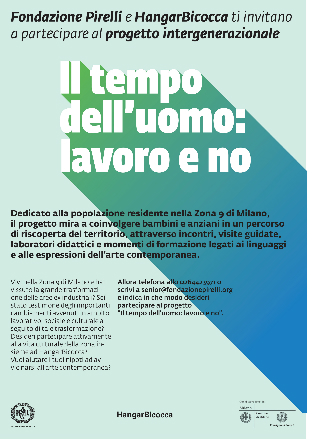
What is new this year is the close collaboration with HangarBicocca, the space devoted to the production and display of contemporary art, of which Pirelli is a founding partner and promoter. From the HangarBicocca website you can download the HB School programme and all the information you need in order to take part.

What is an archive? How do you make a tyre? How do you make an advertisement? What is corporate cinema? How did they illustrate stories back in 1400?

These are just some of the questions that will find answers in the free creative course devised by the Pirelli Foundation for the 2013-2014 school year for primary school children and lower- and upper-secondary school children.

The educational department of the Pirelli Foundation has set up the “Pirelli Foundation Educational” programme, the main purpose of which is to introduce young people to the world of production and work. The proposed activities cover a variety of subjects, from the history and technology of tyres to graphics and advertising, urban transformation, and corporate cinema, starting from the wealth of historical and documentary evidence preserved in the Pirelli Historical Archive.

The creative courses each last about 3 hours and are divided into a theoretical part, which involves the use of multimedia instruments, and a more specifically workshop section. Some of the courses will also include a visit to the Pirelli Historical Archive, to the fifteenth-century Villa della Bicocca degli Arcimboldi and to the R&D laboratories in the Pirelli area.

Participants can take part in the Foundation’s activities every day from Monday to Friday, from 9 a.m. to 5 p.m., depending on the requirements of each individual school.

You can download the creative courses from the “Related Content” page.

For more information and to enrol, please write to:

scuole@fondazionepirelli.org

Phone: +39 – 0264423971

What is new this year is the close collaboration with HangarBicocca, the space devoted to the production and display of contemporary art, of which Pirelli is a founding partner and promoter. From the HangarBicocca website you can download the HB School programme and all the information you need in order to take part.

Sign up for the newsletter