Help with your research

To request to view the materials in the Historical Archive and in the libraries of the Pirelli Foundation for study and research purposes and/or to find out how to request the use of materials for loans and exhibitions, please fill in the form below. You will receive an email confirming receipt of the request and you will be contacted.

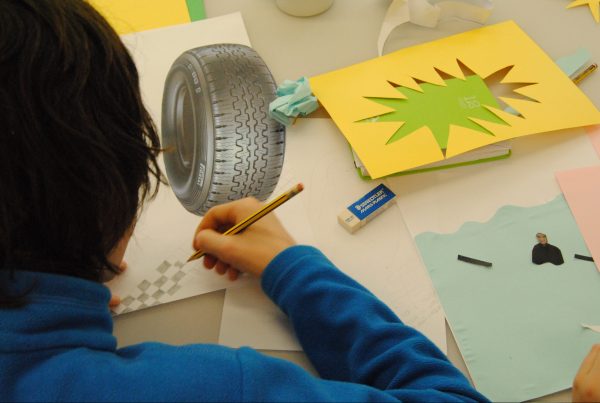
Pirelli Foundation Educational Courses

Select the education level of the school

Visit the Foundation

For information about the Foundation's activities, guided tours and accessibility, please call +39 0264423971 or fill in the form below, providing details of your request in the notes field.

Italy lacks “innovation capital” and is struggling to compete

It’s called “innovation capital”, a synthesis of people skills, cutting-edge technologies, and infrastructure, and it’s a determinant factor in a nation’s productivity level and it’s ability to compete internationally. It is also yet another area in which Italy is lagging behind the rest of Europe, according to a study just published by McKinsey (as reported in Corriere della Sera on 28 June). We do have innovative, competitive enterprises thanks to our flexible (“resilient”, adaptive to change, economists would say) culture of enterprise, which is recognised around the world, and our manufacturing (machinery automation, food and agriculture, fashion and interior design, automotive, chemicals and rubber) is one of the best worldwide. And yet Italy has, for some time now, been struggling to post any significant growth, and our “production excellence” is having a hard time keeping businesses and the nation as a whole competitive in today’s rapidly changing marketplace. Why? Because of our lack of “innovation capital”.

The McKinsey study explains that 16% of innovation capital is made up of public and private-sector investment in high-tech infrastructures (such as broadband). Then at 60% of the total there is “knowledge capital” – research and development, software, architecture and design, marketing and advertising, financial innovation, culture spending, and so on. Finally, 24% is in the form of “human capital” – university education, career training and investments in organisational improvement. Within the sixteen nations (U.S., U.K., Sweden, Germany, France, Spain, Italy, Denmark, etc.) analysed as part of the McKinsey study, all of this innovation capital is worth a total of 14 trillion dollars. This rich “economy of the intangible” accounts for 42% of their GDP and grew at a rate of 4.6% annually from 1995 to 2007. Of these three types of capital, the one that provides the greatest return is human capital, coming in at 40% greater than the return on knowledge capital.

Over the extended period from 1995 to 2007, innovation capital accounted for 53% of the growth in productivity, so it clearly played a crucial role. But Italy lagged behind, with production increasing by just 0.5% annually, as compared to growth in Germany of 1.7% and 2.8% in the U.K. Why? Looking at the various nations individually, we can see the differences more clearly. In Italy, innovation capital came in at just 25% of GDP, whereas it totalled 34% in Germany, 35% in France, 40% in the U.K., and 51% in the U.S. “Italy isn’t investing in the future,” was the assessment of Leonardo Totaro, managing director of McKinsey for the Mediterranean region. There is no emphasis on innovation. Education and know-how is being ignored (as can also be seen in the latest figures on investment in research and development, which reached just 1% of GDP, whereas public funding for cultural initiatives at the national, regional and local levels fell from €7.5 billion to €5.8 billion in 2012). In other words, Italy is becoming dumber, less innovative, less productive and less competitive.

So we are seeing a trend of increasing marginalisation that needs to be turned around through reforms that place the emphasis on innovation capital, and on human capital in particular – something that Italy has a wealth of, but is unable to take full advantage of. And how? McKinsey shows us the way: remove barriers to international investment (that brings in research and innovation); stimulate businesses and organisations that conduct research, including through tax incentives; better protect patents and other intellectual property rights; facilitate new business, and nurture a robust culture of enterprise based on the recognition of merit. In other words, innovate to grow. We’ve known the formula for some time, so now we have to make it a part of public policy.

It’s called “innovation capital”, a synthesis of people skills, cutting-edge technologies, and infrastructure, and it’s a determinant factor in a nation’s productivity level and it’s ability to compete internationally. It is also yet another area in which Italy is lagging behind the rest of Europe, according to a study just published by McKinsey (as reported in Corriere della Sera on 28 June). We do have innovative, competitive enterprises thanks to our flexible (“resilient”, adaptive to change, economists would say) culture of enterprise, which is recognised around the world, and our manufacturing (machinery automation, food and agriculture, fashion and interior design, automotive, chemicals and rubber) is one of the best worldwide. And yet Italy has, for some time now, been struggling to post any significant growth, and our “production excellence” is having a hard time keeping businesses and the nation as a whole competitive in today’s rapidly changing marketplace. Why? Because of our lack of “innovation capital”.

The McKinsey study explains that 16% of innovation capital is made up of public and private-sector investment in high-tech infrastructures (such as broadband). Then at 60% of the total there is “knowledge capital” – research and development, software, architecture and design, marketing and advertising, financial innovation, culture spending, and so on. Finally, 24% is in the form of “human capital” – university education, career training and investments in organisational improvement. Within the sixteen nations (U.S., U.K., Sweden, Germany, France, Spain, Italy, Denmark, etc.) analysed as part of the McKinsey study, all of this innovation capital is worth a total of 14 trillion dollars. This rich “economy of the intangible” accounts for 42% of their GDP and grew at a rate of 4.6% annually from 1995 to 2007. Of these three types of capital, the one that provides the greatest return is human capital, coming in at 40% greater than the return on knowledge capital.

Over the extended period from 1995 to 2007, innovation capital accounted for 53% of the growth in productivity, so it clearly played a crucial role. But Italy lagged behind, with production increasing by just 0.5% annually, as compared to growth in Germany of 1.7% and 2.8% in the U.K. Why? Looking at the various nations individually, we can see the differences more clearly. In Italy, innovation capital came in at just 25% of GDP, whereas it totalled 34% in Germany, 35% in France, 40% in the U.K., and 51% in the U.S. “Italy isn’t investing in the future,” was the assessment of Leonardo Totaro, managing director of McKinsey for the Mediterranean region. There is no emphasis on innovation. Education and know-how is being ignored (as can also be seen in the latest figures on investment in research and development, which reached just 1% of GDP, whereas public funding for cultural initiatives at the national, regional and local levels fell from €7.5 billion to €5.8 billion in 2012). In other words, Italy is becoming dumber, less innovative, less productive and less competitive.

So we are seeing a trend of increasing marginalisation that needs to be turned around through reforms that place the emphasis on innovation capital, and on human capital in particular – something that Italy has a wealth of, but is unable to take full advantage of. And how? McKinsey shows us the way: remove barriers to international investment (that brings in research and innovation); stimulate businesses and organisations that conduct research, including through tax incentives; better protect patents and other intellectual property rights; facilitate new business, and nurture a robust culture of enterprise based on the recognition of merit. In other words, innovate to grow. We’ve known the formula for some time, so now we have to make it a part of public policy.

Democratised Manufacturing

Say goodbye to traditional factories, but not just yet. The end is near and very real, and may be nearer than we think according to some experts, particularly if we consider what is being called “the third industrial revolution”, i.e. that of digital manufacturing. Of course, what’s at stake is not just the future of manufacturing, but also its very culture and the way we think about work and production. It will be a near future for some, distant for many, but definitely one to be studied and better understood.

The latest effort by Chris Anderson – journalist, author, technologist, and editor-in-chief of WIRED until 2012 – is a particularly important read that describes how the next industrial revolution came about and how it is expanding with the arrival and spread of technologies such as 3D printers (i.e. that “print” objects in much the same way as a traditional printer prints on paper). But Makers – The New Industrial Revolution is not just a story of new technology. It is, above all, the story of how this technology could play the same role as the steam engine that brought about the first industrial revolution, but with a difference. This time, Anderson says that individual creativity could again be placed at the heart of the debate surrounding the culture of enterprise.

But Anderson is, first and foremost, a great storyteller, so the book begins with an autobiographical introduction about the work he did in his garage, transforming bits of metal into high-precision components, before moving on to a series of examples of the use of new technologies in design and manufacturing. This ranges from projects such as the Tesla high-performance electric vehicle and Local Motors’ crowd-powered automotive design to 3D Robotics’ remote-controlled drones and Italy’s own Arduino, a microcontroller that promises great things for the ICT world.

Makers is a fascinating, visionary work to be read by those looking to better understand how the very culture of making things could change with the rise of “democratised manufacturing”, i.e. the ability for individuals to produce and sell things using the Internet and new technologies, thereby revolutionising the world of industrial manufacturing as we know it.

Makers. The New Industrial Revolution

Chris Anderson

Random House Business, 2013.

Say goodbye to traditional factories, but not just yet. The end is near and very real, and may be nearer than we think according to some experts, particularly if we consider what is being called “the third industrial revolution”, i.e. that of digital manufacturing. Of course, what’s at stake is not just the future of manufacturing, but also its very culture and the way we think about work and production. It will be a near future for some, distant for many, but definitely one to be studied and better understood.

The latest effort by Chris Anderson – journalist, author, technologist, and editor-in-chief of WIRED until 2012 – is a particularly important read that describes how the next industrial revolution came about and how it is expanding with the arrival and spread of technologies such as 3D printers (i.e. that “print” objects in much the same way as a traditional printer prints on paper). But Makers – The New Industrial Revolution is not just a story of new technology. It is, above all, the story of how this technology could play the same role as the steam engine that brought about the first industrial revolution, but with a difference. This time, Anderson says that individual creativity could again be placed at the heart of the debate surrounding the culture of enterprise.

But Anderson is, first and foremost, a great storyteller, so the book begins with an autobiographical introduction about the work he did in his garage, transforming bits of metal into high-precision components, before moving on to a series of examples of the use of new technologies in design and manufacturing. This ranges from projects such as the Tesla high-performance electric vehicle and Local Motors’ crowd-powered automotive design to 3D Robotics’ remote-controlled drones and Italy’s own Arduino, a microcontroller that promises great things for the ICT world.

Makers is a fascinating, visionary work to be read by those looking to better understand how the very culture of making things could change with the rise of “democratised manufacturing”, i.e. the ability for individuals to produce and sell things using the Internet and new technologies, thereby revolutionising the world of industrial manufacturing as we know it.

Makers. The New Industrial Revolution

Chris Anderson

Random House Business, 2013.

Man or woman, it’s the intangibles of business that truly matter

Whether male or female, an entrepreneur is always an entrepreneur, in the sense that the spirit of enterprise at the heart of production and innovation and the various financial targets to be reached are always the same, regardless of the gender of the person running the business. Businesspeople are just that, people that do business. Nonetheless, what can differ between the sexes are the personal relationships, the mood, the interpretation of the role of the business leader, and the various circumstances that surround the actions that are taken. The culture of enterprise changes depending on who is leading the company, along with all that follows in terms of performance, both financially and in the marketplace. To better understand this, we need – as far as possible – to compare the experience and context of a variety of organisations.

The debate rages on. Of course, this comes at the expense of the rhetoric on male and female styles of business, but to the benefit of a more accurate view of business.

Contributing to the debate are two studies published one right after the other. A Bank of Italy study has shown that, in terms of profitability and productivity, and even accounting for the size of the organisation and the industry, there appears to be no significant difference between a male-led business and a female-led one. Shortly after, a work by Bocconi and Universitat Autònoma de Barcelona explains that, when a female managing director is able to interact with other women on the board of directors, a sort of chemistry arises that can increase profits by as much as 18%.

The first of these conclusions was reached by Domenico Depalo and Francesca Lotti (both with the Bank of Italy’s Research Office) in their study entitled “Che genere di impresa? Differenziali di performance tra imprese maschili e femminili” (Business gender? Differences in performance between male and female businesses), which looked at both the leading literature on the matter of “gender differences” and at cold, hard numbers based on the financial statements and related ratios (data obtained from Infocamere) of various types of businesses.

However, in their study “Gender Interactions within the Family Firm” (to be published soon in Management Science), Alessandro Minichilli and Mario Daniele Amore (Bocconi’s Department of Management & Technology), together with Orsola Garofalo (Universitat Autònoma de Barcelona), reach a different conclusion: When the managing director is a woman, companies with a female-dominated board of directors post an average increase in profits of 18%. Alternatively, an increase in the presence of female directors from the 25th to the 75th percentile represents a 12% increase over the average firm profitability. The three researchers in this case reached this conclusion by way of a complex study of family-run businesses with annual revenues of at least €50 million.

Of course, this leaves out what numbers alone cannot fully show us, i.e. the unquantifiable approach to business management – the intangibles that every business leader worthy of his or her position brings to the organisation. But then again, we’re talking about something that has nothing to do with numbers and everything to do with the intrinsic qualities of the individual, regardless of gender.

Che genere di impresa? Differenziali di performance tra imprese maschili e femminili

Domenico Depalo, Francesca Lotti

Bank of Italy, Questioni di economia e finanza (Occasional papers), 184 – June 2013

Gender Interactions within the Family Firm

Alessandro Minichilli, Mario Daniele Amore, Orsola Garofalo

Management Science (soon to be published).

Whether male or female, an entrepreneur is always an entrepreneur, in the sense that the spirit of enterprise at the heart of production and innovation and the various financial targets to be reached are always the same, regardless of the gender of the person running the business. Businesspeople are just that, people that do business. Nonetheless, what can differ between the sexes are the personal relationships, the mood, the interpretation of the role of the business leader, and the various circumstances that surround the actions that are taken. The culture of enterprise changes depending on who is leading the company, along with all that follows in terms of performance, both financially and in the marketplace. To better understand this, we need – as far as possible – to compare the experience and context of a variety of organisations.

The debate rages on. Of course, this comes at the expense of the rhetoric on male and female styles of business, but to the benefit of a more accurate view of business.

Contributing to the debate are two studies published one right after the other. A Bank of Italy study has shown that, in terms of profitability and productivity, and even accounting for the size of the organisation and the industry, there appears to be no significant difference between a male-led business and a female-led one. Shortly after, a work by Bocconi and Universitat Autònoma de Barcelona explains that, when a female managing director is able to interact with other women on the board of directors, a sort of chemistry arises that can increase profits by as much as 18%.

The first of these conclusions was reached by Domenico Depalo and Francesca Lotti (both with the Bank of Italy’s Research Office) in their study entitled “Che genere di impresa? Differenziali di performance tra imprese maschili e femminili” (Business gender? Differences in performance between male and female businesses), which looked at both the leading literature on the matter of “gender differences” and at cold, hard numbers based on the financial statements and related ratios (data obtained from Infocamere) of various types of businesses.

However, in their study “Gender Interactions within the Family Firm” (to be published soon in Management Science), Alessandro Minichilli and Mario Daniele Amore (Bocconi’s Department of Management & Technology), together with Orsola Garofalo (Universitat Autònoma de Barcelona), reach a different conclusion: When the managing director is a woman, companies with a female-dominated board of directors post an average increase in profits of 18%. Alternatively, an increase in the presence of female directors from the 25th to the 75th percentile represents a 12% increase over the average firm profitability. The three researchers in this case reached this conclusion by way of a complex study of family-run businesses with annual revenues of at least €50 million.

Of course, this leaves out what numbers alone cannot fully show us, i.e. the unquantifiable approach to business management – the intangibles that every business leader worthy of his or her position brings to the organisation. But then again, we’re talking about something that has nothing to do with numbers and everything to do with the intrinsic qualities of the individual, regardless of gender.

Che genere di impresa? Differenziali di performance tra imprese maschili e femminili

Domenico Depalo, Francesca Lotti

Bank of Italy, Questioni di economia e finanza (Occasional papers), 184 – June 2013

Gender Interactions within the Family Firm

Alessandro Minichilli, Mario Daniele Amore, Orsola Garofalo

Management Science (soon to be published).

“Milanesiana”, talking about science and philosophy in industrial environments

Areas of knowledge, those of manufacturing and machines, that overlap. The analytical knowledge of philosophy which seeks out original keys to interpretation in order to navigate the complexities of companies and markets going through constant change. Those of research and development laboratories, in which the bases for new products and new systems of production are experimented, as well as those of artistic creativity. In an Italy struggling to come out of a recession, still filled with the devastating social effects (loss of jobs, drop in income, fading of hopes, above all for the new generations), the strategy of a manufacturing renaissance (discussed in the blog on 8th January) in fact needs to bring together different skills, able to enrich the human capital and the social capital essential for sustainable growth in environmental and social terms.

As the sociologist Aldo Bonomi, who theorised “molecular capitalism” and the “infinite city” of intelligent manufacturing and services networks spread throughout the territory, rightfully noted, Italian production must become Italian reproduction in order to open up a fourth season, after those of the workshops, industrial buildings and industrial zones. For production chains the time must come when the territory is a source of value in its dimension of a common asset to be regenerated. No longer just a store of knowledge, traditions and resources to be taken within a purely quantitative growth model founded on territorial consumption and social dumping, but instead something which raises the problem of the social and cooperative nature of investments in the knowledge economy. Where, in order to reconstruct the bases of value, manufacturing needs to pollinate the culture of the factory with scientific and social knowledge borne by creatives, professionals and young digital natives. Who in turn, if they want to translate investments in training into income and corresponding jobs, cannot continue to cultivate the utopia of a virtual and de-industrialised capitalism (La sfida della crisi e le cinque metamorfosi, [“The challenge of the crisis and the five metamorphoses”], IlSole24Ore, 23 June).

Those raised by Bonomi are in fact themes dear to Pirelli corporate culture, discussed in depth several times on the pages of this blog and used as the bases for designs and products. A fusion of different competencies within the production system and dialogue from inside industry to the outside.

An example? The recent case of workplaces enlivened by debates on the general themes of philosophy and science, at the end of June, hosting in the auditorium of the Pirelli headquarters, in Bicocca, a section of the “Milanesiana”, directed by Elisabetta Sgarbi, dedicated to “Philosophy, Cinema and a Secret” (with participation, among many others, by Massimo Cacciari, Remo Bodei, Umberto Veronesi, Marco Bellocchio, Tzevan Todorov and Emanuele Severino). Or the experiences exchanged among artists working on the building of large installations at the HangarBicocca (Carsten Nicolai, Tomàs Saraceno, Micol Assael and Wilfredo Prieto) and the engineers and technicians from the Laboratori Pirelli (long and impassioned discussions on nanotechnologies and light, electricity and mechanical strain, applied to art or to the experimentation of new materials for rubber mixes). Theatre and music in the factory, in the new plant in Settimo Torinese, with the structure of the facilities and research laboratories designed by Renzo Piano, according to criteria of “industrial beauty”, in a natural setting, ecologically admirable. Or the factory which becomes the material for tales of work which give shape to books and plays (in a collaboration with publishers such as Mondadori and Laterza or with the Piccolo Teatro di Milano). Or the exhibitions at Fondazione Pirelli and the educational projects of Fondazione Pirelli and HangarBicocca with thousands of children from Milan schools, in order to strengthen and renew relations between industry and education, work and training. All this is a fusion of outlooks and competencies, questions of different cultures and answers rich in “cross contamination”.

Intense activity in view of a better quality of the metropolis as a place of innovative competencies and high-end products, as part of the knowledge economy and, in fact, of industry as a lynchpin of quality development. Another way of bringing to life corporate culture and the corporation as a place of culture, open to culture, producer of culture. This also means working towards a “manufacturing renaissance”. 

Areas of knowledge, those of manufacturing and machines, that overlap. The analytical knowledge of philosophy which seeks out original keys to interpretation in order to navigate the complexities of companies and markets going through constant change. Those of research and development laboratories, in which the bases for new products and new systems of production are experimented, as well as those of artistic creativity. In an Italy struggling to come out of a recession, still filled with the devastating social effects (loss of jobs, drop in income, fading of hopes, above all for the new generations), the strategy of a manufacturing renaissance (discussed in the blog on 8th January) in fact needs to bring together different skills, able to enrich the human capital and the social capital essential for sustainable growth in environmental and social terms.

As the sociologist Aldo Bonomi, who theorised “molecular capitalism” and the “infinite city” of intelligent manufacturing and services networks spread throughout the territory, rightfully noted, Italian production must become Italian reproduction in order to open up a fourth season, after those of the workshops, industrial buildings and industrial zones. For production chains the time must come when the territory is a source of value in its dimension of a common asset to be regenerated. No longer just a store of knowledge, traditions and resources to be taken within a purely quantitative growth model founded on territorial consumption and social dumping, but instead something which raises the problem of the social and cooperative nature of investments in the knowledge economy. Where, in order to reconstruct the bases of value, manufacturing needs to pollinate the culture of the factory with scientific and social knowledge borne by creatives, professionals and young digital natives. Who in turn, if they want to translate investments in training into income and corresponding jobs, cannot continue to cultivate the utopia of a virtual and de-industrialised capitalism (La sfida della crisi e le cinque metamorfosi, [“The challenge of the crisis and the five metamorphoses”], IlSole24Ore, 23 June).

Those raised by Bonomi are in fact themes dear to Pirelli corporate culture, discussed in depth several times on the pages of this blog and used as the bases for designs and products. A fusion of different competencies within the production system and dialogue from inside industry to the outside.

An example? The recent case of workplaces enlivened by debates on the general themes of philosophy and science, at the end of June, hosting in the auditorium of the Pirelli headquarters, in Bicocca, a section of the “Milanesiana”, directed by Elisabetta Sgarbi, dedicated to “Philosophy, Cinema and a Secret” (with participation, among many others, by Massimo Cacciari, Remo Bodei, Umberto Veronesi, Marco Bellocchio, Tzevan Todorov and Emanuele Severino). Or the experiences exchanged among artists working on the building of large installations at the HangarBicocca (Carsten Nicolai, Tomàs Saraceno, Micol Assael and Wilfredo Prieto) and the engineers and technicians from the Laboratori Pirelli (long and impassioned discussions on nanotechnologies and light, electricity and mechanical strain, applied to art or to the experimentation of new materials for rubber mixes). Theatre and music in the factory, in the new plant in Settimo Torinese, with the structure of the facilities and research laboratories designed by Renzo Piano, according to criteria of “industrial beauty”, in a natural setting, ecologically admirable. Or the factory which becomes the material for tales of work which give shape to books and plays (in a collaboration with publishers such as Mondadori and Laterza or with the Piccolo Teatro di Milano). Or the exhibitions at Fondazione Pirelli and the educational projects of Fondazione Pirelli and HangarBicocca with thousands of children from Milan schools, in order to strengthen and renew relations between industry and education, work and training. All this is a fusion of outlooks and competencies, questions of different cultures and answers rich in “cross contamination”.

Intense activity in view of a better quality of the metropolis as a place of innovative competencies and high-end products, as part of the knowledge economy and, in fact, of industry as a lynchpin of quality development. Another way of bringing to life corporate culture and the corporation as a place of culture, open to culture, producer of culture. This also means working towards a “manufacturing renaissance”. 

The butterfly of innovation

Innovation is possible, also and above all starting from the simple things. After all the apparently simplest innovations have often opened up the way to unpredictable approaches. There are no ready-made formulas in innovation, even in companies. What counts more is the experience as told by others, those who in some way have already innovated. 

This is why it is interesting to read 9 storie di ordinaria innovazione [“9 Stores of Ordinary Innovation”], edited by Giusi Carai and Alessio Neri for the digital publisher Asterisk and newly published.

It all began with the spoken accounts by 9 groups of innovators from Reggio Calabria who presented their business plan at “Barcamp di ‘U Web” organised by the association LiberaReggio LAB in the autumn of 2012.

The idea behind this is that young innovators represent the future of the economy and that the Web can be used as what in actual fact it should always be: an infrastructure that promotes growth.

A line-up therefore of business plans or businesses in embryo involved in architecture, social cohesion, correct and transparent information, adding of value to the territory, personal promotion, the fight against organised crime, commerce, publishing and communication and town and city centres. All examples of innovation which is not just theoretical but concrete, practical and actually achieved. 

An e-book to be read in one go, made up of examples linked by a question posed at the beginning of each story: what is innovation? A question to which the creators of one of the businesses narrated gave an intriguing answer, a provocation also to established firms, that innovation is a butterfly which dies soon after it is born. Yet billions of butterflies are born every day.

9 storie di ordinaria innovazione

Giusi Carai and Alessio Neri

Asterisk, 2013

Innovation is possible, also and above all starting from the simple things. After all the apparently simplest innovations have often opened up the way to unpredictable approaches. There are no ready-made formulas in innovation, even in companies. What counts more is the experience as told by others, those who in some way have already innovated. 

This is why it is interesting to read 9 storie di ordinaria innovazione [“9 Stores of Ordinary Innovation”], edited by Giusi Carai and Alessio Neri for the digital publisher Asterisk and newly published.

It all began with the spoken accounts by 9 groups of innovators from Reggio Calabria who presented their business plan at “Barcamp di ‘U Web” organised by the association LiberaReggio LAB in the autumn of 2012.

The idea behind this is that young innovators represent the future of the economy and that the Web can be used as what in actual fact it should always be: an infrastructure that promotes growth.

A line-up therefore of business plans or businesses in embryo involved in architecture, social cohesion, correct and transparent information, adding of value to the territory, personal promotion, the fight against organised crime, commerce, publishing and communication and town and city centres. All examples of innovation which is not just theoretical but concrete, practical and actually achieved. 

An e-book to be read in one go, made up of examples linked by a question posed at the beginning of each story: what is innovation? A question to which the creators of one of the businesses narrated gave an intriguing answer, a provocation also to established firms, that innovation is a butterfly which dies soon after it is born. Yet billions of butterflies are born every day.

9 storie di ordinaria innovazione

Giusi Carai and Alessio Neri

Asterisk, 2013

New CEO, new life?

When a new CEO arrives at a company, its management methods, approach to organisation and culture can change. However there is certainty that everything works in the best possible way and above all there is no mathematical formula which automatically connects a new CEO to a forward leap in corporate performance. Even if, as is customary in academic literature and expected by many firms, it is easy to think that the arrival of a new CEO, coming from different firms, is what makes the difference.

Ayse Karaevli and Edward J. Zajac (from the Otto Beisheim School of Management in Vallendar in Germany and the Northwestern University, Kellogg School of Management in Evanston, USA respectively), think that the magic that can be sparked between a new CEO and corporate results is not that obvious – on the contrary. They explain that the implicit or explicit assumption that outsider CEOs will give an advantage in achieving strategic change in companies is not always that true. It takes much more than a new CEO to change the fortunes of a firm.

In order to demonstrate that reality can be different from the theory of many boards of directors, the two researchers, in their When do Outsider CEOs Generate Strategic Change? The Enabling Role of Corporate Stability which has just been published in the Journal of Management Studies, have studied the changes which took place between 1972 and 2010 in a US airline and a chemicals company with a series of different CEOs.

The idea put to the test is that the arrival of an outsider CEO, albeit with many years’ experience, can do little when faced with a firm without organisation, without corporate spirit and without a certain continuity of management.

The results of the research appear to confirm this theory. The actual conditions which the CEO should succeed in modifying constitute according to the two authors the basis for change.

Download pdf

When do Outsider CEOs Generate Strategic Change? The Enabling Role of Corporate Stability 

Ayse Karaevli and Edward J. Zajac

Journal of Management Studies, June 2013.

When a new CEO arrives at a company, its management methods, approach to organisation and culture can change. However there is certainty that everything works in the best possible way and above all there is no mathematical formula which automatically connects a new CEO to a forward leap in corporate performance. Even if, as is customary in academic literature and expected by many firms, it is easy to think that the arrival of a new CEO, coming from different firms, is what makes the difference.

Ayse Karaevli and Edward J. Zajac (from the Otto Beisheim School of Management in Vallendar in Germany and the Northwestern University, Kellogg School of Management in Evanston, USA respectively), think that the magic that can be sparked between a new CEO and corporate results is not that obvious – on the contrary. They explain that the implicit or explicit assumption that outsider CEOs will give an advantage in achieving strategic change in companies is not always that true. It takes much more than a new CEO to change the fortunes of a firm.

In order to demonstrate that reality can be different from the theory of many boards of directors, the two researchers, in their When do Outsider CEOs Generate Strategic Change? The Enabling Role of Corporate Stability which has just been published in the Journal of Management Studies, have studied the changes which took place between 1972 and 2010 in a US airline and a chemicals company with a series of different CEOs.

The idea put to the test is that the arrival of an outsider CEO, albeit with many years’ experience, can do little when faced with a firm without organisation, without corporate spirit and without a certain continuity of management.

The results of the research appear to confirm this theory. The actual conditions which the CEO should succeed in modifying constitute according to the two authors the basis for change.

Download pdf

When do Outsider CEOs Generate Strategic Change? The Enabling Role of Corporate Stability 

Ayse Karaevli and Edward J. Zajac

Journal of Management Studies, June 2013.

Legality as a cornerstone in competition and development

Legality is a fundamental principle of competition” and a “basic condition for the proper functioning of the market”. This was the assessment, published on 19 June in Il Sole24Ore, of Paola Severino, the former justice minister of the Monti government and a lawyer that has earned great respect in the realms of both law and business. These important words point to a profound, cultural shift that has been taking place in many segments of the economy for some time now and which is leaving its mark on a new culture of enterprise, one in which there is an ever stronger bond between legality and competitiveness, the desire to invest both domestically and internationally, pride in strong financial performance, and working together as a nation. So legality as a key to development and transparent, well-regulated markets as a dynamic means of selecting the best players and of driving “quality growth”.

Legality as a valuable asset in sustainable growth has been a topic of discussion at Assolombarda for some time now (and a priority issue within the Chairman’s Committee, both when it was led by Alberto Meomartini and now under the guidance of Gianfelice Rocca), connecting the concept with that of culture of enterprise and, above all, with corporate social responsibility, i.e. establishing a company identity and relations with all stakeholders that work towards strong performance, whether it be financial or otherwise, while remaining socially and environmentally sustainable. There has also recently been some discussion about better relations between businesses and the legal system, and so legality and competiveness, the quality of development and of civil life, in the hills of Florence at the Scuola Superiore della Magistratura (Advanced School for Magistrates) in Scandicci as part of the launch of the study programmes for newly appointed magistrates and as part of a meaningful dialogue promoted by the school’s president, Prof. Valerio Onida, between different worlds and with a view to improving the nation’s overall economic culture.

From what perspective are we to look at legality? From, for example, that of the perverse relationship between an excess of laws and regulations and how little they are actually followed (being “a right of the markets and of businesses full of regulations, but virtually free of principles”, as opined by law expert Guido Rossi). Or from that of the corruption business by the mafia and other organised crime found throughout Italy. Or even that of the unfair competition brought about by the “underground economy” and by the continued existence of broad areas of tax evasion. Then there’s the point of view of the limited efficiency and efficacy of the slow, complex legal system, which can no longer meet the needs of civil and criminal justice within a reasonable timeframe or in the form of clear, high-quality rulings. Not to mention that of the poor functioning of the justice system and the crisis on the well-regulated markets giving the advantage to the least scrupulous, most domineering and least lawful players. All of which can only be of detriment to the Italian economy.

An essential reference to the importance of a strategy that unites legality and competitiveness and the economic value of lawfulness can also be found in the annual report of the president of the Italian anti-trust authority, Giuseppe Pitruzzella.  Paola Severino said, “If this message is to be heard by the most sensitive and most reactive segments of the economy, and heard not only as an encouragement to act ethically, but as a means of establishing an actual virtuous circle towards business growth, we will be able to make significant inroads towards a model of fair competition.”  An organisation that follows the rules is stronger, more suited to competing on more advanced international markets, and more open to a broader array of stakeholders than we are seeing in many Italian settings. To this end, we should probably also further motivate the virtuous enterprises, including through a system of rewards, by introducing a “lawfulness rating” into the “Cresci Italia” (Grow Italy) decree to be used for relations between businesses, banks and government. As Severino explains, “The speed with which the anti-trust authority adopted the executive regulations and the Ministry of Justice, in turn, issued the implementing decree are signs of how important this entity is seen as being in increasing confidence in a healthy economy and in a market that encourages legality and fights the infiltration of organised crime, corruption and other forms of fiscal and corporate crime. Crimes that earn easy money by eating away at the healthy part of the industry and irreparably damaging the image of the nation and its best businesspeople.”

Institutions ready to set up a system of measuring legality and businesses aware of the importance of obtaining a good rating. Severino concludes, “The encouraging number of rating requests received by the authority over a short timespan shows that the mechanism is seen as being helpful by those who have understood that the most damaging thing to Italy’s economy is unfair competition, where it’s not the best that wins, but those who think they’re more clever than the rest, who look for shortcuts and who throw stumbling blocks in the paths of the more virtuous businesses.  Only widespread awareness of the scope and irreparability of this harm will be able to provide the defence we need against unlawfulness and bring out those who continue to believe, and to grow, in merit.” In other words, good market culture of enterprise. Legal.

Legality is a fundamental principle of competition” and a “basic condition for the proper functioning of the market”. This was the assessment, published on 19 June in Il Sole24Ore, of Paola Severino, the former justice minister of the Monti government and a lawyer that has earned great respect in the realms of both law and business. These important words point to a profound, cultural shift that has been taking place in many segments of the economy for some time now and which is leaving its mark on a new culture of enterprise, one in which there is an ever stronger bond between legality and competitiveness, the desire to invest both domestically and internationally, pride in strong financial performance, and working together as a nation. So legality as a key to development and transparent, well-regulated markets as a dynamic means of selecting the best players and of driving “quality growth”.

Legality as a valuable asset in sustainable growth has been a topic of discussion at Assolombarda for some time now (and a priority issue within the Chairman’s Committee, both when it was led by Alberto Meomartini and now under the guidance of Gianfelice Rocca), connecting the concept with that of culture of enterprise and, above all, with corporate social responsibility, i.e. establishing a company identity and relations with all stakeholders that work towards strong performance, whether it be financial or otherwise, while remaining socially and environmentally sustainable. There has also recently been some discussion about better relations between businesses and the legal system, and so legality and competiveness, the quality of development and of civil life, in the hills of Florence at the Scuola Superiore della Magistratura (Advanced School for Magistrates) in Scandicci as part of the launch of the study programmes for newly appointed magistrates and as part of a meaningful dialogue promoted by the school’s president, Prof. Valerio Onida, between different worlds and with a view to improving the nation’s overall economic culture.

From what perspective are we to look at legality? From, for example, that of the perverse relationship between an excess of laws and regulations and how little they are actually followed (being “a right of the markets and of businesses full of regulations, but virtually free of principles”, as opined by law expert Guido Rossi). Or from that of the corruption business by the mafia and other organised crime found throughout Italy. Or even that of the unfair competition brought about by the “underground economy” and by the continued existence of broad areas of tax evasion. Then there’s the point of view of the limited efficiency and efficacy of the slow, complex legal system, which can no longer meet the needs of civil and criminal justice within a reasonable timeframe or in the form of clear, high-quality rulings. Not to mention that of the poor functioning of the justice system and the crisis on the well-regulated markets giving the advantage to the least scrupulous, most domineering and least lawful players. All of which can only be of detriment to the Italian economy.

An essential reference to the importance of a strategy that unites legality and competitiveness and the economic value of lawfulness can also be found in the annual report of the president of the Italian anti-trust authority, Giuseppe Pitruzzella.  Paola Severino said, “If this message is to be heard by the most sensitive and most reactive segments of the economy, and heard not only as an encouragement to act ethically, but as a means of establishing an actual virtuous circle towards business growth, we will be able to make significant inroads towards a model of fair competition.”  An organisation that follows the rules is stronger, more suited to competing on more advanced international markets, and more open to a broader array of stakeholders than we are seeing in many Italian settings. To this end, we should probably also further motivate the virtuous enterprises, including through a system of rewards, by introducing a “lawfulness rating” into the “Cresci Italia” (Grow Italy) decree to be used for relations between businesses, banks and government. As Severino explains, “The speed with which the anti-trust authority adopted the executive regulations and the Ministry of Justice, in turn, issued the implementing decree are signs of how important this entity is seen as being in increasing confidence in a healthy economy and in a market that encourages legality and fights the infiltration of organised crime, corruption and other forms of fiscal and corporate crime. Crimes that earn easy money by eating away at the healthy part of the industry and irreparably damaging the image of the nation and its best businesspeople.”

Institutions ready to set up a system of measuring legality and businesses aware of the importance of obtaining a good rating. Severino concludes, “The encouraging number of rating requests received by the authority over a short timespan shows that the mechanism is seen as being helpful by those who have understood that the most damaging thing to Italy’s economy is unfair competition, where it’s not the best that wins, but those who think they’re more clever than the rest, who look for shortcuts and who throw stumbling blocks in the paths of the more virtuous businesses.  Only widespread awareness of the scope and irreparability of this harm will be able to provide the defence we need against unlawfulness and bring out those who continue to believe, and to grow, in merit.” In other words, good market culture of enterprise. Legal.

Innovating is possible

It’s easy to say it will take innovation for businesses, and for the economy in general, to change their fate. But these words need to be followed by action. We need the capacity to innovate and, above all, to think outside the box. This is also true in business management, in creating, day by day, that manufacturing culture that has made countless Italian organisations great and that now, if not actually against the ropes, is at least starting to breathe heavy. Businesses do continue to innovate, but at times they don’t even realise it.

The how, when and why is what we need to try to understand. This is what Riccardo Luna, a journalist and avid Internet user, has sought to do in his enjoyable book, Cambiamo tutto! La rivoluzione degli innovatori (Let’s change everything! The innovators’ revolution). This recently published work gives us an idea how innovation is still taking place both in Italy and around the world, starting with the Internet and through to the actual production of goods and services.

It’s a page-turner of 150 pages packed with examples right up to current times. There’s Apple, of course, the rest of the Silicon Valley, Olivetti, and even a few businesses that are virtually unheard of – the dreams of people who have tried and succeeded, but also those missed opportunities that teach us where we went wrong.

This exploration of the innovator’s world starts with a prologue, then takes six leaps forward towards an epilogue that wraps it all up in the common sense of good old Italian industry. Along the way, we read of “startuppers”, “makers”, “dreamers” and “civic hackers”, of “biopunk” and “iSchools”, to describe the various aspects of innovation – who started, who made it, who had a dream, who works for society, science or education – before delivering a forward-looking message: Change, like innovation, is possible, even in business and even in Italy.

All it takes is to be grounded in the present while looking forward to the future. The entire work closes, as mentioned above, with the wise words of an Italian businessman: “This is what the future is. Making things, producing, inventing solutions to problems. And never giving up.”

Cambiamo tutto! La rivoluzione degli innovatori

Riccardo Luna

Laterza, 2013

It’s easy to say it will take innovation for businesses, and for the economy in general, to change their fate. But these words need to be followed by action. We need the capacity to innovate and, above all, to think outside the box. This is also true in business management, in creating, day by day, that manufacturing culture that has made countless Italian organisations great and that now, if not actually against the ropes, is at least starting to breathe heavy. Businesses do continue to innovate, but at times they don’t even realise it.

The how, when and why is what we need to try to understand. This is what Riccardo Luna, a journalist and avid Internet user, has sought to do in his enjoyable book, Cambiamo tutto! La rivoluzione degli innovatori (Let’s change everything! The innovators’ revolution). This recently published work gives us an idea how innovation is still taking place both in Italy and around the world, starting with the Internet and through to the actual production of goods and services.

It’s a page-turner of 150 pages packed with examples right up to current times. There’s Apple, of course, the rest of the Silicon Valley, Olivetti, and even a few businesses that are virtually unheard of – the dreams of people who have tried and succeeded, but also those missed opportunities that teach us where we went wrong.

This exploration of the innovator’s world starts with a prologue, then takes six leaps forward towards an epilogue that wraps it all up in the common sense of good old Italian industry. Along the way, we read of “startuppers”, “makers”, “dreamers” and “civic hackers”, of “biopunk” and “iSchools”, to describe the various aspects of innovation – who started, who made it, who had a dream, who works for society, science or education – before delivering a forward-looking message: Change, like innovation, is possible, even in business and even in Italy.

All it takes is to be grounded in the present while looking forward to the future. The entire work closes, as mentioned above, with the wise words of an Italian businessman: “This is what the future is. Making things, producing, inventing solutions to problems. And never giving up.”

Cambiamo tutto! La rivoluzione degli innovatori

Riccardo Luna

Laterza, 2013

Internet and business: how and why

It’s become a given: markets both foreign and domestic are commanded, in part, through a strong online presence. Of course, behind the Internet presence there always needs to be a serious product, an effective organisation and a real business. But being online, being able to dialogue with potential customers and new markets in real time and keeping an eye on the competition via the web are key factors for companies wanting to break free from their limited local markets. They are also factors that will also have a rapid impact on that company’s corporate culture and on the way it interacts with the outside world.

For this reason, a better understanding of how the Internet enters an organisation and, above all, how that organisation makes use of it is crucial to understanding how the organisation will evolve and what the future holds.

Charmaine Glavas and Shane Mathews (of Queensland University of Technology; Brisbane, Australia) have done just that by exploring the relationship between the characteristics of international entrepreneurship and the use of the Internet in international business processes.

The underlying assumption is that Internet capabilities truly are necessary in business. “However,” as explained in the study How international entrepreneurship characteristics influence Internet capabilities for the international business processes of the firm, published in May issue of the International Business Review, “international entrepreneurship characteristics which are seen as a precursor to leveraging Internet capabilities are still vague.” To understand what this means and how it actually manifests itself, the authors looked at eight case studies of small and medium-sized enterprises in the tourism industry in order to compare their level of entrepreneurship and their ability to use the web in business processes. What emerged is a snapshot that can be of use in other industries and for other types of businesses, as well. As well as one surprise: the ability of an organisation to take on the risks of international markets and the degree of success it will have are not necessarily the conditions that lead to an effective use of the Internet. In other words, the Internet is necessary, but it’s not nearly enough on its own.

How international entrepreneurship characteristics influence Internet capabilities for the international business processes of the firm

Charmaine Glavas & Shane Mathews

International Business Review, May 2013.

It’s become a given: markets both foreign and domestic are commanded, in part, through a strong online presence. Of course, behind the Internet presence there always needs to be a serious product, an effective organisation and a real business. But being online, being able to dialogue with potential customers and new markets in real time and keeping an eye on the competition via the web are key factors for companies wanting to break free from their limited local markets. They are also factors that will also have a rapid impact on that company’s corporate culture and on the way it interacts with the outside world.

For this reason, a better understanding of how the Internet enters an organisation and, above all, how that organisation makes use of it is crucial to understanding how the organisation will evolve and what the future holds.

Charmaine Glavas and Shane Mathews (of Queensland University of Technology; Brisbane, Australia) have done just that by exploring the relationship between the characteristics of international entrepreneurship and the use of the Internet in international business processes.

The underlying assumption is that Internet capabilities truly are necessary in business. “However,” as explained in the study How international entrepreneurship characteristics influence Internet capabilities for the international business processes of the firm, published in May issue of the International Business Review, “international entrepreneurship characteristics which are seen as a precursor to leveraging Internet capabilities are still vague.” To understand what this means and how it actually manifests itself, the authors looked at eight case studies of small and medium-sized enterprises in the tourism industry in order to compare their level of entrepreneurship and their ability to use the web in business processes. What emerged is a snapshot that can be of use in other industries and for other types of businesses, as well. As well as one surprise: the ability of an organisation to take on the risks of international markets and the degree of success it will have are not necessarily the conditions that lead to an effective use of the Internet. In other words, the Internet is necessary, but it’s not nearly enough on its own.

How international entrepreneurship characteristics influence Internet capabilities for the international business processes of the firm

Charmaine Glavas & Shane Mathews

International Business Review, May 2013.

Bridging the gap between EU and US corporate governance

In today’s global economy, are European businesses are being governed in the same way as in the U.S.?  And, above all, are the rules of governance the same? These are important questions in better understanding the different corporate cultures found on either side of the Atlantic, cultures that appear, in many ways, to be far apart, but which could also now be coming closer together. So long as the rules and laws of governance allow it.

Whitney K. Taylor has taken a close look at the matter in his thesis submitted in partial fulfilment of the requirements for the degree of Master of Arts in European Union Studies in the Graduate College of the University of Illinois at Urbana-Champaign, which he obtained just a few weeks ago. Entitled “Dueling shares: comparative EU-US corporate governance practices”, the work looks at the cultural and corporate rules, attitudes and other mechanisms that are tied to the corporate governance of businesses in the U.S. and Europe and is particularly important because of the method that Taylor has used. He starts with empirical evidence taken from 24 case studies of actual organisations such as Danone, Dassault, Naturex and Total in Europe, and of IBM, Apple, Google, Exxon, Kellog in the U.S., while also referring to a wide range of literature on the topic.  Of these 24 organisations, he then uncovers any unwritten procedures and looks at the rules of conduct, the laws that apply, and how the organisations have evolved.

The current rules of governance are then seen in relation to the histories and societies that have characterised the U.S. and Europe. The goal of the study was to determine, in Taylor’s words, “whether divergences still exist, and why these divergences may persist”. Or in other words, “Will there come a day in which the rules of governance of EU and US companies can be the same?”

Dueling shares: comparative EU-US corporate governance practices

Whitney K. Taylor

Graduate College of the University of Illinois at Urbana-Champaign

In today’s global economy, are European businesses are being governed in the same way as in the U.S.?  And, above all, are the rules of governance the same? These are important questions in better understanding the different corporate cultures found on either side of the Atlantic, cultures that appear, in many ways, to be far apart, but which could also now be coming closer together. So long as the rules and laws of governance allow it.

Whitney K. Taylor has taken a close look at the matter in his thesis submitted in partial fulfilment of the requirements for the degree of Master of Arts in European Union Studies in the Graduate College of the University of Illinois at Urbana-Champaign, which he obtained just a few weeks ago. Entitled “Dueling shares: comparative EU-US corporate governance practices”, the work looks at the cultural and corporate rules, attitudes and other mechanisms that are tied to the corporate governance of businesses in the U.S. and Europe and is particularly important because of the method that Taylor has used. He starts with empirical evidence taken from 24 case studies of actual organisations such as Danone, Dassault, Naturex and Total in Europe, and of IBM, Apple, Google, Exxon, Kellog in the U.S., while also referring to a wide range of literature on the topic.  Of these 24 organisations, he then uncovers any unwritten procedures and looks at the rules of conduct, the laws that apply, and how the organisations have evolved.

The current rules of governance are then seen in relation to the histories and societies that have characterised the U.S. and Europe. The goal of the study was to determine, in Taylor’s words, “whether divergences still exist, and why these divergences may persist”. Or in other words, “Will there come a day in which the rules of governance of EU and US companies can be the same?”

Dueling shares: comparative EU-US corporate governance practices

Whitney K. Taylor

Graduate College of the University of Illinois at Urbana-Champaign

Sign up for the newsletter