Access the Online Archive
Search the Historical Archive of the Pirelli Foundation for sources and materials. Select the type of support you are interested in and write the keywords of your research.
    Select one of the following categories
  • Documents
  • Photographs
  • Drawings and posters
  • Audio-visuals
  • Publications and magazines
  • All
Help with your research
To request to view the materials in the Historical Archive and in the libraries of the Pirelli Foundation for study and research purposes and/or to find out how to request the use of materials for loans and exhibitions, please fill in the form below. You will receive an email confirming receipt of the request and you will be contacted.
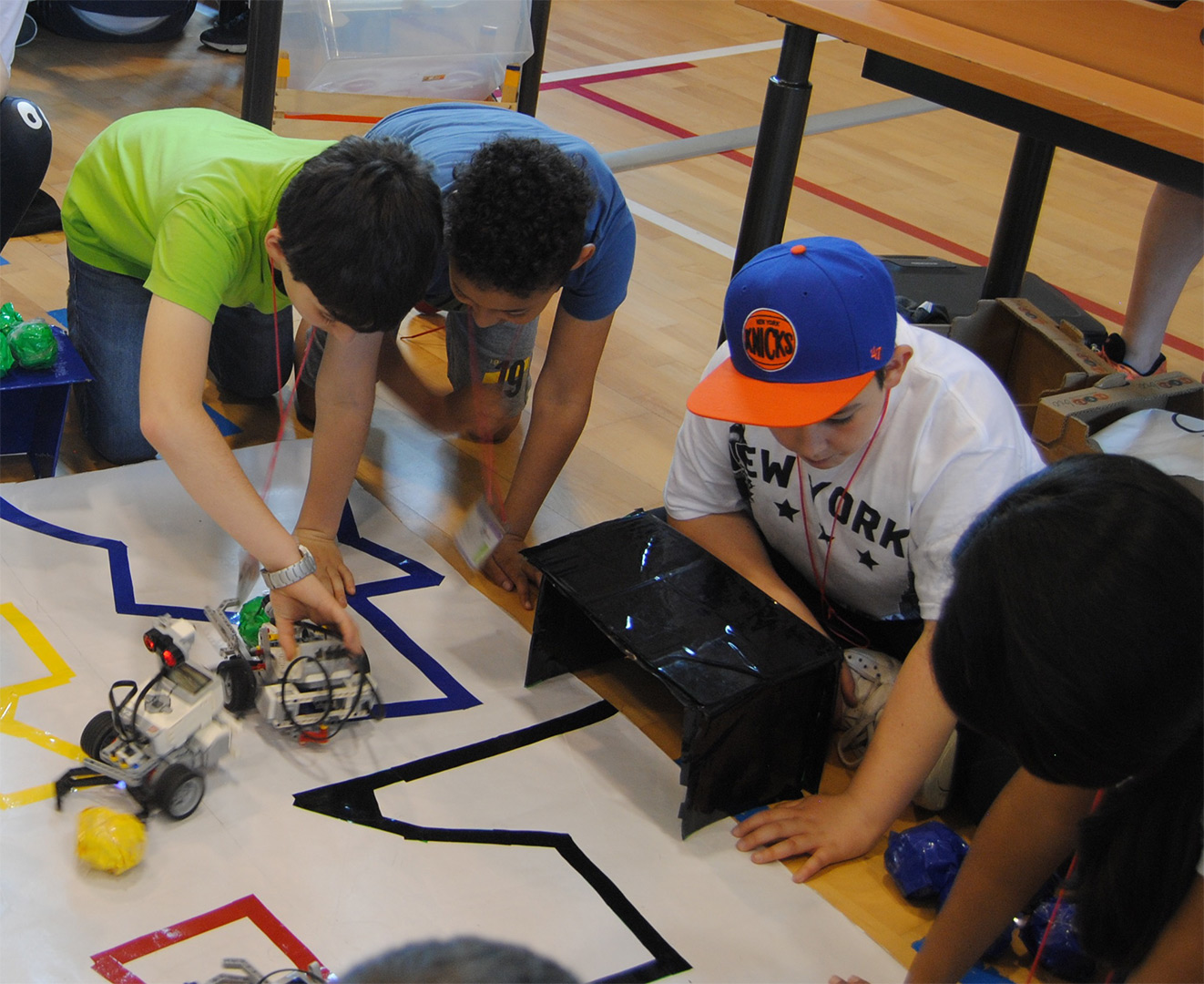
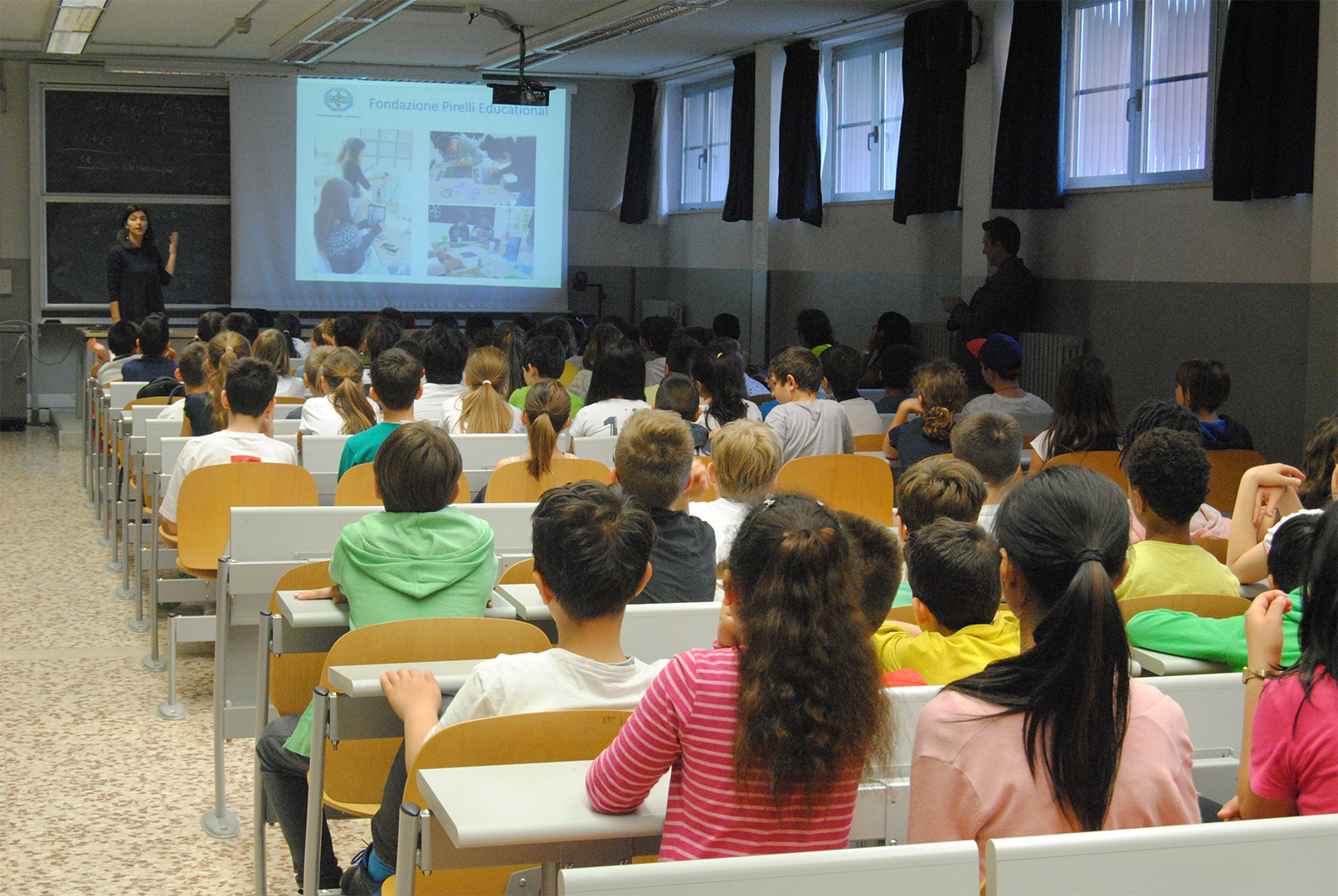
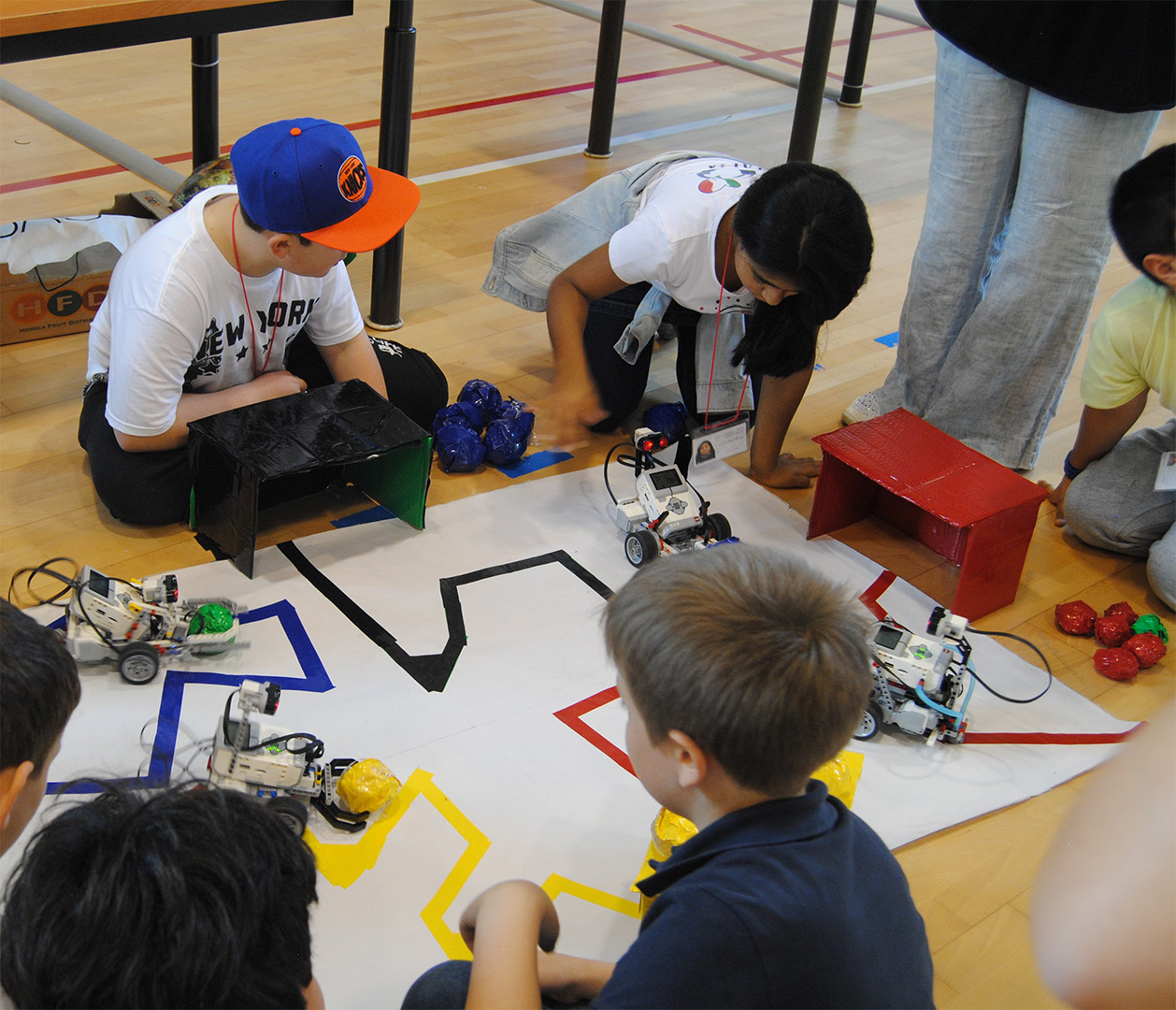
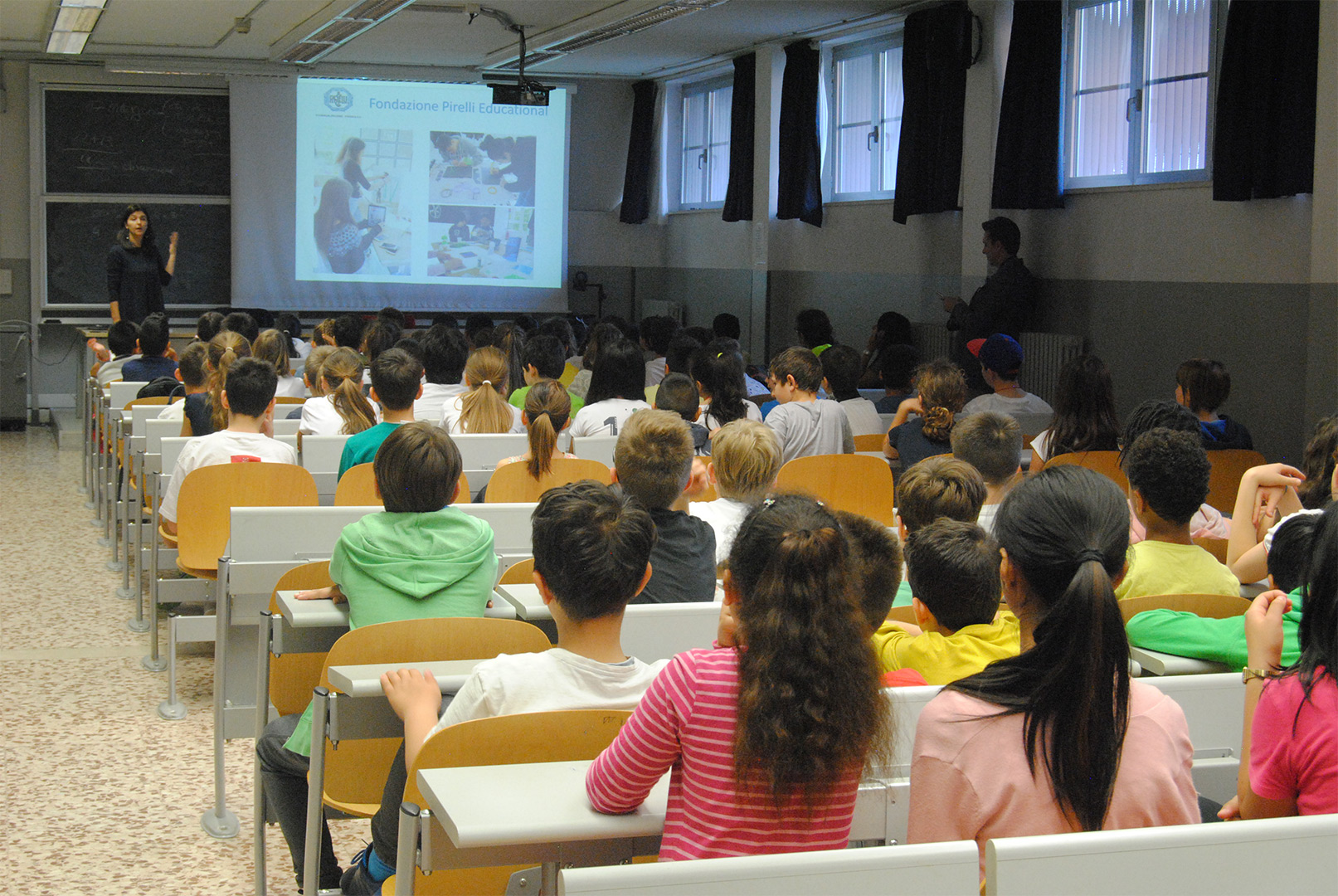
Pirelli Foundation Educational Courses

Select the education level of the school
Back
Primary schools
Pirelli Foundation Educational Courses
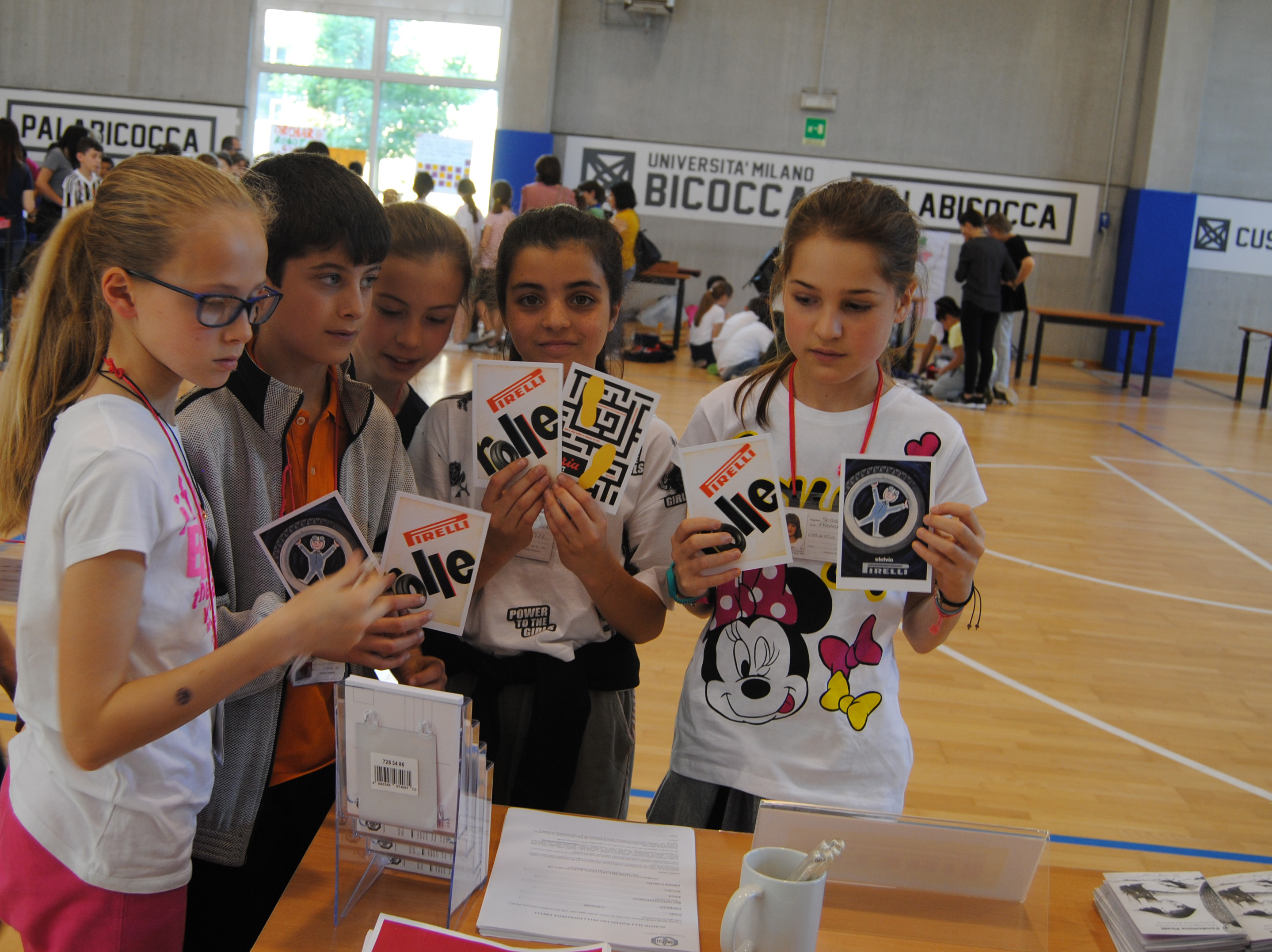
Please fill in your details and the staff of Pirelli Foundation Educational will contact you to arrange the dates of the course.

I declare I have read  the privacy policy, and authorise the Pirelli Foundation to process my personal data in order to send communications, also by email, about initiatives/conferences organised by the Pirelli Foundation.

Back
Lower secondary school
Pirelli Foundation Educational Courses
Please fill in your details and the staff of Pirelli Foundation Educational will contact you to arrange the dates of the course.
Back
Upper secondary school
Pirelli Foundation Educational Courses
Please fill in your details and the staff of Pirelli Foundation Educational will contact you to arrange the dates of the course.
Back
University
Pirelli Foundation Educational Courses

Do you want to organize a training programme with your students? For information and reservations, write to universita@fondazionepirelli.org

Visit the Foundation
For information about the Foundation’s activities, guided tours and accessibility,
please call +39 0264423971 or fill in the form below, providing details of your request in the notes field.

The new “all-season” exhibit

When the book A Muse in the Wheels was published, we put 56 original works on display for the new installation of the Foundation’s Open Space. The works trace the history of the company’s communication from the 1910s to the late 1960s, illustrating the very close client relationship with internationally renowned artists, which has always been a feature of the company.

There are sketches that were used to advertise the products, drawings created to illustrate articles and reports in Pirelli magazine, and others to celebrate the anniversaries of the industrial group: the works on show were made by such great artists as Armando Testa, Bruno Munari, Bob Noorda e Lora Lamm, to name but a few.

The materials selected also include three large-format works with pictures of factories and production statistics, made by Domenico Bonanimi and Umberto Ubaldi in 1922 and displayed at the Museo Storico delle Industrie Pirelli to celebrate the company’s 50th anniversary.

On the floor there are reproductions of a series of photographs that show how the advertising message has been conveyed by means of posters, store-window signs and trade-show stands. At the centre of the Open Space, also on the floor, is a selection of technical data sheets that tell the stories of the most famous Pirelli tyres, from the Cord to the Stella Bianca, to the Stelvio and the Cinturato.

A special display case contains a Cinturato All Season – a modern tyre designed to offer an alternative and innovative form of mobility – in an original reinterpretation of an advertisement for the Pirelli Cinturato created by Riccardo Manzi in 1957.

Look at photogallery on Facebook.

When the book A Muse in the Wheels was published, we put 56 original works on display for the new installation of the Foundation’s Open Space. The works trace the history of the company’s communication from the 1910s to the late 1960s, illustrating the very close client relationship with internationally renowned artists, which has always been a feature of the company.

There are sketches that were used to advertise the products, drawings created to illustrate articles and reports in Pirelli magazine, and others to celebrate the anniversaries of the industrial group: the works on show were made by such great artists as Armando Testa, Bruno Munari, Bob Noorda e Lora Lamm, to name but a few.

The materials selected also include three large-format works with pictures of factories and production statistics, made by Domenico Bonanimi and Umberto Ubaldi in 1922 and displayed at the Museo Storico delle Industrie Pirelli to celebrate the company’s 50th anniversary.

On the floor there are reproductions of a series of photographs that show how the advertising message has been conveyed by means of posters, store-window signs and trade-show stands. At the centre of the Open Space, also on the floor, is a selection of technical data sheets that tell the stories of the most famous Pirelli tyres, from the Cord to the Stella Bianca, to the Stelvio and the Cinturato.

A special display case contains a Cinturato All Season – a modern tyre designed to offer an alternative and innovative form of mobility – in an original reinterpretation of an advertisement for the Pirelli Cinturato created by Riccardo Manzi in 1957.

Look at photogallery on Facebook.

Italy in ten selfies: good culture of enterprise to improve competition and development

Italy is slowly climbing out of the crisis, but to make true progress – to trigger a process of profound economic and social renovation and more balanced, long-lasting growth – the country needs to “change its point of view”. This is the challenge for business, for politics, and for the public at large as proposed by Symbola, the foundation led by Ermete Realacci, and summarised in an original, stimulating document, “L’Italia in dieci selfie” (Italy in ten selfies), which offers an unconventional, profoundly truthful look at the strengths of Italian competitiveness.

And what does this document say? “Only 5 of the world’s nations can boast a manufacturing trade surplus of greater than USD 100 billion, and Italy is one of them. There is one European country that attracts more Chinese, American, Canadian, Australian and Brazilian tourists than any other thanks to its wealth of beauty, culture and quality: Italy. There is one nation that leads the way in the environmental efficiency, with lower CO2 and greater recovery of raw materials, of its businesses: Italy. And there is one nation that boasts 935 products out of the 5,117 analysed for global trade that are leaders in terms of foreign trade surplus. That nation is Italy”. It is a “selfie” of talent and a critical response to the many mistaken clichés that “risk distracting us from the country’s real problems”.

There are age-old evils to be overcome, as Realacci says, “Public debt, inequality in the distribution of wealth, the lack of jobs, the burden of organised crime and corruption that has never been suitably combatted, bureaucracy that is often suffocating, the south losing contact. We can’t make it without an idea of the future, if we don’t start with our strengths, if we don’t mobilise our best talents and energies. And to do so, we need to look at business, at the communities, and at the Italian territory as a whole with care and fondness, through eyes different from those of the ratings agencies, without being held prisoner by laziness and my preconceptions that at times come from the outside. And we must tell a story of Italy that is different from those who insist on telling the tale of doom and decline.” Because, as Paul Auster writes, “Stories happen only to those who are able to tell them.”

Hence Symbola’s 10 selfies as a starting point for challenging the crisis (backed by data and research by Symbola as well as by Unioncamere and the Edison Foundation). The first of these shows that “Italy is one of only five nations in the world to boast a manufacturing surplus of greater than USD 100 billion”, along with industrial superpowers like China, Germany, Japan and South Korea, whereas France (-34 billion), Great Britain (-99 billion) and the USA (-610 billion) have actually posted trade deficits in manufacturing.

The second selfie tells us that “Italian businesses are among the world’s most competitive. In 2012, out of a total of 5,117 products (the maximum level of statistical disaggregation on world trade), Italy placed first, second or third worldwide for foreign trade surplus in 935 product categories.”

The third: “In terms of aggregate debt (i.e. government, households, businesses), Italy is one of nations with the lowest levels of debt in the world”. Although the crisis and austerity measures have not been without ramifications even on consumers, Italian debt is at 261% of GDP. In Japan, debt is at 412%; in Spain, 305%; in the UK, 284%; and in the US, 264%.

The fourth selfie shows that “Italian food and agriculture dominates on the world’s markets. Indeed, 23 of these products have no peers internationally, leading the world in market share, and there are 54 others that come in either second or third. Despite imitations and the unfair competition of Italian-sounding products, we are in the top three in global trade for fully 77 products.

The fifth selfie concerns the strength of our engineering and machinery industry: “Italy is the world’s second most competitive nation in the machinery industry” and “ranks among the best in the world in the industry.” Indeed, Italy’s machinery industry is second only to Germany in the ranking of competitiveness based on the Trade Performance Index calculated by the joint UNCTAD/WTO International Trade Centre.

Which brings us to the sixth: “The green economy, turbo for Italian business.” During the crisis, 22% of Italian businesses, or 33% of Italian manufacturing firms, turned to the green economy, an industry worth €101 billion in value added, or 10.2% of the nation’s economy. It has been a successful move, both in terms of exports – with 44% of manufacturing firms that invest in the green economy showing stability in exports as compared with 24% of those that don’t – and in terms of innovation – with 30% of manufacturing firms that focus on being green having developed new products or services, as compared with 15% for the rest – and with green jobs leading the way in innovation and accounting for fully 705 of new hires by businesses for the areas of research and development.

The seventh selfie shows that “Italy is a European leader in eco-efficiency in business”. Indeed, Italy’s production model is one of the most innovative environmentally, at 104 tons of carbon dioxide per million euros produced (vs. Germany at 143 tons and the UK at 130) and 41 tons of waste (vs. 65 for Germany and the UK and 93 for France). “We are European champions in the recycling industry. With 163 million tons of industrial waste being recovered throughout Europe, 24.1 million of this was in Italy alone, greater than any other European nation in absolute terms (ahead of Germany at just 22.4 million). Milan, where Expo 2015 is to be held, tops the rankings of European cities, along with Vienna, in selective waste collection at over a million inhabitants and is at the top of major cities worldwide in terms of people served for organic waste collection.

The eighth selfie states that 2Italy feeds on culture2. Italy’s cultural value chain – including the value produced in creative and cultural sectors, but also that portion of the nation’s economy that is “activated” by culture, such as tourism (and every euro produced in creative and cultural sectors generates 1.67 in the rest of the economy) – is worth 15.3% of the country’s value added at euro 214 billion.”

The ninth states that “In the Eurozone, Italy is the preferred destination for tourists from outside Europe”. Italy is the leading nation in terms of non-EU tourism with 56 million overnight stays booked, and the country is the preferred destination for tourists from places such as China, Brazil, Japan, South Korea, Australia, the US, and Canada (source: Eurostat), all of whom are drawn to Italy for the nation’s wealth of beauty and culture. Not by chance, Italy is the country with the world’s greatest representation on the UNESCO list of World Heritage Sites (with 51 out of 1001).

The final selfie concerns “cohesion: a recipe for competition” and explains that “‘cohesive‘ businesses – i.e. those with the strongest ties to the community, to its workers, and to the territory and which invest in talent, sustainability, quality and beauty – are more competitive. In 2013, these businesses posted increases in revenues over 2012 in 39% of the cases, as compared to 31% for ‘non-cohesive’ ones. They also posted growth in employment in 22% of the cases, as compared to 15% for the rest. It is perhaps not by chance that, from 2007 to 2012, even without measures of public support, Italian businesses led the way – behind the US – in reshoring and now account for 60% or European relocalisations.”

“These 10 selfies embody the strengths of this nation and are a clear indication of the path to follow in order to return to growth”, concludes Ermete Realacci, president of Symbola. “Indeed, in order to weather the perfect storm of this crisis, Italy must accept the challenge of a world that is changing, but without losing its soul, and, as we are already doing in many fields even without policies and recognition, must unite innovation and knowledge with quality, beauty and the green economy. In short, Italy needs to do what Italy does best.”

Italy is slowly climbing out of the crisis, but to make true progress – to trigger a process of profound economic and social renovation and more balanced, long-lasting growth – the country needs to “change its point of view”. This is the challenge for business, for politics, and for the public at large as proposed by Symbola, the foundation led by Ermete Realacci, and summarised in an original, stimulating document, “L’Italia in dieci selfie” (Italy in ten selfies), which offers an unconventional, profoundly truthful look at the strengths of Italian competitiveness.

And what does this document say? “Only 5 of the world’s nations can boast a manufacturing trade surplus of greater than USD 100 billion, and Italy is one of them. There is one European country that attracts more Chinese, American, Canadian, Australian and Brazilian tourists than any other thanks to its wealth of beauty, culture and quality: Italy. There is one nation that leads the way in the environmental efficiency, with lower CO2 and greater recovery of raw materials, of its businesses: Italy. And there is one nation that boasts 935 products out of the 5,117 analysed for global trade that are leaders in terms of foreign trade surplus. That nation is Italy”. It is a “selfie” of talent and a critical response to the many mistaken clichés that “risk distracting us from the country’s real problems”.

There are age-old evils to be overcome, as Realacci says, “Public debt, inequality in the distribution of wealth, the lack of jobs, the burden of organised crime and corruption that has never been suitably combatted, bureaucracy that is often suffocating, the south losing contact. We can’t make it without an idea of the future, if we don’t start with our strengths, if we don’t mobilise our best talents and energies. And to do so, we need to look at business, at the communities, and at the Italian territory as a whole with care and fondness, through eyes different from those of the ratings agencies, without being held prisoner by laziness and my preconceptions that at times come from the outside. And we must tell a story of Italy that is different from those who insist on telling the tale of doom and decline.” Because, as Paul Auster writes, “Stories happen only to those who are able to tell them.”

Hence Symbola’s 10 selfies as a starting point for challenging the crisis (backed by data and research by Symbola as well as by Unioncamere and the Edison Foundation). The first of these shows that “Italy is one of only five nations in the world to boast a manufacturing surplus of greater than USD 100 billion”, along with industrial superpowers like China, Germany, Japan and South Korea, whereas France (-34 billion), Great Britain (-99 billion) and the USA (-610 billion) have actually posted trade deficits in manufacturing.

The second selfie tells us that “Italian businesses are among the world’s most competitive. In 2012, out of a total of 5,117 products (the maximum level of statistical disaggregation on world trade), Italy placed first, second or third worldwide for foreign trade surplus in 935 product categories.”

The third: “In terms of aggregate debt (i.e. government, households, businesses), Italy is one of nations with the lowest levels of debt in the world”. Although the crisis and austerity measures have not been without ramifications even on consumers, Italian debt is at 261% of GDP. In Japan, debt is at 412%; in Spain, 305%; in the UK, 284%; and in the US, 264%.

The fourth selfie shows that “Italian food and agriculture dominates on the world’s markets. Indeed, 23 of these products have no peers internationally, leading the world in market share, and there are 54 others that come in either second or third. Despite imitations and the unfair competition of Italian-sounding products, we are in the top three in global trade for fully 77 products.

The fifth selfie concerns the strength of our engineering and machinery industry: “Italy is the world’s second most competitive nation in the machinery industry” and “ranks among the best in the world in the industry.” Indeed, Italy’s machinery industry is second only to Germany in the ranking of competitiveness based on the Trade Performance Index calculated by the joint UNCTAD/WTO International Trade Centre.

Which brings us to the sixth: “The green economy, turbo for Italian business.” During the crisis, 22% of Italian businesses, or 33% of Italian manufacturing firms, turned to the green economy, an industry worth €101 billion in value added, or 10.2% of the nation’s economy. It has been a successful move, both in terms of exports – with 44% of manufacturing firms that invest in the green economy showing stability in exports as compared with 24% of those that don’t – and in terms of innovation – with 30% of manufacturing firms that focus on being green having developed new products or services, as compared with 15% for the rest – and with green jobs leading the way in innovation and accounting for fully 705 of new hires by businesses for the areas of research and development.

The seventh selfie shows that “Italy is a European leader in eco-efficiency in business”. Indeed, Italy’s production model is one of the most innovative environmentally, at 104 tons of carbon dioxide per million euros produced (vs. Germany at 143 tons and the UK at 130) and 41 tons of waste (vs. 65 for Germany and the UK and 93 for France). “We are European champions in the recycling industry. With 163 million tons of industrial waste being recovered throughout Europe, 24.1 million of this was in Italy alone, greater than any other European nation in absolute terms (ahead of Germany at just 22.4 million). Milan, where Expo 2015 is to be held, tops the rankings of European cities, along with Vienna, in selective waste collection at over a million inhabitants and is at the top of major cities worldwide in terms of people served for organic waste collection.

The eighth selfie states that 2Italy feeds on culture2. Italy’s cultural value chain – including the value produced in creative and cultural sectors, but also that portion of the nation’s economy that is “activated” by culture, such as tourism (and every euro produced in creative and cultural sectors generates 1.67 in the rest of the economy) – is worth 15.3% of the country’s value added at euro 214 billion.”

The ninth states that “In the Eurozone, Italy is the preferred destination for tourists from outside Europe”. Italy is the leading nation in terms of non-EU tourism with 56 million overnight stays booked, and the country is the preferred destination for tourists from places such as China, Brazil, Japan, South Korea, Australia, the US, and Canada (source: Eurostat), all of whom are drawn to Italy for the nation’s wealth of beauty and culture. Not by chance, Italy is the country with the world’s greatest representation on the UNESCO list of World Heritage Sites (with 51 out of 1001).

The final selfie concerns “cohesion: a recipe for competition” and explains that “‘cohesive‘ businesses – i.e. those with the strongest ties to the community, to its workers, and to the territory and which invest in talent, sustainability, quality and beauty – are more competitive. In 2013, these businesses posted increases in revenues over 2012 in 39% of the cases, as compared to 31% for ‘non-cohesive’ ones. They also posted growth in employment in 22% of the cases, as compared to 15% for the rest. It is perhaps not by chance that, from 2007 to 2012, even without measures of public support, Italian businesses led the way – behind the US – in reshoring and now account for 60% or European relocalisations.”

“These 10 selfies embody the strengths of this nation and are a clear indication of the path to follow in order to return to growth”, concludes Ermete Realacci, president of Symbola. “Indeed, in order to weather the perfect storm of this crisis, Italy must accept the challenge of a world that is changing, but without losing its soul, and, as we are already doing in many fields even without policies and recognition, must unite innovation and knowledge with quality, beauty and the green economy. In short, Italy needs to do what Italy does best.”

The first was Rosa. Sories of women in documents in the Pirelli Historical Archive

On 8 March, International Women’s Day, the Pirelli Foundation retraces 150 years of company history “in the feminine”, through documents from its Historical Archive.

The first was Rosa. In August 1873, at the age of just 15, Rosa Navoni became the first woman to be hired by Pirelli, in Via Ponte Seveso. The documents do the talking: between the lines, company registers, address books, personnel files, and photographs all tell her story and that of many other women. We see their faces, and documents about their work, illustrating the changes that took place before, during, and after the war. In the pages of house organs, from Pirelli magazine to Fatti e Notizie, these stories continue through the years of the reconstruction, offering insights into the new role of women and their emancipation. This feminine universe also appears in visual communication, in the form of sketches, posters, and photo shoots.

On Monday 9 March at 3 p.m. the Pirelli Foundation hosted the last lecture in the refresher course for teachers: “Cinema & History 2014-15 | The Great War”, with Dottoressa Barbara Curli of the University of Turin, who spoke on the theme “The home front: mobilisation and women’s work”.

All the documents will be on display at the Foundation during the week dedicated to women, for which 12 new promocards have been created, all with a feminine theme.

In March and April, a film festival for the internal Pirelli community will explore aspects of the female universe in the Auditorium of the Headquarters. Each film will be introduced by leading lights in the world of cinema.

On 8 March, International Women’s Day, the Pirelli Foundation retraces 150 years of company history “in the feminine”, through documents from its Historical Archive.

The first was Rosa. In August 1873, at the age of just 15, Rosa Navoni became the first woman to be hired by Pirelli, in Via Ponte Seveso. The documents do the talking: between the lines, company registers, address books, personnel files, and photographs all tell her story and that of many other women. We see their faces, and documents about their work, illustrating the changes that took place before, during, and after the war. In the pages of house organs, from Pirelli magazine to Fatti e Notizie, these stories continue through the years of the reconstruction, offering insights into the new role of women and their emancipation. This feminine universe also appears in visual communication, in the form of sketches, posters, and photo shoots.

On Monday 9 March at 3 p.m. the Pirelli Foundation hosted the last lecture in the refresher course for teachers: “Cinema & History 2014-15 | The Great War”, with Dottoressa Barbara Curli of the University of Turin, who spoke on the theme “The home front: mobilisation and women’s work”.

All the documents will be on display at the Foundation during the week dedicated to women, for which 12 new promocards have been created, all with a feminine theme.

In March and April, a film festival for the internal Pirelli community will explore aspects of the female universe in the Auditorium of the Headquarters. Each film will be introduced by leading lights in the world of cinema.

Cinema & History 2015-2016 – The Great War

From 9 February to 11 March 2015, the Pirelli Foundation will be hosting a series of lessons for lower school and upper school teachers in the Milan area regarding the first World War.

Entitled Cinema & Storia 2015 – La grande guerra. Immagini, racconto e interpretazione tra cinema e storia | Cinema & History 2015 – The Great War. Images, Stories and Interpretations in Film and History, this course for practicing teachers is being organised by the Fondazione ISEC and by the Istituto Lombardo di Storia dell’Età Contemporanea in collaboration with the Pirelli Foundation and Fondazione Cineteca Italiana. The purpose of the course is to provide an updated overview of the history of  the first World War, while taking a closer look at aspects that are less well known, such as the role of women, a pictorial history of the war as it unfolded, and the problem of prisoners and refugees.

The lectures, which will be held at the Pirelli Foundation, and seminars held by university instructors will be accompanied by screenings of films and presentations and commentary by experts in history scholars. These films will be shown in the morning at MIC and are open to all classes. Groups of students in their final year of secondary school may also attend the lessons while spaces last.

Attendance of the lessons and viewing of the films is free of charge.

From 9 February to 11 March 2015, the Pirelli Foundation will be hosting a series of lessons for lower school and upper school teachers in the Milan area regarding the first World War.

Entitled Cinema & Storia 2015 – La grande guerra. Immagini, racconto e interpretazione tra cinema e storia | Cinema & History 2015 – The Great War. Images, Stories and Interpretations in Film and History, this course for practicing teachers is being organised by the Fondazione ISEC and by the Istituto Lombardo di Storia dell’Età Contemporanea in collaboration with the Pirelli Foundation and Fondazione Cineteca Italiana. The purpose of the course is to provide an updated overview of the history of  the first World War, while taking a closer look at aspects that are less well known, such as the role of women, a pictorial history of the war as it unfolded, and the problem of prisoners and refugees.

The lectures, which will be held at the Pirelli Foundation, and seminars held by university instructors will be accompanied by screenings of films and presentations and commentary by experts in history scholars. These films will be shown in the morning at MIC and are open to all classes. Groups of students in their final year of secondary school may also attend the lessons while spaces last.

Attendance of the lessons and viewing of the films is free of charge.

Monte Carlo Forty Years on: An Ode to the Stratos

For three years running, in 1975-76-77, Sandro Munari drove to victory along the roads of the Principality in his Lancia Stratos fitted with Pirelli P7 tyres. Probably the greatest rally driver of all time: Sandro Munari. The car: the splendid, mighty Lancia Stratos for which Pirelli engineers had invented the ultra-low-profile Pirelli P7. The race: suffice it to say that it was the Monte Carlo: the most classic of classics ever since 1911.

Forty years ago this year, on 23 January 1975, the 43rd Monte Carlo Rally was won by an invincible combination of power, technology, imagination, and the best of the “Made in Italy” label. This came in the form of the Munari/Mannucci team, the Stratos number 14 in Alitalia livery, and Pirelli P7s. The Dragon made no errors on that Monte Carlo Rally of forty years ago, in a car that proved to be a miracle of reliability, and the performance of the tyres reminded the whole world that Pirelli was making rallying history. Because it was clear while the tyres for the Stratos were at the cutting edge of Pirelli’s commitment to rallying, it was equally clear that this technological know-how was also available for most of the auto industry. Indeed, behind the Stratos no. 14 at the 1975 Monte Carlo Rally came a threesome of Fiat 124 Abarths, all fitted with Pirelli tyres: no. 2 with Mikkola/Todt, no. 10 with Alen/Kivimaki, and no. 12 with Bacchelli/Scabini.

The following year, in 1976, Munari once again drove the Stratos to victory, this time with Maiga. His no. 10 was the first of a Lancia/Pirelli hat-trick, the second was the Stratos with Waldegaard-Thorzelius, and the third that of Darniche-Mahé. And, to make sure no stone was unturned, fourth place was taken by another Pirelli P7 car: Rohrl and Berger’s Opel Kadett.

Abbiamo sbancato Montecarlo – “We broke the Monte Carlo bank” – a 1977 advertisement would say, when history repeated itself once again: Munari and Maiga’s Stratos again reached the Casino square first. The runner-up was another “Made in Italy” gem that entered the history of rallies: Andruet and Biche’s Fiat 131 Abarth.
Pirelli was now the absolute star in the history of rallies.

For three years running, in 1975-76-77, Sandro Munari drove to victory along the roads of the Principality in his Lancia Stratos fitted with Pirelli P7 tyres. Probably the greatest rally driver of all time: Sandro Munari. The car: the splendid, mighty Lancia Stratos for which Pirelli engineers had invented the ultra-low-profile Pirelli P7. The race: suffice it to say that it was the Monte Carlo: the most classic of classics ever since 1911.

Forty years ago this year, on 23 January 1975, the 43rd Monte Carlo Rally was won by an invincible combination of power, technology, imagination, and the best of the “Made in Italy” label. This came in the form of the Munari/Mannucci team, the Stratos number 14 in Alitalia livery, and Pirelli P7s. The Dragon made no errors on that Monte Carlo Rally of forty years ago, in a car that proved to be a miracle of reliability, and the performance of the tyres reminded the whole world that Pirelli was making rallying history. Because it was clear while the tyres for the Stratos were at the cutting edge of Pirelli’s commitment to rallying, it was equally clear that this technological know-how was also available for most of the auto industry. Indeed, behind the Stratos no. 14 at the 1975 Monte Carlo Rally came a threesome of Fiat 124 Abarths, all fitted with Pirelli tyres: no. 2 with Mikkola/Todt, no. 10 with Alen/Kivimaki, and no. 12 with Bacchelli/Scabini.

The following year, in 1976, Munari once again drove the Stratos to victory, this time with Maiga. His no. 10 was the first of a Lancia/Pirelli hat-trick, the second was the Stratos with Waldegaard-Thorzelius, and the third that of Darniche-Mahé. And, to make sure no stone was unturned, fourth place was taken by another Pirelli P7 car: Rohrl and Berger’s Opel Kadett.

Abbiamo sbancato Montecarlo – “We broke the Monte Carlo bank” – a 1977 advertisement would say, when history repeated itself once again: Munari and Maiga’s Stratos again reached the Casino square first. The runner-up was another “Made in Italy” gem that entered the history of rallies: Andruet and Biche’s Fiat 131 Abarth.
Pirelli was now the absolute star in the history of rallies.

Pirelli: A Winter’s Tale

We dressed up the Pirelli Foundation in white so we could tell a story of art, research and technology.

From the Artiglio tyre, which became the Inverno in the 1950s, assisted by experimentation on the BS in the first rallies, by way of the internationalisation of the tyre market in the 1980s, which expanded the range, leading to the creation of the Winter, all the way through to the Sottozero 3, the most recent stage of this never-ending research, at the heart of which is always quality and innovation.

Photographs and advertisements from the 1950s and 1960s tell the story of the BS and the Winter: from the skaters portrayed by Scopinich in Cortina to the humorous characters created by Riccardo Manzi and Alessandro Mendini, and on to the abstractions of Confalonieri, Negri and Bob Noorda.

We continue to drive safely on the snow, enlightened here and there by complex graphic signs, calculations, and tables: these are the technical drawings that guided the design of the Winter tyre through the 1980s and 1990s. These transparencies have been salvaged and restored and now constitute an important new archive collection that has been acquired by the Pirelli Foundation, and will thus be added to its rich heritage of technological knowledge.

Lastly, the experiments carried out on F1 compounds bring us to the present day: the Sottozero 3, racing beneath the snow in a mountain landscape, is here to tell us a new winter’s tale.

We dressed up the Pirelli Foundation in white so we could tell a story of art, research and technology.

From the Artiglio tyre, which became the Inverno in the 1950s, assisted by experimentation on the BS in the first rallies, by way of the internationalisation of the tyre market in the 1980s, which expanded the range, leading to the creation of the Winter, all the way through to the Sottozero 3, the most recent stage of this never-ending research, at the heart of which is always quality and innovation.

Photographs and advertisements from the 1950s and 1960s tell the story of the BS and the Winter: from the skaters portrayed by Scopinich in Cortina to the humorous characters created by Riccardo Manzi and Alessandro Mendini, and on to the abstractions of Confalonieri, Negri and Bob Noorda.

We continue to drive safely on the snow, enlightened here and there by complex graphic signs, calculations, and tables: these are the technical drawings that guided the design of the Winter tyre through the 1980s and 1990s. These transparencies have been salvaged and restored and now constitute an important new archive collection that has been acquired by the Pirelli Foundation, and will thus be added to its rich heritage of technological knowledge.

Lastly, the experiments carried out on F1 compounds bring us to the present day: the Sottozero 3, racing beneath the snow in a mountain landscape, is here to tell us a new winter’s tale.

Why a good book helps both managers and the enterprise to grow better

What are business leaders reading? Management books, one would hope. Success stories of other enterprises. How-to books. And that’s about it. As documented by Giovanni Solimine in L’Italia che legge, a book published by Laterza in 2010 but still relevant today, 38% of all business owners, managers and freelance professionals spend only brief amounts of time reading only things strictly related to their professions – things they find useful, in other words – but very few novels and not much non-fiction in fields like current events, history, philosophy, or even economics. The widespread opinion in the world of business is that there are better things to be doing than reading, unless it’s something “technical” or otherwise “useful”. That’s a shame, both for them and for their businesses.

“Understanding people, their defects and their passions is absolutely essential in business, and literature is one of the best ways we have of doing that,” said Ivan Lo Bello, vice-president of education for Confindustria and a businessman who profoundly revolutionised the conduct of Sicilian industrialists, revitalising a commitment to lawfulness and to combatting organised crime. Lo Bello spoke of this to Filippo Astone in the Sunday cultural insert to Il Sole24Ore – something that everyone in business would do well to read – where he reiterated the crucial importance of sound foundations in culture and the responsibility of people in business to play an active role in their own lives. He said, “Great literature is indispensable for everyone, not just in business, because it is beautiful, and that beauty gives meaning and depth to our lives. It helps us to understand that our lives are what we make of them, that there is always a way to take control.”

In the same cultural insert to Il Sole24Ore, Oscar Farinetti also said, “The ability to tell stories to promote and sell the products of our territory comes from the relationship we have with good books.”

And Severino Salvemini, professor of business organisation at Bocconi and leading expert in the relationship between culture and enterprise, said, “Businesspeople who deal with today’s products and markets must necessarily be in tune with contemporary language and so must read a great deal, including good literature.”

But read what? Ideas are endless. The Latin classics to ponder the essence of leadership, for example, starting with Caesar’s De Bello Gallico (The Gallic War) before moving on to lessons of Cicero, Seneca and Tacitus on ethics, politics and responsibility. Or the great works of theatre: nothing is better than Shakespeare’s King Lear for a study on greed, deception and the quest for power, even among family, or on placing your trust in the wrong people, or In Praise of Folly by Erasmus of Rotterdam to find the spark of creativity, innovation and entrepreneurship in the darkest corners of an uncommon – even heretical – mind. Or the great Italian literature of Manzoni and Leopardi. The Council of Egypt by Leonardo Sciascia on deception and truth. The Leopard, by Giuseppe Tomasi di Lampedusa, about the pride of identity, and about death and regret. Bouvard et Pécuchet, by Flaubert, for an awareness of the magnitude of stupidity in our daily lives (or along those same lines: Allegro ma non troppo, by Carlo M. Cipolla). The Wrench, by Primo Levi, about industrial pride, and so on and so forth on up to The Bonfire of the Vanities by Tom Wolfe or The Goldfinch by Donna Tart, a best seller that shows us that which lies in the depths of our hearts in these modern times.

And this list goes on and on. Any reader or, better, any manager who is lucky enough (both for his own sake and that of his enterprise) to be a real bookworm can feel free to add to it, but let’s conclude here with one more recommendation: The Novel Cure – An A-Z of Literary Remedies by Ella Berthoud and Susan Elderkin (Canongate Books). Every crisis has a book that shows the way out. Or better, nearly every crisis, with the exception with that of not reading, which is more than just a crisis; it’s a terrible choice for poverty.

What are business leaders reading? Management books, one would hope. Success stories of other enterprises. How-to books. And that’s about it. As documented by Giovanni Solimine in L’Italia che legge, a book published by Laterza in 2010 but still relevant today, 38% of all business owners, managers and freelance professionals spend only brief amounts of time reading only things strictly related to their professions – things they find useful, in other words – but very few novels and not much non-fiction in fields like current events, history, philosophy, or even economics. The widespread opinion in the world of business is that there are better things to be doing than reading, unless it’s something “technical” or otherwise “useful”. That’s a shame, both for them and for their businesses.

“Understanding people, their defects and their passions is absolutely essential in business, and literature is one of the best ways we have of doing that,” said Ivan Lo Bello, vice-president of education for Confindustria and a businessman who profoundly revolutionised the conduct of Sicilian industrialists, revitalising a commitment to lawfulness and to combatting organised crime. Lo Bello spoke of this to Filippo Astone in the Sunday cultural insert to Il Sole24Ore – something that everyone in business would do well to read – where he reiterated the crucial importance of sound foundations in culture and the responsibility of people in business to play an active role in their own lives. He said, “Great literature is indispensable for everyone, not just in business, because it is beautiful, and that beauty gives meaning and depth to our lives. It helps us to understand that our lives are what we make of them, that there is always a way to take control.”

In the same cultural insert to Il Sole24Ore, Oscar Farinetti also said, “The ability to tell stories to promote and sell the products of our territory comes from the relationship we have with good books.”

And Severino Salvemini, professor of business organisation at Bocconi and leading expert in the relationship between culture and enterprise, said, “Businesspeople who deal with today’s products and markets must necessarily be in tune with contemporary language and so must read a great deal, including good literature.”

But read what? Ideas are endless. The Latin classics to ponder the essence of leadership, for example, starting with Caesar’s De Bello Gallico (The Gallic War) before moving on to lessons of Cicero, Seneca and Tacitus on ethics, politics and responsibility. Or the great works of theatre: nothing is better than Shakespeare’s King Lear for a study on greed, deception and the quest for power, even among family, or on placing your trust in the wrong people, or In Praise of Folly by Erasmus of Rotterdam to find the spark of creativity, innovation and entrepreneurship in the darkest corners of an uncommon – even heretical – mind. Or the great Italian literature of Manzoni and Leopardi. The Council of Egypt by Leonardo Sciascia on deception and truth. The Leopard, by Giuseppe Tomasi di Lampedusa, about the pride of identity, and about death and regret. Bouvard et Pécuchet, by Flaubert, for an awareness of the magnitude of stupidity in our daily lives (or along those same lines: Allegro ma non troppo, by Carlo M. Cipolla). The Wrench, by Primo Levi, about industrial pride, and so on and so forth on up to The Bonfire of the Vanities by Tom Wolfe or The Goldfinch by Donna Tart, a best seller that shows us that which lies in the depths of our hearts in these modern times.

And this list goes on and on. Any reader or, better, any manager who is lucky enough (both for his own sake and that of his enterprise) to be a real bookworm can feel free to add to it, but let’s conclude here with one more recommendation: The Novel Cure – An A-Z of Literary Remedies by Ella Berthoud and Susan Elderkin (Canongate Books). Every crisis has a book that shows the way out. Or better, nearly every crisis, with the exception with that of not reading, which is more than just a crisis; it’s a terrible choice for poverty.

Corporate Culture Week 2014: mystery and guided tour

It’s time again for Corporate Culture Week, the annual event, now in its 13th edition, promoted by Confindustria in collaboration with Museimpresa. Again this year, the Pirelli Foundation will be opening its doors to the public with activities designed specifically for the occasion.

It all begins on 20 November at 19:00 with the team competition “Un mistero… d’aperitivo” (Mystery Aperitif).  You will be thrust back to 30 October 1959 and the presentation of a new Pirelli tyre and, while enjoying an aperitif, you will be faced with a mystery to be solved. With the help of professional actors from the about:blank theatre company, you will be challenged to solve puzzles using the great many documents and other materials found in our historical archives. It will take investigative skill, a keen eye for clues, and a great desire to have some fun.

Saturday, 22 November, there will also be guided tours of the Pirelli Foundation, Bicocca degli Arcimboldi, and the Pirelli headquarters, which makes for a unique opportunity to see 142 years of Pirelli history through the historical archives of the Pirelli Foundation, visits to the marvellous 15th century “Bicocca degli Arcimboldi” residence and the former cooling tower that is now a part of Pirelli’s headquarters, designed by Vittorio Gregotti.

In conjunction with publication of the inventory of the Historical Archives on the web site www.fondazionepirelli.org, the Pirelli Foundation will be taking on its new “winter” look. This will include displays of historic company advertising, photo shoots, technical drawings, and original sketches that all share a wintery theme, all of which tell the story, through a variety of media, of the quality and innovation that has always distinguished Pirelli and the company’s products.

Booking required for both initiatives (space limited).

The guided tours on Saturday, 22 November, will take place in three shifts: 14:30-16-17:30

For information and bookings, write to info@fondazionepirelli.org or call

02-64423971.

It’s time again for Corporate Culture Week, the annual event, now in its 13th edition, promoted by Confindustria in collaboration with Museimpresa. Again this year, the Pirelli Foundation will be opening its doors to the public with activities designed specifically for the occasion.

It all begins on 20 November at 19:00 with the team competition “Un mistero… d’aperitivo” (Mystery Aperitif).  You will be thrust back to 30 October 1959 and the presentation of a new Pirelli tyre and, while enjoying an aperitif, you will be faced with a mystery to be solved. With the help of professional actors from the about:blank theatre company, you will be challenged to solve puzzles using the great many documents and other materials found in our historical archives. It will take investigative skill, a keen eye for clues, and a great desire to have some fun.

Saturday, 22 November, there will also be guided tours of the Pirelli Foundation, Bicocca degli Arcimboldi, and the Pirelli headquarters, which makes for a unique opportunity to see 142 years of Pirelli history through the historical archives of the Pirelli Foundation, visits to the marvellous 15th century “Bicocca degli Arcimboldi” residence and the former cooling tower that is now a part of Pirelli’s headquarters, designed by Vittorio Gregotti.

In conjunction with publication of the inventory of the Historical Archives on the web site www.fondazionepirelli.org, the Pirelli Foundation will be taking on its new “winter” look. This will include displays of historic company advertising, photo shoots, technical drawings, and original sketches that all share a wintery theme, all of which tell the story, through a variety of media, of the quality and innovation that has always distinguished Pirelli and the company’s products.

Booking required for both initiatives (space limited).

The guided tours on Saturday, 22 November, will take place in three shifts: 14:30-16-17:30

For information and bookings, write to info@fondazionepirelli.org or call

02-64423971.

Diversity as a competitive tool: focus on inclusion and innovation

Inclusion and innovation is a combination that ensures greater productivity and competitiveness in business. Diversity (such as sexual orientation, religion, ethnicity, culture) can be a powerful driver of growth, a source of creativity and of new ideas, and a stimulus for a better culture of enterprise, and diversity management is now seen as an essential tool in development, especially for those who operate in the international marketplace and in the difficult construction of the vital unification of global and local. Recent studies by Catalyst (a leading US advisory firm, which has offices in Europe, Japan, Canada, India, Australia, and more) and by McKinsey have shed some light on this topic.

According to Catalyst (as reported by Paolo Bricco in Il Sole24Ore, 25 September), over the last decade, the 50 global US corporations – benchmarks in diversity management – posted stock-price gains that outperformed the Dow Jones Industrial Average by 22% and the Nasdaq by 28%. In other words, the financial markets are rewarding the vibrancy of companies that are able to come to terms with and take advantage of different, and often conflicting, approaches to business. (In short, investors like a company that is neither a military base nor a temple of conformity, of blind obedience, or of organisational inflexibility.) McKinsey expanded the study to include Europe, putting together a sample population of US, British, French and German firms, and found that companies that have boards that feature a significant number of women are worth 25% more, in terms of efficiency as measured by return on equity (ROE) and growth, than the rest, while also confirming the improved internal physiology of businesses that adopt diversity policies generally. In short, McKinsey has found that a diversified, inclusive workforce generates greater results in teamwork (57% above the standard), in individual productivity (+12%), and in the ability to build strong, long-lasting relationships with the customer (+19%).

Taylorism and Fordism, strict technocrats, and standardised management processes have had their day in the sun. “Obedience is no longer a virtue” is a recurring view that can now also be witnessed in the best culture of enterprise (and was the courageous decision of the Roman Catholic priest Lorenzo Milani, one that was finally rediscovered after his death in 1967). There is now room in enterprises working on the complex fringes of innovation for critical (and even heretical) thought. Calls for “the individual first” (or what of the work of Emmanuel Mounier or parts of “La condition ouvrière” by Simone Weil?) and for the development of human resources, essential aspects of our “knowledge economy”, need to be translated into organisational structures and rules of governance in which diversity is a key to decision-making and a focus of conduct and strategies – efforts to be carried forward.

“The new economic rationality is made up of the appreciation of differences,” as Bricco has said, and Andrea Notarnicola, a labour sociologist and author of “Global Inclusion” (a book recently published by Franco Angeli), notes: “The paradigm founded on inclusion represents the evolution of equal opportunities for women and of corporate social responsibility. It is an overall approach, a global orientation, that leads every business, both within and without, to consider see diversity as the new, fundamental key to competitiveness.”

Easier said than done. There is, of course, no lack of resistance in business. The road from a will to improve to actual inclusive practices properly applied is a long one. Nonetheless, the most important thing is that the process is under way, backed by a sound theoretical framework and supported by a number of success stories. In addition, a study by the European Business Test Panel of 188 European enterprises that have a diversity agenda has shown that all areas of the business can benefit. As reported in “Il Sole24Ore”, the business owners and managers surveyed pointed to performance improvements in recruiting in 61% of the cases, in customer service in 58%, in the development of new products in 49%, in training in 45%, in entering new markets in 42%, in management processes in 40%, and in the involvement of stakeholders in 30% of the cases. And the result? Better and more effective ideas, greater organisational efficiency, and greater profits.

In short, diversity pays, and work is being done in this direction even in Italy. To cite just one example, Barilla has created a Diversity & Inclusion Board comprised of independent experts and an internal Operating Committee working in concert with Catalyst, Human Right Campaign, and Parks. Mariapaola Vetrucci, chief strategy officer for Barilla, said, “Multicultural diversity is an indispensable value for a multinational organisation. The promotion of diversity and inclusion is more than just ‘doing the right thing’. It is also supporting our strategy for growth. A diverse workforce and an inclusive corporate culture increase our commitment and encompass a more profound understanding of the company, which is essential for those like us who serve consumers throughout the world.”

Ethical and financial value in harmony. “Parks – Liberi e uguali”, an organisation founded by Ivan Scalfarotto (a member of Italy’s parliament and now under-secretary of reform in the Renzi Government), chaired by Dario Longo and directed by Igor Suran, is also working in this direction. The name comes from Rosa Parks, a civil-rights activist in the US who had started the anti-discrimination protest against blacks on buses in Montgomery, Alabama, in 1955. Its underlying vision is clear: “Going to work is as ordinary a gesture of life as catching a bus, and Parks’ small gesture is a testimony to all of us that the world can be changed just by saying a peaceful but firm ‘no’ to discrimination.” Today, companies such as Microsoft, Johnson & Johnson, Roche, Ikea, Telecom, IBM, Barilla, Deutsche Bank, and others are all members of the organisation: “Valuing all aspects of an individual’s identity is an indispensable part of the full expression of human capital.” Identity, diversity, competitiveness. A virtuous circle to be supported.

Inclusion and innovation is a combination that ensures greater productivity and competitiveness in business. Diversity (such as sexual orientation, religion, ethnicity, culture) can be a powerful driver of growth, a source of creativity and of new ideas, and a stimulus for a better culture of enterprise, and diversity management is now seen as an essential tool in development, especially for those who operate in the international marketplace and in the difficult construction of the vital unification of global and local. Recent studies by Catalyst (a leading US advisory firm, which has offices in Europe, Japan, Canada, India, Australia, and more) and by McKinsey have shed some light on this topic.

According to Catalyst (as reported by Paolo Bricco in Il Sole24Ore, 25 September), over the last decade, the 50 global US corporations – benchmarks in diversity management – posted stock-price gains that outperformed the Dow Jones Industrial Average by 22% and the Nasdaq by 28%. In other words, the financial markets are rewarding the vibrancy of companies that are able to come to terms with and take advantage of different, and often conflicting, approaches to business. (In short, investors like a company that is neither a military base nor a temple of conformity, of blind obedience, or of organisational inflexibility.) McKinsey expanded the study to include Europe, putting together a sample population of US, British, French and German firms, and found that companies that have boards that feature a significant number of women are worth 25% more, in terms of efficiency as measured by return on equity (ROE) and growth, than the rest, while also confirming the improved internal physiology of businesses that adopt diversity policies generally. In short, McKinsey has found that a diversified, inclusive workforce generates greater results in teamwork (57% above the standard), in individual productivity (+12%), and in the ability to build strong, long-lasting relationships with the customer (+19%).

Taylorism and Fordism, strict technocrats, and standardised management processes have had their day in the sun. “Obedience is no longer a virtue” is a recurring view that can now also be witnessed in the best culture of enterprise (and was the courageous decision of the Roman Catholic priest Lorenzo Milani, one that was finally rediscovered after his death in 1967). There is now room in enterprises working on the complex fringes of innovation for critical (and even heretical) thought. Calls for “the individual first” (or what of the work of Emmanuel Mounier or parts of “La condition ouvrière” by Simone Weil?) and for the development of human resources, essential aspects of our “knowledge economy”, need to be translated into organisational structures and rules of governance in which diversity is a key to decision-making and a focus of conduct and strategies – efforts to be carried forward.

“The new economic rationality is made up of the appreciation of differences,” as Bricco has said, and Andrea Notarnicola, a labour sociologist and author of “Global Inclusion” (a book recently published by Franco Angeli), notes: “The paradigm founded on inclusion represents the evolution of equal opportunities for women and of corporate social responsibility. It is an overall approach, a global orientation, that leads every business, both within and without, to consider see diversity as the new, fundamental key to competitiveness.”

Easier said than done. There is, of course, no lack of resistance in business. The road from a will to improve to actual inclusive practices properly applied is a long one. Nonetheless, the most important thing is that the process is under way, backed by a sound theoretical framework and supported by a number of success stories. In addition, a study by the European Business Test Panel of 188 European enterprises that have a diversity agenda has shown that all areas of the business can benefit. As reported in “Il Sole24Ore”, the business owners and managers surveyed pointed to performance improvements in recruiting in 61% of the cases, in customer service in 58%, in the development of new products in 49%, in training in 45%, in entering new markets in 42%, in management processes in 40%, and in the involvement of stakeholders in 30% of the cases. And the result? Better and more effective ideas, greater organisational efficiency, and greater profits.

In short, diversity pays, and work is being done in this direction even in Italy. To cite just one example, Barilla has created a Diversity & Inclusion Board comprised of independent experts and an internal Operating Committee working in concert with Catalyst, Human Right Campaign, and Parks. Mariapaola Vetrucci, chief strategy officer for Barilla, said, “Multicultural diversity is an indispensable value for a multinational organisation. The promotion of diversity and inclusion is more than just ‘doing the right thing’. It is also supporting our strategy for growth. A diverse workforce and an inclusive corporate culture increase our commitment and encompass a more profound understanding of the company, which is essential for those like us who serve consumers throughout the world.”

Ethical and financial value in harmony. “Parks – Liberi e uguali”, an organisation founded by Ivan Scalfarotto (a member of Italy’s parliament and now under-secretary of reform in the Renzi Government), chaired by Dario Longo and directed by Igor Suran, is also working in this direction. The name comes from Rosa Parks, a civil-rights activist in the US who had started the anti-discrimination protest against blacks on buses in Montgomery, Alabama, in 1955. Its underlying vision is clear: “Going to work is as ordinary a gesture of life as catching a bus, and Parks’ small gesture is a testimony to all of us that the world can be changed just by saying a peaceful but firm ‘no’ to discrimination.” Today, companies such as Microsoft, Johnson & Johnson, Roche, Ikea, Telecom, IBM, Barilla, Deutsche Bank, and others are all members of the organisation: “Valuing all aspects of an individual’s identity is an indispensable part of the full expression of human capital.” Identity, diversity, competitiveness. A virtuous circle to be supported.

Entrepreneurs. Angels or demons?

The modern businessman is not what he once was. Although the roots are the same and the spirit of enterprise starts from the same foundations, it is clear that the challenges, the pace of change, the possible alternatives, and the decisions to be made can be quite different from what they were 20 or 50 years ago. The role of the entrepreneur has always been under the spotlight, but now it is also, often, the focus of harsh criticism. The entrepreneur seems to have descended through all of the figures found in Purgatory, from angels to daemons. So much so that one might wonder whether entrepreneurs are even needed anymore.

“Imprenditore: risorsa o problema? Impresa e bene comune” (Entrepreneur: resource or problem? Enterprise and common good), by Giorgio Fiorentini, Giulio Sapelli and Giorgio Vittadini, reflects on this and on how important it still is to appreciate the role of the entrepreneur and seeks to answer a number of related questions, such as how much the work of the entrepreneur has changed over the last decade in Italy, what the role of enterprise is in modern society, where do entrepreneurs fall along the spectrum of tradition and innovation, and what does “common good” mean to an entrepreneur.

One nice thing about the book is that it is not based purely on theory and observation, but also on the views of entrepreneurs themselves.  The book is a collection of writings by some of Italy’s leading managers and entrepreneurs, including Oscar Farinetti, Pasquale Natuzzi, Roberto Snaidero, Pietro Modiano, Giorgio Squinzi, Bernhard Scholz, and 20 of their peers, all of whom may raise controversy, but who are certainly examples of business people who have something interesting to say.

In this way, the work reflects on the profound transformation being seen in Italian industry and points to a number of possible strategies for giving rise to an economic and cultural recovery, starting with the crisis, these eyewitness testimonies, and the new ways of doing business that are coming to the fore and arriving to one important conclusion: in order to start again and to construct a new economy, we need to focus on the good of the individual and the development of society.

Imprenditore: risorsa o problema? Impresa e bene comune

Giorgio Fiorentini, Giulio Sapelli, Giorgio Vittadini

Mondadori, 2014

The modern businessman is not what he once was. Although the roots are the same and the spirit of enterprise starts from the same foundations, it is clear that the challenges, the pace of change, the possible alternatives, and the decisions to be made can be quite different from what they were 20 or 50 years ago. The role of the entrepreneur has always been under the spotlight, but now it is also, often, the focus of harsh criticism. The entrepreneur seems to have descended through all of the figures found in Purgatory, from angels to daemons. So much so that one might wonder whether entrepreneurs are even needed anymore.

“Imprenditore: risorsa o problema? Impresa e bene comune” (Entrepreneur: resource or problem? Enterprise and common good), by Giorgio Fiorentini, Giulio Sapelli and Giorgio Vittadini, reflects on this and on how important it still is to appreciate the role of the entrepreneur and seeks to answer a number of related questions, such as how much the work of the entrepreneur has changed over the last decade in Italy, what the role of enterprise is in modern society, where do entrepreneurs fall along the spectrum of tradition and innovation, and what does “common good” mean to an entrepreneur.

One nice thing about the book is that it is not based purely on theory and observation, but also on the views of entrepreneurs themselves.  The book is a collection of writings by some of Italy’s leading managers and entrepreneurs, including Oscar Farinetti, Pasquale Natuzzi, Roberto Snaidero, Pietro Modiano, Giorgio Squinzi, Bernhard Scholz, and 20 of their peers, all of whom may raise controversy, but who are certainly examples of business people who have something interesting to say.

In this way, the work reflects on the profound transformation being seen in Italian industry and points to a number of possible strategies for giving rise to an economic and cultural recovery, starting with the crisis, these eyewitness testimonies, and the new ways of doing business that are coming to the fore and arriving to one important conclusion: in order to start again and to construct a new economy, we need to focus on the good of the individual and the development of society.

Imprenditore: risorsa o problema? Impresa e bene comune

Giorgio Fiorentini, Giulio Sapelli, Giorgio Vittadini

Mondadori, 2014