Help with your research

To request to view the materials in the Historical Archive and in the libraries of the Pirelli Foundation for study and research purposes and/or to find out how to request the use of materials for loans and exhibitions, please fill in the form below. You will receive an email confirming receipt of the request and you will be contacted.

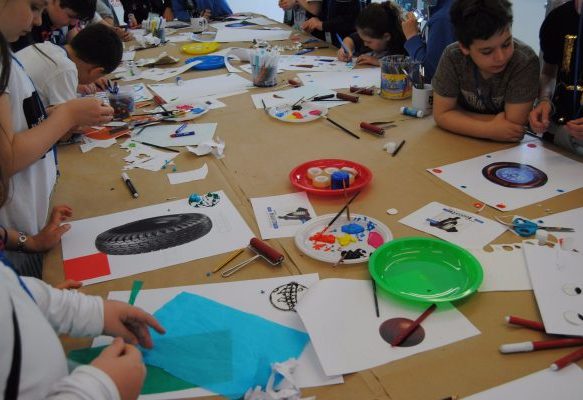
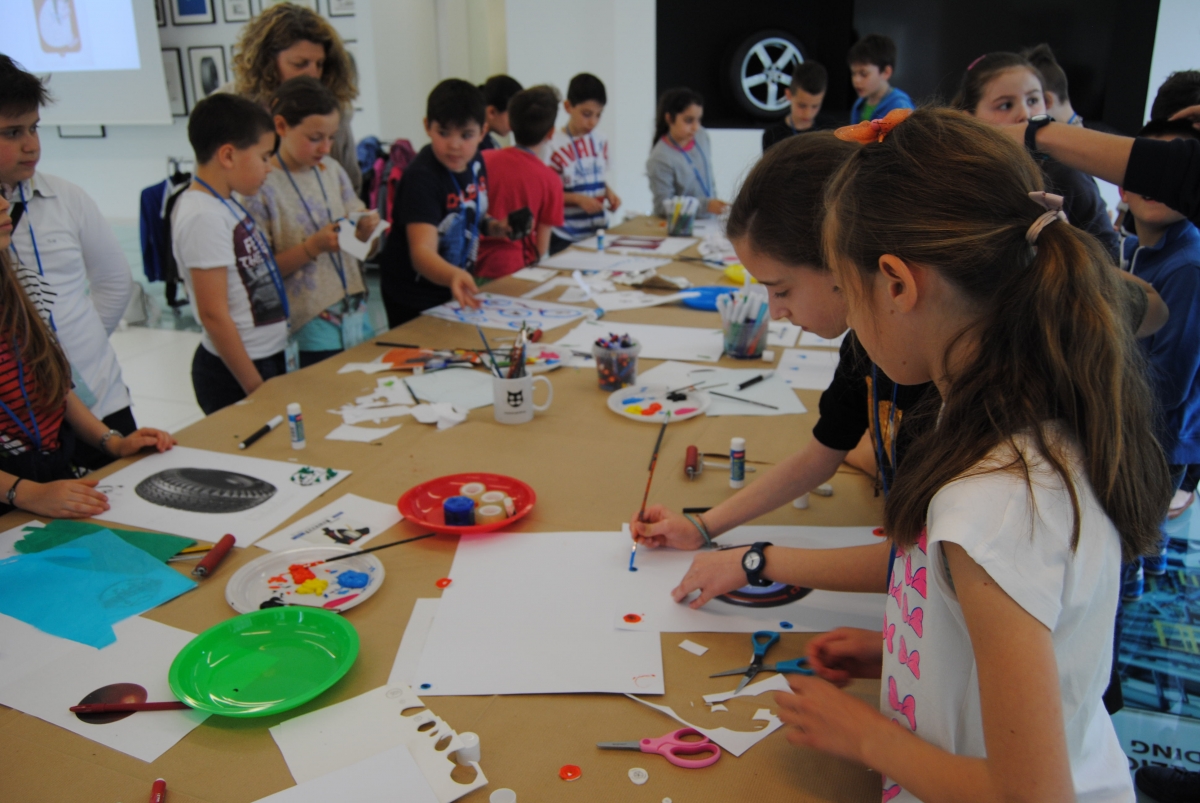
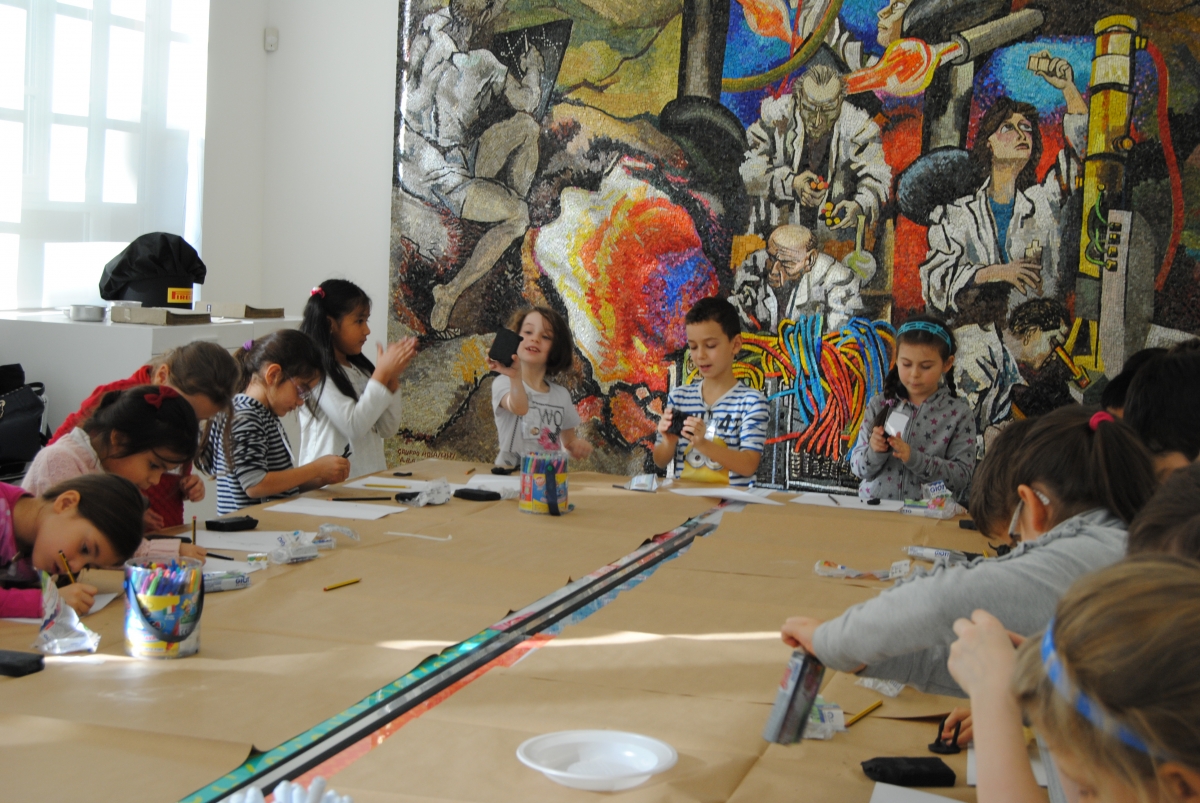
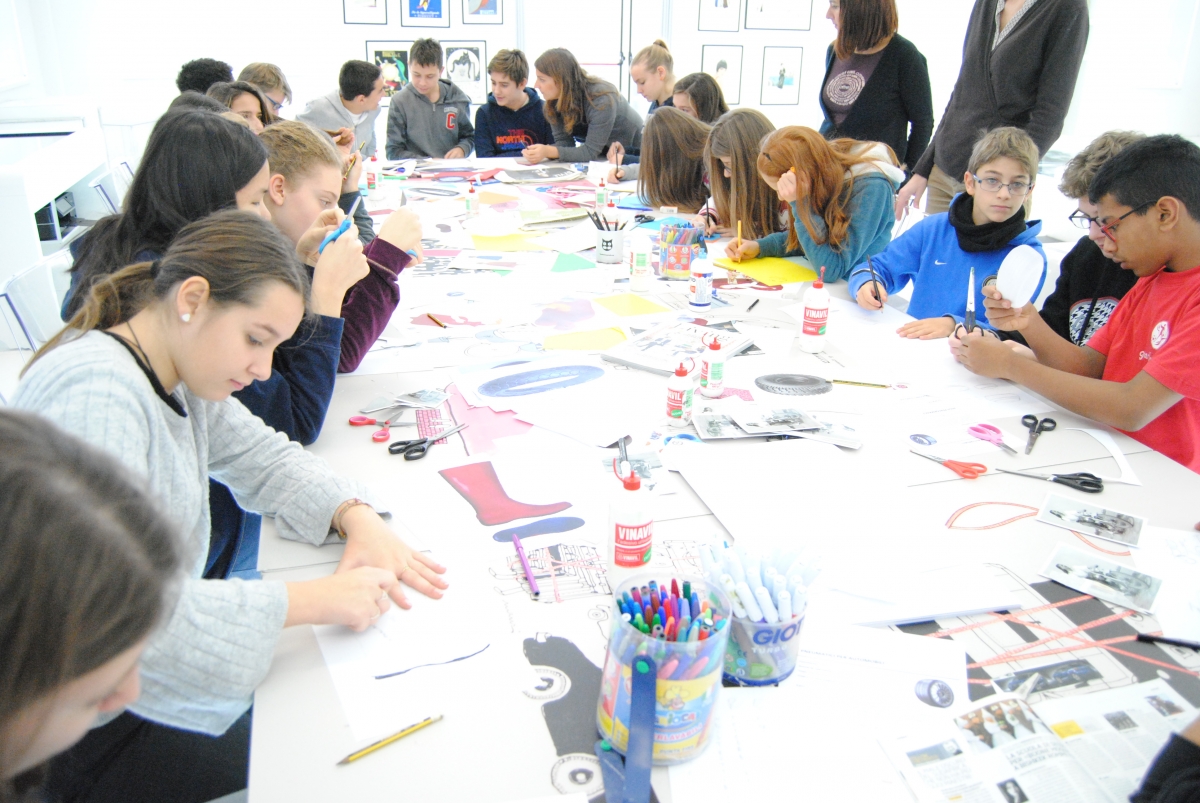
Pirelli Foundation Educational Courses

Select the education level of the school

Visit the Foundation

For information about the Foundation's activities, guided tours and accessibility, please call +39 0264423971 or fill in the form below, providing details of your request in the notes field.

Music and labour: Pirelli-MiTo concerts and the conversation between factory and culture

Building compatible behaviours, bringing people together, tuning instruments. Learning how to aggregate original expressions and dissonance. Making music. Organising labour. Creating symmetry. Building beauty. A product made with the hands or mind. This attempt to draw connections between industry and music, sound and labour, it is audacious? It is difficult, perhaps. But not impossible. If anything , it’s unusual but not audacious. The creativity that connects people and builds communities must always be built.

This is a subject close to Pirelli’s heart. It’s part of the history of the bonds Pirelli has forged between manufacturing and culture, and between technology and artistic narration, using every tool available to it. The advertising illustrators of old. Painters. Writers. Poets. Architects. Artists. Photographers. People of words and machines. Invoking essential values. The quality of work and interpersonal relations. The joy of a hard-working community that is receptive to research and change.

Let’s make music our focus this time. Let’s tell why Pirelli is resuming its partnership with MiTo. And why concerts are returning to the workplace, on the factory floor at Settimo Torinese industrial park in 2010, 2011 and 2014 and now at Pirelli HQ in Milan, to relive, and of course, also to renew, that sense of deep-rooted tradition.

We’ll see labour and its “sound”, the evocation of 19th century soundscapes (the “industrial century”), meticulous execution, and the pursuit of perfection all return as the same central themes as previous concerts. All summed up in a simple phrase: to produce, and to do it well. Finding and creating original, new harmonies. A challenge in constant evolution.

Pirelli has renewed its commitment to another of its self-imposed obligations: to restore music to its central role in popular culture, aware that people have never stopped loving classical music and, if anything, the younger generations in particular, are eager for more open, intense relations, charged with inventive and emotion. MiTo has always been central to this. The choice of Beethoven and his “sons”, starting with Schumann, are proof-positive of this: music that is not limited to the Baroque tradition of a violin, violoncello and piano trio and which gives form to the surge of what was once romantic modernity, in the innovative “counterpointing” and in the creation of chords narrating change in the world, heralding evolutions on the horizon. Extraordinary creativity. And meticulous execution. Times past and times future, just like we said. Metamorphosis. Once again, industry breeds culture and champions  all that is contemporary.

Where shall we start our exploration? From skills with something in common. The skills of manufacturing and machines. And of philosophical reasoning, as it seeks original interpretations to make sense of the complexities of society and evolving markets. And of the stories they tell. The skills to be found in R&D labs, where the grounds are laid for new products and new production, distribution and consumer systems. The skills of artistic creativity.

Worthy of note is sociologist Aldo Bonomi, for example, an exponent of “molecular capitalism theory”,  of the “infinite city”, a world crammed with intelligent and far-reaching manufacturing and service networks, of “In-finite capitalism”, in the transition from post-Fordism to fragmentation and the “liquid labour swamp”: for a recovery to be made,  “made in Italy” must be replaced with “remade in Italy”, and a fourth season inaugurated, in the wake of the cottage industry, factories and business parks.  Supply chains must enter an era in which the host territory becomes a source of value, held aloft as a common asset to be regenerated and no longer treated as merely a repository of knowledge, traditions and resources to be extracted, or contemplated purely in terms of growth of the quantitative kind, founded on local consumption and social dumping. It should be an era that recognizes the social and cooperative nature of investment in the knowledge economy. A world in which manufacturing, in order to rebuild the value base, must pollinate industrial culture with the scientific and social skills propagated by the creative in our society, professionals, young “digital natives”. In turn, if  their investment in vocational development is to translate into work and an associated income, they can no longer harbour the utopian idea of virtual and deindustrialised capitalism.” In other words, there must be a fusion of different skills within the production system. And dialogue between an industry’s inner and outer worlds.

This could also said in another way,  using the “Milano Steam” acronym for example.  Assolombarda, Lombardy’s association of industries,  decided to use the word Steam to represent the fusion of the city’s manufacturing and creative sectors, borrowing  the initial letters of Science, Technology, Engineering and Environment (the sustainable environment), and Arts. The latter comprises  the collective knowledge of the humanities, an area in which Italy excels, and manufacturing, also referred to as “the beautiful factory” of the high-tech industry in which creativity, research, production, and services measure their competitiveness against the exceptional ability to “make beautiful things that the world finds beautiful.” Milan is therefore a paradigm  for Italy, a country in which social capital, economic capital, scientific capital and aesthetic capital play as a team in the development game. Can all this be conveyed in a single word? “Harmony” – a musical word – might work.

This brings us back to the issue of dialogues between an industry’s inner and outer worlds, from Pirelli’s experiential perspective. How about another example? First, there are the workplaces animated by philosophical and scientific debate, as was the case when, in June 2013, Pirelli hosted a section of the “Milanesiana” in the group’s Bicocca HQ Auditorium. Directed by Elisabetta Sgarbi, the central theme of the concert was “Philosophy, Cinema, Secret” and welcomed among its cast Massimo Cacciari, Remo Bodei, Umberto Veronesi, Marco Bellocchio, Tzevan Todorov  and Emanuele Severino. Or we might want to mention the frequent sharing of experiences between artists working on giant installations in the HangarBicocca and Pirelli engineers and technicians working in Pirelli labs. Or the positive conversations between writers and artists to illustrate and enrich Pirelli’s annual accounts. Or the factory music events (more about that in a second)  held in Pirelli’s Settimo Torinese site, an industrial complex whose infrastructure and research labs were designed by Renzo Piano around the “beautiful factory” concept. The complex is in green belt territory (hence the nickname with obvious literary charm: “the factory in the cherry garden”) making it a transparent, safe, pleasant and ecologically forward-thinking location. Or industry itself, and the material it provides for industrial narratives that form the basis of books and theatrical productions  (such as the collaboration with Mondadori and Laterza, or with Piccolo Teatro di Milano, on “Settimo – La fabbrica e il lavoro” directed by Serena Sinigaglia and performed to a full house at Piccolo Teatro almost every night for three weeks in 2012). Or even the didactic exhibitions and projects that Pirelli Foundation has run in schools across Milan for thousand of pupils, in an effort to reaffirm and renew links between industry and education, labour and professional development. In each, there is an intermingling of knowledge and perspectives, and the questions raised by differing cultures are met with answers offering a wealth of “cross-fertilizations”.

It is intense stuff. The intention is to improve the quality of city life, seen as a place of visionary thinking and high-end production, within the context of the knowledge economy and, as suggested earlier, industry seen as the fulcrum of responsible development. It is another way of bringing business culture to the community and experiencing industry as a place of culture, open to culture and manufacturer of culture. It all amounts to a larger-than-life “manufacturing renaissance”, as it was so brilliantly named at a recent Aspen Institute Italia seminar held in the Bicocca Villa degli Arcimboldi. The event produced a very successful publication offering much food for thought on the subject of good business culture.

As we’ve said, modern businesses need a modern, namely new, culture. Something that echoes the making of products and the making of music, which brings us full circle. Tuning and harmonizing. Learning how to bring together consonances and, it goes without saying, also dissonances. Original harmonies. And discords which recompose.

It is a cultural proposition of fascinating proportions, and also the subject of a very useful book for men and women whose job has to do with industry: “Yes to the Mess: Surprising Leadership Lessons from Jazz” by Frank J. Barrett (the Italian translation has a wonderful and very insightful introduction by Severino Salvemini). What makes the book so interesting are the two identities Barrett occupies: management lecturer at Harvard and jazz pianist. Equally compelling are how his thoughts move confidently across the many levels at which the best business cultures manage to exist. Organisation and improvisation. Team play and the creative talent of the soloist. The repetition of a familiar note. The courage to break away from established patterns and explore new rhythms. Research and innovation, in other words. Built on a solid base of instrumental technique.

The ideas presented are recurring themes in the constant positing of ideas to find the most imaginative relations between industry and culture. Not to mention ever present in the attempt to make sense of the “industrial metamorphosis” that demands we continually seek new paradigms in order to change how we conceptualise production, products and consumption. In changing times, if we are to respond to the Great Crisis, we must be impartial about organisational forms and the relations between the people in them. Music, or jazz as we discussed, provide some answers. Really? Salvemini explains, “New business management models must be based on examples taken from new contexts which are less rigid than traditional ones.” The great historical examples of Miles Davis, Louis Armstrong, Charlie Parker and, more recently, the great Keith Jarrett, tell us that a great soloist needs the accompaniment of solid rhythm sections, a supporting orchestra or of a group of some kind (a trio, a quartet, etc.) able to anticipate, provoke, or to follow the soloist’s trumpet or piano: “The group supports its leader,” Salvemini insists, “as should also happen in an organisation in which cohesion and harmony reign.”

To be prolific, cultures need contrast. Or better still: they need hybridisation. This means the combination of languages, techniques, behaviours and ways of working. The mixing of words about doing and telling. Of machines, people, production and products. However you approach it, music is the perfect interpretative, and even narrative, tool.

Want more proof? Well, how about the experience of a string ensemble, the Italian Chamber Orchestra directed by Salvatore Accardo, an outstanding violinist of international standing who held two concert rehearsals a year, before going on tour, in the Pirelli HQ Auditorium in Milan. The rehearsals were open to all employees who used their break to check for themselves, in a live performance, what “playing a concert” and “building an execution” really mean. The performance sparked many conversations. About work. What it sounds like. About music. Not to mention the work that goes into playing it, the search for perfection (a common experience, known to both violinist and engineer, for whom Accardo was the ultimate ambassador during Pirelli’s Quality Week, in front of an audience of  production engineers and people. ) Produce, but do it well. Find and create original, new harmonies. That’s good business, isn’t it?

There’s another option in this ongoing intrigue, which is to renew the current calibre of classical music. And tie concerts, symphonies, sonatas to workplaces to produce “high” culture that is, at the same time, popular, as well as the extraordinary dimension of a highly original symphony, in which Italian culture, throughout the 20th century, gave Europe a constant supply of innovative elaboration and original fusions.

This is the sense, then, of the by now long-standing relationship between a  grand Italian and international organisation and the Verdi Orchestra, one of Milan’s leading international companies. And also with the Scala theatre, in a long season of its lifetime. Through such a prestigious a festival as MiTo Settembre Musica (nearly four weeks of concerts in Milan and Turin, for which there has often been, and still is, an active collaboration with Pirelli Foundation.)

The value of factory concerts, like the ones held in the Settimo Torinese industrial complex (the last one was 19 September 2014) where thousands of people gave the Turin Philharmonic Orchestra, directed by Micha Hamel, a standing ovation for its performance of two Beethoven symphonies, the First and Seventh, can’t be emphasized enough. “La Settima a Settimo” – Beethoven’s masterpiece, his 7th symphony ”, as it was so brilliantly called. Beethoven played with robots worked and research labs buzzed in Pirelli’s cutting-edge plant. Incidentally, Europe has a tradition of tying music to places of work. Take the workers’ concerts of 20th century Vienna: classical performances were played to new audiences,  spectators who were not traditional middle-class concert-goers, and the compositions were at, for that period, contemporary (just one example: Mahler’s symphonies directed by the young Webern.) This was also the Italy of the 60s and 70s, and the work of musicians like Luigi Nono, Claudio Abbado and Maurizio Pollini , who used their different sensibilities and experiences to “illuminate the factory”.

[Best_Wordpress_Gallery id=”41″ gal_title=”MIto 2014″]

There is a deep bond, after all, between doing business responsibly and making music. Central to the issue are themes like work and what it sounds like, the effort of execution, the pursuit of perfection, in the knowledge that factories are made of people at work, gestures of agile, able hands and the movements of machines. Factories are rhythm. Voices and noises. Noises which become sounds. Factories have their own music. And music can enter factories. Industries have their own culture. And culture can, indeed it must, find a place in industry. In short? Produce, but do it well. Find and create original, new harmonies.

Which brings us back to the combination of tradition and innovation. The choice of Beethoven (for the September 2014 concert) is proof-positive of this: his music has firm roots in the best 18th century canon; he interprets a lively romantic modernity and represents the monumental status of “classical” while also foreshadowing compositions to come many decades after him. Extraordinary creativity. And meticulous orchestration.

The location selected is also hugely significant. After the Great Crisis, industry resumed its place at the heart of the economy. The Settimo facility is proof of how factories have changed and developed, with the adoption of sophisticated technologies. Metamorphosis. Industry breeds culture and champions  all that is contemporary. “Staging a concert in a factory,” said director Micha Hamel, orchestra director of the “Settima a Settimo” concert, “is a singular experience and also a sign that something new is taking place. Music is entering an unusual place. Boundaries are being broken. Artistically speaking, it is a very important concept.”

It was precisely this realization that inspired the entire music-in-a-factory experience. From the very first concert, back on 13 September 2010, in the old Pirelli plant on the eve of its closure (to give way to the new complex). On the stage were the Turin Wind Ensemble and musicians from the Rai Torinese Symphonic Orchestra. In the background were tyres produced in the plant. In the audience, the industrial forecourt, were more than four hundred people. All there to hear music by Mozart, Bach and Beethoven, Berio and Gabrieli, Saglietti and Stravinsky: music from the 1700s to modern-day. Double the significance: of sound and place. It was a concert for brass, the instruments echoing the metal, a symbolic relation to the metal used to make cars. It was a game of harmonies, evoking what work can and should be, even when the harmony is difficult to achieve.

[Best_Wordpress_Gallery id=”42″ gal_title=”MIto 2010″]

Now that latest generation technologies make the workplace a more varied, rich and complex place, music can find a new space, and a more intense contemporary role. Bringing classical back. And adding original evocations to the contemporary. Innovation is also a language.

At the second concert, held on 9 September 2011, the orchestra was the Pomeriggi Musicali di Milano, directed by Luca Pfaff. The venue was the large warehouse space in the new industrial complex. The sounds of machines at work, a faint echo, could be heard in the distance. It was a factory after all. Playing to an audience of 700 people, the orchestra performed Stravinsky, Milhaud, Honegger and De Falla. It was the music of the 1900s. The century of great change. And of industry, a complexity that monopolized innovation, caused serious upheaval, involved millions of men and women: a world of brand-new responsibilities, struggles to take centre stage and  the reclaiming of rights and obligations. The 20th century was all about words, pictures and movement. Noises -and sounds – that had never been heard before.  Literature, figurative art, music were deconstructed then put back together again. Classic forms faded from existence. Research was the new form, and it has continued into our present, uncertain age.

[Best_Wordpress_Gallery id=”38″ gal_title=”Mito 2011″]

To reflect upon the 20th century, with the music it brought to the factory floor, means  more than just critically examining our recent origins; it also means trying to build a new epistemology of post-modernity, and tracing a futuristic map of a better future. To chart a world in movement. Listening to music helps, it can bring comprehension to the deep sense of change, both in work and in its associated relations. Business culture is building a theme tune, starting from the notes of Beethoven at the Settimo concert. Classic symphony and contemporary presence.

Contemporary presence, of course. We see it again in the MiTo theme  for 2016: “Fathers and sons”, or rather,  Beethoven and Schumann in the Auditorium concert. It is a theme to be re-explored and revisited, a baton being passed, from the “classical” to the experimentation which prefigured the decompositions of the 20th century. Times past and times future. And metamorphosis. As applied to creation; to narration; to labour. Besides, it’s what our laborious, controversial, painful modernity is made of: metamorphosis. But it’s happy, too, in the sparks, as it looks to the future.

Music and labour: Pirelli-MiTo concerts and the conversation between factory and culture

Building compatible behaviours, bringing people together, tuning instruments. Learning how to aggregate original expressions and dissonance. Making music. Organising labour. Creating symmetry. Building beauty. A product made with the hands or mind. This attempt to draw connections between industry and music, sound and labour, it is audacious? It is difficult, perhaps. But not impossible. If anything , it’s unusual but not audacious. The creativity that connects people and builds communities must always be built.

This is a subject close to Pirelli’s heart. It’s part of the history of the bonds Pirelli has forged between manufacturing and culture, and between technology and artistic narration, using every tool available to it. The advertising illustrators of old. Painters. Writers. Poets. Architects. Artists. Photographers. People of words and machines. Invoking essential values. The quality of work and interpersonal relations. The joy of a hard-working community that is receptive to research and change.

Let’s make music our focus this time. Let’s tell why Pirelli is resuming its partnership with MiTo. And why concerts are returning to the workplace, on the factory floor at Settimo Torinese industrial park in 2010, 2011 and 2014 and now at Pirelli HQ in Milan, to relive, and of course, also to renew, that sense of deep-rooted tradition.

We’ll see labour and its “sound”, the evocation of 19th century soundscapes (the “industrial century”), meticulous execution, and the pursuit of perfection all return as the same central themes as previous concerts. All summed up in a simple phrase: to produce, and to do it well. Finding and creating original, new harmonies. A challenge in constant evolution.

Pirelli has renewed its commitment to another of its self-imposed obligations: to restore music to its central role in popular culture, aware that people have never stopped loving classical music and, if anything, the younger generations in particular, are eager for more open, intense relations, charged with inventive and emotion. MiTo has always been central to this. The choice of Beethoven and his “sons”, starting with Schumann, are proof-positive of this: music that is not limited to the Baroque tradition of a violin, violoncello and piano trio and which gives form to the surge of what was once romantic modernity, in the innovative “counterpointing” and in the creation of chords narrating change in the world, heralding evolutions on the horizon. Extraordinary creativity. And meticulous execution. Times past and times future, just like we said. Metamorphosis. Once again, industry breeds culture and champions  all that is contemporary.

Where shall we start our exploration? From skills with something in common. The skills of manufacturing and machines. And of philosophical reasoning, as it seeks original interpretations to make sense of the complexities of society and evolving markets. And of the stories they tell. The skills to be found in R&D labs, where the grounds are laid for new products and new production, distribution and consumer systems. The skills of artistic creativity.

Worthy of note is sociologist Aldo Bonomi, for example, an exponent of “molecular capitalism theory”,  of the “infinite city”, a world crammed with intelligent and far-reaching manufacturing and service networks, of “In-finite capitalism”, in the transition from post-Fordism to fragmentation and the “liquid labour swamp”: for a recovery to be made,  “made in Italy” must be replaced with “remade in Italy”, and a fourth season inaugurated, in the wake of the cottage industry, factories and business parks.  Supply chains must enter an era in which the host territory becomes a source of value, held aloft as a common asset to be regenerated and no longer treated as merely a repository of knowledge, traditions and resources to be extracted, or contemplated purely in terms of growth of the quantitative kind, founded on local consumption and social dumping. It should be an era that recognizes the social and cooperative nature of investment in the knowledge economy. A world in which manufacturing, in order to rebuild the value base, must pollinate industrial culture with the scientific and social skills propagated by the creative in our society, professionals, young “digital natives”. In turn, if  their investment in vocational development is to translate into work and an associated income, they can no longer harbour the utopian idea of virtual and deindustrialised capitalism.” In other words, there must be a fusion of different skills within the production system. And dialogue between an industry’s inner and outer worlds.

This could also said in another way,  using the “Milano Steam” acronym for example.  Assolombarda, Lombardy’s association of industries,  decided to use the word Steam to represent the fusion of the city’s manufacturing and creative sectors, borrowing  the initial letters of Science, Technology, Engineering and Environment (the sustainable environment), and Arts. The latter comprises  the collective knowledge of the humanities, an area in which Italy excels, and manufacturing, also referred to as “the beautiful factory” of the high-tech industry in which creativity, research, production, and services measure their competitiveness against the exceptional ability to “make beautiful things that the world finds beautiful.” Milan is therefore a paradigm  for Italy, a country in which social capital, economic capital, scientific capital and aesthetic capital play as a team in the development game. Can all this be conveyed in a single word? “Harmony” – a musical word – might work.

This brings us back to the issue of dialogues between an industry’s inner and outer worlds, from Pirelli’s experiential perspective. How about another example? First, there are the workplaces animated by philosophical and scientific debate, as was the case when, in June 2013, Pirelli hosted a section of the “Milanesiana” in the group’s Bicocca HQ Auditorium. Directed by Elisabetta Sgarbi, the central theme of the concert was “Philosophy, Cinema, Secret” and welcomed among its cast Massimo Cacciari, Remo Bodei, Umberto Veronesi, Marco Bellocchio, Tzevan Todorov  and Emanuele Severino. Or we might want to mention the frequent sharing of experiences between artists working on giant installations in the HangarBicocca and Pirelli engineers and technicians working in Pirelli labs. Or the positive conversations between writers and artists to illustrate and enrich Pirelli’s annual accounts. Or the factory music events (more about that in a second)  held in Pirelli’s Settimo Torinese site, an industrial complex whose infrastructure and research labs were designed by Renzo Piano around the “beautiful factory” concept. The complex is in green belt territory (hence the nickname with obvious literary charm: “the factory in the cherry garden”) making it a transparent, safe, pleasant and ecologically forward-thinking location. Or industry itself, and the material it provides for industrial narratives that form the basis of books and theatrical productions  (such as the collaboration with Mondadori and Laterza, or with Piccolo Teatro di Milano, on “Settimo – La fabbrica e il lavoro” directed by Serena Sinigaglia and performed to a full house at Piccolo Teatro almost every night for three weeks in 2012). Or even the didactic exhibitions and projects that Pirelli Foundation has run in schools across Milan for thousand of pupils, in an effort to reaffirm and renew links between industry and education, labour and professional development. In each, there is an intermingling of knowledge and perspectives, and the questions raised by differing cultures are met with answers offering a wealth of “cross-fertilizations”.

It is intense stuff. The intention is to improve the quality of city life, seen as a place of visionary thinking and high-end production, within the context of the knowledge economy and, as suggested earlier, industry seen as the fulcrum of responsible development. It is another way of bringing business culture to the community and experiencing industry as a place of culture, open to culture and manufacturer of culture. It all amounts to a larger-than-life “manufacturing renaissance”, as it was so brilliantly named at a recent Aspen Institute Italia seminar held in the Bicocca Villa degli Arcimboldi. The event produced a very successful publication offering much food for thought on the subject of good business culture.

As we’ve said, modern businesses need a modern, namely new, culture. Something that echoes the making of products and the making of music, which brings us full circle. Tuning and harmonizing. Learning how to bring together consonances and, it goes without saying, also dissonances. Original harmonies. And discords which recompose.

It is a cultural proposition of fascinating proportions, and also the subject of a very useful book for men and women whose job has to do with industry: “Yes to the Mess: Surprising Leadership Lessons from Jazz” by Frank J. Barrett (the Italian translation has a wonderful and very insightful introduction by Severino Salvemini). What makes the book so interesting are the two identities Barrett occupies: management lecturer at Harvard and jazz pianist. Equally compelling are how his thoughts move confidently across the many levels at which the best business cultures manage to exist. Organisation and improvisation. Team play and the creative talent of the soloist. The repetition of a familiar note. The courage to break away from established patterns and explore new rhythms. Research and innovation, in other words. Built on a solid base of instrumental technique.

The ideas presented are recurring themes in the constant positing of ideas to find the most imaginative relations between industry and culture. Not to mention ever present in the attempt to make sense of the “industrial metamorphosis” that demands we continually seek new paradigms in order to change how we conceptualise production, products and consumption. In changing times, if we are to respond to the Great Crisis, we must be impartial about organisational forms and the relations between the people in them. Music, or jazz as we discussed, provide some answers. Really? Salvemini explains, “New business management models must be based on examples taken from new contexts which are less rigid than traditional ones.” The great historical examples of Miles Davis, Louis Armstrong, Charlie Parker and, more recently, the great Keith Jarrett, tell us that a great soloist needs the accompaniment of solid rhythm sections, a supporting orchestra or of a group of some kind (a trio, a quartet, etc.) able to anticipate, provoke, or to follow the soloist’s trumpet or piano: “The group supports its leader,” Salvemini insists, “as should also happen in an organisation in which cohesion and harmony reign.”

To be prolific, cultures need contrast. Or better still: they need hybridisation. This means the combination of languages, techniques, behaviours and ways of working. The mixing of words about doing and telling. Of machines, people, production and products. However you approach it, music is the perfect interpretative, and even narrative, tool.

Want more proof? Well, how about the experience of a string ensemble, the Italian Chamber Orchestra directed by Salvatore Accardo, an outstanding violinist of international standing who held two concert rehearsals a year, before going on tour, in the Pirelli HQ Auditorium in Milan. The rehearsals were open to all employees who used their break to check for themselves, in a live performance, what “playing a concert” and “building an execution” really mean. The performance sparked many conversations. About work. What it sounds like. About music. Not to mention the work that goes into playing it, the search for perfection (a common experience, known to both violinist and engineer, for whom Accardo was the ultimate ambassador during Pirelli’s Quality Week, in front of an audience of  production engineers and people. ) Produce, but do it well. Find and create original, new harmonies. That’s good business, isn’t it?

There’s another option in this ongoing intrigue, which is to renew the current calibre of classical music. And tie concerts, symphonies, sonatas to workplaces to produce “high” culture that is, at the same time, popular, as well as the extraordinary dimension of a highly original symphony, in which Italian culture, throughout the 20th century, gave Europe a constant supply of innovative elaboration and original fusions.

This is the sense, then, of the by now long-standing relationship between a  grand Italian and international organisation and the Verdi Orchestra, one of Milan’s leading international companies. And also with the Scala theatre, in a long season of its lifetime. Through such a prestigious a festival as MiTo Settembre Musica (nearly four weeks of concerts in Milan and Turin, for which there has often been, and still is, an active collaboration with Pirelli Foundation.)

The value of factory concerts, like the ones held in the Settimo Torinese industrial complex (the last one was 19 September 2014) where thousands of people gave the Turin Philharmonic Orchestra, directed by Micha Hamel, a standing ovation for its performance of two Beethoven symphonies, the First and Seventh, can’t be emphasized enough. “La Settima a Settimo” – Beethoven’s masterpiece, his 7th symphony ”, as it was so brilliantly called. Beethoven played with robots worked and research labs buzzed in Pirelli’s cutting-edge plant. Incidentally, Europe has a tradition of tying music to places of work. Take the workers’ concerts of 20th century Vienna: classical performances were played to new audiences,  spectators who were not traditional middle-class concert-goers, and the compositions were at, for that period, contemporary (just one example: Mahler’s symphonies directed by the young Webern.) This was also the Italy of the 60s and 70s, and the work of musicians like Luigi Nono, Claudio Abbado and Maurizio Pollini , who used their different sensibilities and experiences to “illuminate the factory”.

[Best_Wordpress_Gallery id=”41″ gal_title=”MIto 2014″]

There is a deep bond, after all, between doing business responsibly and making music. Central to the issue are themes like work and what it sounds like, the effort of execution, the pursuit of perfection, in the knowledge that factories are made of people at work, gestures of agile, able hands and the movements of machines. Factories are rhythm. Voices and noises. Noises which become sounds. Factories have their own music. And music can enter factories. Industries have their own culture. And culture can, indeed it must, find a place in industry. In short? Produce, but do it well. Find and create original, new harmonies.

Which brings us back to the combination of tradition and innovation. The choice of Beethoven (for the September 2014 concert) is proof-positive of this: his music has firm roots in the best 18th century canon; he interprets a lively romantic modernity and represents the monumental status of “classical” while also foreshadowing compositions to come many decades after him. Extraordinary creativity. And meticulous orchestration.

The location selected is also hugely significant. After the Great Crisis, industry resumed its place at the heart of the economy. The Settimo facility is proof of how factories have changed and developed, with the adoption of sophisticated technologies. Metamorphosis. Industry breeds culture and champions  all that is contemporary. “Staging a concert in a factory,” said director Micha Hamel, orchestra director of the “Settima a Settimo” concert, “is a singular experience and also a sign that something new is taking place. Music is entering an unusual place. Boundaries are being broken. Artistically speaking, it is a very important concept.”

It was precisely this realization that inspired the entire music-in-a-factory experience. From the very first concert, back on 13 September 2010, in the old Pirelli plant on the eve of its closure (to give way to the new complex). On the stage were the Turin Wind Ensemble and musicians from the Rai Torinese Symphonic Orchestra. In the background were tyres produced in the plant. In the audience, the industrial forecourt, were more than four hundred people. All there to hear music by Mozart, Bach and Beethoven, Berio and Gabrieli, Saglietti and Stravinsky: music from the 1700s to modern-day. Double the significance: of sound and place. It was a concert for brass, the instruments echoing the metal, a symbolic relation to the metal used to make cars. It was a game of harmonies, evoking what work can and should be, even when the harmony is difficult to achieve.

[Best_Wordpress_Gallery id=”42″ gal_title=”MIto 2010″]

Now that latest generation technologies make the workplace a more varied, rich and complex place, music can find a new space, and a more intense contemporary role. Bringing classical back. And adding original evocations to the contemporary. Innovation is also a language.

At the second concert, held on 9 September 2011, the orchestra was the Pomeriggi Musicali di Milano, directed by Luca Pfaff. The venue was the large warehouse space in the new industrial complex. The sounds of machines at work, a faint echo, could be heard in the distance. It was a factory after all. Playing to an audience of 700 people, the orchestra performed Stravinsky, Milhaud, Honegger and De Falla. It was the music of the 1900s. The century of great change. And of industry, a complexity that monopolized innovation, caused serious upheaval, involved millions of men and women: a world of brand-new responsibilities, struggles to take centre stage and  the reclaiming of rights and obligations. The 20th century was all about words, pictures and movement. Noises -and sounds – that had never been heard before.  Literature, figurative art, music were deconstructed then put back together again. Classic forms faded from existence. Research was the new form, and it has continued into our present, uncertain age.

[Best_Wordpress_Gallery id=”38″ gal_title=”Mito 2011″]

To reflect upon the 20th century, with the music it brought to the factory floor, means  more than just critically examining our recent origins; it also means trying to build a new epistemology of post-modernity, and tracing a futuristic map of a better future. To chart a world in movement. Listening to music helps, it can bring comprehension to the deep sense of change, both in work and in its associated relations. Business culture is building a theme tune, starting from the notes of Beethoven at the Settimo concert. Classic symphony and contemporary presence.

Contemporary presence, of course. We see it again in the MiTo theme  for 2016: “Fathers and sons”, or rather,  Beethoven and Schumann in the Auditorium concert. It is a theme to be re-explored and revisited, a baton being passed, from the “classical” to the experimentation which prefigured the decompositions of the 20th century. Times past and times future. And metamorphosis. As applied to creation; to narration; to labour. Besides, it’s what our laborious, controversial, painful modernity is made of: metamorphosis. But it’s happy, too, in the sparks, as it looks to the future.

Pirelli and the five Circles

Friday, August 5: official opening of the XXXI Olympic Games in Rio de Janeiro. Traditionally engaged in all sport disciplines, Pirelli has always enjoyed a particularly fruitful relationship with the Olympics. Many athletes have competed using equipment made by Pirelli, several advertising have been inspired by the Olympics, a famous calendar was dedicated to the Games – and some Olympic champions were Pirelli employees. One of these – maybe the greatest of all – was London ’48 gold medallist Adolfo Consolini.

Adolfo Consolini’s gold discus

The London Olympics, 2 August 1948. With a distance of 52.23 metres, Italian athlete Adolfo Consolini won the discus throwing gold medal: he was at the pinnacle of a career which would make him one of the greatest Italian sportsmen of all times. When he was not donning the blue jersey of team Italy, “gentle giant” Consolini was training on the Pro Patria field opposite the Bicocca plant wearing the Pirelli Sports Group uniform with the stretched P emblem. Four Olympic Games, three world records, Italian record holder for 17 years, 375 competitions won in a thirty-year-long career: discus thrower Adolfo Consolini put the stamp of the stretched P on the Olympic Five Circles for ever.

Rubber at the Olympic Games in Rome

Sports and correlated events fostered the production of new rubber items and novel building materials for erecting new sports facilities. For the 1960 Olympics in Rome, Pirelli was involved in the building of the Corso Francia flyover, connecting the Flaminio bridge to the stadium area with the installation of 1200 “Cargo” neoprene rubber blocks. The floors of the Swimming Stadium at the Foro Italico and some interiors of the Palazzo dello Sport indoor arena were covered with “Miplac” flooring made by Linoleum. The large airport terminal in Rome, opened for the occasion, was equipped with 230 square metres of “Afolin” soundproofing panels and 32,585 square metres of rubber floors to welcome the world’s athletes.

The Olympic cartoons Babbut, Mammut and Figliut

The July 1964 cover of “Pivendere” – the Pirelli newsletter dedicated to retailers – showed an clumsy Olympic athlete attempting a pole vault jump which will probably end in disaster. The athlete was Babbut, the blundering caveman who with his wife Mammut and child Figliut had been appearing in the hugely popular Pirelli TV commercials for several years. All not-so-young Italians will remember the cartoon starring a quintessentially Milanese traffic warden (turned referee in the Olympics version) who at the end cautioned the three troublemakers declaring “ué cavernicoli, non siamo più all’età della pietra!” (“Ohi, cavemen, this isn’t the Stone Age any more!”) going on to explain that in modern times Pirelli has invented foam rubber and Sempione tyres with safety sidewall.

Carl Lewis’ magic rubber foot

When photographer Annie Leibowitz famously depicted him at the starting blocks of the 100 metres race in red pumps for the “Power is nothing without control” campaign in 1994, Carl Lewis was one of greatest Olympians of all times. Long jump and running were the disciplines in which King Carl won it all: four gold medals in Los Angeles ’84, two golds and one silver in Seoul ’88 and two more golds in Barcelona ’92. He would take gold medal number nine four years later, in Atlanta in ’96. Four Olympics, ten medals: Pirelli was closely linked to the Son of the Wind’s relationship with the Five Circles.

In 1997, Carl Lewis passed Pirelli’s ideal Olympic baton to the French track and field sprinter Marie-José Pérec. She continued the race started by the Son of the Wind in the commercial directed by Gerard de Thame, sprinting across glaciers and volcanoes, on water and sand, chased by frightening special-effects monsters. She ultimately escaped by jumping onto the top of the Totem Pole, the majestic stone column in Monument Valley, Utah. Once again, like Carl Lewis before her, she had wings on her feet and could rely on Pirelli treads. And Marie-José had shown the world that she really did have wings on her feet at the Olympic Games in Barcelona 1992 when she took the 400 metre gold, and again in Atlanta 1996, winning the 200 and 400 metre races. So, once again in 1997, an Olympian at the pinnacle of her career reminded the world that “Power is nothing without control”.

The artist’s return to Olympia

Created by Arthur Elgort and shot in Siviglia, the 1990 calendar was a celebration of Olympia and its physicality, naturally all in female form. Track, fencing, discus and javelin throwing, archery and relay, with the Olympic flame on the highest step of the podium: the arena walls were grey and gigantic, the race was dusty. The prize, a  laurel wreath. The athletes of the 1990 Pirelli calendar wore simple loincloths decorated with cryptic symbols that one may be led to believe tell the legendary story of Olympia and the Games. Unknown to most, it was the tread pattern of the Pirelli P600 tyre.

Pirelli and the five Circles

Friday, August 5: official opening of the XXXI Olympic Games in Rio de Janeiro. Traditionally engaged in all sport disciplines, Pirelli has always enjoyed a particularly fruitful relationship with the Olympics. Many athletes have competed using equipment made by Pirelli, several advertising have been inspired by the Olympics, a famous calendar was dedicated to the Games – and some Olympic champions were Pirelli employees. One of these – maybe the greatest of all – was London ’48 gold medallist Adolfo Consolini.

Adolfo Consolini’s gold discus

The London Olympics, 2 August 1948. With a distance of 52.23 metres, Italian athlete Adolfo Consolini won the discus throwing gold medal: he was at the pinnacle of a career which would make him one of the greatest Italian sportsmen of all times. When he was not donning the blue jersey of team Italy, “gentle giant” Consolini was training on the Pro Patria field opposite the Bicocca plant wearing the Pirelli Sports Group uniform with the stretched P emblem. Four Olympic Games, three world records, Italian record holder for 17 years, 375 competitions won in a thirty-year-long career: discus thrower Adolfo Consolini put the stamp of the stretched P on the Olympic Five Circles for ever.

Rubber at the Olympic Games in Rome

Sports and correlated events fostered the production of new rubber items and novel building materials for erecting new sports facilities. For the 1960 Olympics in Rome, Pirelli was involved in the building of the Corso Francia flyover, connecting the Flaminio bridge to the stadium area with the installation of 1200 “Cargo” neoprene rubber blocks. The floors of the Swimming Stadium at the Foro Italico and some interiors of the Palazzo dello Sport indoor arena were covered with “Miplac” flooring made by Linoleum. The large airport terminal in Rome, opened for the occasion, was equipped with 230 square metres of “Afolin” soundproofing panels and 32,585 square metres of rubber floors to welcome the world’s athletes.

The Olympic cartoons Babbut, Mammut and Figliut

The July 1964 cover of “Pivendere” – the Pirelli newsletter dedicated to retailers – showed an clumsy Olympic athlete attempting a pole vault jump which will probably end in disaster. The athlete was Babbut, the blundering caveman who with his wife Mammut and child Figliut had been appearing in the hugely popular Pirelli TV commercials for several years. All not-so-young Italians will remember the cartoon starring a quintessentially Milanese traffic warden (turned referee in the Olympics version) who at the end cautioned the three troublemakers declaring “ué cavernicoli, non siamo più all’età della pietra!” (“Ohi, cavemen, this isn’t the Stone Age any more!”) going on to explain that in modern times Pirelli has invented foam rubber and Sempione tyres with safety sidewall.

Carl Lewis’ magic rubber foot

When photographer Annie Leibowitz famously depicted him at the starting blocks of the 100 metres race in red pumps for the “Power is nothing without control” campaign in 1994, Carl Lewis was one of greatest Olympians of all times. Long jump and running were the disciplines in which King Carl won it all: four gold medals in Los Angeles ’84, two golds and one silver in Seoul ’88 and two more golds in Barcelona ’92. He would take gold medal number nine four years later, in Atlanta in ’96. Four Olympics, ten medals: Pirelli was closely linked to the Son of the Wind’s relationship with the Five Circles.

In 1997, Carl Lewis passed Pirelli’s ideal Olympic baton to the French track and field sprinter Marie-José Pérec. She continued the race started by the Son of the Wind in the commercial directed by Gerard de Thame, sprinting across glaciers and volcanoes, on water and sand, chased by frightening special-effects monsters. She ultimately escaped by jumping onto the top of the Totem Pole, the majestic stone column in Monument Valley, Utah. Once again, like Carl Lewis before her, she had wings on her feet and could rely on Pirelli treads. And Marie-José had shown the world that she really did have wings on her feet at the Olympic Games in Barcelona 1992 when she took the 400 metre gold, and again in Atlanta 1996, winning the 200 and 400 metre races. So, once again in 1997, an Olympian at the pinnacle of her career reminded the world that “Power is nothing without control”.

The artist’s return to Olympia

Created by Arthur Elgort and shot in Siviglia, the 1990 calendar was a celebration of Olympia and its physicality, naturally all in female form. Track, fencing, discus and javelin throwing, archery and relay, with the Olympic flame on the highest step of the podium: the arena walls were grey and gigantic, the race was dusty. The prize, a  laurel wreath. The athletes of the 1990 Pirelli calendar wore simple loincloths decorated with cryptic symbols that one may be led to believe tell the legendary story of Olympia and the Games. Unknown to most, it was the tread pattern of the Pirelli P600 tyre.

Multimedia

Images

Milan, the smart and “STEAM” city, with the State University and Human Technopole in the former Expo area

One step forward, for Milan as the “smart” and “steam” metropolis, a smart and innovative city. But also an attractive city, for major EU agencies and for international investments following the Brexit crisis. What step forward, exactly? The State University, with its scientific faculties, decided last week that it will be moving to the Expo area, beside Human Technopole, the large centre that specialises in life sciences and genomics, nanotechnologies and big data. And here it is, the development prospects of innovation, research and training, the new combination of “knowing” and “doing” that has always distinguished Milan throughout history and which is now in a position to keep up with ever-changing times. Indeed, the future of the “STEAM city”, to the use the acronym that is dear to Assolombarda (we have mentioned in several times in this blog), discussing science, technology, the environment and also education, arts (the entire sophisticated group of arts and creative knowledge) and manufacturing: a hot-pot of know-how, skills and abilities to develop that involve public and private institutions, companies, research centres, “social capital” that is supplemented by “scientific capital” and can have an extraordinary competitive force, within the context of a Europe that is redefining roles, powers and functions.

The decision concretely to proceed with the new university campus, which was made on 19th July by the board of directors of the State University and by the academic Senate, envisages 380 million Euros’ worth of investments (public university funding, as well as a contribution by the Cassa Depositi e Prestiti – Deposits and Loans Fund) to build a large campus with lecture theatres, laboratories and facilities for 18 thousand students and approximately 2 thousand researchers, spanning an area of 150 thousand square metres. All of which should be completed by 2020/2021. This is a major urban planning, design and scientific gamble. With a strong awareness that within the new panoramas of international competition, universities can be seen as major developmental leverage: well prepared youths, scientists, researchers, creatives. People who use intelligence and entrepreneurship as the key for growth. Milan boasts a generous ten universities, which are for the most part outstanding. With around 200 thousand students, 13 thousand of which foreign (this figure is destined to grow rapidly).

The State University will therefore be the main tenant of the Rho-Pero area, therefore embodying a project for the use of large spaces which, following the success of Expo2015, represent developmental leverage in terms of material and immaterial infrastructure, connections and transport and services along the strategic axis between Milan and Turin, the heart of the highly productive and innovative North-West of Italy. But, together with the university, there will also be Human Technopole, with all its technological platforms which pool together the various competencies of genomics (oncology, neuro-vegetative disorders, food science, cutting-edge pharmaceuticals, but also the management of all the mega-data concerning society, medicine and research). The multinational headquarters of Bayer, Roche and IBM (again, pharmaceutical, chemical and IT competencies). Centres for start-up companies, with a strong ability to attract scientific and entrepreneurial talents on an international scale. As well as cultural hotspots: La Scala could move its warehouses, production workshops and Academy activities there. An original blend. With all likelihood of becoming a European excellence.

The challenge is dear to many entities, both local, national and international. Renzi’s government, first and foremost, who was among the first supporters of having the Human Technopole in the Expo area, setting aside 150 million Euros for research for the project (albeit among much controversy in the scientific world). The State University, which gradually won the consent of the other universities across Milan. Assolombarda, ready to make the most of this opportunity for innovative manufacturing tied to training and research and to the re-launching of the “health supply chain”, industry and quality of life and of the environment. A qualified group of multinationals. As well as the Lombardy Region. Along with the Municipality of Milan, with the undoubting commitment of the new mayor Beppe Sala.

A difficult challenge, obviously. To be played out in terms of time frames (everything must be ready within a short time span of just five years), quality of constructions (Anac, the anti-corruption authority guided by Raffaele Cantone promised its commitment to oversee the accuracy and legality of tenders, as it previously did for Expo). In terms of economic prospects. But also a possible challenge, in a metropolis that has some sound trump cards to play in terms of attractiveness, production and financial investments, as well as for the location of large EU agencies, following the Brexit crisis.

Milan is “the place to be”, as the international media declared during the Expo season. The attraction remains and with the new plans, which we have already mentioned, it can continue to grow. In short, Milan could be the European capital.

Milan, the smart and “STEAM” city, with the State University and Human Technopole in the former Expo area

One step forward, for Milan as the “smart” and “steam” metropolis, a smart and innovative city. But also an attractive city, for major EU agencies and for international investments following the Brexit crisis. What step forward, exactly? The State University, with its scientific faculties, decided last week that it will be moving to the Expo area, beside Human Technopole, the large centre that specialises in life sciences and genomics, nanotechnologies and big data. And here it is, the development prospects of innovation, research and training, the new combination of “knowing” and “doing” that has always distinguished Milan throughout history and which is now in a position to keep up with ever-changing times. Indeed, the future of the “STEAM city”, to the use the acronym that is dear to Assolombarda (we have mentioned in several times in this blog), discussing science, technology, the environment and also education, arts (the entire sophisticated group of arts and creative knowledge) and manufacturing: a hot-pot of know-how, skills and abilities to develop that involve public and private institutions, companies, research centres, “social capital” that is supplemented by “scientific capital” and can have an extraordinary competitive force, within the context of a Europe that is redefining roles, powers and functions.

The decision concretely to proceed with the new university campus, which was made on 19th July by the board of directors of the State University and by the academic Senate, envisages 380 million Euros’ worth of investments (public university funding, as well as a contribution by the Cassa Depositi e Prestiti – Deposits and Loans Fund) to build a large campus with lecture theatres, laboratories and facilities for 18 thousand students and approximately 2 thousand researchers, spanning an area of 150 thousand square metres. All of which should be completed by 2020/2021. This is a major urban planning, design and scientific gamble. With a strong awareness that within the new panoramas of international competition, universities can be seen as major developmental leverage: well prepared youths, scientists, researchers, creatives. People who use intelligence and entrepreneurship as the key for growth. Milan boasts a generous ten universities, which are for the most part outstanding. With around 200 thousand students, 13 thousand of which foreign (this figure is destined to grow rapidly).

The State University will therefore be the main tenant of the Rho-Pero area, therefore embodying a project for the use of large spaces which, following the success of Expo2015, represent developmental leverage in terms of material and immaterial infrastructure, connections and transport and services along the strategic axis between Milan and Turin, the heart of the highly productive and innovative North-West of Italy. But, together with the university, there will also be Human Technopole, with all its technological platforms which pool together the various competencies of genomics (oncology, neuro-vegetative disorders, food science, cutting-edge pharmaceuticals, but also the management of all the mega-data concerning society, medicine and research). The multinational headquarters of Bayer, Roche and IBM (again, pharmaceutical, chemical and IT competencies). Centres for start-up companies, with a strong ability to attract scientific and entrepreneurial talents on an international scale. As well as cultural hotspots: La Scala could move its warehouses, production workshops and Academy activities there. An original blend. With all likelihood of becoming a European excellence.

The challenge is dear to many entities, both local, national and international. Renzi’s government, first and foremost, who was among the first supporters of having the Human Technopole in the Expo area, setting aside 150 million Euros for research for the project (albeit among much controversy in the scientific world). The State University, which gradually won the consent of the other universities across Milan. Assolombarda, ready to make the most of this opportunity for innovative manufacturing tied to training and research and to the re-launching of the “health supply chain”, industry and quality of life and of the environment. A qualified group of multinationals. As well as the Lombardy Region. Along with the Municipality of Milan, with the undoubting commitment of the new mayor Beppe Sala.

A difficult challenge, obviously. To be played out in terms of time frames (everything must be ready within a short time span of just five years), quality of constructions (Anac, the anti-corruption authority guided by Raffaele Cantone promised its commitment to oversee the accuracy and legality of tenders, as it previously did for Expo). In terms of economic prospects. But also a possible challenge, in a metropolis that has some sound trump cards to play in terms of attractiveness, production and financial investments, as well as for the location of large EU agencies, following the Brexit crisis.

Milan is “the place to be”, as the international media declared during the Expo season. The attraction remains and with the new plans, which we have already mentioned, it can continue to grow. In short, Milan could be the European capital.

Pirelli. Passion and Innovation (1872-2015)

The life and history of Pirelli span three centuries, something unusual even among the longest lasting companies. What are the values which have made this extraordinary outcome possible? And what are the distinguishing traits of the people who have managed the company over the years? This book tells the corporate history of Pirelli, from the birth of the company and the first factory in Milan in 1872 to its rapid international expansion up until its current dimensions as a global multinational, with 22 manufacturing plants in 13 countries throughout the world, fully integrated in the various economic and social contexts. It is a story of industries, entrepreneurs, managers, engineers, researchers and factory workers with a strong sense of identity that has endured over time. The book brings to light the elements that make up its success, among them the close focus paid by Pirelli to research, innovation and development and the constant care paid to all whose lives have been touched by its history. The book also covers and illustrates the thinking behind the investment choices made by Pirelli in the fibre optics and telecommunications sector, up until its recent ascent to the role of global premium player in the tyre industry. In reconstructing the facts of this history the book draws from a range of official sources from the archive of the Pirelli Foundation, the unpublished correspondence and direct testimonies of some of the main players and the private diaries of Carlo Azeglio Ciampi.

Pirelli. Passion and Innovation (1872-2015)

The life and history of Pirelli span three centuries, something unusual even among the longest lasting companies. What are the values which have made this extraordinary outcome possible? And what are the distinguishing traits of the people who have managed the company over the years? This book tells the corporate history of Pirelli, from the birth of the company and the first factory in Milan in 1872 to its rapid international expansion up until its current dimensions as a global multinational, with 22 manufacturing plants in 13 countries throughout the world, fully integrated in the various economic and social contexts. It is a story of industries, entrepreneurs, managers, engineers, researchers and factory workers with a strong sense of identity that has endured over time. The book brings to light the elements that make up its success, among them the close focus paid by Pirelli to research, innovation and development and the constant care paid to all whose lives have been touched by its history. The book also covers and illustrates the thinking behind the investment choices made by Pirelli in the fibre optics and telecommunications sector, up until its recent ascent to the role of global premium player in the tyre industry. In reconstructing the facts of this history the book draws from a range of official sources from the archive of the Pirelli Foundation, the unpublished correspondence and direct testimonies of some of the main players and the private diaries of Carlo Azeglio Ciampi.

The Pirelli Foundation at the 24th ICOM General Conference

The Pirelli Foundation will take part in the 24th General Conference of ICOM, the International Council of Museums, taking place this year at Milan, 3-9 July.

The theme of the conference will be the relationship between museums and cultural landscapes, a strategic topic for museums of the third millennium.

During the week, attendees of the conference (professional people who are part of the museum-cultural panorama: archivists, historians, architects, town planners and restaurant owners) will also have the chance to visit the exhibition curated by the Pirelli Foundation; The architecture of industry: a journey through the locations and history of Pirelli, on 8 July at two separate times (10am and 3pm). The exhibition was put together for the 26th International Exhibition of the Triennale of Milan, titled “21st Century. Design after Design”, with the details below:

– the HQ1 building and the historical cooling tower, the starting point of the exhibition describing  the influence of Pirelli on industrial architecture and the urban fabric of Milan.

– the 14th century Villa Bicocca degli Arcimboldi

– the Pirelli Foundation, headquarters of the historical archive of the company, inside which it will also be possible to visit the exhibition Pirelli, sustainable culture

The Pirelli Foundation at the 24th ICOM General Conference

The Pirelli Foundation will take part in the 24th General Conference of ICOM, the International Council of Museums, taking place this year at Milan, 3-9 July.

The theme of the conference will be the relationship between museums and cultural landscapes, a strategic topic for museums of the third millennium.

During the week, attendees of the conference (professional people who are part of the museum-cultural panorama: archivists, historians, architects, town planners and restaurant owners) will also have the chance to visit the exhibition curated by the Pirelli Foundation; The architecture of industry: a journey through the locations and history of Pirelli, on 8 July at two separate times (10am and 3pm). The exhibition was put together for the 26th International Exhibition of the Triennale of Milan, titled “21st Century. Design after Design”, with the details below:

– the HQ1 building and the historical cooling tower, the starting point of the exhibition describing  the influence of Pirelli on industrial architecture and the urban fabric of Milan.

– the 14th century Villa Bicocca degli Arcimboldi

– the Pirelli Foundation, headquarters of the historical archive of the company, inside which it will also be possible to visit the exhibition Pirelli, sustainable culture

Multimedia

Images

Industrial Architectures – Bike tour, 2016

Industrial Architectures – Bike tour, 2016

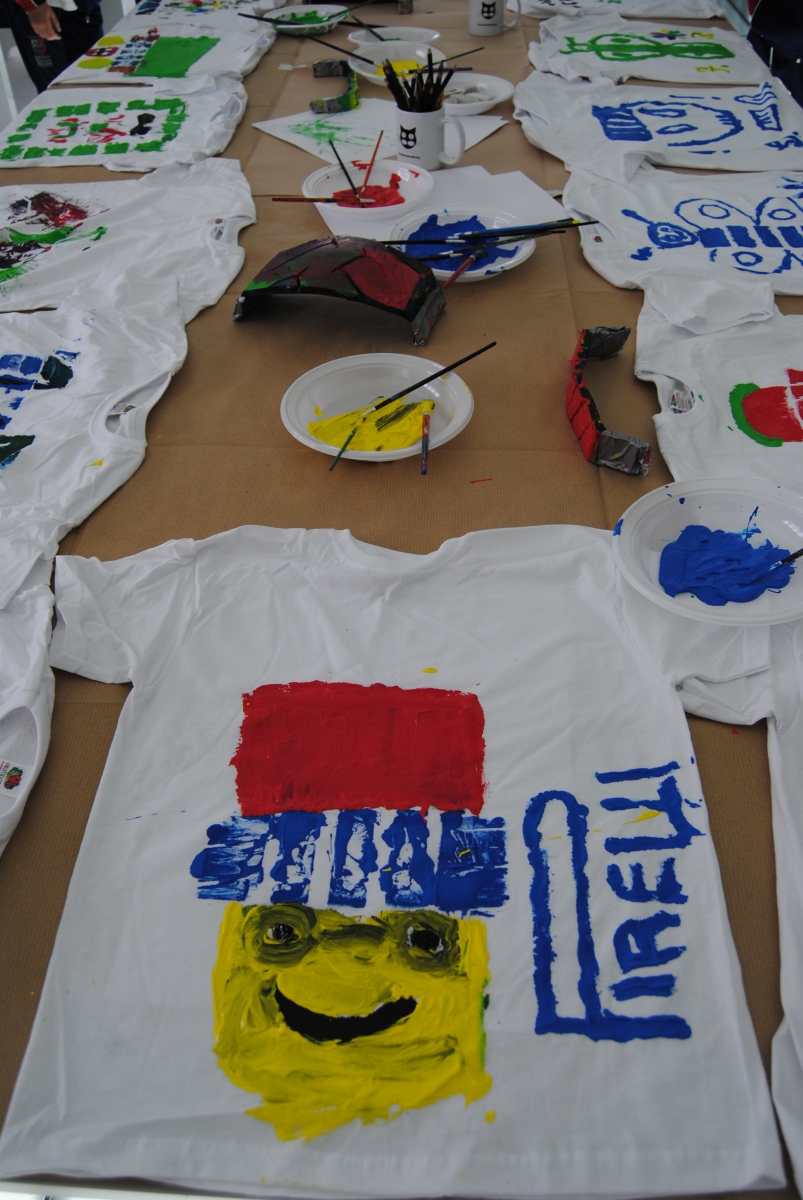
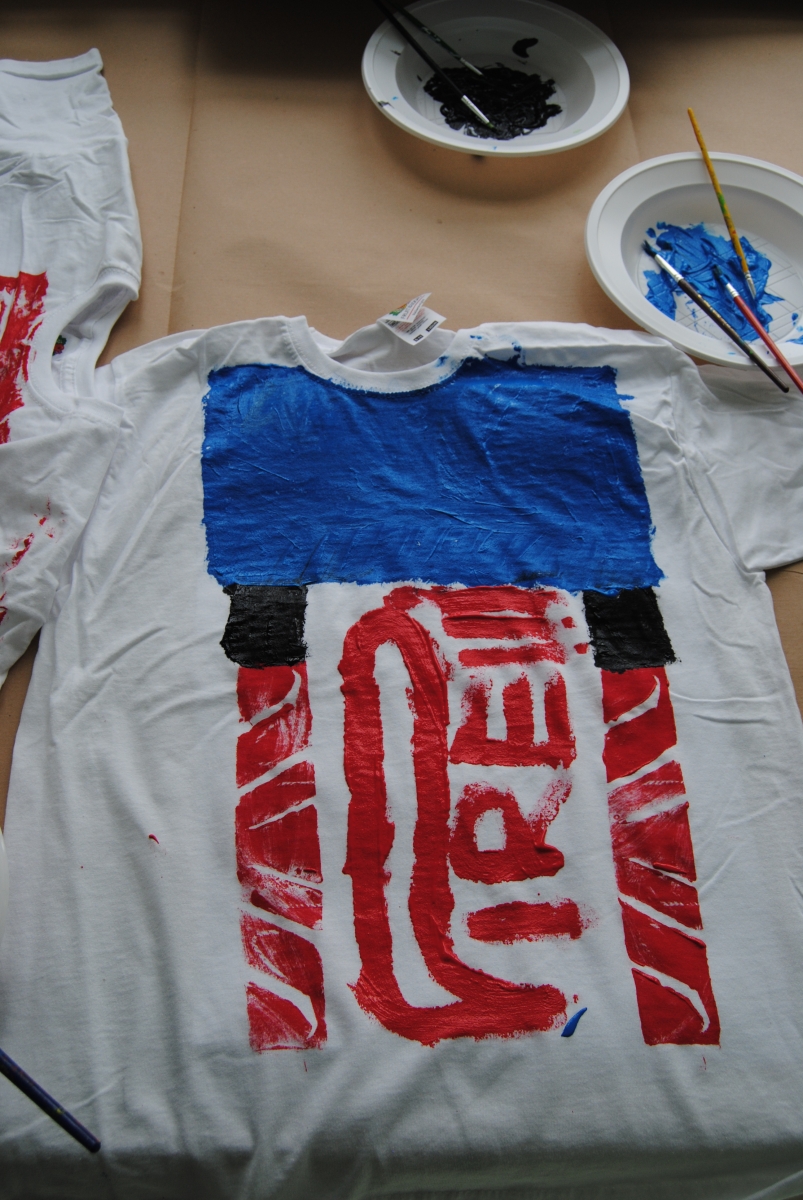
School’s Out at the Fondazione Pirelli Educational Workshops

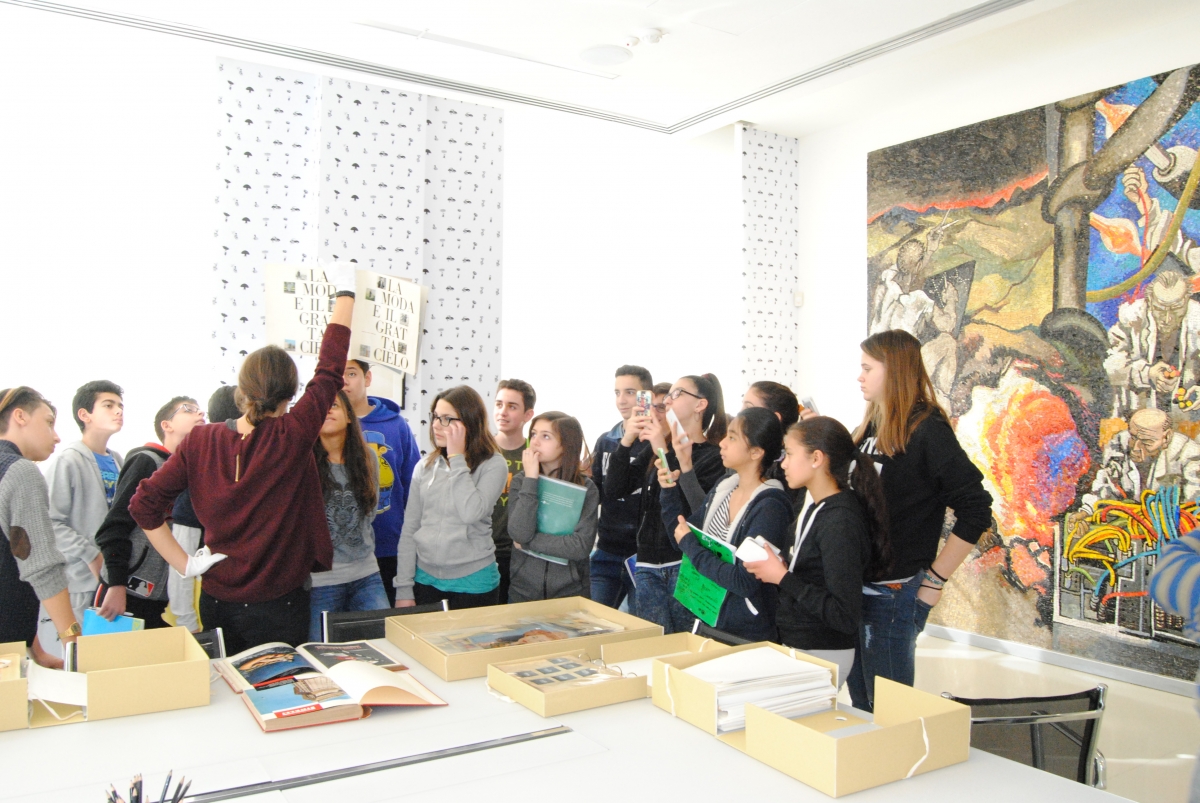
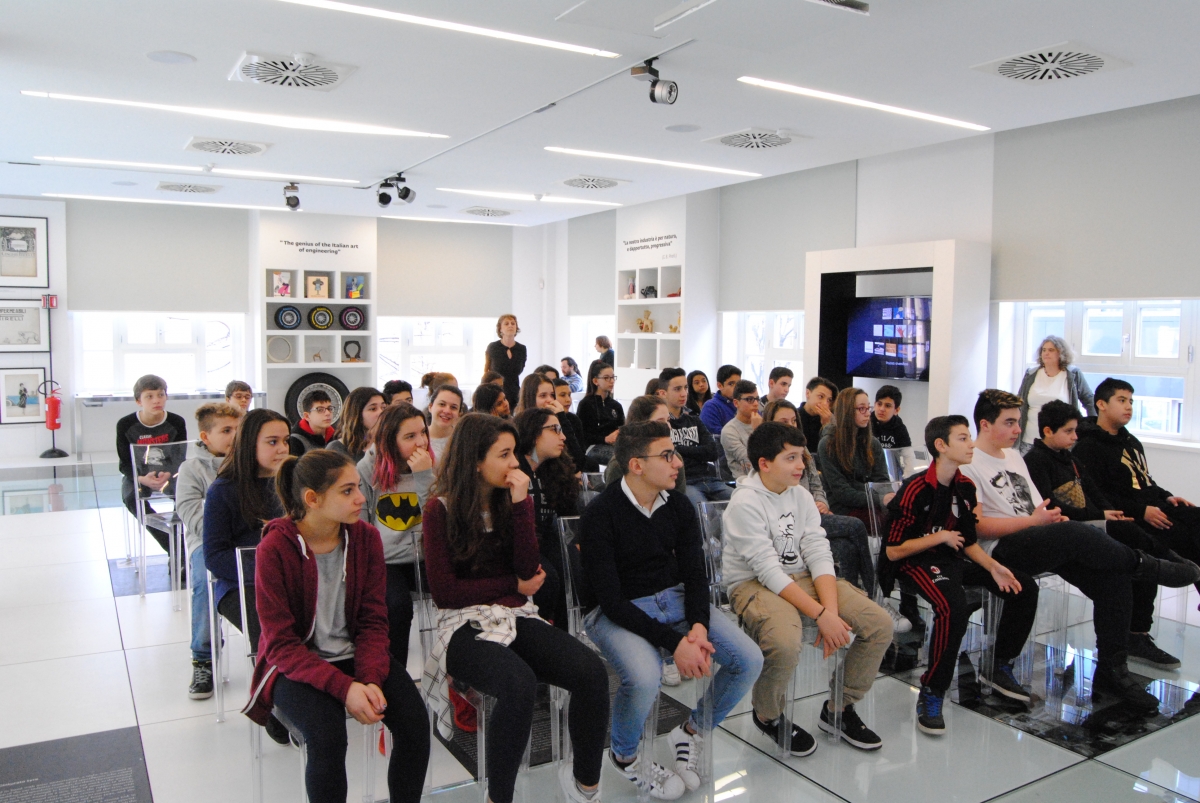
The last bell has rung at the Fondazione Pirelli Educational Workshops, too. The programmes organised by Fondazione Pirelli for the students of schools of all levels to learn about our rich corporate heritage and take part in our activities have finished for this year.

Some numbers: over 2500 students from more than 50 schools, 120 workshops with more than 200 hours of hands-on activities;  35 kilos of plasticine used by budding engineers to design new tread patterns and 110 kilos of plaster of Paris for blossoming fresco painters inspired by their visit to the splendid Bicocca degli Arcimboldi building.

And there were also in-depth analyses of tyre history and technology, graphics and advertising, urban transformation, photography, and corporate cinema.

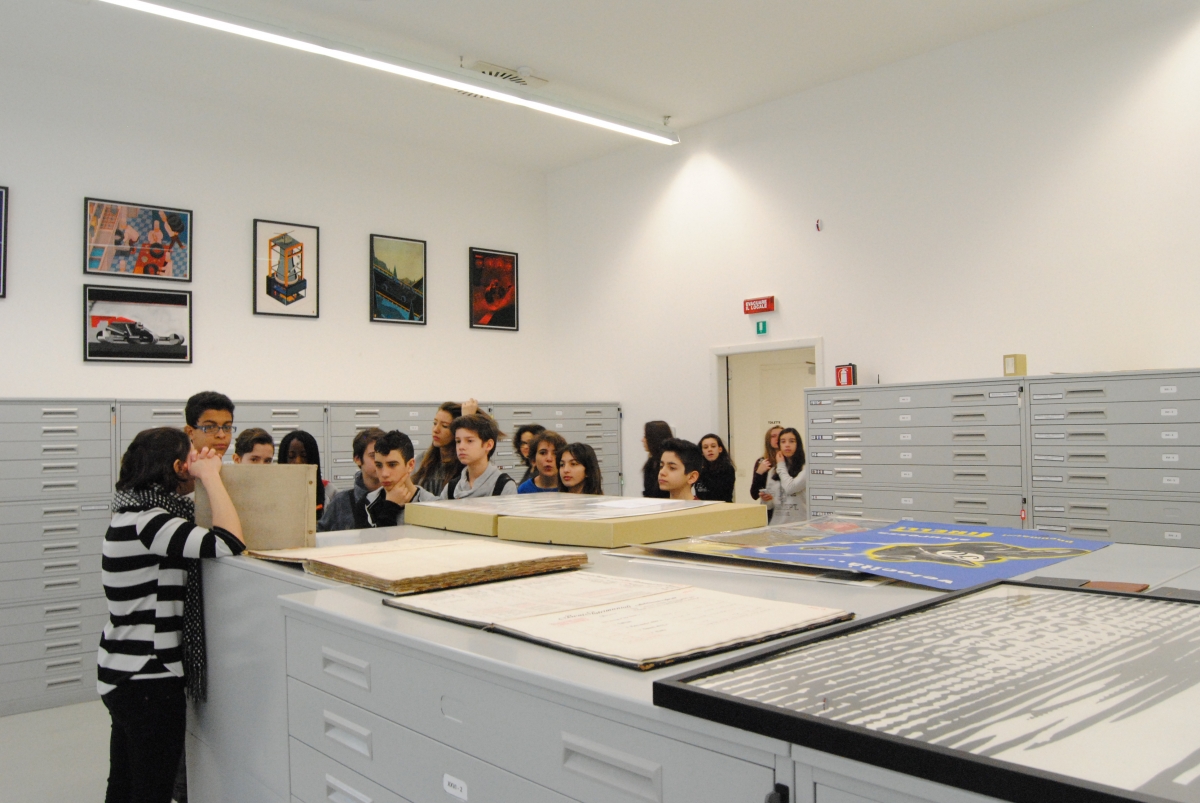
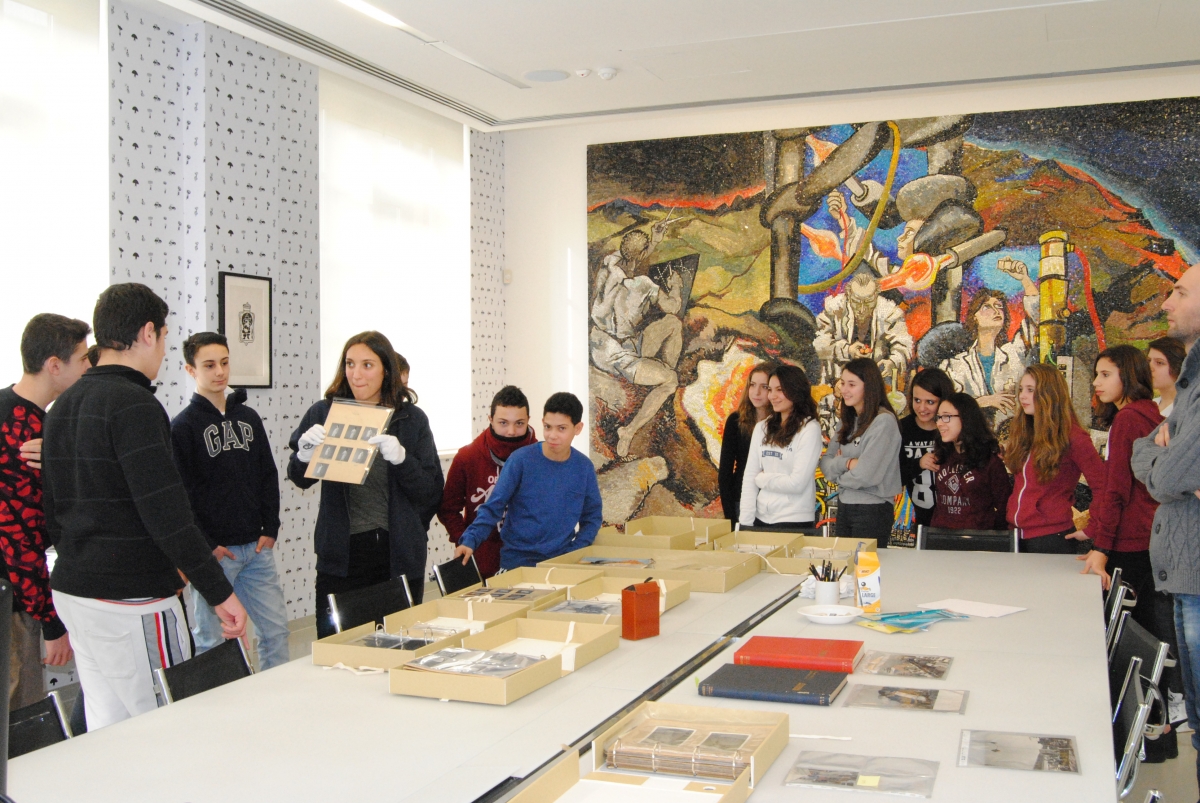
And what about older students? Lower and upper secondary school students had access to state-of-the-art chemical laboratories and the Pirelli R&D facilities. They learnt about archives by studying and interpreting historical source documents and were invited to design the factory of the future under the banner of sustainability.

This school year is over but we look forward to seeing you again in September with a programme packed with new workshops and activities.

||
||

The last bell has rung at the Fondazione Pirelli Educational Workshops, too. The programmes organised by Fondazione Pirelli for the students of schools of all levels to learn about our rich corporate heritage and take part in our activities have finished for this year.

Some numbers: over 2500 students from more than 50 schools, 120 workshops with more than 200 hours of hands-on activities;  35 kilos of plasticine used by budding engineers to design new tread patterns and 110 kilos of plaster of Paris for blossoming fresco painters inspired by their visit to the splendid Bicocca degli Arcimboldi building.

And there were also in-depth analyses of tyre history and technology, graphics and advertising, urban transformation, photography, and corporate cinema.

And what about older students? Lower and upper secondary school students had access to state-of-the-art chemical laboratories and the Pirelli R&D facilities. They learnt about archives by studying and interpreting historical source documents and were invited to design the factory of the future under the banner of sustainability.

This school year is over but we look forward to seeing you again in September with a programme packed with new workshops and activities.

Multimedia

Images

Settimo Torinese and its bid to become city of culture: an innovative place combining industry, art and social sustainability A great example of “polytechnic” culture

Can a small, industrial city, for many years seen as merely a suburb populated by factories and housing schemes, become Italy’s “city of culture” in 2018? Settimo Torinese, a town of 50,000 people on Turin’s commuter belt, along the motorway to Milan, has set itself this very challenge. It’s not a foolhardy one either, but a serious attempt to champion, within the public sphere, the idea that culture is not just for “art cities”. Albeit an essential breeding ground, culture can also be found in more “polytechnic” places, namely those with a tradition of manufacturing, industry and knowledge, of technological and social innovation, research, production relations, hospitality and integration.  In other word, places with are part of a broader definition of culture, and key contributors to a very Italian tradition whose roots extend deep into the country’s industrial heartlands.  A kind of culture that is laying the groundwork for a healthy future built on sustainable environmental and social development.

Proof that this bid to become “city of culture” – an idea advanced by deputy mayor Elena Piastra and immediately embraced by the whole council, led by Fabrizio Puppo (PD) – is not without foundation can be found in the list of sponsors. First and foremost, these include Renzo Piano and his Foundation (“Piano’s idea is to use the city as a thinking lab to create beauty,” deputy mayor Piastra explained). Theatrical actors the likes of Gabriele Vacis and Laura Curino (author of outstanding performances in the series of shows dedicated to Camillo and Adriano Olivetti are a prime example of “polytechnic culture” and the virtuous relationship between urban and industrial development, such as that seen in Ivrea and its current reappraisal. Sponsors also include the Cinema Museum and Turin’s Circle of Readers (one of Piedmont’s most dynamic, cultural institutions); umbrella trade organisations like Confcommercio and Coldiretti; premier training and research organisations, such as Turin Institute of Technology and the Italian Institute of Technology; and the Compagnia di San Paolo Foundation, chaired by Francesco Profumo, former rector of the Institute of Technology and government minister for education. It goes without saying, obviously, that the bid is also backed by Settimo’s blue-chip businesses, from Pirelli to Lavazza and L’Oreal (who has plans to bring pioneering, high-tech production lines to Settimo next year).

In a nutshell, factories are creating culture and they’re doing it with a clear commitment to social responsibility. They are also engendering sustainability, embracing renewable energies and lightening their environmental footprint, as well as generating employment, inclusion, and widespread wealth creation. What we are seeing is an authentic “machine civilisation” or   “industrial humanism”, of which Italy has many excellent examples. Settimo is testament to this.

The “backbone” of the Pirelli complex in Settimo  is a transparent, brightly-lit building designed by Renzo Piano and is home to services, R&D labs, the canteen, the library (boasting 6,000 books, run by Pirelli employees and connected to Turin and Piedmont regional libraries, making it an excellent example and national paradigm for “organisational libraries”)  and sports facilities.  It is surrounded by five hundred cherry trees (“the factory in the cherry garden” as Piano loves to call it, revelling in the literary resonance.) The two factory wings house high-tech, efficient and safe manufacturing systems.

The Pirelli complex is an example of “the beautiful factory” – a site which combines aesthetic considerations with productivity; safety with sustainability. Above all, it makes such considerations the cornerstone of a new kind of competitiveness that many Italian businesses are embracing. Likewise Confindustria’s Culture Group which received wholeheartedly Settimo’s bid to become city of culture.

Factories are therefore fostering culture. And manufacturing excellence. And representation. They are holding classical music concerts (even using the plant as a venue for “Settima a Settimo” – a performance of Beethoven’s masterpiece 7th symphony – during the MiTo 2014 festival.) Theatrical productions are being staged (starring Marco Paolini and Moni Ovadia). Projects are being run with schools. Then there’s the stage production of “Settimo” in Milan’s Piccolo Teatro first, then in Turin, telling a story of labour, industry and social transformation. Directed by Serena Sinigaglia and sustained by Fondazione Pirelli, the show proved a huge success with critics and public, alike.

We see industry and culture come together, time and time again.

The growing tendency to reappraise industrial buildings is another example of this, as they are seen as testament to Italy’s heritage of design and building intelligence from the 20th century.  The new type of “cultural tourism” currently in expansion and embracing old and new industrial sites, business museums and changing industrial cities runs parallel with this. Venice Biennale and Milan Triennale are both part of it. The cultural events promoted by umbrella organisations Assolombarda and Confindustrial are testament to it. Fondazione Pirelli has brought the group’s architecture centre stage, starting with the Bicocca building and Pirelli towers, a masterpiece designed by Gio Ponti,  then Pirelli headquarters, built by Studio Gregotti  around the company’s former cooling tower (an industrial relic that has become the symbol of post-industrial transformation and able to sit comfortably among the landmarks of a growing metropolitan city like Milan, championing the spirit of the most innovative forms of industry) and the BicoccaHangar, a contemporary art space in a disused factory which has innovated, transformed and given a new lease of life to a former suburb. Attention is also turned, obviously, to the new plant in Settimo Torinese, in drawings and executive projects by RPBW, the “Renzo Piano Building Workshop.”

Which brings us back to Settimo and it’s bid to become “city of culture”. It offers everything from cultural monuments and museums (nearby Turin provides several outstanding examples) to a culture of design, drawing, building, and doing. Its strength is innovation; and hospitality (factories were, in the 20th century, and continue, in the present day, to be the ultimate cradles of Italy’s very emblematic tradition of hospitality and integration); and storytelling: in theatres, cinema, literature, contemporary art, and in the dynamic language of the web. It is a challenge to be embraced… and achieved.

Settimo Torinese and its bid to become city of culture:  an innovative place combining industry, art and social sustainability A great example of  “polytechnic” culture

Can a small, industrial city, for many years seen as merely a suburb populated by factories and housing schemes, become Italy’s “city of culture” in 2018? Settimo Torinese, a town of 50,000 people on Turin’s commuter belt, along the motorway to Milan, has set itself this very challenge. It’s not a foolhardy one either, but a serious attempt to champion, within the public sphere, the idea that culture is not just for “art cities”. Albeit an essential breeding ground, culture can also be found in more “polytechnic” places, namely those with a tradition of manufacturing, industry and knowledge, of technological and social innovation, research, production relations, hospitality and integration.  In other word, places with are part of a broader definition of culture, and key contributors to a very Italian tradition whose roots extend deep into the country’s industrial heartlands.  A kind of culture that is laying the groundwork for a healthy future built on sustainable environmental and social development.

Proof that this bid to become “city of culture” – an idea advanced by deputy mayor Elena Piastra and immediately embraced by the whole council, led by Fabrizio Puppo (PD) – is not without foundation can be found in the list of sponsors. First and foremost, these include Renzo Piano and his Foundation (“Piano’s idea is to use the city as a thinking lab to create beauty,” deputy mayor Piastra explained). Theatrical actors the likes of Gabriele Vacis and Laura Curino (author of outstanding performances in the series of shows dedicated to Camillo and Adriano Olivetti are a prime example of “polytechnic culture” and the virtuous relationship between urban and industrial development, such as that seen in Ivrea and its current reappraisal. Sponsors also include the Cinema Museum and Turin’s Circle of Readers (one of Piedmont’s most dynamic, cultural institutions); umbrella trade organisations like Confcommercio and Coldiretti; premier training and research organisations, such as Turin Institute of Technology and the Italian Institute of Technology; and the Compagnia di San Paolo Foundation, chaired by Francesco Profumo, former rector of the Institute of Technology and government minister for education. It goes without saying, obviously, that the bid is also backed by Settimo’s blue-chip businesses, from Pirelli to Lavazza and L’Oreal (who has plans to bring pioneering, high-tech production lines to Settimo next year).

In a nutshell, factories are creating culture and they’re doing it with a clear commitment to social responsibility. They are also engendering sustainability, embracing renewable energies and lightening their environmental footprint, as well as generating employment, inclusion, and widespread wealth creation. What we are seeing is an authentic “machine civilisation” or   “industrial humanism”, of which Italy has many excellent examples. Settimo is testament to this.

The “backbone” of the Pirelli complex in Settimo  is a transparent, brightly-lit building designed by Renzo Piano and is home to services, R&D labs, the canteen, the library (boasting 6,000 books, run by Pirelli employees and connected to Turin and Piedmont regional libraries, making it an excellent example and national paradigm for “organisational libraries”)  and sports facilities.  It is surrounded by five hundred cherry trees (“the factory in the cherry garden” as Piano loves to call it, revelling in the literary resonance.) The two factory wings house high-tech, efficient and safe manufacturing systems.

The Pirelli complex is an example of “the beautiful factory” – a site which combines aesthetic considerations with productivity; safety with sustainability. Above all, it makes such considerations the cornerstone of a new kind of competitiveness that many Italian businesses are embracing. Likewise Confindustria’s Culture Group which received wholeheartedly Settimo’s bid to become city of culture.

Factories are therefore fostering culture. And manufacturing excellence. And representation. They are holding classical music concerts (even using the plant as a venue for “Settima a Settimo” – a performance of Beethoven’s masterpiece 7th symphony – during the MiTo 2014 festival.) Theatrical productions are being staged (starring Marco Paolini and Moni Ovadia). Projects are being run with schools. Then there’s the stage production of “Settimo” in Milan’s Piccolo Teatro first, then in Turin, telling a story of labour, industry and social transformation. Directed by Serena Sinigaglia and sustained by Fondazione Pirelli, the show proved a huge success with critics and public, alike.

We see industry and culture come together, time and time again.

The growing tendency to reappraise industrial buildings is another example of this, as they are seen as testament to Italy’s heritage of design and building intelligence from the 20th century.  The new type of “cultural tourism” currently in expansion and embracing old and new industrial sites, business museums and changing industrial cities runs parallel with this. Venice Biennale and Milan Triennale are both part of it. The cultural events promoted by umbrella organisations Assolombarda and Confindustrial are testament to it. Fondazione Pirelli has brought the group’s architecture centre stage, starting with the Bicocca building and Pirelli towers, a masterpiece designed by Gio Ponti,  then Pirelli headquarters, built by Studio Gregotti  around the company’s former cooling tower (an industrial relic that has become the symbol of post-industrial transformation and able to sit comfortably among the landmarks of a growing metropolitan city like Milan, championing the spirit of the most innovative forms of industry) and the BicoccaHangar, a contemporary art space in a disused factory which has innovated, transformed and given a new lease of life to a former suburb. Attention is also turned, obviously, to the new plant in Settimo Torinese, in drawings and executive projects by RPBW, the “Renzo Piano Building Workshop.”

Which brings us back to Settimo and it’s bid to become “city of culture”. It offers everything from cultural monuments and museums (nearby Turin provides several outstanding examples) to a culture of design, drawing, building, and doing. Its strength is innovation; and hospitality (factories were, in the 20th century, and continue, in the present day, to be the ultimate cradles of Italy’s very emblematic tradition of hospitality and integration); and storytelling: in theatres, cinema, literature, contemporary art, and in the dynamic language of the web. It is a challenge to be embraced… and achieved.

Industrial Architectures – Bike tour

On June 17, 2016 in occasion of the XXI Triennale International Exhibition in Milan with the exhibition entitled “Industrial Architectures: from the Bicocca Project to the Settimo Torinese Industrial Site. A trip through Pirelli’s sites and history”, Fondazione Pirelli is organising a free bike tour to discover the corners of the city of Milan where Pirelli has left its mark.

The programme

3:30 p.m. Meeting at the “Pirelli” skyscraper in Piazza Duca d’Aosta.

4:00 p.m.: Visit to the “Le Età del grattacielo” (The ages of the skyscraper) exhibition on the 26th floor organised in partnership with Fondazione Pirelli.

4:45 p.m.: End of the visit and start of the bike tour heading towards the Bicocca district.

6:00 p.m.: Arrival at the Pirelli Headquarters where the bicycles will be left. Visit to the “Industrial Architectures” exhibition (maximum time: 1h 30m).
For logistic information and bookings (mandatory) call 0264423971 or write to a visite@fondazionepirelli.org

Total time: approximately 4 hours

Difficulty: easy

Bicycles and helmet will be supplied free of charge by Fondazione Pirelli (participants will be asked to sign a waiver of responsibility and leave an identification document).

The visit will be held at the Pirelli Headquarters in case of rain.

|||
|||

On June 17, 2016 in occasion of the XXI Triennale International Exhibition in Milan with the exhibition entitled “Industrial Architectures: from the Bicocca Project to the Settimo Torinese Industrial Site. A trip through Pirelli’s sites and history”, Fondazione Pirelli is organising a free bike tour to discover the corners of the city of Milan where Pirelli has left its mark.

The programme

3:30 p.m. Meeting at the “Pirelli” skyscraper in Piazza Duca d’Aosta.

4:00 p.m.: Visit to the “Le Età del grattacielo” (The ages of the skyscraper) exhibition on the 26th floor organised in partnership with Fondazione Pirelli.

4:45 p.m.: End of the visit and start of the bike tour heading towards the Bicocca district.

6:00 p.m.: Arrival at the Pirelli Headquarters where the bicycles will be left. Visit to the “Industrial Architectures” exhibition (maximum time: 1h 30m).
For logistic information and bookings (mandatory) call 0264423971 or write to a visite@fondazionepirelli.org

Total time: approximately 4 hours

Difficulty: easy

Bicycles and helmet will be supplied free of charge by Fondazione Pirelli (participants will be asked to sign a waiver of responsibility and leave an identification document).

The visit will be held at the Pirelli Headquarters in case of rain.

Multimedia

All
Images
Video

Pirelli, sustainable culture. The new exhibition layout of the Pirelli Foundation

The Pirelli Foundation has devised a new exhibition layout that narrates, starting with the documents from the Historic Archive, the evolution of sustainable management as a competitive edge from 1872 to date.

This journey begins with raw materials, to see up close what makes up “the rubber soul of a tyre, how many and which components are used to make a tyre and how the hevea brasiliensis tree is grown and harvested, along with its unique characteristics, to obtain natural rubber. The exhibition continues with an in-depth investigation of the studies conducted over the years on renewable biomaterials, such as the guayule plant which has already been studied since 1936, and on the search for innovative materials including studies into synthetic rubber conducted since 1937 by the future Nobel Prize winner Giulio Natta for Pirelli, given the growing awareness of the strong social and economic impact of plantations. Visitors will be accompanied along the initial part of the exhibition by photographic reports of rubber plantations in 1922, by a report by Fulvio Roiter dating back to 1963 for “Pirelli” magazine, and also pictures taken in 2015 in Indonesia, where the partnership with Kirana Megatara, natural rubber processor and one of the group’s biggest suppliers, began, to guarantee the training of farmers and their families, and to support the productivity of plantations.

Scientific research and experiments on structures and materials are part of the next portion of the exhibition: men and women at work, machines and facilities from past and present.. Large-size photographs show the stages of the construction process of a tyre.  Photo shoots by Gabriele Basilico and by Arno Hammacher are combined with more recent pictures by Carlo Furgeri Gilbert of the New Industrial Pole in Settimo Torinese.

From factory to products: tyres designed in Pirelli laboratories to guarantee safety and performance, for efficient mobility that is increasingly environmentally-friendly. Durability and safety are core themes in the history of Pirelli product communication, as testified by the advertising campaigns by Pavel Engelmann, Alan Fletcher and Armando Testa or the famous man “with his eyes closed” by Riccardo Manzi.

The exhibition finishes with a more in-depth look into Pirelli’s role in the management of share capital. Welfare and training are just some of the tools with which Pirelli has always liaised with its employees and their families. Sports, leisure time, healthcare, focus on nutrition as told by archive documents, texts and photos. Today, like yesterday, and always, looking to the future.
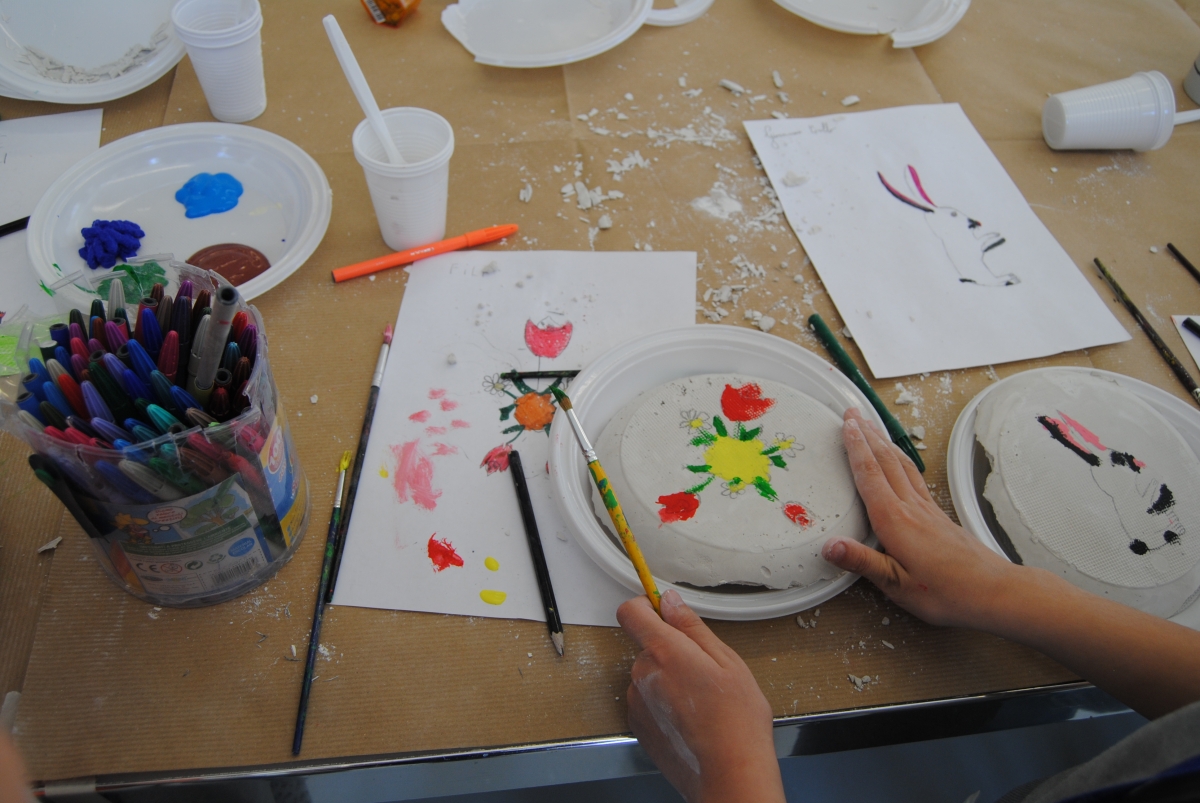
|
|

The Pirelli Foundation has devised a new exhibition layout that narrates, starting with the documents from the Historic Archive, the evolution of sustainable management as a competitive edge from 1872 to date.

This journey begins with raw materials, to see up close what makes up “the rubber soul of a tyre, how many and which components are used to make a tyre and how the hevea brasiliensis tree is grown and harvested, along with its unique characteristics, to obtain natural rubber. The exhibition continues with an in-depth investigation of the studies conducted over the years on renewable biomaterials, such as the guayule plant which has already been studied since 1936, and on the search for innovative materials including studies into synthetic rubber conducted since 1937 by the future Nobel Prize winner Giulio Natta for Pirelli, given the growing awareness of the strong social and economic impact of plantations. Visitors will be accompanied along the initial part of the exhibition by photographic reports of rubber plantations in 1922, by a report by Fulvio Roiter dating back to 1963 for “Pirelli” magazine, and also pictures taken in 2015 in Indonesia, where the partnership with Kirana Megatara, natural rubber processor and one of the group’s biggest suppliers, began, to guarantee the training of farmers and their families, and to support the productivity of plantations.

Scientific research and experiments on structures and materials are part of the next portion of the exhibition: men and women at work, machines and facilities from past and present.. Large-size photographs show the stages of the construction process of a tyre.  Photo shoots by Gabriele Basilico and by Arno Hammacher are combined with more recent pictures by Carlo Furgeri Gilbert of the New Industrial Pole in Settimo Torinese.

From factory to products: tyres designed in Pirelli laboratories to guarantee safety and performance, for efficient mobility that is increasingly environmentally-friendly. Durability and safety are core themes in the history of Pirelli product communication, as testified by the advertising campaigns by Pavel Engelmann, Alan Fletcher and Armando Testa or the famous man “with his eyes closed” by Riccardo Manzi.

The exhibition finishes with a more in-depth look into Pirelli’s role in the management of share capital. Welfare and training are just some of the tools with which Pirelli has always liaised with its employees and their families. Sports, leisure time, healthcare, focus on nutrition as told by archive documents, texts and photos. Today, like yesterday, and always, looking to the future.
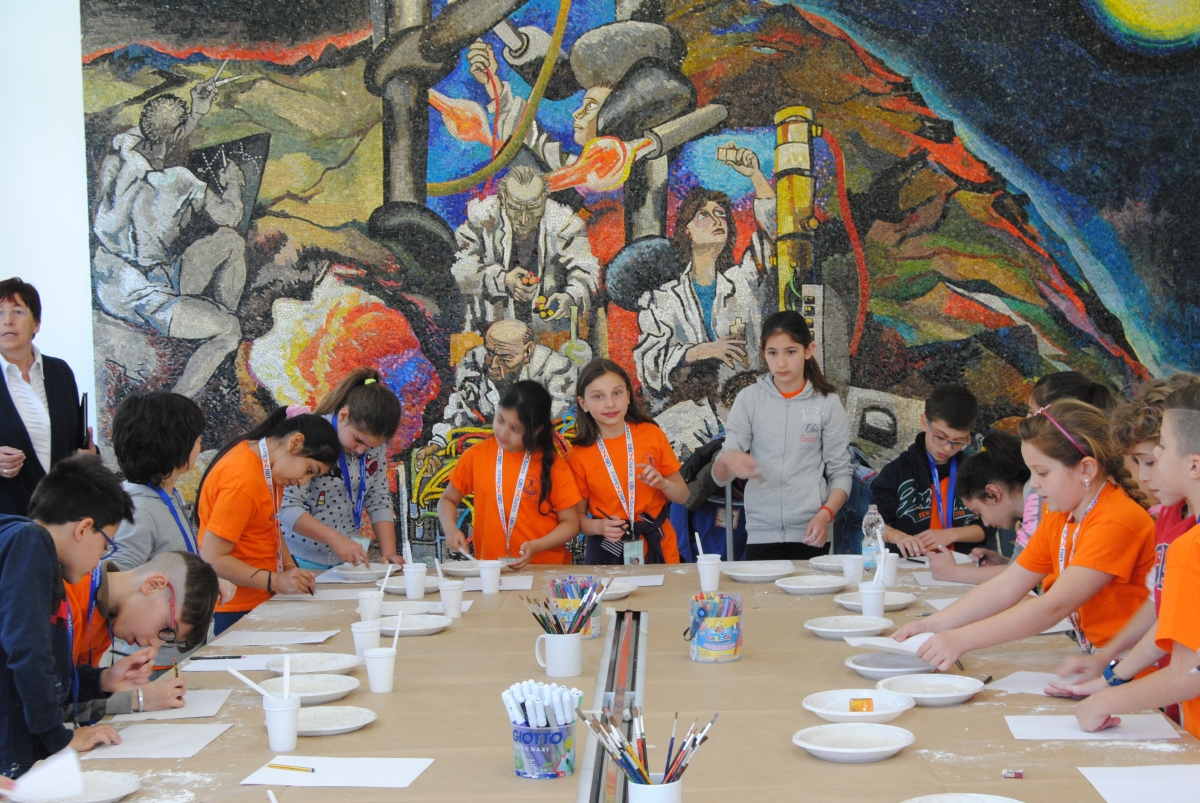
Multimedia

All
Images
Video

Sign up for the newsletter