
Access the Online Archive
Search the Historical Archive of the Pirelli Foundation for sources and materials. Select the type of support you are interested in and write the keywords of your research.
    Select one of the following categories
  • Documents
  • Photographs
  • Drawings and posters
  • Audio-visuals
  • Publications and magazines
  • All
Help with your research
To request to view the materials in the Historical Archive and in the libraries of the Pirelli Foundation for study and research purposes and/or to find out how to request the use of materials for loans and exhibitions, please fill in the form below. You will receive an email confirming receipt of the request and you will be contacted.
Pirelli Foundation Educational Courses

Select the education level of the school
Back
Primary schools
Pirelli Foundation Educational Courses
Please fill in your details and the staff of Pirelli Foundation Educational will contact you to arrange the dates of the course.

I declare I have read  the privacy policy, and authorise the Pirelli Foundation to process my personal data in order to send communications, also by email, about initiatives/conferences organised by the Pirelli Foundation.

Back
Lower secondary school
Pirelli Foundation Educational Courses
Please fill in your details and the staff of Pirelli Foundation Educational will contact you to arrange the dates of the course.
Back
Upper secondary school
Pirelli Foundation Educational Courses
Please fill in your details and the staff of Pirelli Foundation Educational will contact you to arrange the dates of the course.
Back
University
Pirelli Foundation Educational Courses

Do you want to organize a training programme with your students? For information and reservations, write to universita@fondazionepirelli.org

Visit the Foundation
For information about the Foundation’s activities, guided tours and accessibility,
please call +39 0264423971 or fill in the form below, providing details of your request in the notes field.

“Looking Inside”, From the Very Beginning

Pirelli’s commitment to research and innovation began with its founder, Giovanni Battista, a young engineer freshly graduated from the Istituto Tecnico Superiore di Milano – the future Politecnico University – in 1870. Thanks to his initiative, Italy’s first factory for processing elastic rubber opened in 1873 under the technical direction of Aimé Goulard, with forty workers and five office staff. Following the advice of his mentor, Professor Giuseppe Colombo – the founder of Edison and one of the key figures of Italy’s industrial modernisation between the mid-nineteenth century and the First World War – Giovanni Battista Pirelli decided to start manufacturing parts for industrial machinery, steamships and the railways: various articles, such as transmission belts, valves, and insulators. The range soon extended to consumer items such as toys, balls, waterproofs and haberdashery. Just ten years after the company was founded, the results were clear: the workforce grew from 40 to 300, the facilities expanded, and new sectors were launched. One of these was for the production of rubber-coated telegraph wires, which were introduced in 1879. The first chemical and electrical engineers were hired in 1884, and in the following years important experts in the field of electrotechnics joined the company. These included Emanuele Jona and Leopoldo and Luigi Emanueli, who would long lead the Group’s Research and Development department.

In the late nineteenth century, at the behest of the founder, the company started collecting scientific texts, mainly dedicated to rubber, tyres and electric cables, to broaden the training of Pirelli technicians. These volumes eventually became part of today’s Scientific and Technical Library of over 16,000 titles, kept by the Pirelli Foundation since 2010. It is no coincidence that, ever since it was set up, the Foundation has adopted a quote by Luigi Emanueli as its motto: “Adess ghe capissaremm on quaicoss: andemm a guardagh denter (“Now we’ll understand something, let’s go and look inside”). The idea of “looking inside” in order “to understand” sums up the whole concept of science as a form of research, study, and commitment.

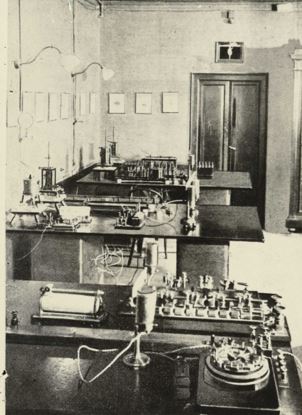
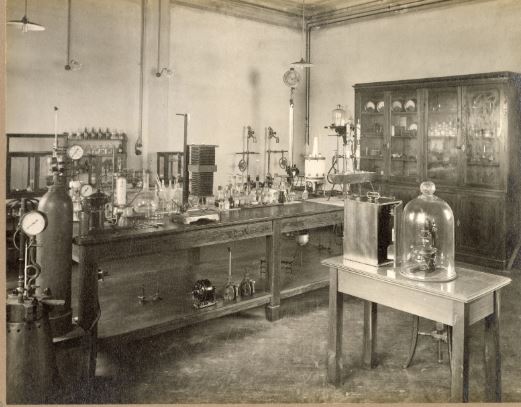
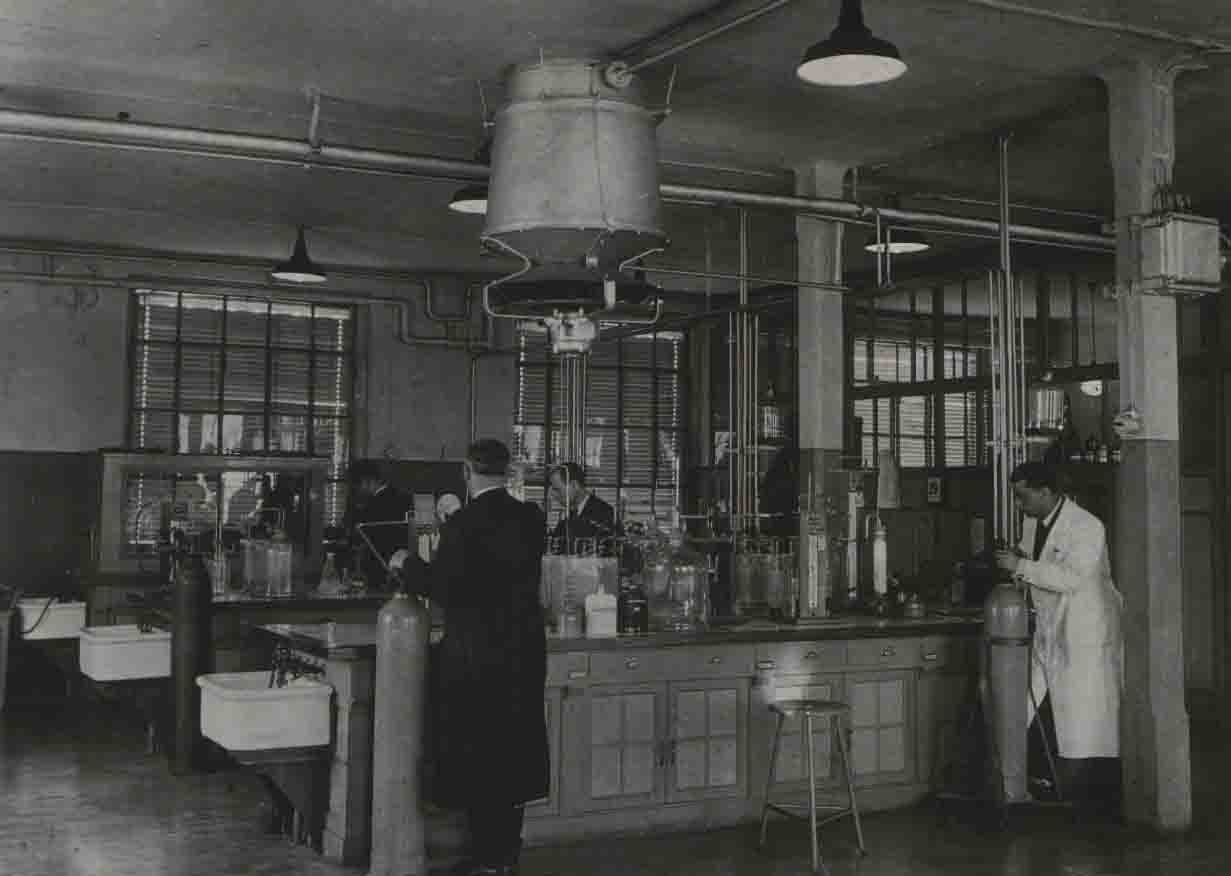
And so it was that, in 1922, photographers were invited to “look inside” the life of the factory. To celebrate the company’s fiftieth anniversary, a photographic shoot was produced at the Milano Bicocca plant, from the production departments to the laboratories. The spaces and technical equipment illustrated Pirelli’s pioneering role in innovation. During these years the company continued to give central importance to research in Italy and abroad. The 1923 annual report stated that the Società Italiana Pirelli “with the help of its technical management and its laboratories, has also […] strongly supported the activity of these foreign plants of ours, continuing its policy of scientific research and refinement at the headquarters and of collaboration with the management of sister companies abroad, which we have constantly pursued throughout these years of expansion of our industrial organisation.” And research never stopped, focusing on new materials and innovative products in the decades that followed, beginning with the development of synthetic rubber.
Back to main page

Pirelli’s commitment to research and innovation began with its founder, Giovanni Battista, a young engineer freshly graduated from the Istituto Tecnico Superiore di Milano – the future Politecnico University – in 1870. Thanks to his initiative, Italy’s first factory for processing elastic rubber opened in 1873 under the technical direction of Aimé Goulard, with forty workers and five office staff. Following the advice of his mentor, Professor Giuseppe Colombo – the founder of Edison and one of the key figures of Italy’s industrial modernisation between the mid-nineteenth century and the First World War – Giovanni Battista Pirelli decided to start manufacturing parts for industrial machinery, steamships and the railways: various articles, such as transmission belts, valves, and insulators. The range soon extended to consumer items such as toys, balls, waterproofs and haberdashery. Just ten years after the company was founded, the results were clear: the workforce grew from 40 to 300, the facilities expanded, and new sectors were launched. One of these was for the production of rubber-coated telegraph wires, which were introduced in 1879. The first chemical and electrical engineers were hired in 1884, and in the following years important experts in the field of electrotechnics joined the company. These included Emanuele Jona and Leopoldo and Luigi Emanueli, who would long lead the Group’s Research and Development department.

In the late nineteenth century, at the behest of the founder, the company started collecting scientific texts, mainly dedicated to rubber, tyres and electric cables, to broaden the training of Pirelli technicians. These volumes eventually became part of today’s Scientific and Technical Library of over 16,000 titles, kept by the Pirelli Foundation since 2010. It is no coincidence that, ever since it was set up, the Foundation has adopted a quote by Luigi Emanueli as its motto: “Adess ghe capissaremm on quaicoss: andemm a guardagh denter (“Now we’ll understand something, let’s go and look inside”). The idea of “looking inside” in order “to understand” sums up the whole concept of science as a form of research, study, and commitment.

And so it was that, in 1922, photographers were invited to “look inside” the life of the factory. To celebrate the company’s fiftieth anniversary, a photographic shoot was produced at the Milano Bicocca plant, from the production departments to the laboratories. The spaces and technical equipment illustrated Pirelli’s pioneering role in innovation. During these years the company continued to give central importance to research in Italy and abroad. The 1923 annual report stated that the Società Italiana Pirelli “with the help of its technical management and its laboratories, has also […] strongly supported the activity of these foreign plants of ours, continuing its policy of scientific research and refinement at the headquarters and of collaboration with the management of sister companies abroad, which we have constantly pursued throughout these years of expansion of our industrial organisation.” And research never stopped, focusing on new materials and innovative products in the decades that followed, beginning with the development of synthetic rubber.
Back to main page

Multimedia

Images