
Access the Online Archive
Search the Historical Archive of the Pirelli Foundation for sources and materials. Select the type of support you are interested in and write the keywords of your research.
    Select one of the following categories
  • Documents
  • Photographs
  • Drawings and posters
  • Audio-visuals
  • Publications and magazines
  • All
Help with your research
To request to view the materials in the Historical Archive and in the libraries of the Pirelli Foundation for study and research purposes and/or to find out how to request the use of materials for loans and exhibitions, please fill in the form below. You will receive an email confirming receipt of the request and you will be contacted.
Pirelli Foundation Educational Courses

Select the education level of the school
Back
Primary schools
Pirelli Foundation Educational Courses
Please fill in your details and the staff of Pirelli Foundation Educational will contact you to arrange the dates of the course.

I declare I have read  the privacy policy, and authorise the Pirelli Foundation to process my personal data in order to send communications, also by email, about initiatives/conferences organised by the Pirelli Foundation.

Back
Lower secondary school
Pirelli Foundation Educational Courses
Please fill in your details and the staff of Pirelli Foundation Educational will contact you to arrange the dates of the course.
Back
Upper secondary school
Pirelli Foundation Educational Courses
Please fill in your details and the staff of Pirelli Foundation Educational will contact you to arrange the dates of the course.
Back
University
Pirelli Foundation Educational Courses

Do you want to organize a training programme with your students? For information and reservations, write to universita@fondazionepirelli.org

Visit the Foundation
For information about the Foundation’s activities, guided tours and accessibility,
please call +39 0264423971 or fill in the form below, providing details of your request in the notes field.

The closure of a bookstore is an open wound, but the important thing is to open new ones in condominiums, schools, neighbourhoods, factories

When a bookshop closes, especially an old bookshop, there is a wound in the civic body of a city. One less place where you can become familiar with a book. One less place to strike up a surprising conversation about a great book (‘Fontamara,’ for example, or ‘Invisible Cities,’ or, why not, ‘La vita indocile’) or a well-designed cover. One less place to form friendships or even engage in a light literary courtship (perhaps both asking each other, with a slightly bewildered Bruce Chatwin-esque air, ‘What am I doing here?’). And those shelves where you could find a surprising, exciting or simply curious page to keep you company for days or even weeks will no longer exist.

Books contain the words of those made of flesh and blood. They reveal passions, nourish pain and evoke the sweetest melancholy. They stir up memories you could happily do without and console you about times gone by.  Ultimately, words are like a warm feeling or a tender hope expressed in a song by Ornella Vanoni:  like love, they last forever.

These are the thoughts racing through my mind as I read in Milanese newspapers that the Hoepli bookshop is likely to close. It was founded as a publishing house in December 1870 by a cultured Swiss family. A few years later, in March 1876, the Corriere della Sera was founded. At that time, Milan was a city of great excitement,  with the first large industries (starting with Pirelli), banks (most notably the Banca Commerciale Italiana, which had German backing) and publishing houses springing up, as well as studios representing the main artistic movements. Milan was ‘the city that rises,’ as proclaimed by the title of one of Umberto Boccioni’s most beautiful paintings.

Cities grow and change; they are living organisms. Neighbourhoods expand and areas become marginalised.  People come and go.  Yet amidst so many transformations, some things remain and acquire great symbolic power and identity-building value. The Hoepli bookshop was one of them.

It has impressive stands for its new releases (including international ones), technical books on engineering and architecture, and excellent sections on history and current affairs.  It has an impressive art and photography collection and a well-stocked Milan department offering a  rare assortment of 500,000 titles.  Not to mention the knowledgeable and friendly staff. Above all this, the gentle and cultured shadow of the late Ulrico Hoeplis looms large: an elegant and severe gentleman.

The Hoepli is one of my favourite points of reference, alongside the Feltrinelli in Piazza Piemonte and a small independent bookshop in Corso Garibaldi. It’s very rare that I walk down the street of the same name without being drawn in by the shop windows and coming out with a new book under my arm.

Now, Milan is full of bookstores. There are large chains and independent bookshops that attract readers with their particular specialisms, as well as cultural initiatives. Festivals like BookCity in November offer thousands of packed events, including book presentations, meetings with writers, public readings and debates, led by Piergaetano Marchetti.

Yet, we know now that if Hoepli closes, it will leave a deep void, a wound, a scar.

It’s true that bookshops are businesses and commercial establishments tied to the game of supply and demand.  The owners, especially if they belong to different family branches, may not share the same vision:  to stay afloat, perhaps barely managing to balance the budget, or even losing money, in order to honour a history, tradition or cultural service, or to enhance a major real estate asset such as the Hoepli building in the heart of Milan. There is no moral judgement here; business is business. Even if the appeal to ‘save the Hoepli in Milan and the civilisation of the bookshop’ is sensible and well-founded (Aldo Cazzullo, Corriere della Sera, 21 February),the problem does not end there. If anything, while safeguarding all employee rights, it is necessary to ensure that, despite the common regret of bibliophiles and avid readers alike at the closure of every Hoepli or other good bookshop, others open. In fact, the municipality should implement a rent relief policy for small businesses and encourage the creation and development of neighbourhood, school, condominium, prison and corporate bookshops (many companies already have them for their employees, including Pirelli, Bracco and Assolombarda, and Museimpresa has listed around forty of them in Italy).

So, alongside the threat of bad news, it’s worth reading the Milanese newspapers (Corriere della Sera on 7 February and Il Giorno on 25 February) to note that a ‘free donation’ library called Baol has opened at number 47 of Viale Molise. There, you can read, borrow books, listen to fellow writers talk about them, and organise a community around the pleasure of reading. This small initiative is supported by volunteers and book-loving residents in the 35-square-metre space left free by condominium activities. So there are still interesting and stimulating initiatives. Will a hundred flowers bloom?

Milan is the city that gave voice to Elio Vittorini‘s talent through writing, politics and passion (La Repubblica, 20 January). Thanks to that voice, it has also seen the growth of a modern publishing culture whose benefits we still enjoy today. Despite everything, Milan is still a metropolis of well-written words and books worth reading, offering a ‘Milanese education’, an excellent title for Alberto Rollo’s beautiful book.

The aim, chosen by the City Council’s Department of Culture led by Tommaso Sacchi, is to ensure that none of the many book-related initiatives are wasted. If anything, they should be encouraged. This will be discussed next spring with the aim of making the municipal library service, which has over 4 million titles available to the city, increasingly efficient and well-connected.

The Hoepli will certainly be missed, just as we miss all the places that have closed over time to make way for more profitable commercial activities, such as selling socks and underwear, opening 24-hour restaurants and nail bars. And it’s getting worse all the time.

One solution would be to find and encourage entrepreneurs to open reading and training centres for children, listening centres, and spaces where they can quietly read or listen to the recommendations of reading groups and booksellers, which are popular with younger audiences. Who knows?

As a boy, I imagined opening a ‘librattoria’, a trattoria-bookshop frequented by students and enthusiasts. Then nothing came of it. Today, you could read about Inspector Montalbano while tucking into a generous portion of fried mullet, an excellent potato stew just like Vittorini liked it, and a tray of Adelina’s arancini…

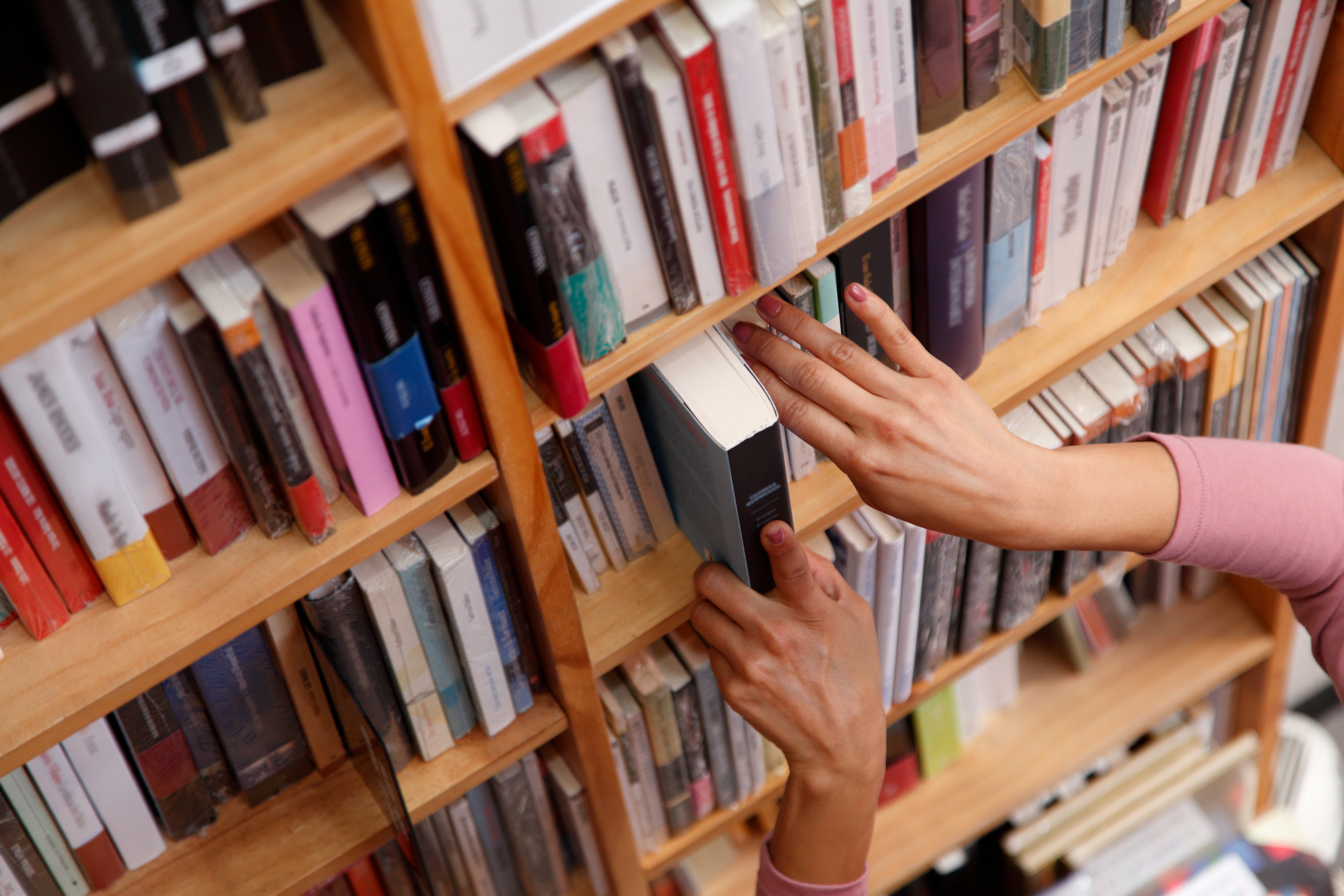
(photo: Getty Images)

When a bookshop closes, especially an old bookshop, there is a wound in the civic body of a city. One less place where you can become familiar with a book. One less place to strike up a surprising conversation about a great book (‘Fontamara,’ for example, or ‘Invisible Cities,’ or, why not, ‘La vita indocile’) or a well-designed cover. One less place to form friendships or even engage in a light literary courtship (perhaps both asking each other, with a slightly bewildered Bruce Chatwin-esque air, ‘What am I doing here?’). And those shelves where you could find a surprising, exciting or simply curious page to keep you company for days or even weeks will no longer exist.

Books contain the words of those made of flesh and blood. They reveal passions, nourish pain and evoke the sweetest melancholy. They stir up memories you could happily do without and console you about times gone by.  Ultimately, words are like a warm feeling or a tender hope expressed in a song by Ornella Vanoni:  like love, they last forever.

These are the thoughts racing through my mind as I read in Milanese newspapers that the Hoepli bookshop is likely to close. It was founded as a publishing house in December 1870 by a cultured Swiss family. A few years later, in March 1876, the Corriere della Sera was founded. At that time, Milan was a city of great excitement,  with the first large industries (starting with Pirelli), banks (most notably the Banca Commerciale Italiana, which had German backing) and publishing houses springing up, as well as studios representing the main artistic movements. Milan was ‘the city that rises,’ as proclaimed by the title of one of Umberto Boccioni’s most beautiful paintings.

Cities grow and change; they are living organisms. Neighbourhoods expand and areas become marginalised.  People come and go.  Yet amidst so many transformations, some things remain and acquire great symbolic power and identity-building value. The Hoepli bookshop was one of them.

It has impressive stands for its new releases (including international ones), technical books on engineering and architecture, and excellent sections on history and current affairs.  It has an impressive art and photography collection and a well-stocked Milan department offering a  rare assortment of 500,000 titles.  Not to mention the knowledgeable and friendly staff. Above all this, the gentle and cultured shadow of the late Ulrico Hoeplis looms large: an elegant and severe gentleman.

The Hoepli is one of my favourite points of reference, alongside the Feltrinelli in Piazza Piemonte and a small independent bookshop in Corso Garibaldi. It’s very rare that I walk down the street of the same name without being drawn in by the shop windows and coming out with a new book under my arm.

Now, Milan is full of bookstores. There are large chains and independent bookshops that attract readers with their particular specialisms, as well as cultural initiatives. Festivals like BookCity in November offer thousands of packed events, including book presentations, meetings with writers, public readings and debates, led by Piergaetano Marchetti.

Yet, we know now that if Hoepli closes, it will leave a deep void, a wound, a scar.

It’s true that bookshops are businesses and commercial establishments tied to the game of supply and demand.  The owners, especially if they belong to different family branches, may not share the same vision:  to stay afloat, perhaps barely managing to balance the budget, or even losing money, in order to honour a history, tradition or cultural service, or to enhance a major real estate asset such as the Hoepli building in the heart of Milan. There is no moral judgement here; business is business. Even if the appeal to ‘save the Hoepli in Milan and the civilisation of the bookshop’ is sensible and well-founded (Aldo Cazzullo, Corriere della Sera, 21 February),the problem does not end there. If anything, while safeguarding all employee rights, it is necessary to ensure that, despite the common regret of bibliophiles and avid readers alike at the closure of every Hoepli or other good bookshop, others open. In fact, the municipality should implement a rent relief policy for small businesses and encourage the creation and development of neighbourhood, school, condominium, prison and corporate bookshops (many companies already have them for their employees, including Pirelli, Bracco and Assolombarda, and Museimpresa has listed around forty of them in Italy).

So, alongside the threat of bad news, it’s worth reading the Milanese newspapers (Corriere della Sera on 7 February and Il Giorno on 25 February) to note that a ‘free donation’ library called Baol has opened at number 47 of Viale Molise. There, you can read, borrow books, listen to fellow writers talk about them, and organise a community around the pleasure of reading. This small initiative is supported by volunteers and book-loving residents in the 35-square-metre space left free by condominium activities. So there are still interesting and stimulating initiatives. Will a hundred flowers bloom?

Milan is the city that gave voice to Elio Vittorini‘s talent through writing, politics and passion (La Repubblica, 20 January). Thanks to that voice, it has also seen the growth of a modern publishing culture whose benefits we still enjoy today. Despite everything, Milan is still a metropolis of well-written words and books worth reading, offering a ‘Milanese education’, an excellent title for Alberto Rollo’s beautiful book.

The aim, chosen by the City Council’s Department of Culture led by Tommaso Sacchi, is to ensure that none of the many book-related initiatives are wasted. If anything, they should be encouraged. This will be discussed next spring with the aim of making the municipal library service, which has over 4 million titles available to the city, increasingly efficient and well-connected.

The Hoepli will certainly be missed, just as we miss all the places that have closed over time to make way for more profitable commercial activities, such as selling socks and underwear, opening 24-hour restaurants and nail bars. And it’s getting worse all the time.

One solution would be to find and encourage entrepreneurs to open reading and training centres for children, listening centres, and spaces where they can quietly read or listen to the recommendations of reading groups and booksellers, which are popular with younger audiences. Who knows?

As a boy, I imagined opening a ‘librattoria’, a trattoria-bookshop frequented by students and enthusiasts. Then nothing came of it. Today, you could read about Inspector Montalbano while tucking into a generous portion of fried mullet, an excellent potato stew just like Vittorini liked it, and a tray of Adelina’s arancini…

(photo: Getty Images)