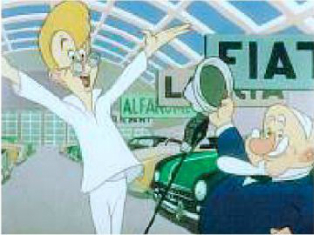


In spot e immagini la storia della Pirelli (la Repubblica)
26 November 2011

Accessibility Come visit us.
Find out moreHelp with your research To access the Historical Archive's documents and materials, please fill out the form to request an appointment.
Request an appointmentHelp with your research To access the Historical Archive's documents and materials, please fill out the form to request an appointment.
Request an appointmentThe Pirelli Foundation Educational Programs
Explore pathsCome visit us.
Come visit us.
To access the Historical Archive's documents and materials, please fill out the form to request an appointment.
Grazie per la tua richiesta
Riceverai una mail di conferma dell'avvenuta ricezione della richiesta e sarai ricontattato.
Grazie per la tua richiesta
Abbiamo ricevuto la tua richiesta. Sarai ricontattato dallo staff di Fondazione Pirelli Educational.
Grazie per la tua richiesta
Abbiamo ricevuto la tua richiesta. Sarai ricontattato al più presto.
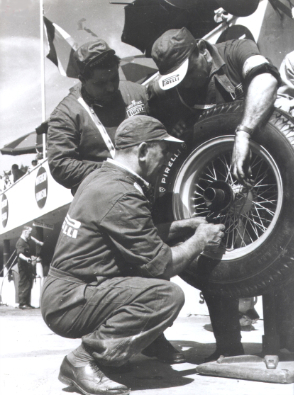
On Wednesday, 23 November, at the head office of Assolombarda (Milan), in conjunction with the 150th anniversary of the unification of Italy, objects from a number of important companies from Milan and the Lombardy region that have left their mark on Italian history and customs take us on a trip through time, telling us the story of their development and accompanying our youth on a voyage to learn about the past and better understand today’s society and our economy.
One of these objects is the Pirelli racing tyre, whose story starts back in 1907, the year of the first Peking to Paris rally, which was won by Prince Scipione Borghese in his Itala, and continues to the present day with the tyre’s return to Formula 1. Serena Berno and Martina De Petris, archivists for the Pirelli Foundation, tell the tale of the “recipe” that enabled Pirelli to win, both then and now, in the world of motor sports.
The work of cartoonists also helped the over 500 high-school students attending the event to visualize the story being told.
On Wednesday, 23 November, at the head office of Assolombarda (Milan), in conjunction with the 150th anniversary of the unification of Italy, objects from a number of important companies from Milan and the Lombardy region that have left their mark on Italian history and customs take us on a trip through time, telling us the story of their development and accompanying our youth on a voyage to learn about the past and better understand today’s society and our economy.
One of these objects is the Pirelli racing tyre, whose story starts back in 1907, the year of the first Peking to Paris rally, which was won by Prince Scipione Borghese in his Itala, and continues to the present day with the tyre’s return to Formula 1. Serena Berno and Martina De Petris, archivists for the Pirelli Foundation, tell the tale of the “recipe” that enabled Pirelli to win, both then and now, in the world of motor sports.
The work of cartoonists also helped the over 500 high-school students attending the event to visualize the story being told.
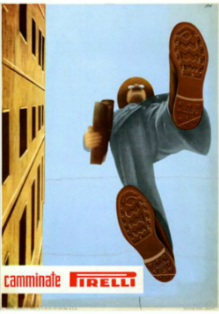
The focus will be on the increasingly important role of design in corporate identity, including a discussion of recent projects and events. One such example was the exhibit “L’Anima di Gomma. Estetica e Tecnica al passo con la moda” (Triennale di Milano, 21 June – 24 July 2011), speakers for which will include Alessia Magistroni, project leader, Riccardo Castaldi from Studio N!03, who was responsible for multimedia and set design, and Bruno Genovese from Leftloft, who was responsible for art direction and graphic design.
For more information, write to info@museologiadesign.it
The focus will be on the increasingly important role of design in corporate identity, including a discussion of recent projects and events. One such example was the exhibit “L’Anima di Gomma. Estetica e Tecnica al passo con la moda” (Triennale di Milano, 21 June – 24 July 2011), speakers for which will include Alessia Magistroni, project leader, Riccardo Castaldi from Studio N!03, who was responsible for multimedia and set design, and Bruno Genovese from Leftloft, who was responsible for art direction and graphic design.
For more information, write to info@museologiadesign.it
Yesterday, Tuesday, 22 November at 3:00pm, the annual Day of Industrial Cinema of the Industrial Cinema & Corporate Communication Archives of Carlo Cattaneo University (LIUC) was held in the LUIC auditorium.
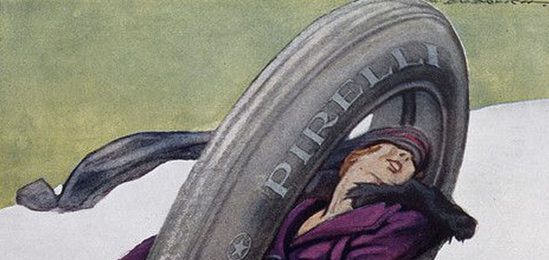
The focus of the conference was Pirelli and the company’s history, which runs parallel to that of the unification of Italy, as well as Pirelli’s image, which has been constructed using highly original marketing strategies, and its corporate culture, one which is based on research, innovation, quality in production systems and the products themselves, and on promoting these traits.
The event included the showing of historical documentaries, advertising, and short subjects created for Pirelli from the 1920s to the 1970s by big names in Italian cinema, including the king’s visit to the Bicocca factory in 1927, the Gavioli brothers, and the animated short subjects featuring the Pagot brothers.
Guests at the event included Antonio Calabrò, director of the Pirelli Foundation, and Elena Koumentakis, head of Advertising & Sponsorship for Pirelli.
Yesterday, Tuesday, 22 November at 3:00pm, the annual Day of Industrial Cinema of the Industrial Cinema & Corporate Communication Archives of Carlo Cattaneo University (LIUC) was held in the LUIC auditorium.
The focus of the conference was Pirelli and the company’s history, which runs parallel to that of the unification of Italy, as well as Pirelli’s image, which has been constructed using highly original marketing strategies, and its corporate culture, one which is based on research, innovation, quality in production systems and the products themselves, and on promoting these traits.
The event included the showing of historical documentaries, advertising, and short subjects created for Pirelli from the 1920s to the 1970s by big names in Italian cinema, including the king’s visit to the Bicocca factory in 1927, the Gavioli brothers, and the animated short subjects featuring the Pagot brothers.
Guests at the event included Antonio Calabrò, director of the Pirelli Foundation, and Elena Koumentakis, head of Advertising & Sponsorship for Pirelli.
A meeting to discuss how corporate culture and company communication have changed over the past century.
There will also be the presentation of a new instrument: the houserorgan.net portal devoted to the history of corporate publications, which brings together and illustrates the most important magazines published by Italian companies during the course of the twentieth century.
This catalogue of Italian house organs is the outcome of a research project launched in 2009 by the Fondazione ISEC in collaboration with the Istituto Lombardo per la Storia Contemporanea. The aim is to promote the collections of Italian house organs, while also documenting the relationship between editorial content and its graphic and visual presentation.
Scholars of literature, business history, communication and design will be taking part in the meeting.
Admission free
Thursday, 24 November 2011
2.30-6.30 p.m.
Villa Mylius, Largo Lamarmora, 17
Sesto San Giovanni, Milan

A meeting to discuss how corporate culture and company communication have changed over the past century.
There will also be the presentation of a new instrument: the houserorgan.net portal devoted to the history of corporate publications, which brings together and illustrates the most important magazines published by Italian companies during the course of the twentieth century.
This catalogue of Italian house organs is the outcome of a research project launched in 2009 by the Fondazione ISEC in collaboration with the Istituto Lombardo per la Storia Contemporanea. The aim is to promote the collections of Italian house organs, while also documenting the relationship between editorial content and its graphic and visual presentation.
Scholars of literature, business history, communication and design will be taking part in the meeting.
Admission free
Thursday, 24 November 2011
2.30-6.30 p.m.
Villa Mylius, Largo Lamarmora, 17
Sesto San Giovanni, Milan
An opportunity to discuss how corporate culture and corporate communication have changed over the last century and to present a tool: the portal at houserorgan.net, a site dedicated to the history of corporate press with a collection of the leading corporate publications in Italy throughout the 20th century.
This collection of Italian corporate press is the result of a research project started in 2009 by the ISEC Foundation, together with the Lombard Institute of Contemporary History. The goal of the collection is to promote corporate periodicals in Italy and to document the relationship between their content and how that content is presented visually.
Guests at the event will include experts from the worlds of literature, industrial history, communication and design.
Entry free of charge
Thursday, 24 November 2011
Time: 14:30-18:30
Villa Mylius, Largo Lamarmora, 17
Sesto San Giovanni, Milan (Italy)
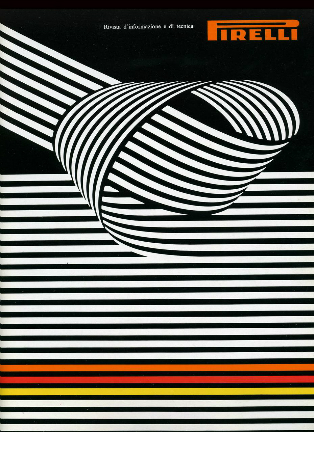
An opportunity to discuss how corporate culture and corporate communication have changed over the last century and to present a tool: the portal at houserorgan.net, a site dedicated to the history of corporate press with a collection of the leading corporate publications in Italy throughout the 20th century.
This collection of Italian corporate press is the result of a research project started in 2009 by the ISEC Foundation, together with the Lombard Institute of Contemporary History. The goal of the collection is to promote corporate periodicals in Italy and to document the relationship between their content and how that content is presented visually.
Guests at the event will include experts from the worlds of literature, industrial history, communication and design.
Entry free of charge
Thursday, 24 November 2011
Time: 14:30-18:30
Villa Mylius, Largo Lamarmora, 17
Sesto San Giovanni, Milan (Italy)
Now in its tenth year, the Corporate Culture Week (from Monday 21st November to Monday 28th) organised by Museimpresa, once again offers a busy schedule for an interpretation, of the history of Italy through the cultural heritage of companies.
Fondazione Pirelli has organised two of the events: on Saturday 26th November the special opening of its historical archive and the exhibition Si va che è un incanto…, followed by a free guided tour of the Bicocca degli Arcimboldi and Hangarbicocca. Sunday 27th November, at the Spazio Oberdan, the filmfest Pirelli in 35 mm is to be held, organised jointly with the Fondazione Cineteca Italiana. Eleven films which demonstrate the influence of the idiom of film on Pirelli corporate communication.
During the week Fondazione Pirelli is also to take part in a series of meetings and debates aimed at investigating the importance of the archives and of corporate culture in company communication procedures.
To view the week’s events download the official programme for the initiative or visit www.museimpresa.com

Now in its tenth year, the Corporate Culture Week (from Monday 21st November to Monday 28th) organised by Museimpresa, once again offers a busy schedule for an interpretation, of the history of Italy through the cultural heritage of companies.
Fondazione Pirelli has organised two of the events: on Saturday 26th November the special opening of its historical archive and the exhibition Si va che è un incanto…, followed by a free guided tour of the Bicocca degli Arcimboldi and Hangarbicocca. Sunday 27th November, at the Spazio Oberdan, the filmfest Pirelli in 35 mm is to be held, organised jointly with the Fondazione Cineteca Italiana. Eleven films which demonstrate the influence of the idiom of film on Pirelli corporate communication.
During the week Fondazione Pirelli is also to take part in a series of meetings and debates aimed at investigating the importance of the archives and of corporate culture in company communication procedures.
To view the week’s events download the official programme for the initiative or visit www.museimpresa.com
Thank you for your request
You will receive an email confirming your subscription to the newsletter.